
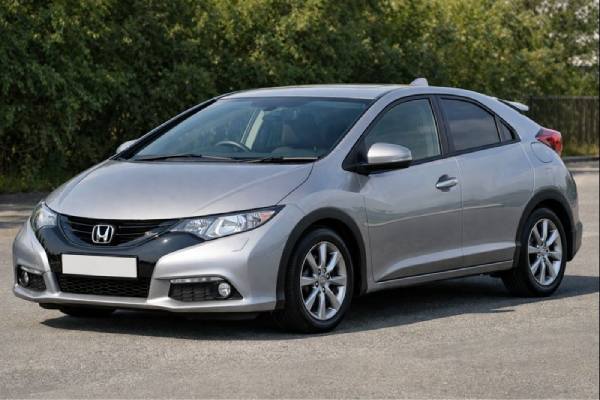
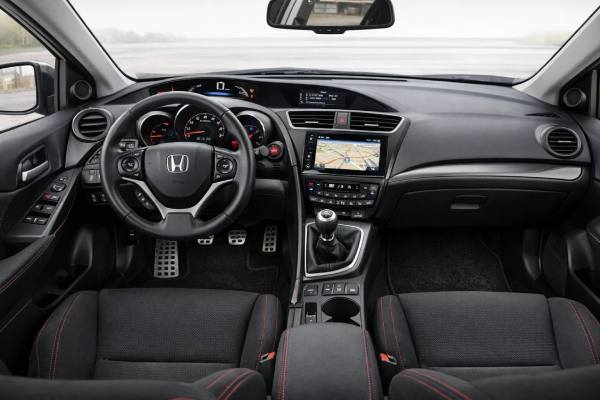
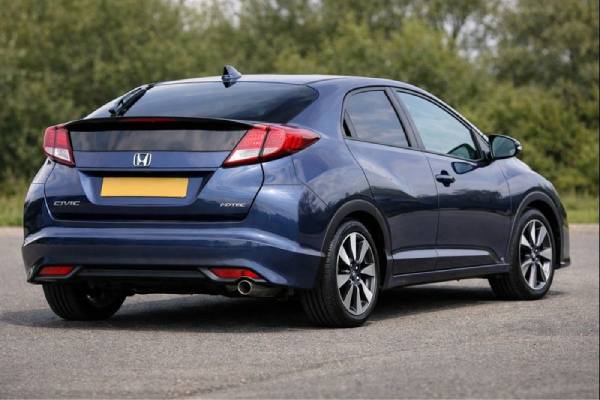
If you want a practical, naturally aspirated Civic that’s simple to live with, the 2012–2017 FK2 with the R18Z4 1.8 i-VTEC is one of the most straightforward choices in the lineup. It’s not a “hot hatch” setup; instead, it’s tuned for dependable daily use: predictable throttle response, durable drivetrain basics, and an ownership profile that rewards routine maintenance more than constant troubleshooting. The 1.8’s power delivery is smooth rather than punchy, and the chassis aims for stable, confidence-building handling on real roads.
Where this Civic stands out is how well it balances space, refinement, and running costs—especially when you buy a well-kept example with clean service history. The main downsides tend to be age-related wear items and a few known Civic niggles (mounts, suspension bushings, and A/C performance) rather than truly fragile core components.
Quick Specs and Notes
- Strong everyday drivability with simple, naturally aspirated power and predictable throttle response.
- Practical cabin packaging with useful cargo space and good visibility for an everyday hatch.
- Generally durable engine and gearbox when serviced on time and kept on correct fluids.
- Plan for suspension and mount refreshes as mileage climbs, especially on rough roads.
- Change engine oil about every 10,000–12,000 km (6,000–7,500 mi) or 12 months, whichever comes first.
Explore the sections
- FK2 Civic 1.8 in context
- R18Z4 specs and capacities
- Trim walk and safety kit
- Failures, TSBs, and recalls
- Service intervals and pre-buy audit
- Performance and road manners
- Comparing the 1.8 FK2
FK2 Civic 1.8 in context
The FK2 Civic hatchback (European-market ninth generation) pairs a roomy, family-focused body with Honda’s R-series 1.8-liter petrol engine. In day-to-day terms, that combination is about low drama: easy cold starts, linear acceleration, and a drivetrain that doesn’t demand special habits beyond normal care. The 142 hp output is enough for confident merging and two-lane passing, but the car’s personality leans toward steady momentum rather than hard “kick.”
From an engineering point of view, the R18Z4 is the kind of engine that ages well when it stays clean inside. It relies on sensible oil control, a conventional cooling system, and a simple naturally aspirated intake path—so you’re not juggling turbo heat management, intercooler plumbing, or high-pressure direct-injection carbon buildup as a primary ownership theme. That simplicity is one reason these Civics can remain dependable commuter cars well past 150,000 km (90,000+ mi) if maintenance is consistent.
The FK2’s chassis is tuned for a stable, slightly firm ride. On good tires and healthy suspension bushings, it tracks straight at highway speed and feels tidy through corners. As the car ages, most complaints you’ll hear are more about rubber and wear items—front lower control arm bushings, rear trailing arm bushings, sway bar links, and engine mounts—than about critical hard-part failures.
Where buyers sometimes misjudge it is performance expectation. The 1.8 works best with a smooth driving style: keep revs in the midrange, use the gearbox willingly, and it feels responsive. If you lug it at low rpm in a high gear, it can feel flat. For owners, the sweet spot is that it remains efficient without being delicate, and it’s friendly to independent shops because the mechanical layout is conventional.
Bottom line: the FK2 1.8 i-VTEC is a practical Civic that rewards boring, correct maintenance. Buy one for reliability, space, and predictable behavior—then keep it that way with fluids, tires, and suspension attention.
R18Z4 specs and capacities
Below are specs tailored to the FK2 Civic 1.8 i-VTEC (R18Z4) as commonly sold in Europe/UK during 2012–2017. Exact figures can vary slightly by market, trim, wheel/tire package, and transmission.
Powertrain and efficiency
| Item | Spec |
|---|---|
| Code | R18Z4 |
| Engine layout and cylinders | Inline-4 (I-4), transverse, i-VTEC, 4 cylinders, 4 valves/cyl |
| Displacement | 1.8 L (1,798 cc) |
| Bore × stroke | 81.0 × 87.3 mm (3.19 × 3.44 in) |
| Induction | Naturally aspirated |
| Fuel system | PFI / multi-port injection |
| Compression ratio | ~10.6:1 |
| Max power | 142 hp (104 kW) @ 6,500 rpm* |
| Max torque | 174 Nm (128 lb-ft) @ 4,300 rpm* |
| Timing drive | Chain |
| Rated efficiency | Typically ~6.0–7.0 L/100 km (≈34–39 mpg US / 41–47 mpg UK), by trim/trans |
| Real-world highway @ 120 km/h (75 mph) | Often ~6.2–7.2 L/100 km if tires and alignment are healthy |
*Power and torque figures are commonly quoted in PS/hp depending on market literature.
Transmission and driveline
| Item | Spec |
|---|---|
| Transmission | 6-speed manual (common); 5-speed automatic (market-dependent) |
| Drive type | FWD |
| Differential | Open (traction control via brakes) |
Chassis and dimensions
| Item | Spec (typical) |
|---|---|
| Suspension (front/rear) | MacPherson strut / torsion beam (H-beam trailing arm) |
| Steering | Electric power steering (EPS) |
| Brakes | 4-wheel discs (sizes vary by trim) |
| Wheels/tires | Typically 16–17 in; common sizes include 205/55 R16 or 225/45 R17 |
| Length / width / height | ~4,300 / 1,770 / 1,440 mm (≈169.3 / 69.7 / 56.7 in) |
| Wheelbase | ~2,595 mm (≈102.2 in) |
| Turning circle | ~10.8–11.0 m (≈35–36 ft), depending on tires |
| Curb weight | Commonly ~1,280–1,360 kg (≈2,820–3,000 lb), depending on trim/trans |
| Fuel tank | ~50 L (≈13.2 US gal / 11.0 UK gal) |
| Cargo volume | Typically ~460–480 L seats up (VDA), varies with spare/repair kit |
Performance and capability
| Item | Spec (typical) |
|---|---|
| Acceleration | ~0–100 km/h: 9–10 s (trim/trans dependent) |
| Top speed | ~210–215 km/h (≈130–134 mph), trim/trans dependent |
| Towing | Market-specific; many are not rated for heavy towing—verify local rating plate |
| Payload | Varies by trim; check door-jamb label |
Fluids and service capacities
Use the specification listed in your owner’s manual/service documentation for your VIN and climate.
| Item | Typical spec |
|---|---|
| Engine oil | 0W-20 (common Honda recommendation); capacity typically ~3.6–3.8 L (3.8–4.0 US qt) with filter |
| Coolant | Honda Type 2 / equivalent long-life; premix typical; capacity varies by radiator and heater core |
| Manual transmission fluid | Honda MTF (or equivalent); capacity commonly ~1.7–2.0 L |
| Automatic transmission fluid | Honda ATF (market-specific); service procedure matters more than “universal” ATF |
| A/C refrigerant | Often R134a on these years; charge quantity varies by system label |
Electrical and ignition
| Item | Typical spec |
|---|---|
| 12V battery | Commonly 45–60 Ah class (varies by market and idle-stop equipment) |
| Spark plugs | Long-life iridium type; gap per plug spec |
Safety and driver assistance
| Item | Notes |
|---|---|
| Crash ratings | Euro NCAP (2012 Civic 1.8 “Comfort”, LHD): 5 stars; Adult 94%, Child 83%, Pedestrian 69%, Safety Assist 86% |
| ADAS suite | Primarily stability control, traction control, ABS/EBD; advanced AEB/ACC/lane systems were not broadly standard in this era |
Trim walk and safety kit
Trim names vary by country, but most FK2 1.8 cars cluster into a familiar ladder: an entry comfort trim, mid trims with better infotainment and wheels, and higher trims with convenience features (lighting, camera/sensors, upgraded audio, and interior materials). The important thing for buyers is to focus less on the badge and more on the mechanical and functional differences that affect ownership.
Trims and options that change the experience
- Transmission choice: A 6-speed manual is the enthusiast-favored option for responsiveness and lower long-term complexity, while the 5-speed automatic (where offered) prioritizes smoothness. If you choose the automatic, insist on documented fluid services using the correct Honda-spec fluid and procedure.
- Wheel and tire packages: 17-inch wheels can sharpen steering response but may increase road noise and be harsher over broken pavement. Tire quality and alignment make a bigger difference than rim size once the suspension has mileage.
- Cabin and infotainment: Higher trims may add a better head unit, Bluetooth integration, and camera/sensor parking aids. These are convenience features, but they also introduce more electronics to test before purchase (screen, buttons, microphone, steering-wheel controls).
- Lighting: Some trims offer upgraded headlights or DRLs. Aging headlight lenses and reflectors can reduce night performance, so check beam pattern and moisture inside housings.
Quick identifiers when shopping
- Look for engine code labeling (or documentation) confirming R18Z4.
- Verify wheel size and brake feel: higher trims sometimes have slightly different brake hardware or pad compounds.
- Check for parking sensors/camera operation during a test drive—intermittent faults can be wiring or module-related.
Safety ratings and equipment
Euro NCAP’s 2012 result for the Civic hatch showed strong adult and child occupant performance for its era, with a particularly solid Safety Assist score driven by stability control and seatbelt reminder performance. The pedestrian score was good for the time, though modern cars often score higher due to newer test protocols and more standard AEB.
In real ownership terms, the key safety equipment to confirm is present and working:
- Airbags: Front, side, and curtain airbags are common; confirm the airbag warning light proves out correctly at start-up.
- ISOFIX/LATCH: Check the rear outboard mounts and top tether points are intact and not damaged by cargo use.
- Braking and stability systems: ABS and ESC should be standard; during a safe test drive, confirm no warning lights and that braking is straight and consistent.
If the car has had suspension work or an alignment event after an impact, ensure the steering wheel is centered and the car tracks straight. A Civic that “hunts” on the highway often needs tire diagnosis, alignment correction, or bushing attention—issues that affect both safety and comfort.
Failures, TSBs, and recalls
Most FK2 1.8 Civics don’t have a single catastrophic “signature failure.” Instead, reliability is about managing wear and preventing neglect from compounding into expensive follow-on repairs. Below is a practical way to think about common problems by prevalence and cost tier.
Common, usually low to medium cost
- Front suspension and steering wear (common / low–medium):
Symptoms: clunks over bumps, vague turn-in, inner tire wear, steering shimmy.
Likely causes: sway bar links, front lower control arm bushings, ball joints, tired dampers, alignment drift.
Remedy: replace worn joints/bushings in pairs where appropriate, then align. Use quality parts; cheap links and bushings can fail quickly. - Engine mounts (common / medium):
Symptoms: vibration at idle, thump on throttle on/off, harshness in the cabin.
Likely causes: aging hydraulic mount(s) and torque mount bushings.
Remedy: replace the failed mount(s), recheck exhaust hangers, and confirm idle speed is correct. - A/C performance drop (common / medium):
Symptoms: weak cooling, cycling, noise, or intermittent operation.
Likely causes: leaks at seals/lines, condenser damage from road debris, compressor wear, or pressure sensor faults.
Remedy: proper leak test and repair before recharging; avoid repeated “top-off” cycles.
Occasional, can become medium to high
- Oil seepage and gasket aging (occasional / medium):
Symptoms: oil smell, spots under the car, damp timing cover area.
Likely causes: valve cover gasket, front crank seal seepage, oil pan sealant aging.
Remedy: reseal correctly and clean the area so future leaks are obvious. - Timing chain noise concerns (occasional / medium–high if ignored):
Symptoms: rattly start-up noise, persistent timing-related noise, check-engine lights for correlation faults (rare).
Likely causes: tensioner wear, neglected oil changes accelerating chain/tensioner wear.
Remedy: diagnose carefully—don’t replace parts blindly. If oil history is poor and noise is real, address it early.
Rare, higher consequence
- Automatic transmission neglect (rare with good service / high if abused):
Symptoms: harsh shifts, delayed engagement, shudder, overheating smell.
Likely causes: wrong fluid, long intervals, overheating, internal wear.
Remedy: correct fluid and service method, then diagnose; chronic symptoms may require deeper repair.
Recalls, TSBs, and how to verify
For this era, many Hondas were touched by broader industry campaigns (for example, airbag-related recalls depending on market and build date). The right approach is not guessing—it’s verification:
- Run an official VIN recall check (government or manufacturer portal depending on your country).
- Ask the seller for dealer invoices showing completion and dates.
- Confirm the car has no persistent warning lights and that airbags/seatbelt pretensioners have not been disturbed by poor repairs.
A well-documented Civic with confirmed recall completion and consistent fluid service is the difference between “cheap to run” and “death by a thousand small fixes.”
Service intervals and pre-buy audit
A simple maintenance routine is what makes the FK2 1.8 a strong long-term bet. Use the maintenance minder (where fitted) and your local schedule, but the intervals below are practical for most driving patterns.
Core maintenance schedule
- Engine oil and filter: every 10,000–12,000 km (6,000–7,500 mi) or 12 months. Short-trip driving, hot climates, and high-speed commuting justify the shorter end. Use the correct viscosity for your market (often 0W-20) and a quality filter.
- Engine air filter: inspect every 20,000–30,000 km; replace sooner in dusty conditions.
- Cabin air filter: every 15,000–30,000 km or annually if you want strong HVAC airflow and low window fogging.
- Spark plugs (iridium): commonly 100,000–120,000 km (60,000–75,000 mi). Replace coils only if misfires or damage appear—don’t shotgun parts.
- Coolant: typically long-life; a common pattern is first change around 10 years/200,000 km, then shorter intervals. Follow the official spec for your VIN.
- Brake fluid: every 2 years regardless of mileage. This matters for pedal feel and caliper longevity.
- Manual transmission fluid: around 60,000–100,000 km depending on use; sooner if shifting feels notchy.
- Automatic transmission fluid (if equipped): service by the book, often around 50,000–80,000 km depending on duty cycle; correct fluid is non-negotiable.
- Tires: rotate every 10,000–12,000 km; align yearly or whenever tire wear looks uneven.
- 12V battery: test annually after year 4; many last 4–6 years depending on climate.
Essential torque values (common targets)
- Wheel lug nuts: ~108 Nm (80 lb-ft)
- Engine oil drain plug: commonly ~30–40 Nm (22–30 lb-ft), verify for your pan/plug
- Spark plugs: commonly ~18–25 Nm (13–18 lb-ft), verify plug manufacturer spec
Pre-purchase inspection checklist
- Cold start: listen for abnormal rattles that persist beyond a brief start-up moment; confirm idle is steady.
- Road test: check for steering shake at 90–120 km/h (55–75 mph), brake vibration, and clunks over small bumps.
- Brakes: firm pedal, no pull, and no ABS/ESC warning lights.
- HVAC: A/C should cool quickly; slow cooling can indicate leaks or weak compressor performance.
- Undercarriage: look for oil seepage, exhaust corrosion, and rear suspension bushing wear.
- Service history: confirm oil change cadence and transmission fluid service (especially for automatics).
- Recalls: verify by VIN and paperwork.
A clean FK2 doesn’t need heroics—just proof that routine care happened on time.
Performance and road manners
On the road, the FK2 1.8 is defined by smoothness and predictability. The R18Z4’s naturally aspirated character means your right foot gets an honest response: no turbo surge, no big lag, and no sudden torque spike that overwhelms the front tires. Around town, it’s easy to drive cleanly, and on the highway it settles into a stable cruise with modest engine noise if tires and wheel bearings are in good shape.
Powertrain character
Expect useful midrange rather than strong low-end punch. The engine feels happiest when you keep it in the middle of the rev range during passing and hill climbs. With the 6-speed manual, the gearing lets you place the engine where it works best, and a healthy clutch engages smoothly without chatter. If you notice a high bite point, slipping in higher gears, or vibration on take-up, budget for clutch work.
If your FK2 has the 5-speed automatic, the experience is calmer and less urgent. It’s usually smooth when serviced properly, but it can feel reluctant to downshift if you ask for quick acceleration from low rpm. That’s normal behavior; what’s not normal is harsh engagement, flare, or shudder under light throttle.
Ride, handling, and NVH
The chassis is generally composed, with a slightly firm edge on rough surfaces. Steering is light at low speed and more weighted on the move, with decent accuracy. The biggest determinant of “how it drives” at 10+ years old is suspension condition:
- Fresh dampers and tight bushings restore the Civic’s tidy feel.
- Cheap tires can make the car noisy and vague; good tires can make it feel one class newer.
- Worn rear beam bushings can add a mild “wiggle” over mid-corner bumps and increase road noise.
Real-world efficiency
In mixed use, many owners see economy in the mid-6 to low-7 L/100 km range, depending on speed, terrain, tire choice, and how often the car is driven cold. At steady highway speeds, it can be quite reasonable; in dense city traffic with short trips, consumption rises noticeably.
Useful real-world metrics
- 0–100 km/h (0–62 mph): typically in the 9–10 second range depending on trim and transmission.
- Passing performance: best when you downshift early and hold midrange rpm rather than waiting for low-rpm torque that isn’t there.
- Braking feel: generally consistent if brake fluid is fresh and calipers slide freely; neglected brake fluid can make the pedal feel soft.
If you want “fast,” you’ll shop a different Civic. If you want calm, consistent, and easy to manage every day, this FK2 is exactly in its element.
Comparing the 1.8 FK2
The FK2 Civic 1.8 sits in the middle of the C-segment in a very Honda way: not the fastest, not the softest, but often one of the easiest to keep for a long time. Here’s how it generally stacks up against common rivals of the era.
Versus turbocharged petrol rivals (Golf 1.4 TSI, Focus EcoBoost)
A small turbo engine can feel stronger at low rpm and may deliver better “effortless” acceleration in daily driving. The trade-off is complexity: more heat management, more plumbing, and often tighter tolerance for poor oil or cooling maintenance. The FK2 1.8 counters with simpler hardware and a more predictable long-term ownership curve. If you prefer fewer systems that can age badly, the Civic’s naturally aspirated approach is appealing.
Versus naturally aspirated competitors (Mazda3 1.6/2.0, Toyota Auris 1.6)
These are closer matches in spirit. The Mazda often feels sportier in steering and body control, while the Toyota leans toward comfort and low stress. The Civic typically wins on clever packaging and an ownership feel that’s straightforward for general repair. Your deciding factors should be cabin condition, rust history in your region, and service documentation—because any of these cars can be “the best one” if it’s been cared for properly.
Versus diesels (within the same era)
If you do high mileage at steady speeds, a diesel can be the fuel-cost winner. But modern diesel ownership brings DPF (diesel particulate filter) behavior, EGR (exhaust gas recirculation) deposits, and sometimes expensive emissions hardware. For mixed driving with short trips, the petrol FK2 often makes more sense, even if it uses a bit more fuel.
Who should choose the FK2 1.8
- Drivers who value reliability and predictable upkeep over maximum torque.
- Buyers who want a roomy hatchback with simple operation and sensible running costs.
- Owners who plan to keep the car and are willing to maintain tires, brakes, and suspension properly.
If you want modern driver assistance or a “new-car quiet” cabin, newer rivals may suit you better. But if you want a proven, naturally aspirated Civic that can age gracefully with routine care, the FK2 1.8 remains a strong, rational buy in the used market.
References
- 2012 Honda Civic Press Kit 2011 (Press Kit)
- 2012 Honda Civic 5-Door 2011 (Press Release)
- Honda Civic 2012 (Safety Rating)
- Honda Owners Manuals | Civic 5dr Petrol Owners | Honda UK 2017 (Owner’s Manual)
- Check if a vehicle, part or accessory has been recalled – GOV.UK 2025 (Recall Database)
Disclaimer
This article is for informational purposes only and is not a substitute for professional diagnosis, inspection, or repair. Specifications, torque values, service intervals, and procedures can vary by VIN, market, model year, and equipment, so always verify details using official Honda service documentation for your specific vehicle.
If you found this guide useful, please consider sharing it on Facebook, X/Twitter, or your favorite forum to help others find reliable ownership information.