
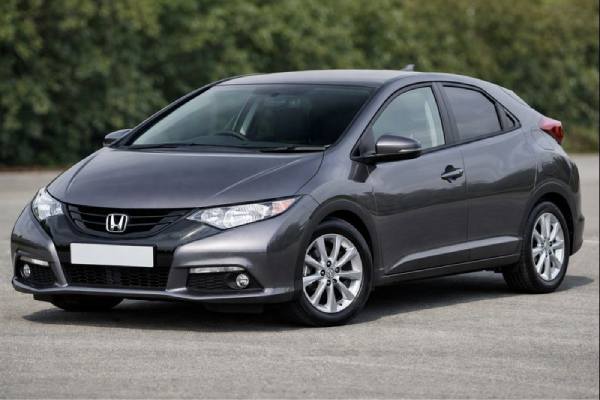
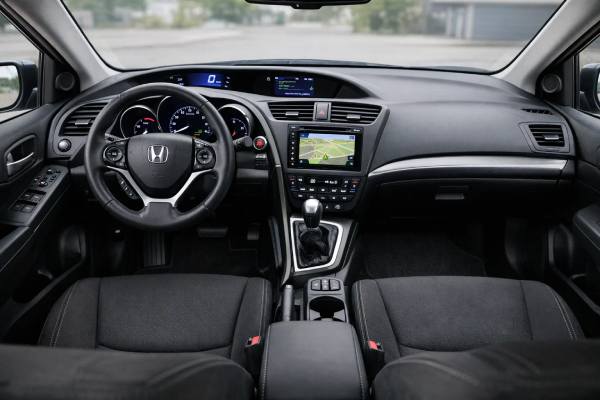
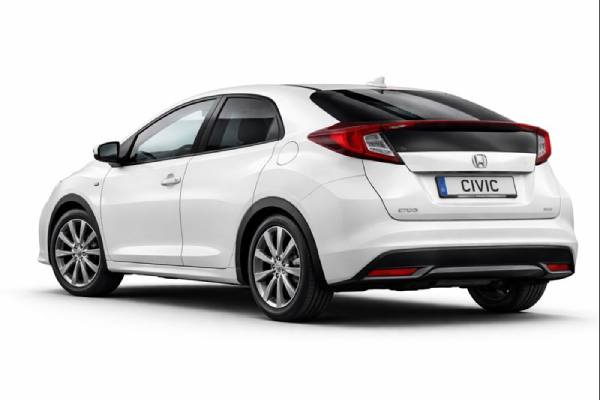
Honda’s ninth-generation Civic hatchback (FK3) with the 1.6 i-DTEC diesel (engine code N16A1) was engineered around one clear goal: deliver diesel torque and long-range economy without turning the car into a heavy cruiser. The result is a practical five-door with an unusually light aluminium diesel, a compact turbo system, and gearing designed for relaxed motorway running. In everyday ownership, this Civic tends to reward drivers who do longer trips and keep up with routine service—especially oil quality and fuel-system care.
One important detail for buyers: in most European markets, the N16A1 Civic was paired primarily with a 6-speed manual gearbox. If you are shopping specifically for an automatic, you will usually be looking at different engines and trims within the same generation rather than this diesel configuration.
What to Know
- Strong low-rpm torque makes it easy to drive in traffic and effortless on hills.
- Very low real-world fuel use is achievable on steady highway runs.
- Light engine helps handling feel less nose-heavy than many diesel rivals.
- Keep diesel emissions hardware (EGR/DPF) healthy with regular longer drives and correct oil spec.
- Oil and filter service: every 12,000 miles (20,000 km) or 12 months (whichever comes first), adjusted for severe use.
Jump to sections
- FK3 1.6 i-DTEC in depth
- N16A1 specs and dimensions
- Trims, safety, and driver assistance
- Reliability issues and service actions
- Maintenance plan and buying advice
- Real-world driving and economy
- Rivals and best alternatives
FK3 1.6 i-DTEC in depth
The FK3 Civic hatchback with the N16A1 1.6 i-DTEC sits in a sweet spot for people who want a compact car that behaves like a larger one on the motorway. Honda’s “Earth Dreams” approach here focused on reducing friction and mass, which matters because diesel drivetrains can feel heavy and inert if the engine and gearbox are bulky. This 1.6 is notably light for a diesel, which helps the front end respond more cleanly to steering inputs than many same-era competitors.
In practical terms, the car’s personality is defined by two things: torque delivery and gearing. The turbocharged diesel’s peak torque arrives low enough to make short-shifting natural, while the 6-speed manual’s upper gears are tall to keep engine speed down at cruising speeds. That combination reduces cabin noise and, more importantly, keeps fuel consumption stable at higher road speeds. If you do frequent motorway journeys, this Civic can feel like it is working well within its comfort zone.
Ownership satisfaction tends to track with usage pattern. These cars generally like to be driven—particularly diesels equipped with a diesel particulate filter (DPF). Short trips, extended idling, and low-speed stop-start routines increase the risk of soot loading and EGR valve contamination. Owners who mix in longer drives (or commute longer distances) usually report fewer emissions-system headaches and steadier economy.
Another theme is simplicity. Compared with newer models, the FK3 era typically has fewer camera- and radar-dependent driver assistance features, and that can reduce long-term calibration costs. However, facelift years and higher trims may include active city braking systems and more complex infotainment, which can add a bit of diagnostic nuance as the car ages.
N16A1 specs and dimensions
Below are practical, model-relevant specifications for the Honda Civic (FK3) 1.6 i-DTEC (N16A1) in the 2013–2017 window. Exact figures can vary by market, trim, wheel size, and homologation update, so treat these as a planning baseline and verify by VIN when ordering parts or fluids.
Powertrain and efficiency
| Item | Specification |
|---|---|
| Code | N16A1 |
| Engine layout and cylinders | Inline-4, DOHC, 4 valves/cyl |
| Bore × stroke | 76.0 × 88.0 mm (2.99 × 3.46 in) |
| Displacement | 1.6 L (1,597 cc) |
| Induction | Turbocharged (variable-geometry type by application) |
| Fuel system | Common-rail diesel injection |
| Compression ratio | 16.0:1 |
| Max power* | 120 hp (88 kW) @ 4,000 rpm |
| Max torque* | 300 Nm (221 lb-ft) @ 2,000 rpm |
| Timing drive | Chain (service by condition; inspect on noise/correlation faults) |
| Rated efficiency (typical EU) | 3.6 L/100 km (approx. 65.3 mpg US / 78.5 mpg UK) |
| Real-world highway @ 120 km/h | Commonly ~4.5–5.5 L/100 km depending on tyres, load, wind, and temperature |
| Aerodynamics | Cd and frontal area are trim-dependent and not consistently published; treat any single value as approximate |
*Outputs can differ slightly by year/market rating method.
Transmission and driveline
| Item | Specification |
|---|---|
| Transmission | 6-speed manual (market-dependent, but the dominant pairing for this diesel Civic) |
| Drive type | FWD |
| Differential | Open (traction control uses brake-based intervention) |
Chassis and dimensions
| Item | Specification |
|---|---|
| Suspension (front/rear) | MacPherson strut / torsion beam (common FK3 layout) |
| Steering | Electric power steering (ratio varies by market/trim) |
| Brakes | 4-wheel discs (front vented; diameters vary by trim; commonly ~282–293 mm front, ~260–282 mm rear) |
| Wheels and tyres | Common sets include 205/55 R16 or 225/45 R17 (varies by trim/market) |
| Ground clearance | ~130 mm (5.1 in) |
| Length / width / height | 4,300 / 1,770 / 1,470 mm (169.3 / 69.7 / 57.9 in) |
| Wheelbase | 2,595 mm (102.2 in) |
| Turning circle | Typically ~11.0 m (36.1 ft) (can vary with tyre and wheel) |
| Kerb (curb) weight | Commonly ~1,307–1,380 kg (2,881–3,042 lb) depending on trim/equipment |
| Fuel tank | 50 L (13.2 US gal / 11.0 UK gal) |
| Cargo volume | About 477 L (16.8 ft³) seats up; ~1,378 L (48.7 ft³) seats down (VDA method varies by market) |
Performance and capability
| Item | Specification |
|---|---|
| 0–100 km/h (0–62 mph) | ~10.5 s (trim and tyres can change results) |
| Top speed | ~207 km/h (129 mph) |
| Braking distance | Highly tyre-dependent; use as a test item rather than a fixed spec |
| Towing capacity | Often ~1,400 kg (3,086 lb) braked / ~500 kg (1,102 lb) unbraked (verify by VIN plate and local rules) |
| Payload and roof load | Market- and trim-dependent; check VIN plate and handbook |
Fluids and service capacities (planning values)
Because official service data can vary by market and update, treat these as typical ranges and confirm in your service literature before filling.
| Item | Specification (typical) |
|---|---|
| Engine oil | Low-SAPS oil required for DPF health; commonly 0W-30 or 5W-30 meeting the correct ACEA spec; capacity often ~3.5–4.0 L (3.7–4.2 US qt) with filter |
| Coolant | Long-life ethylene glycol coolant; usually 50/50 mix; capacity often ~5–7 L (5.3–7.4 US qt) |
| Manual gearbox oil | MTF (Honda-approved); often ~1.7–2.0 L (1.8–2.1 US qt) |
| A/C refrigerant | Usually R134a on this era; charge amount varies by system label |
| Key torque specs | Always verify; typical “critical fasteners” to confirm include wheel lug nuts and drain plugs |
Electrical
| Item | Specification (typical) |
|---|---|
| Alternator output | Varies by equipment load; verify by part number |
| 12 V battery | Size and CCA vary; start/stop systems use higher-spec batteries |
| Spark plug | Not applicable (diesel uses glow plugs; verify type by engine code) |
Safety and driver assistance
| Item | Specification |
|---|---|
| Crash ratings | Euro NCAP results for this generation indicate a 5-star outcome under the applicable test version for its era (scores vary by protocol year) |
| ADAS suite | Typically includes ABS, ESC, traction control; higher trims/facelift years may add city emergency braking and lane-related alerts depending on market |
Trims, safety, and driver assistance
Trim naming varies widely across Europe (and outside it), so the most useful approach is to focus on what changes mechanically and functionally. For the N16A1 diesel Civic, the biggest “real” differences you will see are wheel and tyre size, suspension tune (especially on sport-oriented trims), braking hardware variations tied to wheel size, and equipment packages that add sensors and cameras.
Common trims and quick identifiers
You may see trim names such as S/SE/ES/SR, Comfort/Sport/Executive, or regional equivalents. Practical identifiers include:
- Wheel size: 16-inch wheels typically signal comfort/economy trims; 17-inch wheels are common on sport packages.
- Interior cues: sport seats, darker headliner, and body kit pieces often point to Sport-grade cars.
- Infotainment: facelift years can introduce different head units and connectivity features; check the screen layout and USB/AUX arrangement rather than the badge alone.
- Start/stop (Idle Stop): if equipped, confirm it works consistently—battery health strongly affects it.
Manual vs automatic reality
Your earlier observation about “manual speeds” is mostly a configuration and market pairing issue, not an assumption that the Civic line never offered automatics. In this generation, the 1.6 i-DTEC diesel Civic was commonly sold with a 6-speed manual, while automatic transmissions were more typical on certain petrol engines in the same model family. So yes—some Civics in these years do come as automatics, but they are usually different engines and trims than the N16A1 diesel FK3.
Safety equipment and child-seat provisions
Most FK3 Civics are well equipped for their era:
- Multiple airbags (front, side, and curtain in most markets)
- ISOFIX/LATCH-style anchor points for outer rear seats (market dependent)
- Seatbelt reminders became more comprehensive over time
- Strong baseline stability systems: ABS, EBD, brake assist, ESC, and traction control
When inspecting, verify the airbag light behaves correctly at start-up (illuminate then go out), and ensure the seatbelt pretensioner and buckle sensors are not throwing intermittent faults.
Driver assistance and calibration considerations
Depending on year and market, features may include:
- City emergency braking (low-speed AEB type system)
- Lane departure warning or lane-keeping aids (less common than on newer cars)
- Parking sensors and rear camera (often packaged by trim)
If the car has camera-based safety tech, confirm windscreen replacement history. After a windscreen change, some systems need correct mounting and calibration to avoid false alerts or disabled features.
Reliability issues and service actions
Overall, the FK3 Civic platform has a strong reliability reputation, and the N16A1 diesel is often durable when maintained with the correct oil and used in a way that suits a modern emissions-controlled diesel. The most important reliability split is not “good engine vs bad engine,” but highway/long-trip use vs repeated short-trip use.
Common issues by prevalence and cost
Common (low to medium cost, often mileage/usage-related)
- DPF soot loading:
- Symptoms: DPF warning light, reduced power, frequent regeneration behaviour, rising oil level (on some diesels).
- Likely cause: too many short trips, interrupted regenerations, incorrect oil spec.
- Remedy: correct driving cycle to complete regen, diagnostic-guided forced regen if needed, investigate underlying EGR/boost issues.
- EGR valve and intake contamination:
- Symptoms: rough idle, hesitation, fault codes, poor fuel economy.
- Cause: soot and oily deposits from frequent low-load running.
- Remedy: cleaning or replacement depending on condition; address driving pattern and service quality.
Occasional (medium cost, age-dependent)
- Turbo control and boost leaks:
- Symptoms: limp mode, whistling, underboost codes, smoke under load.
- Cause: split hoses, sticky actuator, sensor issues.
- Remedy: smoke test/pressure test intake tract, repair leaks, check actuator and sensors.
- Clutch and dual-mass flywheel wear (manual cars):
- Symptoms: vibration at idle, judder on take-off, slipping under load.
- Cause: high-torque diesel plus city driving.
- Remedy: replace clutch kit; DMF replacement based on noise/vibration.
Rare (higher cost, usually neglected maintenance or bad fuel events)
- High-pressure fuel system contamination:
- Symptoms: hard starting, rail pressure codes, injector imbalance.
- Cause: water/contaminated diesel, poor filtration practices.
- Remedy: diagnostic confirmation; injectors/pump as required; flush system.
Software updates and drivability
As these cars age, some “mechanical” complaints are actually sensor drift, calibration changes, or software revisions. When buying or diagnosing, ask a dealer or specialist to check for:
- ECU updates related to emissions behaviour (regen strategy, EGR control)
- Infotainment firmware updates on facelift systems
- Stored fault history that was cleared before sale
Recalls, TSBs, and verification
Rather than relying on memory or forum lists, the best practice is:
- Run a VIN check using official recall portals where available.
- Confirm completion in service records or dealer history.
- Treat missing proof as “unknown,” not “done.”
This matters because some recall work is invisible in a test drive but important for safety and compliance.
Maintenance plan and buying advice
The FK3 1.6 i-DTEC can be a low-cost long-distance tool if you keep maintenance simple, consistent, and diesel-appropriate. The biggest mistakes tend to be stretched oil intervals, the wrong oil specification, and ignoring early emissions-related warnings.
Practical maintenance schedule
Use this as a road map, then match it to your official schedule for your exact VIN.
- Engine oil and filter: every 20,000 km (12,000 miles) or 12 months; shorten to 10,000–15,000 km if mostly short trips.
- Air filter (engine): inspect every service; replace about 30,000–40,000 km in dusty use.
- Cabin filter: every 15,000–30,000 km or annually if allergies/dust are an issue.
- Fuel filter (diesel): commonly every 40,000–60,000 km (market schedules vary); do not skip on older cars.
- Brake fluid: every 2 years regardless of mileage.
- Coolant: long-life coolant usually 5 years initial, then per schedule; verify for your market.
- Manual transmission fluid: consider 80,000–120,000 km intervals for smoother shifting and synchro life.
- Timing chain: no routine replacement interval; inspect by symptoms (rattle, correlation codes, abnormal cam/crank timing).
- Serpentine belt and hoses: inspect at every service; replace by condition, often 6–8 years depending on climate.
- Battery testing: yearly after year 4; start/stop cars are sensitive to weak batteries.
- DPF health: plan a 30–45 minute steady drive periodically if your routine is mostly urban.
Buyer’s inspection checklist
- Cold start: should fire quickly without excessive cranking; listen for abnormal rattles.
- Test drive at load: ensure boost builds smoothly, no limp mode, no excess smoke.
- Check for DPF/EGR warning history: ask for diagnostic printouts if possible.
- Clutch feel (manual): check for slip in a higher gear under load; watch for judder.
- Cooling system: stable temperature, no sweet smell, no oily residue in coolant tank.
- Rust and corrosion hotspots: inspect rear arches, underbody seams, and subframe mounting points (especially in salted-road regions).
- Electrical and infotainment: confirm all functions; intermittent faults can be time-consuming.
Best years and trims to seek
- For heavy motorway use: any well-maintained year works; prioritize service history and tyre quality over badge.
- For mixed city/highway: facelift years with improved safety tech can be appealing, but only if the added systems are functioning correctly.
- Avoid (or budget carefully): cars with repeated short-trip history, frequent DPF warnings, or missing oil-spec documentation.
Long-term durability outlook: with correct oil and sensible use, the N16A1 can be a high-mileage engine. Neglected emissions-system symptoms are what usually turn an “economical diesel” into an expensive one.
Real-world driving and economy
The 1.6 i-DTEC Civic is not a hot hatch, but it is quietly quick in the situations that matter for daily life: merging, climbing grades, and maintaining speed with a full load. The engine’s torque arrives in the mid-range, so you do not need to rev it hard to make progress. That shapes the whole driving experience—relaxed, efficient, and predictable.
Ride, handling, and NVH
For a torsion-beam rear suspension car, the FK3 is generally composed. On 16-inch wheels, it tends to ride with a slightly firm European feel but avoids harshness over broken surfaces. On 17-inch tyres, sharp edges are more noticeable, and road noise can rise on coarse asphalt.
Straight-line stability is a strong point at motorway speeds, helped by the car’s planted stance and tall sixth gear. Steering is light at parking speeds and builds weight naturally as speed increases, though feedback is more “clean and accurate” than “chatty.” Brakes are usually easy to modulate; if you feel a long pedal, plan a brake fluid change and inspect sliders and pads.
Powertrain character and gearing
The turbo diesel delivers its best work between roughly 1,700–3,000 rpm. Below that, it is usable but not punchy; above that, it runs out of reason to rev. This is a car that rewards shifting by ear and torque feel rather than chasing redline.
The 6-speed manual’s taller upper gears reduce rpm at cruise, which is excellent for fuel economy. The trade-off is that quick overtakes often feel best with a downshift to keep the turbo in its efficient zone—normal for modern small diesels.
Real-world efficiency
Expect economy to depend strongly on speed and temperature:
- City (short trips): often 5.5–7.0 L/100 km depending on traffic and regeneration activity
- Highway (100–120 km/h): commonly 4.5–5.5 L/100 km when steady
- Mixed driving: often 4.8–6.0 L/100 km
Cold weather can increase consumption and shorten regeneration intervals. If you notice the engine fan running after shutdown or slightly rough idle at stops, it may be completing a DPF regeneration cycle—avoid switching off repeatedly mid-cycle if possible.
Rivals and best alternatives
The FK3 1.6 i-DTEC competes most directly with other compact diesels from the same period. Your best choice depends on whether you value long-distance economy, ride comfort, cabin space, or automatic availability.
Volkswagen Golf 1.6 TDI
- Why choose it: broad market availability, many gearbox and trim combinations, strong resale.
- Why choose the Civic instead: the Honda often feels lighter on its feet and can be very efficient on the motorway with tall gearing.
- Watch-outs: emissions hardware and EGR/DPF concerns exist across the segment, not only Honda.
Ford Focus 1.6 TDCi or 1.5 TDCi
- Why choose it: steering and chassis balance are frequently a benchmark in this class.
- Why choose the Civic instead: the Civic’s driveline can feel calmer at sustained high speed; interior packaging is very practical.
- Watch-outs: confirm service history carefully; neglected diesel maintenance is costly regardless of brand.
Peugeot 308 1.6 HDi
- Why choose it: comfortable ride, efficient engines, many body styles.
- Why choose the Civic instead: Honda’s mechanical simplicity in some trims and the Civic’s long-distance stability can appeal to high-mileage users.
- Watch-outs: check diesel fuel system condition and DPF servicing history.
When the Civic is the best match
Choose the FK3 1.6 i-DTEC if you:
- Drive longer distances weekly and want low running costs
- Prefer a manual gearbox and a torquey, relaxed engine
- Value practical hatchback packaging and stable motorway manners
Look elsewhere if you:
- Need an automatic transmission specifically in this generation and price band
- Drive mostly short urban trips where a diesel DPF may be a repeated frustration
- Want modern ADAS coverage comparable to newer compacts
References
- 2012 Honda Civic 1.6 i-DTEC Press Kit 2012 (Press Kit)
- 2015 Honda Civic 2015 (Press Release)
- Honda Owners | Recalls and Updates | Honda UK 2025 (Recall Information)
- Check if a vehicle, part or accessory has been recalled – GOV.UK 2025 (Recall Database)
- euroncap_honda_civic_2012_5stars.pdf 2012 (Safety Rating)
Disclaimer
This article is for informational purposes only and is not a substitute for professional diagnosis, inspection, or repair. Specifications, torque values, service intervals, and procedures can vary by VIN, market, model year, and equipment. Always verify details using your official owner’s manual, service documentation, and manufacturer guidance for your exact vehicle.
If you found this guide useful, please consider sharing it on Facebook, X (Twitter), or your preferred platform—your support helps us keep producing detailed, practical ownership resources.