
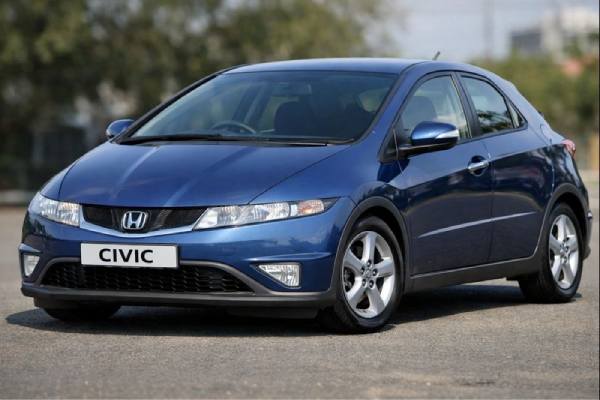
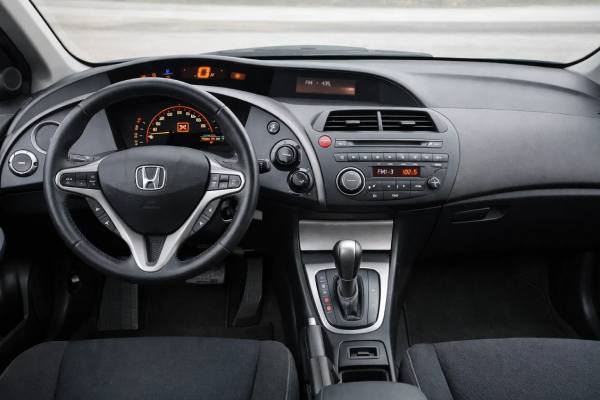
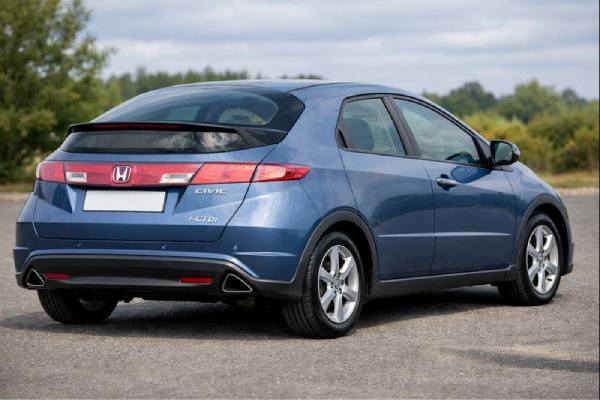
The 8th-generation Honda Civic hatchback with the 2.2 i-CTDi (N22A2) is one of those “engine-first” cars that still works as a daily driver. The body is compact and easy to place, while the diesel powertrain brings real, usable torque for highway merges, hills, and full-load driving. It’s also a model where the long-term experience depends less on the badge and more on how it was used: lots of short trips can load the EGR and intake with soot, while sustained runs tend to keep it happier. Expect a tight manual gearbox feel, stable high-speed manners, and fuel economy that can still beat many newer petrol cars—if you maintain the air, fuel, and boost systems properly.
Quick Specs and Notes
- Strong mid-range pull makes it easy to drive in traffic and effortless on motorways.
- Efficient at steady speeds; best results come from long runs, not short stop-start trips.
- Durable bottom end when oil quality and change frequency are taken seriously.
- Watch for soot-related issues (EGR/intake) and clutch/dual-mass flywheel wear on higher-mileage cars.
- Typical oil service: every 10,000–15,000 km (6,000–9,000 mi) or 12 months, whichever comes first.
Guide contents
- FK3 Civic 2.2 diesel in focus
- N22A2 specs and measurements
- Trims, safety, and driver tech
- Known faults, recalls, and fixes
- Maintenance plan and buyer checks
- Real driving and economy
- Rivals: Golf, Focus, and others
FK3 Civic 2.2 diesel in focus
In the 2005–2011 window, the Civic hatchback’s 2.2 i-CTDi setup stands out because it feels “bigger” than the car’s footprint suggests. The body is compact, but the drivetrain behaves like a larger motorway car: it settles at speed, carries momentum easily, and responds well to mid-throttle inputs thanks to diesel torque. The N22A2 is also a Honda-designed diesel, not a rebadged unit, and it shows in the smoothness and the way it revs for a diesel—useful when you need a gear longer through a bend or on a climb.
Ownership, however, is not one-size-fits-all. This Civic is happiest when it sees full operating temperature regularly. If it lived on short urban trips, the soot management parts (EGR system, intake tract, and sometimes turbo control hardware) can become the dominant story. If it spent its life doing longer commutes, the engine often feels crisp and consistent even at higher mileage—provided the oil was changed on time and the correct filters were used.
Chassis-wise, the hatch has a firm, controlled character. It’s not a luxury ride, but it’s stable and predictable, and the steering gives enough information to place the car accurately. The practical advantage is that it can feel sporty without demanding constant attention. As a used buy today, the best examples are those with evidence of preventative work: clean air path, healthy clutch and flywheel, and no lingering boost or EGR faults. Get those right, and you end up with a diesel Civic that still makes sense as an efficient, dependable daily.
N22A2 specs and measurements
Below is a focused technical snapshot for the FK3 2.2 diesel (N22A2). Some figures vary by market, wheel size, and trim; use these as a strong baseline and verify against your VIN-specific documentation.
Powertrain and efficiency
| Item | Specification |
|---|---|
| Code | N22A2 (2.2 i-CTDi) |
| Engine layout and cylinders | Inline-4, DOHC, 4 valves/cyl (16 total) |
| Bore × stroke | 85.0 × 97.1 mm (3.35 × 3.82 in) |
| Displacement | 2.2 L (2204 cc) |
| Induction | Turbocharged (diesel) |
| Fuel system | Common-rail direct injection |
| Compression ratio | 16.7:1 |
| Max power | 140 hp (103 kW) @ 4,000 rpm |
| Max torque | ~340 Nm (251 lb-ft) @ 2,000 rpm |
| Timing drive | Chain |
| Rated efficiency (typical NEDC-era figures) | ~5.3–5.8 L/100 km (44–53 mpg US / 49–53 mpg UK) |
| Real-world highway @ 120 km/h (75 mph) | ~5.5–6.7 L/100 km (35–43 mpg US / 42–51 mpg UK) |
Transmission and driveline
| Item | Specification |
|---|---|
| Transmission | 6-speed manual |
| Drive type | FWD |
| Differential | Open (traction/stability systems vary by trim) |
Chassis and dimensions
| Item | Specification |
|---|---|
| Suspension (front/rear) | MacPherson strut / torsion beam (market-dependent tuning) |
| Steering | Electric power steering |
| Brakes | 4-wheel discs (sizes vary by trim/market) |
| Common tyre sizes | 205/55 R16 or 225/45 R17 (varies) |
| Length / width / height (typical 5-door) | ~4,245 / 1,765 / 1,460 mm (167.1 / 69.5 / 57.5 in) |
| Wheelbase | ~2,635 mm (103.7 in) |
| Turning circle (kerb-to-kerb) | ~10.8 m (35.4 ft) |
| Kerb weight | ~1,350–1,450 kg (2,976–3,197 lb) |
| Fuel tank | ~50 L (13.2 US gal / 11.0 UK gal) |
| Cargo volume (typical hatch) | ~485 L (17.1 ft³) seats up; ~1,350 L (47.7 ft³) seats down |
Performance (typical, stock)
| Metric | Result |
|---|---|
| 0–100 km/h (0–62 mph) | ~8.5–9.5 s (depends on test conditions) |
| Top speed | ~205–210 km/h (127–131 mph) |
Fluids and service capacities (common guidance)
| Item | Specification (verify by VIN) |
|---|---|
| Engine oil | ACEA C3-type low-ash where required; commonly 5W-30; ~5.5–6.0 L (5.8–6.3 US qt) with filter |
| Coolant | Honda Type 2-style long-life coolant; ~6–7+ L (varies by bleed method) |
| Manual transmission fluid | Honda MTF-type; ~2.0–2.3 L (2.1–2.4 US qt) |
| A/C refrigerant | R134a (charge varies by system) |
Electrical (typical)
| Item | Specification |
|---|---|
| 12V battery | Commonly 45–60 Ah class (market fitment varies) |
| Glow plugs | Diesel-specific (type varies by model year) |
Safety and driver assistance (era-correct)
| Item | Notes |
|---|---|
| Crash ratings | Vary by year/test protocol and market; verify by your local rating body |
| Core safety systems | ABS and stability/traction systems common; equipment varies by trim/year |
| ADAS | Generally minimal by modern standards (no AEB/ACC on most versions of this era) |
Trims, safety, and driver tech
For the FK3 2.2 diesel, trims and option structures vary widely by country, but the buying logic stays consistent: focus on mechanical condition first, then pick equipment that matches your use. Many markets offered a ladder that roughly maps to entry, mid, sport-styled, and premium. On the outside, wheel size is often the quickest indicator—16-inch wheels on comfort/efficiency trims, 17-inch on sportier or higher grades. Inside, climate control type (manual vs automatic), audio controls, and seat material are common tells.
Trims and options that matter mechanically
- Wheel and tyre packages: Bigger wheels can sharpen steering response but also increase tyre cost and can make the ride harsher on broken pavement. If your roads are rough, a 16-inch setup is often the better ownership choice.
- Brakes and suspension tuning: Some trims receive firmer damping or slightly different anti-roll bar tuning. It won’t transform the car, but it can change how composed it feels on fast roads.
- ESP/VSA availability: Stability control became more common as the model years progressed and as markets standardized safety equipment. If you drive in snow or heavy rain, prioritize cars that clearly have stability control and matching warning lights at key-on.
- Convenience packages: Keyless entry, upgraded audio, and heated seats add comfort but also add more electrical components that can age. They’re not deal-breakers—just check everything works.
Safety ratings: how to interpret them
Crash-test results depend on the test body, the year, and the protocol version. A “star rating” from one year does not translate directly to another year because the scoring requirements changed. When you shop, treat ratings as a general indicator of structural design and restraint performance, then confirm the specific result that matches your body style and model year in your region.
Safety systems and what you’ll actually live with
- Airbags: Front airbags are standard; side and curtain airbags depend on trim/market and sometimes model year. Confirm by checking A-pillar tags and the dash/seat labels, not just seller descriptions.
- Child-seat provisions: Most cars of this era support ISOFIX/LATCH in many markets, but not always on all rear seating positions. If you need child seats, physically confirm the anchors and access.
- Braking and stability: ABS is expected; stability/traction systems vary. If equipped, be aware that wheel speed sensors and steering angle calibration matter—after alignment work or steering rack replacement, a proper scan-tool calibration may be required to avoid warning lights.
- Headlights: Lighting performance depends heavily on lens condition and bulb choice. Cloudy lenses can make night driving feel dramatically worse than it should; restoring them is often one of the highest-value improvements.
Known faults, recalls, and fixes
This Civic diesel can be very durable, but it has predictable “aging patterns.” Think in terms of soot management, boost control, and drivetrain wear items. Below is a practical map by prevalence and cost tier.
Common issues (high prevalence)
- EGR valve and intake soot buildup (medium cost):
Symptoms: Hesitation, uneven idle, reduced power, limp mode, excessive smoke under load.
Likely cause: Short trips and low-load use increase soot deposits in the EGR valve and intake tract.
Remedy: Diagnose with scan data first (requested vs actual EGR, MAF readings). Clean or replace EGR components where appropriate, and address the driving pattern (regular full-warm runs). If the intake is heavily restricted, removal and cleaning may be required. - Boost leaks from hoses/intercooler plumbing (low–medium cost):
Symptoms: Whistling, oily mist around joints, low boost, sluggish pull, underboost codes.
Likely cause: Aging rubber hoses and clamps; oil vapour can soften hoses over time.
Remedy: Pressure-test the charge system, replace compromised hoses, and ensure clamps seal correctly. - Clutch and dual-mass flywheel wear (high cost):
Symptoms: Rattle at idle, vibration on take-off, slipping under torque in higher gears, harsh engagement.
Likely cause: High torque + city driving + towing/overloading habits accelerate wear.
Remedy: Replace as a set when symptoms are clear. Also inspect engine mounts—worn mounts can mimic drivetrain shudder.
Occasional issues (moderate prevalence)
- Turbo actuator/control problems (medium–high cost):
Symptoms: Intermittent limp mode, inconsistent power delivery, overboost/underboost faults.
Likely cause: Soot and heat cycling affect variable-geometry control and vacuum/actuation hardware (where fitted).
Remedy: Confirm control signals and mechanical movement. Avoid “parts darts”; proper diagnosis saves money. - Diesel fuel system sensitivity (medium–high cost):
Symptoms: Hard starts, rough running, rail pressure codes, injector correction outliers.
Likely cause: Poor fuel quality, overdue fuel filter changes, air leaks at filter housing or lines.
Remedy: Replace fuel filter on schedule, check for air ingress, test injectors if corrections are excessive.
Rare but important
- Cooling system neglect (medium cost):
Symptoms: Overheating under load, poor cabin heat, coolant loss.
Likely cause: Old coolant, small leaks, or a stuck thermostat.
Remedy: Pressure-test, fix leaks early, and keep the correct coolant type.
Recalls, service campaigns, and verification
Even if the car drives well, always verify recall completion and service actions by VIN through official channels in your market. Treat seller claims as unverified until you see paperwork or a dealer record printout. For this generation, pay extra attention to safety-related campaigns (airbags, electrical items) that may have been updated over many years.
Maintenance plan and buyer checks
A good maintenance approach for the FK3 diesel is built around two ideas: keep lubrication and filtration strong, and prevent soot/boost issues before they become fault codes. If you want the car to feel “tight” at 250,000+ km, you maintain it like a torque engine, not like a budget commuter.
Practical maintenance schedule (typical, adjust for use)
| Item | Interval (distance/time) | Notes |
|---|---|---|
| Engine oil and filter | 10,000–15,000 km or 12 months | Short-trip cars should use the shorter interval. |
| Fuel filter | 30,000–40,000 km or 2 years | Earlier if fuel quality is inconsistent. |
| Engine air filter | 20,000–30,000 km | More often in dusty areas. |
| Cabin air filter | 15,000–30,000 km or yearly | Helps HVAC performance and window fogging. |
| Coolant | 5 years, then per manufacturer schedule | Use the correct long-life coolant type. |
| Brake fluid | Every 2 years | Moisture control matters for pedal feel and ABS longevity. |
| Manual transmission fluid | 80,000–120,000 km | Earlier if shifting feels notchy or history is unknown. |
| Serpentine belt and tensioner | Inspect every service; replace by condition | Replace at first signs of cracking/noise. |
| Glow plugs | Inspect by symptoms; often 120,000–180,000 km | Prioritize before winter if cold starts worsen. |
| Suspension and alignment | Inspect yearly | Tyres tell the truth—look for uneven wear. |
Fluid specs and “decision-grade” numbers
- Oil: Use a quality diesel-rated oil that matches the emissions equipment your car actually has. If your version uses a particulate filter, low-ash oil is especially important.
- Coolant: Stick to the correct long-life coolant type; mixing types can reduce corrosion protection.
- Manual gearbox: Use the correct MTF-type fluid; wrong viscosity can hurt shift quality when cold.
Buyer’s guide: what to check on a test drive
- Cold start behavior: It should start cleanly without extended cranking. Excessive smoke or hunting idle suggests fuel/air/EGR issues.
- Boost delivery in 3rd/4th gear: Roll into throttle from ~1,800 rpm; power should build smoothly. Surging, limp mode, or flat spots point to boost leaks, EGR problems, or turbo control faults.
- Clutch and flywheel: Try a higher-gear pull at low rpm; slipping shows up under torque. Listen for rattles at idle with clutch engaged/disengaged.
- Cooling stability: After a longer drive, fans should behave normally and temperature should stay steady.
- Chassis noises: Front lower arm bushings, drop links, and wheel bearings are common wear points.
- Brakes: Check for rear caliper drag (hot wheel, poor coast-down) and pulsing under braking.
Long-term durability outlook
Mechanically, the N22A2 can do high mileage if the car avoids chronic short-trip use and receives consistent oil and filter service. The expensive moments usually come from drivetrain wear (clutch/DMF) or from letting soot and boost leaks compound until the engine runs out of “adjustment room.” Preventative care is cheaper than reactive repairs on this platform.
Real driving and economy
The diesel Civic hatch’s defining trait is how relaxed it feels at everyday speeds. Where many small diesels of the era feel strained when pushed, the 2.2 tends to stay composed. The torque peak arrives early enough that you can short-shift around town, yet the engine still has usable rev range when you need to hold a gear through a sweeping on-ramp. The 6-speed manual is a big part of the experience: it lets you keep the engine in the sweet spot without constant shifting, and the long top gear supports low noise and good economy on the motorway.
Ride, handling, and NVH (noise, vibration, harshness)
- Straight-line stability: Confident at speed, especially with good tyres and correct alignment.
- Cornering balance: Predictable and safe; it prefers smooth inputs rather than abrupt mid-corner throttle changes.
- Steering: Accurate for a daily driver; feel is more “light and quick” than “heavy and textured.”
- Braking feel: Generally consistent if the rear calipers are healthy and brake fluid is fresh.
- Cabin noise: Diesel clatter is most noticeable at cold start and low rpm. At steady highway speeds, tyre noise often dominates—wheel choice matters.
Powertrain character
Turbo lag is present if you drop below the effective boost range, but in normal driving it’s easy to avoid. The engine likes being loaded from around 1,700–1,900 rpm upward. If you consistently lug it well below that range, it can feel grumpy and can contribute to soot buildup over time.
Real-world efficiency
Expect the best numbers on long, steady runs:
- City-heavy driving: Often ~6.8–8.0 L/100 km (29–35 mpg US / 35–42 mpg UK), depending on traffic and temperature.
- Highway (100–120 km/h): Often ~5.5–6.7 L/100 km (35–43 mpg US / 42–51 mpg UK).
- Mixed use: Commonly ~6.0–7.2 L/100 km (33–39 mpg US / 39–47 mpg UK).
Cold weather can add meaningful consumption because diesels take longer to warm up and cabin heat demand is high. If your commute is short, the solution is not “drive it gently”—it’s drive it long enough to fully warm up, periodically, so the engine and exhaust systems can stabilize.
Key metrics that change the verdict
The car’s passing performance is more relevant than the headline 0–100 time. In-gear pull from 80–120 km/h is strong for the class, which is why these Civics feel so capable on European-style roads.
Rivals: Golf, Focus, and others
If you’re cross-shopping the FK3 2.2 diesel today, you’re usually comparing it to other mid-2000s to early-2010s European hatchbacks with proven diesel options. The “right” choice depends on whether you value engine character, chassis feel, parts pricing, or cabin refinement.
Volkswagen Golf 2.0 TDI (Mk5/Mk6 era)
- Why the Golf wins: Broad parts availability, strong aftermarket support, often a more mature cabin feel and quieter cruising.
- Why the Civic wins: The Honda diesel can feel smoother and more eager in the upper rev range, and many owners prefer the Civic’s reliability profile when maintained carefully.
- Decision tip: Choose the best-maintained example; both can be excellent, both can be expensive when neglected.
Ford Focus TDCi (Mk2 era)
- Why the Focus wins: Steering and chassis balance are a benchmark; it’s often the most “natural” handler in the class.
- Why the Civic wins: Strong motorway composure and a drivetrain that can feel more robust if the maintenance history is clean.
- Decision tip: If you prioritize handling feel above all else, the Focus is hard to beat. If you prioritize long-run durability and consistency, the Civic can be the safer bet.
Mazda3 diesel (era-dependent availability)
- Why Mazda wins: Driving position and steering response can be excellent; interiors often age well if cared for.
- Why Civic wins: The Honda diesel’s torque delivery and real-world economy are often stronger, and the Civic has a very “engineered” feel to controls.
- Decision tip: Rust/corrosion checks matter a lot on many Mazdas of the era—inspect thoroughly.
BMW 118d (E87 era)
- Why BMW wins: Premium feel, rear-wheel-drive balance, strong long-distance comfort (spec dependent).
- Why Civic wins: Lower complexity, generally lower running costs, and easier “DIY-friendly” maintenance.
- Decision tip: If your budget is fixed, a well-kept Civic often beats a tired premium car.
Bottom line
The FK3 2.2 i-CTDi is at its best for drivers who do regular longer trips and want torque with sensible fuel use. Against rivals, it’s rarely the quietest or plushest, but it can be one of the most satisfying “daily diesels” when it’s maintained with intent rather than just serviced to the minimum.
References
- HONDA CIVIC 2006 2006 (Manufacturer Press Release)
- VIN Decoder | NHTSA 2025 (Recall and VIN Verification Tool)
- Honda Owners Manuals | All Cars | Owners | Honda UK 2025 (Owner Information)
Disclaimer
This article is for informational purposes only and is not a substitute for professional diagnosis, inspection, or repair. Specifications, torque values, service intervals, and procedures vary by VIN, market, model year, and equipment; always verify details using official service information for your specific vehicle.
If this guide helped, please consider sharing it on Facebook, X (Twitter), or your favorite forum/community to support our work.