
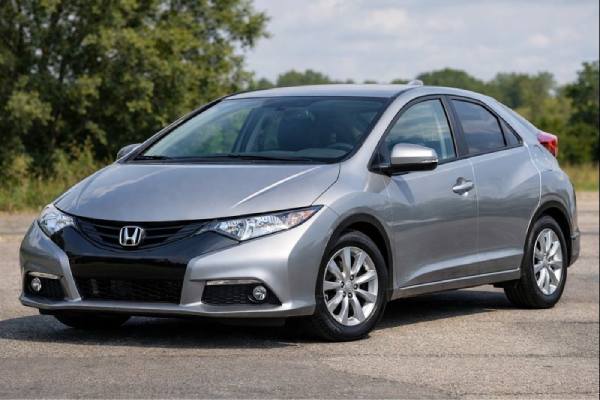
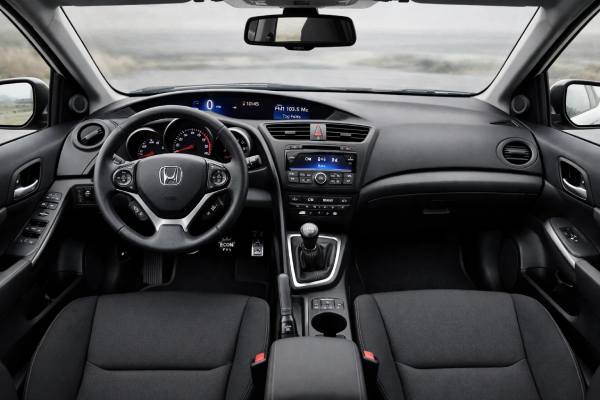
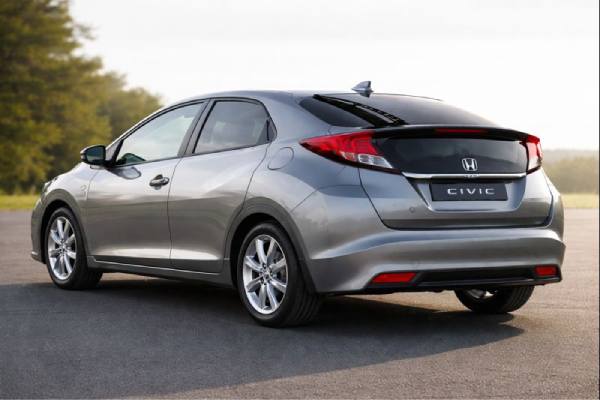
The 2012–2014 Honda Civic (FK3) with the 2.2 i-DTEC (N22B4) is one of the more “engine-led” Civics of its era: a strong, long-stroke diesel tuned for real mid-range pull, paired with a 6-speed manual and front-wheel drive. In daily use, it stands out for relaxed motorway cruising, low official CO₂ figures for its output, and the practical Civic packaging that makes the cabin easy to live with.
Ownership is usually straightforward when the service history is consistent and the car sees regular longer runs. The main caveat is that modern emissions hardware (especially the DPF and EGR system) dislikes repeated short trips, and a neglected diesel can become an expensive “catch-up” project. If you match the car to the right driving pattern and maintain it on time, the FK3 2.2 i-DTEC remains a capable, efficient long-distance hatch.
What to Know
- Strong 350 Nm torque delivery makes it an effortless motorway and hill-climb car, even when loaded.
- Official combined consumption can be around 4.2 L/100 km (56.0 mpg US / 67.3 mpg UK) on the standard tyre setup.
- Practical hatch packaging with a 50 L fuel tank suits long-range use.
- Short-trip driving increases risk of DPF saturation and EGR soot buildup over time.
- Sensible oil service cadence: 10,000–15,000 km or 12 months (use the shorter interval for city-heavy use).
Contents and shortcuts
- FK3 Civic diesel in depth
- N22B4 specs and capacities
- Trim levels, safety, and tech
- Known weak points and fixes
- Service schedule and buying checks
- On-road performance and economy
- Against Golf, Focus, and Astra
FK3 Civic diesel in depth
Think of the FK3 2.2 i-DTEC as a Civic built around “usable muscle,” not headline horsepower. Peak output is a healthy 150 PS (150 hp) with a wide band of torque, and the engineering emphasis shows up in the way the car covers ground: low effort at motorway speeds, fewer downshifts on gradients, and a calm, long-legged feel that suits long commutes.
Under the skin, this European-market Civic uses a MacPherson strut front and torsion beam rear layout. The rear beam is often discussed as a compromise versus multi-link rivals, but Honda tuned it for stability, predictability, and compact packaging. In practice, that means good straight-line composure and a rear end that resists “wallow” when the car is loaded—useful for family duty and luggage-heavy travel.
The N22B4 diesel itself is the star. It is a transverse inline-four with DOHC and four valves per cylinder, fed by common-rail injection and a variable-geometry turbocharger. Honda focused heavily on friction reduction and combustion efficiency for this generation, aiming to cut consumption and CO₂ without losing the strong pull that makes a 2.2-litre diesel appealing. That balance is the core advantage of this model: it feels “bigger-engined” than its official economy figures suggest.
Where this FK3 can disappoint is also typical of modern diesels. The same emissions systems that enable low official CO₂—DPF (diesel particulate filter), EGR (exhaust gas recirculation), sensors, and control strategies—want regular heat cycles and steady-state driving. Owners who do mostly short, cold trips can see warning lights, rising oil level concerns (fuel dilution during regeneration on some driving patterns), and higher maintenance spend than expected.
The best way to judge whether this Civic fits you is to be honest about usage. If you mostly drive 20–40 km at a time with regular motorway runs, the FK3 diesel makes sense. If you mainly do five-kilometre errands in stop-start traffic, a petrol Civic (or a hybrid in other model lines) is usually the more forgiving choice.
N22B4 specs and capacities
Below are the key technical figures commonly referenced for the 2012–2014 Civic 2.2 i-DTEC in Europe. Some items (especially service-fill capacities and certain brake dimensions) can vary by market, wheel package, and supplier updates, so treat them as planning numbers and verify against VIN-specific service documentation.
Powertrain and efficiency
| Item | Specification |
|---|---|
| Engine code | N22B4 (2.2 i-DTEC) |
| Layout and cylinders | Transverse inline-4, DOHC, 4 valves/cyl (16V) |
| Bore × stroke | 85.0 × 96.9 mm (3.35 × 3.81 in) |
| Displacement | 2.2 L (2,199 cc) |
| Induction | Turbocharged (variable-geometry turbo) |
| Fuel system | Common rail direct injection |
| Compression ratio | 16.3:1 |
| Max power | 150 hp (110 kW) @ 4,000 rpm |
| Max torque | 350 Nm (258 lb-ft) @ 2,000 rpm |
| Emissions standard | Euro 5 (market-dependent calibration) |
| Official economy (combined) | 4.2 L/100 km (56.0 mpg US / 67.3 mpg UK) |
| Official economy (urban / extra-urban) | 5.1 / 3.7 L/100 km (typical published values) |
| CO₂ | 110 g/km (typical published value) |
| Real-world highway @ 120 km/h | Often ~5.0–6.0 L/100 km depending on tyres, wind, temperature, and load |
Transmission and driveline
| Item | Specification |
|---|---|
| Drive type | FWD |
| Gearbox | 6-speed manual |
| Clutch | Single-plate dry clutch (dual-mass flywheel common on diesels) |
| Final drive ratio | 3.045 (typical published value) |
Chassis, dimensions, and weights
| Item | Specification |
|---|---|
| Suspension (front / rear) | MacPherson strut / torsion beam axle |
| Steering | Electric power steering |
| Turning circle (at wheels) | ~5.24–5.54 m (wheel/tyre dependent) |
| Brakes | Ventilated front discs, rear discs (diameter varies by trim) |
| Wheels and tyres (common) | 205/55 R16 or 225/45 R17 (market/trim dependent) |
| Length / width / height | 4,285 / 1,770 / 1,472 mm (168.7 / 69.7 / 58.0 in) |
| Wheelbase | 2,605 mm (102.6 in) |
| Ground clearance | ~150 mm (5.9 in) |
| Kerb (curb) weight | ~1,363 kg (3,006 lb) |
| GVWR / max permitted weight | ~1,910 kg (4,211 lb) |
| Fuel tank | 50 L (13.2 US gal / 11.0 UK gal) |
| Cargo volume | 477 L seats up; ~1,210 L seats folded (method can vary) |
Performance
| Item | Specification |
|---|---|
| 0–100 km/h (0–62 mph) | ~8.5 s |
| Top speed | ~217 km/h (135 mph) |
| Braking distance | Strongly tyre-dependent; verify with a test source for your tyre size |
Service planning (typical ranges)
| Fluid / item | Typical spec guidance (verify by VIN) |
|---|---|
| Engine oil | Low-SAPS oil suitable for DPF-equipped diesels; many markets specify 0W-30 or 5W-30 depending climate |
| Manual transmission fluid | MTF specification (Honda MTF or equivalent) |
| Coolant | Long-life coolant, usually 50/50 premix or concentrate mixed to 50% |
| A/C refrigerant | Often R134a on this era (charge varies by equipment) |
| Glow plugs | Diesel uses glow plugs (no spark plug gap) |
Trim levels, safety, and tech
Equipment on the FK3 diesel varies significantly by country and year, so it helps to think in “functional groups” rather than exact trim names. Most markets offered a ladder from value-oriented grades (cloth seats, smaller wheels, simpler audio) to high-spec versions with navigation, upgraded lighting, and more driver assistance. On the used market, condition and history matter more than the badge—provided you know what features you want and what they imply for repair costs.
Trims and options that change ownership
Key differences that commonly affect driving feel, running costs, or repair complexity:
- Wheel size (16 vs 17 in): 17-inch packages look sharper and can improve turn-in, but they typically increase tyre cost and can make the ride firmer on rough roads.
- Lighting: higher grades may add HID/LED elements or auto high-beam features; headlamp units can be expensive if damaged.
- Infotainment and navigation: factory navigation and premium audio are nice but can complicate upgrades and fault tracing if the unit develops glitches.
- Parking aids and camera: helpful for daily use; check that sensors are consistent and that the camera image is clean and stable.
- Climate control: automatic climate is common on higher trims and generally reliable, but compressor and condenser repairs are not cheap.
Quick identifiers for the 2.2 diesel setup:
- “i-DTEC” badging (market-dependent), diesel filler restrictions (misfuel guard on many versions), and a tachometer that reflects a diesel’s lower rev range.
- 6-speed manual is typical; if you see a different drivetrain combination, double-check the exact variant.
Safety ratings and crash structure
This generation of Civic achieved a strong reputation in European crash testing for its time, with a 5-star overall result under the applicable test protocol and high sub-scores in adult and child occupant protection. It also benefited from Honda’s body structure approach and standard stability control in most markets. Remember that crash-test protocols evolve; what matters is that the car offers a solid baseline of passive safety plus modern-enough restraint design.
Safety systems and driver assistance
Commonly fitted safety hardware includes:
- Multiple airbags (front, side, and full-length curtain airbags on many versions)
- ABS with electronic brakeforce distribution, stability control, and traction control
- ISOFIX/LATCH mounting points (typically on the rear outboard seats)
Driver-assistance availability varies by grade:
- Adaptive Cruise Control (ACC) and Collision Mitigation Braking System (CMBS) were offered on some higher trims/option packs in certain markets. If equipped, confirm proper operation and insist on correct calibration procedures after windscreen replacement or front-end repairs, as sensor alignment can affect performance.
If safety tech is important to you, shop by verified equipment list and VIN decoding, not by trim name alone.
Known weak points and fixes
The FK3 2.2 i-DTEC can be dependable, but it is not immune to the “diesel reality” of soot management and wear items loaded by torque. Below is a practical map of issues by prevalence and cost tier. Exact rates depend heavily on driving pattern and maintenance quality.
Common and usually moderate-cost
- DPF loading (short-trip use):
Symptoms: DPF warning light, frequent regeneration, reduced performance, higher fuel use.
Likely cause: repeated cold starts and low-load driving preventing full regeneration.
Remedy: change driving pattern (regular sustained runs), diagnose ash loading, check pressure sensors, and avoid “parts darts.” In severe cases, professional cleaning or DPF replacement is required. - EGR valve and cooler soot buildup:
Symptoms: hesitation, rougher idle, smoke, fault codes, reduced economy.
Cause: soot accumulation accelerated by city driving and extended service intervals.
Remedy: cleaning or replacement depending on condition; verify that related sensors and vacuum/actuation systems are healthy. - Boost leaks (hoses and intercooler plumbing):
Symptoms: whooshing under load, oily mist around joints, limp mode in some cases.
Cause: aging hoses, clamps, or intercooler end-tank leaks.
Remedy: pressure test intake tract; replace hoses/clamps as needed.
Occasional but can become expensive
- Clutch and dual-mass flywheel wear (torque-driven):
Symptoms: slipping under load, vibration, rattling at idle, shudder on take-off.
Typical window: often shows up in higher-mileage cars, or earlier with heavy city driving or aggressive launches.
Remedy: clutch kit plus DMF as required; do not ignore early shudder because it can accelerate wear. - Turbo control issues (actuator/sensor faults):
Symptoms: inconsistent boost, limp mode, fault codes.
Cause: actuator problems, vacuum control faults (where applicable), sensor drift, or soot-related sticking.
Remedy: proper diagnostics first; a “new turbo” is not the default answer.
Rare, but high consequence if ignored
- Cooling system neglect:
Symptoms: temperature instability, coolant loss, overheating.
Cause: aging hoses, radiator/condenser damage, or water pump wear.
Remedy: fix leaks promptly and keep coolant service current—diesels run high cylinder pressures and do not tolerate overheating well.
Recalls, TSBs, and service actions
Rather than memorizing a list, treat recalls as a verification task:
- Run a VIN recall check using an official manufacturer recall page.
- Ask for dealer documentation showing completion dates.
- Confirm that any safety-related campaigns (airbags, seatbelt components, etc.) were performed.
A well-kept diesel Civic is defined as much by “proof of correct work” as by the absence of warning lights during a test drive.
Service schedule and buying checks
A diesel Civic rewards consistency. The goal is to keep oil quality high (protecting turbo and timing hardware), keep soot systems functioning (DPF/EGR), and avoid deferred maintenance stacking into a large bill.
Practical maintenance schedule
Use the vehicle’s service minder where applicable, but the intervals below are a sensible planning baseline:
- Engine oil and filter: every 10,000–15,000 km or 12 months. Choose the shorter interval for city-heavy driving, frequent cold starts, or lots of idling. Always use the correct low-SAPS oil for DPF-equipped diesels.
- Air filter: inspect every service; replace about 30,000 km (more often in dusty areas).
- Cabin filter: about 15,000–30,000 km or yearly if you want consistent HVAC performance.
- Fuel filter: commonly 60,000–90,000 km (dirty fuel or water contamination can cause expensive issues).
- Coolant: often 5 years / 100,000 km initial, then 3 years thereafter (verify the exact coolant type and interval for your market).
- Brake fluid: every 2–3 years regardless of mileage.
- Manual gearbox fluid: consider 80,000–120,000 km if you keep the car long term; it can improve shift feel and longevity.
- Aux belt and tensioner: inspect regularly; replace by condition or around 100,000–160,000 km depending climate and noise.
- Timing drive: generally chain-driven on this engine family—plan inspections for abnormal noise, timing-related fault codes, or correlation issues rather than a fixed replacement interval.
- Battery and charging system: load-test yearly in cold climates; replacement is often needed every 4–6 years depending on usage.
Buyer’s checklist for the FK3 2.2 diesel
Bring this list to the inspection:
- Service records: oil services on time, correct oil type noted, and proof of fuel filter changes.
- DPF health: ask about regeneration frequency; look for warning lights, stored codes, or signs of repeated short-trip use.
- Clutch and flywheel: test a higher-gear pull from low rpm; watch for slipping or vibration.
- Boost integrity: listen for hissing/whooshing under load; check for oil misting around intercooler joints.
- Cooling system: stable temperature, no sweet smell, no coolant residue.
- Brakes and tyres: uneven tyre wear can indicate alignment or suspension wear; check for caliper drag.
- Rust and water ingress: inspect hatch seals, door bottoms, and underbody seams—especially in salted-winter regions.
- Electrics: confirm all locks, windows, infotainment functions, and parking aids work consistently.
Long-term outlook: if the car’s life has included regular longer drives and timely oil changes, the 2.2 i-DTEC tends to age well. If it has lived as a city-only diesel, budget for emissions and clutch-related catch-up work.
On-road performance and economy
The FK3 2.2 i-DTEC feels fast in the way drivers actually experience speed: strong torque at everyday revs, quick overtakes without drama, and relaxed cruising. With around 350 Nm available in the mid-range, the car does not need to be revved hard to make progress. The 6-speed manual complements this character by letting you sit at low rpm on the motorway, which supports both comfort and fuel economy.
Ride, handling, and NVH
- Ride: generally controlled and composed at speed. On 17-inch wheels, sharp-edged bumps can be more noticeable, while 16-inch setups tend to round off poor surfaces better.
- Handling balance: predictable front-led grip with stable rear behaviour. The torsion beam rear is tuned for security, and the car remains steady on sweeping curves and in crosswinds.
- Steering: the electric system is light and easy in town; feedback is adequate rather than “old-school hydraulic.”
- Noise: diesel combustion and tyre noise are the main contributors. A well-maintained engine should not sound harsh; excessive clatter can indicate neglected servicing or mounting issues.
Real-world efficiency
Official combined economy for this configuration can be about 4.2 L/100 km, but real-world results depend heavily on speed and trip length:
- City-heavy: often 6.0–7.5 L/100 km, especially in winter or with repeated short trips (and this is the worst case for DPF health).
- Steady motorway (100–120 km/h): commonly 5.0–6.0 L/100 km depending on wind, tyres, and load.
- Mixed use: typically lands between those extremes.
A useful ownership habit is to give the car a longer run (for example 20–30 minutes at steady speed) regularly. That supports exhaust temperature management and reduces the chance of soot-related problems.
Key metrics that matter
- 0–100 km/h: about 8.5 seconds gives it genuinely brisk real-world pace for a family hatch.
- Top speed: around 217 km/h where legal and safe, reflecting the engine’s long-legged gearing and power.
- Range: with a 50 L tank, long-distance range can be excellent when driven sensibly—one reason this variant appeals to commuters.
If you want a Civic that behaves like a compact grand tourer, this is the version that gets closest within the 2012–2014 European lineup.
Against Golf, Focus, and Astra
In the 2012–2014 market context, the FK3 2.2 diesel competed with strong alternatives: Volkswagen Golf 2.0 TDI, Ford Focus 2.0 TDCi, and Vauxhall/Opel Astra 2.0 CDTi among them. Each rival has a slightly different “personality,” so the right choice depends on your priorities.
Where the Civic 2.2 i-DTEC tends to win
- Effortless torque delivery: the Honda’s mid-range strength makes overtakes easy and reduces shifting fatigue.
- Long-distance economy potential: official figures are strong, and real-world motorway economy can be very good when the car is used as intended.
- Practical packaging: the Civic’s cabin and hatch usability remains a core advantage, especially for owners who mix commuting with family duties.
- Driving stability: the chassis is confidence-inspiring at speed, with a “settled” feel that suits motorway travel.
Where key rivals can be stronger
- Ride sophistication on rough roads: some multi-link competitors can feel more polished at low speeds over broken surfaces, especially on larger wheels.
- Cabin materials and infotainment polish: certain trims of the Golf (in particular) may feel more premium, depending on year and equipment.
- Diesel emissions tolerance in city use: this is less about brand and more about diesel reality, but if your driving is mostly urban, any diesel hatchback can be the wrong tool—some buyers are simply better served by petrol.
Which buyer should choose the FK3 diesel?
Pick this Civic if you:
- drive frequent longer trips,
- want strong real-world passing power, and
- value a practical hatch with a reputation for solid engineering.
Consider a petrol alternative if you:
- do mainly short trips, school runs, and stop-start commuting,
- cannot guarantee regular longer drives, or
- want the simplest ownership path over maximum torque.
Done right, the FK3 2.2 i-DTEC is a capable, efficient long-distance Civic that still feels purposeful years later.
References
- 2012 Honda Civic 5-Door 2011 (Press Kit)
- New Honda Civic 5 Door Receives 5-star Euro NCAP Overall Safety Rating and Advanced NCAP Award for Safety Innovation | Honda Global Corporate Website 2012 (Safety Rating)
- Honda Civic 2012 (Safety Rating)
- Honda Owners | Recalls and Updates | Honda UK 2025 (Recall Database)
- Check if a vehicle, car seat, tyre or component has been recalled – GOV.UK 2025 (Recall Database)
Disclaimer
This article is for informational purposes only and is not a substitute for professional diagnosis, inspection, or repair. Specifications, torque values, service intervals, and procedures can vary by VIN, market, model year, and equipment. Always verify details using official owner and service documentation for the exact vehicle you are working on.
If you found this guide useful, please consider sharing it on Facebook, X (Twitter), or your favourite forum to help support our work.