
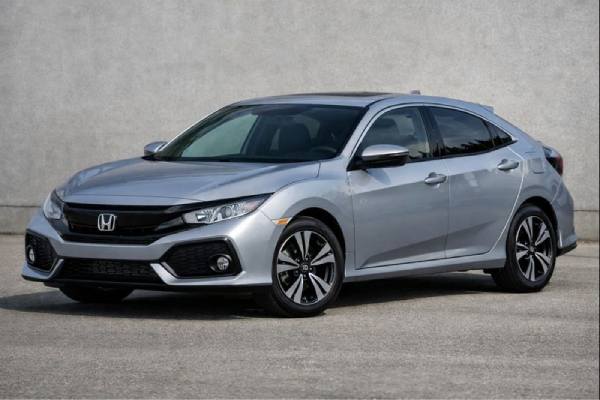
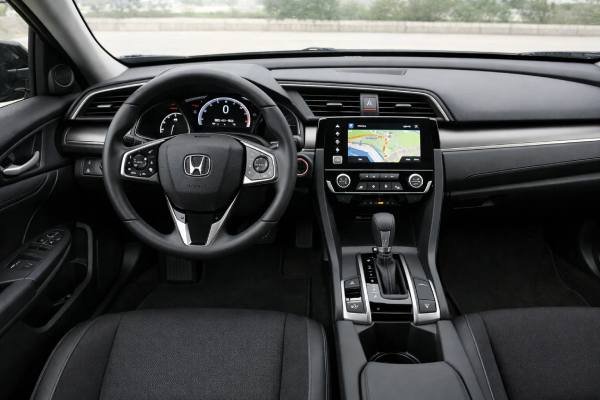
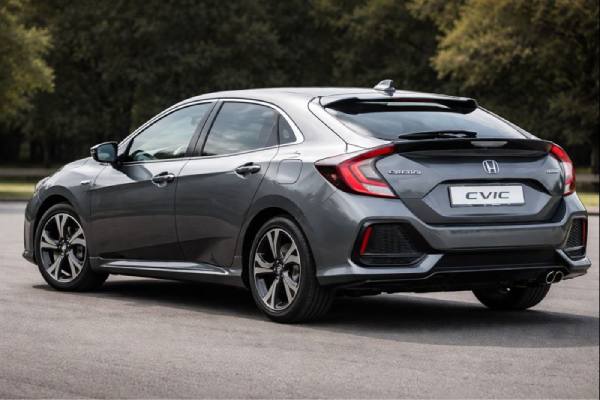
The Honda Civic FK4 with the L15B7 1.5-liter turbo is the “do-it-all” Civic for drivers who want a practical hatchback shape without giving up modern powertrain engineering. Its small-displacement turbo uses direct injection and a broad torque curve to feel stronger in daily driving than the horsepower number suggests, especially from 1,800–3,500 rpm. FK4 models were commonly sold with both a 6-speed manual and an automatic (CVT) depending on market and trim—so manuals showing up in earlier writeups is usually a content-bias issue, not a rule of the car.
Where ownership gets interesting is heat and fuel management: the turbo and DI system reward clean oil, correct spark plugs, and consistent fuel quality. Get the service rhythm right and the FK4 delivers low running costs, strong safety performance, and a cabin and chassis that still feel current today.
Owner Snapshot
- Strong mid-range pull and easy overtakes for a 1.5-liter, especially on the CVT calibration
- Hatchback packaging is genuinely useful, with a low load lip and flexible rear seating
- Good passive safety fundamentals and widely available stability and traction systems
- Watch for cold-climate short-trip oil dilution and follow oil level checks closely
- Plan an oil and filter service about every 12 months or 10,000–15,000 km (6,000–9,000 mi), depending on use
Contents and shortcuts
- FK4 model and engine profile
- Technical specs and dimensions
- Trims, options, and safety tech
- Reliability patterns and known faults
- Maintenance plan and buying advice
- Real-world driving and efficiency
- FK4 vs key hatchback rivals
FK4 model and engine profile
The FK4 Civic hatch sits in the 10th-generation Civic family and is best understood as a balanced “daily performance” package: a roomy hatch body, a stiff chassis, and a small turbo engine tuned for usable torque. The L15B7 is a 1,498 cc inline-four with direct injection (DI) and a turbocharger, paired most commonly to either a 6-speed manual or a continuously variable transmission (CVT). In many markets the rated output is around 174 hp (130 kW), while some calibrations list slightly higher figures; the driving feel is more important than the headline number because boost and gearing dominate real-world pace.
Engineering-wise, this powertrain is designed around efficiency and emissions compliance: DI helps mixture control, and the turbo allows a smaller engine to behave like a larger one when asked. The tradeoff is that maintenance quality matters more than on older port-injected, naturally aspirated Civics. Oil condition (and correct viscosity) is crucial for turbo bearing life, timing-chain health, and cam phasing. Fuel quality and injector cleanliness influence cold starts and long-term smoothness.
The FK4 hatch also benefits from a chassis that tends to feel more “European” than older Civics: stable at speed, eager to change direction, and well damped over uneven pavement. It’s not a Type R, but the steering and brake tuning are confident enough that you can enjoy back-road driving without punishing yourself on a commute.
Ownership priorities come down to three themes:
- Choose the right gearbox for your use. The CVT suits heavy traffic and relaxed cruising; the manual is simpler and more engaging but can see clutch wear if driven hard in stop-start conditions.
- Treat heat management as normal. Turbo engines run hot. Cooling system health, correct spark plugs, and clean oil reduce “small problems” becoming expensive ones.
- Understand your market’s equipment. Safety and infotainment packages vary widely by country and model year, so you should verify what your specific VIN was built with.
Technical specs and dimensions
Below are commonly cited specifications for the FK4 hatch with the L15B7 turbo engine. Treat them as a practical reference: exact values can vary by year, market, trim, wheel size, and transmission.
Powertrain and efficiency
| Item | Specification |
|---|---|
| Engine code | L15B7 |
| Layout and cylinders | Inline-4 (I-4), DOHC, 16 valves (4 valves/cyl) |
| Bore × stroke | 73.0 × 89.4 mm (2.87 × 3.52 in) |
| Displacement | 1.5 L (1,498 cc) |
| Induction | Turbocharged |
| Fuel system | Direct injection (DI) |
| Compression ratio | ~10.3:1 (market dependent) |
| Max power | ~174 hp (130 kW) @ ~6,000 rpm (varies by calibration) |
| Max torque | ~220–240 Nm (162–177 lb-ft) @ ~1,700–5,500 rpm (varies by transmission/market) |
| Timing drive | Chain |
| Rated efficiency | Typically ~6.0–7.5 L/100 km (31–39 mpg US / 37–47 mpg UK), depending on test cycle and gearbox |
| Real-world highway @ 120 km/h | Commonly ~6.5–8.0 L/100 km (29–36 mpg US / 35–43 mpg UK), strongly affected by tyres and wind |
| Aerodynamics | Cd not consistently published by market; drag-area improvements are often quoted rather than a single Cd number |
Transmission and driveline
| Item | Specification |
|---|---|
| Transmission (manual) | 6-speed manual (market/trim dependent) |
| Transmission (automatic) | CVT automatic (market/trim dependent) |
| Drive type | FWD |
| Differential | Open (some trims may use brake-based torque vectoring via stability control) |
Chassis and dimensions
| Item | Specification |
|---|---|
| Suspension (front/rear) | MacPherson strut / multi-link |
| Steering | Electric power steering (EPS) |
| Brake type | 4-wheel discs (front ventilated) |
| Wheel and tyre examples | 215/50 R17, 235/40 R18 (varies by trim) |
| Length / width / height | ~4,500 / 1,800 / 1,430 mm (177.2 / 70.9 / 56.3 in), market dependent |
| Wheelbase | ~2,700 mm (106.3 in) |
| Turning circle (kerb-to-kerb) | ~11.0 m (36.1 ft), tyre dependent |
| Kerb weight | ~1,300–1,420 kg (2,866–3,131 lb), equipment dependent |
| Fuel tank | Often ~46–47 L (12.2–12.4 US gal / 10.1–10.3 UK gal) |
| Cargo volume | Hatchback varies by method; typically ~420 L seats up and ~1,200+ L seats down (market dependent) |
Performance and capability
| Metric | Typical result |
|---|---|
| 0–100 km/h (0–62 mph) | ~8.0–9.0 s (transmission and tyres matter) |
| Top speed | ~200–210 km/h (124–131 mph), market dependent |
| Braking 100–0 km/h | Commonly ~35–38 m (tyres and pad compound dominate) |
| Towing | Often limited or not rated in some markets; where rated, modest figures apply |
| Roof load | Commonly 50–75 kg (110–165 lb), depends on roof type and rails |
Fluids and service capacities (typical ranges)
Because these values can change by gearbox and market, use them as a decision guide—not a final workshop spec.
| Fluid | Specification | Typical capacity |
|---|---|---|
| Engine oil | 0W-20 (spec varies by market), synthetic recommended | ~3.5–4.0 L (3.7–4.2 US qt) |
| Coolant | Long-life coolant (premix or 50/50) | ~4.5–6.0 L (4.8–6.3 US qt) |
| Manual trans fluid | Honda MTF-equivalent | ~1.7–2.0 L (1.8–2.1 US qt) |
| CVT fluid | Honda HCF-2-equivalent | service-fill varies; drain/refill often ~3–4 L |
| Brake fluid | DOT 3/4 depending on market | as required |
| A/C refrigerant | R-1234yf or R-134a (varies by year/market) | label under hood specifies charge |
Electrical basics
| Item | Typical spec |
|---|---|
| Alternator output | Commonly ~100–130 A, market dependent |
| 12 V battery | Often ~45–60 Ah (size and CCA vary by climate package) |
| Spark plugs | Iridium type; gap and part number vary by market |
Safety and driver assistance (high level)
| Category | Notes |
|---|---|
| Crash ratings | Strong Euro NCAP performance is common for this generation; verify by exact year/test |
| Core safety | ABS, ESC/stability control, traction control; multiple airbags |
| ADAS | Market/trim dependent: AEB, lane support, adaptive cruise, traffic sign recognition in some packages |
Trims, options, and safety tech
FK4 trim structure depends heavily on country, but the pattern is consistent: the base car is strong mechanically, while comfort and driver-assist features scale with trim level. When you’re shopping or writing about this car, it helps to separate mechanical differences (what changes how it drives and wears) from equipment differences (what changes daily convenience and safety features).
Trims and option themes you’ll see
Most FK4 markets group equipment into familiar “ladder” trims:
- Entry or mid trims usually focus on value: smaller wheels, simpler audio, fewer sensors, and sometimes fewer ADAS features. Mechanically, these cars can be excellent because they often run narrower tyres and lighter wheels, which helps ride comfort and fuel economy.
- Sport-oriented trims typically add larger wheels/tyres, firmer suspension tuning, and cosmetic packages. They look great, but they can ride more firmly and cost more in tyres and brakes.
- Top trims add the comfort and tech that make the FK4 feel modern: better sound insulation, upgraded infotainment, dual-zone climate in many markets, and the most complete driver-assist suite.
Quick identifiers that help in the field:
- Wheel size and tyre profile: 17s often point to comfort trims; 18s are common on sport and high trims.
- Front camera and radar modules: a camera housing near the mirror and a radar unit behind the grille usually indicate a more advanced ADAS package.
- Interior tells: stitched dash panels, upgraded seat fabric/leather, and larger infotainment screens often correlate with higher trims.
Safety ratings and what they mean for owners
This Civic generation generally performs well in modern crash testing thanks to a rigid passenger cell, effective restraint systems, and a structure designed to manage small-overlap type impacts better than older compacts. When you cite safety, be careful to match:
- Test year (protocols change)
- Body style (hatch vs sedan can be treated differently by some agencies)
- Equipment (AEB and lane support can influence “assist” scores)
Safety systems and ADAS (what to confirm)
Core systems you should expect on most FK4 builds:
- Front airbags, side torso airbags, and curtain airbags
- ABS with electronic brake-force distribution and brake assist
- Electronic stability control (ESC) and traction control
- ISOFIX/LATCH child seat anchors (usually outboard rear seats)
Common ADAS features when equipped:
- AEB (automatic emergency braking): camera/radar-based, may require calibration after windshield replacement or front-end repairs.
- Lane keeping support: relies on camera visibility; alignment, ride height changes, and windscreen condition can affect performance.
- Adaptive cruise control: excellent for motorway use; radar aiming matters after collisions.
Service implication worth stating clearly: if the FK4 you’re covering has camera/radar systems, owners should budget for calibration time after certain repairs (windscreens, bumper work, front suspension geometry changes). This isn’t a Honda-only issue; it’s part of modern ownership.
Reliability patterns and known faults
The FK4’s reliability story is mostly positive, but it’s not “set-and-forget” like older naturally aspirated Civics. The turbo DI powertrain is robust when maintained correctly, and most expensive problems come from ignored small signals: oil level drifting upward, a cooling system that’s slightly weak, or a gearbox fluid that’s never changed.
Below is a practical way to map issues by prevalence and cost tier.
Common issues (most likely to appear)
- Oil dilution in cold, short-trip use (cost tier: medium if ignored)
Symptoms: oil level rising on dipstick, fuel smell in oil, rougher cold starts, heater takes longer to get strong heat.
Root cause: repeated cold starts and short runs can leave fuel in the oil on some DI turbo setups.
Remedy: shorten oil change intervals, verify PCV system health, ensure the engine reaches full temperature regularly, and use the correct oil spec. If the oil level rises noticeably, change oil early and investigate driving pattern. - A/C performance issues (cost tier: medium)
Symptoms: weak cooling, hissing, intermittent performance.
Root cause: can be condenser leaks, seals, or compressor-related issues depending on market and year.
Remedy: pressure test, dye test, repair with correct refrigerant type, and confirm proper charge weight from the under-hood label. - Infotainment glitches and sensor “ghost” warnings (cost tier: low to medium)
Symptoms: random reboots, Bluetooth dropouts, occasional warning lights that clear.
Root cause: software bugs, weak 12 V battery, or connector sensitivity.
Remedy: update software where available, test battery under load, clean/secure grounds, and scan for stored codes rather than guessing.
Occasional issues (not rare, but not expected on every car)
- CVT shudder or flare when fluid is old (cost tier: medium)
Symptoms: judder on takeoff, inconsistent ratio changes, odd “rubber band” feel beyond normal CVT behavior.
Root cause: aged CVT fluid, heat, or improper service procedure.
Remedy: drain-and-refill with correct CVT fluid and follow the specified procedure; avoid universal fluids. - Clutch wear on manuals (cost tier: medium)
Symptoms: slipping under boost in higher gears, high bite point, shudder.
Root cause: torque + city driving + aggressive launches.
Remedy: driving style adjustments, inspect for leaks, replace clutch kit when worn; consider engine and transmission mounts at the same time if vibration is present. - Turbo-related noises (cost tier: low to high depending on cause)
Symptoms: wastegate rattle, whistling, or boost inconsistency.
Root cause: actuator play, heat cycling, or intake leaks.
Remedy: confirm boost control operation and inspect hoses and clamps before assuming the turbo is failing.
Rare but expensive issues (watch for during inspection)
- Fuel system component faults (high tier): high-pressure pump or injector issues can be costly and may present as misfires under load.
- Overheating episodes (high tier): a single serious overheat can shorten head gasket life and turbo longevity.
Recalls, TSBs, and verification
Because year and market matter, the best practice is process-driven:
- Check official recall databases for your region and model year.
- Ask the seller for dealer invoices or printouts showing recall completion.
- Verify software updates if the car has ADAS, because some fixes are delivered as calibrations rather than part replacements.
Maintenance plan and buying advice
A turbo DI Civic rewards owners who maintain it like a “small performance car,” not like an old commuter. The goal is simple: keep oil clean, keep temperatures stable, and keep fluids correct for the transmission type.
Practical maintenance schedule (distance or time, whichever comes first)
| Item | Typical interval | Notes |
|---|---|---|
| Engine oil and filter | 10,000–15,000 km (6,000–9,000 mi) or 12 months | Short trips, cold climates, and heavy traffic justify shorter intervals |
| Oil level check | Monthly | Especially important if you suspect oil dilution |
| Engine air filter | 30,000–45,000 km (18,000–28,000 mi) | More often in dusty areas |
| Cabin air filter | 15,000–30,000 km (9,000–18,000 mi) | Helps HVAC performance and cabin comfort |
| Spark plugs | 160,000 km (100,000 mi) typical | Use the correct heat range and type; turbo engines are sensitive |
| Coolant | Often 10 years/200,000 km first, then 5 years/100,000 km | Verify the exact schedule for your market |
| Brake fluid | Every 3 years | Moisture control protects ABS hardware |
| Brake inspection | At every service | Pad thickness, rotor condition, slide pins |
| Manual gearbox oil | 60,000–100,000 km (37,000–62,000 mi) | Earlier if shifting feel worsens |
| CVT fluid service | 40,000–60,000 km (25,000–37,000 mi) severe use | Heat and traffic justify shorter intervals |
| Tyre rotation | 10,000–12,000 km (6,000–7,500 mi) | Helps front tyres last on FWD cars |
| Alignment check | Yearly or after tyre replacement | Protects tyres and stability |
| 12 V battery test | Yearly after year 3 | Weak batteries trigger odd electronic behavior |
Fluid choices (ownership-friendly guidance)
- Engine oil: use the viscosity and spec stated for your market. If you drive short trips in winter, oil quality matters more than chasing long intervals.
- CVT fluid: use the specified CVT fluid, not a universal substitute. Incorrect fluid can change belt/pulley behavior and wear.
- Coolant: stick to long-life coolant types; mixing incompatible formulas can reduce corrosion protection.
Buyer’s checklist (what to look for in 30 minutes)
Cold start and idle
- Listen for roughness, misfire, or hunting idle.
- Check for warning lights and scan if possible.
Oil condition
- Verify level and look for fuel smell or an unusually thin feel.
- Ask how often oil was changed and what oil was used.
Cooling system
- Inspect coolant level and look for staining around hose joints and radiator area.
- Confirm the cabin heater gets hot—slow heat can correlate with short-trip use and oil dilution patterns.
Transmission behavior
- Manual: check for clutch slip under boost in higher gears.
- CVT: look for smooth ratio changes and no shudder on gentle takeoff.
Suspension and brakes
- Listen for front end knocks (links/bushings).
- Check for uneven tyre wear (alignment or worn bushings).
Electronics
- Test Bluetooth, reverse camera, parking sensors, and ADAS warnings if equipped.
- A weak 12 V battery can mimic bigger problems, so voltage testing is valuable.
Long-term durability outlook
With consistent oil service, correct transmission fluid, and a healthy cooling system, the FK4 is a strong long-term bet. The biggest risks usually come from neglected maintenance, repeated short-trip driving without oil strategy, and owners who modify the tune without upgrading maintenance discipline.
Real-world driving and efficiency
The FK4’s driving experience is defined by “usable speed.” You don’t need to rev it hard to make progress, and that’s exactly what a small turbo is supposed to deliver.
Ride, handling, and NVH
On typical tyres, the FK4 feels planted at motorway speeds and composed on uneven pavement. The chassis communicates more than older Civics without becoming harsh, especially on 17-inch wheels. Step up to 18-inch wheels and you usually gain steering sharpness but lose some ride compliance—pothole impacts feel louder and tyre noise can rise on coarse surfaces.
Steering is light in parking maneuvers and firms up as speed increases. It’s not a hydraulic “feedback” system, but the FK4 is predictable: you can place the front end cleanly, and the rear follows without drama. Braking feel is usually consistent; most complaints trace back to tyre quality, cheap pads, or neglected slide pins rather than the core hardware.
Powertrain character: manual vs CVT
- Manual (6MT): more engaging and often feels slightly punchier in the midrange because you choose the ratio and hold boost where you want it. The clutch can be a wear item if driven hard in traffic.
- CVT automatic: smoother in stop-start conditions and surprisingly quick when you ask for full acceleration. Under heavy throttle it holds revs, which some drivers interpret as “noise,” but it’s the gearbox doing its job.
Low-rpm torque is the headline feature. In daily use the engine feels strongest from about 1,800 rpm upward, which is why it’s so comfortable in rolling traffic and on inclines.
Real-world efficiency
Expect fuel economy to be highly sensitive to speed, temperature, and tyre choice.
- City driving: typically ~7.5–9.0 L/100 km (26–31 mpg US / 31–38 mpg UK), higher in winter.
- Highway at 100–120 km/h: often ~6.5–8.0 L/100 km (29–36 mpg US / 35–43 mpg UK).
- Mixed use: commonly ~6.8–8.5 L/100 km (28–35 mpg US / 34–42 mpg UK).
Cold weather deserves a specific note: short trips can reduce economy and may worsen oil dilution risk. If most drives are under 10 km (6 mi), a shorter oil interval is a sensible cost-control move.
Key performance metrics that matter
In real life, the FK4’s most meaningful metric is passing response. The turbo torque makes 60–100 km/h (37–62 mph) and 80–120 km/h (50–75 mph) acceleration feel confident, especially with the CVT keeping the engine in its boost band. Tyres, not horsepower, often become the limiting factor for traction in wet conditions—good tyres improve both safety and drivability more than most bolt-on mods.
FK4 vs key hatchback rivals
The FK4 Civic 1.5T sits in a crowded, highly competent class. Its advantage is balance: strong torque, useful packaging, and a chassis that feels mature. Your best rival depends on what you value.
Versus Volkswagen Golf (1.4/1.5 TSI)
Why the Golf wins
- Often feels more premium in cabin materials and sound insulation.
- Strong infotainment integration in many trims.
Why the FK4 wins
- Usually sharper steering and a more “alive” chassis feel.
- Long-term running costs can be lower if the FK4 has a clean service history and fewer complex options.
Choose the Golf if you want a quieter, more upscale cabin feel. Choose the FK4 if you want a more engaging everyday drive with strong practicality.
Versus Ford Focus (1.0/1.5 EcoBoost)
Why the Focus wins
- Excellent steering and handling reputation, especially in certain generations and trims.
Why the FK4 wins
- The 1.5T Civic often feels more consistent in power delivery and easier to drive smoothly in traffic.
- Cabin packaging and hatch usability are typically strong points.
This one is close: the Focus can be a dynamic benchmark, but the FK4 often feels like the safer “all-rounder” choice.
Versus Mazda3 (2.0/2.5 Skyactiv)
Why the Mazda3 wins
- Naturally aspirated engine simplicity and a refined interior in many trims.
- Smooth throttle response without turbo heat and boost-management concerns.
Why the FK4 wins
- Stronger low-end torque and easier passing without downshifting.
- Often better suited to drivers who want relaxed performance at low rpm.
Pick Mazda3 if you prioritize refinement and simplicity. Pick FK4 if you want effortless midrange pull.
Versus Toyota Corolla (turbo in some markets, hybrid in others)
Why the Corolla wins
- Hybrid variants can deliver excellent city efficiency and low brake wear.
- Strong reliability image and broad parts support.
Why the FK4 wins
- More enthusiastic chassis feel and stronger performance character in many configurations.
- Hatch packaging can be more versatile depending on year and body.
If you want maximum economy and low-stress ownership, Corolla hybrid is tough to beat. If you want a more spirited, torque-rich drive without moving to a hot hatch, the FK4 remains a standout.
References
- 2017 Honda Civic 2017 (Manufacturer Press Kit)
- Assessment details 2017 (Safety Rating Datasheet)
- Gas Mileage of 2017 Honda Civic 2017 (Official Fuel Economy Data)
- Vehicle Detail Search – 2017 honda civic | NHTSA 2017 (Recall and Safety Database)
Disclaimer
This article is for informational purposes only and is not a substitute for professional diagnosis, inspection, or repair. Specifications, torque values, fluid capacities, service intervals, and procedures can vary by VIN, market, model year, and installed equipment. Always verify details against the official Honda owner’s manual and service documentation for the exact vehicle you are working on.
If this guide helped, please consider sharing it on Facebook, X (Twitter), or your favorite forum to support our work.