
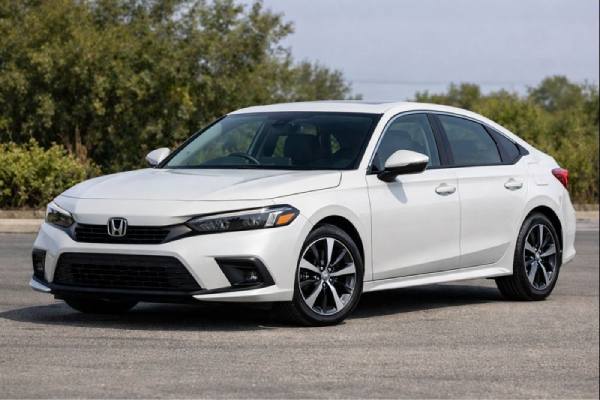
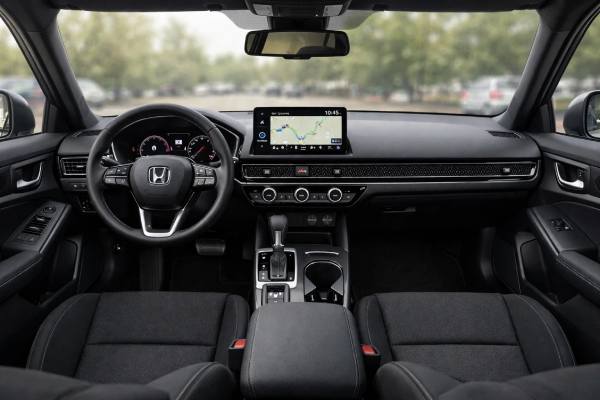
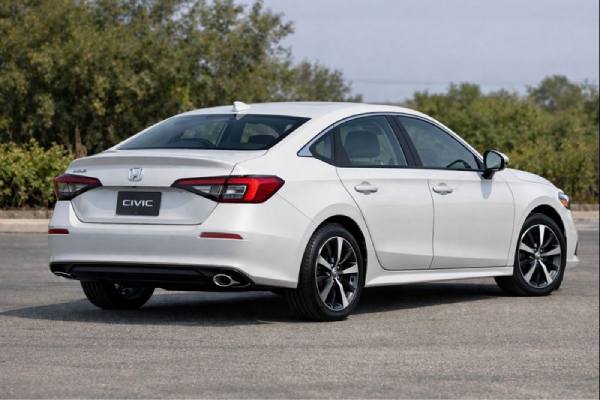
The FL1-era Honda Civic with the 1.5-liter turbo (L15B7) aims to be the “do-it-all” Civic: compact outside, genuinely usable inside, and efficient without feeling underpowered. This powertrain’s strength is its wide torque band, which makes daily driving easy and keeps highway merging calm even with passengers. Under the surface, you get direct injection, an intercooled turbocharger, and a modern safety structure paired with a deep driver-assistance suite in many markets. Ownership success mostly comes down to choosing the right trim, keeping up with fluid quality (especially on the turbo engine and CVT), and confirming recall work has been completed. If you want a Civic that balances comfort, technology, and real-world pace without Type R costs, this is one of the most sensible picks in the segment.
What to Know
- Strong midrange torque makes it feel quicker than the horsepower number suggests, especially from 1,700–4,500 rpm.
- Practical hatchback packaging with a low load floor and a large seats-down cargo area in most markets.
- Modern safety performance and widely available driver-assistance features make it an easy daily car.
- Plan for more frequent oil service if you do short trips or cold starts; turbo DI engines dislike neglected oil.
- Typical interval: replace brake fluid every 3 years, regardless of mileage, to protect ABS and stability hardware.
Section overview
- FL1 Civic 1.5T in context
- L15B7 specs and capacities
- Trims, tech and safety kit
- Known faults, recalls and fixes
- Service schedule and buying checks
- On-road performance and economy
- Choosing rivals in this class
FL1 Civic 1.5T in context
The “FL1” Civic is best understood as Honda’s attempt to bring the Civic back to a clean, mature formula: solid structure, predictable handling, and straightforward controls, but with the cabin refinement and driver-assistance tech buyers now expect. In many regions, the hatchback version uses the FL1 code, while the sedan may use a related code; either way, the 1.5-liter turbo sits at the center of the range as the “right amount of everything” option.
Where the L15B7 fits
A 1.5-liter turbo Civic is not about peak horsepower. It is about usable torque at real road speeds. The turbocharged L15 family delivers its best work in the midrange, which is why it feels strong in normal traffic even if you rarely rev it to redline. For drivers moving up from older naturally aspirated Civics, the biggest change is that the engine responds more like a larger-displacement motor at low rpm, then tapers off as rpm climbs.
Why owners like it
- Balance: It is quicker than base engines without paying performance-model insurance and tire costs.
- Efficiency: Turbo torque lets you cruise with lighter throttle openings on highways.
- Usability: Hatchback packaging makes it a genuine “one car” solution for many households.
- Refinement: Compared with earlier generations, the body structure and suspension tuning reduce harshness on broken pavement.
Where ownership gets complicated
Turbo direct-injection engines reward consistent maintenance. Short trips, cold weather, and extended oil intervals can amplify issues like fuel dilution or carbon build-up on intake valves over time. If the car uses a CVT in your market, driving style and fluid service matter even more: repeated full-throttle launches and skipped CVT fluid changes can turn a smooth drivetrain into a shuddery one.
The smart way to shop
A well-bought FL1 1.5T is usually one with documented oil service, correct spark plugs, clean cooling system history, and proof of recall completion. Favor cars that were warmed up regularly and driven longer distances. If you are choosing between trims, prioritize the features you cannot add later (safety hardware, headlights, factory audio, and the wheel and tire package) and treat accessories as secondary.
L15B7 specs and capacities
Below is a focused, real-ownership spec set for the FL1 Civic with the 1.5-liter turbo (L15B7). Exact figures can vary by market, model year, emissions calibration, and trim, so treat this as a planning baseline and verify against the under-hood label and your service documentation.
Powertrain and efficiency
| Item | Specification |
|---|---|
| Code | L15B7 (market-dependent naming within the L15 turbo family) |
| Engine layout and cylinders | Inline-4, DOHC, 16 valves (4 valves/cyl) |
| Displacement | 1.5 L (1,498 cc) |
| Bore × stroke | 73.0 × 89.4 mm (2.87 × 3.52 in) |
| Induction | Turbocharged, intercooled |
| Fuel system | Direct injection (DI) |
| Compression ratio | ~10.3:1 (varies by calibration) |
| Max power | 180 hp (134 kW) @ ~6,000 rpm |
| Max torque | 240 Nm (177 lb-ft) @ ~1,700–4,500 rpm |
| Timing drive | Chain |
| Rated efficiency | Typically ~6.7–7.8 L/100 km (35–30 mpg US) depending on gearbox and wheels |
| Real-world highway @ 120 km/h | Often ~6.5–7.5 L/100 km when driven smoothly |
| Aerodynamics | Cd and frontal area not consistently published across markets |
Transmission and driveline
| Item | Specification |
|---|---|
| Transmission | Commonly CVT (some markets may offer a manual in certain years) |
| Drive type | FWD |
| Differential | Typically open; traction control brakes spinning wheel as needed |
Chassis, dimensions, and capacity
| Item | Typical specification (market and trim dependent) |
|---|---|
| Suspension (front/rear) | MacPherson strut / multi-link |
| Steering | Electric power steering (EPS) |
| Brakes | 4-wheel discs (sizes vary by trim) |
| Wheels and tyres | Commonly 16–18 in; tyre widths typically 215–235 mm |
| Length / width / height | ~4,547 / 1,802 / 1,415 mm (179.0 / 71.0 / 55.7 in) |
| Wheelbase | ~2,735 mm (107.7 in) |
| Turning circle | ~11.0 m (varies by wheel and tyre) |
| Kerb weight | Often ~1,330–1,450 kg (2,930–3,200 lb) |
| Fuel tank | ~47 L (12.4 US gal / 10.3 UK gal) |
| Cargo volume | Approx. 694 L (24.5 ft³) seats up / 1,308 L (46.2 ft³) seats down (method varies by region) |
Performance targets
| Item | Typical result |
|---|---|
| 0–100 km/h (0–62 mph) | High-7s to low-8s seconds (trim and gearbox dependent) |
| Top speed | Often ~200–210 km/h (125–130 mph), market limited |
Fluids and service capacities
| System | Specification (verify for your VIN) |
|---|---|
| Engine oil | 0W-20 meeting modern API standards; capacity ~3.7 L (3.9 US qt) with filter |
| Coolant | Honda Type 2 style premix (region equivalent); capacity varies by radiator and heater routing |
| CVT fluid | Honda HCF-2 (or region equivalent); drain-and-fill quantity often ~3–4 L |
| Brake fluid | DOT 3 (Honda spec) |
| A/C refrigerant | Varies by market; check under-hood label (often R-1234yf on newer models) |
| Key torque specs | Wheel nuts commonly ~108 Nm (80 lb-ft); confirm for your wheels |
Trims, tech and safety kit
Because the FL1 Civic is sold differently by region, “the right trim” depends on what your market bundles into each grade. Your goal is to identify which trims carry the 1.5T engine, then compare what those trims add mechanically and safety-wise.
Common trim patterns for the 1.5T
In many markets, the 1.5T appears in upper trims (examples include “EX-L” or “Touring” style grades), often paired with larger wheels and a richer interior package. Practical differences you may see:
- Wheel and tyre package: Larger wheels improve steering response but can increase road noise and replacement cost.
- Headlights: Higher trims often include better headlight performance, which matters for night safety more than many buyers expect.
- Audio and infotainment: Higher trims may add larger screens, upgraded speakers, and sometimes wireless phone integration.
- Driver assistance additions: Some markets reserve blind-spot monitoring or parking sensors for higher grades.
Quick identifiers when shopping used
- Badging and wheel design: Often the fastest visual cue, but wheels can be swapped.
- Interior tells: Seat material, climate-control layout, and speaker branding can help confirm trim.
- VIN and build sheet: The most reliable method; ask a dealer or use official build information when available.
Safety ratings: what they mean in practice
For this generation, crashworthiness performance is generally strong when tested under modern protocols. Still, ratings can differ by body style, headlight package, and optional safety equipment. When a safety award depends on “Good” headlights, the trim you choose matters.
Driver assistance and calibration considerations
Many FL1 Civics include a broad ADAS set such as automatic emergency braking, adaptive cruise control, lane-keeping support, road-departure mitigation, and traffic sign recognition (feature names vary). Two ownership points matter:
- Windshield and camera work: After windshield replacement or front-end repair, the camera and radar system may need calibration. Skipping this can cause warning lights or reduced function.
- Alignment quality: Lane support systems perform best when the car is correctly aligned and tyres are evenly worn.
Child-seat and family usability notes
Look for ISOFIX or LATCH anchors, a rear bench shape that fits your child seat, and door openings that make loading easy. The Civic’s rear seating position is usually practical, but bulky rear-facing seats can still push the front passenger forward in compact cars. Test-fit if your family setup is tight.
Known faults, recalls and fixes
A well-maintained FL1 Civic 1.5T is often dependable, but there are predictable issue patterns worth knowing. Below is a prevalence-and-severity map to help you prioritize inspections and budget planning.
Common (plan for it)
- Turbo DI carbon build-up (medium cost, later-life):
- Symptoms: Rough idle, hesitation, reduced efficiency over time.
- Likely cause: Direct injection does not wash intake valves with fuel.
- Remedy: Intake valve cleaning when symptoms appear; reduce short-trip use and keep oil service consistent.
- CVT fluid aging and shudder (medium cost):
- Symptoms: Shudder on light acceleration, inconsistent rpm behavior, delayed engagement.
- Cause: Old or overheated fluid, sometimes worsened by aggressive driving.
- Remedy: Correct-spec fluid drain-and-fill cycles, then evaluate for software updates and adaptation resets where applicable.
- Infotainment glitches (low to medium cost):
- Symptoms: Random reboots, Bluetooth dropouts, slow response.
- Cause: Software bugs or module hiccups.
- Remedy: Official software updates; confirm the car is on the latest available version.
Occasional (watch for it)
- Fuel dilution risk in severe use (medium cost if ignored):
- Symptoms: Oil smells like fuel, rising oil level, rough cold running.
- Cause: Repeated cold starts and short trips can leave fuel in the oil.
- Remedy: Shorten oil intervals, use correct oil spec, and ensure the engine reaches full operating temperature regularly.
- A/C performance issues (cost varies):
- Symptoms: Weak cooling, intermittent function, warning lights.
- Cause: Component leaks or control issues depending on market and year.
- Remedy: Proper leak diagnosis and repair; avoid “top-up only” approaches.
Rare but important (high consequence)
- Steering gearbox related service campaigns or recalls:
- Symptoms: Heavier steering effort, notchy feel, steering warning messages.
- Risk: Increased steering effort can raise crash risk.
- Remedy: Verify recall completion and follow the official repair procedure.
Recalls, TSBs, and how to verify
Do not rely on “the previous owner said it was done.” Use an official VIN check and dealer service history. For example, Honda issued a steering-gearbox related recall campaign affecting certain 2022–2025 vehicles in some markets, with a remedy involving internal parts replacement and lubricant redistribution or addition. Ask for the repair invoice or the dealer’s proof-of-completion record.
Pre-purchase checks to request
- Documented oil service intervals (date and mileage).
- Proof of CVT fluid service if mileage is higher or the car was city-driven.
- A scan for stored fault codes (engine, ABS, and ADAS modules).
- A cold-start test drive (listen for abnormal noise, check idle stability).
- Confirm recall completion using official tools and dealer records.
Service schedule and buying checks
A maintenance plan for the FL1 1.5T should match how the car is used. Turbocharged direct-injection engines thrive on clean oil and stable temperatures, and CVT-equipped cars are especially sensitive to fluid condition. If your Civic uses a maintenance minder system, treat it as the minimum baseline and adjust for severe driving.
Practical maintenance schedule
| Item | Typical interval (distance or time) | Notes |
|---|---|---|
| Engine oil and filter | 8,000–12,000 km or 6–12 months | Short trips and cold climates justify the shorter end |
| Engine air filter | 20,000–30,000 km | Earlier in dusty areas |
| Cabin air filter | 15,000–25,000 km or yearly | Reduces HVAC strain and odors |
| Spark plugs | ~160,000 km (or per schedule) | Use correct heat range and gap |
| Coolant | Often 10 years then 5 years | Verify exact spec for your market |
| Brake fluid | Every 3 years | Protects ABS and stability hardware |
| CVT fluid (if equipped) | 50,000–60,000 km (severe) | Use correct Honda CVT fluid spec only |
| Tyre rotation | 8,000–10,000 km | Helps EV-style torque wear patterns even on ICE |
| Alignment check | Yearly or with uneven wear | Critical for ADAS lane support quality |
| 12 V battery test | Annually after year 3 | Replace proactively if cranking slows |
Fluids, parts, and “do not improvise” items
- Oil: Stick to the specified viscosity and modern API category; turbo engines are hard on oil.
- CVT fluid: Use the exact Honda-approved fluid. “Universal CVT” fluids are a common source of shudder complaints.
- Coolant: Use the correct premixed long-life coolant type; mixing chemistries can create deposits.
Common reconditioning costs on used cars
Budget for tyres (especially on 18-inch trims), brake pads and rotors if the car lived in the city, and a battery if the car is at the 3–5 year mark. Also consider a “baseline service” after purchase: oil service, filters, brake fluid, and a careful inspection of charge pipes and coolant hoses.
Buyer’s checklist: 10-minute version
- Check for uneven tyre wear (alignment or suspension bushing hints).
- Confirm smooth, consistent acceleration (no CVT shudder).
- Test A/C performance at idle and at speed.
- Confirm all driver-assistance warnings are off and features function normally.
- Look for oil seepage around the valve cover and turbo plumbing connections.
- Inspect coolant level and color (no oil sheen, no crusty residue).
- Ensure steering feels even and light, without notchiness.
- Verify the car’s recall status by VIN and ask for proof of completion.
Long-term durability outlook
With correct fluids, consistent oil service, and completed recall work, this Civic powertrain can be a long-life daily driver. Neglect, short-trip-only use, and incorrect CVT fluid are the main paths to avoidable expense.
On-road performance and economy
The FL1 Civic 1.5T is not a hot hatch, but it is a genuinely quick-feeling commuter. The secret is torque delivery: it builds early and stays strong through the midrange, which is where daily driving actually happens.
Powertrain character
- Throttle response: Light throttle inputs produce real movement, so it feels more energetic than many naturally aspirated 2.0-liter compacts.
- Turbo behavior: Expect a modest ramp-in rather than a dramatic “boost hit.” Peak torque typically arrives around the high-1,000 rpm range, so you rarely need to chase rpm.
- CVT behavior (where fitted): In calm driving it can hold low rpm and cruise quietly. Under heavy throttle it will raise rpm and keep it there, which can sound busy even if the car is accelerating well. Learning to use half-throttle effectively often improves both sound and fuel economy.
Ride, handling, and NVH
The chassis tuning is usually the Civic’s standout advantage. The front end bites predictably, the rear stays composed over mid-corner bumps, and body motions feel controlled without being harsh. Wheel size matters:
- Smaller wheels (more sidewall): Better ride comfort and lower replacement cost.
- Larger wheels: Sharper response, but more impact harshness and road noise on rough surfaces.
At highway speeds, wind noise is typically moderate for the class, with tyre choice playing a big role. If you want the quietest result, prioritize touring-oriented tyres over aggressive sport patterns.
Real-world efficiency
Fuel economy depends heavily on speed and temperature. At steady highway speeds, many drivers can achieve mid-6 L/100 km figures if traffic is light and tyres are properly inflated. In city stop-and-go, especially in winter, consumption can rise notably. Turbo engines can be efficient, but only when you are not frequently using boost.
Selective performance metrics that matter
- 0–100 km/h (0–62 mph): Often in the high-7 to low-8 second range, depending on trim and gearbox.
- Passing feel: Strong in the 50–110 km/h band because torque arrives early.
- Braking confidence: Stable and easy to modulate; pad choice matters more than rotor size for normal use.
Traction and stability behavior
With front-wheel drive, traction is tyre-limited, not power-limited, in normal conditions. In wet or cold climates, a high-quality all-season or winter tyre transforms launch behavior and stability-control interventions more than any drivetrain option could in this class.
Choosing rivals in this class
The FL1 Civic 1.5T’s main selling point is balance: it blends usable power, everyday comfort, and modern safety tech into a package that does not feel “cheap” over time. Rivals often beat it in one area, but fewer match its overall spread.
When the Civic is the better pick
- You value chassis feel: The Civic often delivers more confidence on imperfect roads than many comfort-first compacts.
- You want torque without a big engine: The 1.5T makes highway and hill driving easy without major fuel penalties.
- You plan to keep it: A well-maintained Civic tends to stay tight and usable deep into ownership.
Where rivals can be stronger
- Mazda3 (often 2.0 or 2.5 NA): Typically feels more premium inside and can be quieter, but may give up rear space and cargo practicality depending on body style.
- Volkswagen Golf and related 1.5 TSI models (where sold): Strong efficiency and refined road manners; long-term costs can depend more on local parts pricing and service quality.
- Toyota Corolla (2.0 or hybrid): Hybrid versions often win urban fuel economy and low-speed smoothness; handling feel is competent but usually less engaging.
- Hyundai and Kia compacts (market dependent): Often strong value and features for money, though resale and long-term durability perceptions vary by region and model year.
Simple decision rules
- Choose the Civic 1.5T if you want the best blend of torque, handling confidence, and day-to-day usability.
- Choose a hybrid rival if most of your driving is slow urban commuting and fuel cost is the priority.
- Choose a premium-leaning compact if cabin quiet and interior materials matter more than rear space.
- If you are shopping used, prioritize the car with the best service history and completed recalls over the car with the fanciest trim badge.
References
- Civic Hatchback Specifications – 2022 Honda Civic Hatchback 2022 (Specifications)
- 2022 Honda Civic 2022 (Safety Rating)
- Official Honda Civic 2022 safety rating 2022 (Safety Rating)
- Check for Recalls: Vehicle, Car Seat, Tire, Equipment | NHTSA 2025 (Recall Database)
- RCLRPT-24V744-4093.PDF 2024 (Recall Document)
Disclaimer
This article is for informational purposes only and is not a substitute for professional diagnosis, repair, or official service guidance. Specifications, torque values, fluid types, service intervals, and procedures vary by VIN, market, model year, and equipment. Always verify details using your vehicle’s owner’s manual, official service documentation, and recall records.
If this guide helped, please consider sharing it on Facebook, X (Twitter), or your favorite forum to support our work.