
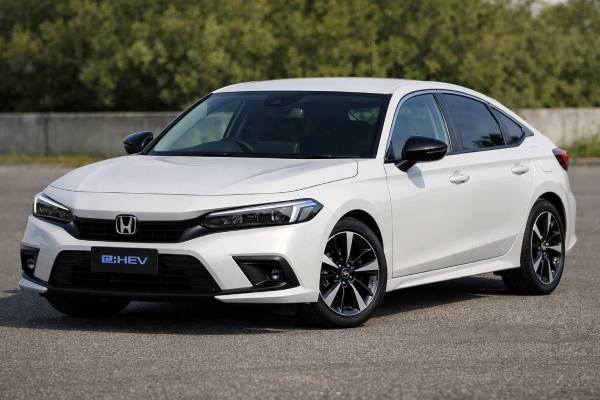
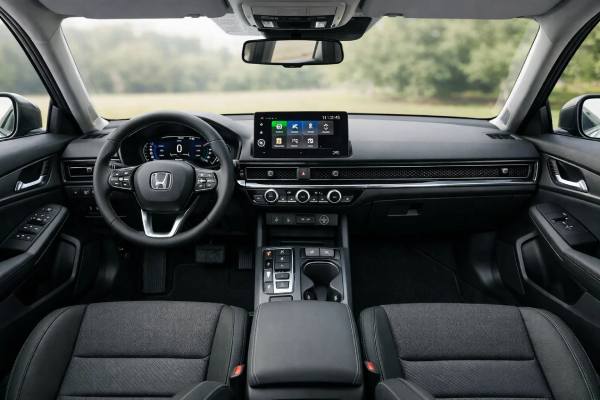
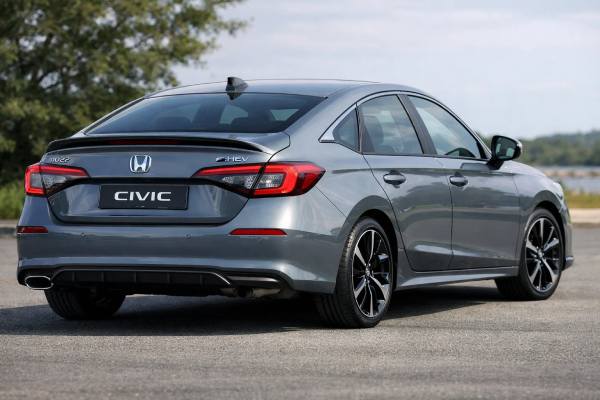
Honda’s 11th-generation Civic e:HEV (FL4) is a smart take on the “daily driver” hatchback: a practical body wrapped around a hybrid system tuned more for smooth, strong real-world pace than headline battery size. The LFC1 2.0-liter engine runs an Atkinson-style operating strategy for efficiency, while the electric motor does most of the day-to-day pushing—especially in town and rolling traffic. The result is a car that often feels like a refined EV at low speeds, yet still behaves like a normal Civic on long highway runs.
Ownership success comes down to understanding how Honda’s e:HEV system works (and how it differs from a regular automatic), staying on top of software updates, and following sensible fluid and brake maintenance. If you want quiet commuting without giving up Civic practicality, the FL4 e:HEV is one of the most well-rounded choices in its class.
What to Know
- Smooth, torque-rich response in everyday driving, with EV-like low-speed behavior and no plug-in routine.
- Strong safety baseline in most markets thanks to Honda Sensing and a modern body structure.
- Hatchback packaging: easy rear access and useful cargo volume for the segment.
- Plan for software updates and occasional infotainment quirks; keep the 12 V battery healthy.
- Typical interval: rotate tires every 10,000–12,000 km (6,000–7,500 mi) to protect handling and tire life.
Quick navigation
- Civic e:HEV FL4 in depth
- LFC1 hybrid specs table
- Grades, options, and safety tech
- Reliability patterns and recalls
- Maintenance schedule and buying advice
- Road manners and real economy
- e:HEV versus key rivals
Civic e:HEV FL4 in depth
The FL4 Civic e:HEV is best understood as a Civic hatchback built around Honda’s “electric-first” hybrid philosophy. In many situations—especially city driving—the wheels are driven mainly by the electric motor, while the gasoline engine runs in the background as an efficient generator. At higher steady speeds, a clutch can couple the engine more directly to the wheels to reduce conversion losses. This is why the Civic e:HEV can feel both smooth in traffic and relaxed on the highway, without the “rubber band” sensation some drivers associate with older CVTs.
Under the hood, the LFC1 2.0-liter engine is tuned for efficiency rather than sporty top-end power. It’s paired with a traction motor rated around 135 kW (184 PS in many European materials) and a strong 315 Nm of torque—numbers that matter because they shape how the car feels when you pull away from a stoplight or pass without a downshift. The engine itself is more modest (roughly 105 kW and 186 Nm in published specs), but the system is calibrated so the motor covers the gaps and keeps the car responsive.
From an ownership standpoint, the Civic e:HEV has three big “engineering wins”:
- Consistent drivability: You get immediate torque and smooth modulation, especially in low-speed traffic.
- Efficient real-world operation: The engine can run at efficient load points more often than in a non-hybrid.
- Simple user routine: No charging planning, no home wallbox decisions, and no range anxiety.
The trade-offs are worth understanding. First, hybrid smoothness depends heavily on calibration—so software updates can genuinely improve how the car behaves. Second, the braking system blends regenerative braking (motor slowing the car and charging the battery) with friction braking, so brake feel and pad wear don’t mirror a non-hybrid Civic. Finally, like many modern cars, the Civic e:HEV relies on cameras and radar for driver assistance; windshield replacement, wheel alignment, or suspension work can trigger recalibration needs.
In short, the FL4 Civic e:HEV is a practical hatch with a “quiet competence” personality: it rewards drivers who maintain it thoughtfully and want efficiency without giving up the familiar Civic strengths of stability, usable space, and predictable handling.
LFC1 hybrid specs table
Below are the most relevant published specifications for the Civic e:HEV (FL4). Exact values can vary by market, grade, wheel and tire package, and homologation cycle.
Powertrain and efficiency (e:HEV)
| Item | Specification |
|---|---|
| Powertrain code | LFC1 |
| Engine layout | Inline-4, DOHC |
| Displacement | 2.0 L (1,993 cc) |
| Bore × stroke | 81.0 × 96.7 mm |
| Valves | 4 per cylinder |
| Compression ratio | ~13.9:1 (published tolerance varies by source) |
| Induction | Naturally aspirated |
| Fuel system | Direct injection (market-dependent wording) |
| Engine max power | ~105 kW @ 6,000 rpm |
| Engine max torque | ~186 Nm @ 4,500 rpm |
| Electric motor max power | ~135 kW (184 PS) |
| Electric motor max torque | ~315 Nm |
| Hybrid type | Full hybrid (self-charging), Honda e:HEV |
| Rated economy (WLTP, combined) | ~4.7–5.0 L/100 km (grade dependent) |
| CO₂ (WLTP, combined) | ~108–114 g/km (grade dependent) |
Transmission and driveline
| Item | Specification |
|---|---|
| Transmission | e-CVT style hybrid drive (single-speed motor drive with clutch coupling at cruise) |
| Drive type | FWD |
| Differential | Open (traction and stability systems manage wheelspin) |
Chassis, brakes, and tires (typical)
| Item | Specification |
|---|---|
| Front suspension | MacPherson strut |
| Rear suspension | Multi-link |
| Steering | Electric power steering |
| Brakes | 4-wheel discs (exact sizes vary by market) |
| Wheels and tires | Commonly 17–18 inch wheels, grade dependent |
| Turning circle | About 11.0–11.6 m (package dependent) |
Dimensions and capacities (hatchback)
| Item | Specification |
|---|---|
| Length | ~4,551 mm |
| Width | ~1,802 mm |
| Height | ~1,408 mm |
| Wheelbase | ~2,734 mm |
| Seating | 5 |
| Fuel tank | ~40 L |
| Cargo volume (seats up) | ~410 L (VDA, market materials) |
| Cargo volume (seats down) | ~1,220 L (to roof, market materials) |
Performance and capability (published)
| Item | Specification |
|---|---|
| 0–100 km/h (0–62 mph) | ~7.8–8.1 s (grade dependent) |
| Top speed | ~180 km/h |
| Towing (braked/unbraked) | ~750 kg / 600 kg (market dependent) |
| Roof load | ~65 kg (market dependent) |
Fluids and service capacities (owner-facing essentials)
Manufacturers do not always publish complete capacities in marketing materials, and hybrid variants can differ from non-hybrids. Use these as decision-level guidance and verify for your VIN before servicing.
| Item | Typical guidance |
|---|---|
| Engine oil | 0W-20, API/SP or ACEA equivalent (market spec); capacity often ~3.7–4.2 L with filter (verify) |
| Coolant | Honda Type 2 / long-life equivalent; typically 50/50 mix unless specified otherwise (verify capacity) |
| Hybrid transaxle fluid | Honda-spec fluid for the hybrid drive (market naming varies); service interval varies (verify) |
| A/C refrigerant | Often R-1234yf on newer EU-market cars (check under-hood label) |
| Brake fluid | DOT 4 class in many markets (verify cap and manual) |
Safety and driver assistance (high level)
| Item | Notes |
|---|---|
| Crash ratings | Euro NCAP: 5-star rating for the Civic tested (see Safety section for category scores) |
| ADAS | Honda Sensing suite availability varies by market and grade |
Grades, options, and safety tech
Most FL4 Civic e:HEV markets organize the car into a small set of well-defined grades (often along the lines of Elegance, Sport, and Advance, though names differ). The key is to focus on functional differences rather than cosmetics, because those differences affect replacement cost, ride quality, and long-term satisfaction.
What typically changes by grade
- Wheel and tire size: Sport-oriented grades often use larger wheels. Larger wheels can sharpen steering response but usually increase road noise and make pothole impacts harsher. They also cost more to replace.
- Lighting: Higher trims may add adaptive high beams, cornering functions, or upgraded LED headlamps. These systems improve night driving but can be expensive if damaged.
- Seats and interior materials: Heated seats, upgraded upholstery, and power adjustments show up in higher grades. Comfort upgrades are valuable if you do long commutes.
- Infotainment and connectivity: Look for wireless smartphone integration, navigation availability, and the number of USB ports. In some markets, the difference between “good enough” and “great daily usability” is the infotainment spec.
- Driver-assistance completeness: Some markets keep the core Honda Sensing features standard, while others reserve items like blind-spot monitoring for certain grades.
Quick identifiers when shopping used
- Wheel design and diameter are often the fastest clue from photos.
- Headlamp signatures (projector vs multi-element LED designs) can hint at trim.
- Seat stitching and upholstery pattern can separate mid and high grades quickly.
- Driver display layout and infotainment screen size can indicate option packs.
Safety ratings and what they mean
For the Civic tested by Euro NCAP, the overall rating is five stars, with strong category performance across adult and child occupant protection and a solid score for Safety Assist (the category that reflects how well the driver-assistance systems performed in the test protocol). As always, note that rating protocols evolve over time, and the tested configuration may not perfectly match every market’s equipment.
Honda Sensing: what to expect
Honda Sensing is typically built around a forward camera (and, in many markets, radar) to enable:
- Autonomous Emergency Braking (AEB): Helps mitigate or avoid front collisions; performance depends on sensor cleanliness and calibration.
- Adaptive Cruise Control (ACC): Very useful for commuting; watch for how smoothly it handles cut-ins.
- Lane Keeping Assist and lane departure mitigation: Helps with highway fatigue, but its feel varies by calibration and road markings.
- Traffic sign recognition: Convenient, but can misread in unusual signage zones.
- Stability control and traction control: Especially important in a torque-rich hybrid; good tires make a bigger difference than most owners expect.
If the car has had windshield work, front bumper repairs, or suspension alignment corrections, ask for proof of ADAS calibration. Proper calibration is not just a warning-light issue—it changes how the safety systems behave.
Reliability patterns and recalls
The Civic e:HEV’s core hybrid hardware has a strong track record in Honda’s broader e:HEV family, but modern reliability is as much about software, sensors, and electronics as it is about mechanical wear. A helpful way to think about this car is: the powertrain is usually robust, while ownership friction tends to come from calibration, 12 V battery health, and infotainment behavior.
Common (more likely) issues
- Infotainment freezes or connectivity drops
Symptoms: screen reboots, wireless phone projection drops, Bluetooth instability.
Likely cause: software bugs, phone compatibility edge cases, or weak 12 V voltage.
Remedy: check for head-unit software updates; test the 12 V battery; confirm the car’s USB ports and cables are healthy. - 12 V battery sensitivity (hybrid-specific ownership behavior)
Symptoms: warning messages, odd electrical behavior after sitting, slow boot-up.
Likely cause: frequent short trips plus accessory loads, or a battery aging early.
Remedy: periodic battery testing, consider a smart maintainer if the car sits for weeks, and ensure update procedures are done with stable voltage. - Brake feel variation or low-speed brake “grab”
Symptoms: inconsistent pedal feel at very low speed, occasional noises, surface rust on discs.
Likely cause: regen-to-friction blending and light friction use.
Remedy: occasional firm stops in a safe place to clean discs; brake service based on inspection, not just mileage.
Occasional issues (moderate likelihood)
- Steering or alignment complaints
Symptoms: off-center steering wheel, pulling, uneven tire wear.
Likely cause: alignment shifts, curb impacts, or tire wear patterns.
Remedy: alignment check and correct tire pressures; rotate tires on schedule. Larger wheels amplify sensitivity. - Driver-assistance sensor faults
Symptoms: ACC or lane systems unavailable, camera warnings in heavy rain or bright glare.
Likely cause: normal sensor limitations, dirty camera area, or calibration required after repairs.
Remedy: keep camera and radar areas clean; confirm calibration after windshield or bumper work.
Rare but high-cost items to understand
- Hybrid power electronics or traction motor faults are uncommon, but expensive if out of warranty.
What to do: ensure the hybrid system warranty terms for your market are understood, and scan for stored diagnostic codes during a pre-purchase inspection. - A/C system repairs (R-1234yf markets) can be more costly than older refrigerants.
What to do: verify A/C performance and listen for compressor noise; confirm correct service equipment was used.
Recalls, TSBs, and service actions
Recall scope is market-specific, so avoid relying on “internet lists” when shopping. Instead:
- Run an official VIN check (manufacturer recall portal for your region).
- Ask a dealer to print the campaign status and confirm completion dates.
- Check for software campaigns affecting ADAS or powertrain behavior; these can materially improve the driving experience.
A pre-purchase inspection should include a full diagnostic scan, verification that warning lights are not recently cleared, and a test drive long enough for the hybrid system to warm up and cycle through EV drive, hybrid drive, and engine-coupled cruising.
Maintenance schedule and buying advice
Honda’s modern maintenance strategy often uses a maintenance minder approach, but owners still benefit from a clear baseline schedule—especially if you want long-term durability beyond the warranty window. The guidance below is designed to be practical and conservative for mixed use.
Practical maintenance schedule (distance or time)
- Engine oil and filter: every 10,000–12,000 km (6,000–7,500 mi) or 12 months, whichever comes first (follow the minder if it triggers earlier).
Why it matters: short trips and cold starts can load oil with moisture and fuel dilution even in efficient hybrids. - Cabin air filter: every 20,000–30,000 km (12,000–18,000 mi) or 12–24 months.
Tip: replace more often in dusty cities or if the windshield fogs easily. - Engine air filter: inspect every 20,000 km; replace around 30,000–60,000 km depending on dust and pollen exposure.
- Brake fluid: every 3 years is a solid rule unless your market schedule differs.
Hybrid note: regen reduces pad wear, but brake fluid still absorbs moisture over time. - Coolant: commonly long-life; plan an initial change around 8–10 years, then at shorter intervals (verify for your VIN and market).
Hybrid note: some hybrids have more than one coolant loop (engine and power electronics). Confirm what your car uses. - Spark plugs: often around 100,000–120,000 km (60,000–75,000 mi) (verify).
Hybrid note: the engine may run fewer total hours than a non-hybrid, but heat cycles still age plugs. - Hybrid transaxle fluid: consider a service around 60,000–100,000 km depending on your market guidance and driving conditions.
Why it matters: fluid condition affects bearings and reduction gears; hybrids can still shear and contaminate fluid over time. - Tire rotation and alignment check: rotate every 10,000–12,000 km; align annually or at any sign of uneven wear.
- 12 V battery test: annually after year 3, or sooner if the car sits often.
Fluid specifications and decision-level capacities
Because exact capacities and torque values vary by VIN and publication, treat these as “planning numbers,” not workshop instructions:
- Engine oil: typically 0W-20; roughly ~4.0 L with filter (confirm in the owner’s literature).
- Wheel nuts: commonly ~108 Nm (80 lb-ft) on many Hondas (confirm for your wheels).
- Oil drain plug: often in the ~30–40 Nm range (confirm).
- Spark plugs: commonly in the ~18–25 Nm range depending on plug design (confirm).
Buyer’s guide: what to inspect
- Tires: uneven wear suggests alignment issues; mismatched tires can confuse stability systems.
- Hybrid behavior: smooth transitions, no persistent warnings, and stable state-of-charge swings are what you want.
- Brakes: look for grooved discs or heavy rust if the car has done mostly short trips.
- ADAS functionality: ACC and lane support should work without repeated dropouts in normal conditions.
- A/C: verify cold output and quiet operation; repairs can be expensive in some refrigerant markets.
- Service history: prioritize documented oil services, brake fluid changes, and completed campaigns.
If you plan to keep the car long term, the “best value” version is usually the one with the safety and comfort features you’ll use daily—but without oversized wheels if your roads are rough.
Road manners and real economy
On the road, the Civic e:HEV feels like a Civic first and a hybrid second—which is a compliment. Straight-line stability is strong for the class, and the body stays composed over long highway stretches. The steering is light at parking speeds and firms up as speed builds, with a predictable on-center feel that suits commuting. In corners, the chassis is tidy and confidence-inspiring rather than playful; the rear multi-link suspension helps the car track cleanly over mid-corner bumps where simpler torsion-beam rivals can fidget.
Powertrain character: where the hybrid shines
In urban driving, the electric motor’s torque defines the experience. Pull-away is immediate, and the car often stays quiet because the engine can remain off or run at low load. When you ask for more, the engine may spin up to generate power, which can sound different from a conventional automatic (because engine speed is not always tied directly to road speed). Honda’s calibration aims to keep this natural, but you’ll still notice it during hard acceleration or steep climbs.
At highway cruise, the system typically settles down. The engine can couple more directly to the wheels under certain conditions, which reduces the “generator sensation” and helps efficiency at steady speeds. The end result is a powertrain that feels refined in normal driving, with enough surge for safe overtakes.
Ride, handling, and NVH
- Ride: generally controlled and mature. Larger wheel packages can add impact harshness.
- Braking feel: mostly natural, but low-speed blending can feel slightly different than a non-hybrid.
- Noise: good suppression for the class; tire choice is a major contributor.
Real-world efficiency expectations
Published WLTP combined figures around 4.7–5.0 L/100 km are achievable in mixed driving if you drive smoothly and keep tires properly inflated. In the real world, a helpful planning range is:
- City: ~4.5–5.5 L/100 km (52–43 mpg US; 63–51 mpg UK)
- Highway at 100–120 km/h (60–75 mph): ~5.5–6.5 L/100 km (43–36 mpg US; 51–43 mpg UK)
- Mixed: ~5.0–5.8 L/100 km (47–41 mpg US; 56–49 mpg UK)
Cold weather can add a noticeable penalty because the engine runs more to provide cabin heat and maintain battery temperature. Short trips amplify this effect.
Performance metrics that matter
In most published materials, the Civic e:HEV lands around 7.8–8.1 seconds to 100 km/h, depending on grade. More important than the number is how it delivers: the car feels quick in everyday gaps because the motor provides torque without waiting for downshifts.
e:HEV versus key rivals
The Civic e:HEV competes in a crowded space where rivals take different hybrid approaches. The best choice depends on whether you value refinement, maximum fuel economy, or driving feel.
Versus Toyota Corolla Hybrid (1.8 or 2.0)
- Civic advantages: often feels more refined at speed and more “grown up” in ride and cabin quality. The hatchback packaging is strong, and the motor-driven character can feel smooth in traffic.
- Corolla advantages: typically excellent efficiency and a long-standing hybrid reputation; in some markets it may offer lower ownership costs and wider independent-shop familiarity.
- Who should choose Civic: drivers who want a quieter, more substantial-feeling compact without going plug-in.
Versus Volkswagen Golf eTSI (mild hybrid) or similar
- Civic advantages: a full-hybrid system can deliver bigger real-world fuel savings in city driving, where mild hybrids are limited.
- Golf advantages: some drivers prefer the conventional turbo feel and transmission logic; certain trims offer a very polished interior tech experience.
- Decision tip: if your commute is stop-and-go, the Civic’s hybrid architecture usually makes more sense.
Versus Mazda3 (mild hybrid in some markets)
- Civic advantages: better fuel economy potential and a more spacious rear and cargo area in hatch form.
- Mazda advantages: often a sharper steering feel and a more “premium” cabin vibe, depending on trim.
- Decision tip: choose Mazda if driving feel is your top priority; choose Civic if efficiency and space matter more.
Versus plug-in hybrids (PHEVs)
A PHEV can beat the Civic’s running costs if you can charge reliably and your trips fit its EV range. But the Civic e:HEV wins on simplicity: no charging planning, fewer charging-related failure points, and consistent behavior whether you have access to a plug or not.
Bottom line
The Civic e:HEV is a “balanced excellence” option. It may not always be the cheapest or the absolute most efficient in every test, but it’s frequently the easiest to live with: smooth in traffic, stable at speed, and practical as a hatchback—while delivering hybrid savings without changing your routine.
References
- Honda Civic Hybrid Specifications 2025 (Specifications)
- Honda Civic 2022 (Safety Rating)
- Recalls and Updates 2025 (Recall and Service Campaign Info)
- New Civic e:HEV Price and Specification Guide 2022 (Specifications Guide)
Disclaimer
This article is for informational purposes only and is not a substitute for professional diagnosis, inspection, or repair. Specifications, torque values, service intervals, fluids, and procedures vary by VIN, market, model year, and equipment. Always verify details using your vehicle’s official owner’s manual and service documentation, and follow manufacturer guidance for ADAS calibration after repairs.
If this guide helped, please consider sharing it on Facebook, X (Twitter), or your favorite forum communities to support our work.