
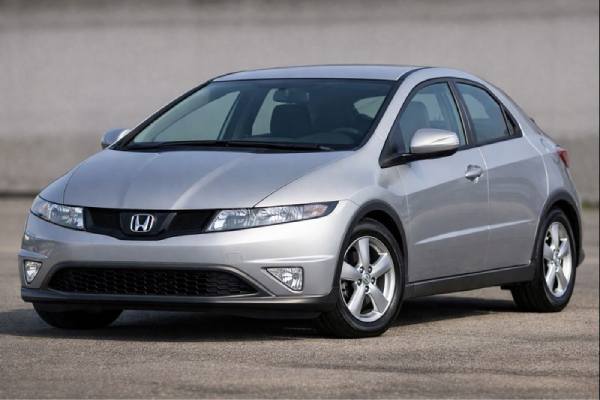
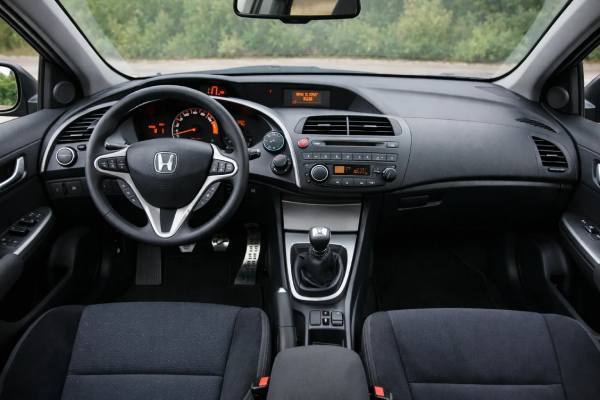
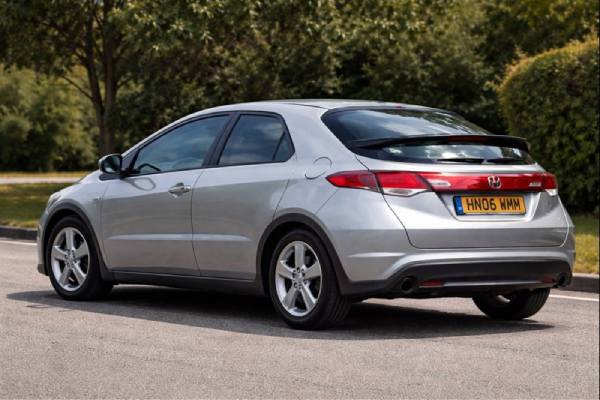
The 8th-generation Honda Civic hatchback (FN1) with the R18A2 1.8 is the “do-most-things-well” Civic of its era: simple naturally aspirated power, a timing chain, and a chassis tuned for European roads. It is not a hot hatch, but it’s quick enough to be enjoyable, efficient enough to be cheap to run, and mature enough to feel stable at motorway speeds. The big ownership story is consistency—this engine rewards regular oil changes and sensible cooling-system care, while the car’s real costs usually come from wear items, corrosion in harsh climates, and a handful of known weak spots (A/C hardware, suspension joints, and—on some markets—automated-manual quirks). Buy a clean, well-serviced example and you get an unusually practical hatch with a long-lived drivetrain and a driving feel that still holds up today.
What to Know
- Strong all-rounder: reliable NA engine, predictable handling, and practical hatch packaging.
- Timing chain and simple port injection keep routine ownership straightforward.
- Watch for corrosion (rear/underbody) and A/C or suspension wear on higher-mileage cars.
- If equipped with i-Shift, smoothness depends heavily on clutch wear and calibration.
- Plan oil service every 10,000–15,000 km (6,000–9,000 mi) or 12 months, depending on use.
Contents and shortcuts
- FN1 Civic 1.8 essentials
- R18A2 specs and capacities
- FN1 trims and safety gear
- Common problems and recalls
- Service schedule and buying tips
- Road feel and fuel use
- How it stacks up
FN1 Civic 1.8 essentials
The FN1 Civic hatchback is the European-flavoured 8th-gen Civic: a compact footprint, a tall cabin, and a chassis that feels more “grown up” than many rivals from 2005–2011. With the R18A2 1.8-litre engine (rated around 138 hp), it sits in the sweet spot of the range—noticeably stronger than the smaller 1.4s, simpler and typically cheaper to own than high-output performance trims, and less complicated than some early hybrids or diesels of the era.
Engineering highlights that matter in real ownership:
- Naturally aspirated, port-injected four-cylinder: You get linear throttle response and fewer heat-management worries than a turbo, plus less sensitivity to short-trip carbon build-up than many direct-injection engines.
- Timing chain: No scheduled timing-belt service, but the chain system still depends on clean oil and proper level checks.
- Well-judged gearing (market dependent): Many FN1 1.8 cars use a 6-speed manual; some markets offered i-Shift (an automated manual). Either can work well, but they age differently and should be evaluated differently.
- Practical interior packaging: The high rear roofline and smart seat-folding make it feel like a larger car when you’re hauling luggage, tools, or a pushchair.
On the road, the 1.8 is not a torque monster at low rpm, but it’s smooth, willing, and happier revving than many small-displacement rivals. It’s also an engine that tends to stay “honest” over time—power delivery changes gradually rather than falling off a cliff, so long as ignition, airflow, and cooling are kept healthy.
Who it suits best: drivers who want an easy daily with good motorway stability, owners who value predictable costs over maximum performance, and buyers who do mixed driving (city + highway) and want a petrol hatch that can comfortably cross 250,000 km with routine care.
Who should be picky: anyone buying an i-Shift car without proof of clutch work or calibration history, and buyers in rust-prone regions where body and subframe condition can matter more than mileage.
R18A2 specs and capacities
Below are practical, ownership-relevant specifications for the Honda Civic FN1 1.8 (R18A2). Exact figures can vary slightly by year, market, wheels, and transmission, so treat these as a decision-ready baseline and verify against your VIN-specific documentation.
Powertrain and efficiency
| Item | Specification |
|---|---|
| Code | R18A2 |
| Engine layout and cylinders | Inline-4, SOHC i-VTEC, 4 valves/cyl (16-valve) |
| Bore × stroke | 81.0 × 87.3 mm (3.19 × 3.44 in) |
| Displacement | 1.8 L (1799 cc) |
| Induction | Naturally aspirated |
| Fuel system | Port fuel injection (PFI/MPFI) |
| Compression ratio | ~10.5:1 (market dependent) |
| Max power | ~138 hp (101 kW) @ ~6300 rpm |
| Max torque | ~174 Nm (128 lb-ft) @ ~4300 rpm |
| Timing drive | Chain |
| Rated efficiency (typical) | ~6.5–7.5 L/100 km (36–31 mpg US / 43–38 mpg UK) |
| Real-world highway @ 120 km/h | ~7.0–8.0 L/100 km (34–29 mpg US / 40–35 mpg UK) |
Transmission and driveline
| Item | Specification |
|---|---|
| Drive type | FWD |
| Transmission (typical) | 6-speed manual; some markets: i-Shift automated manual |
| Differential | Open |
Chassis and dimensions (typical FN1 hatch)
| Item | Specification |
|---|---|
| Suspension (front/rear) | MacPherson strut / torsion beam (market dependent tuning) |
| Steering | Electric power steering (EPS) |
| Brakes (typical) | Front discs; rear discs on many trims (rear hardware varies by market) |
| Length / width / height | ~4240 / 1765 / 1460 mm (167.0 / 69.5 / 57.5 in) |
| Wheelbase | ~2635 mm (103.7 in) |
| Turning circle (kerb-to-kerb) | ~10.9 m (35.8 ft) |
| Kerb weight | ~1250–1320 kg (2755–2910 lb) |
| Fuel tank | ~50 L (13.2 US gal / 11.0 UK gal) |
| Cargo volume | Market dependent; often quoted ~485 L (VDA) seats up |
Performance (typical)
| Metric | Typical figure |
|---|---|
| 0–100 km/h (0–62 mph) | ~8.9–9.8 s |
| Top speed | ~205–210 km/h (127–131 mph) |
Fluids and service capacities (common values; verify by VIN)
| Fluid | Spec and typical capacity |
|---|---|
| Engine oil | 0W-20 to 5W-30 (market/temperature dependent), ~3.7 L (3.9 US qt) with filter |
| Coolant | Honda Type 2 / long-life coolant, ~5–6 L total system (varies) |
| Manual transmission fluid | Honda MTF (MTF-3 where specified), ~1.6–1.8 L |
| A/C refrigerant | Often R134a; charge varies—check under-hood label |
Electrical (typical)
| Item | Specification |
|---|---|
| 12V battery | Size/output varies by market; test annually after 4–5 years |
| Spark plugs | Long-life iridium type; gap and part number vary by market |
Safety and driver assistance (era-correct)
| Item | Notes |
|---|---|
| Crash ratings | Euro NCAP results vary by test year/protocol; see references |
| ADAS suite | Typically no modern AEB/ACC; ABS and stability control depend on trim/year |
FN1 trims and safety gear
FN1 trim names vary widely by country (for example: S, SE, Sport, ES, EX, Executive), but most cars fall into a few familiar equipment “layers.” The key is to focus on mechanical differences (transmission type, wheel size, brake hardware) and safety equipment (airbags and stability control), not just cosmetics.
Trims and options that change the driving and ownership experience
Wheels and tyres:
Many cars run 16–18 inch wheels depending on trim. Larger wheels can sharpen turn-in but increase tyre costs and make the ride harsher on broken pavement. When test driving, listen for front-end knocking over sharp bumps (often drop links or bushes) and check for uneven tyre wear that suggests alignment or worn suspension joints.
Transmission choice (biggest differentiator):
- 6-speed manual: Generally the simplest long-term bet. Check for smooth engagement, no crunch into 2nd/3rd when cold, and no clutch slip under load in higher gears.
- i-Shift automated manual (where fitted): This is a conventional manual gearbox with automated clutch and shift control. It can be economical, but it is sensitive to clutch wear, actuator health, and software calibration. In traffic it may feel hesitant if not maintained correctly.
Comfort and convenience packages:
Common upgrades include climate control, cruise control, better audio, panoramic glass roof on some variants, parking sensors, and sometimes factory navigation. These features don’t usually affect core reliability, but water leaks (door seals, tailgate area) and drain blockage (if equipped with large glass roof) can create electrical or corrosion problems over time.
Safety ratings and what they mean here
The Civic’s body structure is generally strong for its era, but published ratings depend on test year and protocol. A later “reassessment” style rating can show percentages (adult/child/VRU and safety assist), while older results may be star-based. When you cite safety performance, always anchor it to the specific published test version.
Safety systems and what to check on a used car
Typical equipment you should confirm works properly:
- ABS (anti-lock braking system): ensure no warning light stays on.
- Stability control (often called VSA/ESP depending on market): verify the system self-checks and no fault codes are present.
- Airbags: many cars have front, side, and curtain airbags; confirm the SRS light behaves normally at startup.
- Child-seat anchors: ISOFIX/LATCH availability varies; check rear seat labels and anchor condition.
Because this generation usually lacks modern camera/radar driver assistance, ownership safety is more about tyre quality, brake condition, and proper alignment than sensor calibration. If the car pulls under braking or the steering wheel sits off-centre, assume it needs inspection for worn suspension parts or previous accident repair.
Common problems and recalls
A well-kept FN1 1.8 is typically durable, but age and mileage create patterns. The most useful way to think about reliability is by prevalence (how often it happens) and severity (how painful it is when it does).
Common (expect to see on higher-mileage cars)
- Front suspension wear (low–medium cost):
Symptoms: knocking over bumps, vague steering, uneven tyre wear.
Likely cause: drop links, lower arm bushes, ball joints, or top mounts wearing.
Remedy: replace worn components as a set where appropriate, then align the car. - Brake hardware sticking (low–medium cost):
Symptoms: hot wheel, pulling, poor fuel economy, uneven pad wear.
Likely cause: seized slider pins or corrosion on caliper brackets.
Remedy: proper brake service (clean/lube/replace pins), and replace pads/rotors if heat-damaged. - A/C performance loss (medium cost):
Symptoms: weak cooling, compressor noise, intermittent operation.
Likely cause: leaks, compressor clutch issues, or compressor wear (varies by market).
Remedy: leak test and correct repair—avoid repeated “top-ups” without fixing the leak.
Occasional (depends on use, climate, and maintenance)
- i-Shift shift quality and clutch wear (medium–high cost if neglected):
Symptoms: jerky take-up, delayed shifts, slipping, warning lights.
Likely cause: worn clutch, actuator wear, or calibration drift.
Remedy: clutch replacement with correct learning/calibration procedure; confirm any control-unit updates. - Engine mounts and driveline vibrations (medium cost):
Symptoms: vibration at idle, clunk on take-off, shudder under load.
Likely cause: tired mounts, sometimes compounded by worn clutch components.
Remedy: replace mounts as needed; re-check after clutch work.
Rare but important (verify rather than assume)
- Cooling system leaks or overheating risk (high severity if ignored):
Symptoms: coolant smell, unexplained coolant loss, temperature fluctuations.
Likely cause: hose/thermostat/radiator ageing, or (in some markets/years) known casting issues reported on certain Civics.
Remedy: pressure test, repair leaks promptly, and never run low coolant—overheating is what turns a small leak into a major engine failure.
Recalls, TSBs, and service actions: how to handle them
Because recall scope varies by country, model year, and VIN range, treat recall research as part of your buying process:
- Run the car’s VIN through an official recall checker (see the reference section).
- Ask the seller for proof of completion (dealer invoices or stamped recall letters).
- During a pre-purchase inspection, request a scan for stored codes—even if the dash has no warning lights.
As these cars age, the most cost-effective strategy is to buy condition and history rather than chase the lowest price. A slightly more expensive example with documented cooling, clutch, brake, and fluid care is often cheaper over two years than a bargain car that needs everything at once.
Service schedule and buying tips
A Civic FN1 1.8 stays dependable when you treat maintenance as a system: clean oil for the timing chain and VTEC mechanism, fresh fluids for the gearbox and brakes, and preventative checks to stop small leaks or corrosion from becoming big bills.
Practical maintenance schedule (typical, adjust for severe use)
| Item | Interval (distance/time) | Notes |
|---|---|---|
| Engine oil and filter | 10,000–15,000 km (6,000–9,000 mi) or 12 months | Short trips/cold climates: choose the shorter interval |
| Engine air filter | 30,000 km (18,000 mi) or 2 years | More often in dusty areas |
| Cabin filter | 15,000–30,000 km (9,000–18,000 mi) or yearly | Helps A/C airflow and demisting |
| Spark plugs (iridium) | ~160,000 km (100,000 mi) | Earlier if misfire or hard starting appears |
| Coolant | Often 8–10 years first, then 4–5 years | Use the specified long-life coolant |
| Brake fluid | Every 2–3 years | Moisture lowers boiling point and corrodes components |
| Manual transmission fluid | 60,000–90,000 km (37,000–56,000 mi) | Especially if shifting feels notchy |
| Tyre rotation and inspection | 10,000–12,000 km (6,000–7,500 mi) | Include alignment check if wear is uneven |
| Auxiliary belt and hoses | Inspect yearly; replace as needed | Cracks/glazing are early warnings |
| 12V battery test | Yearly after year 4–5 | Replace proactively if weak |
Fluid specifications and decision-ready capacities
- Engine oil: choose viscosity for your climate (commonly 0W-20 to 5W-30 depending on market). Typical fill is about 3.7 L (3.9 US qt) with filter.
- Manual transmission fluid: use the Honda-specified MTF; typical fill ~1.6–1.8 L.
- Coolant: use the specified long-life coolant and correct mix; capacity varies with radiator and heater configuration.
Essential torque values (common figures; verify for your exact model)
- Wheel lug nuts: ~108 Nm (80 lb-ft)
- Engine oil drain plug: ~39 Nm (29 lb-ft)
- Spark plugs: ~18 Nm (13 lb-ft)
Buyer’s guide: what to inspect before you commit
Body and corrosion hotspots (high priority in wet/salty regions):
- Rear arches and inner lips, underbody seams, rear suspension mounting points, and subframe areas.
- Signs of poor previous rust repair (fresh underseal over flaking metal, uneven paint texture).
Engine bay checks (10 minutes that can save months of hassle):
- Coolant level and condition, oil level, and any oily residue around hoses or the radiator end tanks.
- Smooth idle and clean warm restart. A reluctant warm start can point to fuel/ignition issues.
Transmission behaviour:
- Manual: no grinding, no clutch slip, no excessive drivetrain clunk.
- i-Shift: consistent take-off, no repeated gear hunting, and no warning lights. Ask specifically about clutch replacement and calibration.
Common reconditioning items to budget for on an older car:
- Tyres, brakes, battery, suspension links/bushes, and a full fluid refresh if history is incomplete.
Best “value” configuration for most owners: a well-maintained 6-speed manual car with sensible wheel size (often 16–17 inch) and clear rust prevention history. If you want i-Shift, buy only with proof of correct clutch and calibration work—and budget for it anyway.
Road feel and fuel use
The FN1 1.8’s appeal is how it blends daily comfort with a confident, planted feel. It’s not razor-sharp like a true performance model, but it feels composed at speed and predictable when the road turns rough.
Real-world ride, handling, and noise
Ride quality: on standard-size wheels the car filters motorway undulations well, but broken city streets can reveal firmness—especially on larger wheels and low-profile tyres. If the ride feels crashy, don’t assume it’s “just how they are”; worn dampers, incorrect tyre pressures, and cheap tyres can exaggerate harshness.
Steering and balance: the electric power steering is usually light at low speeds and stable on the motorway. You should feel a neutral front end with gradual understeer at the limit. If the car darts or feels nervous, suspect alignment, mismatched tyres, or worn suspension bushes.
NVH (noise, vibration, harshness): expect some tyre roar on coarse asphalt and more wind noise than newer cars, but the engine itself is typically smooth. Vibration at idle often points to engine mounts rather than internal engine problems.
Powertrain character and transmission behaviour
The R18A2’s i-VTEC system is tuned for efficiency and clean response rather than a dramatic “cam change.” Power builds smoothly, and the engine is happy cruising at moderate rpm. It’s not especially strong below ~2,000 rpm, so clean drivability depends on correct ignition, good airflow, and a healthy clutch.
- 6-speed manual: best for drivers who want predictable response. A healthy gearbox shifts cleanly even when cold.
- i-Shift: can be efficient, but low-speed smoothness depends on clutch condition and calibration. A good one feels consistent; a worn one feels indecisive and jerky in stop-start traffic.
Real-world efficiency (what owners typically see)
Expect fuel use to vary mainly with speed and tyre choice:
- City: ~8.0–9.5 L/100 km (29–25 mpg US / 35–30 mpg UK)
- Mixed: ~7.0–7.8 L/100 km (34–30 mpg US / 40–36 mpg UK)
- Highway at 120 km/h: ~7.0–8.0 L/100 km (34–29 mpg US / 40–35 mpg UK)
Cold weather and short trips can add 10–20% consumption because the engine spends more time warming up and the cabin heater demands more heat.
Key performance metrics that matter
A healthy FN1 1.8 typically lands around 9–10 seconds to 100 km/h, which is enough for confident merging and overtakes if you downshift. Braking performance depends heavily on pad and tyre quality; if the pedal feels long or inconsistent, budget for a full brake fluid service and hardware inspection rather than assuming “old-car brakes.”
How it stacks up
Cross-shopping helps because the FN1 Civic’s strengths are specific: it’s often more durable than average, more practical than it looks, and more pleasant at speed than many budget hatches—but it isn’t always the cheapest to refresh if you buy a tired one.
Versus Volkswagen Golf Mk5/Mk6 (1.6–2.0 petrol)
Civic advantages: generally simpler engine bay, strong long-term reliability when maintained, and a roomy-feeling cabin for its size.
Golf advantages: more premium interior materials and often a quieter ride on similar tyres.
Ownership note: Golf parts availability is excellent, but some petrol engines and electrical systems can create higher “diagnostic time” costs than the Civic.
Versus Ford Focus Mk2 (1.6–2.0 petrol)
Civic advantages: efficient drivetrain and typically solid long-term engine health.
Focus advantages: steering feel and chassis balance are excellent, often more playful at normal speeds.
Ownership note: Focus suspension wear is common too; your decision often comes down to which specific car has better maintenance and less corrosion.
Versus Mazda3 (BK/BL generation petrol)
Civic advantages: practical packaging and usually strong drivetrain longevity.
Mazda3 advantages: lively handling and often better engine character in 2.0 form.
Ownership note: rust risk can be significant on some Mazda3 examples in salted climates, so inspect carefully—same as the Civic, but often more critical.
Versus Toyota Auris/Corolla hatch (1.6–1.8 petrol)
Civic advantages: more engaging highway stability and often a more “driver-focused” position.
Toyota advantages: conservative engineering and very predictable ownership with fewer surprises.
Ownership note: the Toyota may feel less special to drive, but it can win on simplicity if you value low drama above all else.
Bottom line
Choose the FN1 Civic 1.8 if you want a balanced hatch with a strong track record, good motorway manners, and a drivetrain that responds well to routine care. Skip it only if you can’t find a rust-free example, if you specifically dislike the i-Shift’s driving style, or if you want modern driver assistance that simply didn’t exist on most trims in this era.
References
- Official Honda Civic safety rating 2017 (Safety Rating)
- Fuel Economy of 2008 Honda Civic 2008 (Fuel Economy Database)
- Check for Recalls: Vehicle, Car Seat, Tire, Equipment | NHTSA 2025 (Recall Database)
Disclaimer
This article is for informational purposes only and is not a substitute for professional diagnosis, inspection, or repair. Specifications, torque values, fluid capacities, service intervals, and procedures can vary by VIN, market, model year, and equipment. Always verify details using official service literature and labels specific to your vehicle.
If you found this guide helpful, please consider sharing it on Facebook, X (Twitter), or your favorite forum to support our work.