
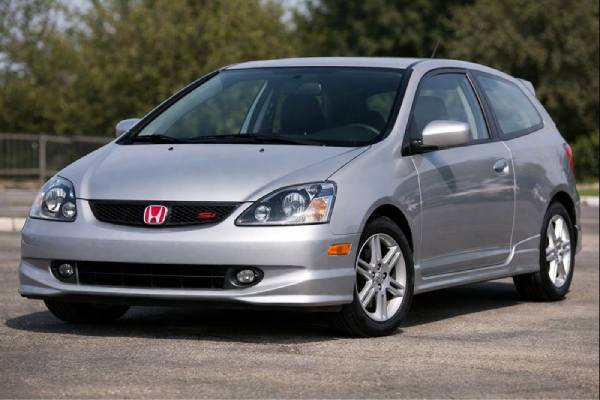
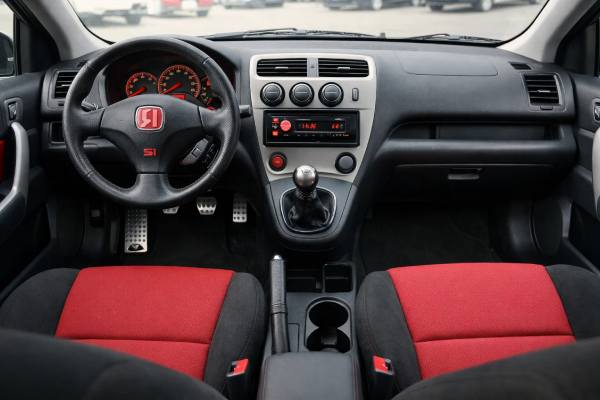
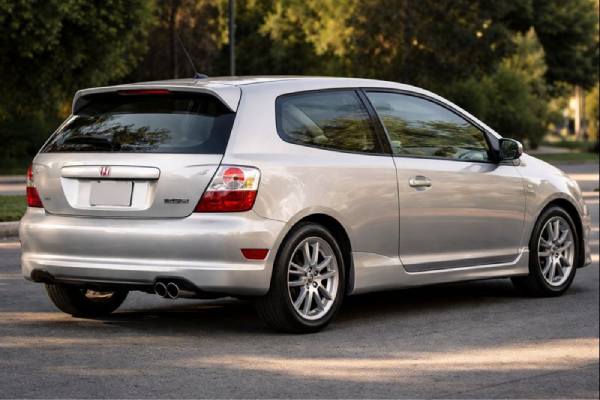
The 2002–2005 Honda Civic Si (EP3) is a practical hot hatch built around Honda’s K-series 2.0-liter engine and a close-ratio manual gearbox. In stock form it is not the highest-output Civic Si, but it often wins owners over with mechanical simplicity, a high-revving character, and a chassis that rewards good tires and fresh suspension parts. The EP3’s tall roofline and hatchback packaging also make it easier to live with than many sport compacts from the same era.
Ownership success comes down to two things: maintenance discipline and buying condition. Most EP3 problems are not exotic—think wear items, aging rubber, and a few repeatable drivetrain issues—yet the car responds strongly to preventative service. If you want an engaging daily driver with Honda parts support and a straightforward learning curve, the EP3 remains a sensible entry point.
Owner Snapshot
- Strong K-series durability when oil level and cooling system health are kept in check.
- Hatchback practicality with a compact footprint, good visibility, and easy daily usability.
- Simple driver-focused layout with a manual transmission that feels rewarding when serviced.
- Budget for suspension bushings, engine mounts, and possible synchro work on higher-mile cars.
- Replace engine oil and filter about every 8,000 km (5,000 mi) or 6 months for conservative ownership.
Section overview
- What the EP3 Si is
- EP3 K20A3 specifications
- Options, airbags, and ratings
- Failure patterns and fixes
- Service schedule and buyer tips
- Road feel and fuel use
- Choosing between key rivals
What the EP3 Si is
The EP3 Civic Si is the early-2000s Civic hatchback that blends Honda’s “everyday” Civic DNA with a sportier drivetrain and chassis tune. The core recipe is simple: a naturally aspirated 2.0-liter K20A3 inline-four, a 5-speed manual transmission, and front-wheel drive. Output is modest by modern hot-hatch standards, but the car’s appeal is the way it delivers that power—smoothly, predictably, and with enough top-end enthusiasm to encourage you to use the full rev range.
Packaging is one of the EP3’s biggest advantages. The hatchback body offers a tall roof and a wide opening, and the rear seat area is usable for adults in a way many coupes are not. That practicality matters because it changes how you drive and maintain the car: owners often put real mileage on EP3s, which makes condition and service history more important than “collector” status.
From an engineering standpoint, the EP3 sits at an interesting point in Honda history. It is newer than the D-series and B-series Civics many enthusiasts started with, yet it is still free of modern complexity like direct injection, turbocharging, and advanced driver assistance systems. That makes diagnosis and maintenance straightforward, but it also means the car is now old enough that rubber, plastics, and corrosion can dominate the ownership experience.
If you are shopping today, think in systems rather than model-year stereotypes. The best EP3 is usually the one with clean fluids, tight shifting, intact cooling components, and a body that has avoided rust and crash repairs. A neglected EP3 can feel tired—loose mounts, worn bushings, and a crunchy gearbox can make it seem worse than it really is. The upside is that a properly refreshed EP3 often drives “younger” than its age, because the chassis responds strongly to basic reconditioning and sensible tire choices.
EP3 K20A3 specifications
Below are practical baseline specifications for the Honda Civic Si (EP3) with the K20A3 2.0-liter engine and 5-speed manual transmission. Some figures vary by market, equipment, and production date, so treat this as a decision-making reference and verify with the vehicle’s labels and official documentation for your exact car.
Powertrain and efficiency
| Item | Specification |
|---|---|
| Code | K20A3 |
| Layout | Inline-4, DOHC, 4 valves/cyl |
| Bore × stroke | 86.0 × 86.0 mm (3.39 × 3.39 in) |
| Displacement | 2.0 L (1,998 cc) |
| Induction | Naturally aspirated |
| Fuel system | PFI (port fuel injection) |
| Compression ratio | 9.8:1 |
| Max power | 160 hp (119 kW) @ ~6,500 rpm (market dependent) |
| Max torque | ~179 Nm (132 lb-ft) @ ~5,000 rpm (market dependent) |
| Timing drive | Chain |
| Rated efficiency (EPA, manual) | 9.4 L/100 km combined (25 mpg US / 30 mpg UK) |
| City / highway (EPA, manual) | 10.2 / 8.4 L/100 km (23 / 28 mpg US) |
| Aerodynamics | Cd and frontal area not consistently published in owner documentation |
Transmission and driveline
| Item | Specification |
|---|---|
| Transmission | 5-speed manual |
| Drive type | FWD |
| Differential | Open (no factory LSD on most EP3 Si trims) |
Chassis and dimensions
| Item | Specification |
|---|---|
| Suspension (front / rear) | MacPherson strut / independent rear (multi-link control arms) |
| Steering | Rack-and-pinion; ratio not specified in owner documentation |
| Brakes | 4-wheel disc; rotor diameters vary by market (verify by VIN) |
| Wheels and tires | Typically 195/60 R15 (15 in rim) |
| Length | 4,170 mm (164.2 in) |
| Width | 1,705 mm (67.1 in) |
| Height | 1,375 mm (54.1 in) |
| Wheelbase | 2,570 mm (101.2 in) |
| Track (front / rear) | 1,468 / 1,464 mm (57.8 / 57.6 in) |
| Ground clearance | Not consistently published; measure if needed for driveway and winter use |
Fluids, service capacities, and key torque specs
| Item | Specification |
|---|---|
| Engine oil | 5W-20; 4.2 L (4.4 US qt) with filter |
| Oil drain bolt torque | 44 Nm (33 lb-ft) |
| Oil filter torque | 12 Nm (9 lb-ft) |
| Coolant | Honda Type 2, 50/50; total ~6.8 L (7.2 US qt) |
| Manual transmission fluid | ~1.7 L (1.8 US qt) for refill (verify service method) |
| A/C refrigerant | R-134a; ~620 g (22 oz) |
| 12 V battery | 12 V, 45 Ah (20HR) |
| Wheel nut torque | 108 Nm (80 lb-ft) |
| Spark plugs | NGK IZFR6K-11; gap 1.1 mm (0.04 in); torque 9.8 Nm (7 lb-ft) |
Performance and capability (typical real-world expectations)
| Item | Typical range |
|---|---|
| 0–100 km/h (0–62 mph) | ~7.5–8.5 s (conditions and driver dependent) |
| Top speed | ~200 km/h (125 mph) (market dependent) |
| Towing | Generally not recommended; follow your owner documentation and local regulations |
Options, airbags, and ratings
Trims and options (what to expect in the real world)
In many markets, the EP3 Si was sold with a narrow configuration: one main trim with a manual transmission and sport-oriented interior pieces. That simplicity can help buyers, but only if you know what is “normal” and what suggests repairs or part swapping.
Common equipment you may see includes:
- Sport seats and a driver-focused cabin layout with a high-mounted shifter.
- Air conditioning, power accessories, and a factory audio system (often upgraded by owners).
- Alloy wheels and a tire size aimed at balanced everyday driving rather than maximum grip.
- Sunroof or audio variations depending on market and package.
Options and variations that matter mechanically:
- ABS and brake system differences: confirm whether ABS is fitted and whether the ABS light behaves correctly at startup.
- Side airbags: some cars have side airbags integrated into the front seats; confirm presence via seat tags and the SRS indicator behavior.
- Lighting: headlight performance varies widely due to lens aging and bulb choices; cloudy lenses can make the car feel unsafe at night even if everything “works.”
Quick identifiers for buyers
Because these cars are often modified, simple checks help you confirm what you are actually buying:
- VIN and certification labels: match VIN locations and confirm the engine family and build information.
- Cluster and warning lights: with ignition on, verify that ABS and SRS lights illuminate and then go out normally. Missing lights can indicate tampering.
- Seats and airbags: if the car should have side airbags, confirm you are not looking at swapped seats from a lower trim.
- Wheels and brakes: mismatched wheel sizes and cheap tires can hide suspension issues and change the way the car tracks on the highway.
Safety ratings (how to interpret them for the EP3)
Safety ratings can be confusing because test bodies do not always test every body style. IIHS, for example, published results for the 2002 Civic sedan in a moderate overlap frontal test, and notes that the rating applies to 2001–2005 models of that tested configuration. For EP3 owners, treat this as a useful structural and restraint-system reference, but remember that a hatchback can differ in mass, rear structure, and equipment.
Euro NCAP crash testing for early-2000s vehicles used a different scoring system than modern percentage-based protocols. That means you should compare the EP3’s era only against other cars tested under the same rules. Also remember that the largest real-world safety gains you can control today often come from tires, brakes, and lighting condition, not from the original brochure rating.
Driver assistance (ADAS)
Expect essentially no modern ADAS. The EP3 era predates widespread automatic emergency braking and lane support. The “safety tech” you rely on is fundamentals: airbags, seat belts, ABS (where fitted), predictable steering, and good tires.
Failure patterns and fixes
A well-kept EP3 can be very dependable, but age and prior ownership style determine whether it feels solid or worn out. Use the guide below to prioritize what matters most.
Common and usually low-cost
- Worn engine mounts → vibration at idle, clunks on throttle changes → replace mounts as a set if multiple are soft.
- Suspension bushings and links → wandering on the highway, knocking over bumps → inspect control arm bushings, rear trailing arm bushings, sway bar links, and strut top mounts.
- Brake hardware and slide pins → uneven pad wear, pulling under braking → service calipers, replace hoses if cracked, flush brake fluid.
Common and medium-cost
- Manual gearbox synchro wear (often 2nd or 3rd gear) → grinding on quick shifts, worse when cold → confirm with a test drive, then plan for fluid service first; persistent grind may require synchro work.
- Clutch hydraulic wear → inconsistent pedal feel, difficulty selecting gear at a stop → inspect for leaks at the master and slave cylinders; replace as needed and bleed properly.
- Cooling system aging → temperature creep in traffic, loss of coolant with no visible leak → pressure-test, inspect radiator end tanks, hoses, and thermostat function.
Occasional but high-cost if ignored
- Overheating events → sweet smell, bubbling reservoir, misfire afterward → stop driving, diagnose immediately; prolonged overheating can warp the cylinder head.
- Oil neglect or low oil level → timing chain noise, top-end wear → keep oil at the full mark, investigate consumption, and fix leaks promptly.
- Rust and structural corrosion (region dependent) → bubbling paint, flaky seams, subframe corrosion → prioritize a clean body shell; mechanical parts are easier than rust repair.
Recalls, service actions, and how to verify
At this age, recall completion matters more than recall existence. The only reliable approach is:
- Run the VIN through the official recall database for your country.
- Ask for dealer records showing completion dates.
- Inspect for campaign labels or paperwork in the service file.
Airbag-related recalls have affected many early-2000s vehicles across brands, so do not assume an EP3 is exempt. If an SRS light is on, treat it as a safety defect first and a bargaining point second.
Software and calibrations
The EP3 does not typically rely on frequent ECU updates like modern cars. However, driveability complaints (idle fluctuation, intermittent fault codes) still deserve a scan with a capable tool and a check for any official updates applicable to your VIN and market.
Service schedule and buyer tips
A practical EP3 ownership plan is conservative: frequent fluids, consistent inspections, and quick response to small leaks or noises. The car rewards this approach because most systems are accessible and parts support remains strong.
Core maintenance schedule (practical and easy to follow)
- Engine oil and filter: about every 8,000 km (5,000 mi) or 6 months. If you drive short trips, reduce the interval.
- Manual transmission fluid: commonly every 48,000–80,000 km (30,000–50,000 mi) depending on shift feel and driving style. Fresh fluid can noticeably improve cold shifting.
- Engine coolant: replace, then repeat about every 96,000 km (60,000 mi) or 5 years.
- Brake fluid: replace on time, not mileage—many owners use a 2–3 year interval.
- Spark plugs: follow the long-life interval where applicable; inspect earlier if misfires appear.
- Air and cabin filters: inspect yearly and replace as needed, especially if HVAC airflow drops.
Timing components (chain-driven K20A3)
There is no routine “timing belt service” here. Instead, listen and inspect:
- Cold-start rattles, persistent chain noise, or timing correlation faults are reasons to investigate chain, guides, and tensioner condition.
- Oil quality and oil level are major inputs to chain life. Low oil is a chain killer.
Fluid specifications and decision-ready capacities
Use the correct oil grade (commonly 5W-20 for this application) and a proper long-life coolant compatible with aluminum engines. Keep records of what you used and when; it matters for resale and for troubleshooting later.
Buyer’s inspection checklist (what actually predicts happiness)
- Cold start: listen for abnormal chain noise and confirm stable idle.
- Gearbox: do repeated 2nd–3rd and 3rd–2nd shifts at moderate throttle; crunching is a red flag.
- Cooling system: look for dried coolant residue, soft hoses, and a weak radiator fan strategy.
- Suspension: check for uneven tire wear, clunks over bumps, and rear-end “steer” from worn bushings.
- Body and rust: inspect rear arches, sills, hatch seams, and underbody mounting points.
- Electrical: verify windows, locks, HVAC blower speeds, and that the charging system behaves normally.
Long-term durability outlook
If you start with a clean shell and a healthy gearbox, the EP3 can be a long-lived daily driver. Most owners who struggle do so because the car was already behind on maintenance, or because a single major issue—overheating, rust, or a worn transmission—was ignored until it multiplied repair costs.
Road feel and fuel use
The EP3’s driving character is best described as honest. It is not a torque-heavy car, and it does not hide its economy-car roots, but it communicates clearly and responds well to sensible upgrades and maintenance.
Ride, handling, and NVH
On good dampers and fresh bushings, the EP3 feels light on its feet. The front end changes direction eagerly, and the rear follows predictably as long as rear bushings are healthy. When the suspension is worn, the same car can feel nervous: it will tramline on the highway, react to crosswinds, and thump over sharp bumps. That is why reconditioning—rather than chasing power—usually gives the biggest “performance” improvement per dollar.
Cabin noise is typical for an early-2000s hatchback. Tire choice has an outsized effect: aggressive tread patterns and hardened cheap tires add noise and reduce wet grip. If you want a calmer daily driver, choose a quality touring or sporty touring tire rather than the loudest performance option.
Powertrain character and shifting
The K20A3 is smooth and consistent, but it rewards revs more than lugging. In city driving, you may find yourself downshifting to keep the engine in a responsive band. The 5-speed manual is central to the experience, so shift quality matters: fresh fluid, a healthy clutch hydraulic system, and tight mounts can transform a “notchy” EP3 into a satisfying one.
Real-world efficiency
EPA figures for the manual EP3 are commonly listed around 23 mpg city, 28 mpg highway, and 25 mpg combined (about 10.2 / 8.4 / 9.4 L/100 km). Real-world outcomes depend heavily on speed and tire choice. At steady highway speeds around 110–120 km/h (70–75 mph), many owners see economy drift worse than the official highway number, especially with roof racks, wide tires, or short gearing.
Cold weather and short trips can also raise consumption sharply. The EP3 warms up reasonably quickly, but repeated short starts keep it in enrichment longer and increase moisture contamination in the oil—another reason conservative oil intervals are smart.
Performance metrics that matter
In stock form, acceleration is brisk rather than fast, but the car feels lively because you can use more of its performance more often. If you plan occasional spirited driving, prioritize:
- High-quality tires in the correct size.
- Fresh brake fluid and good pads.
- Alignment with even, correct camber side-to-side.
Those basics do more for real-world speed and safety than small power mods on a healthy stock car.
Choosing between key rivals
When you compare the EP3 Si to rivals, it helps to be clear about your priorities: daily comfort, modification headroom, straight-line speed, or long-term ownership cost.
Against Acura RSX (base) and RSX Type-S
The EP3 shares K-series DNA with the RSX family. A base RSX often feels similar in everyday use, while the Type-S is the more serious performance benchmark from the era. If you value top-end power and a stronger factory performance package, the Type-S is hard to ignore. If you value hatch practicality and a simpler “Civic” ownership experience, the EP3 remains attractive—especially if you find a clean, unmodified one.
Against VW GTI (early-2000s)
A GTI can feel more substantial in cabin materials and highway stability, but long-term running costs and troubleshooting complexity can be higher depending on engine and maintenance history. The EP3 typically wins on mechanical simplicity and predictable service needs. The GTI often wins on torque feel and a more grown-up ride.
Against Ford Focus SVT and other sport compacts
The Focus SVT is frequently praised for steering and chassis balance. It can feel more playful at the limit, while the EP3 feels more “Honda”: precise, consistent, and easy to place. Parts availability and platform knowledge tend to favor the Civic community in many regions, and the EP3’s K-series ecosystem can be a benefit if you plan to keep the car for years.
Against Toyota Celica GT-S and Corolla XRS-era alternatives
Toyota’s performance models of the time can offer high-rev excitement too, often with excellent reliability. The EP3 counters with easier hatch usability and a very approachable DIY maintenance experience. Condition matters more than brand here: a rust-free, well-serviced EP3 will beat a neglected “better” rival every time.
The practical verdict
Choose the EP3 if you want an engaging manual hatchback that you can maintain without specialized tools, and you are willing to refresh wear items to restore tightness. Choose a stronger-output rival if you want faster stock acceleration with fewer drivetrain compromises. In 2025, the best “rival” is often not a different model—it is simply a cleaner example with better history.
References
- 2002 Civic Hatchback Online Reference Owner’s Manual 2002 (Owner’s Manual)
- Gas Mileage of 2002 Honda Civic 2025 (Fuel Economy Ratings)
- 2002 Honda Civic 2025 (Safety Rating)
- Vehicle Detail Search – 2002 HONDA CIVIC 2-DR HATCHBACK | NHTSA 2025 (Recall Database)
- euroncap_honda_civic_2001_4stars.pdf 2001 (Safety Rating)
Disclaimer
This article is for informational purposes only and is not a substitute for professional inspection, diagnosis, or repair. Specifications, torque values, service intervals, and procedures can vary by VIN, market, production date, and equipment, so always verify details using your official owner and service documentation.
If you found this guide useful, please consider sharing it on Facebook, X (Twitter), or your favorite forum to help others and support our work.