
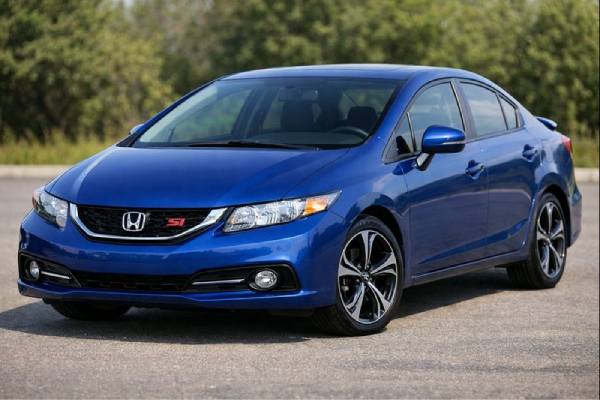
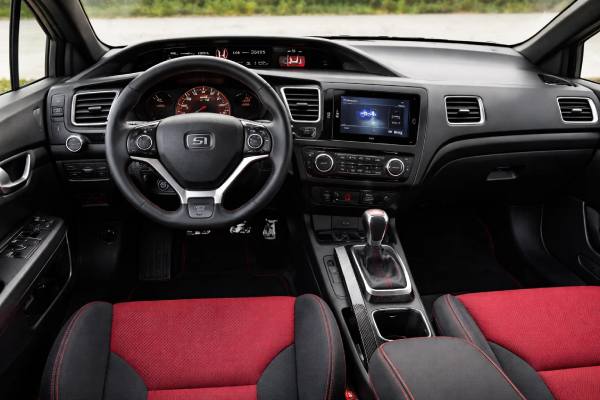
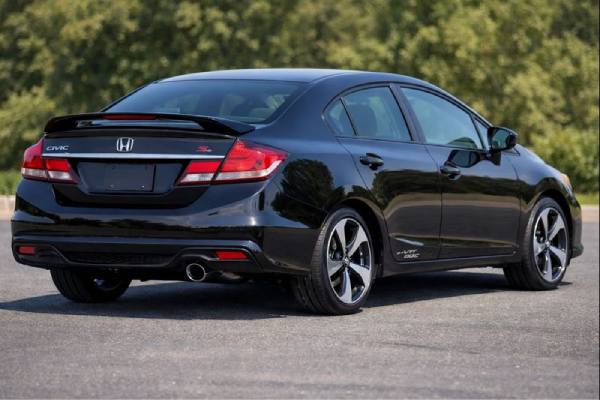
The 2014–2015 Honda Civic Si sedan (FB6) is one of the last mainstream sport compacts that feels “mechanical” in the best way: a naturally aspirated 2.4-liter K24Z7 with a real powerband, a close-ratio 6-speed manual, and a helical limited-slip differential (LSD) working through the front wheels. It’s also a practical daily driver—four doors, a usable trunk, and a chassis that stays composed when the road gets bumpy or the pace gets quick.
Ownership is usually straightforward because the recipe is simple: no turbo hardware, no complicated dual-clutch transmission, and a long-lived timing chain. The tradeoff is that this car rewards maintenance discipline and sympathetic driving habits—especially around clutch life, gearbox feel, and suspension wear as mileage climbs. If you want a sporty commuter you can still enjoy years later, this Si sits in a sweet spot.
Owner Snapshot
- Strong, high-rpm naturally aspirated pull with a simple, durable layout
- Helical LSD gives real traction gains in corners, not just marketing value
- Practical cabin and trunk volume for a “fun” sedan
- Expect wear-and-tear fixes over time (mounts, bushings, clutch hydraulics)
- Plan oil changes about every 8,000–10,000 km (5,000–6,000 mi) or 6–12 months, depending on use
Navigate this guide
- Civic Si FB6 engineering story
- FB6 Civic Si tech specs
- FB6 equipment and safety tech
- Reliability hot spots to watch
- Maintenance plan and buying tips
- How it drives in real life
- Civic Si FB6 vs competitors
Civic Si FB6 engineering story
Honda’s 2014–2015 Civic Si (FB6 sedan) is built around a familiar idea: keep the car light enough, keep the controls direct, and let the engine do the talking. The centerpiece is the K24Z7—an i-VTEC 2.4-liter inline-four tuned to make its best work at higher rpm. In Canadian-spec form it’s rated at 205 hp at 7,000 rpm and 174 lb-ft at 4,400 rpm, and it asks for premium fuel. That combination matters: you’re not buying effortless low-end torque; you’re buying an engine that stays eager as revs rise, paired to a gearbox that encourages you to use it.
What separates the Si from “regular Civic plus wheels” is the supporting hardware. The helical limited-slip differential is the most valuable single upgrade for real-world pace. Instead of spinning the inside tire on corner exit, the LSD biases torque to the tire with grip, letting you get back on throttle sooner and with fewer stability-control interruptions. It also reduces the steering-wheel tug-of-war you can get in open-diff front-drive cars when power meets uneven traction.
Chassis tuning on the Si is sporty without being punishing. You get independent suspension front and rear (strut front, multi-link rear), stabilizer bars, and a quick, accurate electric rack. In stock form the ride is firm, but it doesn’t crash harshly over normal urban imperfections the way some stiffer hot hatches can. That balance—usable daily comfort with real handling control—is why the FB6 still makes sense as a one-car solution.
The last piece of the “Si feel” is the cabin interface: a low-ish seating position, supportive seats, a conventional handbrake, and straightforward buttons. You don’t get modern semi-autonomous driver aids here; you get a car designed to be driven. For many owners, that simplicity is the point—and it’s also why a well-kept example can stay satisfying long after the novelty of newer tech wears off.
FB6 Civic Si tech specs
Below are the core specifications for the 2014–2015 Civic Si sedan (FB6) with the K24Z7. Market-specific details can differ slightly (ratings standards, equipment, and some measurements), so treat these as the “typical” spec baseline for the platform.
Powertrain and efficiency
| Item | Specification |
|---|---|
| Engine code | K24Z7 |
| Layout | Inline-4, DOHC, i-VTEC |
| Displacement | 2.4 L (2354 cc) |
| Bore × stroke | 87 × 99 mm (3.43 × 3.90 in) |
| Fuel system | PGM-FI (multi-point fuel injection) |
| Induction | Naturally aspirated |
| Compression ratio | 11.0:1 |
| Max power | 205 hp (153 kW) @ 7,000 rpm |
| Max torque | 236 Nm (174 lb-ft) @ 4,400 rpm |
| Recommended fuel | Premium gasoline |
| Rated efficiency (city/hwy/combined) | 10.8 / 7.6 / 9.4 L/100 km (≈ 22 / 31 / 25 mpg US) |
Real-world highway @ 120 km/h (75 mph): Expect results to swing with wind, tires, temperature, and gearing. A healthy, stock car often lands roughly in the 7.5–8.5 L/100 km (28–31 mpg US) range on steady motorway cruising, and higher with short trips and winter fuel.
Transmission and driveline
| Item | Specification |
|---|---|
| Transmission | 6-speed manual |
| Drive type | FWD |
| Differential | Helical limited-slip differential (LSD) |
Chassis and dimensions
| Item | Specification |
|---|---|
| Suspension (front/rear) | Independent strut / independent multi-link |
| Steering | Electric rack-and-pinion (EPS) |
| Brakes | Ventilated front discs / solid rear discs (Si) |
| Wheels and tires | 18 in wheels; P225/40 R18 (typical Si fitment) |
| Length | 4,556 mm (179.4 in) |
| Width | 1,752 mm (69.0 in) |
| Height | 1,435 mm (56.5 in) |
| Wheelbase | 2,670 mm (105.1 in) |
| Turning circle (kerb-to-kerb) | 5.4 m (17.7 ft) |
| Ground clearance (no-load/full-load) | 147 / 110 mm (5.8 / 4.3 in) |
| Curb weight | ~1,332 kg (~2,937 lb) |
| Fuel tank | 50 L (13.2 US gal / 11.0 UK gal) |
| Cargo volume (trunk) | 353 L (≈ 12.5 ft³) |
Performance and capability
| Item | Typical real-world range (stock) |
|---|---|
| 0–100 km/h (0–62 mph) | ~6.7–7.2 s |
| 80–120 km/h passing (3rd/4th) | Strongest when kept above mid-range rpm |
| Top speed | Usually limited by gearing/aerodynamics; expect ~210–220 km/h (130–137 mph) depending on conditions |
| Braking 100–0 km/h | Often ~36–40 m with good tires and pads |
The big “performance truth” with this Si is that tires and alignment can change the car more than many bolt-on engine mods. A quality summer tire and a clean alignment (with sensible front camber) noticeably improves turn-in, traction, and braking consistency.
Fluids and service capacities
Exact capacities depend on drain method and component version, but these are common planning figures:
| Item | Typical spec to confirm by VIN |
|---|---|
| Engine oil | 0W-20 full synthetic (many owners use 5W-30 for sustained high heat); ~4.2 L (≈ 4.4 US qt) with filter |
| Coolant | Honda Type 2 (premix); typically ~5–6 L total system |
| Manual transmission fluid | Honda MTF (or equivalent); typically ~1.7–2.0 L |
| Brake fluid | DOT 3 or DOT 4 (follow cap/manual guidance) |
Electrical
| Item | Notes |
|---|---|
| 12V battery | Fitment varies by market; replace proactively around 4–6 years if starting slows |
| Spark plugs | Iridium type; typical gap around 1.0–1.1 mm (0.039–0.043 in) |
Safety and driver assistance
| Item | Notes |
|---|---|
| Core safety systems | ABS, EBD, brake assist, stability control with traction control, hill start assist |
| Airbags | Front, side, and side curtain coverage (market-dependent details) |
| IIHS (sedan platform) | Strong crashworthiness ratings for the 2013–2015 sedan generation; front crash prevention was often optional on the broader Civic line |
FB6 equipment and safety tech
The 2014–2015 Civic Si sedan is a “one main trim” car in many markets: Honda assumes you want the performance hardware, then layers in a sensible set of comfort and infotainment features without turning it into a luxury model. That’s good for used buyers, because it narrows the shopping problem: you’re mostly evaluating condition, maintenance history, and modifications rather than decoding a dozen overlapping packages.
Trims, options, and quick identifiers
Typical Si sedan identifiers you can verify quickly:
- 18-inch wheels and a sportier tire size (often 225/40R18)
- Si-specific seats with stronger bolstering and sport trim
- 6-speed manual only (if you see an automatic listed as “Si,” be skeptical)
- Helical LSD is standard—harder to confirm visually, but it should be present on true Si trims
- Si badging and sport exhaust finisher styling (details vary by market)
Common “nice-to-have” equipment on many Si sedans includes a touchscreen-style infotainment setup (market dependent), upgraded audio, steering wheel audio controls, and sport pedals. Navigation and connectivity features vary widely by region and model-year configuration, so treat them as bonuses rather than core requirements.
Year-to-year changes that matter (2014 vs 2015)
For this generation, the bigger story is consistency rather than dramatic yearly change. In most markets, 2014 and 2015 feel nearly identical from the driver’s seat. When you see meaningful differences, they usually show up as:
- Small infotainment or connectivity revisions
- Minor wheel/tire branding changes
- Running updates to software calibrations and supplier parts
For used shopping, condition trumps year. A stock, well-serviced 2014 can be a better buy than a neglected 2015 with questionable modifications.
Safety ratings and what they really mean
Crash-test ratings can be confusing because different bodies (IIHS vs NHTSA vs Euro NCAP) test different configurations and update methods over time. For the Civic sedan platform in this era, IIHS results are generally strong in core crashworthiness categories like small overlap front (driver-side), moderate overlap, side, roof strength, and head restraints. That’s a reassuring base for a small sporty sedan, especially when compared with older sport compacts that predate modern structural strategies.
What you should not assume: that a 2014–2015 Si has modern driver assistance. Many examples have no automatic emergency braking (AEB), no adaptive cruise, and only basic camera assistance depending on region. In practice, your best “ADAS” upgrade is often simple: fresh tires, high-quality brake pads/rotors, and properly functioning ABS and stability control.
Safety systems and service implications
The Si shares Honda’s core safety architecture and systems:
- ABS with electronic brake-force distribution (EBD) and brake assist
- Stability control and traction control (useful, but tire choice still matters more than many owners expect)
- LATCH/ISOFIX anchor provisions for child seats (check condition and accessibility in your specific vehicle)
After any front-end work—especially suspension replacement or alignment—verify steering angle sensor calibration and confirm there are no warning lights. If you replace wheel/tire sizes, keep overall diameter close to stock to avoid ABS/stability-control confusion.
Reliability hot spots to watch
The 2014–2015 Civic Si has a reputation for being durable, but “durable” doesn’t mean “maintenance-free.” Most issues are typical aging and enthusiast-use problems, not fundamental engine design flaws. Think in terms of prevalence (how often it happens) and severity (how expensive it is when it happens).
Common (low to medium severity)
- Engine mounts softening
- Symptoms: more vibration at idle, clunks on throttle lift/on, wheel hop feels worse
- Root cause: rubber aging + spirited launches
- Remedy: replace worn mounts; avoid ultra-stiff mounts unless you accept NVH (noise/vibration/harshness)
- Suspension bushings and end links
- Symptoms: front-end rattles, vague turn-in, clunks over bumps
- Root cause: normal wear, potholes, lowered springs
- Remedy: inspect end links, lower control arm bushings, rear compliance bushings; align after repairs
- Brake hardware wear and corrosion
- Symptoms: pulsation, uneven pad wear, sticking caliper feel
- Root cause: heat cycles, infrequent fluid changes, winter salt
- Remedy: clean/lube slide pins, replace hardware, flush fluid on schedule
Occasional (medium severity)
- Manual gearbox notchiness or 2nd/3rd gear grind
- Symptoms: hard shifts when cold, reluctance into gear, occasional grind under fast shifts
- Root cause: worn synchros, old fluid, aggressive shifting habits
- Remedy: fresh Honda MTF, check shifter cables/bushings, avoid high-force shifts; rebuild if persistent
- Clutch and hydraulics wear
- Symptoms: high engagement point, slipping under load, inconsistent pedal feel
- Root cause: normal wear accelerated by launches and traffic driving
- Remedy: clutch kit when worn; inspect master/slave cylinder if feel changes
Rare but expensive (high severity)
- Overheated engine from neglected cooling system
- Symptoms: temperature spikes, coolant smell, weak cabin heat
- Root cause: old coolant, failing radiator cap/thermostat, ignored leaks
- Remedy: pressure test, replace weak components early; never “just top up” repeatedly without finding the leak
- Heavily modified or poorly tuned cars
- Symptoms: knock/pinging, misfires, catalyst damage, uneven compression over time
- Root cause: aggressive tuning, low-quality intakes/exhaust changes without calibration, cheap fuel
- Remedy: return to a known-good baseline; compression/leakdown test before you buy
Recalls, TSBs, and how to verify
The safest approach is to treat recalls as a checklist item, not a rumor. There was a 2014 NHTSA recall notice tied to certain Civic vehicles involving the possibility of tire damage during installation, with inspection/replacement as the remedy. The exact applicability depends on VIN.
Best practice:
- Run the VIN through an official recall lookup.
- Ask the seller for dealer paperwork showing completion.
- If documentation is missing, call a dealer with the VIN and ask what’s open/closed.
Pre-purchase checks worth paying for
If you only do a few things, do these:
- Compression test or leakdown (especially if modified)
- Clutch engagement and slip test in a high gear at low rpm
- Cold-start behavior (listen for chain tensioner/actuator-type rattles and general noise)
- Undercarriage inspection for corrosion, leaking dampers, torn boots, and bent suspension arms
- Scan tool check for stored codes, not just a dashboard with no lights
Maintenance plan and buying tips
This Civic rewards owners who keep it “boringly consistent.” If you do that, it tends to stay quick, quiet, and dependable. Below is a practical schedule that fits how many Si cars are actually used: commuting plus occasional spirited driving.
Core maintenance schedule
Every 8,000–10,000 km (5,000–6,000 mi) or 6–12 months
- Engine oil and filter (shorten interval if you do many short trips or high-rpm driving)
- Inspect tire wear and pressures; rotate tires (many do every 8,000–10,000 km)
- Quick inspection: coolant level, accessory belt condition, visible leaks
Every 24,000–32,000 km (15,000–20,000 mi)
- Engine air filter (sooner in dusty areas)
- Cabin air filter (often yearly in city driving)
- Brake inspection (pads, rotors, slide pins) and parking brake function
Every 48,000–64,000 km (30,000–40,000 mi)
- Manual transmission fluid (earlier if shifts get notchy)
- Alignment check (especially if you’ve hit potholes or changed suspension)
Every 3 years (regardless of mileage)
- Brake fluid flush (this is a big “feel” and corrosion prevention item)
Every 160,000 km (100,000 mi) or as specified by your manual
- Spark plugs (iridium lasts, but don’t stretch it if you track the car)
- Coolant service per official interval (don’t guess—verify by manual and history)
Timing components
The K24Z7 uses a timing chain, not a belt. There isn’t a standard “replace at X km” belt interval. Instead:
- Listen for abnormal startup noises
- Address oil level and oil quality (chain systems hate neglected oil)
- Investigate any timing correlation fault codes promptly
Fluid specs and decision-making notes
- Oil viscosity: 0W-20 is common in official documentation for efficiency; owners who drive hard in hot climates sometimes choose a higher-temperature viscosity (like 5W-30) for margin. The key is using a quality oil and changing it on time.
- Manual transmission fluid: staying with a fluid that matches Honda’s friction requirements helps shift feel and synchro health.
- Brake fluid: frequent spirited driving heats fluid faster; that alone justifies strict flush intervals.
Essential torque values (verify by service manual)
Because torque specs can vary by component revision and market, use these only as planning references and confirm by VIN/service manual:
- Wheel lug nuts: ~108 Nm (80 lb-ft)
- Engine oil drain plug: ~39 Nm (29 lb-ft)
- Spark plugs: ~18 Nm (13 lb-ft)
Buyer’s guide: what to seek and what to avoid
Seek
- Stock or lightly modified cars with receipts
- Evidence of regular oil changes and brake fluid service
- Unmodified intake/exhaust or a professional tune with documentation
- Even tire wear (suggests alignment and suspension health)
Be cautious
- Very stiff aftermarket mounts, extreme lowering, or unknown coilovers
- “Cold air intake + no tune” setups if they trigger drivability issues
- Signs of frequent launches: heavy clutch smell, chatter, gearbox grinding, torn mounts
- Electrical add-ons (alarm/audio wiring) that look messy or unsupported
Long-term durability outlook: If the drivetrain is stock-ish and maintained, many examples age well. Most long-term costs come from suspension refresh, clutch work, and the normal rubber-and-fluid items that any sporty daily driver eventually needs.
How it drives in real life
The FB6 Civic Si is at its best when you drive it like a momentum car with a powerband. Around town it’s perfectly manageable, but it doesn’t hide what it is: gearing encourages shifting, the engine likes revs, and the chassis communicates more road texture than a standard Civic.
Ride, handling, and NVH
- Straight-line stability: Confident at highway speeds, with good lane discipline for a compact sedan.
- Cornering balance: Neutral-to-safe in stock form. The rear multi-link helps the car rotate predictably without feeling nervous.
- Steering feel: Electric assist, but still accurate. The best part is consistency—what the wheel does at 30 km/h feels related to what it does at 130 km/h.
- Braking feel: Stronger than base Civics, with good pedal confidence when the system is healthy. Fluid condition matters more than most owners realize.
- Cabin noise: You’ll hear more tire and road noise than a newer compact, especially on aggressive tires. That’s normal for the segment and the era.
Powertrain character
The K24Z7 feels muscular for a naturally aspirated four-cylinder, but the torque curve still rewards rpm. Expect:
- Clean throttle response (especially stock)
- Strong mid-range that builds to a willing top end
- Best passing results when you downshift and keep it “on the cam” rather than short-shifting
The 6-speed manual is a major part of the experience. In a good example, shifts are positive and predictable. If it feels vague or crunchy, it may just need correct fluid and linkage attention—or it may be telling you about synchro wear.
Real-world efficiency
On paper, the 2.4L manual Si typically lands around 25 mpg combined (US), with city driving around 22 mpg and highway around 31 mpg depending on rating system and market. In practice:
- City: short trips can drop economy into the high-teens mpg (US) in winter
- Highway: steady cruising can land in the high-20s to low-30s mpg (US)
- Mixed: most owners settle in the mid-20s mpg (US)
Two ownership tips that genuinely move the needle:
- Keep tire pressures correct and alignment in spec.
- Don’t lug the engine in too-high a gear; it’s not a turbo torque motor.
Key metrics that change the verdict
- 0–60 mph / 0–100 km/h: typically high-6s to low-7s seconds stock
- Corner-exit traction: the helical LSD is a real advantage over open-diff rivals
- Brake consistency: great when maintained; mediocre when fluid is old or calipers stick
Tires, alignment, and the “hidden performance” factor
If you want the car to feel sharp again, focus here before chasing horsepower:
- Quality summer tires transform turn-in and exit traction.
- A conservative performance alignment can reduce understeer without hurting tire life too badly.
- Fresh dampers and bushings restore the “tight” feel more than many owners expect.
Civic Si FB6 vs competitors
The 2014–2015 Civic Si sedan competes in a category that has shifted over time. Many rivals chased turbo torque, bigger screens, and heavier structures. The Si stayed relatively light, simple, and driver-focused. Here’s how it stacks up in the ways that usually matter to real owners.
Against turbo hot hatches (VW GTI, Focus ST, Mazdaspeed3)
Where the Si wins
- Naturally aspirated throttle response and predictable power delivery
- Generally simpler long-term ownership (no turbo heat management, fewer boost-related variables)
- Excellent traction behavior for FWD thanks to the helical LSD
Where turbo cars win
- Strong low-end torque (easier passing without downshifts)
- Bigger tuning headroom if you want big power
- Often more modern infotainment and cabin features
If your driving is mostly city stop-and-go or you want effortless mid-range shove, the turbo cars feel faster day-to-day. If you like working a gearbox and keeping momentum, the Si feels more interactive.
Against AWD sport compacts (Subaru WRX)
WRX advantage: traction in poor weather and stronger acceleration potential from turbo torque.
Si advantage: lower running costs, lighter feel, and less drivetrain complexity.
If you live in snow and don’t want to think about tires and traction as much, AWD is compelling. But with good winter tires, the Si remains very usable and often cheaper to keep “right.”
Against lightweight RWD coupes (FR-S/BRZ)
This is more philosophy than numbers:
- The FR-S/BRZ offers purer balance and steering feel.
- The Si offers four doors, a bigger trunk, and a more flexible daily routine.
For many buyers, the Si is the choice when you want one car to do everything—commute, road trip, and still be fun on a back road.
Verdict for most shoppers
Choose the FB6 Si if you value:
- A high-revving, naturally aspirated character
- Manual-only simplicity
- Real corner-exit traction from an LSD
- Practical sedan packaging
Look elsewhere if you want:
- Big low-rpm torque without shifting
- Modern ADAS and up-to-date cabin tech
- A platform built around easy power upgrades
References
- HON15629_02_Civic_Sedan_Specs_2015_EN_Header.indd 2015 (Specifications Sheet)
- Gas Mileage of 2015 Honda Civic 2015 (Official Fuel Economy Data)
- 2015 Honda Civic 4-door sedan 2015 (Safety Rating)
- Vehicle Detail Search – 2014 HONDA CIVIC SI | NHTSA 2014 (Recall and Safety Database)
- Microsoft Word – 577 Civic 2014 Tire Bead – WORKING 2014 (Recall Notice PDF)
Disclaimer
This article is for informational purposes only and is not a substitute for professional inspection, diagnosis, or repair. Specifications, torque values, fluid types, capacities, service intervals, and procedures can vary by VIN, market, and installed equipment. Always verify details using your vehicle’s official owner documentation and service information, and consult a qualified technician when needed.
If this guide helped, please consider sharing it on Facebook, X (Twitter), or your favorite forum to support our work.