
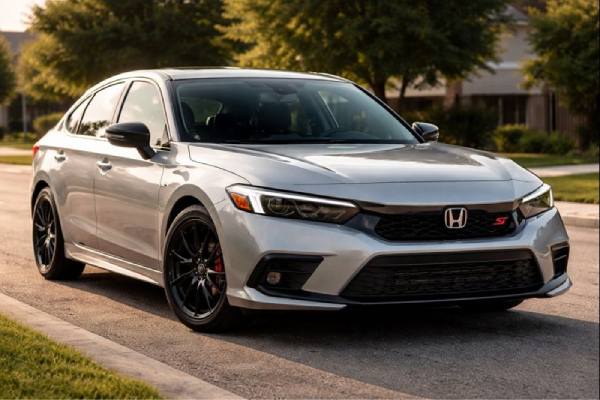
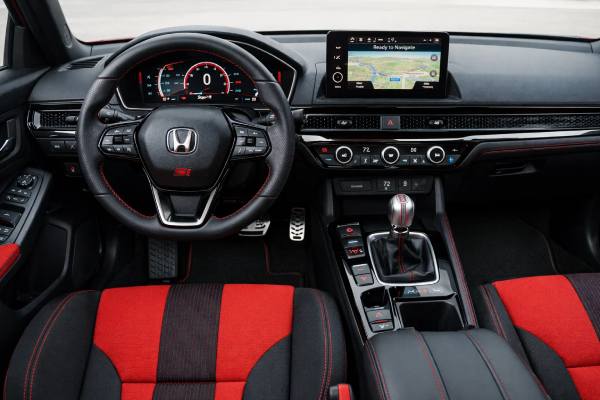
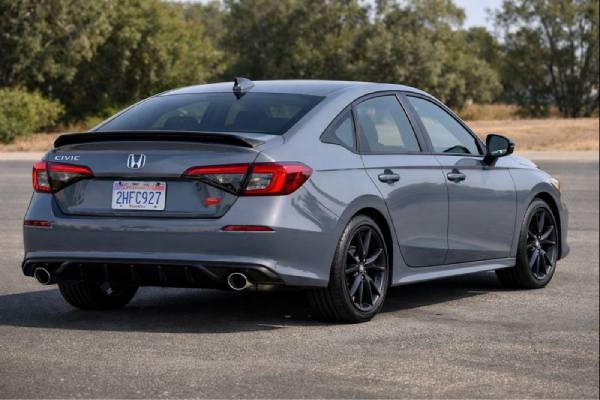
The 11th-gen Civic Si (FE1) is built around a simple promise: keep the Civic’s everyday usability, then sharpen the parts that matter for enthusiastic drivers. The L15CA 1.5-liter turbo is tuned for a wide, usable torque band, and it pairs exclusively with a 6-speed manual and a helical limited-slip differential (LSD)—a combination that still feels rare in this class. Under the skin, the Si uses stiffer bushings, sport-tuned suspension, larger brakes, and a more aggressive wheel and tire package to deliver higher cornering confidence without turning the car into a chore on rough roads.
As an ownership proposition, the Si tends to reward consistent maintenance and smart tire choices. Treat it like a daily first and a backroad car second, and it can stay tight, quiet, and dependable well past the warranty years.
At a Glance
- Strong balance of daily comfort and real cornering grip, helped by a standard helical LSD.
- Broad, easy torque delivery makes it quick in normal driving without constant downshifts.
- Simple, engaging powertrain choice: 6-speed manual only, with sport tuning that feels purposeful.
- Ownership caveat: watch for “sticky” steering symptoms and verify recall/TSB history before buying used.
- Practical interval: change engine oil about every 8,000–12,000 km (5,000–7,500 mi) or 12 months (shorten for hard driving).
Guide contents
- FE1 Civic Si fundamentals
- Spec tables for Civic Si
- Options, identifiers, and driver aids
- Reliability watchlist and service actions
- Long-term care and buyer guidance
- How the Si drives daily
- Si versus key competitors
FE1 Civic Si fundamentals
The FE1 Civic Si is best understood as a “systems” upgrade rather than a single big horsepower jump. Honda keeps the practical Civic sedan body and cabin packaging, then layers in the hardware that improves repeatability: the manual gearbox calibration, the limited-slip differential, the chassis tuning, and the brake and tire specification. The result is a car that feels composed when pushed—especially in second- and third-gear corners where front-drive cars often struggle to put power down cleanly.
At the center is the L15CA turbo 1.5-liter inline-four. It uses direct injection and a relatively high compression ratio for a boosted engine, which helps off-boost response. The turbo setup is tuned for midrange, not drama at the top end, so the car feels energetic in everyday driving. Peak numbers matter less here than the shape of the torque curve: it delivers useful pull early, and it stays consistent through typical passing speeds.
The drivetrain philosophy is equally clear. The Si is manual-only, and the helical LSD is standard. In practice, that LSD is one of the Si’s biggest advantages: it reduces inside-wheel spin on corner exit and makes the car feel calmer when you add throttle mid-turn. You still need good tires and good technique—an LSD doesn’t defy physics—but it noticeably improves traction and steering “line holding” compared with an open differential.
On the chassis side, the Si uses a sport suspension tune (MacPherson strut front, multi-link rear) with firmer control than a standard Civic. Honda also selects a wider, lower-profile tire and larger brakes than you’d see on commuter trims. The goal is not just grip, but consistency: the car should give similar responses lap after lap on a spirited road, rather than feeling sharp for five minutes and then softening as temperatures rise.
For many owners, the Si’s “sweet spot” is that it still behaves like a Civic most of the time. It’s easy to place, easy to park, efficient enough to daily, and roomy enough to carry adults in back. If you want the highest performance Civic, the Type R exists—but the Si’s advantage is that its limits are approachable on normal roads, and its running costs can stay reasonable with the right maintenance plan.
Spec tables for Civic Si
Below are core specifications for the FE1 Civic Si with the L15CA 1.5-liter turbo and 6-speed manual. Some figures vary slightly by market and model year, so treat the tables as a strong baseline and verify against your VIN-specific documentation where needed.
Powertrain and efficiency
| Item | Specification |
|---|---|
| Engine code | L15CA |
| Layout | Inline-4, DOHC, turbocharged, direct injection |
| Displacement | 1.5 L (1,498 cc) |
| Bore × stroke | 73.0 × 89.4 mm (2.87 × 3.52 in) |
| Compression ratio | 10.3:1 |
| Max power | 200 hp (149 kW) @ 6,000 rpm |
| Max torque | 260 Nm (192 lb-ft) @ 1,800–5,000 rpm |
| Timing drive | Chain |
| Recommended fuel | Premium unleaded (typical for manual-trans turbo calibrations) |
| Rated efficiency (typical) | ~6.7–7.6 L/100 km (31–35 mpg US) depending on test cycle/market |
| Real-world highway @ 120 km/h | Often ~7.2–8.2 L/100 km (29–33 mpg US), tire choice and wind matter |
Transmission and driveline
| Item | Specification |
|---|---|
| Transmission | 6-speed manual |
| Drive type | FWD |
| Differential | Helical limited-slip (LSD) |
Chassis, brakes, and tires
| Item | Specification |
|---|---|
| Suspension (front / rear) | MacPherson strut / multi-link |
| Steering | Electric power steering; quick ratio tuning |
| Front brakes | 312 mm (12.3 in) vented discs |
| Rear brakes | 282 mm (11.1 in) discs |
| Wheels | 18 × 8J |
| Tires (common fitment) | 235/40R18 |
Dimensions and weights (typical FE1 sedan)
| Item | Specification (approx.) |
|---|---|
| Length | ~4,674 mm (184.0 in) |
| Width | ~1,802 mm (70.9 in) |
| Height | ~1,414 mm (55.7 in) |
| Wheelbase | ~2,735 mm (107.7 in) |
| Turning circle (kerb-to-kerb) | ~11.8 m (38.6 ft) |
| Kerb (curb) weight | ~1,339 kg (2,952 lb) |
Performance and capability (typical tested ranges)
| Metric | Typical result |
|---|---|
| 0–100 km/h (0–62 mph) | ~6.8–7.4 s (traction and surface dependent) |
| Passing 80–120 km/h | Strong for class due to midrange torque |
| Braking 100–0 km/h | Often ~35–38 m on good tires |
Fluids and service capacities (1.5 L manual-trans models)
| Item | Specification |
|---|---|
| Engine oil | 0W-20; 3.5 L (3.7 US qt) with filter |
| Engine coolant | Honda Type 2 (50/50); ~5.6 L (5.59 L manual models) |
| Manual transmission fluid | Honda MTF; ~1.9 L (2.0 US qt) (service fill) |
| Brake and clutch fluid | Honda Heavy Duty Brake Fluid DOT 3 |
| Fuel tank | 46.9 L (12.39 US gal) |
| A/C refrigerant | HFO-1234yf (R-1234yf); 435–485 g (15.3–17.1 oz) |
| A/C compressor oil | POE type (varies by spec); ~110–123 cm³ range |
Electrical and ignition (what matters most)
| Item | Specification |
|---|---|
| Spark plug type (1.5 L) | NGK DILKAR8P8SY |
| Headlights | LED (market/trim dependent) |
Safety and driver assistance (high-level)
| Item | Notes |
|---|---|
| Structure | Civic sedan platform with modern crash structure and multiple airbags |
| ADAS suite | Commonly includes AEB, ACC, lane support, and traffic sign recognition (availability varies by market/year) |
| Crash ratings | Check the exact body style, year, and headlight configuration used in the test protocol |
Options, identifiers, and driver aids
In most markets, the FE1 Civic Si is deliberately simple: one main grade with limited packages, because the “option” is the Si hardware itself. Still, there are important year-to-year and region differences that affect comfort features, lighting performance, and even how you should shop used.
Trims and equipment pattern (what typically changes)
- Infotainment and cluster: Screen size, wireless phone integration, and audio branding can change across years. If you care about daily convenience, verify whether the car supports wireless Apple CarPlay/Android Auto, and test for connection stability on a short drive.
- Seats and interior: Si seats are usually more bolstered than standard Civic seats, with unique cloth or suede-like inserts depending on market. On used cars, check outer seat bolsters for wear; aggressive bolsters are great for support but show damage sooner.
- Lighting: Headlight performance can vary even when everything is “LED.” If your market offers multiple headlight variants, confirm you’re getting the better beam pattern—not just the brighter look.
- Wheels/tires: 18-inch wheels with 235-section tires are core to the Si feel. If a used car wears cheaper all-seasons or mismatched brands, expect a noticeable drop in steering precision and braking consistency.
Mechanical identifiers worth confirming
- Helical LSD: The Si should have it. During a test drive, a tight low-speed turn with gentle throttle shouldn’t produce harsh chatter (more typical of clutch-type LSDs). Instead, you’ll feel a smoother “pull” out of the corner with less inside-wheel spin.
- Brakes: The Si’s front brakes are larger than base trims. If you see small rotors behind the wheel, question whether parts were swapped or the car isn’t a true Si.
- Suspension feel: An Si that feels floaty or bouncy may simply need dampers, but it can also signal mismatched tires, incorrect alignment, or crash repairs. A straight, even tire wear pattern matters more than many buyers realize.
Safety systems and ADAS considerations
Most FE1 Civic Si models are offered with a modern driver-assistance suite. Typical functions include:
- Automatic emergency braking (AEB) with pedestrian detection
- Adaptive cruise control (ACC)
- Lane keeping or lane centering support
- Traffic sign recognition
- Blind spot monitoring (availability varies by year/market)
Ownership note: if the car has ADAS, any windshield replacement, front radar disturbance, or front-end alignment work can require calibration. When shopping used, ask for documentation showing calibrations were performed after glass or collision repairs.
Child-seat and practical safety details
The Civic sedan format is inherently family-friendly. Look for ISOFIX/LATCH anchors and verify the rear seatback condition if child seats were used (improper installations can deform upholstery and plastics). If you plan to track the car, remember that safety is a system: fresh brake fluid, correct tires, and stable suspension bushings are part of “active safety,” even if they aren’t crash-test items.
Reliability watchlist and service actions
The FE1 Civic Si is not a fragile car, but it is a turbocharged, direct-injection engine paired with a manual drivetrain—so reliability depends heavily on oil quality, heat management, and how the car is driven. Below is a practical watchlist organized by prevalence and cost impact.
Common (watch closely)
- Sticky or notchy steering feel (medium to high cost if parts are needed):
Symptoms: Steering that feels “sticky” off-center, a slight bind when making small corrections, or uneven effort left vs right.
Likely causes: Steering gear/rack issues or related service actions depending on build period.
Remedy: Verify recall completion and any updated parts. If unresolved, have a dealer or specialist evaluate the steering system before you buy. - Clutch wear and hot spots (medium cost):
Symptoms: High engagement point, slipping under boost in higher gears, shudder on takeoff.
Root causes: Aggressive launches, repeated high-load low-rpm pulls, or heavy traffic use.
Remedy: Adjust driving style, ensure no oil leaks contaminating the disc, replace clutch if worn. - Direct-injection deposits over time (medium cost, mileage-dependent):
Symptoms: Rough idle, hesitation, reduced efficiency.
Root causes: DI engines can accumulate intake valve deposits because fuel does not wash the valves.
Remedy: Quality fuel, frequent oil changes, and—when needed—professional intake cleaning (walnut blasting or approved methods).
Occasional (inspect during ownership)
- Turbo plumbing leaks or loose clamps (low to medium cost):
Symptoms: Reduced boost feel, whooshing noises, occasional underboost codes.
Remedy: Pressure test intake tract, tighten/replace clamps, inspect intercooler hoses. - Infotainment glitches (low cost, annoying):
Symptoms: Random reboots, Bluetooth dropouts.
Remedy: Software updates, reset procedures, check 12V battery health.
Rare (but expensive if ignored)
- Overheating under sustained high load (high cost if repeated):
Symptoms: Rising coolant temps during track sessions or long mountain climbs.
Root causes: Heat soak, old coolant, weak radiator airflow, or neglected maintenance.
Remedy: Refresh coolant on schedule, ensure fans operate correctly, use the right oil, and consider cool-down laps if tracking.
Recalls, TSBs, and how to verify
Honda and NHTSA periodically issue recalls affecting Civics across multiple trims. For the Si, two categories matter most:
- Steering-related campaigns: confirm whether the steering gear has an open campaign or completed remedy.
- Fuel system campaigns (e.g., fuel pump): confirm completion to avoid drivability issues or no-start scenarios.
Best practice when buying used:
- Run an official VIN recall check (government database or dealer).
- Ask the seller for a dealer repair history printout showing campaign completion dates.
- During a test drive, deliberately evaluate steering feel on a straight road with small corrections.
If a car “feels off,” trust your hands. The Si is normally precise. Vague steering, wandering, or odd effort changes deserve investigation before purchase, not after.
Long-term care and buyer guidance
A Civic Si can be a long-term keeper if you treat maintenance as a performance tool, not just a checkbox. The key is controlling heat, keeping fluids fresh, and staying ahead of wear items that affect how the car feels.
Practical maintenance schedule (distance/time)
Use the manufacturer’s maintenance minder where applicable, then apply these owner-friendly guardrails:
- Engine oil (0W-20): every 8,000–12,000 km (5,000–7,500 mi) or 12 months.
If you drive hard, do short trips, or see very hot/cold climates: 5,000–8,000 km (3,000–5,000 mi). - Oil filter: with every oil change.
- Cabin air filter: every 15,000–30,000 km (10,000–20,000 mi) or 12–24 months (dusty cities shorten it).
- Engine air filter: inspect every 15,000 km (10,000 mi); replace as needed.
- Brake fluid (DOT 3): every 3 years, regardless of mileage (more often if tracked).
- Manual transmission fluid (Honda MTF): every 40,000–60,000 km (25,000–40,000 mi) for mixed use; 20,000–30,000 km if frequently driven hard.
- Coolant (Honda Type 2): follow the official interval where specified; a conservative approach is initial change around 160,000 km (100,000 mi) or 10 years, then every 5 years.
- Spark plugs: typically 160,000 km (100,000 mi) in many Honda schedules; shorten if you run sustained high load or see misfire symptoms.
- Brake pads/rotors: inspect at every tire rotation; the Si’s grip can accelerate front pad wear.
- Tires and alignment: rotate every 8,000–10,000 km (5,000–6,000 mi). Align yearly or after major pothole impacts.
Fluids, capacities, and “decision-grade” numbers
- Engine oil capacity (with filter): ~3.5 L (3.7 US qt)
- Manual transmission service fill: ~1.9 L (2.0 US qt)
- Coolant (manual models): ~5.59 L
- A/C refrigerant: 435–485 g (verify under-hood label for exact spec)
Essential torque values (common service points)
- Wheel nuts: 108 Nm (80 lb-ft)
- Engine oil drain bolt: 39 Nm (29 lb-ft)
Buyer’s checklist (especially for used examples)
- Steering feel test: On a straight road, make small lane-centering corrections. Any “sticky” sensation is a red flag until proven fixed.
- Clutch and gearbox: Check for slip in higher gears, notchy engagement, and crunch into 2nd or 3rd when cold.
- Tire integrity: Uneven inner shoulder wear often points to alignment issues; cheap tires usually mean the handling story has been dulled.
- Brake condition: Look for lip on rotors and ask about brake fluid age.
- Service history quality: Prefer cars with regular oil changes and documented campaign/recall completion.
- Modification audit: A mild tune can be fine if done properly, but confirm supporting maintenance. Poorly tuned cars often show inconsistent throttle, knock-related timing pull, or overheating under load.
Long-term outlook: kept stock or lightly modified with disciplined fluid service, the Si tends to age well. Most “expensive surprises” come from neglected fluids, unknown tunes, or unresolved steering campaigns.
How the Si drives daily
The Civic Si’s driving character is defined less by peak power and more by how confidently it carries speed. In normal commuting, the turbo engine feels responsive because it builds torque early, and the manual gearbox keeps you involved without requiring constant shifting. You can short-shift and ride the torque, or you can rev it out—either way, it remains easy to place in traffic.
Ride, handling, and NVH
- Ride quality: Firmer than standard Civics, but not punishing. Impacts are sharper on 18-inch tires, so tire brand and inflation pressure make a meaningful difference.
- Steering and balance: The Si’s quick steering calibration and chassis tuning make it feel lighter than it is. The front end responds promptly, and the rear multi-link suspension helps stability mid-corner.
- Braking feel: The larger front brakes typically deliver a more confident pedal than commuter trims. For mountain driving or track days, brake fluid freshness matters as much as pad choice.
- Cabin noise: Expect more tire noise than a base Civic because of the wider, lower-profile tires. On coarse highways, tire selection can change the noise level dramatically.
Powertrain character
- Turbo behavior: Mild lag exists if you request full boost at very low rpm, but in the typical 2,000–4,500 rpm band it feels strong and predictable.
- Manual gearbox: The Si is designed to be shifted often; the lever action is usually precise. Smoothness improves if you match revs on downshifts and avoid forcing cold synchros.
- LSD effect: When exiting corners, the helical LSD helps the car “pull” itself forward rather than lighting up the inside tire. This is one of the most noticeable differences versus non-Si Civics.
Real-world efficiency
In steady highway cruising, many owners see respectable economy for a sporty sedan, especially with conservative throttle and proper tire pressures. City economy varies widely: short trips, cold weather, and turbo boost use will raise consumption quickly. If you want to maximize efficiency without dulling the fun:
- Keep tires at the door-jamb spec, and avoid heavy wheels.
- Change oil on time; turbo engines benefit from clean oil.
- Use premium fuel if required for your market calibration to maintain knock resistance under load.
Track and spirited-use notes
The Si can handle occasional track time, but the car rewards preparation:
- Fresh DOT 3 brake fluid and quality pads prevent fade.
- Watch tire temperatures and pressures; the 235/40R18 setup can overheat if overdriven.
- Add cool-down time after hard sessions to manage heat soak.
Done right, the Si feels “together” at speed—communicative enough to learn from, but controlled enough to stay friendly when the road gets rough.
Si versus key competitors
The Civic Si competes in a narrow but meaningful space: sporty compact cars that still behave like practical daily drivers. The best rival depends on what you value most—manual engagement, straight-line speed, ride comfort, or drivetrain traction.
If you want maximum traction: Subaru WRX (AWD)
The WRX’s all-wheel drive can be a major advantage in wet climates or winter regions. It also tends to deliver strong real-world acceleration because it can deploy power earlier without wheelspin. The tradeoffs are typically higher fuel consumption, more weight, and a different steering feel. If your roads are often cold, wet, or broken, AWD confidence may outweigh the Si’s lighter feel.
If you want hatch practicality: VW GTI
A GTI often feels more refined at highway speed, with a mature ride and strong torque. It can also offer a dual-clutch automatic option in many markets, which is great if you want speed without a third pedal. The Si counters with a simpler long-term ownership story in many cases and a more “mechanical” manual driving feel. Choose the GTI for hatchback utility and polish; choose the Si for straightforward engagement and sedan simplicity.
If you want raw, lightweight response: Toyota GR86 / Subaru BRZ (RWD coupe)
These cars are not direct competitors in body style, but they are common cross-shoppers. They deliver rear-drive balance and a different kind of feedback. The compromise is rear seat utility and winter friendliness. If you prioritize pure chassis balance over passenger space, they’re compelling; if you need a true daily sedan, the Si makes more sense.
If you want a near-lux sport compact: Acura Integra (6MT)
The Integra shares much of the Civic family DNA and can offer a more premium cabin and features, depending on trim. The Si often wins on value and “clean” simplicity. If you want a nicer interior experience without losing the manual-sport compact formula, the Integra is the natural alternative.
The Civic Si “why” in one line
Pick the Si if you want a well-rounded sedan that feels engineered for enthusiastic driving—manual, LSD, and chassis tuning—without the higher costs and harder edges of more extreme performance models.
References
- 2024 Honda Civic Si Specifications & Features 2024 (Specifications)
- Specifications | CIVIC SEDAN 2024 2024 (Owner’s Manual)
- 2024 Honda Civic 4-door sedan 2024 (Safety Rating)
- Honda Civic 2022 (Safety Rating)
- Part 573 Safety Recall Report 24V-744 2024 (Recall Database)
Disclaimer
This article is for informational purposes only and is not a substitute for professional diagnosis, inspection, or repair. Specifications, torque values, fluid capacities, service intervals, and procedures can vary by VIN, market, model year, and installed equipment—always verify details using official owner’s literature, service information, and labeling on your specific vehicle.
If you found this guide useful, please consider sharing it on Facebook, X (Twitter), or your favorite forum to help others and support our work.