
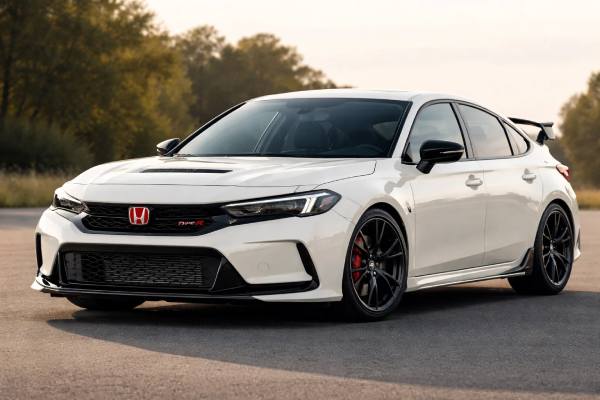
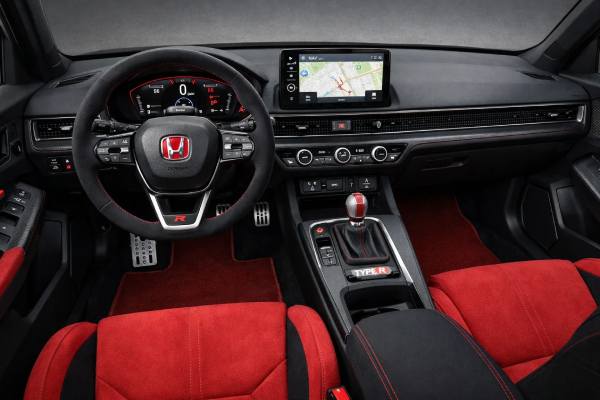
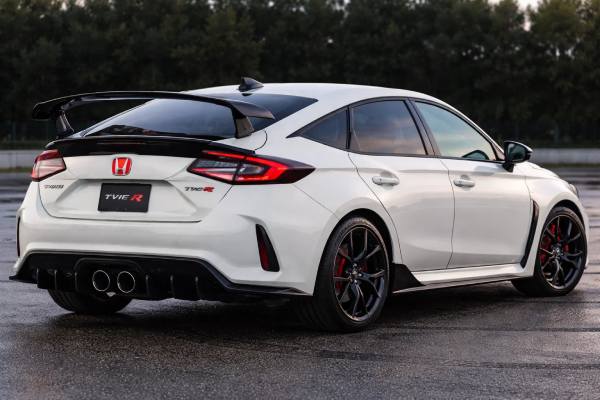
The FL5-generation Civic Type R is a focused performance car built around a simple idea: make front-wheel drive work at serious power levels without turning every hard pull into wheelspin and torque steer. Honda’s K20C1 2.0-liter turbo uses direct injection and smart cooling to support sustained high-load driving, while the chassis leans on a mechanical limited-slip differential, wide tires, and careful suspension geometry to put power down cleanly. Unlike many modern rivals, the FL5 stays manual-only, which shapes both its character and ownership realities.
For buyers, the biggest “engineering story” is balance: firm body control without feeling brittle, strong brakes sized for repeated stops, and an aero package that is functional rather than decorative. If you maintain it like a track-capable machine (fluids, tires, and alignment), it rewards you with durable, repeatable performance.
Quick Specs and Notes
- Manual-only drivetrain keeps the experience pure, but traffic-friendly clutch feel still depends on driver habits.
- Mechanical LSD and wide tires make the power usable, especially in 2nd–3rd gear pulls.
- Cooling and brakes are designed for repeated hard use, yet consumables (pads, tires) can disappear quickly.
- Plan on more frequent fluid service if you track it, especially engine oil and brake fluid.
- Rotate tires about every 8,000–10,000 km (5,000–6,000 mi) to slow shoulder wear on aggressive setups.
Guide contents
- FL5 Type R in context
- K20C1 specs and dimensions
- Trims, options, and safety tech
- Reliability and known weak points
- Maintenance plan and buying tips
- Road and track performance feel
- FL5 Type R versus rivals
FL5 Type R in context
The Civic Type R (FL5) sits in a shrinking niche: a modern, emissions-compliant hot hatch (or hatch-style liftback, depending on market wording) that still prioritizes driver control over automation. The headline numbers—315 hp from a turbo 2.0 and drive to the front wheels—sound like they should overwhelm traction. The FL5’s trick is not magic horsepower, but how it manages load paths: a rigid body structure, carefully tuned suspension geometry, and a helical limited-slip differential (LSD) that keeps the inside front tire from turning into a smoke machine when you accelerate out of tight corners.
Honda also kept the recipe focused. There is no dual-clutch option, and there is no all-wheel drive variant. That makes the car easier to understand, easier to service than many complex rivals, and more consistent on track when driven with mechanical sympathy. It also means the driver must be part of the system: clutch technique, rev-matching habits, and warm-up discipline matter more here than in an all-wheel drive automatic competitor.
Where the FL5 feels most “engineered” is in repeatability. The brakes are sized like they expect repeated high-speed stops. Cooling hardware and airflow management are more serious than a normal Civic’s. The aero package—splitter, wing, underbody work—aims to add stability rather than just style. In daily use, the same hardware brings trade-offs: wide tires amplify road texture, alignment can drift if you frequently hit rough roads, and consumables cost more than a standard Civic’s.
If you want one takeaway before diving into specs: this is a performance tool that can be daily-driven, not a commuter car that happens to be fast. Treat it that way, and it is one of the clearest “driver’s cars” you can still buy new.
K20C1 specs and dimensions
Below are specs organized around what owners actually look up: how the engine is built, what the car weighs and measures, what it consumes, and what it needs in fluids and service. Where markets differ (power rating method, emissions equipment, lighting, and option content), verify by VIN and region.
Powertrain and efficiency (FL5 Type R)
| Item | Specification |
|---|---|
| Engine code | K20C1 |
| Layout and valvetrain | Inline-4, DOHC, 16-valve (4 valves/cyl) |
| Displacement | 2.0 L (≈1,996 cc) |
| Induction | Turbocharged |
| Fuel system | Direct injection (DI) |
| Compression ratio | 9.8:1 (market listings may vary) |
| Max power | 315 hp (235 kW) @ 6,500 rpm |
| Max torque | 310 lb-ft (420 Nm) @ 2,600–4,000 rpm |
| Timing drive | Chain |
| Rated efficiency (example listing) | 11.8 / 8.7 / 10.4 L/100 km (city/hwy/combined; region-dependent) |
| Real-world highway @ 120 km/h | Commonly ~8.5–9.8 L/100 km (driver, tires, weather, and speed matter) |
Transmission and driveline
| Item | Specification |
|---|---|
| Transmission | 6-speed manual |
| Drive type | FWD |
| Differential | Limited-slip differential (LSD) (Type R hallmark) |
Chassis and dimensions
| Item | Specification |
|---|---|
| Suspension (front/rear) | Performance-tuned independent setup (market descriptions vary) |
| Steering | Electric power steering (EPS), performance calibration |
| Brakes | High-performance ventilated discs; Brembo-style front package (market-dependent naming) |
| Wheels and tires (typical) | 265/30 R19 (varies with market and tire brand) |
| Ground clearance | 123 mm (4.8 in) |
| Length / width / height | 4593 / 1890 / 1407 mm (180.8 / 74.4 / 55.4 in) |
| Wheelbase | 2736 mm (107.7 in) |
| Curb weight | ≈1434 kg (≈3161 lb) (varies with market equipment) |
| Fuel tank | 46.9 L (12.4 US gal / 10.3 UK gal) |
| Cargo volume | Region-dependent measurement method; verify by local spec sheet |
Performance and capability (typical real-world ranges)
| Metric | What owners commonly see |
|---|---|
| 0–100 km/h (0–62 mph) | ~5.2–5.8 s (traction and launch technique matter) |
| 0–60 mph | ~4.9–5.4 s |
| Braking 100–0 km/h | Often ~33–37 m on good tires and surface |
| Towing | Typically not rated or discouraged in many markets; check your owner documentation |
Fluids, service capacities, and key torque specs (verify by VIN)
Because the Type R is often used hard, the “right” spec is the spec for your exact market and emissions package.
| Item | Practical guidance |
|---|---|
| Engine oil | Use the Honda-approved viscosity for your region; many markets specify 0W-20 for normal use, but track use often pushes owners toward more frequent changes and track-appropriate oil choices per official guidance |
| Coolant | Honda-approved long-life coolant; maintain proper mix ratio per manual |
| Manual transmission fluid | Use only the specified Honda MTF for shift quality and synchro life |
| Brake fluid | High-performance DOT 4 is common for track days; change more often if heat-soaked repeatedly |
| Lug nut torque | Verify in service manual (performance Hondas are commonly around ~135 Nm / ~100 lb-ft) |
| Oil drain plug torque | Verify in service manual (avoid overtightening on aluminum pans and threads) |
Electrical (typical owner lookups)
| Item | Notes |
|---|---|
| 12V battery | Size and CCA vary by market; test annually after year 3 in cold climates |
| Spark plugs | Use the specified heat range and gap; turbo engines are sensitive to plug condition under boost |
Safety and driver assistance
The Type R is based on the Civic platform, but equipment can differ by market and model year.
| Item | Notes |
|---|---|
| Crash ratings | Ratings usually apply to the Civic family in a given market; confirm the exact body style and test protocol year |
| ADAS | AEB, ACC, lane assistance, blind-spot monitoring, and traffic-sign functions may be standard or optional depending on region; manual-transmission behavior for ACC can differ |
Trims, options, and safety tech
In many regions, the FL5 Type R is intentionally simple to buy: one core “Type R” grade with a short list of color choices and limited factory options. That simplicity is a feature for long-term ownership because it reduces the “mystery equipment” problem—fewer trim permutations means fewer surprises when ordering parts, sourcing wheels, or comparing used examples. Still, there are meaningful differences by market and year that affect daily livability and resale.
Trims and options that change ownership
Common variation points to look for:
- Seats and interior trim: Most FL5 cars use aggressive sport seats and red-themed details. The big “tell” is bolstering shape and upholstery material—used cars with shiny outer bolsters often indicate heavy in-and-out wear.
- Infotainment and data features: Some markets include performance-oriented displays, lap timing functions, or logging features; others keep it basic. If you care about track data, verify the exact model year features rather than assuming.
- Wheels and tires: The factory tire spec is wide and low-profile. That delivers grip and steering response, but it also increases risk of sidewall damage on potholes. If a used car is on a narrower wheel or a taller tire, ask why (comfort? damage? winter setup?).
- Lighting: Headlight design and beam performance vary heavily by region. This matters for safety and for insurance repair costs.
Year-to-year changes are often small (colors, software refinements, parts supersessions), but they still matter. When comparing a 2022–2023 car to a newer one, focus on what changed in calibration (infotainment, driver assistance behavior, and any drivability updates) rather than expecting big mechanical revisions.
Safety ratings, with the right caveat
Crash-test scores can be confusing on performance trims. The key points:
- The rating body matters: Euro NCAP, IIHS, and NHTSA use different tests and update protocols over time.
- The tested vehicle matters: A “Civic hatchback” rating may not perfectly represent a Type R if airbags, belt hardware, seat design, or lighting packages differ.
- The model year matters: A car can be “the same generation” but tested under a newer, tougher protocol later.
Treat safety ratings as a baseline indicator of structure and restraint design, then confirm your exact build’s equipment (headlights, ADAS availability, and seat/airbag configuration).
Safety systems and ADAS (what owners should know)
Expect modern basics—multiple airbags, stability control, ABS, and traction logic tuned for performance tires. On driver assistance, pay attention to these ownership realities:
- Calibration after repairs: Windshield replacement, front radar work, and alignment changes can require ADAS recalibration. Budget time and cost for proper calibration rather than living with warning lights.
- Track use and sensor fouling: Rubber debris, track dust, and heat cycles can trigger temporary sensor warnings. That is not always a failure, but repeated warnings deserve diagnosis.
- Manual-transmission behavior: Adaptive cruise systems can behave differently with manuals; some features may limit use at low speeds or require driver input more often.
Reliability and known weak points
The FL5 Type R’s core hardware is robust for a high-output turbo four, but reliability depends heavily on how the car is used. A lightly driven street car that sees regular warm-ups and on-time fluid changes will have a very different life than a car that is launched hard, heat-soaked repeatedly, and parked immediately after hot laps.
Below is a practical way to think about issues: prevalence (how often owners encounter it) and severity/cost tier (how expensive it is when it happens).
Common (low to medium cost)
- Tire shoulder wear and tramlining
- Symptoms: Inside-edge wear, steering “following” road grooves, noise increases.
- Likely cause: Aggressive alignment, wide tires, and imperfect rotation habits.
- Remedy: Rotate consistently, keep alignment within spec, and match tire models front-to-rear.
- Brake dust, vibration, or pad taper
- Symptoms: Steering shake under braking, squeal, uneven pad wear.
- Likely cause: High heat, uneven bedding, or cheap replacement pads.
- Remedy: Proper bedding, quality pads/rotors, and more frequent inspections if tracked.
- Heat-related fluid fatigue (track users)
- Symptoms: Soft brake pedal, notchy shifts when hot, oil darkening quickly.
- Likely cause: Fluids exceeding their thermal limits.
- Remedy: Shorten service intervals and use the correct approved fluids.
Occasional (medium to high cost)
- Turbocharged DI carbon buildup (long-term pattern)
- Symptoms: Rough idle, reduced efficiency, misfire codes in higher mileage examples.
- Likely cause: Direct injection can allow intake-valve deposits over time, especially with short trips.
- Remedy: Drive cycles that fully warm the engine, quality fuel, and cleaning procedures when symptoms justify it.
- Clutch wear from launches or traffic abuse
- Symptoms: Higher engagement point, slip under boost in higher gears, smell after hard use.
- Likely cause: Repeated hard launches and excessive heat.
- Remedy: Adjust driving habits; replace clutch components when out of spec.
Rare but expensive (high cost)
- Overheat-related damage
- Symptoms: Persistent high coolant temps, limp mode, repeated warning lights after track days.
- Likely cause: Pushing beyond cooling capacity in extreme conditions, blocked airflow, or coolant system faults.
- Remedy: Diagnose properly; do not “guess and send it” on a turbo performance engine.
Software, calibrations, and service actions
Modern performance cars rely on software stability as much as hardware. If you experience drivability oddities (idle behavior, boost control inconsistencies, infotainment crashes, ADAS faults), ask a dealer to confirm:
- ECU and infotainment software is current for your VIN.
- Any open service campaigns have been completed.
- ADAS sensors are calibrated correctly after alignment or windshield work.
Pre-purchase checks worth requesting
- Full service history with dates and mileage (oil changes and brake fluid matter most).
- Evidence of correct tire sizes and matched sets (mismatched tires can mask chassis issues).
- A scan for stored codes, especially misfire, fuel system, and ADAS-related entries.
- Visual check for track use clues: heat marks on rotors, heavily worn outer seat bolsters, melted rubber in wheel wells, and repeated stone chips on the rear quarters.
Maintenance plan and buying tips
The FL5 rewards owners who follow a “baseline schedule plus usage adjustments” approach. Honda’s built-in maintenance logic (where fitted) can be helpful for normal driving, but performance use demands more proactive intervals.
Practical maintenance schedule (street-focused baseline)
Use whichever comes first: distance or time.
| Service item | Typical interval | Notes |
|---|---|---|
| Engine oil and filter | 8,000–12,000 km (5,000–7,500 mi) or 12 months | Shorten to 5,000 km (3,000 mi) if tracked or driven hard often |
| Tire rotation | 8,000–10,000 km (5,000–6,000 mi) | Critical on wide, low-profile tires |
| Brake inspection | Every 10,000–15,000 km | Track users: inspect after events |
| Brake fluid | Every 2 years (street) | Track: often yearly or more depending on heat |
| Cabin air filter | 15,000–30,000 km or 1–2 years | Dusty climates shorten this |
| Engine air filter | 20,000–40,000 km | Inspect more often with track and dusty use |
| Spark plugs | Often 40,000–60,000 km (region-dependent) | Turbo DI engines are sensitive to plug health |
| Coolant | Follow official interval (often long-life) | Replace only with the correct type |
| Manual transmission fluid | 40,000–60,000 km (street) | Track/heat: shorten interval for shift feel and synchro life |
| Alignment check | Annually or after impacts | Wide tires magnify small alignment errors |
| 12V battery test | Year 3+ annually | Cold climates accelerate battery decline |
Fluids and specifications: the “don’t improvise” list
- Manual transmission fluid: Use the specified Honda fluid. Incorrect fluid can cause notchiness and long-term synchro wear.
- Coolant: Use Honda-approved long-life coolant; mixing types is a common mistake.
- Brake fluid: Use a quality fluid that meets the required spec; for track, heat tolerance matters more than marketing.
- Engine oil: Use the correct viscosity and rating for your region; shorten intervals if oil sees repeated high temps.
Buyer’s guide: what to inspect in 30 minutes
- Cold start behavior: Listen for abnormal rattles, check for warning lights, confirm stable idle after warm-up.
- Clutch and shifting: Smooth engagement, no slip under load, no grinding on quick 2–3 shifts.
- Braking feel: Firm pedal, no pulsation, and no pulling under braking.
- Tire condition: Even wear across tread; inner-edge wear suggests alignment neglect.
- Underside check: Look for scraped aero panels, damaged jack points, and fluid seepage.
- Electronics: Confirm camera, sensors, and infotainment stability—repairs can be expensive.
Long-term durability outlook
If kept stock, serviced on time, and allowed proper warm-up and cool-down, the FL5 platform is generally well-suited to long ownership. The biggest “cost surprises” tend to be consumables (tires, brakes) and calibration-related needs (ADAS alignment and sensor work), not catastrophic engine failures—provided the car is not overheated and is not tuned beyond its safety margins.
Road and track performance feel
On the road, the FL5 Type R’s personality is defined less by raw acceleration and more by how confidently it carries speed. The steering is quick and deliberate, with a front end that feels “keyed in” to the surface. Because the car is wide-tired and stiffly controlled, you feel road texture clearly—great feedback on a smooth surface, but noticeably busier on broken pavement.
Ride, handling, and NVH
- Straight-line stability: Strong, especially at highway speeds, aided by aero and chassis rigidity.
- Cornering balance: Neutral-to-slightly front-biased at the limit, but unusually adjustable for FWD with good trail braking.
- Braking feel: Strong initial bite and heat capacity, but pad choice dramatically changes pedal character.
- Cabin noise: More tire roar than a normal Civic because of tire width and compound; quieter tires reduce it, but you trade grip.
Powertrain character (K20C1 + 6MT)
The engine’s torque band is the real advantage. It builds strong midrange pull, which means you do not have to rev it to the limiter to make progress—though it does reward revs when you keep it on boost. Throttle response is crisp for a turbo car, and boost delivery feels engineered for traction rather than shock value.
The manual gearbox is a central part of the experience. Shift quality depends on fluid condition, temperature, and technique. When driven hard, a clean, warm gearbox with fresh correct fluid usually feels more precise and less resistant.
Real-world efficiency
Expect fuel use to swing widely:
- Gentle highway cruising can land in the high 8s to 9s L/100 km range.
- City driving and short trips can push into the 11–13+ L/100 km range.
- Track sessions are a different world: consumption becomes secondary to heat management and fluid protection.
Cold weather amplifies consumption because the engine stays richer longer, tire rolling resistance changes, and cabin heating adds load.
Traction and control
For a FWD performance car, traction is the party trick. The LSD and chassis setup help the car “pull” itself out of corners rather than just spinning the inside tire. Tire choice, however, makes or breaks it. A summer tire with the wrong temperature behavior can feel greasy when overheated; a more track-focused tire can transform repeatability at the cost of noise and wet grip.
FL5 Type R versus rivals
The FL5 Type R competes less on spec-sheet novelty and more on how complete the package feels when driven hard. Here is how it typically stacks up against the most common cross-shops.
Versus Toyota GR Corolla
- GR Corolla advantage: All-wheel drive traction and a playful rear bias when configured for it. Strong in poor weather.
- Type R advantage: More mature front-end precision and a calmer high-speed platform; manual feel is often more “clean” and less busy.
- Choose the Type R if you prioritize steering accuracy and repeatable lap behavior over AWD traction tricks.
Versus Volkswagen Golf R
- Golf R advantage: Refined daily comfort, AWD confidence, and easy speed with less effort.
- Type R advantage: More connected steering, lighter-feeling front end, and more engaging manual-only involvement.
- Choose the Type R if you want your commute to feel like a warm-up lap, not a luxury car with horsepower.
Versus Hyundai Elantra N
- Elantra N advantage: Value, strong exhaust character, and a playful chassis; often cheaper to buy and run.
- Type R advantage: Higher overall grip ceiling, better power deployment at speed, and a more cohesive “engineered” feel under repeated stress.
- Choose the Type R if you want the more track-ready baseline and accept higher consumable costs.
Versus BMW M235i / similar AWD sport compacts
- AWD sport compact advantage: Straight-line pace, easy traction, and automatic convenience.
- Type R advantage: Lower weight feel, more direct control, and fewer drivetrain complexities long-term.
- Choose the Type R if you value mechanical simplicity and driver engagement over effortless speed.
The bottom line
The FL5 Type R is rarely the cheapest option and not always the quickest in a drag race. It wins when roads get technical, when braking is repeated, and when you want the driver to be the main “system” rather than the software.
References
- Civic Type R Specifications 2024 (Manufacturer Specs)
- Campaign Notice 24-050 2024 (Service Action)
- Check for Recalls: Vehicle, Car Seat, Tire, Equipment 2025 (Recall Database)
- Vehicle ratings 2025 (Safety Rating)
- Latest Safety Ratings 2025 (Safety Rating)
Disclaimer
This article is for informational purposes only and is not a substitute for professional diagnosis, inspection, or repair. Specifications, torque values, service intervals, and procedures can vary by VIN, market, and equipment. Always verify details using your official owner’s manual and service documentation for your exact vehicle.
If this guide helped, please consider sharing it on Facebook, X (Twitter), or your favorite forum to support our work.