

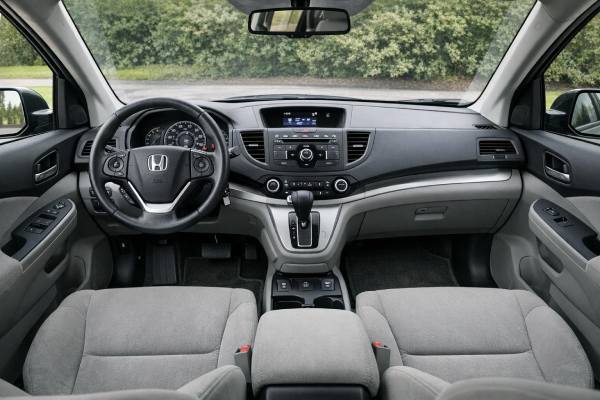
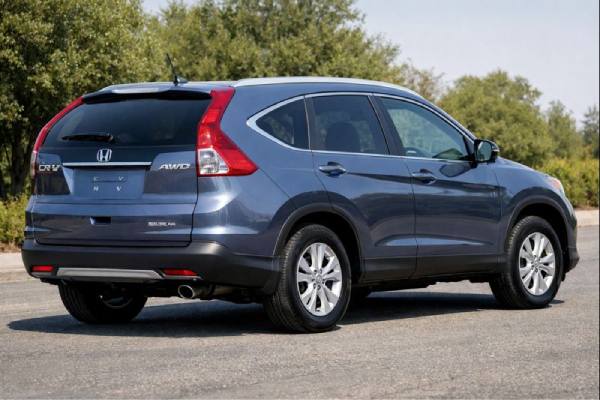
The 2012–2015 Honda CR-V 2.2 i-DTEC with Real Time AWD is the “quiet achiever” of mid-size diesel SUVs: it was designed to be easy to live with, efficient at motorway pace, and genuinely useful when weather or loose surfaces turn against you. The N22B4 2.2-litre diesel is tuned for broad torque rather than drama, which suits the CR-V’s relaxed gearing and family-car mission. Honda’s Real Time AWD system is primarily front-driven, sending torque rearward only when the front tyres begin to slip—great for rain, snow, gravel, and steep wet driveways without the complexity of a full-time 4×4.
If you maintain it with the right fluids (especially for the AWD hardware) and keep the diesel emissions parts healthy with regular longer runs, this CR-V can be a durable, low-stress long-distance tool.
Quick Specs and Notes
- Strong mid-range pull and calm motorway manners make it an easy long-distance SUV.
- Real Time AWD adds all-weather security without the weight and fuel penalty of full-time systems.
- Cabin and boot packaging are practical, with a low-lift tailgate and wide opening.
- Budget for diesel system upkeep on short-trip use (EGR and DPF load-up are the common headaches).
- Plan engine oil and filter service every 10,000–15,000 km (6,000–9,000 mi) or 12 months, depending on duty cycle.
Guide contents
- Diesel AWD in context
- N22B4 technical tables
- Equipment, trims, and safety tech
- Known diesel faults and recalls
- Service schedule and purchase checks
- How it drives and sips
- Alternatives to cross-shop
Diesel AWD in context
This CR-V variant sits in a sweet spot for owners who want an SUV that behaves more like a well-mannered estate car (wagon) than a truck. The 2.2 i-DTEC’s defining trait is usable torque: it builds low, stays strong through everyday speeds, and doesn’t demand high rpm to feel responsive. That matters in a family SUV, where you spend most of your time between 1,500 and 3,000 rpm—pulling away uphill, merging onto a motorway, or overtaking without constant downshifts.
Honda’s Real Time AWD is equally “purpose-built for reality.” In steady cruising, the CR-V drives the front wheels. When the system detects front-wheel slip, it engages a clutch pack at the rear to send part of the torque backwards. The advantage is efficiency and simplicity: fewer moving parts working all the time, less parasitic drag, and typically fewer drivetrain surprises than full-time AWD setups. The trade-off is that it’s not intended for deep mud, serious rock crawling, or sustained high-load off-road use. Think of it as traction insurance, not a low-range 4×4 substitute.
For ownership, two themes matter most:
- Duty cycle: Diesels like heat and distance. If your use is mostly short trips, the emissions equipment (EGR and DPF) can become the dominant maintenance story, even if the engine itself is healthy.
- Fluids discipline: Hondas reward correct fluids. This matters for the engine, but it’s especially important for the AWD rear differential and transfer components, where the wrong oil can cause noise, vibration, or clutch chatter.
The upside is compelling: a practical cabin, predictable handling, strong crash safety credentials for its era, and a drivetrain that feels engineered for long service life—provided you match maintenance to how you actually drive.
N22B4 technical tables
Below are model-appropriate specs for the 2.2 i-DTEC (N22B4) diesel paired with Real Time AWD, focusing on the data that most affects ownership: service fluids, dimensions, performance, and the AWD hardware. Figures vary by market, gearbox, wheels, and trim, so treat them as best-practice ranges to validate against your VIN and local handbook.
Powertrain and efficiency
| Item | Specification |
|---|---|
| Engine code | N22B4 |
| Layout | Front transverse, inline-4 |
| Valvetrain | DOHC, 16 valves (4 valves/cyl) |
| Bore × stroke | 85.0 × 96.9 mm (3.35 × 3.81 in) |
| Displacement | 2.2 L (2,199 cc) |
| Induction | Turbocharged, intercooled |
| Fuel system | Common-rail diesel |
| Compression ratio | 16.3:1 |
| Max power | 150 hp (110 kW) @ ~4,000 rpm (market dependent) |
| Max torque | ~350 Nm (258 lb-ft) @ ~2,000–2,750 rpm |
| Timing drive | Chain |
| Rated efficiency (typical) | ~5.8–7.0 L/100 km (41–33 mpg US / 49–40 mpg UK), depending on spec |
| Real-world highway @ 120 km/h | ~6.5–8.0 L/100 km (36–29 mpg US / 43–35 mpg UK), tyre/roof load/weather dependent |
| Aerodynamics | Cd and frontal area vary by year/trim; validate per homologation data where available |
Transmission and driveline
| Item | Specification |
|---|---|
| Transmission (common) | 6-speed manual (market dependent) |
| Transmission (some markets) | Automatic availability varies by region/year |
| Drive type | Real Time AWD (on-demand) |
| Differentials | Open differentials; rear torque via clutch pack |
Chassis and dimensions
| Item | Specification (typical range) |
|---|---|
| Suspension (front/rear) | MacPherson strut / multi-link |
| Steering | Electric power steering (EPS) |
| Brakes | Four-wheel discs (sizes vary by trim) |
| Wheels/tyres | 17–18 in packages common; tyre sizes vary by trim |
| Ground clearance | Typically ~160–180 mm (6.3–7.1 in), spec dependent |
| Length / width / height | Approx. 4,530–4,570 mm / 1,820–1,830 mm / 1,650–1,680 mm |
| Wheelbase | Approx. 2,620–2,630 mm |
| Turning circle | Typically ~11.5–11.9 m (37.7–39.0 ft) |
| Kerb weight | Approx. 1,600–1,750 kg (3,527–3,858 lb) depending on trim/gearbox |
| Fuel tank | Commonly ~58 L (15.3 US gal / 12.8 UK gal) |
| Cargo volume | Typically ~590 L seats up / ~1,650–1,700 L seats down (method varies) |
Performance and capability
| Item | Typical figure (varies by trim/gearbox) |
|---|---|
| 0–100 km/h (0–62 mph) | ~9.5–10.7 s |
| Top speed | ~190–200 km/h (118–124 mph) |
| Towing capacity (braked) | Often 1,500–2,000 kg (3,307–4,409 lb) depending on market/spec |
| Payload | Typically ~450–600 kg (992–1,323 lb), spec dependent |
| Roof load | Often ~75 kg (165 lb), check rails and handbook |
Fluids and service capacities (decision-useful)
| System | Specification (typical) |
|---|---|
| Engine oil | Low-ash diesel oil meeting the required ACEA spec; commonly 0W-30 or 5W-30 by climate |
| Engine oil capacity | ~5.5 L (5.8 US qt) with filter (confirm by handbook) |
| Coolant | Honda Type 2–equivalent long-life coolant; mix as specified |
| Manual transmission | Honda MTF-type fluid (region dependent) |
| Rear differential | Honda Dual Pump Fluid (DPSF) or approved equivalent for the AWD unit |
| Brake fluid | DOT 4 (typical) |
| A/C refrigerant | R134a common for this era; charge varies by market |
Electrical
| Item | Typical |
|---|---|
| 12 V battery | Capacity varies by climate/market; confirm battery tray size and CCA needs |
| Alternator output | Varies by equipment level; confirm by parts listing or label |
| Glow plugs | Diesel-specific, spec varies; use OEM-equivalent type |
Safety and driver assistance (high-level)
| Item | Notes |
|---|---|
| Core systems | ABS, stability control (ESC/VSA), traction control |
| Airbags | Typically front, side, and curtain airbags depending on market/trim |
| Crash ratings | Euro NCAP 5-star era rating for the model generation tested; details in Safety section |
Equipment, trims, and safety tech
Trim structure varies widely by country, so it helps to think in “equipment bands” rather than expecting one universal trim name. Most markets offered a base grade focused on value, a mid-grade with comfort and convenience, and a top grade that bundled leather, premium audio, and more driver aids. On diesel AWD versions, you’ll also see differences tied to wheel size and gearbox availability, which can change ride comfort, tyre cost, and sometimes towing approval.
Trims and options that matter in real life
- Wheel and tyre packages: 18-inch wheels look great but can increase tyre costs and make pothole impacts harsher. If your roads are rough or winters are long, a 17-inch setup is often the smarter ownership play.
- Seat material and interior durability: Cloth wears well and is cheaper to refresh. Leather feels premium but can crack if neglected; check bolsters and seat heater operation (where fitted).
- Infotainment tiers: Navigation and premium audio are nice, but older head units can age poorly. Focus on function: Bluetooth stability, screen condition, and whether steering wheel controls work correctly.
- Tow package readiness: Some markets included trailer stability logic, upgraded cooling, or factory wiring provisions. If you plan to tow, verify the cooling system health and ensure the electrical integration is done properly.
Quick identifiers you can use during a walkaround:
- Rear badging may indicate i-DTEC, AWD, or grade naming depending on country.
- Headlamp design often signals trim (projector housings, washers, or DRL arrangements).
- Cabin tells: dual-zone climate, panoramic roof availability, and seat memory are usually top-grade markers.
Safety ratings and what they mean
For this era CR-V, the headline is that it was engineered to score well in the mainstream crash-test programs of its time. A strong passenger cell, effective restraint tuning, and stability control availability were central to those results. Remember that crash-test protocols evolve: a strong rating then still matters, but it does not mean it matches the active safety performance of modern SUVs with advanced automatic braking and lane-centering.
Safety systems and ADAS (driver assistance)
Most vehicles in this range provide:
- ABS and electronic brakeforce distribution to help maintain control under heavy braking.
- ESC (stability control) to reduce spin risk during abrupt manoeuvres or on slick roads.
- Multiple airbags including curtain airbags in many trims.
- ISOFIX/LATCH anchors for child seats, usually with clear labeling and robust anchoring points.
ADAS in this era tends to be limited. Some trims offered features like parking sensors, reversing camera, or speed limiter/cruise control. If equipped with rain-sensing wipers, auto lights, or a camera, confirm they work—these are convenience items that often reveal wiring or module issues when they fail.
Known diesel faults and recalls
A well-kept N22B4 CR-V can be dependable, but the ownership experience is shaped by diesel emissions components and by how consistently previous owners serviced the AWD drivetrain. The best approach is to sort issues by prevalence and by cost impact.
Common, usually manageable (low to medium cost)
- EGR valve and intake soot buildup
- Symptoms: sluggish response, uneven idle, higher fuel use, occasional fault lights.
- Likely cause: short trips, low exhaust temperatures, soot recirculation load.
- Remedy: cleaning or replacement; address the root cause by ensuring regular longer drives and correct oil spec.
- DPF loading (diesel particulate filter)
- Symptoms: frequent regeneration, fan running after shutdown, reduced power, warning light.
- Likely cause: repeated short journeys, interrupted regenerations, faulty sensors.
- Remedy: forced regen or cleaning if caught early; diagnose sensors and driving pattern.
- Rear differential fluid degradation (AWD unit)
- Symptoms: groaning or shudder on tight turns, low-speed vibration, “binding” feel.
- Likely cause: neglected Dual Pump Fluid service or wrong fluid used.
- Remedy: drain-and-fill with correct fluid (sometimes repeated), then set a routine interval.
Occasional, higher cost if ignored (medium to high)
- Turbo control issues (actuator or boost leaks)
- Symptoms: limp mode, inconsistent power, boost-related fault codes.
- Likely cause: vacuum/boost hose leaks, actuator wear, sensor problems.
- Remedy: pressure/vacuum testing, targeted component replacement; avoid “parts cannon” repairs.
- Injector and fuel system wear
- Symptoms: hard starts, rough idle, smoke, diesel knock, poor economy.
- Likely cause: high mileage, contaminated fuel, overdue filter changes.
- Remedy: diagnostic balance checks, filter service, injector refurbishment or replacement as needed.
- Clutch and dual-mass flywheel (manuals)
- Symptoms: vibration at idle, chatter, slipping under load, heavy pedal.
- Likely cause: normal wear accelerated by towing, city use, or aggressive launches.
- Remedy: clutch and flywheel replacement as a set when symptoms justify it.
Rare, but expensive if it happens (high)
- Timing chain stretch or tensioner issues
- Symptoms: rattling on start, timing correlation faults, poor running.
- Likely cause: oil neglect, high mileage, or component wear.
- Remedy: verify with proper diagnostics; replace chain components if out of spec.
Recalls, TSBs, and service actions
Honda has had multi-model recall campaigns over the years, and your CR-V may be affected depending on build date and market. The most important point is process: verify by VIN, not by memory.
- Ask for dealer recall completion records and compare against the vehicle’s service history.
- Check for airbag campaign history (many brands had broad supplier-related airbag recalls in this era).
- Confirm any software updates have been applied where drivability, emissions sensors, or stability-control calibration were involved.
A good pre-purchase request list:
- Full service records showing oil spec and intervals.
- Proof of rear differential fluid service for AWD models.
- Evidence of DPF health (no persistent warnings, sensible regen behaviour).
- Diagnostic scan for stored or pending fault codes, especially emissions-related.
Service schedule and purchase checks
This CR-V rewards a maintenance plan built around two realities: diesel emissions components dislike short, cold running, and the AWD hardware needs the correct fluids on time. Below is a practical schedule you can apply and then tailor to your market handbook and use case.
Core maintenance schedule (distance/time)
- Engine oil and filter: every 10,000–15,000 km (6,000–9,000 mi) or 12 months. If you do short trips, lean toward the shorter interval. Use the correct low-ash diesel oil spec for DPF compatibility.
- Air filter: inspect every service; replace typically every 20,000–30,000 km (12,000–18,000 mi) or sooner in dusty conditions.
- Cabin filter: every 15,000–30,000 km or annually if you have allergies or city pollution exposure.
- Fuel filter: commonly 40,000–60,000 km (25,000–37,000 mi); sooner if fuel quality is questionable.
- Coolant: follow handbook intervals; as a rule of thumb, replace long-life coolant around 5 years after initial fill, then per schedule thereafter.
- Brake fluid: every 2 years regardless of mileage.
- Manual transmission fluid: check for shift quality and leaks; service intervals vary, but many owners refresh around 60,000–100,000 km for longevity.
- Rear differential (AWD) fluid: service around 30,000–60,000 km, and sooner if you notice tight-turn noise or if service history is missing. Always use the specified Dual Pump Fluid type.
- Serpentine/aux belt and hoses: inspect annually; replace on condition or around 100,000–160,000 km depending on age and climate.
- Glow plugs: test on symptoms; replace as a set if cold starts become rough.
- Battery: test yearly after year 4; many last 4–6 years depending on climate and trip length.
Fluids and “must-get-right” items
- Use the correct AWD rear differential fluid, not a generic gear oil. Many driveline complaints come from incorrect fluid choices.
- Keep the diesel system healthy with periodic longer drives: a steady 20–30 minutes at operating temperature helps DPF regeneration complete as designed.
Buyer’s guide: inspection checklist
Bring a checklist and treat the first drive as a diagnostic session:
- Cold start behaviour: should fire cleanly with minimal cranking; excessive smoke or roughness points to injector, glow plug, or sensor issues.
- DPF and EGR clues: ask about regeneration frequency; check for warning lights and look for uneven idle or hesitation.
- AWD tight-turn test: in a quiet car park, do slow full-lock circles. Groaning or shudder suggests overdue rear diff fluid or AWD clutch wear.
- Suspension and steering: listen for front-end clunks (bushings/ball joints) and check steering self-centre and feel.
- Brakes: pedal should be consistent; pulsing can indicate warped rotors; dragging can indicate caliper issues.
- Rust and corrosion hotspots: inspect subframes, suspension mounting points, brake lines, and tailgate seams in salt regions.
- Electronics: verify windows, locks, sensors, camera, and climate control—small faults add up fast.
Long-term durability outlook
With regular oil service, correct AWD fluid changes, and a driving pattern that supports diesel emissions health, this CR-V can be a durable, economical family SUV. Neglect tends to show up first as DPF/EGR problems and AWD shudder—both avoidable with the right habits and service timing.
How it drives and sips
In day-to-day driving, the diesel CR-V feels composed rather than sporty, and that’s the point. The chassis is tuned for stability and comfort: it tracks straight at motorway speeds, absorbs broken pavement well on the smaller wheel packages, and stays predictable when you ask it to change direction quickly. Steering feel is typically light to moderate, prioritising ease in town over feedback.
Powertrain character
The N22B4’s torque delivery defines the experience. From low rpm it pulls with a “single shove” that suits relaxed driving—especially with passengers and luggage. You do not need to chase the redline; in fact, it often feels best short-shifted in the midrange. With a manual gearbox, the clutch take-up should be smooth and progressive. Any judder, heavy pedal feel, or vibration at idle can be early signs of clutch or dual-mass flywheel wear.
Real Time AWD is mostly invisible until you need it. In rain or on loose surfaces, you’ll notice cleaner pull-away with fewer traction-control interventions. On snow, it helps maintain momentum, but tyres still matter more than drivetrain. Good winter tyres transform this CR-V more than any mechanical modification.
Ride, handling, and NVH
- Ride: generally supple, but 18-inch wheels can make sharp impacts more noticeable.
- Handling: safe and neutral; it prefers smooth inputs. Push hard and it will understeer progressively.
- Noise: diesel clatter is most noticeable on cold start and low rpm; at cruising speed, wind and tyre noise become the main sounds, especially with roof bars or aggressive tyres.
Real-world efficiency
Expect results that track your route profile:
- City-heavy use: often 7.0–9.0 L/100 km (34–26 mpg US / 40–31 mpg UK), with higher numbers in winter or short-trip patterns.
- Highway at 100–120 km/h: commonly 6.5–8.0 L/100 km (36–29 mpg US / 43–35 mpg UK), depending on wind, tyres, and load.
- Mixed driving: typically 6.5–8.0 L/100 km is a realistic planning range for many owners.
Cold weather and short trips can add a meaningful penalty. More importantly, they can increase DPF regeneration frequency. If you mostly drive short distances, plan a weekly longer run to keep the system happier.
Load and towing notes
When towing within its rating, the CR-V is generally stable and confidence-inspiring, but the maintenance bar rises:
- Keep cooling system condition strong (radiator cleanliness, correct coolant).
- Refresh drivetrain fluids on a stricter schedule if you tow often.
- Expect fuel consumption to rise significantly under load; planning for a 20–40% increase is reasonable depending on speed and trailer weight.
Alternatives to cross-shop
If you’re shopping this CR-V, you’re likely comparing it against other diesel-era compact and mid-size SUVs that promise the same mix: family practicality, winter traction, and sensible running costs. Here’s how the Honda typically stacks up, and what to watch for with common rivals.
Toyota RAV4 D-4D AWD (similar years)
- Why choose it: strong resale, broad parts availability, reputation for durability.
- Trade-offs: some diesel variants can be noisier; certain generations have their own EGR/DPF stories.
- Honda advantage: often feels more refined in steering and cabin usability, depending on trim.
Mazda CX-5 2.2 Skyactiv-D AWD
- Why choose it: sharper handling, efficient highway cruising, modern interior design for the era.
- Trade-offs: diesel complexity can be higher; maintenance discipline becomes critical.
- Honda advantage: Real Time AWD simplicity and an ownership profile that can be less fussy when maintained correctly.
Volkswagen Tiguan 2.0 TDI 4Motion
- Why choose it: solid highway feel, strong torque, wide trim variety, DSG availability in many markets.
- Trade-offs: higher complexity, potentially higher repair costs as vehicles age.
- Honda advantage: typically lower long-term “surprise” costs if service history is clean.
Ford Kuga 2.0 TDCi AWD
- Why choose it: good road dynamics, strong engines, often well-equipped.
- Trade-offs: depends heavily on maintenance history; some driveline and electrical issues can be pricey.
- Honda advantage: straightforward packaging and generally predictable behaviour when serviced.
Hyundai ix35 / early Tucson and Kia Sportage diesels AWD
- Why choose them: value for money, generous equipment, often cheaper to buy used.
- Trade-offs: refinement and long-term component ageing varies; verify service quality closely.
- Honda advantage: mature chassis tuning and a diesel that can be very satisfying on long runs.
The CR-V’s “best-fit” buyer profile
Choose the Honda if you want:
- A diesel SUV that excels at motorway commuting and mixed family duty, not aggressive off-roading.
- AWD that is helpful without being heavy or complicated.
- A vehicle where good maintenance is rewarded with a calm, long-service-life feel.
If your driving is almost entirely short urban trips, consider a petrol or hybrid alternative in the same class. That single decision can reduce emissions-system headaches more than any repair strategy.
References
- Honda CR-V 2013 (Safety Rating)
- Honda CR-V 2013 (Safety Rating)
- New Honda CR-V receives 5-star Euro NCAP Overall Safety Rating 2013 (Manufacturer Publication)
- Recalls and Updates 2026 (Recall Database)
- Check if a vehicle, part or accessory has been recalled 2026 (Recall Database)
Disclaimer
This article is for informational purposes only and is not a substitute for professional inspection, diagnosis, or repair. Specifications, torque values, service intervals, and procedures can vary by VIN, market, model year, and equipment, so always confirm details using your official Honda service documentation and local dealer records.
If you found this guide useful, please consider sharing it on Facebook, X (Twitter), or your favourite forum to help others and support our work.