
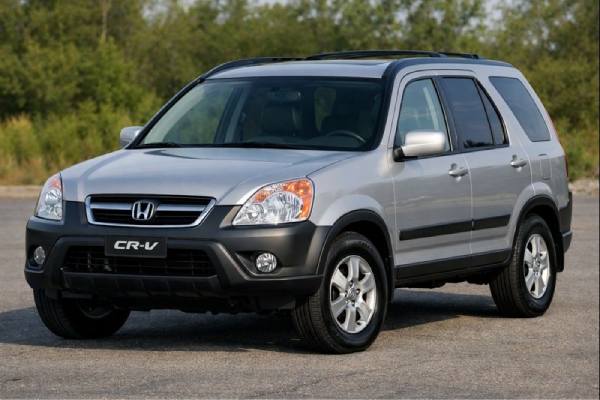
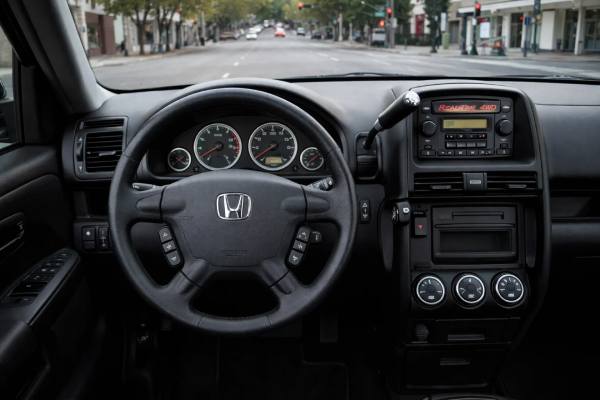
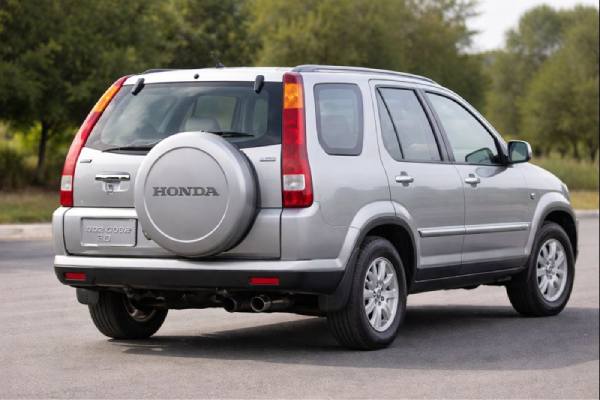
The 2002–2006 Honda CR-V (second generation) in RD8 Real Time 4WD form sits in a sweet spot for owners who want a compact SUV that feels more like a tall hatchback than a truck. With the K20A4 2.0 i-VTEC making a modest 150 hp, it is not built to impress on paper—yet it delivers where daily driving matters: predictable response, strong packaging, and a drivetrain that adds winter reassurance without constant AWD drag.
Real Time 4WD is a reactive system: it prioritizes front-wheel efficiency and sends torque rearward when slip appears. Combined with Honda’s simple, durable suspension layout, the RD8 tends to age gracefully if serviced on time—especially fluids that owners often ignore (rear differential and automatic transmission). Buy well, maintain it consistently, and this CR-V can be a long-term, low-drama companion.
Owner Snapshot
- Confident, predictable traction on wet roads and light snow with good tyres, without full-time AWD fuel penalties.
- Practical cabin and cargo shape make it easier to live with than many “sportier” rivals of the era.
- Rear differential fluid neglect can cause tight-turn shudder; budget for a proper service with the correct fluid.
- Plan engine oil changes about every 10,000 km (6,200 mi) or 12 months for typical mixed use.
- A well-kept manual gearbox feels especially durable; automatics last too, but prefer frequent ATF drain-and-fill.
Navigate this guide
- RD8 Real Time 4WD model guide
- K20A4 specs, dimensions and capacities
- Trims, options and safety equipment
- Reliability issues, recalls and fixes
- Maintenance plan and buyer’s checklist
- Real-world driving and efficiency
- How the RD8 CR-V stacks up
RD8 Real Time 4WD model guide
Think of the RD8 CR-V as a car-first SUV. The seating is upright, visibility is excellent, and the controls are typical early-2000s Honda: light, consistent, and designed to disappear in daily use. The K20A4 2.0 i-VTEC focuses on smoothness and mid-range flexibility rather than punch. You will feel that character most around town and on B-roads, where the engine stays quiet at low rpm and wakes up progressively as revs rise.
The headline feature is Real Time 4WD, Honda’s on-demand system aimed at traction rather than off-road crawling. Under normal grip it behaves like front-wheel drive; when the front tyres slip, a pump-driven clutch in the rear differential engages and sends torque rearward. In practice, it shines on wet roundabouts, muddy parking areas, slushy climbs, and uneven gravel—especially with quality tyres. What it is not: a low-range system, a rock-crawler, or something you should treat like a traditional part-time 4×4.
For ownership, the RD8’s biggest strengths are its packaging and predictability. The cabin is boxy in a good way: adults fit comfortably, and the cargo area is easy to load. The suspension tuning is also well-judged—compliant enough for rough urban streets while still controlled on faster roads. This balance is a key reason many RD8s become “forever cars” in families.
Where owners get surprised is rarely the engine itself. Problems usually trace back to fluid neglect, rubber aging, or previous repairs done cheaply. Rear differential servicing is the classic example: if it is skipped, the AWD can groan or shudder during tight turns, which feels dramatic but is often fixable with the correct fluid and a repeat service. The other ownership reality is age: at 20+ years, any RD8 you look at is more about condition than mileage. Service records and rust inspection matter more than the odometer.
K20A4 specs, dimensions and capacities
Below are the core specifications owners usually care about for the RD8 Real Time 4WD with K20A4 2.0 i-VTEC (150 hp). Exact figures can vary by market, gearbox, and trim, so treat the numbers as a practical reference and verify against your VIN documentation when ordering parts or fluids.
Powertrain and efficiency
| Item | Specification |
|---|---|
| Code | K20A4 |
| Layout | Transverse front engine |
| Cylinders and valvetrain | Inline-4, DOHC i-VTEC, 4 valves/cyl |
| Bore × stroke | 86 × 86 mm (3.39 × 3.39 in) |
| Displacement | 2.0 L (1,998 cc) |
| Induction | Naturally aspirated |
| Fuel system | Multi-port injection (PFI/MPFI) |
| Compression ratio | 9.8:1 |
| Max power | 150 hp (110 kW) @ ~6,500 rpm |
| Max torque | 192 Nm (142 lb-ft) @ ~4,000 rpm |
| Timing drive | Chain |
| Rated efficiency (typical, mixed) | ~8.9 L/100 km (≈26.4 mpg US / 31.8 mpg UK) |
| Real-world highway @ 120 km/h | ~9.5–10.5 L/100 km (≈22–25 mpg US / 27–30 mpg UK) |
Transmission and driveline
| Item | Specification |
|---|---|
| Transmission | 5-speed manual or 4-speed automatic (market dependent) |
| Drive type | Real Time 4WD (on-demand AWD) |
| Rear differential | Clutch-based engagement; uses Honda-specific dual-pump fluid |
Chassis and dimensions
| Item | Specification |
|---|---|
| Front suspension | MacPherson strut |
| Rear suspension | Multi-link |
| Brakes | 4-wheel discs (specs vary by market/trim) |
| Wheelbase | ~2,620 mm (103.1 in) |
| Length | ~4,535–4,555 mm (178.5–179.3 in) |
| Width | ~1,780 mm (70.1 in) |
| Height | ~1,710 mm (67.3 in) |
| Ground clearance | ~200 mm (≈7.9 in) class typical (verify by trim/tyres) |
| Turning circle | ~11.0 m (≈36 ft) typical |
| Kerb weight | ~1,500–1,600 kg (3,307–3,527 lb) depending on gearbox/trim |
Performance and capability (typical)
| Metric | Typical figure |
|---|---|
| 0–100 km/h (0–62 mph) | ~10.0–10.5 s (manual), ~11.5–12.5 s (automatic) |
| Top speed | ~175–180 km/h (109–112 mph) |
| Towing | Market-dependent; commonly ~1,500 kg braked (verify for your VIN) |
| Roof load | Often 75 kg (165 lb) typical for the class (verify) |
Fluids and service capacities (decision-useful)
| System | Specification (typical) |
|---|---|
| Engine oil | API/ACEA per market; common viscosity 5W-30; ~4.0–4.3 L (4.2–4.5 US qt) with filter |
| Coolant | Honda-type long-life; ~5–6 L (5.3–6.3 US qt) typical |
| Manual transmission | Honda MTF; ~1.7–2.0 L (1.8–2.1 US qt) |
| Automatic transmission | Honda ATF (period spec); drain/refill ~3 L; total larger (varies) |
| Rear differential | Honda Dual Pump Fluid; ~1 L (≈1.1 US qt) |
| Brake fluid | DOT 3/4 as specified by market; flush quantity varies |
Electrical (typical)
| Item | Specification |
|---|---|
| 12 V battery | Commonly 45–60 Ah class (varies by region/spec) |
| Spark plugs | Long-life type by market; confirm heat range and gap for K20A4 |
Safety and assistance (era-appropriate)
| Item | Notes |
|---|---|
| Airbags | Front airbags common; side/curtain depend on year/trim/market |
| ABS/EBD | Common; stability control availability varies by market/year |
| ADAS | Modern features like AEB/ACC/LKA were not typical on this generation |
Trims, options and safety equipment
Because the RD8 ran across multiple regions, trims can be confusing: the same mechanical package may be called different names depending on country. The simplest approach is to decode the vehicle by build plate/VIN details, gearbox, and safety equipment rather than relying only on badges.
Trims and options that matter mechanically
Most RD8 Real Time 4WD models share the same fundamentals—K20A4 engine, similar suspension layouts, and the same on-demand AWD concept. The meaningful differences usually come from:
- Gearbox choice: 5-speed manuals often feel more responsive and can be cheaper to keep perfect. 4-speed automatics are relaxed in traffic but need more frequent fluid care to stay smooth.
- Wheel and tyre packages: Larger wheels can sharpen steering response but often add noise and reduce ride compliance. For winter traction, tyre quality matters more than wheel size.
- Brake and stability systems: ABS is common; stability control (where offered) can be a worthwhile safety upgrade, especially on older, taller vehicles.
Comfort and convenience options typically include sunroof, heated seats, upgraded audio, leather, and climate-control variations. These do not usually change reliability dramatically, but they can change what you must inspect (sunroof drains, heated seat elements, and HVAC flap motors are age-related failure points).
Quick identifiers owners can use
When viewing a candidate RD8, you can often “read” its equipment level quickly:
- Side and curtain airbags: Look for SRS tags on seat sides and “curtain” markings near the A-pillar/headliner area (varies by market).
- ABS presence: ABS indicator on the cluster at key-on and ABS hardware at the hydraulic unit.
- AWD confirmation: Real Time 4WD badging and, more reliably, the rear differential and prop shaft presence under the vehicle.
Safety ratings in context
Crash-test ratings vary by region and test protocol. For the same model family, results can look different because tests measure different things and because safety equipment changed over the run. A common pattern for early-2000s SUVs is:
- Front impacts: Often strong structural performance for the era.
- Side impacts: Highly dependent on whether side and curtain airbags are fitted. Early builds without them can score notably worse than later ones equipped with head protection.
For buyers, the practical takeaway is simple: if you can choose, prefer later-year vehicles with more standard side and curtain protection, especially if you regularly carry passengers.
ADAS reality check
This generation predates modern driver-assistance suites. You should assume no factory AEB, adaptive cruise, or lane keeping. If a vehicle has aftermarket parking sensors or a head unit with a camera, treat those as convenience accessories—not safety systems. Also remember that any crash-avoidance benefit you gain today often comes from basics: good tyres, healthy brakes, clear headlights, and a suspension that is not worn out.
Reliability issues, recalls and fixes
The RD8’s reputation is generally positive, but “reliable” does not mean “maintenance-free.” Below is a practical map of issues by prevalence and cost tier, with symptoms and best fixes.
Common (low to medium cost)
- Rear differential shudder or groan on tight turns
- Symptoms: juddering, binding, or groaning in parking manoeuvres.
- Likely cause: degraded or incorrect rear diff fluid; clutch pack chatter.
- Remedy: drain and refill with the correct Honda-spec dual-pump fluid; often improves further after a short drive and sometimes a second service.
- Suspension wear (bushings, links, ball joints)
- Symptoms: clunks over bumps, vague steering, uneven tyre wear.
- Cause: rubber aging, worn joints, tired dampers.
- Remedy: refresh wear items in pairs; align afterwards.
- A/C performance decline
- Symptoms: weak cooling, intermittent compressor engagement, noise.
- Cause: age-related leaks, clutch wear, or compressor fatigue.
- Remedy: leak test first; avoid “top-up only” cycles without diagnosis.
Occasional (medium cost)
- Automatic transmission shift quality issues
- Symptoms: flare, harsh shifts, delayed engagement.
- Cause: old ATF, overheating history, internal wear.
- Remedy: multiple drain-and-fills with correct fluid (not a power flush), then reassess; persistent symptoms may signal deeper wear.
- Power steering seepage and pump noise
- Symptoms: groan at full lock, fluid loss, wet hoses.
- Cause: hose and seal aging.
- Remedy: fix leaks before replacing the pump; use correct fluid type.
- Wheel bearings
- Symptoms: humming that rises with speed; changes when loading left/right.
- Remedy: replace affected bearing/hub; check tyres too.
Rare but higher consequence (higher cost)
- Rust and structural corrosion (market dependent)
- Symptoms: bubbling paint, flaky seams, suspension mount corrosion, brake line corrosion.
- Cause: salted-road exposure, poor past repairs, trapped moisture.
- Remedy: walk away from advanced structural rust unless priced for restoration.
Recalls, service actions, and how to verify
Older CR-Vs have had safety campaigns over the years. Rather than relying on hearsay, always verify by VIN through an official database and dealer history. The most important owner habit here is simple: run a VIN check before purchase and after purchase, and keep proof of completion.
When evaluating any recall-related item, ask for:
- Dealer invoice or recall completion printout
- A VIN report showing “remedy performed”
- Visual confirmation where practical (some recall fixes include marked parts or documented kits)
Even if a campaign is old, completion rates can be surprisingly uneven—especially on vehicles that changed hands often or lived outside the dealer network.
Maintenance plan and buyer’s checklist
A well-kept RD8 is usually affordable to run, but it rewards owners who treat maintenance as a system, not a once-a-year event. Below is a practical schedule and a buyer-focused inspection list.
Practical maintenance schedule (typical mixed driving)
- Engine oil and filter: every 10,000 km (6,200 mi) or 12 months; consider 8,000 km (5,000 mi) if you do short trips, cold starts, or heavy city use.
- Engine air filter: inspect every 15,000 km; replace as needed (often 30,000 km / 18,000 mi typical).
- Cabin air filter: every 15,000–30,000 km (or yearly if you drive dusty routes).
- Spark plugs: commonly 90,000–120,000 km (55,000–75,000 mi) depending on plug type and market spec.
- Coolant: typically long-life; often 5 years/100,000 km then shorter intervals—verify your exact spec.
- Brake fluid: every 2 years regardless of mileage.
- Manual transmission fluid: about every 60,000–80,000 km (40,000–50,000 mi), sooner if shifting feels notchy.
- Automatic transmission fluid: conservative owners do drain-and-fill every 30,000–50,000 km (20,000–30,000 mi).
- Rear differential fluid (Real Time 4WD): every 30,000–50,000 km; sooner if you tow or see lots of tight turns and low-speed manoeuvring.
- Tyre rotation and alignment check: rotate every 10,000–12,000 km; align annually or when tyres wear unevenly.
- Valve clearance (if applicable to your spec): inspect on a schedule appropriate to your service manual; many owners check around 80,000–100,000 km as a condition-based item (noise/rough idle can be clues).
- 12 V battery test: annually; replacement windows vary, but many last 4–6 years in normal climates.
Fluid specifications that matter most
- Rear differential: do not substitute generic gear oil; use the correct Honda-type dual-pump fluid to avoid chatter.
- Automatic transmission: use the correct Honda ATF specification for the era; avoid universal fluids unless explicitly approved for your exact unit.
- Engine oil: pick quality oil that matches the manual’s viscosity range for your climate; older engines often prefer consistent change intervals over chasing exotic blends.
Essential torque values (verify by VIN documentation)
Use these only as a high-level decision guide, not a substitute for the service manual:
- Wheel lug nuts: commonly around 108 Nm (80 lb-ft) typical Honda spec for the era
- Spark plugs: commonly around 18 Nm (13 lb-ft) for many Honda aluminum heads
- Oil drain plug: commonly in the 30–40 Nm range on similar setups
Buyer’s guide checklist (what to inspect)
Rust and underbody
- Rear wheel arches, sills, subframe areas, suspension mounting points, brake lines.
Drivetrain
- Tight-turn test in a parking lot: listen/feel for rear diff shudder.
- Check for vibration under load (prop shaft and mounts).
- On automatics, confirm smooth engagement hot and cold.
Cooling and leaks
- Inspect radiator end tanks, hoses, and coolant condition.
- Look for oil seepage around the valve cover and VTEC solenoid area.
Brakes and tyres
- Uneven tyre wear suggests alignment or bushing wear.
- Soft brake pedal may indicate old fluid or sliding caliper issues.
Electrics and convenience
- Windows, locks, HVAC fan speeds, A/C cold performance, and sunroof drains.
Long-term durability outlook
If the structure is solid and fluids are kept fresh, the RD8’s most common “big bills” are usually age-related wear refreshes (suspension, bearings, A/C) rather than catastrophic engine failure. In other words: buy a straight, rust-free example with proof of care, and you can reasonably plan for years of service with predictable upkeep.
Real-world driving and efficiency
On the road, the 150 hp K20A4 feels best when you drive it like a modern naturally aspirated engine: keep it in the middle of the rev range and let it breathe when merging. It is not torque-heavy at low rpm, so full-load acceleration is calmer than turbo rivals. That said, throttle response is typically clean, and the engine’s refinement is a genuine advantage on longer trips.
Ride, handling, and NVH
The RD8’s ride quality is one of its enduring strengths. It tends to absorb rough city surfaces without crashing, and body motions are controlled enough that passengers do not get tossed around. Steering is light and easy at low speeds; on the highway it tracks predictably, though the feedback is more “accurate” than “talkative.” Cabin noise depends heavily on tyres and door seals. Many owners transform the car simply by fitting quieter touring tyres and refreshing worn suspension bushings.
Braking feel is usually progressive rather than sharp. If the pedal feels long, start with brake fluid age and caliper slider condition—older Hondas can regain a lot of confidence with basic brake service.
Powertrain character: manual vs automatic
- 5-speed manual: best for drivers who want control on hills and overtakes. It makes the engine feel more eager and can improve real-world economy when driven smoothly.
- 4-speed automatic: suits relaxed commuting. It can feel busy at highway speeds compared with newer gearboxes, and it benefits from conservative ATF service intervals.
Real Time 4WD in practice
In normal driving you may not notice AWD at all—and that is the point. When traction drops suddenly (wet paint lines, slush, muddy ramps), the system can make the vehicle feel calmer and less prone to one-wheel scramble. The limitation is heat and sustained load: it is designed for intermittent traction events, not extended deep-sand or steep rock work. If you use it for winter roads, pair it with proper tyres; AWD helps you move, but tyres help you steer and stop.
Real-world efficiency
Owner-observed consumption often lands around:
- City-heavy use: ~10–12 L/100 km (≈20–24 mpg US / 24–28 mpg UK)
- Highway 100–120 km/h: ~9.5–10.5 L/100 km (≈22–25 mpg US / 27–30 mpg UK)
- Mixed driving: ~9–11 L/100 km (≈21–26 mpg US / 26–31 mpg UK)
Cold weather, short trips, roof racks, and underinflated tyres can easily add 0.5–1.5 L/100 km. If fuel economy is a priority, the biggest wins are maintenance basics: correct tyre pressures, clean filters, healthy oxygen sensors, and fresh fluids.
How the RD8 CR-V stacks up
When cross-shopping an RD8 CR-V Real Time 4WD, you are often looking at other early-2000s compact SUVs that were still finding the balance between car comfort and SUV utility. Here is how the Honda typically compares in the real world.
Versus Toyota RAV4 (similar era)
The RAV4 often feels a bit more compact and “tossable,” and some engines deliver stronger low-end pull depending on market. The CR-V usually wins on cabin ease-of-use and a calmer ride on broken surfaces. For long-term ownership, both can be excellent—condition and rust exposure matter more than brand reputation.
Versus Subaru Forester
The Forester’s symmetrical AWD and lower center of gravity can feel more planted in poor weather, and it can be the more confidence-inspiring choice on consistently slippery roads. The CR-V counters with simpler AWD hardware aimed at low-maintenance traction events and a very practical interior. Choose the Subaru for “always-on” traction feel; choose the Honda for packaging and straightforward day-to-day ownership.
Versus Nissan X-Trail (T30) and Mitsubishi Outlander
These rivals often offer strong practicality and good value, but ownership experience varies more by drivetrain and maintenance history. The CR-V’s advantage is the sense that the whole vehicle was tuned as one cohesive package: steering, pedals, seating, visibility, and controls all feel natural, even decades later. That cohesion is hard to quantify, but it matters every day.
Who the RD8 suits best
- Drivers who want an easy, confidence-inspiring compact SUV for mixed urban and highway use
- Owners in winter climates who value traction support but do not need heavy off-road hardware
- Buyers who prefer a durable, repairable platform with strong parts availability
Who should look elsewhere
- Anyone expecting modern safety tech and active driver assistance without retrofitting
- Drivers who tow heavy loads regularly (verify towing specs carefully)
- Off-road users who need low range, locking differentials, or sustained high-traction demands
If you find a clean RD8 with proof of fluid services—especially rear differential and transmission—it remains one of the more sensible used-SUV buys of its era.
References
- 2002 CR-V Online Reference Owner’s Manual Contents 2002 (Owner’s Manual)
- CR-V 02 2002 (Manufacturer Publication) ([Honda News][1])
- 2002 Honda CR-V 4-door SUV 2002 (Safety Rating) ([IIHS][2])
- Vehicle Detail Search – 2002 HONDA CR-V W/SAB | NHTSA 2002 (Recall Database) ([NHTSA][3])
- Adult occupant protection Child restraints Pedestrian protection Safety equipment Car details Comments 2002 (Safety Rating)
Disclaimer
This article is for informational purposes only and is not a substitute for professional diagnosis, inspection, or repair. Specifications, torque values, service intervals, and procedures can vary by VIN, market, model year, and equipment. Always verify details using your official owner’s manual, service manual, and manufacturer documentation for your exact vehicle.
If this guide helped, please consider sharing it on Facebook or X/Twitter—your support helps us keep producing detailed, practical ownership resources.