

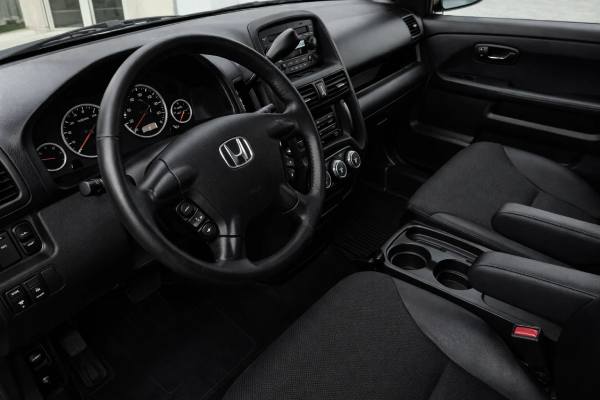
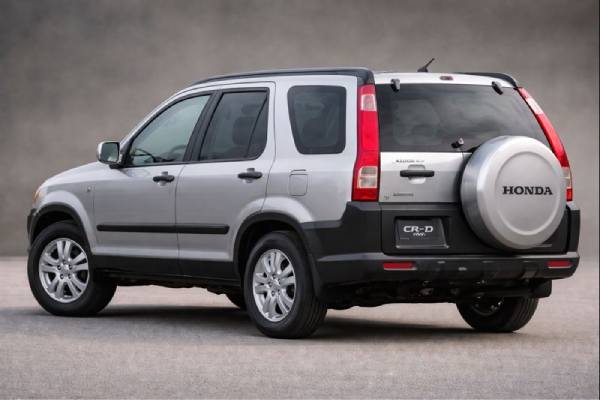
The 2005–2006 Honda CR-V RD9 diesel is the version that finally gave Europe’s second-generation CR-V the torque it always deserved. Honda’s 2.2 i-CTDi (N22A2) is an all-aluminium, common-rail turbo-diesel tuned for strong midrange pull and unusually low noise for its era. Paired with a close-ratio 6-speed manual and Honda’s Real Time 4WD, it feels more relaxed on long motorway runs than the petrol models, yet still works as a practical family SUV with a genuinely clever interior.
Ownership is mostly about staying ahead of diesel-specific maintenance: keeping airflow and emissions hardware clean, using the right oil for the turbo, and listening for driveline wear as mileage climbs. Get those basics right and the RD9 i-CTDi remains a capable, efficient, and easy-to-live-with compact SUV.
Quick Specs and Notes
- Strong low-rpm torque makes overtakes and towing feel easy for a compact SUV.
- Efficient official economy for its class: 6.7 L/100 km combined (NEDC).
- Practical cabin packaging and flexible rear seat system suits daily family use.
- Budget for common diesel wear items as mileage rises (EGR/intake soot, clutch and flywheel).
- Change engine oil about every 10,000–15,000 km (6,000–9,000 mi) or 12 months, depending on duty cycle.
Navigate this guide
- RD9 diesel 4WD ownership profile
- N22A2 specifications and capacities
- Equipment grades and safety tech
- Known diesel issues and recalls
- Service schedule and buying tips
- On-road feel and fuel use
- RD9 diesel vs alternatives
RD9 diesel 4WD ownership profile
Honda’s RD9 CR-V i-CTDi arrived as a facelift-era answer to a simple market reality: European buyers wanted diesel torque and long-range economy in the same practical, mid-size footprint that made the CR-V popular. The N22A2 delivers that with a broad torque plateau (peak torque arrives very low in the rev range), so the car feels stronger in everyday driving than the power figure suggests. The 6-speed manual is a key part of the experience: the ratios are closely stacked for response, while sixth gear is tall enough to drop cruising revs and noise on the motorway.
Real Time 4WD in this generation is an on-demand system designed for traction and stability rather than rock crawling. In normal conditions it behaves like a front-driven SUV; when the front wheels slip, the rear axle engages to help you pull away cleanly on wet tarmac, steep gravel drives, or snow-covered streets. For owners, that means the system’s value shows up in winter confidence and low drama rather than in off-road heroics. Ground clearance is useful for rutted tracks and poor roads, but approach and departure angles (and the CR-V’s road-focused tyres) set the realistic limit.
Inside, the RD9’s advantage is packaging. The seating position is upright without being van-like, visibility is good for its era, and the sliding and folding rear seat system makes it easy to switch from passengers to bulky cargo. Honda also leaned into “everyday utility” details: the split tailgate glass for quick access and the underfloor storage concept that owners either love for wet gear or forget exists until it saves a trip.
Where the RD9 diesel differs from petrol ownership is heat and soot management. Short trips, cold starts, and stop-start driving (even without modern stop-start hardware) can load the EGR and intake with deposits faster than you might expect. The engine itself is robust when maintained, but it rewards the owner who uses correct oil, warms it properly, and gives it regular longer runs. In short: it’s a family SUV that drives like a well-sorted car, but it expects “diesel-appropriate” care to stay at its best.
N22A2 specifications and capacities
Below are specifications for the 2005–2006 CR-V Real Time 4WD diesel (N22A2, 6-speed manual). Values can vary slightly by market, tyre fitment, and certification method, so treat them as a solid baseline for comparison and planning.
Powertrain and efficiency (2.2 i-CTDi)
| Item | Spec |
|---|---|
| Engine code | N22A2 |
| Layout and valvetrain | Inline-4, DOHC, 4 valves/cyl |
| Bore × stroke | 85.0 × 97.1 mm |
| Displacement | 2.2 L (2204 cc) |
| Induction | Turbocharged, intercooler (variable-nozzle turbo) |
| Fuel system | Common rail direct injection |
| Compression ratio | 16.7:1 |
| Max power | 140 hp (103 kW) @ 4,000 rpm |
| Max torque | 340 Nm (251 lb-ft) @ 2,000 rpm |
| Emissions class | Euro IV era (market dependent) |
| Official fuel use (NEDC) | Urban 8.2 / Extra-urban 5.8 / Combined 6.7 L/100 km |
| CO₂ (type approval) | 177 g/km |
A practical ownership note: the tall sixth gear is part of the economy story. At a steady 100 km/h, engine speed in sixth is about 2,070 rpm, which helps noise, consumption, and long-distance comfort.
Transmission and driveline
| Item | Spec |
|---|---|
| Transmission | 6-speed manual |
| Drive type | Real Time 4WD (on-demand AWD) |
| Differential | Open (traction aided by brake and stability systems where fitted) |
Manual gear ratios (diesel 6MT)
| Gear | Ratio |
|---|---|
| 1st | 3.933 |
| 2nd | 1.892 |
| 3rd | 1.189 |
| 4th | 0.928 |
| 5th | 0.777 |
| 6th | 0.653 |
| Reverse | 4.008 |
| Final drive | 3.894 |
Chassis, dimensions, weights, tyres
| Item | Spec |
|---|---|
| Front suspension | MacPherson strut (toe control link) |
| Rear suspension | Double wishbone (reactive link) |
| Steering | Power-assisted rack and pinion |
| Turning circle | 10.6 m (kerb-to-kerb) |
| Brakes (front/rear) | 300 mm ventilated discs / 305 mm discs |
| Wheels and tyres | 16 × 6.5J, typically 215/65 R16 |
| Length | 4,635 mm |
| Width | 1,780 mm (body); 1,835 mm (overall, market/measurement dependent) |
| Height | approx. 1,540–1,560 mm (market/roof equipment dependent) |
| Wheelbase | 2,630 mm |
| Ground clearance | 200 mm |
| Cargo volume | 527–948 L (VDA) to window line (seat position dependent) |
| Kerb weight | ~1,631 kg (diesel) |
| GVWR / max permissible | ~2,140 kg (diesel) |
| Fuel tank | 58 L |
Performance and capability (diesel 6MT)
| Item | Spec |
|---|---|
| 0–100 km/h | 10.6 s |
| Top speed | 180 km/h |
| Towing (braked / unbraked) | 1,500 kg / 600 kg |
| Trailer nose weight (typical) | 100 kg (market dependent) |
Service fluids and key workshop numbers (owner planning)
Some service capacities and torque values vary by VIN and market equipment. Use these as planning ranges and verify before ordering fluids or setting a torque wrench.
| Item | Typical guidance |
|---|---|
| Engine oil | Low-SAPs diesel oil where specified (commonly 5W-30 meeting ACEA standards for the market); capacity often around 5.5–6.0 L with filter |
| Coolant | Honda-type long-life coolant, typically 50/50 mix; capacity often around 6–7 L |
| Rear differential / 4WD fluid | Honda Dual Pump / DPSF-type fluid per spec; change more often if you get tight-turn shudder |
| Wheel nut torque (typical Honda) | around 108 Nm (80 lb-ft) |
Equipment grades and safety tech
Trim names vary by country, but the 2005–2006 European/UK structure is usually three grades. Honda’s own documentation often maps them as LS / ES / Executive (with UK retail naming like SE / SE Sport / SE Executive depending on year). What matters for buyers is not the badge itself, but the equipment bundle: stability control, side curtain airbags, and comfort features that influence long-term satisfaction.
Trims and option logic (what typically changes)
Entry grade (LS/SE-type) usually gives you the core CR-V strengths: the flexible interior, air conditioning (often manual), 16-inch wheels (commonly steel), and the diesel + 6-speed combo. This is also where safety equipment can be most variable by market. Curtain airbags and stability control may be optional rather than standard, so you need to confirm on the car.
Mid grade (ES/SE S-type) is often the “sweet spot” if you want modern-feeling safety without chasing luxury. In many markets, this is where Vehicle Stability Assist (VSA) and side curtain airbags become standard, along with alloy wheels, upgraded audio, cruise control (market dependent), and automatic climate control.
Top grade (Executive/SE Executive-type) typically adds leather, heated front seats, upgraded trim, privacy glass options, and sometimes factory navigation or premium audio depending on region. Mechanically, these trims are usually the same drivetrain and suspension as lower grades, but tyre brand/condition and brake servicing history can make them feel different on the road.
Quick identification tips when listings are vague:
- Curtain airbags: look for “SRS” tags along the roof rail/headliner area.
- VSA: check for a VSA button and a VSA indicator at key-on.
- Heated seats/leather: obvious, but also helps confirm “Executive” claims.
- Tow equipment: many diesels were used as tow cars; inspect for wiring condition and evidence of heavy use.
Safety ratings and what they mean for 2005–2006
For this generation, safety test results are best understood as “body family” results. A CR-V tested in the early 2000s reflects the same underlying platform and safety cell used through 2005–2006, while later protocol changes (and later CR-V generations) should not be mixed in.
- Euro NCAP (period result): this CR-V generation achieved a 4-star occupant rating in the Euro NCAP regime of the time, with strong pedestrian performance for its era.
- IIHS (US market reference): the 2002–2006 CR-V body family earned strong frontal crash ratings in the original moderate overlap test.
- NHTSA (US market reference): US government star ratings were strong for the same generation.
These results are helpful context, but remember two limits: (1) the test protocols were less demanding than today’s, and (2) equipment fitment (especially side and curtain airbags) depends on year and market. Your best “real-world” safety upgrade is choosing a car with complete airbag coverage, stability control where available, correct tyres, and brakes maintained to spec.
Driver assistance (ADAS)
Modern ADAS features (AEB, ACC, lane centring) were not part of this era. What you may see instead:
- ABS (standard in most markets)
- Brake assist and electronic brakeforce distribution (market dependent)
- VSA stability control on higher trims and later years in some regions
- ISOFIX child-seat points and top tether arrangements, which are worth confirming if you carry child seats regularly
Known diesel issues and recalls
The RD9 diesel’s reputation is generally positive, but age and diesel-specific systems bring predictable patterns. A good way to think about this CR-V is: the engine is fundamentally strong, yet the “supporting cast” (air, fuel, emissions, and driveline wear items) needs attention as mileage climbs.
Common issues (most likely on higher-mile cars)
1) EGR valve and intake soot buildup (medium cost, high annoyance)
- Symptoms: hesitant throttle, flat midrange, smoke under load, uneven idle, occasional engine warning light.
- Likely cause: soot and oil mist deposits accumulate in the EGR passages and intake manifold over years of short trips and low-load driving.
- Remedy: proper diagnostic scan first; then EGR cleaning/replacement and intake cleaning as needed. Prevent with good oil, timely changes, and regular longer drives where the engine reaches full operating temperature.
2) Turbo control and boost leaks (medium cost, varies)
- Symptoms: low power, limp mode, whistle, or inconsistent pull.
- Likely cause: split boost hoses, tired clamps, vacuum control issues, or a sticking variable-nozzle mechanism on neglected engines.
- Remedy: smoke/pressure test intake tract; replace hoses; confirm vacuum supply and actuator movement; use correct oil and allow proper warm-up/cool-down habits to protect the turbo.
3) Clutch and dual-mass flywheel wear (high cost if both needed)
- Symptoms: vibration at idle, rattling when engaging gears, clutch slip under load, shudder on pull-away.
- Likely cause: high diesel torque plus urban driving and towing can shorten DMF life.
- Remedy: replace clutch kit; DMF replacement if noise/vibration is present. If you tow, budget for this earlier.
4) Injector sealing and fuel system aging (medium cost, important)
- Symptoms: diesel smell, rough starting, uneven idle, combustion “chuff” sounds, or rising oil level (rare but serious).
- Likely cause: injector seat sealing issues or general high-mile fuel system wear.
- Remedy: correct diagnostic procedure; reseal/repair to prevent carbon buildup and protect compression.
Occasional issues (seen, but not every car)
Rear differential / 4WD fluid degradation (low to medium cost)
- Symptoms: shudder or binding on tight turns, especially when cold.
- Cause: aged fluid affecting the dual-pump clutch behaviour.
- Remedy: drain and refill with the correct Honda fluid; repeat if badly neglected. This is one of the most cost-effective “feel improvements” you can do on a used RD9.
Prop shaft and driveline vibration (medium cost)
- Symptoms: vibration under acceleration or at specific speeds.
- Cause: worn joints, mounts, or imbalanced components—often after years of winter use.
- Remedy: inspection on a lift; address mounts/joints before blaming tyres.
Suspension bush wear and alignment drift (low to medium cost)
- Symptoms: knocking over bumps, vague steering, uneven tyre wear.
- Cause: ageing rubber, especially on heavier diesel models.
- Remedy: replace worn bushes/links; align properly; choose tyres with a stable sidewall to match the CR-V’s weight transfer.
Recalls, service actions, and how to verify
At this age, the most important recall topic across many Hondas is airbag inflator campaigns and periodic manufacturer updates. Coverage and VIN ranges vary widely by market, so don’t rely on generic statements.
Best practice:
- Run a VIN check using an official Honda recall/update portal for your region.
- Confirm completion with a dealer record if possible.
- Treat “no outstanding recalls” as a positive, but still inspect the car for correct airbag warning behaviour (warning lights should self-test and go out).
Service schedule and buying tips
A well-maintained RD9 diesel is usually a better bet than a low-mile example with thin history. Age-related issues don’t care about odometer readings as much as you might hope, and diesel systems dislike long periods of short-trip use.
Practical maintenance schedule (real-world oriented)
Intervals below are sensible for mixed European use. If your car has a maintenance minder or service indicator, use it as a guide, but don’t stretch oil intervals on an older turbo-diesel.
- Engine oil and filter: every 10,000–15,000 km (6,000–9,000 mi) or 12 months. Use the correct diesel-rated oil for your market and climate.
- Air filter: inspect every 15,000 km, replace about 30,000 km (dusty regions sooner).
- Cabin filter: 15,000–30,000 km or yearly if you drive in cities.
- Fuel filter: every 40,000–60,000 km (or sooner if you suspect contamination).
- Coolant: typically 5 years, then every 3–5 years depending on coolant type used.
- Brake fluid: every 2 years regardless of mileage.
- Brake pads/rotors: inspect at every service; the diesel’s weight can consume fronts faster.
- Gearbox oil (manual): refresh around 80,000–120,000 km if shifts feel notchy or history is unknown.
- Rear differential / 4WD fluid: every 40,000–60,000 km, and sooner if you feel tight-turn shudder.
- Aux belt and pulleys: inspect annually; replace at signs of cracking/noise.
- Battery and charging check: test yearly; many drivability complaints are voltage-related on older cars.
- EGR/intake health: plan periodic inspection/cleaning based on driving style—short trips need it more often.
Buyer’s checklist (what to inspect before you commit)
Paperwork and history
- Look for consistent oil changes (not just “serviced”).
- Confirm the correct diesel oil spec was used (turbo longevity depends on it).
- Verify recall/update status via VIN checks and receipts.
Cold start and idle
- It should start cleanly with minimal smoke once glow plugs do their job.
- Idle should be steady; excessive vibration can hint at mounts or DMF wear.
Test drive
- Pull should be strong from low rpm without surging.
- Listen for drivetrain clunks on on/off throttle.
- Try tight, slow turns in a car park: shudder can suggest overdue 4WD fluid service.
- Brake firmly from speed: it should track straight with no steering shake.
Underbody and rust
- Inspect brake lines, rear subframe areas, and suspension mounting points—especially in salted winter regions.
- Check the exhaust condition and heat shields for rattles.
Common reconditioning costs to budget
- Tyres (matching set matters on 4WD systems)
- Full fluid baseline (oil, filters, brake fluid, differential fluid)
- Suspension links/bushings
- Clutch/DMF if symptoms are present
Long-term outlook: if you start with a healthy drivetrain and keep up with fluids, this CR-V can be a durable “keep it for years” SUV. If you buy one with neglected diesel airflow maintenance or clear clutch/DMF symptoms, costs can quickly exceed the purchase price savings.
On-road feel and fuel use
The RD9 diesel’s defining trait is how effortless it feels at everyday speeds. Peak torque arrives at 2,000 rpm, and the engine’s strong midrange means you can short-shift and still make brisk progress. In traffic, it behaves more like a larger-engined petrol car than a typical early-2000s diesel: it’s willing, flexible, and less “peaky” than many rival diesels of the time.
Ride, handling, and NVH
For a compact SUV, the CR-V is notably car-like. The suspension design (MacPherson strut front and double wishbone rear) gives it predictable grip and tidy body control. You feel the diesel’s extra weight over the nose compared with petrol versions, especially in quick direction changes, but it remains stable and confidence-inspiring. Steering is light rather than talkative; what you gain is easy placement and low effort in town.
Noise and vibration are better than many expect. Honda added diesel-specific sound suppression and refinement measures, and the payoff is a cabin that stays calm at a cruise. At motorway speeds, the tall sixth gear helps: at 100 km/h, the engine turns roughly 2,070 rpm, which keeps both noise and fuel use in check. Wind noise and tyre roar will dominate more than engine noise if the car is on aggressive tread tyres or worn door seals.
Performance you can feel
The official numbers look modest—0–100 km/h in 10.6 s, 180 km/h top speed—but the way it delivers speed is what matters. Overtakes from 80–120 km/h typically feel strong because you can sit in the torque band without needing big rpm. The close-ratio 6-speed is well matched: you can keep the engine in its sweet spot without constant shifting.
Real-world economy (what to expect)
Official (NEDC) fuel use is:
- Urban: 8.2 L/100 km
- Extra-urban: 5.8 L/100 km
- Combined: 6.7 L/100 km
In real conditions, many owners see results close to that on steady A-road and motorway trips, with the biggest penalties coming from short cold runs, winter fuel, and stop-start traffic. A realistic planning range:
- Mixed driving: ~6.8–7.8 L/100 km (41–34 mpg UK, approx.)
- Motorway at 120 km/h: often around 7.0–7.5 L/100 km depending on tyres, load, and wind
- Urban-only use: can climb beyond 8.5–9.5 L/100 km if trips are short and the engine stays cool
Traction and control in poor conditions
Real Time 4WD is most noticeable when you ask it to do something difficult: pulling away uphill on wet leaves, crossing slushy junctions, or towing on a damp campsite. It is not a low-range system, but it is a very effective “keep you moving” setup when paired with good tyres. If you drive in snow, winter tyres do more for control than any drivetrain badge.
RD9 diesel vs alternatives
When new, the diesel CR-V competed directly with the core European compact SUV field. Today, those rivals are also ageing, so the comparison is less about brochure features and more about how each model ages: driveline durability, parts costs, and how sensitive the vehicle is to neglected maintenance.
Versus Toyota RAV4 D-4D (similar era)
Why the CR-V wins: the Honda’s cabin packaging and seat versatility are hard to beat, and the N22A2’s refinement and gearing can feel more “long-distance friendly.” The CR-V also tends to feel stable and predictable at speed.
Why the RAV4 wins: some markets see stronger long-term corrosion resistance and very broad parts availability.
Choose the Honda if: you value comfort, interior practicality, and a calm motorway character.
Versus Nissan X-Trail 2.2 dCi
Why the CR-V wins: typically more polished on-road manners and a more reliable “daily driver” feel if maintained.
Why the X-Trail wins: often more rugged stance and sometimes better rough-road tolerance depending on spec.
Choose the Honda if: you want car-like behaviour and a drivetrain that rewards consistent servicing.
Versus Hyundai Santa Fe and Kia Sportage (diesels of the time)
Why the CR-V wins: interior flexibility, steering/suspension balance, and often a more refined power delivery.
Why they win: you may find better value per purchase price in some markets, sometimes with higher towing ratings depending on version.
Choose the Honda if: you want a compact footprint with smart packaging rather than a larger-feeling SUV.
Versus Land Rover Freelander TD4 (ownership reality check)
Why the CR-V wins: lower ownership drama on average—simpler day-to-day reliability, fewer “specialist only” repairs, and typically lower running costs.
Why the Freelander wins: a different off-road capability ceiling.
Choose the Honda if: you want dependable use over adventurous edge cases.
The RD9 diesel’s best-fit owner
This CR-V makes the most sense for drivers who:
- Do regular medium or long trips (good for diesel airflow health).
- Want a compact SUV that drives like a car and tows up to 1,500 kg sensibly.
- Prefer practical features over modern screens and ADAS.
If your driving is mostly short urban trips, you can still own one successfully, but you should plan more frequent oil changes and be proactive about EGR/intake cleanliness. In that use case, a petrol SUV (or a newer diesel with modern aftertreatment designed for stop-start duty) can be the lower-stress choice.
References
- CR-V 05 2005 (Manufacturer Press Release)
- 2005 Honda CR-V 2005 (Safety Rating)
- Vehicle Detail Search – 2005 HONDA CR-V 4 DR 2005 (Recall Database and Ratings)
- Honda Owners | Recalls and Updates | Honda UK 2026 (Recall Checker)
Disclaimer
This article is for informational purposes only and is not a substitute for professional inspection, diagnosis, or repair. Specifications, torque values, service intervals, and procedures can vary by VIN, market, production date, and equipment, so always verify details using the official Honda owner’s and service documentation for your exact vehicle.
If this guide helped, please consider sharing it on Facebook, X (Twitter), or your favourite forum—it helps others find reliable ownership information.