

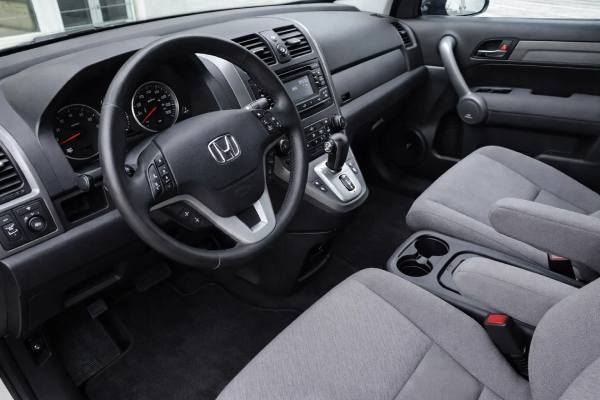
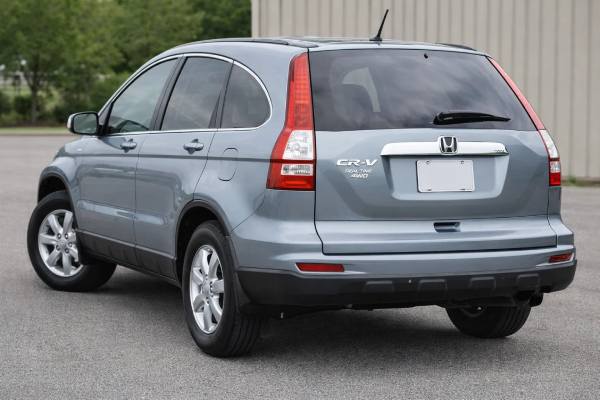
The 2007–2011 Honda CR-V RE4 with Real Time 4WD and the K24Z1 2.4-liter engine sits in a sweet spot for owners who want simple, durable engineering with genuinely useful all-weather traction. It is not a “locked” 4×4 system, but a front-biased AWD setup that can send torque rearward when the front tires slip—ideal for rain, steep driveways, and snow on the right tires, without the driveline binding you get from part-time systems on dry pavement. The K24Z1 is a naturally aspirated, timing-chain four-cylinder that favors smooth torque and low drama over peak power, and the platform’s packaging remains one of the CR-V’s biggest strengths: a tall cabin, easy rear access, and a cargo area that stays practical even with AWD hardware underneath. Buy well, maintain fluids on time, and this generation can be a long-lived daily driver.
Owner Snapshot
- Predictable, confidence-building traction in wet and winter conditions without special driver input.
- Practical interior packaging that still works as a family car, commuter, or light-duty hauler.
- K24Z1 timing-chain engine favors longevity when oil changes stay consistent.
- Rear differential fluid neglect can cause tight-turn shudder; service it early if symptoms appear.
- Plan an oil and filter service about every 10,000–12,000 km (6,000–7,500 mi) or 12 months, depending on use.
Navigate this guide
- RE4 AWD model character
- K24Z1 AWD specs tables
- RE4 trims and safety kit
- Common RE4 failures and fixes
- Service schedule and buying tips
- Real-world driving and economy
- RE4 vs similar SUVs
RE4 AWD model character
Honda’s 2007–2011 CR-V RE4 (Real Time 4WD) is best understood as a front-wheel-drive crossover with an intelligent rear axle that steps in when it has to. In normal cruising, most torque goes to the front wheels for efficiency and low driveline wear. When the front tires begin to spin, a rear differential/dual-pump style coupling (market-dependent naming) pressurizes and sends torque rearward. The result is a system that feels invisible in daily driving yet noticeably stabilizes launches on slick surfaces and helps the car “pull” rather than “push” when one front tire loses grip.
The K24Z1 2.4-liter engine matches the vehicle’s mission. It is not a turbo motor that surges; it builds torque smoothly and rewards calm throttle inputs. That matters because this CR-V’s strongest use case is consistent, low-stress driving: commuting, family trips, and winter errands. The chassis is tuned more for comfort and control than sharp handling, with a stable highway attitude and steering that prioritizes ease over feedback. Ground clearance and approach angles are modest, so think forest parking lots and snowy streets, not deep ruts or rock steps.
Ownership traits tend to split into three buckets:
- Packaging and usability: a tall seating position, square cargo space, and easy rear entry. This generation is still a benchmark for “it just fits my life.”
- Low-drama mechanicals: a timing-chain engine, conventional automatic/manual options (market dependent), and widely available service parts.
- AWD care requirements: the system is robust, but it is sensitive to tire diameter differences and rear differential fluid condition.
If you plan to keep the car long-term, treat it like a system: match tires closely, keep the engine oil clean, and service the transmission and rear diff before they complain. Do that, and the RE4’s biggest advantage is confidence—confidence that it will start, track straight, and keep moving when conditions are messy.
K24Z1 AWD specs tables
Specs for the 2007–2011 CR-V vary by market (EPA vs WLTP-era methods, trim wheel sizes, and manual vs automatic availability). The tables below focus on the RE4 Real Time 4WD with the K24Z1 2.4 l gasoline engine and typical global equipment. Where regional differences are common, values are shown as realistic ranges.
Powertrain and efficiency
| Item | Specification |
|---|---|
| Engine code | K24Z1 |
| Layout | Inline-4 (I-4), DOHC, i-VTEC, 4 cylinders, 4 valves/cyl |
| Displacement | 2.4 l (2354 cc) |
| Bore × stroke | 87.0 × 99.0 mm (3.43 × 3.90 in) |
| Induction | Naturally aspirated (NA) |
| Fuel system | PGM-FI / multi-point injection (MPI) |
| Compression ratio | ~10.5:1 (market dependent) |
| Max power | 166 hp (124 kW) @ ~5800 rpm |
| Max torque | ~218 Nm (161 lb-ft) @ ~4200 rpm |
| Timing drive | Chain |
| Rated efficiency | Typical mixed: 9.5–11.5 L/100 km (≈ 20–25 mpg US / 24–30 mpg UK) |
| Real-world highway @ 120 km/h (75 mph) | Often 7.8–9.2 L/100 km (≈ 26–30 mpg US / 31–36 mpg UK) |
| Aerodynamics | Cd and frontal area vary by source; expect Cd in the mid-0.3 range |
Transmission and driveline
| Item | Specification |
|---|---|
| Transmission | Commonly 5-speed automatic (market dependent); some markets offered a 6-speed manual |
| Drive type | Real Time 4WD (AWD) |
| Differential | Open front and rear; AWD coupling manages rear engagement |
Chassis and dimensions
| Item | Specification |
|---|---|
| Suspension (front/rear) | MacPherson strut / multi-link |
| Steering | Electric power steering (EPS), rack-and-pinion; ratio varies by market/trim |
| Brakes | 4-wheel discs (front ventilated); rotor diameters vary by market/trim |
| Wheels/tyres | Common: 225/65 R17; base trims may use 215/70 R16 |
| Ground clearance | ~185 mm (7.3 in) (varies slightly by trim) |
| Length / width / height | ~4525 / 1820 / 1675 mm (≈ 178.1 / 71.7 / 65.9 in) |
| Wheelbase | ~2620 mm (103.1 in) |
| Turning circle (kerb-to-kerb) | ~11.4–11.8 m (37–39 ft) |
| Kerb (curb) weight | Typically 1580–1660 kg (3480–3660 lb) |
| GVWR | Market dependent; commonly ~2100–2200 kg (4630–4850 lb) |
| Fuel tank | 58 L (15.3 US gal / 12.8 UK gal) |
| Cargo volume | Typical: ~1010 L (35.7 ft³) seats up / ~2060 L (72.9 ft³) seats down (method varies) |
Performance and capability
| Item | Typical figure (AWD) |
|---|---|
| 0–100 km/h (0–62 mph) | ~10.5–11.8 s (transmission, tires, altitude affect results) |
| Top speed | ~175–185 km/h (109–115 mph) |
| Braking 100–0 km/h | Often ~40–43 m (tires and test method matter) |
| Towing capacity | Often ~680 kg (1500 lb) in some markets; higher in others with trailer brakes and cooling provisions |
| Payload | Commonly ~400–500 kg (880–1100 lb) |
| Roof load | Often ~75 kg (165 lb) (check roof-rail rating by market) |
Fluids and service capacities
| Item | Specification (typical) |
|---|---|
| Engine oil | 5W-20 (many markets); capacity about 4.2 L (4.4 US qt) incl. filter |
| Coolant | Honda Type 2 / equivalent long-life; capacity varies (commonly ~5.5–6.5 L (5.8–6.9 US qt) total system) |
| Transmission/ATF | Honda ATF (DW-1 successor in later service practice); total fill varies by transmission (often ~6–7 L) |
| Rear differential | Honda Dual Pump Fluid; typically about ~1.0–1.2 L |
| A/C refrigerant | R-134a; charge varies by market (commonly ~450–550 g) |
Key torque specs (critical fasteners only)
| Fastener | Torque |
|---|---|
| Engine oil drain bolt | 39 Nm (29 lb-ft) |
| Wheel lug nuts | Commonly 108 Nm (80 lb-ft) (verify by wheel type/market) |
| Rear trailing arm bolt (recall bulletin reference) | 115 Nm (~85 lb-ft) |
Electrical
| Item | Specification (typical) |
|---|---|
| Alternator output | Often ~90–110 A (by market and equipment load) |
| 12 V battery | Commonly 45–60 Ah range (CCA varies widely) |
| Spark plugs | Long-life iridium; gap typically ~1.0–1.1 mm (0.039–0.043 in) |
Safety and driver assistance
| Item | Notes |
|---|---|
| Crash ratings | Ratings depend on test body and year of protocol; see Safety section for summaries |
| Headlights (IIHS context) | Headlight scoring varies by trim and bulb type; many trims are “adequate” by modern standards |
| ADAS suite | This generation predates modern AEB/ACC/LKA; focus is on airbags, ABS, and stability control |
RE4 trims and safety kit
Trim names vary by region, but the mechanical picture is consistent: you are choosing mostly equipment level, not a radically different drivetrain. In many markets, AWD availability tracks with higher trims, while base trims may be FWD-only. For an RE4 buyer, the practical trim differences usually come down to wheels/tires, interior comfort, and a few convenience systems that can affect long-term costs.
Common trim patterns and quick identifiers
- Entry AWD trims: often cloth seats, smaller wheels (16-inch in some regions), and fewer electronic extras. These can be the best ownership value because there is less to age out.
- Mid trims: typically add alloy wheels, upgraded audio, privacy glass, and sometimes a sunroof. Wheel size changes matter because larger wheels often ride more firmly and cost more in tires.
- Upper trims: leather, heated seats, premium audio/navigation (region dependent), and more exterior brightwork. Great for comfort, but check every switch and motor carefully on a used car.
Simple identifiers that help in a parking lot:
- Wheel size (16 vs 17) is often the fastest cue.
- Sunroof presence often signals a mid/upper trim package.
- Stability control button/indicators and airbag tags (seat/curtain) help confirm safety equipment where it was not universal in early production for some markets.
Safety hardware you should expect
Most 2007–2011 CR-Vs include:
- Front airbags plus front side airbags and side curtain airbags (availability can vary by early base trims and markets).
- ABS with EBD (electronic brake-force distribution) and brake assist.
- Stability control (Honda commonly brands this as VSA). If you find a vehicle without stability control in your market, treat it as a significant downgrade for wet and winter safety.
Child-seat provisions typically include LATCH/ISOFIX anchors and top tethers. When inspecting a used car, verify that tether anchors are intact and not rusted or damaged, especially if the vehicle lived in heavy road-salt areas.
Crash-test ratings in plain language
- IIHS (U.S.-focused): This CR-V generation is known for strong performance in the moderate overlap frontal and side tests for its era, especially when equipped with side airbags and stability control. What matters for you: structure and restraint performance are generally good, so the car has a solid safety foundation.
- NHTSA (U.S. database): Ratings commonly show strong front and side scores, with rollover risk being the category where crossovers often score lower than sedans. Use the specific year’s listing for the model year you are buying.
ADAS reality check
Do not buy this generation expecting modern driver assistance. There is no factory AEB, adaptive cruise, or lane centering. The “driver assistance” you are relying on is good visibility, a stable chassis, predictable brakes, and the traction advantage of AWD in poor conditions. The ownership upside is simplicity: fewer radar sensors, fewer camera calibrations, and fewer expensive modules to replace.
Common RE4 failures and fixes
The 2007–2011 CR-V is generally durable, but age and mileage create patterns you can plan around. Below, issues are grouped by how often they appear and how expensive they tend to be. Mileage bands are approximate because climate and maintenance matter as much as odometer reading.
Common, low-to-medium cost
- Rear differential “groan” or shudder on tight turns (often 60,000–120,000 km / 40,000–75,000 mi, but can appear sooner)
Symptoms: vibration or moaning in slow, tight parking-lot turns.
Likely cause: old or incorrect rear diff fluid; sometimes mismatched tire diameters forcing the AWD coupling to work overtime.
Remedy: drain and refill with the correct Honda Dual Pump Fluid (often twice with a short drive between), then keep to a shorter interval if the car sees snow, hills, or frequent short trips. - Door lock actuator weakness (age-related, any mileage)
Symptoms: inconsistent locking, one door staying unlocked, clicking with no movement.
Remedy: replace the actuator for the affected door; verify the key fob and body control system are not the real culprit. - Suspension wear items (80,000–160,000 km / 50,000–100,000 mi)
Symptoms: clunks over bumps, vague steering, uneven tire wear.
Likely cause: sway bar links, bushings, and occasionally ball joints or control arm bushings.
Remedy: replace worn components as a set where it makes sense, then align.
Occasional, medium cost
- A/C performance decline
Symptoms: weak cooling, cycling compressor, oily residue around condenser area.
Likely causes: condenser damage/corrosion, leaks at seals, or compressor wear depending on history.
Remedy: proper leak test, replace failed components, evacuate and recharge by weight. - Oil seepage at gaskets and solenoids
Symptoms: oil smell, light drips, oil around the VTEC/spool valve area or valve cover.
Remedy: replace gaskets/seals; clean the area and confirm it is not a larger crank seal leak. - Engine startup rattle (brief)
Symptoms: short rattle at cold start that disappears quickly.
Likely cause: VTC actuator or timing chain tension behavior in some cases.
Remedy: start with correct oil viscosity and change intervals; if persistent or worsening, diagnose timing components early rather than late.
Rare, high cost (but important)
- Rear frame corrosion in salt regions (recall-related)
Symptoms: heavy underbody corrosion near rear suspension mounting areas; alignment changes; unusual rear handling noises; visible perforation or flaking at critical points.
Risk: in severe cases, structural corrosion can compromise rear suspension mounting integrity.
Remedy: verify recall eligibility and completion by VIN and dealer records; avoid buying vehicles with advanced structural rust even if “patched.”
Software and calibrations
Compared with newer vehicles, calibrations are limited. Still, a used vehicle can have drivability improvements or updated control modules depending on recall/TSB history. Your best practice is practical, not theoretical: ask for documented dealer service history, confirm any open recalls, and pay attention to warning lights that could hint at a neglected fault rather than a “simple sensor.”
Pre-purchase checks to request
- Tire match: confirm all four tires are the same brand/model and within close tread depth. AWD systems dislike diameter differences.
- Rear diff test: do a tight figure-eight at low speed; listen and feel.
- Underbody inspection: especially rear suspension mounts and subframe areas.
- Fluid condition: engine oil, ATF color/odor, and evidence of rear diff servicing.
- Electrical sweep: locks, windows, HVAC, and instrument cluster behavior.
Service schedule and buying tips
A CR-V that feels “bulletproof” usually has one thing in common: its fluids were changed before the owner felt a problem. For the RE4 AWD, fluid maintenance is not just about the engine—it is also about keeping the AWD hardware calm and quiet.
Practical maintenance schedule
Use this as a conservative baseline for mixed driving. If your vehicle follows a dashboard maintenance minder, treat the minder as the minimum and shorten intervals for short trips, heavy city driving, or extreme temperatures.
| Item | Interval (distance/time) | Notes |
|---|---|---|
| Engine oil and filter | 10,000–12,000 km (6,000–7,500 mi) or 12 months | Shorten for frequent short trips, cold starts, or dusty use |
| Engine air filter | 30,000 km (18,000 mi) inspect; replace as needed | Dusty regions may need earlier changes |
| Cabin air filter | 20,000–30,000 km (12,000–18,000 mi) | Helps HVAC performance and reduces blower strain |
| Coolant | 5 years or ~160,000 km (100,000 mi) then 3 years/50,000 km | Use correct long-life coolant spec |
| Spark plugs | ~160,000 km (100,000 mi) | Long-life iridium; replace coils only if needed |
| Valve clearance (if applicable) | Inspect around 160,000–200,000 km | Adjust if noisy, rough idle, or misfire history |
| Automatic transmission fluid | 50,000–60,000 km (30,000–37,000 mi) drain-and-fill | More frequent if towing or heavy city use |
| Rear differential fluid | 30,000–50,000 km (18,000–31,000 mi) | Earlier if you hear groan/shudder in tight turns |
| Brake fluid | Every 3 years | Moisture control matters more than mileage |
| Brake inspection | Every service | Check pad thickness, rotor condition, slide pins |
| Tires rotation | Every 8,000–10,000 km (5,000–6,000 mi) | Helps keep AWD happy by minimizing diameter differences |
| Alignment check | Annually or with tire wear | Especially after suspension work or curb impacts |
| 12 V battery test | Annually after year 4 | Replace proactively if weak in winter |
Fluid specs and decision-making capacities
- Engine oil: many markets specify 5W-20; capacity is about 4.2 L (4.4 US qt) including filter.
- Rear differential: use the correct Honda AWD fluid (commonly Dual Pump Fluid). Wrong fluid can cause chatter.
- Transmission: use the correct Honda ATF for your exact transmission type; “universal” fluids are a gamble.
Buyer’s checklist that actually saves money
- Rust and structure first: surface rust is common; structural rust near suspension mounts is the deal-breaker.
- AWD behavior test: tight turns + low-speed uphill starts on mixed traction tell you more than a highway drive.
- Cooling system health: confirm stable temperature, no sweet smell, and no dried coolant traces.
- Service history reality: look for repeatable evidence—receipts, dealer printouts, or documented intervals.
- Common reconditioning items: tires (matched set), brakes, shocks/struts, and fluids. Budget for them rather than hoping.
Long-term durability outlook
With consistent oil changes and proactive driveline fluid service, the K24Z1/RE4 combination is well-suited to 10+ years of ownership. The main threats are not exotic engine failures—they are neglect, rust, and “close enough” tires that slowly stress the AWD system.
Real-world driving and economy
The RE4 CR-V drives like a well-sorted tool: not exciting, but confidence-inspiring. Around town, the seating position and glass area make it easy to place, and the steering effort stays light enough for constant parking maneuvers. The suspension leans toward comfort, with enough control to keep the body from feeling floaty. Over broken pavement, you will usually hear the suspension before it feels harsh—NVH (noise, vibration, harshness) is acceptable for the era, though wind noise at highway speeds can rise on worn door seals or roof rack-equipped cars.
Powertrain character
The K24Z1’s torque delivery suits everyday driving. Throttle response is progressive rather than sharp, which helps traction on slippery roads because you can “feed in” power instead of spiking wheelspin. With the common automatic, expect smooth upshifts and a willingness to downshift on grades. What you should not expect is rapid passing power at high speeds—plan overtakes with a bit of space and use kickdown early.
If your market offers a manual, it can make the car feel more responsive, but the underlying character remains the same: steady torque, not fireworks.
How Real Time 4WD feels on the road
In normal conditions you will not notice it, and that is the point. In rain or snow, you may feel the rear axle “join in” as the car stops scrabbling at the front tires and begins to track more cleanly. The system is not designed for prolonged wheelspin. If you regularly drive in deep snow, the biggest performance upgrade is often tires, not hardware: a quality winter tire transforms this CR-V.
Two ownership behaviors make a real difference:
- Matched tires: keep all four within close tread depth so the AWD coupling does not fight tire diameter differences.
- Rear diff fluid: fresh fluid reduces chatter and helps engagement stay smooth.
Real-world efficiency
On modern roads, a healthy RE4 AWD CR-V typically lands in the high single digits to low double digits in L/100 km depending on speed, temperature, and tires. Expect your biggest swings from:
- Highway speed: 120–130 km/h costs noticeably more fuel than 100–110 km/h.
- Cold weather: short trips plus heater use can add a meaningful penalty.
- Tires and alignment: aggressive all-terrains or misalignment can quietly raise consumption.
Selective performance metrics that matter
- 0–100 km/h: roughly 11 seconds is common for AWD automatics—adequate for merging, not sporty.
- Braking feel: generally stable and predictable, but aging caliper slide pins and old brake fluid can make the pedal feel inconsistent.
- Turning circle: compact enough for daily life; you feel its practicality most in parking garages and city streets.
RE4 vs similar SUVs
When you compare the 2007–2011 CR-V RE4 to its era rivals, the decision usually comes down to three questions: Do you value interior packaging over power? Do you want “always-there” AWD behavior or something more off-road oriented? And how much repair complexity are you willing to accept as the vehicle ages?
Against Toyota RAV4 (same era)
- CR-V advantages: more consistent cabin packaging and a calm, predictable drivetrain. Owners often prefer the Honda’s ergonomics and day-to-day usability.
- RAV4 advantages: some markets offered stronger engine options (including higher-output variants), which can feel more effortless at highway speeds.
- Decision tip: if you routinely carry heavy loads or do high-speed highway travel, the RAV4’s power advantage can matter; if you live in the car and value “it just works,” the CR-V often wins.
Against Subaru Forester
- CR-V advantages: typically simpler maintenance and a more “appliance-like” ownership experience, especially if you prioritize smoothness and ease.
- Forester advantages: Subaru’s AWD is more consistently engaged and can feel more secure in continuously slippery conditions.
- Decision tip: if you face long winters on unplowed roads, Forester AWD behavior can be compelling; if you want lower driveline fuss and excellent interior utility, CR-V is strong.
Against Nissan X-Trail/Rogue (market dependent)
- CR-V advantages: strong long-term reputation for drivetrain durability and a very usable interior.
- X-Trail/Rogue advantages: depending on year and transmission, some models deliver good fuel economy; equipment packages can be attractive.
- Decision tip: prioritize the best-maintained example. A well-maintained CR-V usually ages more gracefully, but condition matters more than badges at 15+ years old.
Against Volkswagen Tiguan (early generation)
- CR-V advantages: lower complexity and generally lower cost risk as the vehicle ages.
- Tiguan advantages: often feels more “European” in steering and chassis tuning, with stronger torque if turbocharged variants are common in your market.
- Decision tip: if you want fewer surprises in ownership, CR-V is the safer bet; if you want sharper road feel and accept higher maintenance risk, Tiguan can be appealing.
The RE4’s clear niche
The CR-V RE4 is not the fastest or the most rugged, but it is a balanced tool for real life: stable, roomy, and easy to keep on the road. Its biggest advantage over rivals is how many things it does “well enough” without demanding special attention—so long as you respect the AWD system’s two rules: matched tires and fresh rear diff fluid.
References
- 2007 Honda CR-V Online Reference Owner’s Manual 2007 (Owner’s Manual)
- Vehicle Detail Search – 2007 HONDA CR-V | NHTSA 2026 (Safety Database)
- 2007 Honda CR-V 4-door SUV 2007 (Safety Rating)
- Part 573 Safety Recall Report 23V-228 2023 (Recall Database)
Disclaimer
This article is for informational purposes only and is not a substitute for professional inspection, diagnosis, or repair. Specifications, torque values, maintenance intervals, and procedures can vary by VIN, market, drivetrain, and equipment. Always verify details using your vehicle’s official owner’s manual and service documentation, and consult a qualified technician for safety-critical work.
If this guide helped you, please consider sharing it on Facebook, X/Twitter, or your favorite forum—your support helps us keep producing practical, high-quality ownership resources.