

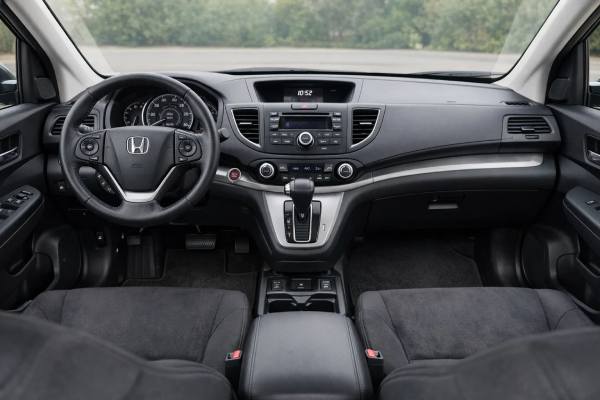
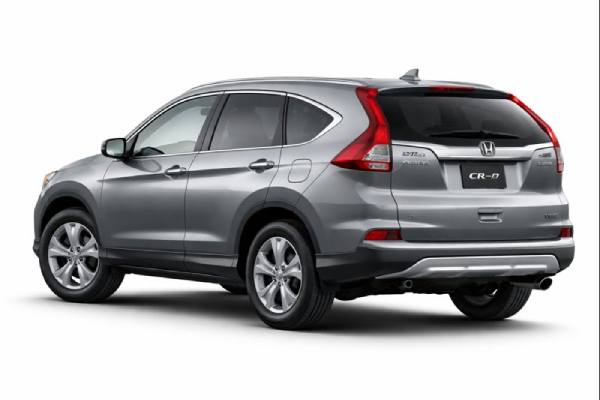
Honda’s fourth-generation CR-V with the 2.0-liter R20A9 and Real Time AWD is a very specific kind of family SUV: designed to be easy to live with, predictable in poor weather, and cost-stable when maintained on schedule. The R20A9 is a naturally aspirated petrol four-cylinder that rewards regular oil changes and clean air filtration more than fancy “tuning” parts. Meanwhile, the Real Time AWD system is not a hardcore off-roader setup—it’s an on-road traction system that can send torque rearward when the front tires slip, then relax back to a mostly front-drive feel.
For owners, the big themes are simple: choose the right transmission for your use, keep the AWD rear drive unit fluid fresh, and stay ahead of age-related rubber and suspension wear. Do that, and this CR-V tends to age gracefully with few unpleasant surprises.
Owner Snapshot
- Strong wet and winter stability with predictable Real Time AWD behavior on all-season tyres.
- R20A9 petrol engine favors steady maintenance and typically tolerates city driving well.
- Budget for rear differential (rear drive unit) fluid service every 30,000–50,000 km (or 2–3 years) depending on use.
- If you hear tight-turn shudder or binding, treat it as an AWD fluid or rear unit issue early—cost stays low when caught fast.
- Expect the usual 10+ year wear items: dampers, control arm bushings, and wheel bearings.
Jump to sections
- Real Time AWD ownership fit
- R20A9 AWD specs and measurements
- Trims, safety, and driver aids
- Reliability hotspots and campaigns
- Maintenance plan and buying tips
- Real-world driving and efficiency
- AWD SUV rivals and alternatives
Real Time AWD ownership fit
This CR-V configuration is best understood as a traction-optimised commuter and family hauler, not an off-road toy. The Real Time AWD system is designed to be unobtrusive: in normal cruising it behaves like a front-driver, then progressively feeds torque to the rear when front slip is detected. That “rear assist” character is exactly why many owners prefer it—on wet roundabouts, snowy inclines, muddy parking fields, and steep gravel driveways, it adds stability without demanding driver attention.
A practical advantage is how it pairs with the R20A9 engine. A naturally aspirated 2.0-liter doesn’t have the low-rpm surge of a turbo motor, but it delivers smooth, linear response that’s easy to meter in low-grip conditions. For day-to-day use, the CR-V’s tall seating position, generous glass area, and calm chassis tuning make it feel like a tool you can place accurately in traffic.
Where expectations need adjusting is capability. Ground clearance is useful for snow ruts and light trails, but approach and departure angles, underbody protection, and tyre selection still set the real limits. If you routinely drive rocky tracks, you’ll want different tyres and more underbody caution than the CR-V platform assumes. Think of the AWD as insurance for traction—not permission for aggressive terrain.
The ownership “price” of AWD is straightforward:
- More service points: rear drive unit fluid, propeller shaft and joints, extra seals and bearings.
- More tyres discipline: mismatched tyre sizes (or uneven wear) can stress the AWD coupling. Rotate tyres on time and replace as a set when tread depth differences grow.
- Slightly higher consumption and weight: you’ll feel it most in stop-and-go driving and short trips.
If your climate is mild and your roads are clean, FWD can be cheaper to run. But if you see frequent rain, winter slush, steep driveways, or tow light loads occasionally, the AWD CR-V often feels “more relaxed” because it asks less from the front tyres.
R20A9 AWD specs and measurements
Because this CR-V was sold across many markets, some specifications vary by transmission, wheel package, and local regulations. The tables below focus on the RE5-era CR-V with the R20A9 2.0 petrol and Real Time AWD, noting common ranges where markets differ.
Powertrain and efficiency
| Item | Specification (typical for R20A9 AWD) |
|---|---|
| Engine code | R20A9 |
| Layout | Front transverse inline-4 |
| Valvetrain | SOHC i-VTEC, 16 valves (4 valves/cyl) |
| Bore × stroke | ~81.0 × 96.9 mm |
| Displacement | 2.0 L (1,997 cc) |
| Induction | Naturally aspirated |
| Fuel system | PGM-FI (port injection, market-dependent calibration) |
| Compression ratio | Market-dependent (commonly ~10.6:1) |
| Max power | ~155 hp (114 kW) @ rpm (varies slightly by market) |
| Max torque | Typically ~190–193 Nm @ rpm (varies by market) |
| Timing drive | Chain |
| Rated efficiency | Often mid-7 to low-8 L/100 km combined (varies by gearbox, tyres, and homologation cycle) |
| Real-world highway @ 120 km/h | Commonly ~7.5–8.5 L/100 km depending on load, tyres, and wind |
| Aerodynamics | Cd and frontal area vary by trim; expect “SUV-normal” rather than class-leading |
Transmission and driveline
| Item | Specification |
|---|---|
| Transmission | 6MT or 5AT in many regions; some markets use CVT on later years—verify by VIN/trim |
| Drive type | Real Time AWD (on-demand torque transfer to rear) |
| Differential | Open front; rear drive unit with clutch-based torque transfer (serviceable fluid) |
Chassis and dimensions
| Item | Typical specification / range |
|---|---|
| Front suspension | MacPherson strut |
| Rear suspension | Multi-link |
| Steering | Electric power steering (EPS); ratio varies by model year/market |
| Brakes | 4-wheel discs (sizes vary by wheel package) |
| Wheels/tyres | Commonly 16–18 inch; tyre sizes vary (e.g., 215/70R16, 225/65R17) |
| Ground clearance | Typically ~165–175 mm (package dependent) |
| Length / width / height | Around 4,520–4,570 mm / ~1,820 mm / ~1,650–1,680 mm (market/roof-rail dependent) |
| Wheelbase | ~2,620 mm |
| Turning circle | Typically ~11–12 m kerb-to-kerb (tyres and steering calibration affect this) |
| Kerb weight | AWD adds roughly ~70–100 kg vs comparable FWD trims (varies by gearbox and equipment) |
| Fuel tank | Commonly ~58 L (market dependent) |
| Cargo volume | Market measurement methods differ; practical takeaway is “one of the roomier” compact SUVs for prams and luggage |
Performance and capability
| Item | Typical AWD R20A9 range |
|---|---|
| 0–100 km/h | ~10.0–11.5 s (gearbox and trim dependent) |
| Top speed | Often ~185–195 km/h (market dependent) |
| Braking 100–0 km/h | Tyres matter most; expect “good family SUV” results on quality tyres |
| Towing capacity | Market and gearbox dependent; commonly ~1,500 kg braked in some regions—verify your VIN plate and local handbook |
| Roof load | Often ~75 kg (verify rails and market rating) |
Fluids and service capacities (decision-grade guidance)
| Item | Typical guidance (verify for your VIN) |
|---|---|
| Engine oil | 0W-20 or 5W-30 depending on market and climate; use the spec listed in your handbook |
| Oil capacity | Commonly ~4.2–4.5 L with filter |
| Coolant | Honda-type long-life coolant; premix ratio per manual |
| Transmission fluid | Honda ATF (auto) or MTF (manual); CVT fluid if equipped—never substitute |
| Rear drive unit fluid | Honda Dual Pump Fluid / DPSF (version varies by market) |
| A/C refrigerant | R134a on most of this generation (region/year dependent); charge amount on under-hood label |
| Key torque specs | Use official service info; over-torquing suspension fasteners is a common DIY failure mode |
If you want one simple rule: treat this CR-V as VIN-specific for transmission and fluid type. Many reliability stories—good and bad—come down to using the right fluid and changing it at sane intervals.
Trims, safety, and driver aids
Trim naming varies widely (Comfort, Elegance, Executive, EX, ES, Touring, Lifestyle, and more), so it’s more useful to think in functional “equipment tiers.” Most AWD R20A9 cars follow a pattern: entry trims focus on durability and basic comfort, mid trims add convenience and infotainment, and top trims bring leather, better audio, and more driver-assist features depending on market and year.
Trims and options: what changes mechanically
For the R20A9 AWD specifically, mechanical differences between trims are usually modest:
- Wheel and tyre packages: Larger wheels can sharpen turn-in but reduce ride compliance and increase tyre cost. They can also slightly raise consumption.
- Brake hardware: Some markets pair higher trims with slightly different rotor sizes or pad compounds, but the basic system is consistent.
- Cooling and towing prep: In certain regions, tow ratings and cooling packages differ. If towing matters, verify the exact rating on the VIN plate and in the local handbook rather than assuming “CR-V AWD = same.”
Quick identifiers when shopping used:
- Look for AWD badges (or local naming) and confirm by checking the rear drive unit presence underneath.
- Check the gear selector and cluster markings to identify manual/automatic/CVT.
- Use the VIN at a dealer or official portal to pull original build spec (especially important for safety equipment and airbags).
Safety ratings: how it generally scores
This CR-V generation is typically rated strongly for its era. You’ll see high marks in mainstream crash tests, but keep two caveats in mind:
- Test protocols evolve. A “top rating” in early-2010s testing does not automatically equal today’s small-overlap or advanced pedestrian requirements.
- Equipment can shift scores. Some test results depend on trim-level features such as headlight performance or optional safety tech.
Safety systems and ADAS availability
Core safety hardware is consistent and reassuring:
- Airbags: Front, side, and curtain airbags are common; some markets add knee airbags depending on year/trim.
- Stability and traction control: Standard on most trims; it’s a key partner to the AWD system because it can brake spinning wheels while the rear coupling transfers torque.
- Child seats: ISOFIX/LATCH provisions are typically straightforward; always confirm latch-point condition and rear-seat belt function on used cars.
Driver assistance is where markets diverge the most. Depending on year and region, you may find:
- Rear camera and parking sensors (often mid-to-high trims).
- Lane support or forward-collision features on later years or specific packages in some markets (not universal on R20A9 cars).
- Headlights: Projector or halogen setups differ. If night driving matters, prioritize the best available headlight package and ensure lenses are clear and correctly aimed.
Service note: whenever a vehicle has camera- or radar-based systems (where fitted), bumper repairs, windscreen replacement, and wheel alignment can affect calibration. Even on simpler trims, correct alignment and tyre matching matter for stable braking and AWD behavior.
Reliability hotspots and campaigns
Overall, the R20A9 AWD CR-V is a “maintenance-sensitive reliable” vehicle: it’s usually dependable, but it does not reward neglect—especially in the AWD rear unit and suspension.
Below is a prevalence and cost-tier map to help prioritise what to inspect.
Common (low to medium cost)
- Rear drive unit (AWD) fluid wear
- Symptoms: shudder or chatter on tight turns, vibration when parking, occasional groan from rear.
- Likely cause: degraded rear unit fluid or contamination from extended intervals.
- Remedy: correct rear drive unit fluid change first; if ignored, clutch pack wear can follow.
- Suspension bushings and stabilizer links
- Symptoms: clunks over bumps, vague steering, uneven tyre wear.
- Cause: age, potholes, heavier AWD curb weight.
- Remedy: replace worn links/bushings; align afterward.
- A/C performance decline
- Symptoms: weak cooling, oily residue near condenser, slow leak behavior.
- Cause: condenser corrosion/stone damage (usage and climate dependent).
- Remedy: leak test, repair properly, evacuate and recharge to label spec.
Occasional (medium cost)
- Wheel bearings (especially rear on high-mileage cars)
- Symptoms: humming that changes with speed and load, sometimes more obvious on long highway runs.
- Cause: normal wear; water intrusion accelerates it.
- Remedy: bearing replacement; check tyres first so you don’t misdiagnose cupping.
- Propeller shaft joints or mounts (AWD driveline)
- Symptoms: vibration under load, driveline thump, clunk on take-up.
- Cause: wear in joints or mounts; sometimes aggravated by mismatched tyres.
- Remedy: inspect drivetrain angles and joints; address tyre mismatch early.
Rare to occasional (medium to high cost)
- Timing chain system issues are uncommon compared with belt-driven engines, but listen for abnormal rattle beyond a brief cold-start tick.
- Symptoms: persistent rattle, correlation faults, rough idle.
- Cause: tensioner wear, oil quality/interval neglect.
- Remedy: diagnose correctly—don’t throw parts; verify oil pressure and service history.
- Steering rack or EPS concerns can show up as noise, free play, or inconsistent assist.
- Symptoms: clunk through steering wheel, wandering, assist warnings (rare).
- Remedy: inspect joints, alignment, software updates where applicable.
Recalls, TSBs, and service actions: how to handle them
For a used purchase, treat recall verification as non-negotiable:
- Run the VIN through an official recall database for your market.
- Ask for dealer printouts or service records showing completion.
- Verify that any safety campaign parts (airbags, inflators, etc.) were installed—not just “ordered.”
Even if a car drives fine, open campaigns affect resale, insurance confidence, and your risk profile. The best outcome is simple: buy a car with proof of completion, then keep that documentation with the vehicle.
Pre-purchase request list (high value):
- Evidence of rear drive unit fluid changes (dates and mileage).
- Proof of transmission fluid service with the correct spec fluid.
- Records for coolant, brake fluid, and spark plugs at appropriate intervals.
- Tyre brand and tread depth matching across all four corners.
Maintenance plan and buying tips
A good maintenance plan for this CR-V focuses on three goals: protect the timing chain system with clean oil, keep the AWD hardware healthy with correct fluids, and prevent small suspension wear from turning into tyre-destroying alignment problems.
Practical maintenance schedule (distance/time)
Use the tighter end of the range if you do short trips, heavy city driving, mountains, or frequent wet/snow conditions.
- Engine oil and filter: every 10,000–12,000 km or 12 months (many owners prefer 8,000–10,000 km for severe use).
- Engine air filter: inspect every 15,000 km, replace by 30,000–45,000 km depending on dust.
- Cabin filter: 15,000–30,000 km or yearly if allergies matter.
- Brake fluid: every 2 years regardless of mileage (moisture control is the point).
- Coolant: follow the official interval for your market; many long-life coolants land around 5 years / 100,000 km initial, then shorter repeats.
- Spark plugs: commonly 100,000–120,000 km (verify plug type and interval in your handbook).
- Serpentine belt and hoses: inspect yearly after ~8 years; replace when cracks, glazing, or seepage appear.
- Tyre rotation: every 8,000–10,000 km, and always keep tread depth similar across all four tyres for AWD harmony.
- Wheel alignment: check yearly or with any new tyres/suspension work.
AWD and transmission fluids (where many owners win or lose)
- Rear drive unit (rear differential) fluid: every 30,000–50,000 km or 2–3 years. If you do lots of tight manoeuvres, hills, or winter conditions, stay closer to 30,000 km.
- Automatic transmission fluid (if 5AT): often 40,000–60,000 km for long-term smoothness.
- Manual transmission fluid (if 6MT): typically 60,000–90,000 km depending on use.
- CVT fluid (if equipped in your market): follow the exact CVT fluid spec and interval; CVTs are sensitive to correct fluid chemistry.
Buyer’s guide: inspection checklist
Bring a torch, a tyre tread gauge, and patience:
- AWD behavior: in an empty car park, do slow tight circles both directions. Shudder suggests rear drive unit fluid or wear.
- Tyres: confirm same brand/model and similar tread depth across all four tyres. Large differences can stress the AWD coupling.
- Suspension noises: listen for front clunks over sharp bumps and rear thumps over speed humps.
- Brakes: check for pulsation (warped rotors) and uneven pad wear.
- Fluid leaks: look around the engine timing cover area, transmission, and rear drive unit.
- Cooling system: inspect coolant level and evidence of past overheating.
- Electrics: test windows, locks, A/C, infotainment, reverse camera, and parking sensors.
- Corrosion hotspots: wheel arches, rear subframe areas, brake lines (climate dependent), and underbody fasteners.
Recommended approach when shopping:
- Prioritize complete service history over low mileage. A higher-mileage car with correct fluids often outlasts a low-mileage “neglect special.”
- Choose wheels and tyres for your roads. Smaller wheels with taller tyres usually ride better and cost less to maintain.
- If you value long-term durability, buy the cleanest example you can and “baseline service” it immediately (all fluids, filters, and a careful inspection).
Real-world driving and efficiency
Ride, handling, and NVH
On the road, this CR-V feels calm and predictable rather than sporty. The suspension is tuned for comfort and control over broken pavement, and the body stays composed in normal cornering. Steering is typically light at parking speeds and firms up on the move, with enough precision for confident lane placement. Where you notice the AWD hardware most is in stability: accelerating onto wet roads, climbing a slippery ramp, or pulling away from a snowy junction feels less dramatic because the front tyres don’t have to do everything.
Cabin noise is generally moderate for the class. At city speeds it’s easygoing; at motorway speeds, tyre choice becomes the biggest variable. Aggressive tread patterns and cheaper tyres can raise road roar substantially, while quality touring tyres make the car feel a class more refined.
Powertrain character
The R20A9 engine’s strength is smoothness. Throttle response is clean and linear, which makes it easy to drive gently in low traction. It does not deliver a big midrange punch, so overtakes are best planned with a downshift rather than a long full-throttle slog in a high gear. With an automatic, you may feel more “gear hunting” on rolling hills than with a torquier engine—keeping the transmission fluid fresh helps maintain crisp shift logic and clutch behavior.
If your market uses a CVT on later years, the driving feel changes: acceleration becomes more “steady pull” than stepped shifts. Some drivers like the smoothness; others prefer the traditional automatic feel. Either way, correct fluid and cooling health are the long-term keys.
Real-world efficiency
Efficiency depends heavily on trip length and speed. For many AWD petrol CR-Vs in this era:
- City: short trips and cold starts can push consumption into the 9–11 L/100 km range.
- Highway (100–120 km/h): many owners see roughly 7.5–8.5 L/100 km if tyres and alignment are in good shape.
- Mixed: typically lands in the 8–9 L/100 km neighborhood for real use.
Cold weather can add a noticeable penalty because the engine runs richer when warming up and the drivetrain fluids are thicker. Tyre pressure also drops in winter—keeping pressures correct is a simple way to maintain both safety and economy.
Load, towing, and traction
With passengers and luggage, the CR-V remains stable and confidence-inspiring, but expect consumption to rise. If towing is permitted in your market, keep the load conservative, use the correct hitch hardware, and treat transmission fluid service as mandatory—not optional. On long grades, a lower gear and steady throttle often keeps temperatures and shift behavior happier than forcing the drivetrain to lug.
The AWD system works best with:
- Matched tyres and proper pressures
- Predictable throttle application
- Stability control enabled (it’s part of the traction “team”)
In snow, good winter tyres make a bigger difference than AWD alone. AWD helps you go; tyres help you stop and turn.
AWD SUV rivals and alternatives
When comparing this AWD R20A9 CR-V to rivals, focus on what you actually value: running costs, winter confidence, interior packaging, and how the powertrain behaves under load.
Toyota RAV4 (similar era)
- Why choose it: strong reliability reputation, often good resale, straightforward ownership.
- Why choose the CR-V instead: many drivers prefer the CR-V’s cabin usability and visibility, and the Honda’s road manners can feel more “settled” on long drives.
- Ownership note: compare service history quality rather than brand reputation—maintenance beats mythology.
Mazda CX-5
- Why choose it: sharper steering and handling feel, often more engaging to drive.
- Why choose the CR-V instead: typically more practical cabin and cargo packaging, and a calmer ride for family duties.
- Ownership note: tyre choice and suspension condition can swing the CX-5’s ride comfort more dramatically.
Nissan Qashqai / X-Trail (market dependent)
- Why choose them: widely available, often good equipment for the money.
- Why choose the CR-V instead: the Honda tends to reward long-term ownership with fewer drivetrain surprises when serviced properly.
- Ownership note: if cross-shopping CVT-equipped vehicles, evaluate fluid service discipline and test-drive for smoothness.
Hyundai Tucson / Kia Sportage (era dependent)
- Why choose them: good value, equipment-rich trims.
- Why choose the CR-V instead: many buyers still prefer the Honda’s conservative engineering and predictable aging pattern.
- Ownership note: compare rust protection, underbody condition, and recall completion in your local market.
The practical verdict
If you want an AWD family SUV that feels stable, easy, and “non-demanding,” this CR-V is often a strong pick—especially when you buy based on condition and service records. Choose it if you value:
- Predictable wet and winter behavior
- Practical packaging and visibility
- Long-term cost stability through routine maintenance
Choose a rival instead if you prioritize:
- Sportier handling (often CX-5)
- Different powertrain choices (diesel, turbo, hybrid in other models/years)
- A specific driver-assist suite that your local CR-V trims didn’t offer
References
- Main Menu 2014 CR-V Online Reference Owner’s Manual 2013 (Owner’s Manual)
- 2015 Honda CR-V 4-door SUV 2015 (Safety Rating)
- Vehicle Detail Search – 2015 HONDA CR-V SUV AWD | NHTSA 2015 (Recall Database)
- Honda CR-V 2013 (Safety Rating)
- Honda CR-V owners manuals 2026 (Owner’s Manual)
Disclaimer
This article is for informational purposes only and is not a substitute for professional inspection, diagnosis, or repair. Specifications, torque values, fluid types, service intervals, and procedures can vary by VIN, market, model year, and equipment. Always verify details using your official owner’s manual and service documentation for your specific vehicle.
If you found this guide helpful, consider sharing it on Facebook or X (Twitter) to support our work.