

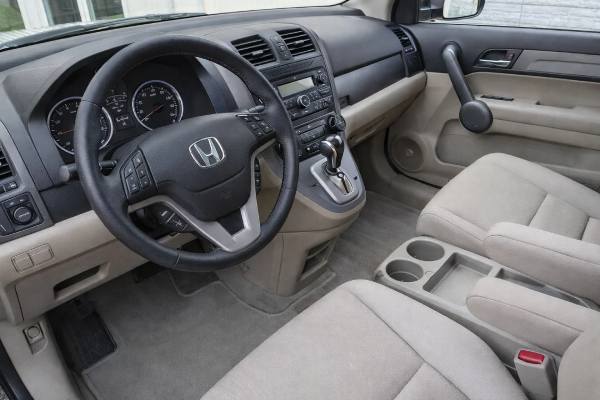

The 2007–2010 Honda CR-V Real Time 4WD with the 2.2 i-CTDi (engine code N22A2) sits in a sweet spot for owners who want a practical family SUV with genuine long-distance ability. This diesel CR-V is defined by strong mid-range torque, a well-matched 6-speed manual in most markets, and an AWD system that stays simple and dependable when maintained correctly. It is not an off-roader, but it is a calm, predictable all-weather tool with good visibility, sensible packaging, and a chassis that still feels tight when bushings and alignment are kept up.
Where this version rewards attention is in diesel-specific upkeep—air intake cleanliness, quality oil, and timely driveline fluid changes—because small service shortcuts tend to show up later as turbo, clutch, or AWD “judder” complaints. Buy carefully, service it methodically, and it can be a durable, economical daily and road-trip vehicle.
Essential Insights
- Strong real-world torque makes highway merging and hill climbs easy even when loaded.
- Real Time 4WD adds winter confidence without the complexity of full-time AWD hardware.
- Cabin and cargo packaging is excellent for family use, with a low, square load area.
- Budget for clutch and dual-mass flywheel wear on higher-mileage cars, especially in city use.
- Change rear differential fluid about every 40,000–60,000 km (25,000–37,000 mi) to prevent tight-turn shudder.
Quick navigation
- RE6 diesel 4WD ownership profile
- N22A2 specifications and capacities
- RE6 trims, options, and safety gear
- RE6 reliability issues and service campaigns
- Maintenance plan and buying checklist
- Driving feel and real-world economy
- RE6 diesel 4WD vs main rivals
RE6 diesel 4WD ownership profile
Think of the 2007–2010 CR-V RE6 diesel as a comfort-first SUV with a “truck-like” torque curve, not a sporty crossover. The N22A2 2.2 i-CTDi was engineered for relaxed pulling power: it delivers its best work in the mid-range, where you spend most of your time in real traffic. That makes this CR-V especially good for long motorway runs, mountain grades, and family hauling. It also suits owners who prefer simple mechanical systems over complex driver-assistance tech—because this generation’s safety strength is primarily structure, airbags, and stability control rather than modern sensor suites.
Real Time 4WD (Honda’s on-demand system) is a key part of the ownership story. In normal driving it behaves like a front-driver, then sends torque rearward when the front tires slip. For most owners, that means less drama in rain, slush, and light snow—without the constant drivetrain drag and maintenance load of full-time AWD systems. The trade-off is that it depends heavily on correct rear differential fluid and tire matching; ignore those, and the system can develop the well-known low-speed “binding” or shudder on tight turns.
The RE6 cabin and cargo layout are major advantages. The seating position, outward visibility, and wide-opening rear doors work well for daily family use. Cargo space is practical because it is square and easy to load, not because it chases headline liters with awkward contours. Owners also tend to appreciate the CR-V’s honest ergonomics—big controls, predictable HVAC, and straightforward maintenance access for common service items.
One important buying reality: “2007–2010” overlaps with a powertrain transition in some European markets, where later facelift models may use a different 2.2 diesel. If you are specifically shopping for the 140 hp N22A2, confirm the engine code on paperwork, under-hood labels, or dealer records. This matters for parts compatibility, emissions equipment differences, and service planning.
N22A2 specifications and capacities
The tables below focus on the common European-spec 2.2 i-CTDi (N22A2) with Real Time 4WD (RE6). Some figures vary by trim, wheel size, and market homologation; where that happens, ranges are shown.
Powertrain and efficiency
| Item | Specification |
|---|---|
| Code | N22A2 |
| Engine layout and cylinders | Front-transverse I-4, DOHC, 4 valves/cyl |
| Displacement | 2.2 L (2,204 cc) |
| Induction | Turbocharged, intercooled |
| Fuel system | Common-rail direct injection |
| Compression ratio | 16.7:1 (typical for N22A2) |
| Bore × stroke | 85.0 × 97.1 mm (3.35 × 3.82 in) (typical) |
| Max power | 140 hp (103 kW) @ 4,000 rpm |
| Max torque | 340 Nm (251 lb-ft) @ 2,000 rpm |
| Timing drive | Chain |
| Rated efficiency | ~6.5 L/100 km combined (varies by test cycle/market) |
| Real-world highway @ 120 km/h (75 mph) | ~7.0–7.6 L/100 km (31–34 mpg US / 37–40 mpg UK) depending on tires, load, and temperature |
| Aerodynamics | Cd / frontal area: not consistently published across markets |
Transmission and driveline
| Item | Specification |
|---|---|
| Transmission | Typically 6-speed manual (market-dependent) |
| Drive type | Real Time 4WD (on-demand AWD) |
| Differential | Open front; rear unit uses Honda dual-pump style coupling (service fluid critical) |
Chassis and dimensions
| Item | Specification |
|---|---|
| Suspension (front/rear) | MacPherson strut / multi-link |
| Steering | Rack-and-pinion (assist type varies by market) |
| Brakes | 4-wheel discs; common sizes ~293 mm (11.5 in) front vented / ~302 mm (11.9 in) rear solid (trim/market variation exists) |
| Wheels/tyres | Common: 225/65 R17 (varies with trim) |
| Ground clearance | ~185 mm (7.3 in) (market spec may vary) |
| Length / width / height | ~4,530 / 1,820 / 1,680 mm (178.3 / 71.7 / 66.1 in) |
| Wheelbase | ~2,620 mm (103.1 in) |
| Turning circle (kerb-to-kerb) | ~11.8 m (38.7 ft) (typical) |
| Kerb weight | ~1,650–1,750 kg (3,638–3,858 lb) depending on trim |
| GVWR | ~2,150–2,250 kg (4,740–4,960 lb) (market-dependent) |
| Fuel tank | 58 L (15.3 US gal / 12.8 UK gal) |
| Cargo volume | ~556 L (19.6 ft³) seats up / ~1,530 L (54.0 ft³) seats down (commonly quoted VDA-style; market figures vary) |
Performance and capability
| Item | Specification |
|---|---|
| Acceleration | 0–100 km/h (0–62 mph): ~10.3 s (typical for 2.2 i-CTDi) |
| Top speed | ~187 km/h (116 mph) (typical) |
| Braking distance | 100–0 km/h: often ~39–42 m in independent tests (tire-dependent) |
| Towing capacity | Often ~2,000 kg (4,409 lb) braked / ~600 kg (1,323 lb) unbraked (check VIN plate) |
| Payload | Commonly ~450–550 kg (992–1,213 lb) (trim-dependent) |
| Roof load | Typically ~80 kg (176 lb) (check owner documentation) |
Fluids and service capacities
| Item | Specification (typical) |
|---|---|
| Engine oil | Low-ash diesel spec (market-dependent); common viscosity 0W-30 or 5W-30; capacity ~5.9 L (6.2 US qt) with filter |
| Coolant | Honda-type long-life coolant; mix typically 50/50; capacity ~7.0–7.2 L (7.4–7.6 US qt) |
| Manual gearbox | Honda MTF-type fluid; capacity ~2.0–2.3 L (2.1–2.4 US qt) |
| Rear differential | Honda Dual Pump Fluid / DPSF-type; capacity ~1.0–1.2 L (1.1–1.3 US qt) |
| A/C refrigerant | R134a; charge varies by market (often ~500–600 g) |
| Key torque specs | Wheel nuts commonly 108 Nm (80 lb-ft); other fasteners vary by model year and market—verify before tightening |
Electrical
| Item | Specification (typical) |
|---|---|
| Alternator output | Often ~90–120 A (market/trim-dependent) |
| 12V battery | Typically 45–60 Ah with ~360–520 CCA depending on climate package |
| Spark plug | Not applicable (diesel); uses glow plugs |
Safety and driver assistance
| Item | Specification |
|---|---|
| Crash ratings | Euro NCAP and IIHS results vary by test year and protocol; see Section 3 for practical meaning |
| ADAS suite | This generation predates modern AEB/ACC/LKA; safety relies on airbags, ABS, and stability control rather than camera/radar automation |
RE6 trims, options, and safety gear
Trim naming differs across Europe (and between Europe and other regions), but most RE6 diesel lineups follow a familiar ladder: a value-oriented base grade, a mid-grade with comfort and convenience upgrades, and a high-grade with leather, premium audio, and navigation. What matters for buyers is less the badge and more the equipment you can verify in the car.
Trims and options that change ownership
- Wheel size and tire type: Larger wheels can sharpen steering response but often add road noise and raise tire costs. For durability and winter use, the common 17-inch setup with a taller sidewall is a sensible match.
- Climate and convenience packages: Heated seats, better headlamps, and upgraded mirrors are not just comfort items; they improve winter usability and visibility.
- Navigation and audio: Factory navigation of this era can feel dated and expensive to repair. If everything works, it is fine; if not, it should not drive the purchase decision.
- Roof equipment: If equipped with a sunroof, check drains and seals. Water leaks into footwells can create electrical issues and persistent odor.
Quick identifiers when shopping used
- Engine confirmation: The N22A2 code is the anchor for this article. Because late-year changes can exist, verify via documentation or professional inspection rather than relying on seller descriptions.
- AWD confirmation: Look for “Real Time 4WD” badging (where fitted) and confirm by VIN/build sheet if possible. Also inspect rear driveline components under the car.
- Stability control presence: Many markets offered stability control (often called VSA) as standard or on higher trims. Look for the dashboard button/indicator and confirm no warning lights remain after startup.
Safety ratings and what they mean in practice
This generation of CR-V earned strong real-world safety reputation because it combines a solid structure with multiple airbags and stability systems (where fitted). However, crash-test agencies have changed protocols substantially over time, so treat star ratings as “within-era comparisons,” not direct comparisons to modern vehicles.
- Euro NCAP: Later Euro NCAP result pages may reflect updated presentations; focus on the underlying message: occupant protection is generally good for its class and era, and child occupant performance is typically strong when restraint systems are used correctly.
- IIHS: In the U.S. context, IIHS results often highlight good front and side performance for this generation, while roof strength ratings can be more mixed depending on test and trim coverage.
Safety systems and driver assistance
Expect the following core safety hardware depending on market and trim:
- Front, side, and curtain airbags (confirm curtain airbags in particular, as availability can vary).
- ABS with electronic brake distribution and brake assist in many markets.
- Stability control (VSA) and traction control on many versions, sometimes tied to higher trims.
- ISOFIX/LATCH child-seat anchors for outboard rear seating positions (check covers and anchoring points).
There is little in the way of modern ADAS here—no factory AEB, adaptive cruise, or lane-keeping that you would expect in newer SUVs. That simplicity is a feature for some owners, but it also means tires, brakes, and suspension condition play a larger role in active safety.
RE6 reliability issues and service campaigns
A well-serviced N22A2 CR-V can be robust, but it is not tolerant of neglected fluids or “diesel shortcuts.” The most useful way to think about reliability is to sort issues by how often they appear and how expensive they become if ignored.
Common (plan for it)
- Rear differential shudder on tight turns (low-to-medium cost):
- Symptoms: vibration or hopping sensation in parking-lot turns.
- Likely cause: degraded rear diff fluid or mismatched tire circumferences.
- Remedy: drain and refill with the correct Honda rear diff fluid; match tires as a set and keep pressures correct.
- Clutch and dual-mass flywheel wear (medium-to-high cost):
- Symptoms: slipping under load, judder on take-off, rattling at idle, or harsh engagement.
- Likely cause: urban stop-start use, heavy towing, or aggressive driving habits.
- Remedy: clutch kit replacement; DMF replacement if noise or play is present.
- EGR and intake contamination (medium cost, mileage-related):
- Symptoms: hesitation, reduced power, smoky acceleration, uneven idle, fault codes.
- Likely cause: soot and oil vapor buildup in EGR/intake tract, especially with short trips.
- Remedy: clean EGR valve/intake components; ensure correct oil spec and healthy crankcase ventilation.
Occasional (inspect carefully)
- Turbo control issues (medium-to-high cost):
- Symptoms: limp mode, inconsistent boost, whistle changes, black smoke.
- Likely cause: vacuum leaks, sticky actuator mechanism, boost leaks, or oiling issues from poor maintenance.
- Remedy: systematic diagnosis (vacuum/boost tests), repair leaks, verify oil feed health; avoid “parts swapping.”
- Injector and fuel system wear (medium cost):
- Symptoms: hard starts, rough idle, diesel knock, poor economy.
- Likely cause: injector wear, leak-off imbalance, or fuel contamination.
- Remedy: leak-off testing, fuel filter discipline, quality fuel, targeted injector service as needed.
- Suspension bushings and ball joints (medium cost over time):
- Symptoms: clunks over bumps, vague steering, uneven tire wear.
- Likely cause: age and road impacts; heavier diesel front end can accelerate wear.
- Remedy: refresh worn control arm bushings/ball joints; align afterward.
Rare (but expensive if it happens)
- Cooling system failures (high cost if overheating occurs):
- Symptoms: temperature spikes, coolant loss, heater performance changes.
- Likely cause: aging hoses, radiator degradation, thermostat issues, or neglected coolant.
- Remedy: preventive coolant service, pressure testing, and prompt repair—diesels dislike overheating.
Recalls, service actions, and how to verify
For any CR-V of this era, treat recall verification as mandatory, not optional. Airbag inflator campaigns in particular have affected many manufacturers and multiple model years, and they are safety-critical.
- How to verify: Use Honda’s official VIN recall checker for your region and confirm completion through dealer records.
- What to ask for: Documentation showing recall work completed, especially for safety-related items (airbags, seat belt components, or other critical systems).
If a seller cannot provide proof, do not assume “it’s probably done.” Plan a VIN check and a dealer confirmation as part of your pre-purchase process.
Maintenance plan and buying checklist
A disciplined maintenance routine is what separates a “great diesel CR-V” from a frustrating one. The schedule below is practical for mixed use; if you do mostly short trips, reduce intervals because soot loading and oil dilution become more significant.
Practical maintenance schedule (distance/time)
- Engine oil and filter: every 10,000–12,000 km (6,000–7,500 mi) or 12 months. Use a diesel-appropriate low-ash oil per your market requirements.
- Air filter: inspect every oil service; replace about every 20,000–30,000 km (12,000–18,000 mi) (more often in dusty areas).
- Cabin filter: every 15,000–25,000 km (9,000–15,000 mi) or yearly for allergy climates.
- Fuel filter: every 40,000–60,000 km (25,000–37,000 mi); earlier if fuel quality is uncertain.
- Coolant: every 5 years (or per OEM schedule), using correct long-life coolant.
- Brake fluid: every 2 years regardless of mileage.
- Manual transmission fluid: every 80,000–120,000 km (50,000–75,000 mi) depending on use and shift feel.
- Rear differential fluid (Real Time 4WD): every 40,000–60,000 km (25,000–37,000 mi); sooner if you feel tight-turn shudder.
- Brake pads/rotors: inspect every tire rotation; replace based on thickness and condition, not noise alone.
- Tires: rotate every 10,000–12,000 km (6,000–7,500 mi); keep all four tires matched in brand/model/tread depth to protect the AWD system.
- Battery test: yearly before winter; typical replacement window is 4–6 years depending on climate.
Timing components guidance (chain)
The N22A2 uses a timing chain. In normal use, chains are durable, but they are not “lifetime no matter what.” Pay attention to:
- Cold-start rattles that persist beyond a brief initial moment
- Timing correlation fault codes
- Evidence of poor oil service history
If these appear, investigate promptly. Diesel timing issues can escalate from “noise” to “major repair” if ignored.
Buyer’s inspection checklist (high value items)
- Service history quality: Look for consistent oil services and evidence of driveline fluid changes.
- Rear diff behavior: Do slow, tight figure-eights in a parking lot. Shudder suggests fluid neglect or tire mismatch.
- Clutch feel: Test for slip in a higher gear at low rpm with moderate throttle; watch for rising revs without speed gain.
- Turbo and boost: Ensure power delivery is smooth and consistent; any sudden limp mode or heavy smoke needs proper diagnosis.
- Cooling system: Check for dried coolant residue, weak heater output, or fluctuating temperature.
- Undercarriage and corrosion: Inspect rear subframe areas, brake/fuel lines (where relevant), and suspension mounting points.
- Electrics and water ingress: Check footwells for dampness, verify all windows and locks, and ensure no persistent warning lights.
Best trims and setups for long-term durability
For longevity, prioritize condition over options. That said, a mid-trim with:
- 17-inch wheels,
- stability control (where available),
- and a clean, documented service history
often offers the best balance of comfort, operating cost, and resale stability.
Driving feel and real-world economy
In daily driving, the RE6 diesel’s defining trait is how little effort it needs to make progress. The torque peak arrives early, so you can short-shift and ride the mid-range rather than constantly chasing rpm. That character suits the CR-V’s mission: it feels unstrained at motorway speeds and stays composed on long grades, especially compared to smaller-displacement diesels of the same era.
Ride, handling, and NVH
- Ride quality: Tuned for comfort. It absorbs rough pavement well, especially on 17-inch tires, though worn dampers or tired bushings can make it feel loose or thumpy.
- Handling balance: Predictable and safe rather than sporty. Body control is decent for its size, but it will lean if pushed.
- Steering: Light to moderate weight. It is easy to place, but feedback is limited compared to enthusiast-oriented vehicles.
- Noise and refinement: The i-CTDi is generally refined for a mid-2000s diesel, but you will still hear diesel clatter at idle and under load. Wind noise is moderate; tire choice has a large impact on highway sound.
Powertrain character and gearbox behavior
Most versions pair the diesel with a manual transmission that suits the torque band well. Expect:
- Strong pull from low-to-mid rpm
- Less need for downshifts on gentle grades
- A driving style that rewards early shifting and smooth throttle
If the gearbox feels notchy or reluctant when cold, it may improve with correct fluid and warm-up, but persistent issues should trigger a linkage and mount inspection rather than immediate assumptions about internal wear.
Real-world efficiency (what owners typically see)
Economy depends heavily on speed, temperature, and tire choice. As a practical guide:
- City: ~7.8–9.0 L/100 km (26–30 mpg US / 31–36 mpg UK) depending on traffic density and warm-up length
- Highway 100–120 km/h: ~7.0–7.6 L/100 km (31–34 mpg US / 37–40 mpg UK)
- Mixed: often lands near 7.2–8.0 L/100 km (29–33 mpg US / 35–39 mpg UK)
Cold weather can increase consumption noticeably because diesels take longer to reach efficient temperature, and short trips amplify soot-related intake deposits over time.
AWD behavior in the real world
Real Time 4WD engages when front wheels slip; you generally do not “feel” it working until traction is low. With matched tires and fresh rear diff fluid, it is unobtrusive. With mismatched tires or neglected fluid, it can feel grippy in a bad way—binding or shuddering during slow, tight turns. That symptom is your maintenance reminder.
Load, towing, and long-trip confidence
The diesel CR-V is a capable tow vehicle within its rated limits, mainly because torque arrives early. Still:
- Keep cooling and brakes in top condition before towing
- Expect a significant fuel-use increase under load (often 15–30% depending on speed and terrain)
- Use conservative driving on long grades to control temperatures and protect the clutch
RE6 diesel 4WD vs main rivals
In the late-2000s compact SUV class, the CR-V’s core competitors typically included the Toyota RAV4 (diesel in many European markets), Nissan X-Trail, Volkswagen Tiguan, and various Hyundai/Kia and Ford entries depending on region. The RE6 diesel’s strengths and compromises stand out clearly when you compare ownership priorities.
Where the CR-V usually wins
- Everyday usability and packaging: The CR-V is hard to beat for practical ergonomics—visibility, door openings, and a cargo area that works in real life.
- Relaxed diesel drivability: The N22A2’s torque delivery feels mature. For long commutes and frequent highway use, it often feels less “busy” than smaller diesels.
- AWD simplicity: Real Time 4WD is not a hardcore system, but it is generally straightforward. For typical winter roads, it provides real value without demanding constant attention—assuming you service the rear differential and match tires.
Where rivals may be a better fit
- True off-road or heavy-duty AWD needs: Vehicles with more aggressive AWD systems, low-range options, or stronger off-pavement tuning will outperform the CR-V if you regularly drive unpaved, uneven terrain.
- Modern safety technology: Many rivals in later years (and certainly newer generations) moved faster into camera/radar-based driver assistance. If ADAS is a must-have, this era of CR-V is the wrong target.
- Diesel emissions equipment differences: Some competitors’ diesel systems may be easier or harder to maintain depending on their specific EGR/DPF strategies. What matters is not the badge—it is the condition and how the prior owner used the vehicle.
The practical verdict
Choose the RE6 2.2 i-CTDi if you want:
- a dependable, comfortable family SUV,
- strong mid-range diesel performance,
- and AWD that mainly stays out of your way.
Look elsewhere if you need:
- frequent off-road capability,
- cutting-edge driver assistance,
- or the lowest possible risk of diesel intake-related maintenance (which generally means avoiding older diesels entirely or buying with exceptional service history).
References
- THE ALL NEW CR-V 2006 (Press Release)
- Honda Announces All-New CR-V | Honda Global Corporate Website 2006 (Press Release)
- Honda CR-V 2024 (Safety Rating)
- 2007 Honda CR-V 2025 (Safety Rating)
- SRS Airbag Recall | Recall Safety Campaign | Honda UK Cars 2025 (Recall Information)
Disclaimer
This article is for informational purposes only and is not a substitute for professional diagnosis, inspection, or repair. Specifications, torque values, fluid capacities, service intervals, and procedures can vary by VIN, market, model year, and equipment. Always verify details using your vehicle’s official service documentation and follow manufacturer guidance.
If you found this guide useful, please consider sharing it on Facebook, X (Twitter), or your favorite forum—your support helps us keep producing detailed ownership resources.