

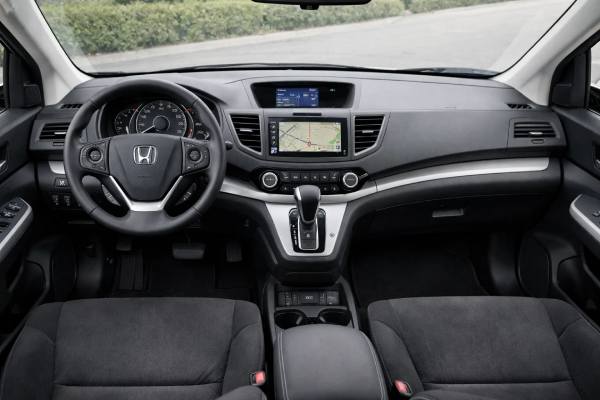
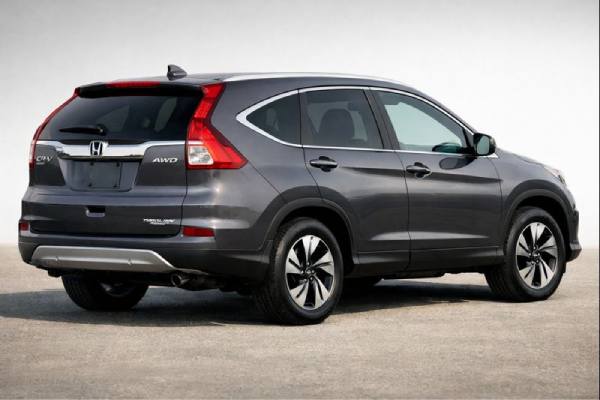
The 2015–2018 facelift Honda CR-V with the 1.6 i-DTEC 160 (engine code N16A4) is a very specific “sweet spot” in the fourth-generation lineup: it combines a strong diesel torque curve with Real Time AWD and a nine-speed automatic, while staying relatively light for the class. In day-to-day ownership, it tends to feel more relaxed than the older 2.2 diesel thanks to tighter gearing and lower cruising rpm, yet it remains practical and family-friendly with a genuinely usable cargo bay and flat-folding rear seats.
Where buyers need to be careful is typical modern-diesel reality: short trips and neglected maintenance can turn emissions hardware into the most expensive “wear item” on the vehicle. If you match the car to the right use (regular highway runs, warm-up cycles, proper fluids), this CR-V can be a durable long-distance tool with strong winter traction and a calm, efficient highway character.
Owner Snapshot
- Strong mid-range pull (350 Nm) makes passing and hill work easy, especially when loaded.
- Real Time AWD adds confidence in rain and snow without the weight and drag of a heavy 4×4 system.
- Excellent packaging: 589 L cargo seats up and up to 1,669 L seats folded in many trims.
- Avoid repeated cold short trips; DPF and EGR issues become more likely when the engine rarely reaches full temperature.
- Plan on an engine-oil service about every 12 months or ~15,000 km (whichever comes first) for best turbo and DPF health.
Contents and shortcuts
- CR-V RE6 diesel facelift explained
- Specs and dimensions for N16A4 AWD
- Trims, options, and safety tech 2015–2018
- Reliability issues on 1.6 i-DTEC 160 AWD
- Maintenance plan and smart buying checklist
- Driving feel and real-world mpg
- Rivals: how this CR-V stacks up
CR-V RE6 diesel facelift explained
This facelift CR-V (2015–2018) is best understood as Honda’s “Europeanized” version of the fourth-gen formula. The headline change for diesel buyers was the 1.6 i-DTEC offered in two outputs, with the 160-PS (about 158 hp / 118 kW) version built to support AWD and higher towing demand. In the 160 tune, Honda paired the engine with a two-stage turbo system: a smaller high-pressure turbo helps low-rpm response, while a larger low-pressure turbo supports airflow at higher loads. The goal is a diesel that feels responsive around town but still breathes properly on the motorway.
Real Time AWD is designed primarily for on-road traction and stability rather than rock crawling. Most of the time the CR-V drives like a front-driver, then sends torque rearward when the system detects slip or when conditions call for extra stability. The practical win is that you get extra confidence in wet roundabouts, steep snowy driveways, and muddy parking fields without constant driveline binding or a big fuel-economy penalty.
The facelift also brought meaningful “ownership quality” improvements: calmer cabin noise, updated infotainment in many trims, and a broader safety technology story. Depending on market and grade, you may find Honda Sensing features such as collision mitigation braking, adaptive cruise control, and lane support—helpful on long trips, but also more sensors to keep aligned and calibrated after windshield or bumper work.
If you’re shopping this exact variant, focus on use case. It’s at its best as a family commuter that also does regular longer runs—think mixed use with consistent warm operating temps. Treat it like a pure city car and the emissions hardware becomes the dominant reliability variable, not the engine’s core mechanical design.
Specs and dimensions for N16A4 AWD
Below are the key technical specs for the facelift CR-V with the 1.6 i-DTEC 160 and nine-speed automatic AWD. Some items (like exact brake diameters and fluid fill volumes) can vary by market, wheel size, and VIN, so treat them as configuration-dependent unless verified against your service documentation.
Powertrain and efficiency (N16A4 / 1.6 i-DTEC 160)
| Item | Spec |
|---|---|
| Code | N16A4 |
| Engine layout and cylinders | Front-transverse inline-4, DOHC, 4 valves/cyl (16v) |
| Displacement | 1.6 L (1,597 cc) |
| Bore × stroke | 76.0 × 88.0 mm (2.99 × 3.46 in) |
| Induction | Two-stage turbo (high-pressure VGT + low-pressure wastegated) |
| Fuel system | Common-rail diesel direct injection |
| Compression ratio | 16.0:1 |
| Max power | 160 PS (≈158 hp / 118 kW) @ 4,000 rpm |
| Max torque | 350 Nm (≈258 lb-ft) @ 2,000 rpm |
| Emissions after-treatment | Euro 6b with NOx storage catalyst (no AdBlue on many markets) |
| Rated combined economy (typical) | ~5.1–5.3 L/100 km (approx wheel dependent) |
Transmission and driveline
| Item | Spec |
|---|---|
| Transmission | 9-speed automatic |
| Drive type | Real Time AWD (on-demand) |
| Differential | Typically open diffs; rear torque via AWD coupling |
Chassis and dimensions
| Item | Spec |
|---|---|
| Suspension (front / rear) | MacPherson strut / Re-Active Link double wishbone |
| Steering | Rack and pinion; ~2.94 turns lock-to-lock |
| Turning circle | 11.0 m at wheels; ~11.7 m at body (4WD) |
| Brakes | Front ventilated discs; rear discs |
| Wheels and tyres (common) | 225/65 R17 or 225/60 R18 |
| Length / width / height | 4,605 / 2,096 (incl mirrors) / 1,685 mm |
| Wheelbase | 2,630 mm |
| Fuel tank | 58 L (15.3 US gal / 12.8 UK gal) |
| Cargo volume | 589 L seats up / up to 1,669 L seats folded (market dependent) |
| Curb weight (range) | ~1,658–1,718 kg (trim dependent, 9AT AWD sits in this band) |
| GVWR | ~2,200 kg (market dependent) |
Performance and capability (1.6 i-DTEC 160 AWD 9AT)
| Item | Spec |
|---|---|
| 0–100 km/h (0–62 mph) | ~10.0 s |
| Top speed | ~197 km/h (122 mph) |
Service capacities (verify by VIN)
Because Honda used market-specific service documentation and sometimes multiple suppliers (especially for automatic transmissions), treat these as “planning numbers,” not final truth:
- Engine oil: typically ~4.7–5.0 L with filter; use a low-SAPS diesel oil that matches the required ACEA spec for your market.
- Coolant: typically ~5–6 L total system fill.
- 9-speed ATF: use only the Honda-specified fluid for the nine-speed; drain/fill quantity is less than total capacity.
- Rear AWD/differential fluid: use Honda-specified rear drive fluid; service intervals matter for longevity.
Trims, options, and safety tech 2015–2018
Trim names vary by country, but the equipment “shape” is fairly consistent: mid trims focus on comfort and value, while upper trims (often called Executive/Elite-style names) add advanced driver assistance, upgraded lighting, and premium interior features. When you’re buying used, it pays to decode the car by hardware rather than badges.
Trims and options that matter on the diesel AWD
Key mechanical differences are usually not huge—most N16A4 AWD cars share the same core powertrain—but the following options change day-to-day satisfaction and running costs:
- Wheel size (17 vs 18 in): 17s generally ride softer and are cheaper for tyres; 18s look sharper but can add road noise and cost.
- Infotainment generation: facelift cars often have a more modern touchscreen setup; confirm Bluetooth stability, navigation presence (if desired), and whether the camera is factory or retrofitted.
- Heated seats and windshield area: in cold climates, these features meaningfully improve winter comfort and reduce windshield fogging delays.
- Tow equipment: some markets offer factory tow packages; check the cooling package, wiring, and whether tow rating changes by trim.
Quick identifiers when photos are limited:
- Upper grades often have LED lighting signatures, more chrome exterior trim, and upgraded seat materials.
- ADAS-equipped cars typically have a camera housing near the rearview mirror and additional radar/sensor elements up front.
Safety ratings and what they mean here
For European buyers, the most relevant baseline is the Euro NCAP five-star rating for this generation. Keep in mind that Euro NCAP protocols evolve; a five-star result in an older protocol is still meaningful, but it is not directly comparable to today’s stricter testing. Still, the structure, restraint design, and baseline stability systems are solid.
Safety systems and ADAS (driver assistance)
Depending on market and trim, you may see some or all of the following:
- Core safety (typically standard): ABS, stability control, traction control, front and side airbags, curtain airbags, ISOFIX/LATCH mounts.
- Braking assistance: collision warning and collision mitigation braking on higher trims.
- Cruise and lane support: adaptive cruise control and lane keeping/lane support features, often bundled under “Honda Sensing” on upper trims.
- Blind-spot and cross-traffic alerts: availability varies widely; don’t assume it’s present without checking mirror icons and menu settings.
Service note: any car with a front radar and windshield camera should be inspected for correct alignment after bumper repairs, windshield replacement, or suspension height changes. Misalignment can cause false warnings or disabled features, and proper calibration is more important than people expect.
Reliability issues on 1.6 i-DTEC 160 AWD
This drivetrain’s reputation is strongly shaped by usage and maintenance. The engine is generally robust when it’s warmed regularly and fed correct low-ash oil, but emissions hardware and “modern diesel peripherals” can dominate the cost story. Below is a practical issue map by prevalence and severity.
Common (plan for it)
- DPF loading and forced regenerations (medium cost):
Symptoms: frequent fan run-on, higher idle, rising fuel use, warning lights.
Root cause: repeated cold short trips, interrupted regens, wrong oil spec (too much ash).
Remedy: change driving pattern (regular 20–30 min highway run), ensure correct oil, scan soot/regen history; clean or replace DPF only when diagnostics confirm it. - EGR and intake soot build-up (medium cost):
Symptoms: rough idle, hesitation, reduced power, occasional fault codes.
Root cause: soot and oily deposits in EGR path and intake.
Remedy: cleaning, updated gaskets, verify boost control and sensors; avoid “parts cannon” replacements without data. - NOx storage catalyst behavior (medium to high cost):
Symptoms: emissions-related fault codes, limp mode in some cases.
Root cause: after-treatment efficiency issues, sensor faults, operating pattern not allowing proper catalyst management.
Remedy: correct diagnosis with live data; sometimes software updates or sensor replacement resolves it.
Occasional (watch for it)
- Two-stage turbo control issues (medium to high cost):
Symptoms: uneven boost, whistle changes, smoke under load, power drop at certain rpm bands.
Root cause: vacuum/actuator issues, boost leaks, sticking mechanism, sensor drift.
Remedy: pressure test intake plumbing; verify actuator movement; address oil supply health with regular oil service. - 9-speed automatic shift quality (medium cost):
Symptoms: hesitation, busy shifting, shudder, harsh 2–3 or 3–4 behavior depending on conditions.
Root cause: aging fluid, adaptation values, software calibration.
Remedy: correct-spec fluid service (often drain/fill), adaptation reset/relearn when supported, check for available ECU/TCU updates. - Rear AWD fluid neglect (low to medium cost):
Symptoms: groan or bind in tight turns, subtle vibration.
Root cause: old rear drive fluid.
Remedy: service the rear unit with the correct Honda fluid at sensible intervals.
Rare but expensive (screen carefully)
- Injector or high-pressure fuel system problems (high cost):
Symptoms: hard starts, diesel knock, misfire codes, metal debris risk in severe cases.
Root cause: contamination, poor fuel quality, abnormal wear.
Remedy: professional diagnosis; avoid repeated cranking and DIY guessing. - Cooling system neglect leading to secondary damage (high cost):
Symptoms: overheating, repeated coolant loss, fan running excessively.
Root cause: leaks, neglected coolant, stuck thermostat.
Remedy: pressure test, fix leaks early; don’t ignore small losses.
Recalls, TSBs, and how to verify
Recalls and service campaigns are market- and VIN-specific. The right process is:
- Run an official VIN recall check for your country (or ask a Honda dealer to print the campaign history).
- Verify completion with dated invoices or dealer records.
- Ask for evidence of software updates if drivability or ADAS faults were previously present.
For pre-purchase: insist on a scan for stored emissions and transmission codes, check DPF soot/regeneration data when possible, and look for consistent oil services with the correct specification. A “cheap” diesel with missing service history is rarely cheap in the long run.
Maintenance plan and smart buying checklist
A reliable ownership experience with this CR-V comes from two principles: (1) keep fluids fresh with the right specs, and (2) make sure the diesel emissions system gets the operating conditions it was designed for.
Practical maintenance schedule (good-owner baseline)
Use the car’s onboard maintenance system where available, but a conservative schedule is often kinder to turbo and emissions hardware:
- Engine oil and filter: every 12 months or ~15,000 km (9,000–10,000 mi).
- Cabin air filter: every 15,000–30,000 km or annually if you drive in dust/pollen.
- Engine air filter: every 30,000 km (more often in dusty regions).
- Fuel filter (diesel): often 60,000–90,000 km; shorten if fuel quality is inconsistent.
- Brake fluid: every 3 years (moisture control matters for ABS modules).
- Coolant: commonly 5 years initial, then 3–5 years thereafter (verify spec).
- Transmission (9-speed ATF): consider a drain/fill around 50,000–70,000 km, then repeat; harsh use (towing, mountains, hot climates) benefits from earlier service.
- Rear AWD fluid: every 40,000–60,000 km is a sensible target for smooth AWD operation.
- Tyres: rotate every 10,000–12,000 km; keep all four tyres closely matched in tread depth to reduce AWD stress.
Fluids: what “correct” means
- Oil: use a low-ash diesel oil that meets the exact ACEA/API spec in your owner documentation. Low-SAPS oil reduces ash accumulation in the DPF.
- ATF and rear drive fluid: do not substitute “universal” fluids. The wrong friction characteristics can create shift issues or driveline noise that no scan tool will “fix.”
- Coolant: stick to Honda-approved coolant type; mixed coolants can shorten water-pump and radiator life.
Essential torque values (decision-useful)
These are common planning values on many Hondas, but verify for your exact wheels and fasteners:
- Wheel nuts: ~108 Nm (80 lb-ft).
- Brake caliper bracket bolts: typically higher torque than slider pins; confirm spec before servicing.
- Drain plugs (engine/ATF/rear unit): always torque to spec and replace crush washers as required.
Buyer’s guide checklist (what to inspect)
Documents and history
- Oil services documented at least annually with correct diesel oil spec.
- Proof of ATF service (or budget it immediately if unknown).
- Recall/campaign completion printout by VIN.
Mechanical
- Cold start: listen for abnormal diesel knock, excessive smoke, or unstable idle.
- Test drive: steady highway run plus stop-and-go; watch for warning lights and odd transmission behavior.
- AWD check: tight low-speed turns in a parking lot; listen for groan/bind.
- Cooling system: inspect for dried coolant residue and check heater performance.
Emissions health
- If possible, scan for DPF soot load and regeneration history.
- Look for evidence the car regularly does longer trips (owner profile matters).
What to seek
- Cars with 17-inch wheels if comfort and running cost are priorities.
- Higher trims only if you value ADAS; otherwise simpler trims can be cheaper to maintain.
Long-term outlook: with correct servicing and appropriate use, the N16A4 CR-V can be a strong 250,000+ km candidate. With poor usage patterns and deferred fluids, the “expensive diesel triangle” (DPF/EGR/after-treatment sensors) becomes the main risk.
Driving feel and real-world mpg
The best compliment to this CR-V is that it feels “unbusy.” It’s tuned for stability and comfort first, which suits families and long motorway days. The facelift’s refinement work shows up as reduced wind and road noise compared with earlier examples, and the driving position remains a Honda strength: upright, clear sightlines, and easy to place in traffic.
Ride, handling, and NVH
- Ride: compliant over rough surfaces, especially on 17-inch tyres. On 18s, sharp impacts are more noticeable, but it still avoids the harshness some rivals developed in this era.
- Handling: predictable rather than sporty. The rear suspension design helps stability mid-corner, and the car resists sudden weight transfer well.
- Steering and brakes: steering is light with moderate feedback; brakes are easy to modulate, with good confidence in normal use.
- Highway comfort: where it shines—steady tracking, relaxed cabin, and less engine strain thanks to the nine-speed’s tall top gear.
Powertrain character (N16A4 + 9AT)
The 350 Nm torque peak arrives early, so it doesn’t need revs to move. Around town, that means fewer “please downshift” moments than you’d expect in a two-ton family SUV. The two-stage turbo setup helps reduce the classic small-diesel flat spot, though you can still feel some transition when load rises quickly. The nine-speed automatic prioritizes efficiency and smoothness; it can feel busy if you drive aggressively, but in normal driving it keeps the engine in its torque band without drama.
Real-world efficiency (what owners typically see)
Official combined figures for this configuration are around the low-5 L/100 km range, but real-world results depend heavily on speed and temperature:
- City: commonly ~6.5–8.0 L/100 km (29–36 mpg US / 35–43 mpg UK), depending on traffic and warm-up time.
- Highway at 100–120 km/h: often ~5.5–6.5 L/100 km (36–43 mpg US / 43–51 mpg UK) in mild weather.
- Cold-weather penalty: short winter trips can push consumption up by 15–30% because the engine spends more time warming and managing emissions.
Traction and control (Real Time AWD)
In normal driving the system is unobtrusive; you mainly notice it when conditions are bad. On snow, it helps you pull away cleanly and reduces the “front tyres doing everything” sensation. It’s not a substitute for proper winter tyres, but with good tyres it becomes a meaningful safety and usability advantage.
Load and towing
This CR-V handles family loads well, and the diesel torque makes it feel less strained with passengers and luggage. If you tow, assume a noticeable consumption increase—often 20–40% depending on speed and trailer shape—and prioritize transmission and rear-drive fluid maintenance.
Rivals: how this CR-V stacks up
Cross-shopping the 2015–2018 diesel AWD CR-V usually means looking at the Volkswagen Tiguan (2.0 TDI 4Motion), Mazda CX-5 (diesel AWD where offered), Ford Kuga (TDCi AWD), Toyota RAV4 (diesel AWD in some markets), and similar-era Hyundai/Kia options. Here’s how the Honda tends to compare in the ways that actually matter long-term.
Where the CR-V wins
- Packaging and practicality: the cargo bay is genuinely usable, the rear seats fold flat easily, and the cabin feels designed around real family objects (strollers, luggage, sports gear).
- Highway refinement: tall gearing and a relaxed diesel torque delivery make it a strong long-distance car. Many owners describe it as “effortless” at motorway speeds.
- AWD philosophy: on-demand Real Time AWD is efficient and predictable for typical European weather. You get traction benefits without the constant driveline drag of some heavier systems.
- Balanced ownership profile: when maintained correctly and used for regular longer drives, it often delivers a stable cost-per-kilometer story.
Where rivals can be stronger
- Driver-assistance availability and modernity: some rivals offered broader ADAS availability earlier across more trims. With the CR-V, you may need a top grade to get the full suite.
- Infotainment polish: depending on market, Honda’s system can feel less intuitive than the best German or Korean interfaces of the same era. Test it carefully: Bluetooth stability and menu speed matter daily.
- “City-only” friendliness: if your driving is mostly short, cold trips, a petrol or hybrid rival can be less demanding. Modern diesels of this era all share the same emissions-hardware sensitivity, but some buyer profiles simply fit non-diesel powertrains better.
Which buyer should choose the N16A4 AWD CR-V?
Choose it if you:
- Drive mixed routes with regular highway time.
- Value winter traction and stability over off-road capability.
- Want a roomy, calm family SUV and are willing to service it properly.
Consider a different powertrain (or a petrol/hybrid rival) if you:
- Do mostly 3–8 km trips in cold weather.
- Can’t commit to correct oil and fluid specs.
- Want the newest ADAS behavior without trim hunting.
The verdict: this facelift CR-V diesel AWD is not the “best at everything” competitor, but it is one of the more complete real-world family tools when matched to the right use pattern and maintained with discipline.
References
- 2015 Honda CR-V 2015 (Press Release) ([Honda News][1])
- Honda Owners Manuals | Honda CR-V| Owners | Honda UK 2026 (Owner’s Manual Portal) ([Honda UK][2])
- Euro NCAP | Press Release June 2013 – Euro NCAP Releases Results for two New Cars and New Advanced Rewards 2013 (Safety Rating) ([Euro NCAP][3])
- New Honda CR-V receives 5-star Euro NCAP Overall Safety Rating | Honda Global Corporate Website 2013 (Safety Rating) ([Honda Global][4])
Disclaimer
This article is for informational purposes only and is not a substitute for professional inspection, diagnosis, or repair. Specifications, torque values, service intervals, and procedures can vary by VIN, market, model year, and equipment. Always verify details using your official owner’s literature and the correct service documentation for your exact vehicle, and consult a qualified technician when needed.
If this guide helped, please consider sharing it on Facebook, X (Twitter), or your favorite forum to support our work.