

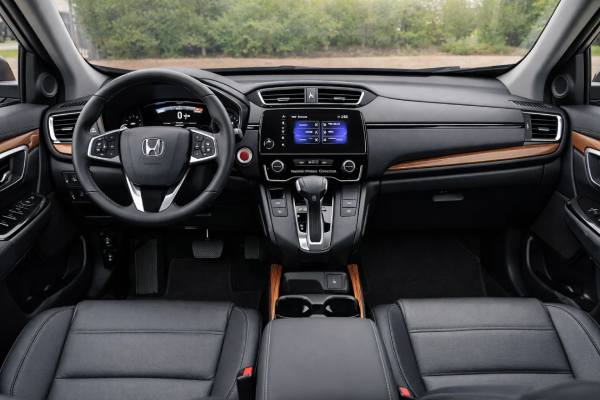
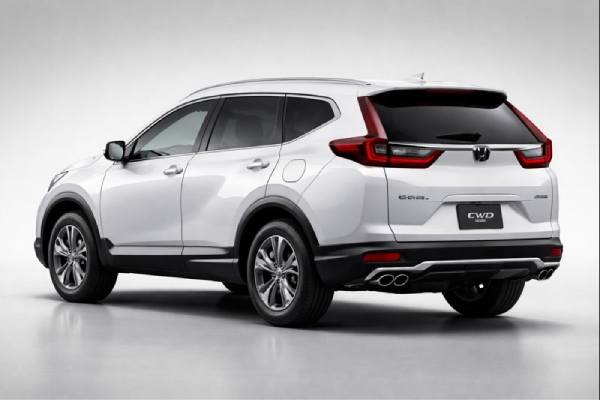
The 2020–2022 Honda CR-V Hybrid with Real Time AWD (RT6) takes the practical CR-V formula and adds two big ownership themes: hybrid smoothness and all-weather traction. The LFA1-based 2.0-liter Atkinson-cycle engine works with Honda’s two-motor hybrid system, which often drives the vehicle electrically at lower speeds and uses the engine efficiently as conditions demand. Real Time AWD then adds a rear driveline that can send torque rearward when the front tyres start to slip—useful on wet roundabouts, snowy starts, and gravel driveways.
What makes the RT6 worth understanding is the way these systems overlap. You get strong low-speed response and steady fuel use on mixed trips, but you also gain extra maintenance points: rear differential/AWD fluid, more tyre-sensitivity, and a greater need to keep the 12V system and software updates healthy. Done right, it’s an easy long-term daily.
Quick Specs and Notes
- Smooth, torque-forward city driving thanks to frequent electric drive operation.
- Real Time AWD improves traction in rain and snow without needing driver input.
- Practical cabin and cargo packaging remains a CR-V strength even with hybrid hardware.
- Budget for rear differential/AWD fluid service; skipping it can lead to noise or shudder.
- Typical rhythm: tyre rotation about every 10,000–12,000 km (6,000–7,500 mi) to protect AWD behaviour and tyre life.
Section overview
- RT6 AWD hybrid layout
- RT6 technical specs and dimensions
- Trims, safety tech, and ADAS
- Common issues, recalls, and fixes
- Maintenance schedule and buying advice
- Real-world driving and efficiency
- RT6 AWD competitor comparison
RT6 AWD hybrid layout
The CR-V Hybrid RT6 combines two systems that owners often evaluate separately: Honda’s two-motor hybrid drive and Real Time AWD. Understanding how they work together helps you predict what the car will feel like in traffic, what it will cost to maintain, and what to prioritize when shopping used.
Hybrid side (LFA1-based 2.0 l + two-motor system): In many everyday situations, the traction motor provides the “push,” delivering instant torque from very low speed. The gasoline engine can run in two main ways: it can spin a generator to make electricity for the motor (common at lower speeds and variable loads), or it can couple more directly at cruising speeds for efficiency. This is why the CR-V Hybrid can feel quiet and effortless in stop-and-go driving, yet sound different under heavy acceleration—engine rpm can rise and hold while road speed builds.
AWD side (Real Time AWD): RT6’s system is designed to be transparent. Most of the time it behaves like a front-driver. When front-wheel slip is detected (or predicted), a clutch-based rear driveline can send torque rearward. It is not a low-range 4×4 and it is not meant for deep mud or rock crawling, but it adds confidence on slick surfaces and steep, low-grip starts.
Where the systems overlap in real life:
- Tyres matter more on AWD hybrids. Mixed tyre tread depths and pressure differences can change handling balance and can cause driveline “busy” behaviour. Rotations and matching tyres are not optional if you want the AWD to stay quiet and smooth.
- Weight and gearing feel: The AWD hardware adds mass. Acceleration remains strong for the class, but you may notice slightly more engine involvement on long grades compared with FWD.
- Braking style affects maintenance: Regenerative braking reduces friction-brake use. That’s great for efficiency, but it can leave the mechanical brakes underworked. Occasional firm stops help keep rotors clean and pads bedded evenly.
The key takeaway is that RT6 is engineered for daily traction and calm performance, not off-road heroics. Treat it like a refined commuter and family SUV with extra driveline care, and it tends to reward owners with consistent, low-stress behaviour.
RT6 technical specs and dimensions
Specifications vary by market, trim, wheel package, and test standard. The tables below reflect common, “decision-grade” values for the 2020–2022 CR-V Hybrid RT6 (Real Time AWD), focusing on what actually changes ownership: driveline, weight, efficiency, and service-relevant items.
Powertrain and efficiency (typical ranges)
| Item | Spec (typical) |
|---|---|
| Code | LFA1 (2.0 l Atkinson-cycle hybrid engine family) |
| Engine layout and cylinders | Inline-4, DOHC, 4 valves/cyl (typical) |
| Bore × stroke | ~81.0 × 96.7 mm (3.19 × 3.81 in) |
| Displacement | 2.0 l (≈1993 cc) |
| Induction | Naturally aspirated |
| Fuel system | Direct injection (market dependent) |
| Compression ratio | ~13:1 to 14:1 (market/calibration dependent) |
| Max system power | ~212 hp (≈158 kW) (rating standard dependent) |
| Drive motor | Single front traction motor (system design), output varies by market |
| Peak motor torque | Commonly quoted around ~315 Nm (≈232 lb-ft), application dependent |
| Timing drive | Chain |
| Rated efficiency | Typically ~5.7–7.4 L/100 km (41–32 mpg US / 50–38 mpg UK), AWD and wheel size dependent |
| Real-world highway @ 120 km/h (75 mph) | Commonly ~6.8–8.2 L/100 km (35–29 mpg US / 42–34 mpg UK), conditions dependent |
| Aerodynamics | Cd typically in the low 0.3s (trim dependent) |
Transmission and driveline (RT6 focus)
| Item | Spec |
|---|---|
| Transmission | Two-motor hybrid drive unit (e-CVT style operation) |
| Drive type | Real Time AWD (RT6) |
| Rear driveline | Clutch-based torque transfer to rear axle (market dependent details) |
| Differential | Front open differential; rear final drive unit (serviceable fluid) |
Chassis, dimensions, and weights (why AWD matters)
| Item | Spec (typical) |
|---|---|
| Suspension (front/rear) | MacPherson strut / multi-link |
| Steering | Electric power steering (EPS) |
| Brakes | Disc/disc (diameters vary by wheel/market) |
| Wheels/tyres | Commonly 17–19 in; match sets across axles for AWD harmony |
| Ground clearance | ~190–210 mm (7.5–8.3 in), trim dependent |
| Length / width / height | ~4620–4630 / 1855–1860 / 1675–1690 mm (≈182 / 73 / 66 in) |
| Wheelbase | ~2660 mm (≈104.7 in) |
| Turning circle | ~11.0–11.4 m (≈36–37 ft) |
| Kerb (curb) weight | Often ~1700–1800 kg (≈3750–3970 lb), AWD adds weight vs FWD |
| Fuel tank | Often ~57 L (≈15.1 US gal / 12.5 UK gal) |
| Cargo volume | Method dependent; roughly ~560 L (≈19.8 ft³) seats up (VDA-style) and up to ~1750 L (≈61.8 ft³) seats down in some markets |
Performance and capability (AWD reality check)
| Item | Spec (typical) |
|---|---|
| 0–100 km/h (0–62 mph) | ~8.2–9.5 s (load, tyres, temperature dependent) |
| Top speed | Commonly ~180–190 km/h (112–118 mph), market dependent |
| Braking 100–0 km/h | Often mid-to-high 30 m range (tyres/surface dependent) |
| Towing capacity | Frequently limited on hybrids; commonly ~450–750 kg (1,000–1,650 lb) depending on market (verify for your VIN) |
| Roof load | Often ~75 kg (≈165 lb), market dependent |
Fluids and service capacities (verify for your VIN)
| Item | Typical guidance |
|---|---|
| Engine oil | 0W-20 (market spec); often ~3.5–4.0 L (3.7–4.2 US qt) with filter |
| Engine coolant | Honda long-life coolant, commonly 50/50 premix; capacity varies |
| Power electronics cooling | May be separate loop in some configurations; use only specified coolant |
| Hybrid drive unit fluid | Honda-specified fluid for the hybrid transaxle; service via drain-and-fill (interval varies) |
| Rear differential/AWD unit fluid | Honda-specified AWD fluid (critical on RT6); interval varies by market and use |
| Brake fluid | DOT 3 or DOT 4 (market dependent) |
| A/C refrigerant | Often R-1234yf on later builds; confirm under-hood label |
These tables are designed to help you compare correctly: the AWD model’s ownership difference is usually less about horsepower and more about tyre discipline, rear-unit fluid care, and slightly higher fuel use at speed.
Trims, safety tech, and ADAS
On the CR-V Hybrid RT6, trim level is not just comfort—it can change the vehicle’s day-to-day “stress level.” Headlights, tyre package, and driver-assistance features influence visibility, noise, and even how confidently the vehicle behaves on wet or snowy roads.
Trim and option themes that matter most
Most markets bundle options into a few clear tiers. Rather than chasing a specific badge, focus on these decision points:
- Headlights (visibility and safety): Higher trims often bring better LED performance and beam control. This is one of the few upgrades that improves every nighttime drive.
- Wheel and tyre size (ride, noise, cost): Larger wheels can sharpen steering response, but they tend to increase tyre cost, reduce sidewall comfort, and can raise road noise. On AWD, they also increase the importance of keeping tyres matched across axles.
- Seat and climate features: Heated seats and steering wheel are not “luxury fluff” in a hybrid—they reduce the need to run high cabin heat, which can help short-trip efficiency in cold weather.
- Infotainment and cameras: A sharper reversing camera and reliable phone integration reduce daily friction. If the car will be family transport, these are worth paying for.
Quick identifiers and year-to-year changes
When shopping used, confirm equipment with physical cues, not assumptions:
- Look for blind-spot sensors (often indicated by mirror icons and rear-bumper sensor placements).
- Check steering-wheel buttons for adaptive cruise and lane support controls.
- Verify camera quality in low light; a clean lens and properly functioning display matter more than screen size.
Across 2020–2022, many markets saw incremental improvements in standard equipment and software. The practical lesson is to test the exact vehicle: ADAS performance and infotainment stability depend on calibration, updates, and electrical health.
Safety systems and calibration considerations
Most RT6 vehicles include a modern set of fundamentals: multiple airbags, stability control, traction control, and strong child-seat anchoring (LATCH/ISOFIX). The “advanced” layer—AEB (automatic emergency braking), ACC (adaptive cruise control), and lane support—adds a maintenance note that many buyers overlook:
- Windshield replacement and front-end repairs may require ADAS calibration. If a vehicle has had glass work, bumper repaint, or alignment changes, ask for documentation that calibration was completed.
- Tyre differences can affect driver aids. Uneven tyre wear or mismatched rolling circumference can subtly influence stability-control behaviour, especially on AWD.
Safety ratings: how to interpret them usefully
Crash ratings can be excellent for this generation, but always interpret them in context:
- Match the rating body to your market.
- Confirm whether your trim’s headlights and ADAS match the tested configuration.
- Use ratings as a baseline, then prioritize tyres and headlights for your real-world roads.
For most RT6 owners, the best safety “upgrade” after buying is simply keeping tyres in top condition and ensuring all cameras and sensors stay clean and properly aligned. These small habits protect both stability and driver-assistance performance.
Common issues, recalls, and fixes
The CR-V Hybrid RT6 has a strong reputation when maintained, but it is not immune to predictable faults. The most helpful approach is to sort issues by how often they occur and how expensive they can become if ignored.
Common (frequent, usually low-to-medium cost)
- Rear differential/AWD unit fluid degradation
Symptoms: low-speed shudder on tight turns, groan, or a “binding” feeling in parking manoeuvres.
Likely cause: aged AWD fluid, heavy city use, lots of tight turns, or towing.
Remedy: drain-and-fill with the correct Honda-specified AWD fluid at the proper interval; do not substitute generic gear oil. - 12V battery weakness
Symptoms: random warnings, slow infotainment boot, sensor messages that disappear after restart, occasional no-start events.
Likely cause: short-trip usage, battery aging, parasitic draw from accessories, or simply time.
Remedy: annual load testing; replace proactively if marginal; confirm charging behaviour and software status. - Brake noise and corrosion patterns
Symptoms: squeal, light vibration, rough first stop after rain.
Likely cause: regen braking reduces friction-brake use; rotors can develop surface rust and uneven pad transfer.
Remedy: periodic firm stops, proper pad bedding after service, and routine brake inspections even when pads look thick.
Occasional (usage and climate dependent)
- Wheel bearing or suspension bushing wear
Symptoms: droning that changes with speed, clunks over bumps, steering that feels vague on-center.
Likely cause: road conditions, larger wheels, alignment drift, or high kerb impacts.
Remedy: diagnose early; keep alignments correct; avoid running tyres underinflated. - Infotainment and connectivity glitches
Symptoms: Bluetooth dropouts, camera lag, delayed touch response.
Likely cause: software bugs, phone compatibility, or low 12V voltage episodes.
Remedy: update firmware where available, stabilize the 12V battery, and reset/re-pair devices.
Rare (lower frequency, potentially higher cost)
- Hybrid cooling or power-electronics warnings
Symptoms: reduced power, warning lights, overheating messages, limp behaviour.
Likely cause: cooling system issues, sensor faults, or connector problems.
Remedy: do not ignore warnings; ensure correct coolant and proper bleeding procedures; diagnose with hybrid-capable tools. - High-voltage battery performance concerns
Symptoms: reduced EV operation time, more frequent engine starts, reduced regen acceptance.
Likely cause: temperature and usage patterns; true failures are uncommon but possible.
Remedy: verify with proper diagnostic data, not guesswork; keep battery cooling paths unobstructed.
Recalls, service actions, and verification
Because hybrid and ADAS systems rely on software and sensor logic, updates matter. Sometimes the “fix” is a calibration update rather than a hardware replacement. When buying used:
- Verify recall completion with official VIN tools and dealer records.
- Ask whether ADAS calibration was performed after windshield or front-end repairs.
- Budget a baseline inspection that includes a scan for stored or pending codes.
Pre-purchase, the biggest red flags are recurring warning lights, unexplained battery replacements, and a lack of proof for AWD fluid service. These are often more meaningful than cosmetic imperfections on a family SUV.
Maintenance schedule and buying advice
The RT6’s maintenance needs are straightforward if you treat it like a system: engine, hybrid drive unit, AWD rear unit, brakes, tyres, and the 12V electrical foundation all matter. Many markets use Honda’s maintenance minder, but a practical schedule keeps you ahead of avoidable problems.
Practical maintenance schedule (distance or time, whichever comes first)
- Every 10,000–15,000 km (6,000–9,000 mi) or 12 months
- Engine oil and filter (correct 0W-20 and spec for your market)
- Inspect: coolant levels, leaks, brake condition, tyre wear, suspension play
- Check for stored codes and relevant software updates
- Every 10,000–12,000 km (6,000–7,500 mi)
- Tyre rotation (critical on AWD to keep rolling circumference matched)
- Tyre pressure check and tread depth logging (simple but powerful for AWD health)
- Every 20,000–30,000 km (12,000–18,000 mi) or 24 months
- Cabin air filter
- Brake inspection with slider pin lubrication as needed
- Alignment check (especially if wear is uneven)
- Every 30,000–45,000 km (18,000–28,000 mi)
- Engine air filter (earlier in dust or heavy pollen areas)
- Hybrid drive unit fluid service (market and usage dependent)
- Rear differential/AWD unit fluid
- Interval varies by market; many owners treat 30,000–60,000 km (20,000–40,000 mi) as a sensible window depending on driving style and climate. If you feel shudder on tight turns, service it promptly.
- Every 3 years (regardless of mileage)
- Brake fluid replacement (time matters; moisture reduces braking performance)
- Every 5 years (or per official schedule)
- Coolant service (confirm whether multiple coolant loops exist on your configuration)
- Around 160,000 km (100,000 mi) (market dependent)
- Spark plugs (iridium), plus related ignition and intake checks
Fluid choices and “don’t compromise” items
- Use only the correct AWD rear-unit fluid. This is the number-one driveline protection step for RT6.
- Use only the specified hybrid drive unit fluid. Avoid generic CVT/ATF substitutions.
- Confirm A/C refrigerant type from the under-hood label before any service.
- Treat the 12V battery as a wear item: test annually and replace before it becomes erratic.
Essential torque values (verify for your VIN)
- Wheel nuts: typically ~108 Nm (≈80 lb-ft)
- Engine oil drain bolt: commonly ~30–40 Nm (22–30 lb-ft)
- Spark plugs: commonly ~18–25 Nm (13–18 lb-ft)
Buyer’s guide: what to check on a used RT6
Documentation
- Proof of oil services and inspection history.
- Evidence of AWD rear-unit fluid service (invoice is ideal).
- Recall completion printout and any ADAS calibration records.
Road test
- No shudder or groan on tight, low-speed turns.
- Smooth acceleration without repeated warning messages.
- Braking that feels consistent from motorway speeds down to a stop.
Physical checks
- Matching tyres (brand/model and similar tread depth across all four wheels).
- Even tread wear, especially inner edges.
- Clean camera view and no cracked windshield in the camera/sensor area.
A well-maintained RT6 is usually a satisfying long-term buy. A poorly maintained one can become a “death by a thousand cuts” vehicle—mostly because tyres, fluids, and 12V health were neglected.
Real-world driving and efficiency
In daily use, the CR-V Hybrid RT6 feels more refined than many buyers expect from a compact SUV. The hybrid system smooths the start-stop grind, and AWD adds traction confidence without requiring you to think about it.
Ride, handling, and NVH
- Ride quality: The multi-link rear helps the vehicle stay settled over broken surfaces. Bigger wheels can add impact harshness; if comfort matters, a smaller wheel with a higher tyre sidewall often rides better and protects rims.
- Steering: Light to moderate effort with stable tracking when alignment and tyres are correct. On AWD models, uneven tyres can subtly affect straight-line feel.
- Cabin noise: Tyres dominate. A quiet touring tyre can make the CR-V feel premium; a louder all-season can make it feel ordinary.
Powertrain character and the “hybrid sound”
Expect smooth response rather than a traditional shifting sensation. At gentle throttle, the vehicle often runs quietly with the engine cycling on when needed. Under hard acceleration or long climbs, the engine can rise to a steady rpm point while the vehicle continues to build speed. That is normal for this system. The best way to keep it calm is to use steady throttle inputs and anticipate traffic so regen can do more of the slowing.
Real-world efficiency: what changes with AWD
AWD typically costs some efficiency, especially at higher speeds and in cold weather. In practice:
- City and mixed routes: Hybrids often do very well because regen captures energy and the engine can run efficiently.
- Motorway at 100–120 km/h (60–75 mph): Efficiency remains solid for an SUV, but the advantage over non-hybrid models narrows as aerodynamic drag dominates.
- Cold weather and short trips: Expect noticeably higher consumption because the engine must warm up and provide heat. Heated seats and steering wheel can reduce the need for high cabin temperature settings.
Braking feel and brake maintenance habits
Hybrid braking blends regen and friction braking. The pedal should feel predictable, but the transition can feel slightly different than a conventional vehicle, especially at very low speeds. To keep brakes healthy:
- Perform occasional firm, safe stops to clean rotors.
- Don’t ignore squeal or vibration—hybrids can hide brake neglect because pads last longer, not because brakes are “maintenance-free.”
- If you drive in salted winter climates, wash the underbody and consider more frequent brake inspections.
AWD behaviour in slippery conditions
Real Time AWD helps most in the first moments of traction loss: pulling away on a wet incline, starting on snow, and stabilizing mild slip mid-corner. It is not designed for continuous heavy off-road use. If you need maximum winter performance, tyres still matter more than AWD hardware—dedicated winter tyres can transform the vehicle more than any driveline feature.
Overall, the RT6 is best viewed as a comfort-and-confidence package: hybrid smoothness for daily traffic plus AWD for weather insurance, with only modest tradeoffs in fuel use and maintenance.
RT6 AWD competitor comparison
The CR-V Hybrid RT6 sits in a crowded field of hybrid compact SUVs. The best comparison is not about who has the loudest spec sheet; it’s about how each vehicle behaves in real ownership: driveline smoothness, winter competence, cabin usability, and maintenance predictability.
Versus Toyota RAV4 Hybrid AWD
- CR-V Hybrid RT6 strengths: A very smooth, torque-forward feel in traffic and a calm, refined power delivery that suits commuting. Many drivers find the Honda’s hybrid behaviour less “busy” at low speeds.
- RAV4 Hybrid strengths: A widely trusted hybrid reputation and, in some markets, strong AWD performance perception. Depending on configuration, it may offer a different driving feel under load that some drivers prefer.
Choose the Honda if you prioritize refinement and daily comfort. Choose the Toyota if you value a more established hybrid track record in your local service ecosystem.
Versus Hyundai Tucson Hybrid / Kia Sportage Hybrid AWD
- CR-V strengths: Straightforward usability, sensible packaging, and a powertrain feel that tends to be consistent rather than flashy.
- Korean rivals’ strengths: Often newer cabin tech, more modern screens and features, and strong warranty positioning in many regions.
If you keep vehicles long-term and prefer a simpler, proven ownership rhythm, the Honda is appealing. If you want the newest interior tech and strong warranty coverage, the newer competitors can be very persuasive.
Versus Ford Kuga / Escape Hybrid AWD (market dependent)
- CR-V strengths: Predictable day-to-day drivability and an ownership experience that often feels “set and forget” when maintained.
- Ford strengths: Competitive packaging and, in some markets, strong pricing or feature bundles.
Here, equipment and local dealer quality usually decide the winner more than the core hybrid concept.
The RT6 “who it’s for” verdict
The RT6 makes the most sense for drivers who want:
- All-weather confidence without the complexity of a full-time 4×4 system
- Smooth commuting with strong low-speed response
- A compact SUV that stays practical for family use
- A hybrid that requires no charging routine
It may be a less ideal match if you:
- Tow frequently and need higher verified tow limits
- Want sporty, shift-like acceleration feel
- Prefer to run mismatched tyres or delay driveline fluid services (RT6 will punish this)
If you buy smart—matching tyres, documented AWD fluid service, healthy 12V battery—the CR-V Hybrid RT6 tends to be an excellent long-term daily vehicle with a calm personality and useful traction in real weather.
References
- Two-Motor Hybrid System – 2022 Honda CR-V Hybrid | Honda Info Center 2022 (Technical Guide)
- Check for Recalls: Vehicle, Car Seat, Tire, Equipment | NHTSA 2026 (Recall Database)
- 2021 Honda CR-V 2021 (Safety Rating)
- Official Honda CR-V 2019 safety rating 2019 (Safety Rating)
- My Honda | Owner’s Manual | Honda Auto 2025 (Owner’s Manual Portal)
Disclaimer
This article is for informational purposes only and is not a substitute for professional diagnosis, inspection, or repair. Specifications, torque values, service intervals, and procedures vary by VIN, market, model year, and equipment; verify details using your official Honda service documentation and the labels on your vehicle before performing maintenance or repairs.
If you found this guide useful, please consider sharing it on Facebook, X (Twitter), or your preferred community to support our work.