
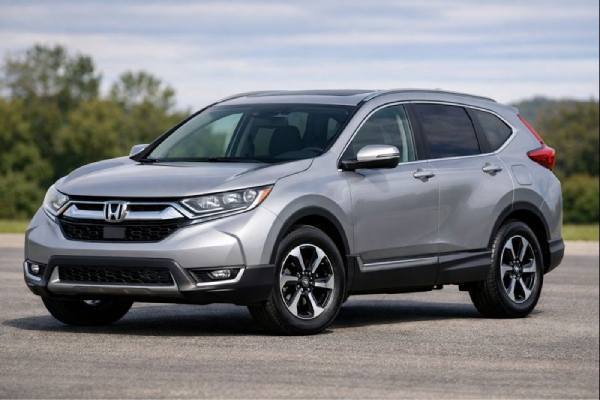
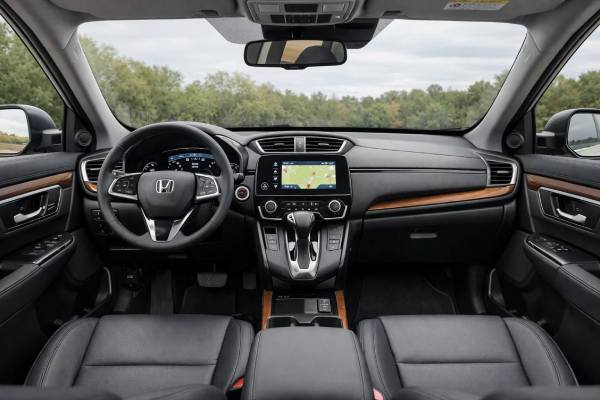

The 2018–2023 Honda CR-V Real Time AWD (RW2) with the L15BE 1.5-liter turbo is the “all-weather” take on Honda’s roomy, family-first SUV. The key difference versus FWD is not just traction—it’s how the AWD hardware changes maintenance needs, tire strategy, and long-term running costs. Honda’s Real Time AWD system is designed for normal roads first: it behaves like a front-driver most of the time, then shifts torque rearward when conditions demand it, often before obvious wheelspin.
With 193 hp in this tune (market dependent), the L15BE delivers strong midrange pull and relaxed highway pace, but it also benefits from careful oil service and sensible warm-up habits—especially in cold climates and short-trip use. Shop the right trim and keep the fluids fresh (engine, CVT, and rear drive unit), and the RW2 CR-V can be a dependable, confidence-inspiring daily SUV.
Quick Specs and Notes
- Real Time AWD adds foul-weather confidence with minimal driver input and predictable behavior on mixed grip.
- The AWD chassis typically feels more planted under load, especially on wet climbs and gravel.
- Match tire brand, size, and tread depth across all four wheels to protect the AWD clutch system.
- Plan rear drive unit fluid service about every 40,000–60,000 km (25,000–37,000 mi) for long-term durability.
- If you drive mostly short trips in winter, shorten oil intervals to reduce contamination and dilution risk.
Section overview
- RW2 AWD engineering notes
- L15BE 193 hp spec tables
- CR-V RW2 trims and ADAS
- Known issues, recalls, and TSBs
- Service schedule for AWD RW2
- Driving feel and real mpg
- AWD CR-V against competitors
RW2 AWD engineering notes
RW2 identifies the Real Time AWD version of the fifth-generation CR-V in many markets. In daily use, it’s best thought of as a front-drive SUV with an intelligent rear assist. Most of the time, the front wheels do the work for efficiency. When the system predicts or detects traction loss—launching on wet pavement, climbing a slippery grade, accelerating through a bend, or pulling out of a loose gravel driveway—it can engage the rear axle through a clutch-based coupling. The goal is stability and momentum, not rock-crawling. That design choice is why the CR-V tends to feel natural and non-dramatic when grip changes.
From an ownership standpoint, AWD changes three things that matter over years.
First, tire discipline becomes important. Real Time AWD systems are sensitive to rolling-radius differences. If one tire is significantly more worn than the others, the AWD clutch may need to work constantly to correct the mismatch, creating heat and wear. The practical rule: replace tires as a set when possible, rotate them on schedule, and keep pressures correct. If you must replace a single tire, match its brand and model and keep tread depth close to the others.
Second, you gain additional fluids and seals. RW2 adds a rear drive unit (often called rear differential in casual conversation, though the internal design may include clutch packs and gear sets). That fluid is not “lifetime” if you keep the vehicle long-term. Fresh fluid helps control heat, reduces clutch chatter, and protects bearings.
Third, the AWD hardware adds mass, which can slightly soften straight-line acceleration and increase fuel use compared with FWD, especially in stop-and-go driving. In return, you get better traction margins and a more secure feel when the road is wet, snowy, or uneven.
Finally, keep expectations realistic: with road-focused tires and modest ground clearance, RW2 is excellent for winter commuting and forest-road access, but it’s not a substitute for dedicated off-road hardware. The CR-V’s advantage is how quietly and automatically it delivers traction without asking the driver to think about it.
L15BE 193 hp spec tables
The tables below describe the Honda CR-V RW2 (Real Time AWD) with the L15BE 1.5-liter turbo in the 193 hp tune stated for this configuration. Exact figures vary by market, emissions standard, wheel and tire package, seating layout, and test cycle. Use these as a high-confidence baseline, then confirm details for your VIN and local specification sheet.
Powertrain and efficiency
| Item | Data (RW2 L15BE) |
|---|---|
| Code | L15BE |
| Layout and cylinders | Inline-4, 4 cylinders, DOHC, 4 valves/cyl |
| Bore × stroke | 73.0 × 89.5 mm (2.87 × 3.52 in) |
| Displacement | 1.498 L (1498 cc) |
| Induction | Turbocharged |
| Fuel system | Direct injection (DI) |
| Compression ratio | 10.3:1 |
| Max power | 193 hp (142 kW) @ rpm (market dependent) |
| Max torque | Typically 240–243 Nm (177–179 lb-ft) @ ~2000–5000 rpm (market dependent) |
| Timing drive | Chain |
| Rated efficiency | Commonly mid-6 to mid-7 L/100 km combined (varies by WLTP/NEDC/EPA) |
| Real-world highway @ 120 km/h | Often ~7.8–8.8 L/100 km (≈27–30 mpg US / 32–36 mpg UK), load and weather dependent |
| Aerodynamics | Cd and frontal area vary by spec; roof accessories can materially increase drag |
Transmission and driveline
| Item | Data |
|---|---|
| Transmission | CVT in most markets (some markets also offered manual) |
| Drive type | Real Time AWD (RW2) |
| Differential | Front open differential; rear drive unit with clutch-based torque transfer (design varies by market) |
Chassis and dimensions
| Item | Data (typical range) |
|---|---|
| Suspension (front/rear) | MacPherson strut / Multi-link |
| Steering | Electric power steering |
| Brakes | 4-wheel discs (diameters vary by market and wheel size) |
| Wheels and tires | Commonly 235/60 R18 or 235/55 R19 (trim dependent) |
| Ground clearance | Often ~198–208 mm (7.8–8.2 in), spec dependent |
| Length / width / height | ~4600–4640 / 1855 / 1680–1690 mm (181–183 / 73.0 / 66.1–66.5 in) |
| Wheelbase | ~2660 mm (104.7 in) |
| Turning circle (kerb-to-kerb) | ~11.0 m (36.1 ft) |
| Kerb weight | AWD typically ~50–90 kg heavier than comparable FWD trim (market dependent) |
| GVWR | Varies by market and seating configuration |
| Fuel tank | ~57 L (15.1 US gal / 12.5 UK gal) |
Performance and capability
| Item | Typical outcome |
|---|---|
| Acceleration 0–100 km/h | Often ~9.0–9.6 s (trim, tires, and test method matter) |
| Top speed | Around ~200–210 km/h (124–130 mph), market dependent |
| Braking 100–0 km/h | Commonly high-30 m range with good tires and dry surface (test dependent) |
| Towing capacity | Market dependent; always verify VIN label and handbook |
Fluids and service capacities (ownership-focused)
| System | Spec (typical guidance) | Notes |
|---|---|---|
| Engine oil | Honda-approved spec; viscosity often 0W-20 or 5W-30 by climate | Capacity varies by filter and market |
| Coolant | Honda long-life coolant or equivalent | Mix ratio per local spec |
| CVT fluid | Honda CVT fluid specified for your market | Use only the correct fluid type |
| Rear drive unit fluid | Honda AWD rear drive unit fluid specified for your market | Service interval matters for longevity |
| A/C refrigerant | Type and charge vary by year and market | Check under-hood label |
Electrical
| Item | Typical |
|---|---|
| 12 V battery | Capacity and CCA vary by market and trim |
| Spark plugs | OEM-specified iridium type; gap per Honda spec |
Safety and driver assistance snapshot
| Item | Notes |
|---|---|
| Crash ratings | Results differ by year, trim, and test protocol version (Euro NCAP, IIHS, and local bodies) |
| Headlights | Ratings can vary widely by trim due to lamp design |
| ADAS suite | AEB, ACC, lane support, and blind-spot features depend on grade and year |
CR-V RW2 trims and ADAS
Trims differ by region, but the Real Time AWD CR-V generally follows a consistent logic: the mechanical package is broadly similar, while lighting, driver assistance, interior comfort, and infotainment scale with grade and option packs. For buyers, the highest-value features are the ones that are hard or expensive to retrofit later—headlights, radar and camera systems, and factory safety equipment.
Trims and options that matter most
- Headlight technology: In safety testing and real driving, headlights can be the deciding factor. Higher trims often add LED units with better beam pattern and output. If you drive rural roads or winter nights, prioritize the trim with the best factory lighting rather than bigger wheels.
- Driver assistance package: Many markets bundle adaptive cruise control, lane-keeping support, and automatic emergency braking into a single suite. That suite can be standard on upper trims and optional on lower trims. If you commute on highways, the value is real: less fatigue and more consistent distance control.
- Wheel and tire package: Larger wheels can sharpen steering slightly, but they usually reduce ride compliance and raise tire costs. AWD models also benefit from good all-season or winter-rated tires because the system can only use the grip the tires provide.
- Seating and cabin equipment: Heated seats, heated windshield area, and a stronger HVAC system can be more valuable than cosmetic upgrades in cold climates. Check whether a heated steering wheel or rear heated seats are included in your market.
Quick identifiers on a used RW2
- Badging and underbody cues: Many AWD versions carry an AWD badge, but do not rely on that alone. A quick underbody glance often reveals a rear drive unit and a prop shaft.
- Instrument and infotainment menus: Some versions show AWD status pages or traction-related messages. Even when they do not, the VIN decode and build sheet remain the definitive check.
- Year-to-year equipment shifts: Safety tech often migrates down the trim ladder over time. A mid-trim late-year vehicle can sometimes match an earlier high-trim vehicle for ADAS coverage.
Safety ratings: interpret them correctly
Crash-test ratings are not always “one number for the whole model.” They may depend on:
- Protocol version (tests get stricter over time)
- Trim-level headlights (a common differentiator in IIHS scoring)
- Standard versus optional ADAS (some awards require specific equipment)
If safety is your priority, align three things: a strong crash rating for the model year, the headlight configuration that scores well, and the driver-assistance package that is actually fitted to the vehicle you are buying.
ADAS service implications
After windshield replacement, bumper repair, or some alignment work, camera and radar systems often require calibration. When shopping used, ask for:
- Proof of calibration after any glass replacement
- No persistent warning lights for lane or collision systems
- A test drive where adaptive cruise and lane support operate smoothly without repeated disengagements
Known issues, recalls, and TSBs
The RW2 CR-V is generally robust, but it rewards owners who treat it like a modern turbo AWD crossover rather than an older, low-stress SUV. The most useful way to plan is by prevalence and cost tier, then match the risks to your climate and driving style.
Common: plan ahead
- Oil contamination in short-trip winter use (severity: medium if unmanaged)
- Symptoms: rising oil level, fuel smell in oil, rougher cold idle.
- Likely cause: repeated cold starts and short journeys that do not fully warm the oil; direct-injected turbo engines are more prone to this pattern.
- Remedy: shorten oil intervals, use the correct viscosity for your climate, and include longer drives periodically to fully heat the oil. If your region offers updated calibrations addressing warm-up behavior, ensure they are applied.
- CVT drivability complaints when fluid ages (severity: medium)
- Symptoms: shudder under light throttle, delayed engagement, inconsistent “step” behavior on acceleration.
- Likely cause: fluid shear and contamination over time, plus adaptation logic that compensates for wear.
- Remedy: drain-and-fill services at sensible intervals with the correct Honda-specified CVT fluid, and confirm no outstanding software updates for drivability.
- Rear drive unit fluid degradation or chatter (severity: medium)
- Symptoms: low-speed groan or binding sensation in tight turns, especially after long intervals with no service.
- Likely cause: degraded fluid and clutch friction characteristics.
- Remedy: service the rear drive unit fluid on time; if symptoms persist, diagnose for bearing wear or incorrect fluid use.
Occasional: inspect during purchase
- A/C performance drift (severity: medium): weak cooling at idle, cycling behavior, or slow pull-down can be refrigerant charge, sensor logic, or condenser damage. Check cooling in traffic, not just at speed.
- Electronic gremlins tied to battery health (severity: low to medium): infotainment reboots, odd warning messages, and intermittent camera issues can be triggered by a weak 12 V battery. Load-test before replacing modules.
- Suspension wear under heavy city use (severity: medium): bushings and links can wear sooner on rough roads. Listen for clunks over sharp bumps and check tire wear patterns.
Rare but expensive: do not ignore early signals
- Cooling system neglect (severity: high): overheating events are costly on any turbo engine. Avoid vehicles with repeated coolant top-ups, evidence of overheating, or inconsistent temperature behavior.
- Fuel system and injector faults (severity: high): direct injection components can be expensive. Persistent misfires, hard starts, or lean codes deserve proper diagnostics, not parts swapping.
Recalls, TSBs, and verification routine
Because campaigns vary by country and model year, treat verification as part of the buying process:
- Run a VIN recall check in the official database for your region.
- Ask for dealer invoices or campaign completion reports.
- If history is incomplete, budget for a dealer inspection after purchase to close any open items and update software.
That last step often pays for itself by preventing repeat visits and ensuring the engine, transmission, and safety systems operate on the latest calibrations available for your VIN.
Service schedule for AWD RW2
A good maintenance plan for the RW2 CR-V balances manufacturer guidance with the realities of turbo engines, CVTs, and AWD clutch hardware. The goal is not to over-service—it is to service the few items that most strongly influence longevity.
Core schedule (practical long-term ownership)
- Engine oil and filter: every 8,000–10,000 km (5,000–6,000 mi) or 12 months for short-trip, cold-climate, or heavy city use. If your driving is mostly long-distance highway in mild weather, you can extend closer to the factory reminder, but monitor oil condition and level.
- Engine air filter: inspect every 15,000 km (9,000 mi); replace typically 30,000–45,000 km (19,000–28,000 mi), sooner in dust.
- Cabin filter: 15,000–30,000 km (9,000–19,000 mi) depending on air quality and HVAC use.
- CVT fluid: every 40,000–60,000 km (25,000–37,000 mi) for long-term durability, especially with hills, heat, or towing.
- Rear drive unit fluid (AWD): every 40,000–60,000 km (25,000–37,000 mi). If you drive steep gravel roads, tow, or see a lot of wet-snow traction events, lean toward the shorter end.
- Brake fluid: every 2–3 years regardless of mileage.
- Coolant: follow the long-life interval for your market; investigate any frequent top-ups immediately.
- Spark plugs: commonly 100,000–160,000 km (60,000–100,000 mi), but replace earlier if misfire data indicates weakness.
- Serpentine belt and hoses: inspect annually after 5 years; replace based on condition, not just mileage.
- 12 V battery: test annually after year 3; many last 4–6 years depending on climate, stop-start usage, and short trips.
Tire and alignment strategy (AWD-specific)
- Rotate tires consistently (often every 8,000–12,000 km / 5,000–7,500 mi).
- Keep pressures correct and check monthly in winter.
- Replace as a set when feasible; if not, keep tread depths closely matched.
- If you feel vibration, pull, or see uneven wear, align early—alignment costs less than tires and protects AWD harmony.
Buyer’s inspection checklist (AWD RW2)
- Tight-turn test in a parking lot: listen and feel for binding or groan that could suggest rear unit fluid neglect.
- CVT behavior at light throttle: shudder or delayed engagement deserves attention.
- Oil level and smell: high level or fuel smell points to poor service habits.
- Underbody check: look for impact damage near the prop shaft and rear drive unit.
- Service proof: confirm CVT and AWD fluid services, not just oil changes.
Durability outlook
Owners who keep the AWD and CVT fluids fresh and avoid extended oil intervals in short-trip winter use tend to see the best long-term results. The RW2 hardware is not fragile, but it benefits from consistent, correct-fluid maintenance and matched tires—two factors that separate “easy ownership” from chronic driveline annoyances.
Driving feel and real mpg
The RW2 CR-V’s driving character is defined by calm competence. It is not trying to feel sporty; it is trying to feel stable, predictable, and easy to place on the road—especially when conditions are poor.
Ride, handling, and cabin noise
- Ride comfort: The CR-V’s suspension filters rough surfaces well, and the multi-link rear helps it stay composed over mid-corner bumps. On larger wheels, you may feel sharper impacts over potholes, so choose wheel size with your roads in mind.
- Handling balance: The CR-V favors safe, mild understeer, which is desirable in a family SUV. AWD can reduce wheelspin when accelerating out of slow corners on wet pavement, making the vehicle feel more “tied down.”
- NVH (noise, vibration, and harshness): Road noise depends heavily on tire choice. Many owners notice a big difference between quiet touring tires and aggressive all-terrains. If refinement matters, prioritize a quality touring all-season and keep the alignment correct.
Powertrain response and AWD behavior
The turbocharged L15BE typically delivers useful torque at low rpm, which makes city driving and highway merges feel effortless. With a CVT, acceleration is smooth and continuous. Under heavier throttle, the engine may hold a steady rpm band; that is normal CVT behavior, but it should not feel like slipping or shuddering.
AWD engagement is usually subtle. On slippery starts, you may feel a brief moment where the vehicle gathers itself and then pulls cleanly, especially if the front tires meet a low-grip patch. Good tires sharpen this behavior more than any drive mode.
Real-world efficiency (what owners actually see)
Expect the spread to be wider than many people assume:
- City-heavy driving: stop-and-go, short warm-ups, and winter conditions can push consumption noticeably above the rating.
- Highway 100–120 km/h: many drivers land in a stable band, but headwinds, roof racks, winter tires, and heavy loads can add a meaningful penalty.
- Cold weather: fuel economy typically worsens because the engine runs richer during warm-up, and the cabin heater demand increases.
A simple habit that improves both efficiency and oil condition is a longer drive at least weekly if your routine is mostly short trips. Fully warming the oil helps evaporate moisture and fuel vapors that otherwise accumulate during repeated cold starts.
Performance metrics that matter
In everyday terms, the RW2 CR-V is “quick enough” rather than fast. The advantage is consistency: it accelerates smoothly, brakes predictably, and feels stable at speed. If you measure value by reduced stress in rain, slush, and uneven roads, the RW2 AWD configuration makes a clear case.
AWD CR-V against competitors
In the compact SUV class, the “best” choice depends on how you drive, how long you keep vehicles, and how disciplined you are with maintenance. The RW2 CR-V’s strengths are space efficiency, predictable manners, and a well-integrated AWD system that does not demand driver attention.
Versus Toyota RAV4 AWD (gas and hybrid)
- CR-V advantage: refined ride, strong midrange response from the turbo, and a cabin that feels designed around passengers and cargo.
- RAV4 advantage: in many markets, hybrid availability can deliver better city economy and a different powertrain complexity profile.
- Decision tip: if your driving is mostly urban with frequent stops, a hybrid rival can be compelling. If you want quiet, easy power and a roomy cabin, the CR-V remains a top-tier all-rounder.
Versus Mazda CX-5 AWD
- CR-V advantage: rear-seat space and cargo practicality, plus a more relaxed long-distance comfort bias.
- CX-5 advantage: sharper steering feel and a more “driver-focused” chassis character.
- Decision tip: choose the Mazda if you value steering and interior ambiance most; choose the Honda if you prioritize space, visibility, and low-effort daily comfort.
Versus Nissan Rogue and X-Trail AWD (market dependent)
- CR-V advantage: a balanced chassis and an AWD system tuned for smooth, confidence-building engagement.
- Rogue and X-Trail advantage: can offer strong comfort and tech value depending on year and powertrain.
- Decision tip: compare service history quality. In this segment, the best-maintained example often beats the better brochure.
Versus Volkswagen Tiguan 4Motion and other turbo AWD rivals
- CR-V advantage: typically simpler ownership expectations and broad parts availability, with fewer “special procedure” service demands.
- Tiguan advantage: European road feel and, in some markets, flexible seating configurations.
- Decision tip: if you plan to keep the vehicle long term and want predictable maintenance, the CR-V’s combination of practicality and mainstream serviceability is hard to beat.
The RW2 verdict
Choose the RW2 CR-V if you want year-round traction confidence without stepping into heavier, more complex AWD systems. The ownership “price” is straightforward: keep tires matched, service the CVT and rear drive unit on time, and treat the turbo engine to clean oil at sensible intervals. Do those things, and the RW2 CR-V delivers the kind of stability and usability that makes a daily SUV feel easy.
References
- 2018 CR-V press kit 2018 (Manufacturer Press Kit)
- All-Wheel Drive System Real Time AWD 2025 (Technical Guide)
- 2018 Honda CR-V 2018 (Safety Rating)
- Official Honda CR-V 2019 safety rating 2019 (Safety Rating)
- Vehicle Detail Search – 2018 HONDA CR-V | NHTSA 2018 (Recall Database)
Disclaimer
This article is for informational purposes only and is not a substitute for professional inspection, diagnosis, or repair. Specifications, torque values, fluid types, capacities, service intervals, and procedures vary by VIN, market, model year, and equipment. Always verify details using your official owner’s manual, factory service information, and dealer/service records for your exact vehicle.
If this guide helped you, please consider sharing it on Facebook, X (Twitter), or your preferred community to support our work.