

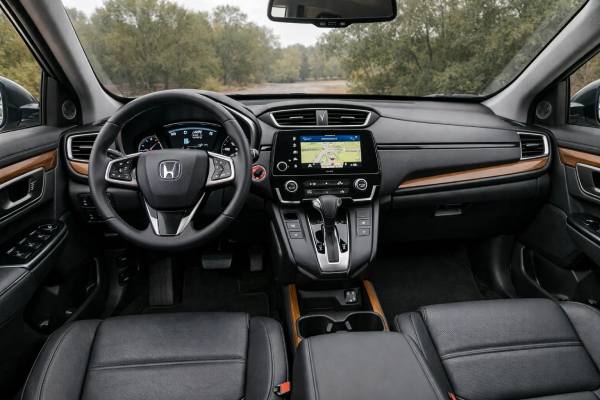
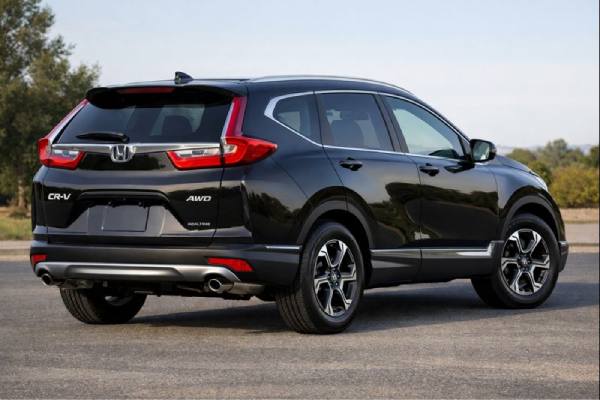
The 2017–2019 Honda CR-V RW8 pairs Honda’s 1.6 i-DTEC diesel (N16A4, 160 hp) with Real Time AWD to create a long-distance family SUV that feels more “engineered” than flashy. The big story is efficiency under load: strong mid-range torque makes relaxed motorway cruising and confident towing possible without constant downshifts, while AWD adds stability on wet roads and light snow. The trade-offs are also clear. Modern diesel emissions hardware (DPF, EGR, and often SCR/AdBlue) rewards correct use and consistent servicing, and the AWD driveline adds fluid services many owners overlook. If you buy with eyes open and maintain it like a torque-rich touring vehicle, the RW8 can be a comfortable, practical, high-mileage companion.
What to Know
- Strong mid-range pull for overtakes and towing; the 160 hp tune feels more “grown-up” than the smaller diesel.
- Real Time AWD improves traction in rain, slush, and gravel without the weight and drag of a full-time system.
- Big, usable cargo area and an easy-driving cabin layout suit family and airport duty.
- Short-trip driving can accelerate DPF clogging and EGR soot issues; a diesel needs regular hot runs.
- Plan an AWD rear-differential fluid change about every 40,000–60,000 km (25,000–37,000 mi), depending on use.
Quick navigation
- RW8 CR-V diesel basics
- N16A4 AWD specs table
- Trims, tech and safety kit
- Known issues, recalls and fixes
- Service plan and buying tips
- On-road feel and economy
- Against key SUV rivals
RW8 CR-V diesel basics
RW8 is the shorthand many owners use for the fifth-generation CR-V configured with Real Time AWD and the higher-output 1.6 i-DTEC diesel (engine code N16A4). In day-to-day terms, it is the “touring” diesel CR-V: enough torque to feel effortless when the cabin is full, stable at motorway speeds, and economical enough to make high-mileage ownership realistic.
Powertrain character. The 160 hp 1.6 i-DTEC is built around efficient combustion and strong low-to-mid rpm torque. Compared with smaller diesels, it gives you more usable shove between roughly 1,700 and 3,000 rpm, which is where an SUV actually lives. That matters when merging, overtaking, or pulling a small trailer up a grade.
How Real Time AWD behaves. Honda’s Real Time AWD is designed to be mostly front-driven in steady cruising, then add rear axle drive when the fronts begin to slip or when conditions demand extra traction. For owners, the benefit is simple: less wheelspin on wet roundabouts, better composure on muddy campsites, and more confidence on compacted snow. The limit is also simple: it is not meant for deep mud, rock crawling, or repeated “abuse” with mismatched tires.
Why the RW8 has a different maintenance profile than a petrol CR-V. There are three reasons:
- Diesel emissions hardware (DPF and EGR, and commonly SCR/AdBlue) needs correct oil, good fuel, and occasional sustained hot running.
- AWD driveline fluids (rear differential and related components) add services that do not exist on FWD models.
- Heavier curb weight means tires and brakes can disappear faster if the vehicle is driven hard in city traffic.
If your typical week includes at least one longer, fully-warm drive, and you keep the drivetrain fluids on schedule, the RW8 is one of the more sensible “do everything” diesel SUVs of its era.
N16A4 AWD specs table
The tables below focus on the 2017–2019 CR-V RW8: Real Time AWD with the 1.6 i-DTEC 160 hp diesel. Exact figures vary by market, wheel size, and transmission, so treat these as practical reference ranges and verify by VIN and build sheet when buying parts or planning service.
Powertrain and efficiency
| Item | Spec (RW8 N16A4 diesel) |
|---|---|
| Code | N16A4 |
| Engine layout and cylinders | Inline-4, DOHC, 16-valve |
| Bore × stroke | ~76.0 × 88.0 mm (2.99 × 3.46 in) |
| Displacement | 1.6 L (1597 cc) |
| Induction | Turbocharged (two-stage/twin-turbo by version) |
| Fuel system | Common-rail direct injection (diesel) |
| Compression ratio | ~16.0:1 (varies by calibration) |
| Max power | 160 hp (118 kW) @ ~4,000 rpm |
| Max torque | ~350 Nm (258 lb-ft) @ ~2,000 rpm |
| Timing drive | Chain |
| Rated efficiency (typical) | ~5.3–6.0 L/100 km (44–53 mpg US / 47–57 mpg UK) |
| Real-world highway @ 120 km/h | ~6.0–6.8 L/100 km (35–39 mpg US / 42–47 mpg UK) |
| Aerodynamics | Cd ~0.33–0.35 (market dependent) |
Transmission and driveline
| Item | Spec |
|---|---|
| Transmission | 6MT (some markets) or 9-speed automatic (common on AWD) |
| Drive type | Real Time AWD (on-demand) |
| Differential | Open (with brake-based traction control) |
Chassis and dimensions
| Item | Spec (typical EU body) |
|---|---|
| Suspension (front/rear) | MacPherson strut / Multi-link |
| Steering | Electric power steering (EPS) |
| Brakes | 4-wheel discs (sizes vary by trim) |
| Wheels and tires | Commonly 225/65 R17; also 235/60 R18; some markets 19-inch |
| Ground clearance | ~198–208 mm (7.8–8.2 in) |
| Length / width / height | ~4586 / 1855 / 1689 mm (180.6 / 73.0 / 66.5 in) |
| Wheelbase | ~2660 mm (104.7 in) |
| Turning circle | ~11.8 m (38.7 ft) |
| Curb weight | ~1615–1725 kg (3560–3800 lb) |
| Fuel tank | ~57 L (15.1 US gal / 12.5 UK gal) |
| Cargo volume | ~561 L up / ~1766 L down (VDA, varies by market) |
Performance and capability
| Item | Spec (typical) |
|---|---|
| 0–100 km/h (0–62 mph) | ~9.5–10.5 s |
| Top speed | ~195–205 km/h (121–127 mph) |
| Towing capacity (braked) | Often up to ~2000 kg (4400 lb), market dependent |
| Roof load | Commonly ~75 kg (165 lb), check rail system rating |
Fluids and service capacities (common service references)
| Item | Typical spec (verify by market) |
|---|---|
| Engine oil | Low-SAPS diesel oil meeting the required ACEA spec; often 0W-30; capacity ~3.6–4.0 L (3.8–4.2 US qt) |
| Coolant | Long-life coolant, premix; capacity ~5.5–6.5 L (5.8–6.9 US qt) |
| Automatic transmission fluid | Honda-specified ATF for the 9AT; service-fill varies (often ~4–5 L), dry fill higher |
| Rear differential fluid (AWD) | Honda dual-pump fluid type varies by market; often ~1.0–1.2 L |
| A/C refrigerant | R-1234yf or R-134a by market; charge varies by build |
| Key torque specs | Always confirm in service data for your VIN before tightening critical fasteners |
Electrical and ignition
| Item | Spec |
|---|---|
| Alternator output | Typically ~120–150 A (varies) |
| 12V battery | Commonly 60–70 Ah class (CCA depends on market) |
| Spark plug | Not applicable (diesel uses glow plugs) |
Safety and driver assistance (baseline snapshot)
| Item | Spec (varies by year/trim/market) |
|---|---|
| Euro NCAP (2019 CR-V) | 5 stars; Adult 93%, Child 83%, VRU 70%, Safety Assist 76% |
| IIHS (US-market reference) | Ratings vary by headlight and trim; verify by year and equipment |
| ADAS | Depending on year/trim: AEB, ACC, lane support, traffic sign recognition, BSD and RCTA |
Trims, tech and safety kit
Trim naming differs by region, but most 2017–2019 diesel AWD CR-Vs follow the same pattern: a comfort-focused base grade, a mid-trim with the “must-have” convenience features, and a top trim that bundles leather, larger wheels, and more driver assistance. When shopping, focus less on badge names and more on functional equipment that changes ownership costs and daily satisfaction.
Trims and options that matter
Transmission pairing. In many markets, the 160 hp diesel AWD is commonly matched to the 9-speed automatic, while lower-output diesels or FWD models may use a manual. If you want effortless towing and commuting, the automatic is the obvious pick. If you want simpler long-term mechanics and you drive mostly open roads, a manual can be appealing where available.
Wheel size. A CR-V on 17-inch wheels typically rides more quietly and costs less in tires. Moving to 18s or 19s can sharpen steering response but often increases road noise and makes pothole impacts harsher. On AWD models, it also raises the importance of keeping tire wear matched across all four corners.
Cold-weather and towing equipment. Look for:
- Heated seats and steering wheel (comfort and resale).
- Factory tow prep or certified wiring (clean integration and fewer electrical gremlins).
- Parking sensors and camera quality (some years have more reliable camera modules than others).
Safety ratings and what they mean
For European buyers, the most comparable crash-test snapshot comes from Euro NCAP testing. The CR-V’s strong adult-occupant score reflects good structure and restraint performance for its class, while child-occupant results are typically helped by well-designed rear seating and ISOFIX mounting points. Pay attention to the test year and protocol, because scoring weights change over time and can make older designs look weaker even if real-world safety remains respectable.
For North American shoppers referencing IIHS or NHTSA data, remember that headlight performance, crash prevention, and trim equipment can change the overall story. Some trims earn better “real life” night-driving confidence simply because their headlamps are better.
Driver assistance (ADAS): standard vs optional thinking
In this era, “Honda Sensing” style packages can include:
- AEB (automatic emergency braking) for vehicles and sometimes pedestrians.
- ACC (adaptive cruise control) for relaxed motorway work.
- Lane support (lane keeping assist or lane departure mitigation).
- Blind-spot monitoring and rear cross-traffic alert (especially useful in tight parking lots).
Two practical ownership points:
- Windshield and radar alignment matters. After a windshield replacement or front-end impact repair, calibration is not optional if the system is to work correctly.
- Do not buy “half-working” ADAS. Intermittent warning lights or sensor faults often mean expensive diagnosis, not a cheap sensor swap.
If safety tech is a priority, choose the newest year within your budget and verify all driver assistance functions work on a test drive in clear, dry conditions.
Known issues, recalls and fixes
A well-kept RW8 is usually durable, but it is not “maintenance indifferent.” The most common problems stem from diesel emissions systems, automatic transmission behavior (where fitted), and the realities of an AWD driveline.
Common issues (higher prevalence)
DPF loading and frequent regenerations (medium cost if ignored).
- Symptoms: rising fuel use, strong hot smell after shutdown, cooling fans running, warning messages, limp mode in worst cases.
- Likely causes: repeated short trips, interrupted regenerations, wrong oil, faulty exhaust temperature or pressure sensors.
- Remedy: change driving pattern (regular hot runs), verify correct low-ash oil, check sensors and software updates, and address any boost or EGR faults that prevent clean combustion.
EGR valve or cooler soot buildup (medium cost).
- Symptoms: hesitation, reduced power, rough idle, increased smoke, fault codes.
- Root cause: soot accumulation is normal on modern diesels, but it accelerates with short trips and low exhaust temperatures.
- Remedy: proper diagnosis, cleaning or replacement where appropriate, and ensuring the engine reaches full temperature regularly.
9-speed automatic shift quality or “hunting” (low to medium cost).
- Symptoms: jerky low-speed shifts, delayed engagement, gear hunting on gentle hills.
- Root cause: calibration behavior, adaptation drift, or degraded fluid.
- Remedy: check for software updates, reset adaptations where recommended, and service fluid on a sensible schedule (not “lifetime”).
Occasional issues
AdBlue (SCR) warnings (low to medium cost).
- Symptoms: countdown warnings, reduced power, fault codes.
- Root cause: low fluid, crystallization at injector, NOx sensor faults.
- Remedy: correct fluid handling, keep the filler clean, and diagnose sensors before replacing parts blindly.
Rear differential fluid neglect (medium cost).
- Symptoms: vibration, shudder on tight turns, groaning noises, especially in parking maneuvers.
- Root cause: old or incorrect fluid, or mismatched tires causing driveline stress.
- Remedy: correct fluid change procedure and confirm all four tires match closely in tread depth and size.
Rare but higher-severity items
Turbocharger control problems (higher cost).
- Symptoms: sudden loss of power, overboost or underboost codes, whistle changes.
- Root cause: actuator issues, vacuum or boost leaks, sticking vanes on variable-geometry systems, or sensor faults.
- Remedy: smoke-test boost plumbing, verify actuator control, and avoid replacing the turbo until diagnostics confirm it.
Recalls, TSBs, and how to verify completion
Modern vehicles often have campaign work tied to VIN ranges. The right approach is consistent:
- Run the VIN through an official recall database and compare results with service invoices.
- Ask a dealer for confirmation that campaigns and software updates are complete.
- Treat missing proof as a negotiation point, not a deal-breaker, if the fix is still available.
The RW8 is usually a reliable long-distance tool when maintained correctly; most “horror stories” trace back to neglected fluids, chronic short trips, or unresolved warning lights.
Service plan and buying tips
A smart maintenance plan for the RW8 is built around three priorities: clean diesel combustion (to protect DPF and EGR), stable transmission behavior, and AWD driveline health. The schedule below is a practical baseline for mixed use. If the vehicle does many short trips, heavy towing, or cold-climate driving, shorten intervals.
Practical maintenance schedule (distance or time, whichever comes first)
- Engine oil and filter: every 10,000–15,000 km (6,000–9,000 mi) or 12 months. If you do mostly city runs, aim closer to 10,000 km. Use the correct low-ash diesel oil spec for your market.
- Air filter: inspect every service; replace about 30,000 km (19,000 mi) (sooner in dusty areas).
- Cabin filter: about 15,000–30,000 km (9,000–19,000 mi) or annually if allergies matter.
- Fuel filter: about 40,000–60,000 km (25,000–37,000 mi) (diesels are sensitive to fuel quality).
- Brake fluid: every 2–3 years, regardless of mileage.
- Coolant: typically 5 years, then per schedule (verify for your VIN).
- Automatic transmission fluid (if 9AT): consider 50,000–80,000 km (31,000–50,000 mi) service intervals for long-term shift quality, especially with towing or city use.
- Rear differential (AWD) fluid: about 40,000–60,000 km (25,000–37,000 mi); sooner if you tow or drive steep, slippery routes.
- Tires: rotate every 10,000–12,000 km (6,000–7,500 mi); keep tread depth matched across all four tires on AWD.
- 12V battery test: yearly after year three; many last 4–6 years depending on climate and short-trip frequency.
Buyer’s guide: what to check before you pay
Service history that proves the right habits.
- Regular oil changes with correct oil spec (receipt details matter).
- Evidence of AWD driveline fluid service.
- Transmission fluid service proof (if automatic) is a major plus.
Diesel health checks.
- Ask how the vehicle is used. A diesel that lives on short trips is riskier.
- On the test drive, ensure the engine reaches full temperature and pulls cleanly under load without warning lights.
- Listen for odd turbo noises and watch for hesitant throttle response.
AWD and tires.
- Confirm all four tires match in brand, size, and similar tread depth.
- Do slow, tight circles in a parking lot: binding, shudder, or groaning can suggest neglected differential fluid or mismatched tires.
Electronics and ADAS.
- Test camera, parking sensors, and all steering-wheel controls.
- Confirm no warning lights for collision systems or lane support. Calibration issues can be expensive.
Long-term durability outlook
If maintained on the “diesel and AWD reality” schedule above, the RW8 commonly ages well. The key is not heroic repairs, but consistent prevention: correct oil, correct fluids, and a driving pattern that lets the emissions system do its job.
On-road feel and economy
The RW8 diesel AWD drives like a calm, capable family SUV rather than a sporty crossover. That is a compliment: it feels settled, predictable, and easy to place on fast roads.
Ride, handling, and noise
Ride comfort is one of the CR-V’s strengths, especially on 17-inch wheels. The suspension is tuned to absorb expansion joints and broken urban pavement without constant fidgeting. With larger wheels, you may notice sharper impacts over potholes and more tire roar on coarse surfaces.
Handling balance is safe and neutral. The body leans, but it does not feel sloppy. On wet roads, Real Time AWD adds a reassuring “pull” out of junctions rather than spinning a front wheel and letting traction control intervene.
Cabin noise (NVH) is generally good at cruising speeds, but diesels bring their own soundtrack:
- A cold start has more clatter than a petrol.
- Under heavy acceleration, you will hear the engine more clearly.
- At steady motorway speeds, wind and tire noise usually dominate.
Powertrain feel: diesel torque and gearbox logic
The 1.6 i-DTEC 160 hp tune is about usable torque, not dramatic top-end power. It feels strongest in the mid-range, which is ideal for overtakes. Where the 9-speed automatic is fitted, it typically aims for low rpm cruising and will downshift decisively when you ask for passing power. If you feel indecision or repeated shifting on gentle hills, a software update, adaptation reset, or fluid service can sometimes restore smoothness.
Real-world efficiency
Expect fuel use to depend heavily on speed and trip length:
- City (short trips): ~6.5–8.0 L/100 km (29–36 mpg US / 35–43 mpg UK), especially in cold weather.
- Highway 100–120 km/h: ~6.0–6.8 L/100 km (35–39 mpg US / 42–47 mpg UK).
- Mixed driving: ~5.7–6.7 L/100 km (35–41 mpg US / 42–50 mpg UK).
Cold weather and frequent idling can add roughly 0.7–1.2 L/100 km because the engine and aftertreatment take longer to reach efficient temperatures.
Load and towing behavior
With moderate towing, the RW8 usually feels stable and confident, helped by torque and the CR-V’s long wheelbase. The trade-off is consumption: plan for a 20–35% increase under meaningful load, and keep a close eye on transmission behavior if you tow regularly. A “towing-friendly” maintenance rhythm (shorter ATF and differential intervals) pays off long-term.
Against key SUV rivals
The RW8 CR-V diesel AWD competes in a crowded segment where the best choice depends on your priorities: fuel economy, towing stability, maintenance simplicity, or cabin space.
Versus Volkswagen Tiguan 2.0 TDI 4Motion
- CR-V advantage: often smoother ride comfort and a very practical cabin and cargo shape. Real Time AWD can feel seamless for normal conditions.
- Tiguan advantage: typically stronger diesel options and a more “Germanic” steering feel; some trims offer more advanced lighting and infotainment.
- Ownership angle: the CR-V can be easier to live with if serviced consistently, while the Tiguan’s diesel and AWD systems can be excellent but may be more sensitive to neglected maintenance and the cost of parts in some markets.
Versus Mazda CX-5 diesel AWD
- CR-V advantage: roomier rear seat and a more family-first cargo area; calmer ride on long trips.
- CX-5 advantage: sharper handling and often a more premium-feeling interior finish.
- Ownership angle: both demand correct servicing; pick the one with the cleanest maintenance record and the best tire and brake condition, because both can become expensive if neglected.
Versus Nissan X-Trail 1.6 dCi AWD (where sold)
- CR-V advantage: stronger overall refinement and a robust “touring” feel at motorway speeds.
- X-Trail advantage: sometimes better packaging for certain seating needs and competitive pricing used.
- Ownership angle: the CR-V’s drivetrain is a strong fit for towing and long-distance use when maintained; the X-Trail can be a value play if you find a well-documented example.
Versus Hyundai Tucson and Kia Sportage diesel AWD
- CR-V advantage: cargo usability and a reputation for comfortable long-distance manners.
- Korean rivals’ advantage: often strong warranty stories when new and attractive feature bundles used.
- Ownership angle: prioritize evidence of correct oil and emissions-system care across all of these; modern diesels across brands punish short-trip neglect.
The bottom line
Choose the RW8 if you want a spacious, stable, long-range family SUV with confident wet-weather traction and torque for towing. Choose a rival if you prioritize sportier steering, specific tech features, or a different transmission feel. In every case, condition and service history beat brand preference—especially for a modern diesel AWD.
References
- Honda Owners Manuals 2025 (Owner’s Manual)
- Official Honda CR-V 2019 safety rating 2019 (Safety Rating)
- 2018 Honda CR-V 4-door SUV 2018 (Safety Rating)
- Vehicle Detail Search – 2018 HONDA CR-V | NHTSA 2018 (Recall Database)
Disclaimer
This article is for informational purposes only and is not a substitute for professional inspection, diagnosis, or repair. Specifications, torque values, service intervals, and procedures vary by VIN, market, and equipment, so always confirm details using official Honda service information for your exact vehicle. If you found this guide useful, please consider sharing it on Facebook, X, or your favorite forum to help others maintain their CR-V responsibly.