
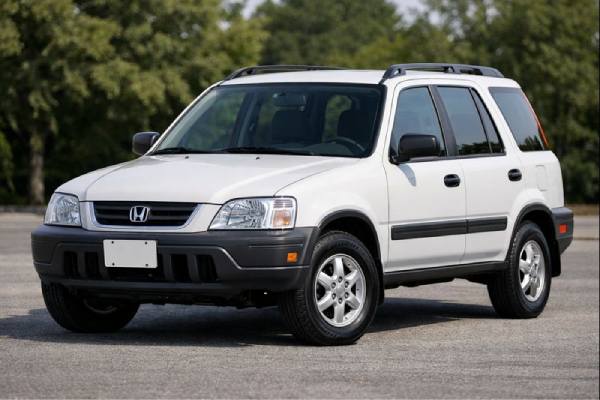
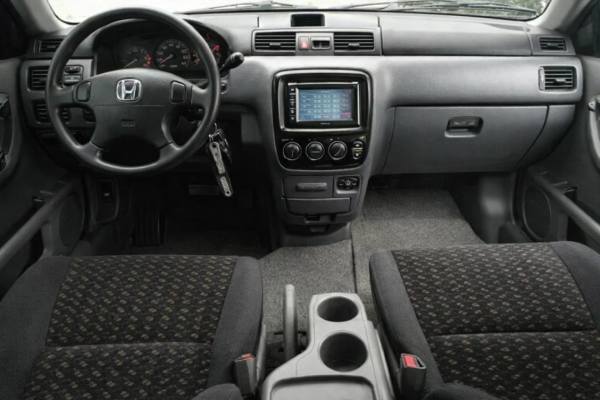
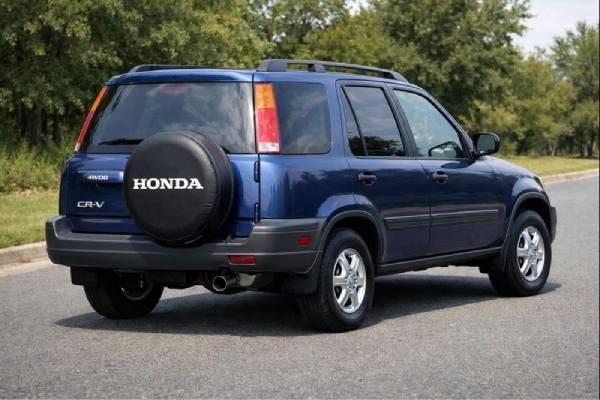
The first-generation Honda CR-V (RD1) in front-wheel drive is a practical study in late-1990s Honda engineering: simple where it matters, cleverly packaged, and durable when maintained. With the 2.0-liter B20Z2 inline-four rated around 148 hp, the FWD RD1 is less complex than the 4WD version and often cheaper to keep on the road as the years add up. What owners tend to notice most is how “honest” the vehicle feels—light steering, predictable handling, and a drivetrain that rewards routine fluid service more than expensive repairs.
This guide focuses on the 1998–2001 CR-V FWD with the B20Z2: what it is, how it drives, what commonly fails with age, what maintenance actually matters, how safe it is by period standards, and why this model still makes sense as an affordable, usable compact SUV—if you buy the right example.
Owner Snapshot
- Easy daily usability with a roomy cabin and a boxy cargo area that still works well for real life.
- FWD layout reduces drivetrain upkeep compared with 4WD and is typically simpler to diagnose.
- B20Z2 is happiest with frequent fluid changes and careful cooling-system upkeep.
- Plan for a timing belt service at about 192,000 km (120,000 mi) or 72 months if history is unclear.
- Expect age-related rubber and seal work (bushings, mounts, gaskets) on most surviving examples.
Explore the sections
- RD1 FWD model overview
- B20Z2 specs and capacities
- Trims, options, and safety gear
- Reliability hot spots and recalls
- Maintenance plan and buyer checks
- On-road performance and economy
- CR-V RD1 vs key rivals
RD1 FWD model overview
The RD1 CR-V was designed before compact SUVs became heavy, overpowered, and packed with electronics. That shows up in two ways: it feels light on its feet, and most problems are mechanical rather than software-driven. In FWD form, the RD1 is the simplest expression of the platform—no rear differential, no dual-pump rear fluid to keep fresh, and fewer driveline parts to wear out. For buyers who don’t need extra traction, this simplicity is a real advantage.
The B20Z2 engine is a non-turbo, naturally aspirated 2.0-liter inline-four with a straightforward layout and wide parts availability. It’s not a “fast” engine by modern standards, but it delivers usable torque for city and suburban driving, and it pairs well with either a manual transmission or Honda’s period 4-speed automatic. The CR-V’s gearing and throttle calibration are tuned for smoothness, not drama, so most of the performance is in the midrange rather than at the top of the tach.
Packaging is a major reason these still have a following. The upright roofline and tall cargo opening make it easy to load bulky items, and the cabin layout is simple and durable. Visibility is also a highlight: thin pillars for the era and a high seating position help in traffic and tight parking.
Where the RD1 shows its age is refinement and safety by modern expectations. Road noise is higher than newer crossovers, braking distances are longer on older tire technology, and stability control was not part of the mainstream equipment set for this generation. That doesn’t make it a poor choice—it just means you should buy it as a well-kept older vehicle, not as a modern safety benchmark.
If you want a compact SUV with low complexity, good day-to-day practicality, and an engine that rewards consistent care, the 1998–2001 CR-V FWD fits well. The key is to treat “condition” as the trim level: service history, cooling health, and corrosion status matter more than badges.
B20Z2 specs and capacities
Below are practical, buyer- and owner-focused specifications for the 1998–2001 Honda CR-V RD1 FWD with the B20Z2 2.0L (148 hp). Many details vary slightly by market, emissions family, and transmission—use these as a working baseline and verify by VIN when ordering parts.
Powertrain and efficiency (typical)
| Item | Spec |
|---|---|
| Engine code | B20Z2 |
| Layout | Inline-4, DOHC, 16-valve (4 valves/cyl) |
| Displacement | 2.0 L (1,972 cc) |
| Bore × stroke | 84.0 × 89.0 mm (3.31 × 3.50 in) |
| Induction | Naturally aspirated |
| Fuel system | Multi-port fuel injection (MPFI) |
| Compression ratio | ~9.6:1 (market-dependent) |
| Max power | 148 hp (110 kW) @ ~6,200 rpm (varies by standard/market) |
| Max torque | ~182 Nm (134 lb-ft) @ ~4,500 rpm (common spec range) |
| Timing drive | Belt |
| Rated efficiency (EPA reference, 2WD auto) | ~11.2 L/100 km combined (21 mpg US combined) |
Transmission and driveline
| Item | Spec |
|---|---|
| Drive type | FWD |
| Automatic | 4-speed automatic (common fitment) |
| Manual | 5-speed manual (market-dependent availability) |
| Differential | Open (front) |
Chassis and dimensions (typical RD1)
| Item | Spec |
|---|---|
| Front suspension | MacPherson strut |
| Rear suspension | Double wishbone (reactive-link style) |
| Steering | Rack-and-pinion, power-assisted |
| Brakes | Front discs / rear drums (some markets vary) |
| Wheels/tires | Commonly 205/70 R15 |
| Length | ~4,520 mm (178.0 in) |
| Width | ~1,750 mm (68.9 in) |
| Height | ~1,660 mm (65.4 in) |
| Wheelbase | ~2,620 mm (103.1 in) |
| Turning circle | ~10.6 m (34.8 ft) |
| Curb weight | ~1,400–1,500 kg (3,086–3,307 lb), equipment-dependent |
| Fuel tank | 58 L (15.3 US gal / 12.8 UK gal) |
Fluids and service capacities (owner-focused)
| System | Specification | Capacity (approx.) |
|---|---|---|
| Engine oil | API-grade; common viscosity 5W-30 (climate dependent) | ~3.8 L (4.0 US qt) |
| Coolant | Honda Type 2, 50/50 mix | ~3.9–4.0 L (4.1–4.2 US qt), transmission-dependent |
| Brake fluid | DOT 3 (DOT 4 acceptable as temporary) | Fill to reservoir marks |
Key torque specs (decision-grade)
| Fastener | Torque |
|---|---|
| Engine oil drain bolt | ~44 Nm (32 lb-ft) |
| Spark plugs | ~18 Nm (13 lb-ft) |
| Coolant drain bolt | ~83 Nm (61 lb-ft) |
If you maintain this CR-V like a simple Honda sedan—fresh oil, clean filters, periodic coolant service, and on-time timing belt work—it tends to respond with long service life. If you neglect cooling health or run old fluids until problems appear, the “cheap to own” math can flip quickly.
Trims, options, and safety gear
Trims and equipment on the 1998–2001 RD1 vary widely by region, so it’s better to think in terms of “feature buckets” than exact badge names. In many markets, you’ll find a base-oriented trim and a better-equipped trim, with option packs that add comfort items rather than major mechanical changes. For the FWD B20Z2 model, the drivetrain itself is usually consistent; what changes is the cabin, wheels, and convenience equipment.
Trims and options: what actually changes day-to-day
Common equipment differences you’ll see across years and trims include:
- Air conditioning type: manual controls vs more refined setups depending on trim and market.
- Seating and interior wear points: cloth patterns and padding quality differ; check the driver bolster and seat rails for play.
- Audio and speakers: basic head unit vs upgraded systems; aftermarket stereos are common, so confirm wiring quality.
- Wheels and tires: steel wheels with covers vs alloys; tire choice strongly affects road noise and wet braking.
- Exterior updates: later years often have minor styling updates and body-color trim depending on market.
From a buyer standpoint, the most meaningful “option” is condition-related: rust prevention history, quality tires, and documented timing belt service usually matter more than a sunroof or alloy wheels.
Safety systems (period-correct reality check)
Most RD1 CR-Vs were built around a conventional 1990s safety package:
- Front airbags (driver and passenger) and seat belts with pretensioners (market-dependent details).
- ABS is common but not universal—verify by checking the ABS warning light at key-on and confirming the system functions properly.
- Child seat provisions: rear seating geometry is generally workable, but always confirm latch points/anchors for your market requirements.
Advanced driver assistance (ADAS) features like automatic emergency braking, adaptive cruise control, or lane-keeping were not part of this generation’s mainstream equipment. If you’re buying an RD1 today, your “ADAS” upgrades are modern tires, fresh brake fluid, quality pads/rotors, and properly aimed headlights.
Crash-test ratings and what they mean
For U.S.-market equivalents of this generation, the Insurance Institute for Highway Safety (IIHS) tested a vehicle representative of the 1997–2001 body style in the moderate-overlap frontal test and rated the overall evaluation as Marginal, with Acceptable structure/safety cage performance but significant lower-leg injury risk in the test configuration. That’s useful context: the cabin holds up reasonably for its era, but injury measures (especially lower extremities) were a known weakness.
Practical takeaway: if safety is a top priority, prioritize the best tires you can fit safely, keep braking systems in top shape, ensure airbags/seat belts are intact and unmodified, and drive it as the older design it is—especially in high-speed traffic.
Reliability hot spots and recalls
A well-kept RD1 CR-V can be very dependable, but age changes the reliability conversation. Many issues aren’t “bad design” so much as rubber, seals, and electrical parts reaching the end of their service life. Below is a practical map of what tends to go wrong, how serious it is, and what you can do about it—focused on the FWD B20Z2 setup.
Common (high prevalence)
- Oil leaks and seepage (low to medium cost):
Symptoms: oily residue around the valve cover, distributor area, or oil pan; occasional burning smell.
Likely cause: aging gaskets and O-rings.
Remedy: reseal common leak points early so you don’t contaminate mounts and bushings. - Idle and drivability issues (low to medium cost):
Symptoms: hunting idle, stalling when cold, inconsistent throttle response.
Likely cause: dirty throttle body, idle air control valve contamination, vacuum leaks.
Remedy: clean and diagnose systematically; avoid random parts swapping. - Cooling system aging (medium to high risk if ignored):
Symptoms: temperature creep in traffic, coolant smell, low reservoir level, heater output changes.
Likely cause: old hoses, tired radiator cap, thermostat wear, small leaks.
Remedy: treat cooling health as preventative maintenance; overheating is where “reliable” engines get expensive fast.
Occasional (moderate prevalence)
- Automatic transmission shift quality (medium cost):
Symptoms: harsh shifts, delayed engagement, flare on upshifts.
Likely cause: old fluid, worn solenoids, internal wear depending on history.
Remedy: correct-spec fluid and sensible service intervals; test-drive from cold and fully warmed. - A/C system wear (medium cost):
Symptoms: weak cooling, intermittent compressor engagement, noisy operation.
Likely cause: compressor/clutch wear, leaks at seals.
Remedy: confirm proper pressures and leak-test before replacing major parts. - Suspension and steering play (low to medium cost):
Symptoms: clunks over bumps, vague straight-line feel, uneven tire wear.
Likely cause: tired bushings, ball joints, sway-bar links, alignment drift.
Remedy: budget for a “rubber refresh” on most survivors.
Rare but important (higher severity)
- Neglected timing belt service (high severity if it fails unexpectedly):
Even if the engine design reduces some catastrophic outcomes, a failed timing belt can still leave you stranded and can damage related components. Treat a missing timing-belt record as an immediate service requirement.
Recalls and service actions: how to handle them
Rather than guessing which recalls apply, use the vehicle’s VIN and check official databases. Many older vehicles have had recall work performed long ago, but documentation gets lost. The practical routine is:
- Run the VIN through an official recall lookup.
- Save the results.
- Ask a dealer to confirm completion status in their system if anything is open.
This step is especially important on older Hondas because recall scope can depend on production date, market, and prior repair history. If you’re buying, treat “open recalls” as a negotiation point and a safety priority, not a deal-breaker—provided parts and remedy are available.
Maintenance plan and buyer checks
If you want an RD1 CR-V to stay inexpensive, maintenance needs to be routine, not reactive. The B20Z2 doesn’t demand exotic work, but it does respond poorly to neglected fluids and overheating. Below is a practical schedule that aligns with how these vehicles age today, plus a buyer checklist that catches the expensive surprises.
Practical maintenance schedule (distance/time)
- Engine oil and filter: every 8,000–12,000 km (5,000–7,500 mi) or 6 months. Short-trip or hot-city use: use the shorter end.
- Engine air filter: inspect every oil change; replace about 24,000–32,000 km (15,000–20,000 mi) or when visibly dirty.
- Cabin air filter (if equipped): replace annually or every 15,000–20,000 km in dusty areas.
- Coolant: drain/refill on schedule and whenever contamination is suspected; always use the correct coolant type and a 50/50 mix.
- Spark plugs: inspect and replace at sensible intervals; verify correct heat range and gap.
- Timing belt service: plan for 192,000 km (120,000 mi) or 72 months when records are missing; include tensioner and related wear parts.
- Automatic transmission fluid (if automatic): drain/fill about every 40,000–50,000 km (25,000–30,000 mi) for long life; test-drive after service for shift quality.
- Brake fluid: replace about every 2 years, regardless of mileage, because moisture buildup affects pedal feel and corrosion risk.
- Brake pads/rotors (or drums): inspect at every tire rotation; don’t wait for grinding.
- Tires: rotate every 8,000–10,000 km (5,000–6,000 mi); align annually or after suspension work.
- 12 V battery: test yearly; expect replacement roughly every 4–6 years depending on climate and usage.
Fluid specs and “good enough” decision details
- Oil viscosity: 5W-30 is commonly appropriate; use climate-appropriate viscosity if you live in extreme cold or heat.
- Brake fluid: DOT 3 is the safe baseline; DOT 4 is an acceptable temporary substitute if DOT 3 isn’t available, but stick with the recommended spec long-term.
- Coolant: use the correct long-life coolant type for Honda systems; mixing random coolants is a common cause of sludge and seal issues.
Buyer’s guide: inspection checklist (what to look for)
- Service history: timing belt record, coolant work, transmission fluid changes. If missing, budget immediately.
- Cold start: listen for belt noise, idle instability, and check for exhaust smoke.
- Cooling system: inspect reservoir level/condition, look for dried coolant around hose joints, confirm fans cycle correctly.
- Leaks: valve cover area, distributor region, power steering seepage, and any wetness under the engine.
- Rust hotspots: rear wheel arches, underbody seams, suspension mounting points, and brake line condition.
- Suspension: clunks over bumps, rear-end steer feeling, uneven tire wear (often alignment or bushing wear).
- Electrical sanity: window regulators, blower motor speeds, and dashboard warning lights at key-on.
Long-term durability outlook
A cared-for RD1 FWD can be a strong “20+ year” vehicle because it’s fundamentally simple. The ownership trick is to treat it like a system: cooling health, belt intervals, and rubber restoration. Do those three things consistently, and the CR-V’s strengths—practicality, easy drivability, and parts availability—tend to stay ahead of its age.
On-road performance and economy
The 1998–2001 CR-V FWD isn’t trying to be sporty, but it feels surprisingly cooperative in real traffic. The platform is relatively light for an SUV, the seating position helps visibility, and the suspension tuning leans toward comfort without turning the vehicle into a floaty barge. Most owners describe it as “easy to place” on the road—an underrated quality if you drive in tight urban areas.
Ride, handling, and NVH
- Ride quality: compliant over broken pavement, with a bit of vertical motion over sharp edges as bushings age. Fresh dampers and good tires make a bigger difference than many expect.
- Handling balance: safe understeer when pushed; the FWD layout is predictable and stable for everyday speeds.
- Steering feel: light and quick enough for parking; feedback is modest, but the response is consistent.
- Noise levels: road and wind noise are higher than modern crossovers. Worn door seals, aggressive tire tread, and aging wheel bearings can add to the volume.
Powertrain character
The B20Z2 is about usable torque rather than top-end excitement. Around town, it moves the CR-V with little drama, but it prefers smooth throttle inputs and planning on hills. With the automatic, kickdown is available, but acceleration is best described as steady rather than urgent. With the manual (where available), the engine feels a bit more responsive because you can keep it in the midrange.
A practical tip: many “slow CR-V” complaints come from neglected maintenance—dirty throttle body, weak ignition components, tired oxygen sensors, or dragging brakes. A healthy example often feels noticeably sharper than a neglected one.
Real-world efficiency
Fuel economy depends heavily on tires, alignment, and driving style. As a reference point, official EPA figures for the 2WD automatic configuration are around 21 mpg US combined (roughly 11.2 L/100 km). In real use:
- City-heavy driving: often lands in the low-20s mpg US (or low-to-mid teens L/100 km) if traffic is dense.
- Highway cruising: mid-20s mpg US is realistic in good mechanical condition, but speed and wind matter more in a tall vehicle.
- Cold weather: expect a noticeable drop due to longer warm-up time and winter fuel blends.
If you want the best economy this platform can deliver, focus on basics: correct tire pressures, clean air filter, aligned suspension, fresh fluids, and no dragging brakes. Those fundamentals often move the needle more than any “fuel saver” gadget.
Performance metrics that matter
Exact acceleration times vary with transmission, tire choice, and condition, but the RD1 is best judged by how it behaves in real scenarios: merging, climbing grades, and carrying load. If it feels strained under moderate load, investigate maintenance first—especially cooling health and ignition condition—before blaming the engine design.
CR-V RD1 vs key rivals
To understand the RD1 CR-V’s advantages today, compare it to the compact SUV rivals that shoppers still cross-shop in the used market: Toyota RAV4 (first generation), Subaru Forester (early models), and early Ford Escape/Mazda Tribute (first generation). Each has a different ownership “shape,” and the best choice depends on what you value.
Versus Toyota RAV4 (1996–2000 era)
- CR-V advantage: interior space and cargo usability often feel more flexible, especially with the CR-V’s upright packaging. Parts availability is strong and repairs are typically straightforward.
- RAV4 advantage: many buyers perceive slightly tighter body control and strong long-term durability, depending on condition.
- Decision point: pick the better-maintained vehicle. A clean service history matters more than brand stereotypes at this age.
Versus Subaru Forester (late-1990s/early-2000s)
- CR-V advantage (FWD RD1): simpler driveline and generally fewer AWD-related maintenance needs. That often means lower long-run costs if you don’t need traction.
- Forester advantage: AWD traction and confident winter behavior are strong selling points, and the driving position can feel more car-like.
- Decision point: if you truly need AWD for your conditions, the Forester makes a stronger case. If not, the CR-V’s simplicity wins.
Versus Ford Escape / Mazda Tribute (early 2000s)
- CR-V advantage: Honda’s late-1990s build logic is simple and consistent, and the CR-V tends to age in predictable ways.
- Escape/Tribute advantage: often more power in some configurations and a more modern feel in certain areas.
- Decision point: if you want “simplest to keep running,” the RD1 is usually the calmer bet—again, assuming you avoid rust and buy one with cooling and belt history.
The RD1’s modern-day sweet spot
The RD1 FWD CR-V is at its best as a practical, low-complexity compact SUV for:
- drivers who value visibility and easy parking,
- owners who can follow a maintenance routine,
- buyers who prefer fewer drivetrain parts to age out,
- and households that need real cargo function more than modern tech.
If you want modern crash performance and advanced driver assistance, newer vehicles are objectively stronger. But if you want a usable “mechanical appliance” that can still be economical to own, a well-maintained RD1 FWD remains a sensible choice—especially in markets where clean examples still exist.
References
- 2001 CR-V Online Reference Owner’s Manual 2001 (Owner’s Manual)
- 2000 Honda CR-V 2026 (Safety Rating)
- Gas Mileage of 2001 Honda CR-V 2026 (Fuel Economy Ratings)
- Check for Recalls: Vehicle, Car Seat, Tire, Equipment | NHTSA 2026 (Recall Database)
Disclaimer
This article is for informational purposes only and is not a substitute for professional inspection, diagnosis, or repair. Specifications, torque values, fluid types, capacities, service intervals, and procedures can vary by VIN, market, production date, and equipment. Always verify details using official service documentation for your specific vehicle and follow safe workshop practices.
If this guide helped, please consider sharing it on Facebook, X (Twitter), or your favorite forum to support our work.