
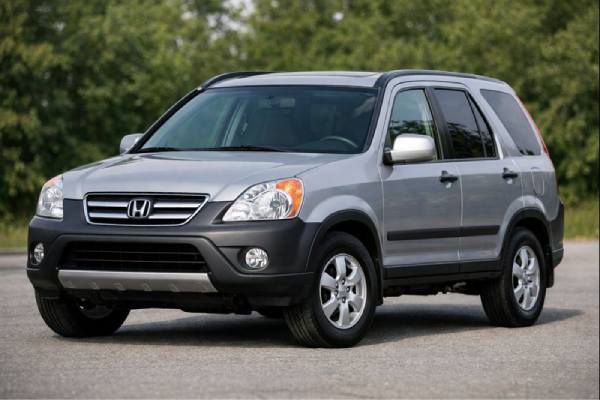
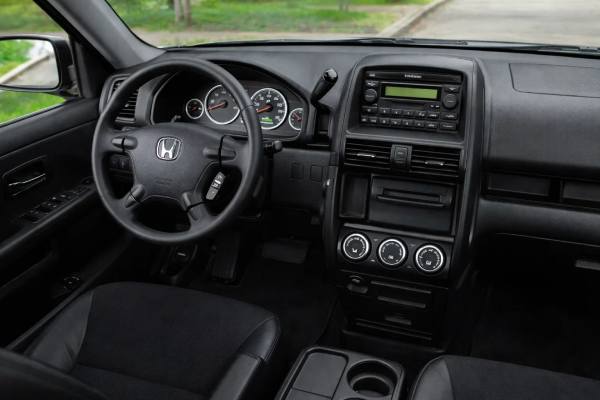
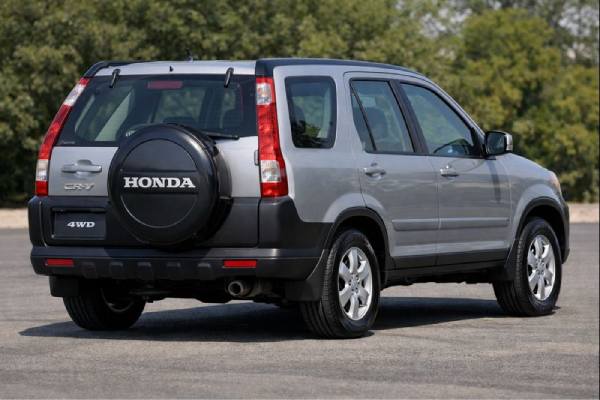
The 2002–2006 Honda CR-V (RD6) with front-wheel drive and the K24A1 2.4-liter engine is one of the most rational used-SUV choices of its era: simple packaging, a durable drivetrain, and a chassis tuned for everyday stability rather than drama. The K24A1’s timing chain (instead of a belt) lowers routine labor, while the tall seating position and square cargo area make it easy to live with. In FWD form, it’s also slightly lighter and a bit more efficient than the Real Time 4WD version—helpful if your driving is mostly urban or highway.
Where owners win is predictability: parts are plentiful, service procedures are straightforward, and the CR-V tends to age well when cooling-system care and fluid changes stay on schedule. Where owners lose is usually neglect—overheating, skipped ATF services, and tired rubber bushings that slowly erode ride quality.
Essential Insights
- The K24A1 is a strong long-term engine when oil level and cooling health are monitored consistently.
- FWD models are typically a little lighter and simpler than 4WD, with fewer driveline wear points.
- Cabin packaging and cargo flexibility remain a standout advantage versus many same-era compact SUVs.
- The 5-speed automatic benefits from regular ATF changes; neglected fluid is a common ownership trap.
- Plan engine oil service about every 8,000–10,000 km (5,000–6,000 mi) or 6–12 months depending on use.
Contents and shortcuts
- FWD RD6 ownership profile
- K24A1 specs tables and measurements
- Trims, packages, and safety equipment
- Reliability patterns and known faults
- Maintenance plan and buyer’s checklist
- How it drives and real efficiency
- Rivals then and now
FWD RD6 ownership profile
Think of the 2002–2006 CR-V FWD as a “high-mileage appliance” that was engineered with enough robustness to tolerate real life—short trips, winter starts, potholes, and imperfect maintenance—better than many rivals. The RD6 platform moved the CR-V upmarket versus the first generation: it feels more solid at speed, the cabin is quieter, and the driving position is more car-like while still giving you a useful step-in height. In front-wheel-drive form, you also remove the rear differential and prop shaft from the maintenance equation, which reduces long-term noise-and-vibration risk and cuts the number of fluid services.
The K24A1 2.4-liter is the centerpiece. It uses a timing chain, and in normal service it’s far more about “keeping the basics right” than chasing heroic repairs. Oil level matters (especially as engines age), coolant condition matters, and clean airflow (engine air filter) helps the throttle and idle stay consistent. When owners describe a “great CR-V,” it’s usually one that stayed cool, stayed full of oil, and got regular fluid changes.
This generation’s biggest ownership advantage is practicality. The body is boxy in the best way: loading strollers, tools, or luggage is easy, and visibility is generally strong for its era. Parts support is excellent, and independent shops tend to know the platform well. Insurance and tire costs are also typically manageable because the vehicle is common and uses mainstream sizes.
The trade-off is that this CR-V is not modern in safety tech or driving aids. It relies on structure, airbags (depending on year), and conventional ABS rather than automatic emergency braking or lane centering. That is not a deal-breaker, but it does shape expectations: you buy it for honest transportation, not for the newest driver-assistance layer.
If you’re shopping today, the best approach is to treat it like a system: engine health + transmission behavior + cooling system + suspension wear + body corrosion. A clean example with records is usually a better buy than a lower-price one with unknown history, because the CR-V can hide neglect until one “small” issue becomes a large bill.
K24A1 specs tables and measurements
Below are practical, ownership-relevant specifications for the 2002–2006 CR-V (RD6) with the K24A1 and front-wheel drive. Exact values can vary by market and trim (LX/EX and regional equivalents), so use these as a baseline and confirm against your VIN and local service literature.
Powertrain and efficiency (FWD focus)
| Item | Specification |
|---|---|
| Engine code | K24A1 |
| Layout | Inline-4, DOHC i-VTEC, 4 valves/cyl (16-valve) |
| Displacement | 2.4 L (2354 cc) |
| Bore × stroke | 87.0 × 99.0 mm (3.43 × 3.90 in) |
| Induction | Naturally aspirated |
| Fuel system | Port fuel injection (PFI/MPFI) |
| Compression ratio | 9.6:1 |
| Max power | 160 hp (119 kW) @ ~6000 rpm (varies slightly by market test standard) |
| Max torque | typically ~220 Nm (162 lb-ft) @ ~3600 rpm (market dependent) |
| Timing drive | Chain |
| Rated efficiency (EPA example, 2005 2WD 5AT) | 23 mpg combined (20 city / 26 highway) |
| Real-world highway @ 120 km/h (75 mph) | commonly ~8.5–10.0 L/100 km (28–23 mpg US) depending on load, tires, and wind |
| Aerodynamics | Cd commonly reported around 0.36–0.38 (varies by equipment) |
Transmission and driveline
| Item | Specification |
|---|---|
| Transmission (typical) | 5-speed automatic or 5-speed manual (market/trim dependent) |
| Drive type | FWD |
| Differential | Front open differential |
| Towing (typical guidance) | Light-duty towing only; confirm local rating and cooling provisions |
Chassis and dimensions
| Item | Specification |
|---|---|
| Front suspension | MacPherson strut |
| Rear suspension | Multi-link (compact trailing arm design) |
| Steering | Electric power steering (EPS) on many trims/years; confirm by market |
| Length | 4537 mm (178.6 in) |
| Width | 1782 mm (70.2 in) |
| Height | 1682 mm (66.2 in) |
| Wheelbase | 2620 mm (103.1 in) |
| Track (front/rear) | 1533 / 1538 mm (60.4 / 60.6 in) |
| Ground clearance | typically ~200–210 mm (~7.9–8.3 in) (trim dependent) |
| Turning circle | commonly ~11.0 m (~36 ft) (approx., by tire and steering stop) |
| Curb weight | typically ~1450–1540 kg (3200–3400 lb) depending on trim and transmission |
| Fuel tank | 58 L (15.3 US gal / 12.8 Imp gal) |
Wheels and tires (common OE examples)
| Trim pattern | Tires | Notes |
|---|---|---|
| Base-oriented setups | P205/70R15 95S | Often 15-inch wheels; check door-jamb placard |
| Upgraded setups | 205/65R16 (common) | Many EX-type trims moved to 16-inch |
Fluids and service capacities (high-use items)
| Fluid | Service fill (approx.) | Notes |
|---|---|---|
| Engine oil (with filter) | 4.2 L (4.4 US qt) | Always confirm dipstick after fill |
| Engine oil (without filter) | 4.0 L (4.2 US qt) | |
| Cooling system (change) | 5.4 L (1.43 US gal) | Total system can be higher depending on drain completeness |
| ATF (2WD, change) | 2.9 L (3.1 US qt) | Drain-and-fill, not a full dry refill |
| ATF (2WD, total) | 6.5 L (6.9 US qt) | “Total” is for overhaul/dry fill context |
| A/C refrigerant | 480–530 g (17.0–18.7 oz) | HFC-134a |
Electrical and basic setup
| Item | Specification |
|---|---|
| 12 V battery | common spec around 36 Ah (5HR) / 45 Ah (20HR) depending on market battery |
| Tire pressure (example placard value) | 180 kPa (26 psi) front and rear on listed tire setup |
Key torque specs (critical fasteners you’ll actually use) will be covered in the maintenance section, because they matter most when you’re doing fluids, brakes, or wheels.
Trims, packages, and safety equipment
For the RD6 generation, trims vary by region, but the ownership-relevant split is usually “base” versus “better equipped,” plus transmission choice. In many markets you’ll see LX and EX (or similar naming), with differences that affect comfort, tires, and sometimes safety equipment depending on year.
Trims and options that change ownership
Base-style trims (often LX equivalents) typically focus on simplicity: cloth seats, smaller wheels, and fewer electronics. The advantage is long-term durability—fewer high-cost comfort items to fail. The downside is you may miss features that improve daily use (better audio, steering-wheel controls, upgraded lighting).
Mid/high trims (often EX equivalents) commonly add:
- Larger wheels/tires (often 16-inch), sometimes improving steering response but raising tire cost slightly.
- Convenience upgrades (sunroof, upgraded audio, remote entry, improved seat fabrics).
- More standard safety equipment in later years.
Transmission choice matters more than trim:
- The 5-speed manual can be a durability win if you’re comfortable with it, but clutch wear and driver abuse are the risks.
- The 5-speed automatic is widely preferred in traffic, but its health depends heavily on fluid condition and shift behavior (smooth engagement, no flare, no shudder under light throttle).
Quick identifiers when inspecting:
- Check the tire size and wheel diameter on the sidewall; it often matches the trim pattern.
- Look for side airbag tags on seat bolsters and curtain airbag markings along the headliner area (where fitted).
- Use the door-jamb placard for factory tire pressure, tire size, and GVWR data specific to that vehicle.
Safety ratings and what they mean for 2002–2006
Safety outcomes are not uniform across the entire run because equipment changed. As a practical takeaway:
- Structure and frontal protection were generally strong for the era, and later-year vehicles benefited from incremental reinforcement and equipment updates.
- Side-impact protection can differ meaningfully by year. Later models that gained standard head-protecting curtains (and related structural updates) are typically the better pick if you prioritize occupant protection.
If you’re comparing two used CR-Vs, treat airbag equipment as a “must verify” item rather than assuming it’s the same across the range. A 2006 with full side-curtain coverage is simply not the same safety proposition as an early 2002 without that coverage.
Driver assistance and braking systems
This generation predates modern ADAS. You should expect:
- ABS availability (common), which helps maintain steering control under hard braking.
- No factory AEB, ACC, or lane-keeping on most markets/years.
- Standard-era traction aids are limited compared with modern vehicles; the best “driver assistance” upgrade you can give an older CR-V is high-quality tires and correctly serviced brakes.
Child-seat practicality is typically good for the segment:
- Look for LATCH/ISOFIX anchors and confirm they’re intact and not rusted or damaged.
- Bring your actual child seat when shopping if fitment is critical; belt buckle length and seat cushion shape vary slightly by trim.
Reliability patterns and known faults
The RD6 CR-V is reliably durable, but not magically immune to age. Most problems fall into predictable buckets: fluids, heat management, rubber wear, and a handful of common electrical annoyances. The best way to think about this section is “what fails most often, and what turns expensive if ignored.”
Common (high prevalence)
- Automatic transmission shift quality issues (medium cost if caught early, high if ignored)
Symptoms: delayed engagement into Drive/Reverse, shift flare, shudder at light throttle, or harsh 2–3 shifts.
Likely causes: old ATF, wrong fluid, neglected drain intervals, or internal wear accelerated by heat.
Remedy: multiple drain-and-fills using the correct spec fluid, verify mounts, and confirm no engine misfire that mimics a “shudder.” If symptoms persist, budget for deeper diagnosis. - Cooling system aging (low to high cost depending on outcome)
Symptoms: temperature creep in traffic, coolant smell, fans cycling oddly, heater performance changes.
Likely causes: tired radiator, weak cap, aging hoses, thermostat wear, or neglected coolant.
Remedy: restore cooling baseline before chasing other issues. Overheating is one of the few ways to turn a good K24 into an expensive engine. - Suspension bushings and links (low to medium cost)
Symptoms: clunks over bumps, vague tracking, inner tire wear, steering shimmy.
Likely causes: worn stabilizer links, control arm bushings, strut mounts, alignment drift.
Remedy: inspect systematically; replace in pairs where appropriate; align afterward.
Occasional (moderate prevalence)
- Air conditioning performance decline (medium cost)
Symptoms: weak cooling at idle, intermittent cold air, compressor noise.
Likely causes: low refrigerant due to slow leak, condenser damage, or compressor wear.
Remedy: leak test before recharging; confirm correct refrigerant charge by weight. - Engine oil seepage and gasket aging (low to medium cost)
Symptoms: oil smell, damp timing cover area, residue near oil pan or VTEC-related hardware.
Likely causes: aging seals and gaskets; normal for age.
Remedy: monitor oil level; repair leaks that reach belts/alternator area or drip onto hot exhaust.
Rare (lower prevalence, but can be serious)
- Repeated overheating history (high cost)
Symptoms: pressurized hoses quickly after cold start, persistent coolant loss, or misfire after warm-up.
Likely causes: prior overheat leading to head gasket compromise.
Remedy: compression/leak-down testing and cooling-system checks before purchase.
Recalls, service actions, and how to verify
Older Hondas often have recall histories that depend on VIN and market. For this era, the most important consumer advice is not guessing which recalls apply—it’s verifying completion:
- Use an official VIN recall lookup and confirm remedies were performed.
- Ask for dealer printouts or service invoices showing recall completion.
- Treat any “no record” situation as a reason to investigate, not an automatic rejection; paperwork gets lost, but safety work still matters.
Practical pre-purchase checks to request:
- Cold start (listen for abnormal chain rattle, rough idle, or belt squeal).
- Test drive with light and moderate throttle (feel for transmission hesitation or shudder).
- Full warm-up in traffic if possible (watch temperature stability).
- Underbody inspection (fluid leaks, exhaust condition, bushing cracks, corrosion).
- Scan for codes even if the dash is clean (pending codes can reveal misfire or emissions problems).
Maintenance plan and buyer’s checklist
A good maintenance plan for the CR-V FWD is about consistency, not complexity. The goal is to keep fluids fresh, keep heat under control, and catch rubber wear before it turns tires into a recurring expense.
Practical maintenance schedule (distance/time)
Engine oil and filter
- Typical interval: 8,000–10,000 km (5,000–6,000 mi) or 6–12 months, shorter for short trips, dusty use, or heavy idling.
- Use the viscosity grade recommended for your climate; many owners run 5W-20 where specified, but always follow your market manual.
Engine air filter
- Inspect every oil service; replace around 20,000–30,000 km (12,000–18,000 mi) depending on dust.
Cabin air filter
- Replace about 20,000–30,000 km or annually if you drive in pollution/dust.
Coolant
- Service interval varies by coolant type and market. A safe ownership approach on an older vehicle is inspection at every service and replacement on a time basis if history is unknown (for example, every 3–5 years).
Spark plugs
- Replace around 160,000 km (100,000 mi) where long-life plugs are specified, but verify your exact plug type and interval.
Automatic transmission fluid (5AT)
- Drain-and-fill about every 40,000–60,000 km (25,000–37,000 mi) for normal use; sooner for city driving, heat, or towing.
- If you buy a used CR-V with unknown ATF history, plan an early service and evaluate shift quality afterward.
Brake fluid
- Replace every 2 years regardless of mileage (moisture absorption is time-based).
Brake pads and rotors
- Inspect every tire rotation; replace based on wear and vibration/pulsation.
Tires and alignment
- Rotate every 8,000–10,000 km (5,000–6,000 mi).
- Align when tires are replaced, after suspension work, or if you see uneven wear.
12 V battery
- Test annually; typical replacement window is 4–6 years depending on climate and usage.
Fluid specs and capacities (decision-useful)
- Engine oil (with filter): 4.2 L (4.4 US qt)
- ATF (2WD drain-and-fill): 2.9 L (3.1 US qt)
- Fuel tank: 58 L (15.3 US gal)
- A/C refrigerant: 480–530 g (17.0–18.7 oz)
Essential torque values (critical fasteners only)
Exact values can vary by model year and market, but these are the fasteners owners most often encounter:
- Wheel lug nuts: commonly around 108 Nm (80 lb-ft)
- Engine oil drain plug: commonly in the 30–40 Nm (22–30 lb-ft) range (verify for your oil pan and washer type)
- Brake caliper bracket bolts: often higher-torque fasteners; verify before servicing
If you do your own maintenance, the smartest tool investment is not a bigger socket set—it’s a quality torque wrench and the correct service documentation for your VIN.
Buyer’s guide: what to seek, what to avoid
Prefer
- Documented ATF services, especially if automatic.
- Evidence of coolant maintenance and no overheating history.
- Even tire wear (suggests healthy suspension and alignment).
- A clean, dry engine bay (light seepage is normal; wet active leaks are not).
Be cautious with
- “Runs hot sometimes” stories, even if it drives fine today.
- Jerky engagement into Drive/Reverse, or shudder under light throttle.
- Heavy rust on suspension mounting points or subframe areas.
- Multiple warning lights removed/ignored (airbag light, ABS light).
Long-term durability outlook: with consistent fluids, a healthy cooling system, and timely suspension refreshes, the RD6 CR-V can remain dependable deep into high mileage. The vehicle’s aging curve is slow—unless heat or neglected transmission fluid accelerates it.
How it drives and real efficiency
The FWD RD6 CR-V drives with a calm, slightly “tall wagon” character. It’s not quick by modern standards, but it’s predictable—and that predictability is exactly why so many owners keep them for years.
Ride, handling, and NVH
Ride quality is tuned for comfort over broken pavement. The suspension is compliant, and the body structure feels reasonably tight for its age if bushings and strut mounts are healthy. When components wear, you’ll notice extra impact harshness and more steering correction on the highway—often cured by addressing tires, alignment, and front-end links/bushings.
Handling balance is safe and front-biased. In FWD, traction is adequate in wet conditions with good tires, but it will not mimic an AWD crossover on steep, slippery starts. Steering feel is light, and on-center precision is “good enough,” not sporty. Braking is stable for the era, though pedal feel depends heavily on pad choice and whether the brake fluid has been changed regularly.
Cabin noise is moderate. Wind and tire noise rise at highway speed, and tired door seals or roof trim can add whistling. The biggest “NVH upgrade” is often simply fresh, quality tires and replacing worn suspension links.
Powertrain character
The K24A1 delivers usable torque at everyday rpm, so it feels stronger than its horsepower number suggests when you roll into the throttle at 30–70 km/h (20–45 mph). It’s happiest when you let it rev a bit; it won’t give effortless passing like a modern turbo engine, but it responds well when maintained.
With the 5-speed automatic, you want smooth, decisive shifts. A healthy unit feels consistent; a tired unit feels indecisive, especially on gentle hills where it hunts between gears. With the manual, the engine feels more direct, but clutch condition becomes part of the purchase math.
Real-world efficiency
Using a common benchmark year for this generation, a 2005 CR-V 2WD automatic is rated around 23 mpg combined (20 city / 26 highway). In metric terms, that’s roughly 10.2 L/100 km combined, 11.8 L/100 km city, and 9.0 L/100 km highway (approximate conversions).
In real driving, expect outcomes to swing more than the sticker suggests:
- Short trips and cold weather push consumption up sharply.
- Highway cruising at 120 km/h (75 mph) often lands in the 8.5–10.0 L/100 km range depending on wind, load, and tire choice.
- Roof racks, aggressive all-terrain tires, and underinflation can move you a full 0.5–1.5 L/100 km in the wrong direction.
Performance metrics (what to expect)
Period-correct performance is best described in ranges, because trim, transmission, and test conditions matter:
- 0–100 km/h (0–62 mph): commonly ~9.0–10.5 s
- Passing response (80–120 km/h / 50–75 mph): adequate, but plan your gaps
- Braking consistency: good when the system is maintained; old fluid and cheap pads quickly degrade confidence
If your use case includes frequent mountain driving or heavy loads, the “performance upgrade” is maintenance: fresh fluids, correct ignition components, and brakes you trust.
Rivals then and now
In its original market, the 2002–2006 CR-V competed in a segment that was still defining itself. Today, it competes against used alternatives, and the right choice depends on whether you prioritize simplicity, winter traction, off-road ability, or comfort.
Versus Toyota RAV4 (early-to-mid 2000s)
A same-era RAV4 is often similarly durable, sometimes with a slightly “tighter” feel, but trim and engine choices vary widely. The CR-V’s advantage is usually packaging and a broad parts ecosystem. The deciding factor is condition: a better-maintained example wins, regardless of badge.
Versus Subaru Forester (early-to-mid 2000s)
A Forester can offer better all-weather traction and a more car-like driving feel, but it brings AWD complexity and, depending on engine family and maintenance history, potentially higher risk of oil leaks and cooling-related issues. If you truly need consistent winter traction, the Subaru argument strengthens; if you want fewer driveline variables, the CR-V FWD stays compelling.
Versus Hyundai Santa Fe and Kia Sportage (same era)
These can be strong value purchases, but long-term parts availability, rust patterns, and drivetrain aging vary more by model and year. The CR-V’s advantage is predictability: most independent shops know exactly what to check, and used parts supply tends to be deep.
Versus “newer but cheaper” compact crossovers
A newer vehicle at the same price may offer more airbags and newer infotainment, but it can also come with direct injection carbon buildup, turbo complexity, or costly ADAS sensors. The RD6 CR-V is attractive when you want:
- A proven drivetrain without turbocharging
- A simple ownership model with reasonable DIY potential
- A vehicle that tolerates age gracefully when maintained
Who should choose the CR-V FWD RD6?
Pick it if your driving is mostly paved roads and you want the simplest version of a practical, reliable compact SUV. Skip it if you regularly face steep snow, muddy access roads, or you strongly value modern driver assistance. In those cases, either the 4WD CR-V variant or a newer crossover with modern stability and safety tech may be the more confident tool.
For most buyers, the best “rival strategy” is not obsessing over the perfect model—it’s buying the cleanest, best-documented vehicle you can, then catching up any neglected fluids and rubber. That’s where the CR-V’s ownership value really appears.
References
- 2006 CR-V Online Reference Owner’s Manual 2006 (Owner’s Manual)
- Gas Mileage of 2005 Honda CR-V 2005 (Fuel Economy Database)
- 2005 Honda CR-V 2005 (Safety Rating)
- Check for Recalls: Vehicle, Car Seat, Tire, Equipment | NHTSA 2026 (Recall Database)
- Car Safety Ratings | Vehicles, Car Seats, Tires | NHTSA 2026 (Safety Rating)
Disclaimer
This article is for informational purposes only and is not a substitute for professional diagnosis, inspection, or repair. Specifications, torque values, service intervals, and procedures can vary by VIN, market, model year, and equipment. Always verify details using the official owner’s manual and service documentation for your exact vehicle, and consult a qualified technician when needed.
If this guide helped you, please consider sharing it on Facebook, X (Twitter), or your favorite forum to support our work.