

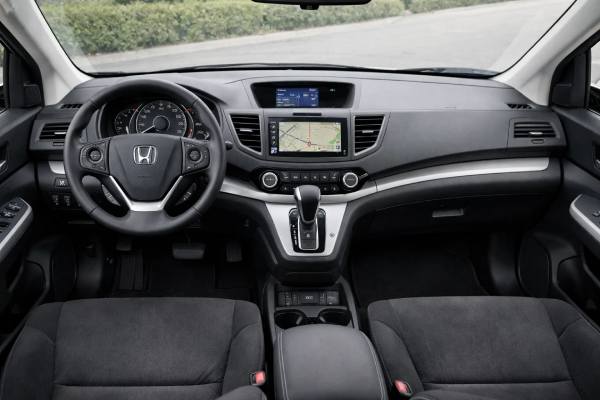

The 2013–2015 Honda CR-V FWD with the 1.6 i-DTEC (N16A2) is the “efficiency-first” version of the fourth-generation CR-V. It keeps the practical cabin, sensible ergonomics, and predictable road manners the model is known for, but pairs them with a small-displacement diesel tuned for low fuel use and relaxed highway cruising. The key engineering story is how Honda aimed for usable torque without the weight and friction losses of a larger diesel: a modern common-rail system, turbocharging, and a tall-geared manual drivetrain in most markets. For owners, this variant can be a strong long-distance companion—quiet enough at speed, stable in crosswinds, and cost-effective when driven warm and steady. The trade-offs are also typical of modern diesels: short-trip operation is harder on emissions hardware, and maintenance discipline matters more than with the simpler petrol engines.
Owner Snapshot
- Strong motorway economy when fully warmed up, especially at steady 100–120 km/h (60–75 mph).
- Torque-forward feel makes it easy to drive without constant downshifts, even with passengers and luggage.
- Spacious rear seat and square cargo area stay class-competitive for family use.
- Avoid repeated short runs; diesel emissions parts age faster with cold starts and low exhaust temperatures.
- Change engine oil every 10,000–15,000 km (6,000–9,000 mi) or 12 months (use the interval that matches your duty cycle).
Guide contents
- CR-V 1.6 i-DTEC profile
- N16A2 specs and capacities
- Trim cues and safety gear
- Reliability hotspots and recalls
- Maintenance plan and buyer tips
- Real-world driving and economy
- Rivals and best alternatives
CR-V 1.6 i-DTEC profile
Honda’s 1.6 i-DTEC CR-V exists for one job: deliver CR-V practicality with significantly lower fuel consumption than the larger diesels—without turning the car into a slow, busy commuter. In most European markets this FWD configuration is paired with a 6-speed manual gearbox, and that pairing is part of the point. Honda can run taller gearing, keep driveline losses down, and avoid the extra weight and friction of an AWD system. If your use pattern is mainly long-distance, the “whole package” makes sense: the engine is happiest once fully warmed, the gearing settles it into a quiet cruise, and the chassis remains composed over broken pavement.
In day-to-day driving, the character is torque-led rather than power-led. The headline 120 hp doesn’t sound like much for a mid-size SUV, but the midrange pull is what you feel: it rolls on confidently in the 1,800–3,000 rpm band. That means fewer revs, fewer downshifts, and less noise when you drive it like a family car rather than a hot hatch. You also get a lighter nose than with bigger diesels, which helps steering feel and reduces the “heaviness” some owners notice in high-mileage front suspension parts.
This version is also a good reminder that “diesel reliability” depends heavily on operating conditions. Long runs are friendly; repeated cold starts are not. Short urban loops can accelerate soot loading in the diesel particulate filter (DPF) and increase EGR (exhaust gas recirculation) deposits. That’s why buyers who do mostly city miles should treat this CR-V as a specialist tool, not a default pick. On the flip side, drivers doing mixed commuting plus weekend trips often find it an ideal compromise: modern comfort and space, with fuel use that looks more like a smaller hatchback on the highway.
Bottom line: the CR-V 1.6 i-DTEC FWD is at its best as a warm-running, steady-speed vehicle—family-friendly, calm, and efficient—provided you commit to correct fluids, correct intervals, and the occasional longer drive that lets the emissions system do its work.
N16A2 specs and capacities
Below are practical, workshop-friendly specifications for the 2013–2015 CR-V FWD with the N16A2 1.6 i-DTEC. Exact figures can vary by market, wheel size, and homologation version, so treat the tables as a baseline and verify against your VIN-specific documentation when ordering parts or fluids.
Powertrain and efficiency (diesel)
| Item | Specification |
|---|---|
| Code | N16A2 |
| Engine layout and cylinders | Inline-4, DOHC, 16 valves (4 valves/cyl) |
| Displacement | 1.6 L (1597 cc) |
| Induction | Turbocharged |
| Fuel system | Common-rail direct injection |
| Max power | 120 hp (88 kW) @ ~4,000 rpm |
| Max torque | 300 Nm (221 lb-ft) @ ~2,000 rpm |
| Timing drive | Chain (typical Honda diesel practice for this family) |
| Rated efficiency (varies by market) | ~4.5–5.0 L/100 km (approx. 47–52 mpg US / 56–63 mpg UK) |
| Real-world highway @ 120 km/h | Often ~5.5–6.5 L/100 km depending on tyres, wind, load, and temperature |
Transmission and driveline
| Item | Specification |
|---|---|
| Transmission | Commonly 6-speed manual (market-dependent) |
| Drive type | FWD |
| Differential | Open |
Chassis and dimensions (typical for 2013–2015 CR-V)
| Item | Specification |
|---|---|
| Suspension (front/rear) | MacPherson strut / multi-link |
| Steering | Electric power steering |
| Brakes | Disc/disc (trim-dependent sizes) |
| Wheels and tyres | Often 16–18 in; tyre sizes vary by trim |
| Ground clearance | Typically ~165–170 mm (market/tyre dependent) |
| Length / width / height | ~4,570 / 1,820 / 1,680 mm (varies slightly by spec) |
| Wheelbase | ~2,630 mm |
| Turning circle | ~11.0 m (kerb-to-kerb, typical class figure) |
| Kerb weight | Often ~1,500–1,600 kg depending on trim |
Performance and capability (realistic expectations)
| Item | Specification |
|---|---|
| 0–100 km/h (0–62 mph) | ~11–13 s (load, tyres, and test method matter) |
| Top speed | ~180–190 km/h (112–118 mph) |
| Towing capacity | Market-dependent; commonly ~1,500 kg braked (verify local rating) |
| Roof load | Typically ~75 kg (check roof rail rating and manual) |
Fluids and service capacities (verify by VIN)
| Fluid | Specification (typical) |
|---|---|
| Engine oil | Low-SAPS diesel oil meeting the required ACEA/API class; common grades 0W-30 or 5W-30 (market dependent) |
| Engine oil capacity | Typically ~4.5–5.5 L with filter (confirm in manual) |
| Coolant | Long-life ethylene glycol coolant; premix per Honda guidance |
| Transmission oil | Manual gearbox fluid per Honda spec (often MTF-type) |
| Brake fluid | DOT 4 (typical Honda requirement) |
| A/C refrigerant | Depends on year/market (many are R134a in this era) |
Electrical (common service items)
| Item | Specification |
|---|---|
| 12 V battery | Size/CCA varies; diesel needs strong cold-crank performance |
| Glow plugs | Diesel-specific; replace only with correct type |
| Alternator output | Market/trim dependent |
Safety and driver assistance (era-typical)
| Item | Specification |
|---|---|
| Stability control | ESC/VSA standard in many markets |
| Airbags | Front, side, and curtain airbags (trim/market dependent) |
| ADAS | Limited compared with newer cars; some trims offer parking sensors/camera |
If you want one “high-value” takeaway from this section: order fluids by spec, not by brand name or forum habit. Modern diesels are sensitive to oil type, and the wrong oil can shorten DPF life and increase deposits.
Trim cues and safety gear
Trim naming differs by country, but the 2013–2015 CR-V’s structure is usually familiar: a practical base grade, a comfort-focused mid grade, and a top trim that adds convenience, larger wheels, and more cabin tech. When you’re shopping used, the easiest way to identify equipment is to look for “hard tells” rather than brochure claims.
Quick trim identifiers that matter
- Wheel size and tyre profile: Higher trims often have larger wheels (commonly 17–18 in). They look better, but they can ride more firmly and cost more in tyres.
- Headlights and washers: Some markets pair higher trim with upgraded headlight units and washer systems. If present, they’re expensive to replace, so check for lens haze and washer operation.
- Cabin controls: Dual-zone climate panels, heated seat switches, and steering-wheel audio controls often indicate mid/high trims.
- Parking aids: Rear camera and parking sensors were common “family upgrades.” Confirm they actually work—aftermarket head units can create odd camera glitches.
- Tow gear: If you need towing, verify the tow bar type (fixed vs detachable), wiring quality, and whether trailer stability logic is supported/enabled in that market.
Options that change ownership more than you’d expect
- Panoramic roof (where offered): Great for cabin light; check for wind noise, smooth operation, and water marks around the headliner.
- Leather vs cloth: Leather can mask seat frame wear because it “looks fine” longer. Sit in it and feel for collapsed bolsters or a sagging base.
- Infotainment/audio upgrades: Factory premium audio is generally reliable, but replacement parts can be costly. Confirm Bluetooth pairing and microphone clarity.
Safety ratings and structure (what to understand)
This generation CR-V is generally regarded as strong in crash protection for its era, helped by a rigid passenger cell and widespread use of stability control. Still, you should treat “a good rating” as a baseline, not a guarantee. Ratings can vary by test protocol year, optional safety equipment, and trim-level fitment (for example, some features are standard in one market and optional in another).
Safety systems and ADAS availability (2013–2015 reality check)
Don’t expect modern ADAS depth here. Many vehicles of this period focus on:
- ESC/stability control, traction control, and ABS with brake assist
- Multiple airbags including curtain airbags on most well-equipped variants
- ISOFIX/LATCH child-seat anchorage (confirm covers and access)
- Tyre pressure monitoring in some markets (system type varies)
After collision repairs or major suspension work, alignment and steering angle calibration matter. A CR-V can “drive straight” but still have subtle stability-control or tyre-wear issues if it wasn’t set up correctly after a repair.
Reliability hotspots and recalls
A well-maintained CR-V is usually a durable car, but the diesel-specific systems change the risk map. Think in two layers: (1) the base vehicle (body, suspension, cabin electronics) and (2) diesel emissions and fuel hardware, which are more sensitive to use pattern.
Common issues (higher prevalence)
- DPF loading and incomplete regenerations (medium cost, can become high):
Symptoms: Rising fuel consumption, frequent fan running after shutdown, warning lights, reduced power.
Likely causes: Repeated short trips, poor oil choice, failed temperature/pressure sensors, or soot accumulation.
Remedy: Diagnose with proper scan data (soot mass, regen history). Address root cause, not just the warning. A forced regeneration may help, but it’s not a fix if the car never gets hot enough. - EGR valve/cooler deposits (medium cost):
Symptoms: Hesitation, rough idle, black smoke under load, fault codes.
Likely causes: Soot and oil mist buildup, especially in urban use.
Remedy: Cleaning or replacement depending on severity; check intake tract for heavy contamination. - Injector and fuel system sensitivity (medium to high cost):
Symptoms: Hard starting, uneven idle, diesel knock, poor economy.
Likely causes: Contaminated fuel, water ingress, high-mileage wear.
Remedy: Fuel-quality checks, filter replacement, leak-off testing, and correct coding/calibration if injectors are replaced.
Occasional issues (moderate prevalence)
- Clutch and dual-mass flywheel wear (high cost when due):
Diesels deliver strong low-rpm torque, which is great to drive but hard on the clutch if you lug it or do heavy stop-start driving.
Check: Vibration on take-off, rattling at idle, slipping under load in higher gears. - Turbo control problems (medium to high cost):
Symptoms: Limp mode, inconsistent boost, whistling, underboost/overboost codes.
Causes: Sticking actuator, boost leaks, sensor faults, or wear at high mileage.
Rare but important
- Cooling system leaks or thermostat issues: Can accelerate DPF and EGR problems by keeping the engine too cool. If the cabin heat is weak or warm-up takes too long, investigate.
Recalls, TSBs, and service actions (what to do as an owner)
Even if your CR-V drives perfectly, verify safety campaigns. A high-profile example across many manufacturers is airbag inflator recalls. The practical steps:
- Run an official VIN check (manufacturer site first; dealer can confirm too).
- Request documentation that recalls were completed.
- If uncertain, treat “we think it was done” as “it wasn’t” until proven.
Pre-purchase checks worth paying for
- Full scan for stored diesel-related codes (including pending)
- Evidence of correct oil spec usage
- DPF health data (where readable) and a drive that gets the car fully warm
- Clutch/flywheel behavior under load
- Cooling system warm-up and stable operating temperature
If the car’s life has been mostly motorway miles with consistent servicing, this diesel CR-V can be a long-haul workhorse. If it’s been a short-trip city car, budget for diesel-system attention.
Maintenance plan and buyer tips
Treat this CR-V as a normal Honda in the basics—fluids, brakes, suspension—but a stricter car in diesel-specific details. The goal is simple: keep combustion clean, keep operating temperature correct, and keep the emissions system working the way it was designed.
Practical maintenance schedule (distance/time)
Use the tighter end of ranges for city driving, repeated cold starts, or towing.
- Engine oil and filter: every 10,000–15,000 km (6,000–9,000 mi) or 12 months.
Use the correct low-ash diesel oil spec for your market. Too-long intervals or the wrong oil can increase deposits and shorten DPF life. - Air filter (engine): inspect every 15,000–30,000 km, replace as needed (dusty regions sooner).
- Cabin filter: every 15,000–30,000 km or annually if you want better HVAC performance.
- Fuel filter: every 30,000–60,000 km (or per manual). If you suspect contaminated fuel, do it sooner.
- Coolant: typically 5 years / 100,000 km as a baseline, then at the recommended interval thereafter (confirm for your market).
- Brake fluid: every 2 years regardless of mileage.
- Manual transmission fluid: often 60,000–100,000 km depending on usage; earlier if shifting feels notchy or if the car tows.
- Brakes (pads/rotors): inspect at every service; replace by wear, not time.
- Tyres: rotate every 10,000–12,000 km, check alignment annually or with any steering pull/uneven wear.
- Battery test: annually before winter; diesels demand strong starting current.
Diesel-specific habits that reduce costs
- Give it heat: At least once every week or two, do a 20–30 minute drive where the engine reaches full temperature and sees steady load. This helps DPF regeneration conditions.
- Don’t lug the engine: Use the torque band, but avoid full-throttle at very low rpm in a high gear—it stresses the clutch and can increase soot.
- Watch the thermostat behavior: Slow warm-up or low indicated temperature can quietly cause soot and EGR issues.
Essential “buyer’s checklist” for a used example
- Service records: Look for oil spec documentation and consistent intervals.
- Cold start: It should fire cleanly without extended cranking; excessive smoke or rough idle is a warning.
- Test drive: Include a hill or full-throttle merge in 3rd/4th gear to check boost consistency and clutch slip.
- Underside inspection: Look for oil seepage, coolant traces, and exhaust leaks.
- Electrics: Confirm HVAC, window regulators, rear camera/sensors, and all dash functions.
Recommended buyer profile (and who should avoid it)
Best match: drivers who do regular highway miles, families who road-trip, commuters with longer routes.
Proceed carefully: mostly-city drivers, very short commutes, or anyone who can’t commit to correct oil and timely servicing.
Long-term durability outlook: good, provided the car spends enough time warm and you treat diesel emissions hardware as part of routine care—not as an afterthought.
Real-world driving and economy
On the road, the 1.6 i-DTEC CR-V feels like a mature family car with a deliberate powertrain. It’s not quick in the sporty sense, but it’s easy to make smooth progress because the torque arrives where you actually drive. In normal traffic you can ride the midrange, short-shift, and let the engine do the work without drama.
Ride, handling, and NVH (noise and vibration)
- Ride quality: Generally comfortable and controlled, especially on smaller wheels. Higher trims with larger wheels can feel sharper over pothole edges.
- Straight-line stability: A CR-V strength—calm at motorway speeds, predictable in crosswinds for the class.
- Steering: Light to moderate effort with a tidy turning circle for an SUV, aimed at ease rather than feedback.
- Braking feel: Consistent if the system is healthy; if the pedal feels soft, start with fluid age and caliper condition.
- Cabin noise: At steady speeds, diesel note fades into the background. On hard acceleration you’ll hear more “diesel presence,” but it’s usually not intrusive in a well-kept example.
Powertrain character and gearing
The 6-speed manual setup is a big part of why this variant feels relaxed. Taller top gears mean low cruising rpm, which helps both noise and fuel use. The trade-off is that rapid passing sometimes needs a downshift—especially with four adults and luggage. The engine responds best when you ask for acceleration above the lowest rev band, rather than trying to surge from idle in a high gear.
Real-world economy expectations (what owners commonly see)
Numbers depend on tyres, ambient temperature, elevation, and driving style, but the pattern is consistent:
- City (short trips): Often 6.5–8.0 L/100 km (approx. 29–36 mpg US / 35–43 mpg UK), mainly because cold operation is inefficient.
- Highway (100–120 km/h): Often 5.5–6.5 L/100 km (approx. 36–43 mpg US / 43–51 mpg UK).
- Mixed use: Often 5.8–7.0 L/100 km (approx. 34–41 mpg US / 40–49 mpg UK).
Cold weather typically raises fuel use and increases the chance that the DPF will struggle if your trips are short. That’s not a “defect”; it’s a normal diesel operating reality.
Load and towing
If your market rating allows towing, the CR-V’s stable chassis makes it a competent tow vehicle for moderate loads. Expect a noticeable fuel penalty and be mindful of clutch heat on inclines. For frequent towing, insist on:
- fresh brake fluid and healthy brakes
- cooling system in top condition
- correct tyre load rating and pressures
- proper tow wiring (no “twist and tape” splices)
For most owners, the driving verdict is clear: this CR-V is a calm, efficient distance tool that rewards smooth inputs and warm-running routines.
Rivals and best alternatives
The 2013–2015 CR-V 1.6 diesel FWD sits in a very competitive space: practical family crossovers, many with similar power and better (or worse) diesel complexity. The right comparison depends on what you value most—fuel use, service simplicity, cabin space, or driving feel.
If you want similar space with lower diesel risk
- Toyota RAV4 (petrol or hybrid, where available in your market): Often less diesel-related maintenance risk because you can avoid diesel entirely. The trade-off is that an older petrol model may use more fuel on the highway than this CR-V diesel, and hybrids have their own battery-age considerations.
- Mazda CX-5 petrol: Often enjoyable to drive and can be simpler long-term than a short-tripped diesel, but real-world fuel use may be higher depending on engine and gearing.
If you want a diesel with strong highway manners
- Volkswagen Tiguan 2.0 TDI (era-dependent): Strong torque and long-distance comfort, but maintenance history is everything. Diesel emissions parts and DSG (if equipped) can add cost.
- Ford Kuga 2.0 TDCi (market-dependent): Often good to drive, but check for model-specific diesel and drivetrain issues depending on year and transmission.
If you want maximum reliability from simple systems
- Honda CR-V petrol variants (where available): Typically less sensitive to trip length and emissions heat cycles. You may give up some highway economy, but you gain simplicity.
- Nissan Qashqai / smaller crossovers: Lower running costs in some cases, but you also lose cabin and cargo space compared with the CR-V.
Where the CR-V 1.6 i-DTEC FWD wins
- Family-friendly packaging: rear seat comfort, cargo practicality, and easy visibility.
- Calm, predictable road behavior with a mature feel at speed.
- Highway efficiency that can be genuinely impressive when used as intended.
Where rivals can beat it
- For short commutes: petrol or hybrid alternatives often make ownership easier.
- For performance: larger diesel or turbo-petrol rivals can feel quicker, especially when loaded.
- For newer safety tech: many competitors (especially later model years) offer more advanced driver assistance.
If you mainly do longer drives and value low fuel use without giving up space, this CR-V remains a smart buy—just choose the cleanest maintenance history you can find, and match the diesel to a diesel-friendly lifestyle.
References
- INTRODUCING THE NEW SUB-120 G/KM CR-V 1.6 i-DTEC 2013 (Press Release)
- Honda CR-V 1.6 i-DTEC Press Kit 2013 (Press Kit)
- Takata airbag inflator recall and replacement campaign 2025 (Recall Information)
- Recall Vehicle Lookup | Check Outstanding Vehicle Safety Recalls UK 2025 (Recall Lookup)
Disclaimer
This article is for informational purposes only and is not a substitute for professional diagnosis, inspection, or repair. Specifications, torque values, fluid capacities, service intervals, and procedures can vary by VIN, market, model year, and equipment. Always verify details using your vehicle’s official service documentation and follow manufacturer guidance for your exact configuration.
If you found this guide helpful, please consider sharing it on Facebook, X (Twitter), or your favorite forum to support our work.