

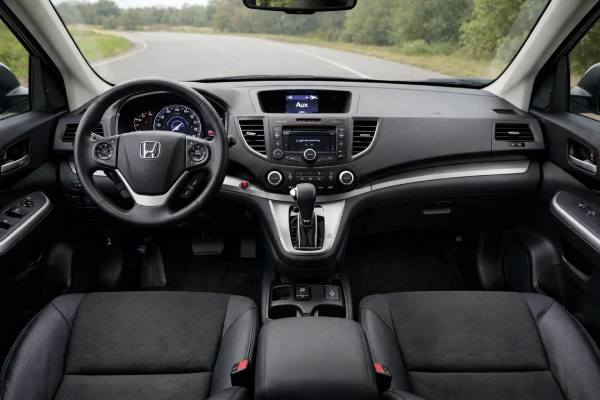

The 2012–2016 Honda CR-V RM3 in front-wheel drive form is a practical, high-mileage-friendly compact SUV built around Honda’s familiar 2.4-liter K-series four-cylinder. In K24Z7 trim, it’s naturally aspirated (no turbo heat management), uses a timing chain, and makes its power with a smooth top-end pull rather than low-rpm punch. For owners, the big story is balance: easy visibility, a cabin that ages well, predictable handling, and running costs that usually stay sane when maintenance is kept current.
That said, the “2012–2016 + K24Z7” pairing can vary by market and facelift year. Some regions moved to a different 2.4 and/or transmission later in the run, even though the RM3 chassis code remains. If you are shopping used, confirm the engine code on the VIN plate/under-hood emissions label and match your service plan to what you actually have.
Owner Snapshot
- Strong everyday usability: roomy rear seat, wide tailgate opening, and a low-effort driving position.
- K24Z7 rewards regular service: timing chain design, simple intake layout, and generally durable cooling hardware.
- Expect modest acceleration when loaded; it’s smooth, not quick, especially on highway merges with passengers.
- Budget for age-related rubber and suspension refresh (bushings, mounts) around 120,000–180,000 km (75,000–110,000 mi).
- Typical oil service interval: every 10,000–12,000 km (6,000–7,500 mi) or 12 months (shorter for short-trip use).
Navigate this guide
- Honda CR-V RM3 FWD ownership fit
- K24Z7 specs, dimensions, and capacities
- Trims, features, and safety equipment
- Reliability issues and service actions
- Maintenance schedule and buyer’s checklist
- Real-world driving and fuel use
- Rivals and alternatives to consider
Honda CR-V RM3 FWD ownership fit
For the RM3 CR-V, front-wheel drive is the “simple and efficient” choice. You avoid AWD-specific fluids, extra rotating mass, and an additional coupling system to maintain. In return, you get slightly better fuel economy and one less drivetrain subsystem that can develop noise as the miles stack up. With good tyres, FWD traction is usually enough for rain and light snow; dedicated winter tyres still matter far more than drivetrain choice for real grip.
The K24Z7 is a classic Honda approach: a naturally aspirated 2.4 with i-VTEC (Honda’s variable valve timing and lift system). It’s not built to surge at 1,500 rpm like a modern turbo. Instead, it’s linear, predictable, and happiest when it can rev cleanly through the midrange. That driving character pairs well with the CR-V’s family mission: calm commuting, steady highway travel, and easy low-speed control in traffic and parking lots.
Where this CR-V shines long-term is day-to-day durability. The cabin materials generally hold up, the seating position suits a wide range of drivers, and visibility is a standout feature compared with many newer crossovers that trade glass area for style. Cargo practicality is also a core strength: the load floor is usable, the opening is large, and the rear seats fold in a straightforward way that makes “real” gear easier to carry than the numbers alone suggest.
The main ownership caveat is that this generation spans meaningful mid-cycle changes. Depending on your region, later years may have different powertrain details (engine family, transmission type, or driver-assistance availability). Treat “2012–2016” as a shopping range, then confirm your exact configuration before you buy parts or lock in a service plan. A five-minute check of the engine code and transmission type can prevent the most common DIY ordering mistakes.
K24Z7 specs, dimensions, and capacities
Below are practical, owner-oriented specifications for the RM3 CR-V with a 2.4-liter K24Z7 and FWD. Exact numbers can vary with market, wheel size, and facelift year, so use this as a decision guide and verify by VIN/service documentation for your vehicle.
Powertrain and efficiency
| Item | Specification |
|---|---|
| Engine code | K24Z7 |
| Layout | Inline-4 (I-4), DOHC, i-VTEC |
| Valves | 4 valves per cylinder |
| Bore × stroke | 87.0 × 99.0 mm (3.43 × 3.90 in) |
| Displacement | 2.4 L (2,354 cc) |
| Induction | Naturally aspirated |
| Fuel system | PGM-FI (port injection in many markets for K24Z7) |
| Compression ratio | ~10.4:1 (market-dependent) |
| Max power | 185 hp (138 kW) @ ~7,000 rpm |
| Max torque | 221 Nm (163 lb-ft) @ ~4,400 rpm |
| Timing drive | Chain |
| Rated efficiency (example FWD 5AT) | ~9.0 L/100 km combined (26 mpg US / 31 mpg UK) |
| Real-world highway @ 120 km/h | Often ~8.5–9.5 L/100 km (varies by tyres, wind, load) |
| Aerodynamics | Cd ~0.33 (approx.); frontal area varies by trim |
Transmission and driveline
| Item | Specification |
|---|---|
| Transmission | 5-speed automatic in many 2012–2014 markets; later years may differ by region |
| Drive type | FWD |
| Differential | Open |
Chassis and dimensions
| Item | Specification |
|---|---|
| Suspension (front/rear) | MacPherson strut / multi-link |
| Steering | Electric power steering (EPS) |
| Brakes | 4-wheel discs (front typically vented) |
| Common tyres | 215/70 R16 or 225/65 R17 (varies by trim/market) |
| Ground clearance | ~165–170 mm (~6.5–6.7 in) |
| Length / width / height | ~4,530 / 1,820 / 1,655 mm (~178.3 / 71.7 / 65.2 in) |
| Wheelbase | ~2,620 mm (~103.1 in) |
| Turning circle (kerb-to-kerb) | ~11.8 m (~38.7 ft) |
| Kerb weight (FWD) | Often ~1,520–1,580 kg (3,350–3,480 lb), trim-dependent |
| Fuel tank | ~58 L (15.3 US gal / 12.8 UK gal) |
| Cargo volume | Measurement method varies widely by market; confirm by local spec sheet |
Performance and capability
| Item | Typical figure |
|---|---|
| 0–100 km/h (0–62 mph) | ~9.8–10.8 s (tyres, altitude, load matter) |
| Top speed | ~185–195 km/h (115–121 mph), market-dependent |
| Braking 100–0 km/h | Commonly high-30s to low-40s m with good tyres |
| Towing capacity | Often up to ~680 kg (1,500 lb) braked in some markets; verify for your VIN |
| Roof load | Commonly ~75 kg (165 lb) where rated |
Fluids and service capacities (common K24Z7 references)
| Item | Specification (typical) |
|---|---|
| Engine oil | 0W-20; ~4.2 L (4.4 US qt) with filter (verify dipstick procedure) |
| Coolant | Honda Type 2 equivalent; capacity varies with heater core and market |
| ATF | Honda ATF DW-1; drain-and-fill volume often ~3.0–3.5 L (3.2–3.7 US qt) |
| A/C refrigerant | R-134a in many years/markets; charge varies by system label |
| Key torque specs | Wheel nuts commonly 108 Nm (80 lb-ft); other fasteners vary—use service manual |
Electrical
| Item | Typical specification |
|---|---|
| 12V battery | Often group 51R (capacity and CCA vary by market) |
| Spark plugs | Iridium type common; gap often ~1.0–1.1 mm (0.039–0.043 in) |
Safety and driver assistance
| Item | Notes |
|---|---|
| Euro NCAP (CR-V tested 2013) | 5-star; Adult 93%, Child 74%, Pedestrian 68%, Safety Assist 66% (test variant differs from K24Z7, but same generation safety structure) |
| IIHS (2012–2014) | Strong results in many categories; early small-overlap driver test can be weaker than later updates |
| IIHS (2015–2016) | Structural/restraint changes improved performance in small-overlap evaluations (market-dependent) |
| ADAS availability | Many early trims rely on stability control + airbags; later years/upper trims may add forward collision warning, AEB, lane support, etc., depending on region |
Trims, features, and safety equipment
Trims for the RM3 CR-V vary by country, but most markets follow a familiar ladder: base cloth interiors with smaller wheels, mid trims with convenience upgrades, and top trims that add leather, premium audio, and advanced driver assistance where offered. For used buyers, the goal is not simply “top trim is best,” but “best match of equipment and long-term complexity.”
How to identify what you’re looking at (quick and practical)
- Engine code confirmation: Look for the emissions label under the hood and verify K24Z7 before you assume parts compatibility. This is especially important in 2015–2016, when some regions changed engine families or transmissions while keeping the same body generation.
- Transmission behavior: A traditional automatic usually shows discrete gear changes and steady rpm drops on upshifts. If the rpm rises and “holds” under acceleration like a rubber band, you may be looking at a CVT-equipped variant (market/year dependent).
- Wheel size clues: 16-inch wheels commonly indicate lower trims; 17–18-inch wheels often come with higher trims or appearance packages, but confirm because wheels are easy to swap.
Options that matter mechanically
Some options are mostly comfort. Others change ownership costs:
- Larger wheels/low-profile tyres: Sharper steering response, but more road noise and higher tyre costs. Also more sensitive to alignment and pothole damage.
- Power tailgate and smart entry: Convenient, but adds sensors, actuators, and latch hardware that can age—check operation and listen for struggling motors.
- Dual-zone climate and heated seats: Usually reliable, but verify blend-door behavior and full heat output; weak heat can hint at coolant service issues or heater core restriction.
Safety systems and ratings (what’s meaningful on the road)
This generation typically includes a strong baseline safety package: multi-airbag layouts (front, side torso, and curtain airbags in many trims), stability control, traction control, ABS, and brake assist. Euro NCAP’s 2013 five-star outcome for the model line reflects solid structural performance for its era, even though the tested European variant differs from the K24Z7 petrol configuration.
In North American testing, IIHS results are generally strong in several crash modes, but the fine print matters: early “small overlap” evaluations were a tougher hurdle for many vehicles of this era, and later updates improved outcomes. For a buyer, that translates to a practical tip: if safety testing detail is a top priority, compare the exact model year and market version rather than assuming all 2012–2016 CR-Vs perform identically.
ADAS calibration note for owners
If your CR-V has camera- or radar-based driver assistance (often on later or high trims), plan ahead for windshield replacement, front bumper repairs, and wheel alignment. Even if the system seems to “work,” poor calibration can create nuisance warnings or reduce effectiveness. After any repair that moves sensors, request calibration documentation, not just a verbal confirmation.
Reliability issues and service actions
The RM3 CR-V with the K24Z7 is widely considered a durable pairing, but “durable” does not mean “maintenance-free.” Most expensive surprises come from neglected fluids, deferred rubber components, and small leaks that quietly escalate. Below is a practical map of common patterns, ranked by how often owners encounter them and how painful they are when ignored.
Common and usually low-to-medium cost
- Suspension wear noises (common, medium):
Symptoms: clunks over bumps, vague steering on-center, uneven tyre wear.
Likely causes: stabilizer links, control arm bushings, strut mounts, rear trailing arm bushings.
Remedy: replace worn links/bushings, then align. Consider doing bushings in pairs to keep handling balanced. - Brake vibration (common, low-to-medium):
Symptoms: steering wheel shake during braking, pulsing pedal.
Causes: rotor hot spots, uneven pad deposits, sticky slide pins.
Remedy: service slide pins, ensure correct torque on wheel nuts, replace rotors/pads if needed. - A/C performance drop (common, medium):
Symptoms: weak cooling at idle, intermittent cold air, clicking from compressor area.
Causes: aging compressor/clutch, condenser damage from road debris, small refrigerant leaks.
Remedy: diagnose leaks first; don’t “top up” repeatedly without fixing the source.
Occasional but worth screening during purchase
- Cold-start rattle (occasional, medium):
Symptoms: brief rattle on first start after sitting, often in cold weather.
Causes: variable cam timing actuator (VTC) wear or oil drain-back.
Remedy: confirm oil grade and change interval; persistent rattle warrants proper diagnosis before it becomes a long-term annoyance. - Oil seepage (occasional, low-to-medium):
Symptoms: oil smell, dampness around timing cover/valve cover area.
Causes: aging gaskets and seals, PCV (positive crankcase ventilation) system issues.
Remedy: replace gaskets and ensure PCV function; don’t ignore oil on rubber mounts and hoses.
Less common, higher consequence if neglected
- Automatic transmission shift quality issues (rare-to-occasional, high if ignored):
Symptoms: flare on upshifts, delayed engagement, shudder under light load.
Causes: old fluid, overheating from heavy use, internal wear accelerated by poor service history.
Remedy: correct fluid (typically Honda DW-1), sensible drain-and-fill intervals, and avoid aggressive “power flushing” unless a qualified shop recommends it for your exact condition.
Recalls, TSBs, and extended coverage: how to handle it
Across 2012–2016 CR-Vs, the most important rule is simple: verify by VIN, not by forum lists. Even within the same model year, production batches differ. When you shop:
- Ask the seller for a VIN and run the official recall lookup for your market.
- Request dealership service history or stamped records showing recall completion.
- If records are missing, treat “it’s probably done” as “it needs verification.”
This is especially important for safety-related campaigns (airbags, latches, restraint components) where the fix is not optional from a risk standpoint.
Maintenance schedule and buyer’s checklist
A good maintenance plan for the K24Z7-powered CR-V focuses on fluids, filters, and inspections that prevent heat and friction from doing expensive work. Think in two tracks: baseline schedule (for normal use) and severe schedule (short trips, cold climate, heavy city driving, frequent idling, or towing). If you don’t know which you are, assume severe—most urban use qualifies.
Practical maintenance schedule (distance/time)
- Engine oil and filter: every 10,000–12,000 km (6,000–7,500 mi) or 12 months; severe use: 7,000–8,000 km (4,000–5,000 mi). Use the viscosity on your oil cap/owner documentation (often 0W-20).
- Engine air filter: inspect every oil service; replace about 30,000–45,000 km (20,000–30,000 mi) or sooner in dusty areas.
- Cabin air filter: 15,000–30,000 km (10,000–20,000 mi) depending on pollen and city soot; a clogged filter can make HVAC feel “weak.”
- ATF (automatic): drain-and-fill every 40,000–60,000 km (25,000–37,000 mi) for long life, sooner if towing or overheating.
- Brake fluid: every 3 years, regardless of mileage (moisture absorption is the enemy).
- Coolant: follow your market’s Honda coolant interval; many Honda long-life coolants are first change around 10 years, then every 5 years, but confirm by documentation.
- Spark plugs (iridium): often 160,000 km (100,000 mi), but confirm; misfires from worn plugs can harm the catalytic converter over time.
- Valve clearance (if applicable): check around 160,000–200,000 km (100,000–125,000 mi) or earlier if rough idle, ticking, or misfire appears.
- Serpentine belt and hoses: inspect yearly; replace at first cracking or glazing, especially before long trips.
- Tyres: rotate every 10,000–12,000 km (6,000–7,500 mi); align if you see shoulder wear or steering pull.
- 12V battery: test annually after year 3; many last 4–6 years depending on climate and usage.
“Decision-making” service details owners actually use
- Oil capacity: commonly around 4.2 L (4.4 qt) with filter for K24 variants—verify by dipstick fill procedure.
- Wheel nut torque: commonly 108 Nm (80 lb-ft)—a big cause of brake vibration is uneven wheel nut torque after tyre work.
- ATF type matters: Honda automatics are sensitive to fluid choice; use the specified Honda fluid equivalent rather than a generic “multi-vehicle” guess.
Used-buyer checklist (10 minutes that can save months)
- Cold start test: listen for rattles, hunting idle, or long cranks.
- A/C at idle: confirm it blows cold while stationary; weak idle cooling often points to a system issue.
- Transmission behavior: smooth engagement into Drive/Reverse, no flare, no shudder under gentle acceleration.
- Steering and front-end feel: over bumps, listen for clunks; on a straight road, confirm it tracks cleanly without constant correction.
- Underbody and seams: look for rust at subframes, suspension mounts, and brake/fuel line routing (climate-dependent).
- Service proof: oil changes, ATF history, coolant history, and recall completion matter more than shiny paint.
Long-term outlook: a well-maintained K24Z7 CR-V is often a “keep it for years” vehicle. The recipe is not exotic—regular oil, sensible ATF service, and addressing noises early before they chew through tyres or mounts.
Real-world driving and fuel use
On the road, the RM3 CR-V feels like it was tuned for confidence rather than excitement. The steering is light, parking effort is low, and the chassis behaves predictably when you make sudden lane changes. Body roll is present (it’s a tall vehicle), but the roll builds gradually, which helps most drivers place the car accurately without feeling surprised.
Powertrain character: what it’s like day to day
The K24Z7 delivers smooth, linear acceleration. Around town, it feels relaxed when you drive with a gentle pedal, and it becomes more energetic as revs rise. If you’re coming from a modern turbo crossover, the difference is obvious: you may need a deeper throttle input for the same initial surge. The upside is response that’s consistent and easy to modulate—useful in wet conditions and stop-and-go traffic.
With the common 5-speed automatic pairing, you’ll typically feel distinct shifts. It’s generally well-matched to the engine, but it may downshift more often on hills because the engine makes its best power higher in the rev range. For buyers who care about refinement, a well-maintained transmission should feel clean and decisive, not hesitant or “slippy.”
Ride comfort, NVH, and braking feel
- Ride: compliant over broken pavement, especially on smaller wheels/tyres. Larger wheels sharpen response but can add impact harshness.
- NVH (noise, vibration, harshness): wind and tyre noise are usually more noticeable than engine noise at highway speeds; worn door seals or cheap tyres can amplify it.
- Brakes: stable and predictable when in good condition; if the pedal feels soft or inconsistent, brake fluid age and slide pin condition are common culprits.
Real-world efficiency
Official ratings differ by market and year, but for the common FWD automatic configuration in this generation, many owners see roughly:
- City: ~10–12 L/100 km (20–24 mpg US) depending on traffic and warm-up time
- Highway (100–120 km/h): ~8–10 L/100 km (24–29 mpg US)
- Mixed: ~9–11 L/100 km (21–26 mpg US)
Cold weather can easily add 10–20% consumption because the engine runs richer during warm-up and the cabin heater demand increases load. Tyres and alignment matter more than most people expect—an aggressive all-season tyre can cost a noticeable amount of economy on the motorway.
Load and towing notes (if you plan to use it that way)
With light trailers, the CR-V is stable when the trailer is correctly loaded (proper tongue weight) and speeds are sensible. The bigger limiter is heat: towing in hot weather or hills raises coolant and transmission temperatures. If you tow, shorten ATF service intervals and avoid lugging—use lower gears when needed to keep the engine in a healthy rpm band.
Rivals and alternatives to consider
The RM3 CR-V’s strongest competitive advantage is the total ownership package: practicality, predictable behavior, and a powertrain that usually rewards routine maintenance rather than demanding specialized care. Still, rivals can beat it in specific niches. Here’s how it typically compares in the real world.
Toyota RAV4 (same era)
Why choose it: often feels slightly more “appliance simple,” with strong resale and broad parts availability. Some versions offer a more modern transmission feel depending on year.
Why pick the CR-V instead: the Honda often wins on cabin ergonomics, visibility, and a more car-like driving position. Many owners prefer Honda’s steering and control layout.
Mazda CX-5 (early generation)
Why choose it: sharper handling, more connected steering, and often a more premium driving feel.
Why pick the CR-V instead: the CR-V tends to feel roomier inside and can be easier to live with for families (rear space, cargo usability). For long-term “easy ownership,” the Honda’s straightforward mechanical package is appealing.
Ford Escape / Kuga (same era)
Why choose it: turbo options deliver stronger low-end torque and quicker passing power.
Why pick the CR-V instead: if you prioritize long-term simplicity and predictable service costs, the naturally aspirated Honda path can be less stressful—especially as vehicles age and heat-related turbo components become a factor.
Subaru Forester
Why choose it: standard AWD in many markets and strong all-weather traction.
Why pick the CR-V instead: for drivers who don’t need AWD, the CR-V FWD can be cheaper to run and maintain. Winter tyres on the CR-V often narrow the real-world traction gap more than expected.
Bottom line: who the RM3 FWD K24Z7 is best for
Choose this CR-V if you want a compact SUV that does normal life well—commuting, family duty, and road trips—without turning every repair into a project. If you routinely drive steep grades fully loaded, want effortless low-rpm punch, or demand modern ADAS across all trims, a newer turbo-era competitor may fit better. But for many owners, this CR-V’s calm competence is exactly the point.
References
- 2012 Honda CR-V 2012 (Safety Rating)
- Vehicle Detail Search – 2012 HONDA CR-V SUV FWD | NHTSA 2012 (Recall Database)
- Gas Mileage of 2013 Honda CR-V 2013 (Official MPG Data)
- New Honda CR-V receives 5-star Euro NCAP Overall Safety Rating 2013 (Safety Rating)
Disclaimer
This article is for informational purposes only and is not a substitute for professional inspection, diagnosis, or repair. Specifications, torque values, fluid capacities, service intervals, and procedures can vary by VIN, market, model year, and installed equipment. Always verify details against your official owner’s manual and service documentation for your exact vehicle.
If this guide helped, please consider sharing it on Facebook, X (Twitter), or your favorite forum to support our work.