

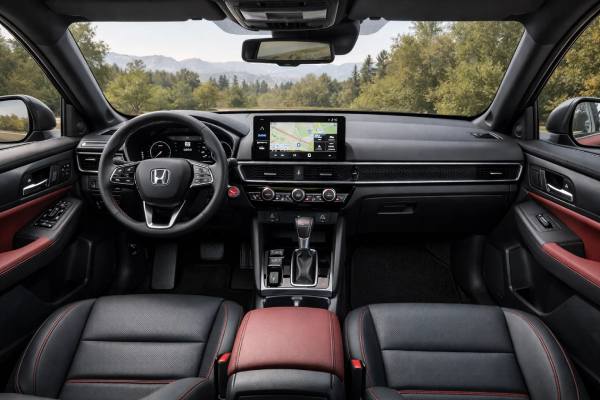
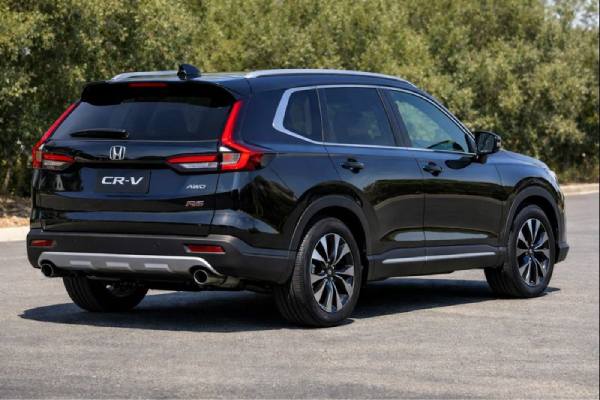
The RS5-generation Honda CR-V Plug-in Hybrid (e:PHEV) is built around a simple ownership promise: do most daily driving on electricity, keep long trips effortless, and avoid the complexity of a conventional multi-speed automatic. In FWD form, it pairs Honda’s 2.0-liter Atkinson-cycle engine with an electrified drive unit that delivers strong low-speed response and a calm, refined feel in town. The key is how you use it. When you charge regularly, the car behaves like an EV for short and medium trips; when you do not, it defaults to a highly efficient hybrid with no range anxiety.
This guide focuses on the real decisions owners make: which specs actually matter, what to watch as mileage builds, how to maintain it without guesswork, and where the CR-V e:PHEV sits against today’s best plug-in SUV rivals.
What to Know
- Strong everyday drivability because the electric motor delivers the main “push” in normal driving.
- Competitive EV-only commuting potential when you can charge at home or work.
- Practical packaging for a PHEV SUV, with a family-friendly cabin and usable cargo space.
- Ownership caveat: if you rarely charge, you carry battery weight without getting the main benefit.
- Plan on charging cycles that fit your routine (for many owners: every 1–2 days, depending on trip length and climate).
Navigate this guide
- How this CR-V PHEV works
- Specs and capacities
- RS5 equipment and safety tech
- Known faults and service actions
- Maintenance schedule and ownership costs
- Driving feel and real efficiency
- PHEV rivals compared
How this CR-V PHEV works
Honda’s CR-V e:PHEV uses a series-parallel hybrid approach that feels different from a typical turbo SUV with an automatic gearbox. Most of the time, the electric traction motor does the driving, and the petrol engine acts as a generator (series mode). At higher steady speeds, the system can connect the engine to the wheels through a fixed gear ratio (engine drive mode) when that is more efficient. The result is a car that often feels like an EV in normal traffic: smooth step-off, quiet low-speed running, and consistent response without gear changes.
For owners, the practical takeaway is that the battery is not just a “boost” pack. When it is charged, you can cover many daily trips with the engine off, especially in moderate weather and at city speeds. When the battery is low, the CR-V still behaves like a full hybrid: it recovers energy under braking (regenerative braking), and it blends engine and motor output automatically to reduce fuel use.
Drive modes matter more than they do in an ICE-only CR-V. A typical setup includes EV mode (prioritize battery), Hybrid mode (balance), and Engine mode (hold charge for later or sustained high-speed work, market dependent). If you do frequent motorway travel, it can be smart to save EV running for the final urban portion of a trip where the efficiency advantage is largest.
The FWD layout simplifies maintenance and reduces mass compared with an AWD system, but it also means traction depends heavily on tires in wet, cold, or snowy conditions. If your winters are harsh, invest in proper seasonal tires; it often improves real safety and confidence more than the drivetrain choice.
Finally, understand the PHEV “efficiency trap.” The CR-V can post impressive consumption figures when you start with a full battery because electricity is doing much of the work. If you never charge, your fuel economy can still be respectable, but you are carrying battery weight you are not using. This model rewards routine charging more than most owners expect.
Specs and capacities
Below are practical specs for the Honda CR-V FWD e:PHEV (RS5, LFB16, 184 hp system output). Some figures vary by market, wheel size, and homologation method, so treat them as a configuration checklist and verify against your VIN-specific documentation where needed.
Powertrain and efficiency
| Item | Specification |
|---|---|
| Powertrain type | Plug-in hybrid (PHEV), series-parallel (Honda e:PHEV / i-MMD concept) |
| System output | 184 hp (135 kW) (system) |
| Engine | 2.0 L inline-4, Atkinson-cycle, direct injection (market naming varies) |
| Engine induction | Naturally aspirated |
| Electric traction motor | 1 motor (front axle), motor-driven most of the time |
| Battery (traction) | 17.7 kWh (usable varies by strategy) |
| Charging (AC) | On-board AC charging (no DC fast charging on most PHEV setups) |
| EV range (rated) | Market dependent (varies by test cycle and wheel/tire) |
| Rated fuel consumption | Strongly dependent on charge state and test cycle |
Real-world highway @ 120 km/h (75 mph): Expect EV-only range to drop sharply at sustained high speeds, and fuel consumption to converge toward “hybrid-like” numbers once the battery is depleted. Cold weather and cabin heating can reduce EV range noticeably.
Aerodynamics (Cd / frontal area): Not consistently published in consumer-facing documents for all markets.
Transmission and driveline
| Item | Specification |
|---|---|
| Transmission | eCVT-style hybrid drive (no stepped gears in typical operation) |
| Drive type | FWD |
| Differential | Open (front), torque management handled by traction control and brake-based systems |
Chassis and dimensions
| Item | Specification |
|---|---|
| Body class | Mid-size SUV |
| Suspension (front / rear) | Independent front / independent rear (layout varies by market spec sheet) |
| Brakes | 4-wheel discs (sizes vary by wheel package) |
| Wheels and tires | Typically 18–19 inch packages depending on grade/market |
| Length / width / height | Market dependent (verify with local spec sheet) |
| Wheelbase | Market dependent (verify with local spec sheet) |
| Turning circle | Market dependent (verify with local spec sheet) |
| Cargo volume | Market dependent; PHEV packaging can differ from HEV/ICE in some regions |
Performance and capability
| Item | Typical expectation |
|---|---|
| 0–100 km/h (0–62 mph) | About 8–10 s range depending on conditions and test method |
| Top speed | Typically governed; varies by market |
| Towing | Often lower on PHEV vs comparable diesel/ICE SUVs; verify braked/unbraked figures for your VIN |
Fluids and service capacities (verify by VIN)
Because hybrid/PHEV service data can vary by market and model year, treat the following as a decision guide, not a workshop directive:
| System | Typical spec to look for |
|---|---|
| Engine oil | 0W-20 (modern API/ACEA equivalent per market) |
| Coolant | Honda long-life type (premix or specified concentrate ratio) |
| Brake fluid | DOT 4 (common in many EU-market Hondas; verify cap label) |
| A/C refrigerant | Often R-1234yf in newer vehicles; check under-hood label |
| Hybrid system coolant loops | Some PHEVs use multiple coolant circuits; confirm before service |
Electrical
| Item | Notes |
|---|---|
| 12 V battery | Conventional 12 V battery still critical for wake-up and systems |
| Charging port | AC inlet (Type 2 in many European markets) |
| Driver assistance sensors | Camera and radar calibration required after some repairs |
RS5 equipment and safety tech
“RS5” refers to the current-generation CR-V platform family; actual trim names vary by market (often grouped as entry, mid, and flagship grades). For the e:PHEV specifically, the big equipment questions usually come down to wheels/tires, headlights, driver assistance scope, and comfort features that affect daily charging and winter use.
Trims and options that matter most
Wheel and tire packages: Larger wheels can sharpen steering response but may reduce ride comfort and real EV range, especially in cold weather. If you prioritize efficiency and refinement, the smallest available wheel/tire package often makes the best daily-driver choice.
Headlights: Matrix-style or higher-output LED units (where offered) improve night confidence and can influence some safety ratings. If your market offers multiple headlight grades, this is a meaningful upgrade.
Cabin features: Heated seats and steering wheel are more than “comfort” on a PHEV. Effective seat heating can reduce your reliance on high cabin heat, which often helps preserve EV range in winter.
Infotainment and connected services: Some markets enable scheduled charging, preconditioning, or charge timers through the vehicle interface or connected services. This can lower running costs if you have off-peak electricity rates and can make cold-weather mornings more pleasant without burning fuel.
Safety ratings and what they mean
Safety results can differ by region because testing protocols and required equipment differ. In Europe, Euro NCAP ratings may depend on whether a safety pack is standard or optional. In the U.S., IIHS ratings are tied to very specific headlight and crash-prevention configurations, and the tested vehicle may be a different powertrain than your e:PHEV. Use the ratings as a structure-and-system benchmark, then confirm your vehicle’s exact equipment.
Driver assistance and calibration implications
Modern CR-Vs typically include a forward camera and radar-based safety suite that can cover:
- Automatic emergency braking (vehicle, pedestrian, cyclist detection varies by market)
- Adaptive cruise control
- Lane keeping assist / lane centering support (names vary)
- Blind-spot monitoring and rear cross-traffic alert (often trim dependent)
- Traffic sign recognition (market dependent)
The ownership note: any windshield replacement, front bumper radar disturbance, or suspension geometry change can require ADAS calibration. If you shop used, ask whether windshield work was done and whether the system was recalibrated. If you service the car, choose a workshop that can document calibrations when required.
Airbag coverage on this generation is typically extensive (front, side, curtain, and additional airbags depending on market). For families, check rear ISOFIX/LATCH locations, top tether anchors, and whether the center rear seating position supports your child seat geometry.
Known faults and service actions
The CR-V RS5 platform is still relatively new, so the most valuable reliability view is a “pattern” approach: what shows up commonly, what is occasional, and what is rare but expensive. For the e:PHEV, also separate issues into conventional chassis/electrical items versus high-voltage (HV) system items.
Common or recurring (usually low to medium cost)
12 V battery sensitivity and software behavior: Like many modern electrified cars, the 12 V battery does a lot of work powering modules and waking the car. Short trips, long parking periods, or heavy accessory use can expose a weak 12 V battery.
- Symptoms: slow start-up, warnings, odd infotainment behavior, remote functions failing.
- Likely root cause: aging 12 V battery, parasitic draw patterns, or software that is sensitive to voltage dips.
- Remedy: battery test with proper load testing; update software where applicable; ensure charging system health.
Brake feel changes due to regen blending: Regenerative braking reduces pad use, which is good for wear but can increase the odds of surface corrosion on discs in wet climates.
- Symptoms: scraping sound after rain, vibration, inconsistent pedal feel at low speed.
- Remedy: periodic firm braking to clean discs (when safe), inspection at tire rotations, and timely brake service.
Tire wear and alignment drift: The combination of EV-like torque and SUV mass can wear front tires faster on FWD models if alignment is off.
- Symptoms: inner-edge wear, steering pull, noise.
- Remedy: alignment check yearly or with any tire replacement; rotate on schedule.
Occasional (medium cost)
Charging door and port wear: Frequent use can reveal stiff doors, weak springs, or port contamination in harsh winters.
- Symptoms: door not latching, charger not locking, intermittent charging.
- Remedy: clean and protect seals; replace worn door mechanisms; diagnose inlet lock issues early.
Cooling system complexity: PHEVs may use multiple coolant loops for engine, inverter, and battery thermal control.
- Symptoms: coolant warnings, reduced EV performance in heat, fan running more often.
- Remedy: correct coolant type, proper bleeding procedure, and prompt leak diagnosis.
Rare but higher cost (high-voltage related)
HV battery, contactors, and power electronics faults: These are uncommon but can be expensive if out of warranty.
- Symptoms: reduced power, “hybrid system” warnings, charging refusal, isolation faults.
- Remedy: dealer-level diagnostics, software updates, and repair per Honda procedures.
Recalls and service actions: how to handle them
Your best practice is simple: run your VIN through official recall databases and keep dealer documentation. Even if a recall is described for a broader CR-V population, applicability can differ by drivetrain, build period, and market.
When shopping used, ask for:
- Full service history and any campaign paperwork
- Confirmation of open recalls being closed
- Evidence of software updates when drivability or warning-light complaints existed
- A battery health check printout if the seller can provide one (market dependent)
Maintenance schedule and ownership costs
A plug-in CR-V can be easy to maintain if you follow a logic-based schedule: protect the engine from neglected oil changes (even if it runs less), keep brake and coolant systems healthy, and treat charging hardware as a routine “wear interface.”
Practical maintenance schedule (typical planning)
Use your vehicle’s maintenance minder as the final authority, but the intervals below help owners plan budgets and avoid surprises.
| Item | Suggested interval (distance/time) | Notes |
|---|---|---|
| Engine oil and filter | 10,000–15,000 km (6,000–10,000 mi) or 12 months | Short trips and cold climates justify the shorter end. |
| Tire rotation | 10,000–12,000 km (6,000–7,500 mi) | Especially important on FWD PHEVs. |
| Cabin air filter | 15,000–30,000 km (10,000–20,000 mi) or yearly | More often in dusty cities. |
| Engine air filter | 30,000–45,000 km (20,000–30,000 mi) | Inspect sooner if you drive on dirt roads. |
| Brake fluid | Every 2–3 years | Moisture absorption matters even with low pad wear. |
| Brake inspection | At every tire rotation | Watch for disc corrosion in wet climates. |
| Coolant (engine and hybrid loops) | Often 5 years then periodic | Verify exact interval and coolant type per market. |
| 12 V battery test | Yearly after year 3 | Many last ~4–6 years depending on use. |
| Alignment check | Yearly or with any tire replacement | Protects tires and stability. |
Hybrid and PHEV-specific care
Charging habits: The best “maintenance” for a PHEV is consistent charging. It reduces engine run time, keeps fuel fresher (when managed properly), and improves ownership economics.
Fuel quality and aging: If you drive mostly electric, do not let the same tank sit for many months. Use fresh fuel periodically and allow the engine to reach operating temperature on some trips.
Regen-brake corrosion prevention: Once every week or two, perform a few firm decelerations (when safe) to use the friction brakes and keep discs clean.
Thermal management: PHEVs benefit from keeping cooling systems correct. Never “top up” with generic coolant unless it matches the exact spec; mixing types can shorten service life.
Buyer’s guide checklist (used or nearly new)
- Verify charging works reliably on a known-good AC charger.
- Check for warning lights after a cold start and after a short drive.
- Inspect tires for uneven wear (front inner edges are a common tell of misalignment).
- Test ADAS features and ensure the windshield and front bumper look correctly fitted.
- Confirm recalls/campaigns are closed and documented.
- Confirm you receive both charging cable and any adapters supplied in your market.
Long-term outlook: the CR-V e:PHEV should age well if charging and coolant/fluids are managed properly. The most expensive risks tend to be neglect-related (cooling issues, ignored warnings, or repeated low-voltage events) rather than inherent mechanical weakness.
Driving feel and real efficiency
In daily use, the CR-V e:PHEV’s personality is defined by electric torque and smoothness, not by engine sound or “gearbox character.” Around town, it can feel more refined than many turbo rivals because there are no conventional gearshifts and the drive motor responds instantly. In stop-and-go traffic, the transition between regen braking and friction braking is generally well managed, though you may feel slight changes in pedal response at very low speeds—common behavior in blended braking systems.
Ride, handling, and NVH
The RS5 CR-V platform prioritizes stability and comfort. Expect a controlled ride with a “big-car” feel over broken pavement, especially on smaller wheels. Steering is tuned for predictability rather than sharp feedback. At motorway speeds, the structure is stable and the cabin is usually quiet for the class, with wind and tire noise depending heavily on tire choice.
Powertrain character
With a charged battery, EV-mode driving is the highlight: quiet, smooth, and responsive. Under heavier acceleration, the petrol engine may start to generate power, and the sound can feel disconnected from road speed because the engine is not always directly tied to the wheels. This is normal for series-hybrid operation and is not the same as a slipping transmission.
Drive modes influence feel:
- EV priority: best for city trips and low-speed commuting.
- Hybrid: best general mode when your route mixes speeds.
- Engine/hold (where offered): useful to save EV for later urban zones.
Real-world efficiency (what owners actually see)
Your results depend on three main factors:
- Charging frequency: Regular charging is the difference between “PHEV magic” and “hybrid-only.”
- Speed: EV range drops quickly above 100–110 km/h (62–68 mph).
- Temperature: Cold weather reduces battery efficiency and increases cabin energy demand.
A realistic expectation for many owners is this: if most trips are within the vehicle’s practical EV window and you can charge reliably, fuel use can be very low over weeks of mixed commuting. If you do frequent long motorway trips, the CR-V behaves more like a conventional hybrid once the battery is used, delivering respectable fuel economy but not “miracle” numbers.
Towing, load, and hills
Even without towing, loading the vehicle heavily (family plus luggage) increases energy use, particularly in EV mode. On long climbs, the system manages battery and engine output to protect components; you may notice the engine running more consistently. If towing is part of your routine, verify your exact tow rating, hitch type approvals, and any cooling-package requirements for your market.
PHEV rivals compared
The CR-V e:PHEV sits in a competitive part of the market: family-sized plug-in SUVs aimed at people who want EV commuting without giving up long-distance convenience. Here is how it usually stacks up, focusing on the differences that change ownership satisfaction.
Versus Toyota RAV4 Plug-in Hybrid
Many buyers cross-shop these two because both brands have strong hybrid credibility. The Toyota often leans harder into outright performance and, in some markets, offers AWD-only configurations. The Honda’s advantage is frequently the “EV-like” smoothness in city driving and a very refined hybrid transition strategy. If you value calmness and a premium-feeling drive more than peak acceleration, the Honda tends to appeal.
Versus Mitsubishi Outlander PHEV
The Outlander is often chosen for its available AWD system and family practicality. Depending on market specs, it can offer strong winter traction and towing-related confidence. The Honda, especially in FWD form, is simpler mechanically and can be lighter, but it cannot match AWD traction when roads are slick. Your choice here often comes down to climate and traction needs.
Versus Ford Kuga PHEV and similar “value” PHEVs
Some rivals compete aggressively on price and may offer attractive lease deals. The tradeoff can be cabin refinement, system smoothness, or long-term complexity perception. The CR-V’s selling point is a well-integrated electrified powertrain and a mature driver-assistance experience, even if initial price is not always the lowest.
Versus Hyundai Tucson PHEV and Kia Sportage PHEV
These often win buyers with feature content and long warranties (market dependent), and many configurations are AWD. Honda’s counter is a reputation for cohesive engineering: predictable controls, strong safety structure, and a powertrain that feels intentionally tuned rather than simply powerful. If you prioritize the most equipment per dollar, the Korean options can look compelling; if you prioritize driving refinement and system integration, the Honda is often the more “settled” experience.
Who should pick the CR-V e:PHEV FWD?
Choose it if you can charge routinely, you want EV-style commuting, and you value comfort and smoothness over sporty handling. Consider an AWD rival if winter traction is a major concern or if your lifestyle demands frequent towing or rougher-road use.
References
- Honda CR-V Full & Plug-in Hybrid SUV Specs | Honda UK 2026 (Product Specifications)
- 2023 Honda CR-V Press Kit 2023 (Press Kit)
- Honda CR-V 2024 (Safety Rating)
- 2024 Honda CR-V 2024 (Safety Rating)
- Part 573 Safety Recall Report 24V-744 2024 (Recall Database)
Disclaimer
This article is for informational purposes only and is not a substitute for professional diagnosis, inspection, or repair. Specifications, torque values, service intervals, and procedures can vary by VIN, market, model year, and equipment. Always verify details using your official owner’s manual, service documentation, and dealer records for your specific vehicle.
If this guide helped, please consider sharing it on Facebook, X (Twitter), or your preferred platform to support our work.