

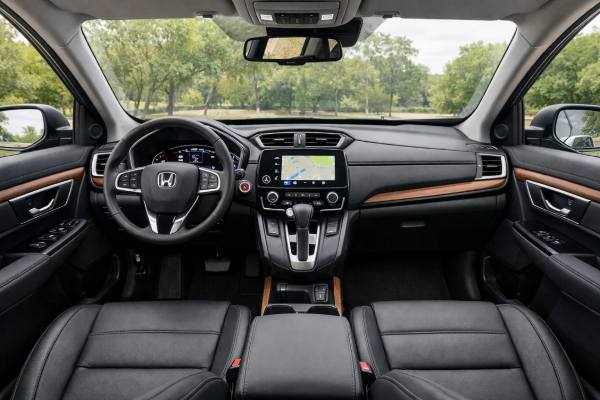
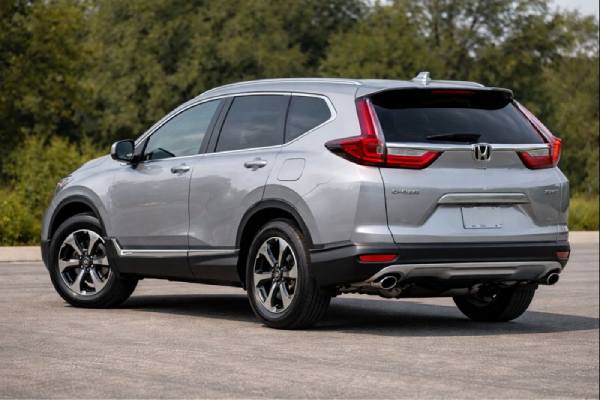
The 2019–2023 Honda CR-V Hybrid in FWD form (RT5) is best understood as an “electric-first” SUV. Most of the time, the wheels are driven by an electric traction motor while the 2.0-liter LFA1 engine works as a generator; a clutch can connect the engine directly to the wheels at steady speeds to reduce losses. In practice, this layout gives the CR-V a smooth, quiet city feel and strong low-speed response without the stepped-gear behavior many drivers associate with traditional automatics.
Ownership tends to reward the people who treat it like a hybrid, not a normal gasoline SUV: keep the cooling systems healthy, use the right fluids, and don’t ignore updates or warning lights. The payoff is efficient day-to-day running, a composed ride, and a drivetrain that avoids some common wear points of belt CVTs—while still requiring smart, schedule-based maintenance.
What to Know
- Strong city efficiency and smooth takeoff thanks to electric-first drive logic
- Roomy cabin packaging with a large cargo hold even in hybrid form
- AWD is optional on this generation, but FWD RT5 is lighter and typically more efficient
- Budget for hybrid-specific coolant and transaxle fluid services over the long term
- Plan engine oil and filter service about every 12 months or 10,000–15,000 km (6,000–9,000 miles), depending on use
Guide contents
- Honda CR-V Hybrid RT5 explained
- LFA1 hybrid spec tables
- RT5 trims and safety tech
- Reliability picture and fixes
- Hybrid service plan and buying
- Road manners and fuel use
- CR-V Hybrid RT5 vs rivals
Honda CR-V Hybrid RT5 explained
Honda’s RT5 CR-V Hybrid uses the company’s two-motor hybrid concept (often described as i-MMD or e:HEV depending on market). The key difference versus many “power-split” hybrids is how often the engine is not mechanically connected to the wheels. At low speeds and in stop-and-go traffic, the traction motor does the driving. The gasoline engine runs when it needs to make electricity, either to feed the motor directly or to top up the battery. At highway cruise—when a gasoline engine can be efficient and electric conversion losses matter more—a clutch can connect the engine to the wheels so the car behaves more like a direct-drive vehicle.
For owners, the benefits are easy to feel:
- Smoothness in town: Electric drive removes gear changes and reduces engine flare.
- Useful low-speed pull: Electric torque helps the CR-V feel more willing pulling away from lights or merging into slow traffic.
- Less “CVT drama”: The system can hold the engine at efficient speeds without the rubber-band sensation some belt CVTs create under load.
The FWD variant matters because it changes the CR-V’s “shape” as a product. Compared with AWD hybrids, the RT5 is typically lighter, slightly simpler mechanically, and a touch more efficient. You also avoid extra rear driveline components (prop shaft, rear differential, and AWD clutch pack), which can reduce maintenance items over very long ownership.
Where people get surprised is that a hybrid isn’t automatically “set and forget.” The drivetrain still depends on cooling and clean fluid. The hybrid system has its own thermal demands, and the transaxle is an expensive assembly. Treating the fluid services as optional is the most common way long-term costs rise. The second surprise is driving style: short trips, repeated cold starts, and heavy throttle in “charge mode” (if your market offers it) can reduce the efficiency advantage. Driven normally, though, this CR-V Hybrid is one of the more relaxed, practical hybrid SUVs of its era.
LFA1 hybrid spec tables
Below are the most relevant specifications for the CR-V Hybrid FWD (RT5) with the LFA1 2.0-liter hybrid system. Values can vary slightly by market, wheel/tire package, and year.
Powertrain and efficiency
| Item | Specification |
|---|---|
| Code | LFA1 (2.0-liter Atkinson-cycle gasoline engine used in hybrid system) |
| Engine layout and cylinders | Inline-4, DOHC, 4 valves/cyl (typical) |
| Bore × stroke | 81.0 × 96.7 mm (3.19 × 3.81 in) |
| Displacement | 2.0 L (1,993 cc) |
| Induction | Naturally aspirated |
| Fuel system | Direct injection (market dependent) |
| Compression ratio | High (Atkinson-cycle; exact value varies by calibration/market) |
| Max system power | 184 hp (137 kW) (hybrid system output) |
| Max torque | Motor-dominant at low speed; published system torque varies by market |
| Timing drive | Chain (typical for this engine family) |
| Rated efficiency (WLTP combined) | ~6.9 L/100 km (34.1 mpg US / 40.9 mpg UK) |
| Real-world highway @ 120 km/h (75 mph) | Often ~7.5–8.5 L/100 km (27.7–31.4 mpg US) depending on wind, tires, and temperature |
| Aerodynamics | Cd and frontal area are not consistently published in public market sheets |
Hybrid motor and battery (what matters in practice)
| Item | Specification |
|---|---|
| Traction motor type | AC synchronous motor (typical Honda two-motor hybrid layout) |
| Motor count and axle | Single front drive motor (FWD) plus generator motor |
| System voltage | Varies by market and generation; verify for your VIN |
| Battery chemistry | Lithium-ion (common on this generation) |
| Battery placement | Rear area under load floor (packaging varies by market) |
Transmission and driveline
| Item | Specification |
|---|---|
| Transmission type | eCVT-style hybrid drive (single-speed electric drive with clutch/direct-drive mode) |
| Drive type | FWD |
| Differential | Open (front) |
Chassis and dimensions
| Item | Specification |
|---|---|
| Suspension (front/rear) | MacPherson strut / Multi-link |
| Steering | Dual rack-and-pinion electric power steering |
| Turns lock-to-lock | ~2.34 |
| Brakes (front/rear) | Disc (ventilated front / solid rear), ~320 mm front / ~310 mm rear (12.6 / 12.2 in) |
| Wheels/tires (common) | 235/60 R18 |
| Ground clearance | ~182 mm (7.17 in) |
| Length | 4,600 mm (181.1 in) |
| Width (with mirrors) | 2,117 mm (83.3 in) |
| Height | ~1,679 mm (66.1 in) |
| Wheelbase | ~2,663 mm (104.8 in) |
| Turning circle (kerb-to-kerb) | ~11.0 m (36.1 ft) (at wheels) |
| Curb weight | ~1,614–1,657 kg (3,558–3,653 lb) (varies by equipment) |
| GVWR / max permitted weight | ~2,240 kg (4,939 lb) |
| Fuel tank | ~57 L (15.1 US gal / 12.5 UK gal) |
| Cargo volume (VDA) | ~497 L seats up; ~1,694 L seats down (seats folded, to roof) |
Performance and capability
| Item | Specification |
|---|---|
| 0–100 km/h (0–62 mph) | ~8.8 s |
| Top speed | ~180 km/h (112 mph) |
| Towing capacity | ~750 kg (1,653 lb) braked; ~600 kg (1,323 lb) unbraked |
| Roof load / payload | Varies by market and trim; verify for your VIN |
Fluids and service capacities (confirm by VIN/market)
| Item | Typical specification |
|---|---|
| Engine oil | 0W-20 (spec per owner’s/service documentation); capacity varies with service method |
| Coolant | Honda-type long-life coolant; mix ratio per market |
| Transaxle fluid | Honda hybrid transaxle fluid (spec varies by market) |
| Brake fluid | DOT 3/4 depending on market labeling |
| A/C refrigerant | R-1234yf on many late-model EU-market vehicles (verify under-hood label) |
Safety and driver assistance (high-level)
| Item | Notes |
|---|---|
| Crash ratings | Euro NCAP 5-star result (test-year specific) |
| IIHS | Ratings vary by year and headlight configuration; some trims qualify for awards with specific headlights |
| ADAS suite | Often includes AEB, ACC, lane support, and traffic sign recognition depending on market package |
RT5 trims and safety tech
CR-V Hybrid trim naming changes by region, but the buying strategy stays the same: identify the version that has the safety and lighting equipment you actually want, then confirm the hybrid hardware is the same across trims (it usually is). Many markets offered “core” trims aimed at value and “upper” trims focused on comfort tech, audio upgrades, and driver assistance completeness.
Trims and options that typically matter most
1) Headlights and visibility tech
Safety ratings and real-world confidence often swing on lighting. Some configurations use halogen or lower-performing LED units, while higher trims may get improved LEDs and high-beam assist. If you drive rural roads, this is a bigger quality-of-life improvement than a larger infotainment screen.
2) Wheel and tire packages
The common 18-inch setup (235/60 R18) balances comfort and grip well. Sportier packages sometimes fit lower-profile tires that can sharpen steering response, but they usually cost more to replace and can reduce ride comfort. On hybrids, aggressive tires can also reduce efficiency.
3) Cabin and cargo functionality
Look for rear seat mechanisms, cargo-floor adjustability, and whether your market offered a panoramic glass roof (it can slightly change cargo-to-roof volume). If you carry bikes, dogs, or bulky strollers, practical details like tie-down points and cargo-lip height matter as much as brochure liters.
4) Infotainment and phone integration
This generation saw infotainment improvements over time in many markets. If you value daily usability, prioritize the later systems or trims with the best phone integration and faster processing. It’s one of the most common owner complaints on early builds.
Safety ratings and what they really mean
Safety results depend on the test version and equipment. In general, this CR-V generation performs strongly in structure and occupant protection. Where the nuance appears is in active safety (AEB performance, lane support tuning) and headlight performance. If your goal is “best possible safety spec,” it’s worth choosing a trim where the safety suite is standard rather than optional.
ADAS and service implications
Driver assistance hardware is not “set once, forget forever.” After windshield replacement, front-end repairs, or some alignments, many systems require calibration. Plan for this in repair budgeting—especially if you use independent shops. When done correctly, it keeps AEB and lane functions accurate; when skipped, it can cause warning lights, misbehavior, or reduced system effectiveness.
Reliability picture and fixes
The RT5 CR-V Hybrid’s core hybrid design is generally robust, but reliability is best described as “electronics-and-updates sensitive.” In other words: the mechanical bits tend to hold up well, while ownership experience depends on keeping software, sensors, and fluid services in line.
Below is a practical issue map using prevalence and severity/cost tier.
Common (expect to see in the fleet)
- 12V battery weakness (low to medium cost)
Symptoms: intermittent no-start, multiple warning messages, stop/start or hybrid system warnings after sitting.
Likely cause: short-trip use, age, parasitic draw from always-on modules.
Remedy: load-test the 12V battery, check charging behavior, update software if applicable, and replace with correct-spec battery. - Infotainment glitches (low to medium cost)
Symptoms: slow boot, random reboots, Bluetooth dropouts, frozen screen.
Likely cause: older firmware, memory management, phone compatibility.
Remedy: update head unit software where supported; consider battery health as low voltage can worsen behavior. - Brake feel changes or noise (low to medium cost)
Symptoms: occasional grabby feel at low speed, squeal, or rust build-up on rotors.
Likely cause: regen braking reduces friction-brake use; rotors can glaze or corrode.
Remedy: periodic firm stops to clean rotors, proper pad bedding, and timely brake fluid service.
Occasional (depends on climate and use)
- Suspension bushings and links (medium cost)
Symptoms: clunks over bumps, vague steering, uneven tire wear.
Likely cause: bushing aging, rough roads, heavier wheel packages.
Remedy: inspect front lower control arm bushings, stabilizer links, and rear bushings; align after replacement. - Wheel bearing noise (medium cost)
Symptoms: humming that changes with speed and load.
Likely cause: wear, pothole impacts, high mileage.
Remedy: confirm with road test and hub play check; replace affected hub assembly.
Rare but important (high cost if ignored)
- Hybrid system cooling faults (medium to high cost)
Symptoms: warning lights, reduced power, limp mode, strong fan activity.
Likely cause: coolant flow issues, sensor faults, or inverter/drive electronics temperature management problems.
Remedy: scan codes with hybrid-capable diagnostics, confirm coolant level/condition, and follow the service procedure rather than guessing. - Fuel delivery recall-related issues (medium cost)
Symptoms: hard starting, hesitation, or engine stalling in worst cases.
Likely cause: recalled fuel pump components on certain production ranges.
Remedy: verify recall completion by VIN and dealer records.
Recalls, TSBs, and how to verify completion
The best habit is simple: run the VIN through the official recall database for your region and keep proof of remedy. If you buy used, request paperwork, not verbal reassurance. Many recall repairs are free, but only if the vehicle is flagged as incomplete in the system. A car with “all recalls done” is meaningfully lower risk over the next several years.
Hybrid service plan and buying
A practical maintenance plan for the RT5 hybrid is about controlling three things: oil condition, coolant health, and transaxle fluid cleanliness. Hybrids can be easy on brakes and sometimes easy on the engine, but they are not immune to time and moisture.
Core maintenance schedule (practical ownership baseline)
Use your official schedule first, then adapt for your driving pattern:
- Engine oil and filter: every 10,000–15,000 km (6,000–9,000 miles) or 12 months.
Short trips and cold weather justify the shorter interval. The hybrid engine may run intermittently, but oil still ages and can accumulate moisture. - Cabin air filter: every 15,000–30,000 km (9,000–18,000 miles) or annually if you drive dusty cities.
- Engine air filter: typically 30,000–45,000 km (18,000–28,000 miles), sooner in dusty regions.
- Brake fluid: every 3 years is a solid rule if your manual doesn’t specify shorter.
- Coolant (engine and hybrid loops if separate in your market): commonly first change around 5 years, then every 3–4 years.
- Transaxle fluid: treat as a durability service—often 60,000–90,000 km (37,000–56,000 miles) depending on use and climate.
- Spark plugs: many modern Honda engines run long-life plugs; a common window is 160,000 km (100,000 miles), but confirm by VIN.
Hybrid-specific checks worth doing
- Cooling system forces a “no shortcuts” mindset
Confirm coolant level and condition, inspect for seepage, and ensure fans and pumps behave normally. Overheating events are what turn a reliable hybrid into an expensive one. - Brake hardware needs occasional “use”
Regen braking reduces rotor cleaning. A few controlled, firm stops (when safe) helps keep friction brakes healthy. - 12V battery testing is not optional
Many “hybrid problems” are low-voltage problems in disguise. Test it yearly after year three.
Used-buyer checklist (what to inspect and request)
- Full service history with dates and mileage (not just stamps)
- Proof of recall completion and any campaign work
- Evidence of regular fluid services (oil and brake fluid at minimum)
- Smooth transitions between EV drive and engine operation (no harsh shudder)
- No warning lights; scan for stored codes anyway
- Even tire wear and a straight steering wheel (alignment matters on these chassis)
- Listen for wheel bearing hum and suspension knocks over rough pavement
- Confirm ADAS calibration after windshield replacement (if replaced)
Long-term outlook: With routine fluids, good battery/charging health, and completed recalls, the RT5 hybrid is a strong “keep it for years” vehicle. It’s not exotic, but it benefits from disciplined maintenance more than many owners expect.
Road manners and fuel use
On the road, the RT5 hybrid feels most distinct at low speeds. Step-off is smooth, and the quietness in traffic is one of the biggest “daily comfort” wins. Instead of a conventional gearbox stepping through ratios, you feel a steady push from the traction motor. When the engine starts, it can sound a little different from a normal gasoline CR-V because it may hold a steady rpm to generate power. It isn’t a flaw—just the system doing its job.
Ride, handling, and NVH
- Ride quality: The CR-V’s suspension tune leans comfort-first. The multi-link rear helps it stay composed over broken surfaces, especially compared to torsion-beam rivals.
- Steering: Light-to-medium weighting with good consistency. It’s not a sports SUV, but it tracks straight and feels predictable.
- Braking feel: Regenerative braking blends with friction brakes. Some drivers notice a slightly different pedal feel at very low speeds as the car transitions between regen and pads; a well-maintained system stays consistent.
Powertrain character
The best way to enjoy this hybrid is to drive it smoothly. Moderate throttle lets the car stay in efficient operating modes more often. Heavy throttle can bring the engine in quickly and hold it at higher output rpm. For passing, it’s effective, but it won’t feel like a turbocharged punch—more like steady, confident acceleration.
Real-world efficiency
Ratings look excellent, but real-world results depend heavily on speed:
- City: This is where the system shines. Frequent deceleration gives regen braking many chances to recapture energy.
- Highway (100–120 km/h / 60–75 mph): Efficiency advantage shrinks with speed and wind resistance. Expect consumption to rise at 120 km/h compared with mixed driving.
- Cold weather: Cabin heat demands and colder battery chemistry reduce electric assist. Short trips in winter are the hardest case.
If your commute is mostly urban or mixed, the RT5 hybrid is easy to recommend. If you do long, fast motorway runs daily, it’s still efficient for a compact SUV—but the “hybrid gap” versus a good modern diesel or efficient turbo gasoline narrows.
Load and towing
The CR-V Hybrid can tow light loads, but it’s not a heavy-duty tow platform. Small trailers, garden hauling, and short trips are fine within rated limits. For frequent towing or long mountain grades, an AWD version (and a trim with stronger cooling management where offered) can feel more confident, but the key is staying within the published ratings and using the right tire pressures.
CR-V Hybrid RT5 vs rivals
In the 2019–2023 era, the CR-V Hybrid RT5 competed in a crowded field. The best rival depends on what you value: fuel economy, interior space, ride comfort, or long-term simplicity.
Versus Toyota RAV4 Hybrid
- Toyota advantage: Often stronger high-speed hybrid efficiency and a long-standing hybrid reputation.
- Honda advantage: Smooth, quiet city behavior and a very practical cabin/cargo layout.
- Choose Honda if: you prioritize comfort, packaging, and a calm driving feel.
Versus Ford Kuga Hybrid (and similar “traditional” hybrids)
- Ford advantage: Some versions feel more eager in chassis response.
- Honda advantage: Predictable hybrid behavior and a mature, easy daily rhythm.
- Choose Honda if: you want fewer “driver modes” and a more consistent, appliance-like experience.
Versus Hyundai Tucson Hybrid / Kia Sportage Hybrid (where available)
- Korean advantage: Often more tech-per-dollar and strong infotainment feature sets.
- Honda advantage: Typically stronger long-term ergonomics and excellent outward visibility, with a drivetrain feel many describe as more natural once accustomed to it.
- Choose Honda if: you value straightforward controls and proven platform maturity.
Versus Mazda CX-5 (non-hybrid in this period)
- Mazda advantage: Sharper steering feel and premium cabin ambiance.
- Honda advantage: Better efficiency in mixed driving and usually more rear-seat/cargo practicality.
- Choose Honda if: you want family functionality and lower fuel use without giving up refinement.
Bottom line
The CR-V Hybrid RT5 is not the “sportiest” or the “most tech-stuffed” option, but it’s one of the most complete. If your driving includes city miles, school runs, and mixed commuting, it delivers the kind of smoothness and efficiency that makes an SUV easier to live with. Buy the trim with the best headlights and the safety package you want, keep the fluids and 12V battery healthy, and it tends to reward long ownership.
References
- 2019 Honda CR-V Hybrid 2019 (Press Release)
- Official Honda CR-V 2019 safety rating 2019 (Safety Rating)
- 2021 Honda CR-V 4-door SUV 2021 (Safety Rating)
- Part 573 Safety Recall Report 24V-064 2024 (Recall Database)
- Part 573 Safety Recall Report 23V-858 2023 (Recall Database)
Disclaimer
This article is for informational purposes only and is not a substitute for professional diagnosis, inspection, or repair. Specifications, torque values, fluid capacities, intervals, and procedures can vary by VIN, market, and equipment; always verify details against official owner’s literature and service documentation for your exact vehicle.
If this guide helped you, please consider sharing it on Facebook, X (Twitter), or your favorite forum—your support helps us keep publishing detailed, practical vehicle references.