


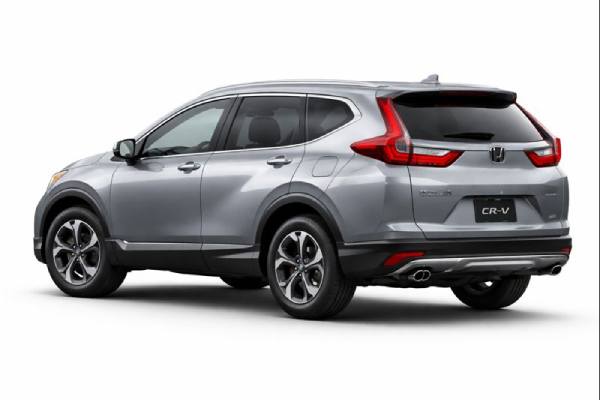
The 2017–2022 Honda CR-V FWD (RW1) with the 1.5-litre turbo petrol (L15BE) is a “do-most-things” family SUV built around efficient packaging, predictable road manners, and an engine tuned for usable mid-range pull rather than headline speed. In front-wheel drive form, it is typically lighter and a touch more fuel-efficient than the AWD versions, and it avoids some drivetrain service items that come with a rear differential and prop shaft. The trade-off is traction on wet grass, steep gravel drives, and deep snow—situations where tyre choice and smart throttle use matter more.
For ownership, this CR-V rewards drivers who keep up with fluid changes (especially if fitted with a CVT) and who use the engine in a way that regularly reaches full operating temperature. Do that, and it tends to deliver long-distance comfort, strong safety performance, and low day-to-day stress.
Quick Specs and Notes
- Strong cabin and cargo packaging for its footprint, with a wide rear opening and family-friendly ergonomics.
- Smooth, low-effort performance in everyday driving, especially mid-range torque for merging and hills.
- Typically lower curb weight and slightly better economy than AWD equivalents.
- Short-trip, cold-weather use can increase fuel dilution risk on the 1.5T; monitor oil level and change oil on time.
- Plan engine oil service about every 12 months or 10,000–15,000 km (use the maintenance minder where fitted, and shorten intervals for severe use).
Quick navigation
- RW1 FWD model breakdown
- L15BE specs and dimensions
- Trims, options, and driver aids
- Reliability, issues, and recalls
- Maintenance plan and buying advice
- Real-world driving and efficiency
- Rivals versus the 1.5T CR-V
RW1 FWD model breakdown
Honda’s fifth-generation CR-V (RW platform codes vary by market; RW1 commonly denotes FWD petrol in several regions) focuses on space-efficiency and calm, confidence-building behavior. In FWD form, the layout is straightforward: a transverse turbocharged inline-four up front, front transaxle, and a chassis tuned for stability and comfort over sharp “sport” reactions.
What the L15BE 1.5 turbo does well
This engine’s appeal is how it delivers torque at low-to-mid rpm. In normal use, it feels stronger than the displacement suggests, which lets the CR-V hold speed on grades without constant downshifts. Most FWD examples pair the engine with a CVT (continuously variable transmission), though some markets offered a manual early on. Either way, the CR-V is tuned to be easy: gentle throttle mapping, smooth take-offs, and predictable braking.
Why FWD matters on this generation
Compared with AWD, the FWD CR-V usually brings:
- Less weight and fewer driveline components, which can mean slightly lower fuel use and fewer fluids to service.
- More consistent steering feel under light acceleration because there is no rear torque transfer strategy to consider.
- Traction limits that show earlier in slippery starts (wet grass, deep snow, steep loose gravel). Good tyres (especially modern all-seasons or winter tyres) often make a bigger difference than people expect.
Practical packaging strengths
The cabin design is one of the CR-V’s core engineering wins: good sightlines, wide-opening doors, and a rear seat area that suits child seats without forcing the front seats too far forward. Cargo volume is competitive, and the load floor and opening shape are easy to live with.
Who this exact configuration fits best
Choose the RW1 FWD 1.5T if you:
- Drive mainly on paved roads and want lower complexity than AWD.
- Want a family SUV that is quiet, stable, and efficient at typical speeds.
- Prefer a modern safety suite (availability varies by trim/year) but do not want a larger vehicle.
Skip it (or budget for tyres and careful inspection) if your daily routine includes steep, slick access roads, frequent towing at maximum limits, or mostly short, cold trips that never fully warm the engine.
L15BE specs and dimensions
Below are practical specifications for the CR-V FWD (RW1) with the 1.5-litre turbo petrol as commonly configured in 2017–2022 markets. Exact figures vary by VIN, wheel size, seating (5 vs 7 in some regions), and homologation cycle, so treat these as a tightly targeted baseline.
Powertrain and efficiency
| Item | Specification |
|---|---|
| Engine code | L15BE (1.5 VTEC TURBO family) |
| Layout and valvetrain | Inline-4, DOHC, 16 valves (4 valves/cyl) |
| Bore × stroke | 73.0 × 89.5 mm (2.87 × 3.52 in) |
| Displacement | 1.5 L (1,498 cc) |
| Induction | Turbocharged |
| Fuel system | Direct injection (market-dependent naming) |
| Compression ratio | 10.3:1 |
| Max power | 190 hp (140 kW) @ ~5,600 rpm (market-rated) |
| Max torque | Typically 220–243 Nm (162–179 lb-ft) @ ~2,000–5,000 rpm (varies by calibration/transmission) |
| Timing drive | Chain |
| Rated efficiency (typical range) | ~7.0–8.0 L/100 km combined (cycle/market dependent) |
| Real-world highway @ 120 km/h | Often ~7.8–9.0 L/100 km depending on tyres, load, and wind |
Transmission and driveline
| Item | Specification |
|---|---|
| Transmission | CVT common; some markets offered 6MT |
| Drive type | FWD |
| Differential | Open (traction control manages wheel slip) |
Chassis and dimensions
| Item | Specification |
|---|---|
| Front suspension | MacPherson strut |
| Rear suspension | Multi-link |
| Steering | Electric power steering (rack and pinion) |
| Brakes | 4-wheel discs (front ventilated, rear solid; sizes vary by wheel package) |
| Wheels and tyres | Common: 235/65 R17, 235/60 R18 (trim dependent) |
| Length / width / height | About 4,600 mm / ~1,855 mm (body) / ~1,679 mm (FWD, market dependent) |
| Wheelbase | About 2,662 mm |
| Turning circle | About 11.0 m (at wheels; spec source dependent) |
| Ground clearance | About 191 mm (FWD baseline) |
| Fuel tank | 57 L (15.1 US gal / 12.5 UK gal) |
| Cargo volume (VDA method) | ~561 L seats up, ~1,756 L seats down (5-seat) |
Performance and capability
| Item | Typical figure |
|---|---|
| 0–100 km/h (0–62 mph) | Around 9.2–9.5 s (trim/transmission dependent) |
| Top speed | Around ~210 km/h (130 mph) (market dependent) |
| Towing capacity | Some regions list up to 2,000 kg braked and 600 kg unbraked (verify by VIN and market plate) |
Fluids and service capacities (decision-grade)
| System | Specification (typical) |
|---|---|
| Engine oil | 0W-20 (spec varies by market), about 3.7–3.9 L with filter |
| Coolant | Honda long-life coolant type; capacity varies by radiator and heater spec |
| CVT fluid | Honda CVT fluid (market equivalent of HCF-2); drain/fill quantity varies |
| Brake fluid | DOT 3 or DOT 4 (market dependent) |
Key torque specs (critical fasteners only)
| Fastener | Typical range (verify by service manual) |
|---|---|
| Wheel lug nuts | Often 108 Nm (80 lb-ft) on Honda passenger vehicles |
| Engine oil drain plug | Commonly 30–40 Nm (22–30 lb-ft) depending on pan design |
Trims, options, and driver aids
Trim naming differs by region, but the structure is usually consistent: entry, mid, and high grades with option packs that bundle comfort, infotainment, and safety tech. For the RW1 FWD, you will see meaningful differences in wheels, lighting, seat materials, and the driver-assistance suite more than in “hard” mechanical parts.
Trims and options that change ownership
Wheel and tyre packages
- 17-inch wheels often ride more softly and protect rims better on poor roads.
- 18-inch wheels sharpen response slightly but can increase tyre cost and road noise depending on tyre model.
Seating and cargo configuration
Some markets offered a 7-seat arrangement on this generation. If you are shopping used, confirm:
- The third-row presence and whether it meaningfully fits your use (it is typically best for children).
- Cargo volume with seats up (7-seat versions can lose a lot of trunk space when all seats are in use).
Infotainment tiers
Higher trims may add larger screens, premium audio, or built-in navigation. From an ownership standpoint, the practical questions are:
- Does it support your preferred phone integration reliably?
- Is the reverse camera clear and well-positioned?
- Do all USB ports and steering wheel controls work without glitches?
Safety ratings and what they mean
Safety performance is strong for this generation, but remember that rating protocols can change by year. The CR-V’s results are best interpreted as evidence of a solid structure plus effective restraint design rather than a promise that every trim is identical.
- Euro NCAP results for this generation show a high overall performance profile with strong adult and child protection percentages, and a meaningful Safety Assist score (equipment-dependent).
- IIHS data covers 2017–2022 models and breaks performance down by crash mode (small overlap, side, roof strength) and by equipment such as headlights and front crash prevention.
Driver assistance (ADAS): what is standard vs optional
Many CR-Vs in this era offer Honda Sensing (package name varies), typically including:
- Autonomous emergency braking (AEB) with forward collision warning
- Lane departure warning and lane-keeping assist
- Adaptive cruise control
- Traffic sign recognition (market dependent)
Calibration implications after service
If the car has a forward camera behind the windshield or radar in the grille, plan for calibration after:
- Windshield replacement
- Front-end accident repair
- Some suspension geometry changes if the steering angle sensor loses reference
A quick used-car check: confirm the ADAS warning lights self-test properly, and that the camera area is clean and free of tint film or aftermarket stickers.
Reliability, issues, and recalls
The RW1 FWD 1.5T is often reliable when maintained, but it has a few repeat patterns worth understanding before you buy. Below, issues are grouped by prevalence and cost tier, with common timing bands. Actual rates depend heavily on climate, driving style, and service quality.
Common (watch closely)
1) Fuel dilution tendency in short-trip, cold use (medium cost if ignored)
- Symptoms: Rising oil level on dipstick, fuel smell in oil, rough cold running.
- Likely root cause: Direct-injection turbo engines can run rich during warm-up; repeated short trips may not evaporate fuel from the crankcase.
- Remedy: Shorten oil intervals, ensure regular fully-warm drives, verify software updates where applicable, and monitor oil level. If oil rises noticeably, do not extend service intervals.
2) CVT fluid condition and drivability (low to medium cost)
- Symptoms: Shudder on light acceleration, “rubber-band” feel that is harsher than normal, delayed engagement.
- Root cause: Aged fluid, overheating cycles, or neglect of drain-and-fill service.
- Remedy: Use the correct Honda-spec fluid and follow a conservative service interval if used hard (city driving, hills, hot climate).
3) Brake wear and vibration under city use (low to medium cost)
- Symptoms: Steering wheel shake under braking, squeal, uneven pad wear.
- Root cause: Heat cycling and corrosion, especially if the vehicle sits.
- Remedy: Proper pad/rotor service, caliper slide cleaning, and brake fluid changes.
Occasional (inspect during purchase)
Turbocharger wastegate rattle or boost control quirks (medium cost)
- Symptoms: Metallic rattle at certain rpm, inconsistent boost feel.
- Root cause: Wastegate linkage wear or control strategy sensitivity.
- Remedy: Diagnosis first (do not guess). Some cases are noise-only; others require hardware replacement.
Direct-injection intake valve deposits over time (medium cost)
- Symptoms: Rough idle, reduced efficiency, misfire codes in higher mileage examples.
- Root cause: DI does not wash intake valves with fuel.
- Remedy: Periodic intake cleaning if symptoms appear; avoid relying on “miracle” additives.
A/C performance faults (medium cost)
- Symptoms: Weak cooling, cycling, or refrigerant loss.
- Root cause: Can vary (seals, condenser, compressor).
- Remedy: Leak test and proper repair; do not repeatedly “top up” without fixing the leak.
Rare but high-impact (confirm history)
ADAS false alerts or sudden braking complaints (variable cost)
- Symptoms: Unexpected warnings or harsh interventions.
- Root cause: Sensor contamination, misalignment, or system sensitivity in certain traffic patterns.
- Remedy: Keep sensors clean, ensure correct calibration after repairs, and check for campaign updates.
Recalls, service bulletins, and how to verify
For any used CR-V in this range:
- Run the official VIN recall check for your country (or ask a dealer to print the campaign history).
- Compare that list against the vehicle’s service invoices.
- Confirm completion dates and mileage.
Even if a recall is “free,” a car that missed recall work can carry avoidable risk. A clean, documented service record matters more on the 1.5T than on older naturally aspirated Hondas, simply because modern turbo/DI systems are less tolerant of neglected fluids and short-trip abuse.
Maintenance plan and buying advice
A smart maintenance approach for the RW1 FWD 1.5T is less about doing exotic work and more about doing the basics on time, using the correct fluids, and adapting intervals to how the car is used.
Practical maintenance schedule (distance and time)
Use the maintenance minder where fitted, but consider these conservative baselines:
- Engine oil and filter: every 10,000–15,000 km or 12 months; shorten to 7,500–10,000 km for short trips, cold climate, heavy traffic, or frequent idling.
- Cabin air filter: every 15,000–30,000 km (or yearly if you drive in dust/pollen-heavy areas).
- Engine air filter: inspect at 20,000–30,000 km, replace as needed (more often in dust).
- Brake fluid: every 2 years (moisture control matters more than mileage).
- Coolant: follow official interval (often long-life); treat 5 years as a reasonable planning point unless documentation says otherwise.
- CVT fluid (if equipped): drain-and-fill about every 40,000–60,000 km for mixed/city use; longer intervals may be acceptable for gentle highway use, but fluid freshness is cheap insurance.
- Spark plugs: commonly 80,000–120,000 km on modern turbo engines (verify by VIN).
- Tyre rotation and alignment check: rotate every 10,000–12,000 km; check alignment yearly or after pothole hits.
- 12 V battery test: annually after year 3; replacement planning window often 4–6 years depending on climate.
Fluid specifications and “good decisions” data
- Use the exact oil viscosity and standard specified for your market. Turbo DI engines are sensitive to oil quality and change timing.
- CVT: insist on the correct Honda-spec CVT fluid; incorrect fluid can create shudder and long-term wear.
- Brake fluid: a high-quality DOT fluid and proper bleeding technique are more important than brand names.
Buyer’s inspection checklist (what to look for)
Paperwork
- Evidence of regular oil services (not just “once a year whenever”).
- CVT fluid history if mileage is above ~60,000 km.
- Recall/campaign completion printout.
Mechanical
- Cold start behavior: listen for timing chain noise, abnormal rattle, or rough idle.
- Driveability: smooth CVT behavior under light throttle; no persistent shudder.
- Cooling and A/C: stable engine temperature and strong cabin cooling.
Body and chassis
- Uneven tyre wear (alignment or suspension bushings).
- Brake feel: no vibration under moderate braking from 100–0 km/h.
- Underbody: look for corrosion at seams and subframe mounting points if the car lived in salted-road regions.
Best “sweet spot” picks
If choice is wide, many buyers prefer mid trims with the safety suite and sensible wheel sizes (often 17s or 18s) because they balance comfort, tyre cost, and equipment. The long-term durability outlook is good when the car’s usage pattern includes regular fully-warm drives and when oil and CVT service is treated as non-negotiable.
Real-world driving and efficiency
The RW1 FWD 1.5T CR-V is defined by ease. It is not a hot hatch in disguise, but it is composed, quiet enough for long trips, and tuned to reduce driver workload in traffic.
Ride, handling, and NVH
Ride quality is generally compliant, with the multi-link rear helping the CR-V feel stable over mid-corner bumps. On 17-inch wheels it tends to absorb rough surfaces better; on 18s the body control feels slightly tighter but impacts can be sharper.
Steering is light at parking speeds and firms up modestly at speed. It is designed for accuracy and calm rather than road texture. On the highway, the car tracks straight and feels secure in crosswinds for the class.
NVH (noise, vibration, harshness) is competitive: tyre noise becomes the dominant factor at 100–120 km/h, so tyre model choice matters. The 1.5T can sound busy if pushed hard, but at normal throttle it stays subdued.
Powertrain character (what it feels like)
- Low rpm: enough torque to move cleanly without revving, especially once warm.
- Mid-range: the engine’s best zone; merging and overtakes feel confident.
- High load: CVT cars may hold rpm in a steady band; some drivers love the smoothness, others prefer stepped automatics.
If equipped with drive modes, the differences are usually in throttle mapping and (on some trims) steering weight and climate strategy.
Efficiency: what owners commonly see
Real-world numbers depend heavily on speed and trip length:
- City: often 8.5–10.5 L/100 km (22–28 mpg US) in dense traffic; shorter trips trend higher.
- Highway (100–120 km/h): often 7.8–9.0 L/100 km (26–30 mpg US) depending on wind, tyres, and load.
- Mixed: commonly 7.8–9.5 L/100 km (25–30 mpg US).
Cold-weather delta: expect a noticeable increase in consumption during winter, and be extra cautious about oil change timing if most journeys are short.
Traction and control in FWD form
With good tyres, the CR-V FWD is competent in rain and light snow. The stability and traction systems intervene smoothly, but physics still applies:
- A steep, slick start can overwhelm the front tyres sooner than an AWD version.
- Quality winter tyres can transform the car more than any electronic mode.
Load and towing notes
If your market permits higher tow ratings, treat towing as a heat-management problem: more load means more stress on engine oil, cooling, and transmission fluid. If you tow regularly, shorten oil intervals and be conservative about CVT service.
Rivals versus the 1.5T CR-V
In the compact SUV class, the CR-V’s strengths are space, day-to-day refinement, and safety availability. Competitors often win on a single standout trait—sportiness, low price, or a specific powertrain—so the best choice depends on your priorities.
Versus Toyota RAV4 (similar years)
Why choose the CR-V: often feels more spacious inside with a more relaxed ride. The turbo engine can feel stronger in the mid-range than some naturally aspirated rivals.
Why choose the RAV4: strong reputation for durability, and many markets offered hybrid variants that excel in city efficiency.
Versus Mazda CX-5
CR-V advantage: rear-seat and cargo practicality, plus an easygoing long-trip nature.
CX-5 advantage: sharper steering feel and a more “premium” driving character. If you value steering feedback and a tauter chassis, Mazda often leads.
Versus Nissan X-Trail / Rogue (depending on market)
CR-V advantage: typically more consistent long-term confidence if maintained, plus strong safety credentials.
Rogue/X-Trail advantage: can offer a comfortable cabin and good value, but powertrain choices vary widely by region and year.
Versus Volkswagen Tiguan
CR-V advantage: simple, family-first packaging and generally straightforward ownership when serviced correctly.
Tiguan advantage: European road feel and, in some trims, strong highway manners and seating flexibility.
The CR-V’s “best at” summary
If you want a compact SUV that is:
- Easy to drive and live with every day
- Spacious for passengers and cargo
- Strong on safety performance for the generation
- Sensible in running costs when maintained conservatively
…the RW1 FWD 1.5T CR-V is a safe bet. The biggest competitor to its value is not another model—it is neglect. Buy one with a clean service story, keep the fluids fresh, and match your usage to the engine’s needs (regular full warm-ups), and it tends to be a satisfying long-term partner.
References
- 2018 Honda CR-V VTEC TURBO Petrol 2018 (Press Release)
- Honda Owners Manuals | Honda CR-V| Owners | Honda UK 2025 (Owner’s Manual Portal)
- Gas Mileage of 2017 Honda CR-V 2017 (Official Fuel Economy Data)
- Vehicle Detail Search – 2019 HONDA CR-V SUV FWD | NHTSA 2019 (Recall Database)
- 2017 Honda CR-V 2017 (Safety Rating)
Disclaimer
This article is for informational purposes only and is not a substitute for professional inspection, diagnosis, or repair. Specifications, torque values, service intervals, and procedures can vary by VIN, market, model year, and installed equipment. Always verify details using the official owner’s manual and service documentation for your exact vehicle.
If you found this guide useful, please consider sharing it on Facebook or X to support our work.