
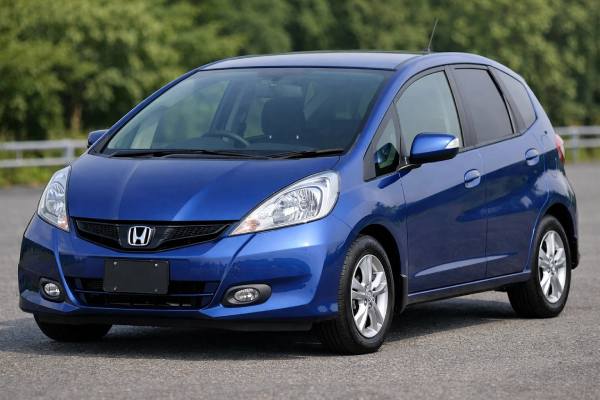
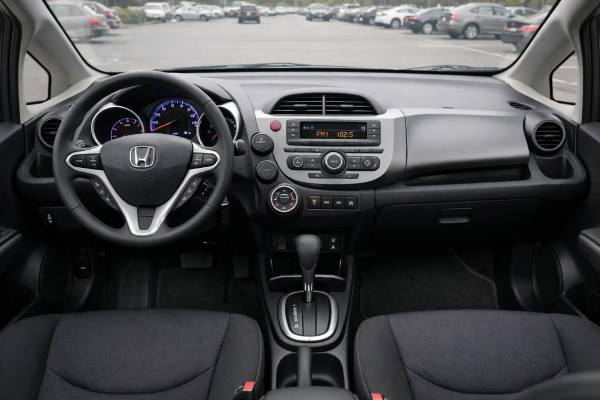
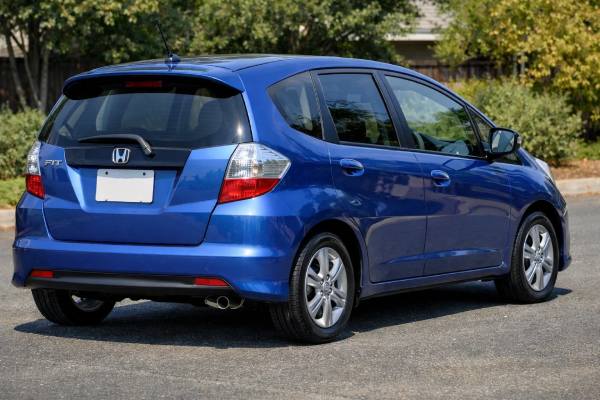
The facelift-era Honda Fit (GE8) with the L15A7 1.5-liter and 117 hp is a case study in smart packaging and low-stress engineering. It’s small on the outside, but its tall roofline, “Magic Seat” cargo system, and wide hatch opening let it carry bulky items like a much larger car. Under the hood, the L-series engine is simple, chain-driven, and generally tolerant of real-world ownership—short trips, mixed driving, and long service life—when basic maintenance stays on schedule.
The 2011–2014 refresh matters because many markets saw equipment and trim mixes shift: stability control availability improved, infotainment and convenience features were revised, and exterior updates came with small but noticeable usability changes. If you want a practical, efficient daily driver with predictable running costs, this version of the Fit is often the sweet spot—provided you verify safety recalls and buy on condition, not mileage alone.
Quick Specs and Notes
- Expect standout cabin flexibility: rear seat modes make bike-and-box trips easier than most subcompacts.
- The L15A7 is typically durable if oil level is kept correct and cooling health is maintained.
- Check recall completion (especially airbags) before purchase, even on “well cared for” cars.
- Budget for suspension wear items in older cars: links and bushings are common reconditioning.
- Typical oil service: every 8,000–12,000 km (5,000–7,500 mi) or 12 months, adjusted for short-trip use.
Navigate this guide
- Facelift GE8 ownership profile
- L15A7 facelift spec tables
- Facelift trims and safety gear
- Common problems by mileage
- Maintenance roadmap and inspections
- Performance and fuel use
- Best rivals and alternatives
Facelift GE8 ownership profile
Think of the 2011–2014 Fit GE8 facelift as a “maximum usefulness per liter of fuel” car. Its core advantage is not a single spec number—it’s how the body and cabin geometry work together. The upright seating position improves outward visibility in traffic and makes it easier to judge corners and parking. The roofline stays tall far back, so the rear door opening is practical for child seats and the hatch is genuinely usable for tall cargo.
The L15A7 1.5-liter is a conventional naturally aspirated inline-four designed for efficiency, smoothness, and low operating stress. There’s enough power for normal commuting, but the real value is that it doesn’t rely on turbo hardware, direct injection complexity, or high cylinder pressures. Owners tend to see consistent behavior across seasons, and the engine tolerates a wide range of driving patterns—if the oil is changed on time and the cooling system is kept healthy.
Where the facelift-era Fit can surprise first-time buyers is refinement versus expectations. It’s still a light subcompact with short wheelbase physics, so you’ll hear more road noise on coarse pavement than in a larger sedan. On the other hand, the controls are typically light and predictable, the turning circle is tight for city use, and the car’s visibility helps reduce stress in dense traffic.
This generation’s “Magic Seat” system is the signature ownership feature. It allows:
- Tall mode for upright items behind the front seats (think houseplants or small appliances).
- Long mode to carry longer objects diagonally with one rear section folded.
- Flat load floor when both rear seatbacks are folded, creating a wide, square cargo area.
If you’re shopping today, prioritize condition checks that match age: rust in hidden seams, rubber wear, and maintenance history. A high-mile Fit with consistent servicing is often a better bet than a low-mile example that sat unused with old fluids and aging tires.
L15A7 facelift spec tables
Specs on the Fit vary slightly by market and trim, but the facelift GE8 formula stays consistent: a 1.5-liter L15A7, front-wheel drive, and either a manual or automatic transmission. Use the tables below as a buyer’s baseline, then confirm details against the vehicle label, VIN/build data, and the owner’s/service documentation for your exact market.
Powertrain and efficiency (L15A7 1.5 i-VTEC)
| Item | Specification |
|---|---|
| Code | L15A7 |
| Engine layout and cylinders | Inline-4, 4 cylinders; SOHC i-VTEC; 4 valves/cyl |
| Bore × stroke | 73.0 × 89.4 mm (2.87 × 3.52 in) |
| Displacement | 1.5 L (1,497 cc) |
| Induction | Naturally aspirated |
| Fuel system | Multi-point fuel injection (MPFI) |
| Compression ratio | ~10.4:1 (market-dependent) |
| Max power | 117 hp (87 kW) @ ~6,600 rpm |
| Max torque | ~145 Nm (107 lb-ft) @ ~4,800 rpm |
| Timing drive | Chain |
| Rated efficiency (typical EPA) | ~7.6–8.7 L/100 km (27–31 mpg US) depending on transmission |
| Real-world highway @ 120 km/h (75 mph) | Often ~6.5–7.5 L/100 km (31–36 mpg US) with good tires/alignment |
| Aerodynamics | Cd commonly cited around ~0.33 (varies by trim/market); frontal area varies by equipment |
Transmission and driveline
| Item | Specification |
|---|---|
| Transmission | 5-speed manual (common) or 5-speed automatic (market/trim dependent) |
| Drive type | FWD |
| Differential | Open |
Chassis and dimensions (typical GE8 hatch)
| Item | Specification |
|---|---|
| Suspension (front/rear) | MacPherson strut / torsion beam |
| Steering | Electric power steering |
| Brakes | Front discs / rear drums on many trims (rear discs on some markets/trims) |
| Wheels/tyres | Common: 185/55 R16 or 175/65 R15 depending on trim |
| Length / width / height | ~3,900–4,000 / ~1,695 / ~1,525 mm (varies by bumper/roof equipment) |
| Wheelbase | ~2,500 mm (98.4 in) |
| Turning circle (kerb-to-kerb) | ~10.4 m (34.1 ft) typical |
| Kerb weight | ~1,080–1,160 kg (2,380–2,560 lb) depending on transmission/trim |
| Fuel tank | ~42 L (11.1 US gal / 9.2 UK gal) |
| Cargo volume | Market-method dependent; notable for tall, boxy usable shape |
Performance and capability (realistic expectations)
| Item | Specification |
|---|---|
| 0–100 km/h (0–62 mph) | ~10–12 s (transmission and conditions dependent) |
| Top speed | ~170–180 km/h (106–112 mph) depending on gearing |
| Braking 100–0 km/h | Highly tire-dependent; typically competitive for class when brakes are fresh |
| Towing capacity | Often not rated or very limited in many markets; confirm locally |
| Roof load | Typically modest; confirm handbook for your region |
Fluids and service capacities (verify by VIN/market)
| Item | Specification |
|---|---|
| Engine oil | 0W-20 or 5W-20 (market/climate dependent); capacity commonly ~3.6 L (3.8 US qt) with filter |
| Coolant | Honda-type long life coolant; 50/50 mix typical; capacity varies by radiator |
| Transmission fluid (AT) | Honda ATF (model-specific); capacity varies by drain/fill method |
| Manual transmission | MTF (Honda spec); capacity varies |
| A/C refrigerant | R-134a; charge varies by equipment |
| Key torque specs (critical examples) | Wheel lug nuts commonly ~108 Nm (80 lb-ft) typical for many Hondas; confirm for your market |
Electrical
| Item | Specification |
|---|---|
| 12V battery | Size and CCA vary by market; test condition rather than guessing age |
| Alternator | Output varies by equipment load (audio, heated features, etc.) |
| Spark plugs | Long-life plugs common; gap and part number vary by market/engine calibration |
Safety and driver assistance (era-appropriate)
| Item | Specification |
|---|---|
| Crash ratings | Vary by market and test year; see Facelift trims and safety gear |
| ADAS suite | Typically limited (pre-AEB era); focus on ABS, stability control availability, and airbag configuration |
Facelift trims and safety gear
Facelift-era trims can look similar from ten feet away, so it helps to know the quick identifiers. Most markets offered a core lineup built around a base model, a mid-trim with convenience features, and a sport-oriented trim with wheels, body add-ons, and firmer visual character. The mechanical fundamentals usually stay the same—same engine family, same basic suspension architecture—but wheel/tire packages and equipment weight can subtly change how the car rides and how much road noise you hear.
Trims and options: what actually changes
Common differentiators to look for:
- Wheel and tire size: 15-inch packages tend to ride softer and cost less in tires; 16-inch packages sharpen steering response but can add impact harshness.
- Audio and connectivity: facelift updates often brought revised head units, auxiliary inputs, and in some trims Bluetooth or steering wheel controls.
- Convenience: keyless entry, cruise control, and fog lamps were often trim-linked.
- Interior cues: sport trims may use different seat cloth, contrast stitching, or a thicker steering wheel.
Quick identifiers during a walkaround:
- Sport cues: larger wheels, side skirts, rear spoiler, and a more aggressive front fascia in many markets.
- Cabin tells: steering wheel buttons (audio/phone), display type, and presence of cruise controls.
- Build labels: door-jamb sticker and VIN decoding are the cleanest way to confirm year/market configuration.
Safety ratings: how to interpret them
Safety outcomes depend on test body, test year, and which tests were performed. For this generation, you’ll most often see strong results in moderate overlap frontal and side tests for many configurations, with important caveats when small-overlap testing applies. Treat ratings as a structured comparison tool, not an absolute guarantee.
Safety systems you should verify on the actual car
Because equipment can vary by year and region, verify these items physically:
- Airbags: confirm front, side torso, and side curtain airbags are present (look for seat tags and pillar markings).
- Child seat provisions: ISOFIX/LATCH anchors should be present; check for covers and verify anchor integrity.
- ABS and brake assist: usually standard, but confirm warning lights do a proper bulb check at startup.
- Stability control (ESC/VSA): availability improved over time in many markets. Confirm by dash button/indicator behavior and documentation.
After-service calibration considerations
This is not a radar-and-camera ADAS car in most trims, but it still benefits from correct service steps:
- Steering angle sensor and alignment: after suspension work, a proper alignment prevents tire wear and keeps stability systems happy.
- Battery disconnect behavior: some audio/security systems require re-initialization after battery replacement.
- Airbag recall completion: never assume it was done—confirm by VIN history and receipts.
If you want the safest real-world setup, prioritize cars with stability control, side curtain airbags, and good tires in the correct load rating. In older subcompacts, tire quality and brake condition can matter as much as the original brochure features.
Common problems by mileage
The facelift GE8 Fit is generally robust, but age and usage patterns create predictable weak spots. The best way to think about reliability is not “good or bad,” but “what fails first, how expensive is it, and how easy is it to diagnose.” Below is a practical map by prevalence and cost tier.
Common (usually low to medium cost)
- Suspension wear (links, bushings, strut mounts)
Symptoms: clunks over sharp bumps, loose feel, uneven tire wear.
Likely cause: aging rubber and high city-mile impact loads.
Remedy: replace worn links/bushings; align afterward. - Brake hardware and rear drum maintenance
Symptoms: uneven braking feel, squeal, sticking after sitting, weak parking brake.
Cause: corrosion, old fluid, rear adjustment out of spec.
Remedy: service calipers/drums, replace fluid, adjust rear brakes if applicable. - Ignition coils or plugs at higher miles
Symptoms: misfire under load, rough idle, flashing MIL in severe cases.
Cause: coil aging, worn plugs, oil contamination from leaks.
Remedy: replace plugs at interval; replace coil(s) as needed and verify no oil intrusion.
Occasional (cost varies)
- A/C performance decline
Symptoms: weak cooling, cycling, compressor noise.
Cause: refrigerant leak, condenser damage, relay issues.
Remedy: leak test, repair, and recharge to the correct spec. - Oil seepage and gasket aging
Symptoms: oil smell, small drips, oily residue near valve cover.
Cause: gasket hardening over time.
Remedy: replace gasket, clean PCV-related plumbing if needed.
Rare but higher consequence
- Accident-repair misalignment and hidden structural issues
Symptoms: steering wheel off-center, wandering, uneven panel gaps, recurring tire wear.
Cause: subframe shift, poor repair, bent components.
Remedy: thorough inspection, alignment printout, and measurement checks before purchase.
Recalls, TSBs, and service actions (what to do)
This generation has had significant safety recall activity in many markets—most notably airbag inflator campaigns. Treat recall verification as a non-negotiable purchase step:
- Run a VIN recall check through the official channels for your country.
- Ask the seller for dealer invoices showing completion.
- Inspect for warning lights and confirm the airbag system passes its startup check.
Pre-purchase checks worth paying for
- Scan tool readout for stored and pending codes (not only “check engine”).
- Suspension play check on a lift (front links and bushings are easy to miss on a driveway).
- Cooling system inspection: radiator condition, fan operation, and evidence of past overheating.
- Tires: match brand/model across an axle, correct size, and even wear.
A well-maintained Fit typically ages gracefully, but neglected fluids and cheap tires can turn it into a noisy, twitchy car. Buy the best-kept example you can, even if it costs a little more up front.
Maintenance roadmap and inspections
A Fit that reaches high mileage comfortably usually follows a simple rule: fluids first, rubber second, and don’t ignore small symptoms. Use this schedule as a practical guide, then align it with your market’s official maintenance minder or handbook.
Core maintenance schedule (distance or time, whichever comes first)
- Engine oil and filter: every 8,000–12,000 km (5,000–7,500 mi) or 12 months. Short trips, extreme heat/cold, and heavy city idling justify the shorter interval.
- Cabin air filter: every 15,000–30,000 km (10,000–20,000 mi) or yearly if you drive in dust/pollen.
- Engine air filter: inspect every 15,000 km (10,000 mi); replace as needed or every ~30,000–45,000 km (20,000–30,000 mi) depending on environment.
- Brake fluid: every 2 years (moisture contamination is time-based).
- Coolant: follow the long-life interval in your handbook; after the first change, stick to the recommended cycle and use the correct spec coolant.
- Spark plugs: typically long-life; plan around 100,000–160,000 km (60,000–100,000 mi) depending on plug type and official schedule.
- Automatic transmission fluid: drain-and-fill at sensible intervals (often ~40,000–60,000 km / 25,000–40,000 mi) if you want longevity, especially in hot city use.
- Manual transmission fluid: commonly every ~60,000–100,000 km (40,000–60,000 mi) depending on use.
- Tire rotation and inspection: every 8,000–10,000 km (5,000–6,000 mi); check alignment if you see shoulder wear.
Timing system guidance
The L15A7 uses a timing chain, not a belt. That usually means no routine replacement interval, but you should still pay attention to:
- cold-start rattles that persist,
- correlation/timing codes,
- oil neglect history.
If symptoms appear, diagnosis matters more than mileage.
Practical buyer’s inspection checklist
- Rust and water: check hatch seams, door bottoms, and underbody points; lift the rear cargo floor and check for water smell or dampness.
- Cooling health: stable temperature on a test drive, fans cycle properly, no sweet smell in cabin.
- Steering and suspension: no clunks, car tracks straight, steering returns to center.
- Brakes: no pulsation, parking brake holds reliably, fluid not dark brown.
- Electronics: windows, locks, blower speeds, and A/C performance verified in one session.
Reconditioning items to expect on older examples
Even good cars may need:
- sway bar links and strut mounts,
- new tires (don’t underestimate how much they change noise and stability),
- a battery and terminal cleaning,
- brake service and fluid replacement.
Long-term durability outlook is strong when maintenance is consistent. The biggest “maintenance mistake” on these cars is stretching oil intervals and ignoring alignment—both quietly shorten the life of parts that are otherwise very dependable.
Performance and fuel use
The facelift GE8 Fit is not fast in a straight line, but it’s responsive in the ways that matter for daily driving: quick steering, light controls, and a powertrain that feels eager at higher rpm. The L15A7’s character is typical Honda—smooth, willing to rev, and happiest when you use the upper half of the tach for merging or passing. Around town, the engine’s low-end torque is adequate rather than punchy, so the “fast” way to drive it is to plan gaps early and keep momentum.
Ride, handling, and NVH in the real world
- City ride: short wheelbase means sharp bumps are noticeable, especially on larger wheels and lower-profile tires.
- Highway stability: generally secure for the class, but crosswinds and truck wash are more noticeable than in heavier cars.
- Noise: tire choice makes a major difference. A quality touring tire can noticeably reduce roar on coarse asphalt.
Transmission feel (what owners notice)
- Manual: usually the most engaging setup. It complements the engine’s rev-happy nature and can feel quicker because you control the power band.
- Automatic: smoother in traffic and typically returns strong economy when healthy. A neglected ATF service history can make shifts feel less crisp over time.
Real-world efficiency (typical expectations)
Driving style and speed matter more than small spec differences. Many owners see:
- Mixed driving: roughly 7.0–8.0 L/100 km (29–34 mpg US) depending on transmission and terrain.
- Highway at 100–120 km/h (60–75 mph): often 6.5–7.5 L/100 km (31–36 mpg US) with correct tire pressure and alignment.
- Cold weather penalty: short trips in winter can increase consumption meaningfully; the engine warms quickly, but repeated cold starts add up.
Efficiency tips that actually work on this platform:
- Keep tire pressures correct and align the car after suspension work.
- Use the correct oil viscosity for your climate and spec.
- Avoid carrying unnecessary weight; the Fit responds clearly to extra cargo.
- Fix dragging brakes early—small issues can cut economy and overheat components.
Key performance metrics are best viewed as “adequate with headroom.” The Fit’s advantage is that it feels easy to place and easy to drive quickly in the city without feeling bulky or fragile. If you drive it like a small, light car—smooth inputs, momentum-friendly—it rewards you with stable economy and low wear.
Best rivals and alternatives
The facelift GE8 Fit sits in a competitive space where rivals often trade interior flexibility for quieter cruising or lower purchase price. Your best alternative depends on what you value most: cargo versatility, highway refinement, or long-term maintenance simplicity.
If you want similar practicality
- Toyota Yaris (same era): often simple and economical, but usually offers less cargo flexibility and a less “tall” usable cabin than the Fit.
- Nissan Versa hatch (where available): roomy for the footprint, though driving feel and long-term durability can vary more by drivetrain and maintenance history.
If you want a more mature highway feel
- Mazda2: often more engaging steering and chassis feel, but typically less “mini-MPV” cargo trickery than the Fit.
- Hyundai Accent/Kia Rio (early 2010s): frequently quieter on the highway and sometimes cheaper used, but long-term outcomes depend heavily on service history and regional specifications.
If you want maximum reliability simplicity
- Older Corolla-class compact: moving up a size can reduce noise and improve stability, but you lose the Fit’s easy parking and flexible cabin. Running costs can be similarly predictable if you choose a well-kept example.
Why the Fit still stands out
The GE8 Fit’s enduring advantage is how much you can do with it:
- It carries awkward cargo better than most subcompacts.
- It’s easy to drive and park in dense areas.
- It generally ages well if maintained, with predictable wear items.
Choosing between Fit years within the facelift window
For 2011–2014 facelift shoppers:
- Pick the best maintenance record and cleanest structure first.
- Favor safety equipment completeness (airbags, stability control where offered).
- Prefer stock suspension and wheel setups if you want lower noise and cheaper tire replacement.
A good rival can match the Fit on fuel cost and basic reliability, but few match its combination of visibility, interior flexibility, and “tool-like” usefulness. If those are your priorities, the Fit remains one of the most rational used-car buys in its class.
References
- 13 US FIT-31TK66400.book 2012 (Owner’s Manual)
- 2012 Honda Fit 4-door wagon 2012 (Safety Rating)
- Vehicle Detail Search – 2012 HONDA FIT | NHTSA 2012 (Recall Database)
- Gas Mileage of 2013 Honda Fit 2013 (Official Fuel Economy Data)
- Honda Jazz Achieves Top Euro NCAP Overall Safety Rating 2009 (Safety Rating)
Disclaimer
This article is for informational purposes only and is not a substitute for professional diagnosis, inspection, or repair. Specifications, torque values, fluid capacities, service intervals, and procedures can vary by VIN, market, model year, and equipment. Always verify details using official service information and documentation for your exact vehicle.
If you found this guide useful, please consider sharing it on Facebook, X (Twitter), or your favorite forum—it helps others find reliable ownership information.