
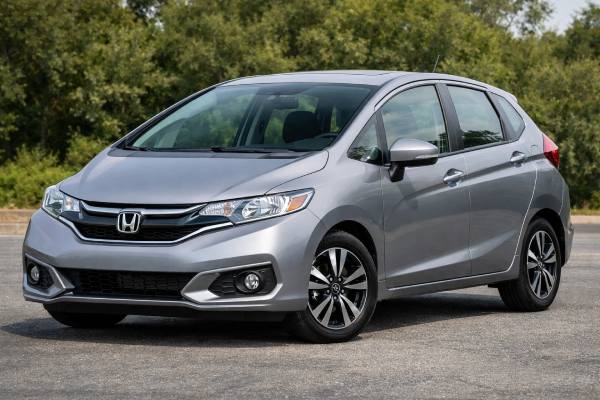
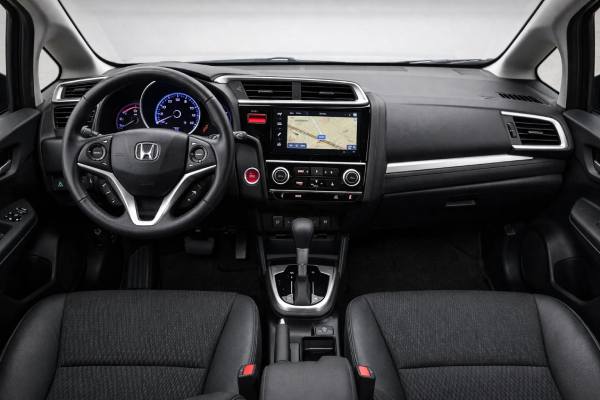
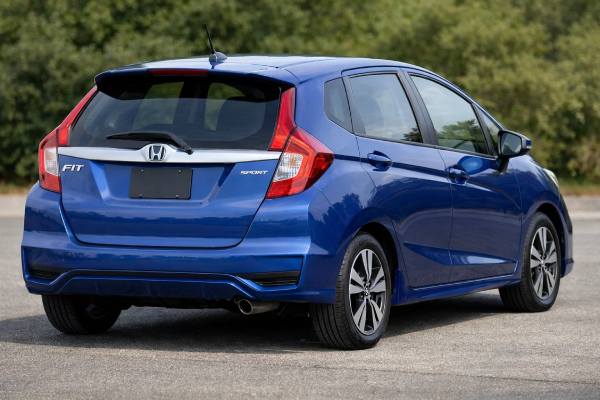
The 2018–2020 facelift Honda Fit (GK5) sits in a sweet spot for small-car engineering: a light, stiff platform; a simple front-wheel-drive layout; and a 1.5-liter L15B1 that delivers usable power without demanding premium fuel. It is also one of the last modern subcompacts built around genuine packaging advantages—its tall roof, low cowl, and “Magic Seat” rear layout make it feel like a class larger in day-to-day use.
For owners, the story is mostly about consistency. The drivetrain rewards routine fluid service, the cabin and controls age well, and the car’s visibility and tight turning circle make city driving easy. Where the Fit asks for attention is typical Honda-detail territory: keep up with oil and CVT fluid quality, don’t ignore suspension knocks, and verify recall completion. Do those basics, and this facelift GK5 can be a high-mileage, low-drama daily driver.
Quick Specs and Notes
- Excellent cabin and cargo flexibility for the footprint; rear seat design is a real advantage in daily use.
- Light curb weight and responsive chassis make it efficient and easy to place in traffic and tight streets.
- The L15B1 tolerates regular unleaded well and stays economical when serviced on schedule.
- CVT-equipped cars are sensitive to fluid condition; prioritize documented CVT fluid changes.
- Plan oil changes about every 10,000 km (6,000 mi) or 12 months (shorter for short trips or severe use).
Navigate this guide
- What the GK5 facelift changed
- Technical specs and service capacities
- Trims, options, and safety systems
- Reliability issues and recalls
- Maintenance plan and buyer’s checklist
- Driving character and real-world economy
- How it stacks up to rivals
What the GK5 facelift changed
The facelift 2018–2020 Honda Fit (GK5) looks like a small update, but it matters in ownership because Honda typically uses mid-cycle refreshes to polish the “edges” drivers notice every day: safety tech availability, infotainment stability, and small durability details. Most markets kept the same core package—MacPherson strut front suspension, torsion beam rear axle, and a compact engine bay that makes routine service straightforward—while improving equipment strategy and, in some trims, driver-assistance features.
From an engineering and usability point of view, the Fit’s biggest advantage remains packaging. The upright roof and fuel-tank placement under the front seats enable the rear “Magic Seat” configurations, letting you carry tall items behind the front seats or fold the rear bench flat for long loads. The facelift years continue that formula, which is why these cars are often chosen by owners who move gear, commute in dense cities, or want a single car that can do “small car” parking with “small crossover” practicality.
The L15B1 1.5-liter is a modern Honda four-cylinder tuned for efficiency and smoothness rather than low-end shove. The Fit does not feel fast off idle, but it builds speed cleanly and stays happy at higher rpm, which suits a lightweight hatchback. The real distinction is transmission choice: a 6-speed manual (where offered) gives you the full 130 hp experience and stronger driver engagement, while the CVT prioritizes smoothness and economy. Neither is “wrong,” but they lead to different maintenance priorities—CVT fluid condition matters more than most buyers expect.
For daily use, the facelift Fit is at its best as a calm, efficient tool that happens to be fun when roads tighten. It steers lightly, rotates predictably, and rarely surprises the driver. If your priorities are low operating costs, easy parking, and cargo flexibility, it’s a uniquely rational choice—especially if you buy with service history and recall completion in mind.
Technical specs and service capacities
Below are the most useful specifications for the 2018–2020 facelift Honda Fit (GK5) with the L15B1 1.5-liter. Exact figures can vary by market, trim, wheels, and transmission, so treat this as a practical spec sheet for ownership decisions rather than a homologation document.
Powertrain and efficiency (L15B1)
| Item | Specification |
|---|---|
| Code | L15B1 |
| Layout | Inline-4, DOHC, 16-valve |
| Displacement | 1.5 L (1497 cc) |
| Induction | Naturally aspirated |
| Fuel system | Direct injection (market-dependent application) |
| Compression ratio | 11.5:1 (typical for this application) |
| Bore × stroke | 73.0 × 89.4 mm (2.87 × 3.52 in) |
| Max power | 130 hp (96 kW) @ ~6,600 rpm (6MT; varies by market) |
| Max torque | ~155 Nm (114 lb-ft) @ ~4,600 rpm |
| Timing drive | Chain |
Transmission and driveline
| Item | Specification |
|---|---|
| Drive type | FWD |
| Manual | 6-speed manual (where offered) |
| Automatic | CVT (where offered) |
| Differential | Open |
Chassis and dimensions (typical)
| Item | Specification |
|---|---|
| Front suspension | MacPherson strut |
| Rear suspension | Torsion beam |
| Steering | Electric power steering |
| Length | ~4,100 mm (161.4 in) |
| Width | ~1,695 mm (66.7 in) |
| Height | ~1,525 mm (60.0 in) |
| Wheelbase | ~2,530 mm (99.6 in) |
| Turning circle | ~10.6 m (34.8 ft) |
| Curb weight | ~1,120–1,190 kg (2,470–2,620 lb) depending on trim/transmission |
| Fuel tank | ~40 L (10.6 US gal / 8.8 UK gal) |
Performance (real-world expectations)
| Metric | Typical result |
|---|---|
| 0–100 km/h (0–62 mph) | ~8.5–10.5 s (manual quicker than CVT, varies by test/tires) |
| Top speed | ~185–195 km/h (115–121 mph) depending on gearing and market |
| Braking 100–0 km/h | ~36–40 m (118–131 ft), tire-dependent |
Fluids and service capacities (owner-focused)
| System | Specification (common guidance) |
|---|---|
| Engine oil | 0W-20; capacity typically ~3.6–3.9 L (3.8–4.1 US qt) with filter |
| Coolant | Long-life Honda-type coolant; capacity varies by market |
| Manual trans fluid | Honda MTF (market equivalent); capacity varies |
| CVT fluid | Honda-spec CVT fluid (market equivalent); drain-and-fill volume varies |
| A/C refrigerant | R-134a (most markets in these years); charge varies by market |
Electrical (typical)
| Item | Specification |
|---|---|
| 12V battery | Small JIS/Group-size equivalent; capacity and CCA vary |
| Spark plugs | Iridium-type; gap and part number vary by market |
Safety and driver assistance (high-level)
| Item | Notes |
|---|---|
| Structure | Strong crash structure for the class; multiple airbags standard in most markets |
| ADAS | Honda Sensing availability depends on trim/market (AEB, lane support, etc.) |
If you want one practical takeaway from the spec sheet: the Fit’s combination of low mass, tall cabin, and efficient gearing is the reason it feels more capable than its numbers suggest. The car’s “efficiency” is not only fuel economy—it’s also how much space and usability you get per meter of length.
Trims, options, and safety systems
Trim naming varies by country, but the facelift 2018–2020 Fit (GK5) generally follows a simple ladder: a base grade focused on value, a mid-grade that adds comfort and wheels, and upper trims that bring the best infotainment and driver assistance. What matters for buyers is not the badge on the hatch, but the equipment differences that change ownership cost and satisfaction.
Trims and options that affect ownership
- Transmission availability: Manuals tend to appear on lower and some mid trims (market-dependent), while CVT availability is broader. If you want the most “lively” Fit experience, the manual is the enthusiast pick. If you want smooth commuting, the CVT is typically the easier daily companion.
- Wheel and tire packages: Larger wheels sharpen steering response but can reduce ride comfort and increase tire cost. A Fit on smaller wheels often rides better on broken pavement and costs less to keep shod.
- Infotainment and cameras: Upper trims more often include better displays, smartphone integration (market dependent), and camera systems. These features matter because repairs can be expensive compared with the value of an older subcompact.
- Climate and convenience equipment: Automatic climate control, heated seats, and keyless entry add comfort but also add modules and switches that can fail with age. None are deal-breakers; you just want them all working at purchase.
Quick identifiers can help when listings are vague. Look for steering-wheel button layouts (often different with ADAS), camera presence at the windshield area (forward camera), and the shape of the center screen bezel. If you can decode the VIN with a dealer parts counter, you can confirm factory-installed safety and infotainment equipment.
Safety ratings: what to know for 2018–2020
Safety ratings depend on test body, region, and test year. In the U.S., the Fit is well-regarded for crashworthiness in the class, but equipment such as headlights and front crash prevention can change results. A key nuance: some crash ratings apply across multiple model years, while headlight and ADAS ratings are often trim-specific.
Safety systems and ADAS (driver assistance)
Depending on market and trim, you may see:
- AEB (automatic emergency braking): Helps reduce or avoid frontal impacts. It can require recalibration after windshield replacement or front-end repairs.
- Lane keeping support: Typically camera-based, sensitive to windshield condition and alignment.
- Adaptive cruise control (where offered): Great for highway use, but radar alignment matters after minor bumps.
- Stability control and ABS: Standard essentials that age well; most issues here are sensor-related (wheel speed sensors) rather than hydraulic failures.
For families, also check rear seat child-seat provisions. Most Fits have practical ISOFIX/LATCH arrangements, but the ease-of-use can vary; a quick inspection for anchor accessibility is worth doing before you buy.
Bottom line: if safety tech matters, shop by equipment first and trim second. A well-optioned mid-trim with the right safety package is often a better buy than the “top” trim without it.
Reliability issues and recalls
The facelift GK5 Fit is generally durable, but reliability is best understood as patterns—what fails often, what fails rarely, and what becomes expensive if ignored. Below is a practical map of common issues by prevalence and cost tier. Mileage bands are approximate and assume normal mixed driving.
Common, usually low-to-medium cost
- Suspension clunks and knocks (40,000–120,000 km / 25,000–75,000 mi):
Symptoms: Front-end rattles over small bumps, vague steering, uneven tire wear.
Likely causes: Stabilizer links, strut mounts, control-arm bushings, or worn dampers.
Remedy: Replace worn links/bushings; align after suspension work. This is normal wear, not a “bad car” sign—just negotiate accordingly. - Brake service sensitivity (any mileage, city use):
Symptoms: Pulsation, squeal, or poor pedal feel.
Likely causes: Cheap pads/rotors, sticking slide pins, infrequent brake-fluid changes.
Remedy: Quality pads/rotors, clean and lubricate slides, flush brake fluid on time. - 12V battery and charging complaints (3–6 years typical):
Symptoms: Slow crank, start/stop glitches (where fitted), random warning lights.
Likely causes: Small battery capacity, short-trip usage, aging battery.
Remedy: Battery test, clean grounds, confirm alternator output.
Occasional, can become medium-to-high cost
- CVT judder or sluggish response (60,000–160,000 km / 40,000–100,000 mi):
Symptoms: Shudder on takeoff, “rubber band” feel, delayed engagement.
Likely causes: Old or incorrect CVT fluid, driving style that overheats fluid, or internal wear in neglected units.
Remedy: Drain-and-fill with the correct fluid (often repeated), reset/relearn where applicable, and avoid towing or heavy overheating. If symptoms persist, walk away unless priced for repair. - Direct-injection carbon buildup (time and driving-style dependent):
Symptoms: Rough idle, reduced response, misfires (often later in life).
Likely causes: Intake valve deposits on DI engines, made worse by short trips.
Remedy: Driving that reaches full temperature, quality fuel, and cleaning when symptoms justify it (not as a blind routine service). - A/C performance drift (5–8 years typical):
Symptoms: Weak cooling at idle, intermittent compressor cycling.
Likely causes: Low refrigerant, condenser damage, or clutch/compressor wear (system type varies).
Remedy: Proper leak test and recharge to spec; avoid “top-off” shortcuts.
Rare, but important to verify
- Recalls and service campaigns: Across 2018–2020 Hondas, common themes include fuel system campaigns and camera-related fixes in some regions. The key ownership move is simple: run the VIN through official recall tools and ask for completion documentation.
- ADAS calibration needs after repairs: If your Fit has camera- or radar-based systems, windshield replacement and front-end repairs may require calibration. A car with persistent ADAS warnings can turn into a diagnostic bill.
Pre-purchase checks to request
- Full maintenance history (oil intervals, brake fluid, coolant history).
- CVT fluid change proof (if CVT).
- Evidence of recall completion (dealer printout or service invoice).
- Test drive from cold: listen for abnormal noises, feel for transmission shudder, confirm A/C and infotainment behavior.
A Fit that feels smooth from a cold start, shifts (or “steps”) cleanly, and has documented fluid services is usually the good kind of boring—and boring is exactly what you want in a used daily driver.
Maintenance plan and buyer’s checklist
A facelift GK5 Fit is not demanding, but it is responsive to routine maintenance. The goal is to keep fluids fresh, catch wear items early, and avoid the “small car trap” where owners skip services because the vehicle is inexpensive. Below is a practical schedule you can use to plan ownership; shorten intervals for heavy city use, short trips, hot climates, or frequent high-speed driving.
Practical maintenance schedule (distance or time)
- Engine oil and filter: every 10,000 km (6,000 mi) or 12 months; consider 7,500 km (4,500 mi) for short-trip severe use. Use the correct viscosity (commonly 0W-20) and quality filters.
- Tire rotation and inspection: every 10,000–12,000 km (6,000–7,500 mi); check inner-shoulder wear and keep pressures correct.
- Engine air filter: inspect every 20,000 km (12,000 mi); replace typically 30,000–45,000 km (20,000–28,000 mi) depending on dust.
- Cabin air filter: every 15,000–30,000 km (10,000–20,000 mi) or yearly for urban/pollen-heavy use.
- Brake fluid: every 3 years (or sooner in humid climates). This is a longevity service for calipers, ABS components, and pedal feel.
- Coolant: follow the factory interval (often long-life); plan an initial change around 5 years, then per schedule thereafter.
- Spark plugs: typically 100,000–160,000 km (60,000–100,000 mi) depending on engine and market specification.
- CVT fluid (if equipped): target 40,000–60,000 km (25,000–37,000 mi) drain-and-fill intervals for longevity, especially with city driving.
- Manual transmission fluid (if equipped): 60,000–100,000 km (37,000–62,000 mi) is a sensible range for shift feel and bearing life.
- Serpentine belt and hoses: inspect annually after year 5; replace on condition (cracks, glazing, noise).
- 12V battery: test annually after year 3; many small batteries last 3–6 years depending on climate and trip length.
Fluid specs and “decision” capacities
Because specifications vary by VIN and market, treat these as the ownership-level targets to verify before you buy fluids:
- Engine oil: commonly 0W-20; capacity typically just under 4 liters with filter.
- CVT: use only the correct Honda-spec CVT fluid. Incorrect fluid is a common cause of drivability complaints.
- Coolant: long-life Honda-type coolant; avoid mixing unknown chemistries.
Essential torque values (owner-relevant)
These can vary by model year and market, so verify in your service information, but typical “critical fasteners” to confirm include:
- Wheel lug nuts
- Spark plugs
- Oil drain plug
- Front caliper bracket bolts (if doing brakes)
If you do your own service, the smartest approach is to use factory torque specs for these few items rather than guessing.
Buyer’s guide: what to inspect and what to budget
Checklist (walk-around and under-hood):
- Uneven tire wear (alignment or worn suspension bushings).
- Oil seepage around the valve cover and timing cover area.
- Coolant level stability and clean overflow bottle (no oily residue).
- CVT behavior: smooth takeoff, no judder, no delayed engagement.
- A/C performance at idle and while driving.
- All cameras and parking sensors (if equipped) working consistently.
- Signs of prior body repair around the radiator support and headlights.
Common reconditioning items: tires, front brakes, alignment, a battery, and suspension links. None are unusual; the point is to budget them realistically so a “cheap” Fit does not become an annoying Fit.
Durability outlook: with fluids kept fresh and recalls verified, the facelift GK5 Fit is one of the more dependable small hatches to run long-term—especially for owners who value function over flash.
Driving character and real-world economy
The facelift Honda Fit (GK5) earns its reputation not by being powerful, but by feeling coherent. Everything is light—mass, controls, and responses—so the car reacts quickly without needing big horsepower. Around town, visibility is excellent, the hood line is low, and the turning circle makes U-turns and parking stress-free. That “easy-to-place” feeling is a major reason Fits rack up high daily mileage in cities.
Ride, handling, and NVH
- Ride quality: On smaller wheels and taller sidewalls, the Fit rides surprisingly well for a short-wheelbase car. Larger wheels sharpen the initial response but can make sharp edges (potholes, expansion joints) feel busier.
- Handling balance: The chassis is stable and predictable. You can feel the rear torsion beam working over mid-corner bumps, but it rarely feels nervous. The Fit prefers smooth, clean inputs rather than abrupt mid-corner corrections.
- Steering: Light at parking speeds and reasonably direct on the move. Feedback is modest (typical EPS), but accuracy is strong.
- Braking feel: Usually firm and easy to modulate when the brakes are in good condition. A “soft” pedal is often old brake fluid or cheap pads, not an inherent flaw.
- Noise: Expect more road and tire noise than larger cars at highway speed. Wind noise is generally controlled, but tires make a big difference.
Powertrain character: L15B1 with manual vs CVT
The L15B1’s personality is “rev-friendly.” It is smooth and willing, but it does not deliver strong low-rpm torque like a turbo engine. The manual transmission suits that character: you can keep it in the power band and enjoy the engine’s clean pull. The CVT aims for efficiency and smoothness; it will hold rpm under load, which some drivers interpret as “droning,” but it can also make the car feel more relaxed in stop-and-go traffic.
Real-world efficiency
Expect results to vary strongly with speed and climate:
- City driving: Typically efficient, especially with gentle throttle and fully warmed engine.
- Highway at 100–120 km/h (60–75 mph): Efficiency is still good, but the Fit’s small-car aerodynamics mean speed increases cost more than you might expect.
- Cold weather: Short trips can raise fuel consumption noticeably because the engine spends more time warming up, and cabin heat demand is relatively high for a small-displacement engine.
A practical ownership note: tires and alignment matter. A Fit on the wrong tires or with toe misalignment can lose a surprising amount of economy and feel “draggy.” Keep tire pressures correct and align the car after suspension work.
Useful performance metrics that change the verdict
- Passing power (80–120 km/h / 50–75 mph): Adequate, but plan your merges. The Fit is happiest when you downshift (manual) or request steady throttle (CVT).
- Stability under load: With passengers and cargo, the Fit remains composed, but acceleration becomes more “measured.” This is normal for the class.
If you want a small car that feels honest and responsive rather than fast, the facelift GK5 Fit delivers. It rewards smooth driving, routine service, and sensible tires more than any “upgrade” part ever will.
How it stacks up to rivals
The 2018–2020 facelift Honda Fit (GK5) competes in a crowded space, but it has two advantages that still stand out: packaging and a cohesive driving feel. Rivals can match it on paper—sometimes even beat it on horsepower or infotainment size—but the Fit’s day-to-day usefulness is hard to copy.
Versus Toyota Yaris (and similar simplicity-focused subcompacts)
- Fit advantage: More interior flexibility and cargo solutions. The rear seat design and tall cabin make the Fit feel “multi-purpose.”
- Yaris advantage: Often a simpler ownership story and sometimes lower repair variability depending on market and sourcing.
- Decision point: If you carry bulky items or value cabin versatility, the Fit is usually the better tool.
Versus Ford Fiesta (where available)
- Fit advantage: Practicality and a generally calmer long-term ownership profile, especially when comparing automatic transmissions.
- Fiesta advantage: Sharper “sporty” feel in some trims and, with the right configuration, more playful dynamics.
- Decision point: If you want fun first and can be picky about transmission history, Fiesta can charm. If you want daily usability with fewer surprises, Fit tends to win.
Versus Hyundai Accent / Kia Rio
- Fit advantage: Packaging, visibility, and a more “industrial design” interior layout for hauling and city use.
- Accent/Rio advantage: Often strong value, good warranties in many markets, and competitive fuel economy.
- Decision point: Fit is often the better long-term ergonomic choice; the Korean twins can be the better budget value if condition and service records are strong.
Versus Honda Civic (used)
Cross-shopping happens because a used Civic can cost similar money.
- Fit advantage: Easier parking, more upright cargo space, and often lower tire and brake costs.
- Civic advantage: Quieter highway manners, stronger passing power, and a more “grown-up” ride.
- Decision point: If you do lots of highway miles, Civic can be worth the step up. If your life is urban, the Fit’s shape and turning circle matter more than you expect.
The simple verdict
Choose the facelift GK5 Fit if you value:
- maximum usefulness per footprint
- predictable driving feel
- strong efficiency without complicated powertrains
- a maintenance plan you can actually follow
Avoid it (or be extra selective) if you need effortless highway power, you dislike CVT driving feel, or you cannot verify service history and recall completion. In the right ownership hands, the Fit is one of the smartest small-car buys of its era.
References
- Specifications – 2020 Honda Fit 2020 (Technical Guide)
- EPA Fuel-Economy Ratings – 2020 Honda Fit 2020 (Official Economy Data)
- 2018 Honda Fit 2018 (Safety Rating)
- Gas Mileage of 2020 Honda Fit 2020 (Official Fuel Economy)
- Vehicle Detail Search – 2020 HONDA FIT | NHTSA 2020 (Recall Database)
Disclaimer
This article is for informational purposes only and is not a substitute for professional diagnosis, inspection, or repair. Specifications, torque values, service intervals, and procedures can vary by VIN, market, model year, and equipment. Always verify details using official service information and documentation for your exact vehicle before performing maintenance or repairs.
If you found this guide helpful, please consider sharing it on Facebook, X (Twitter), or your favorite forum to support our work.