

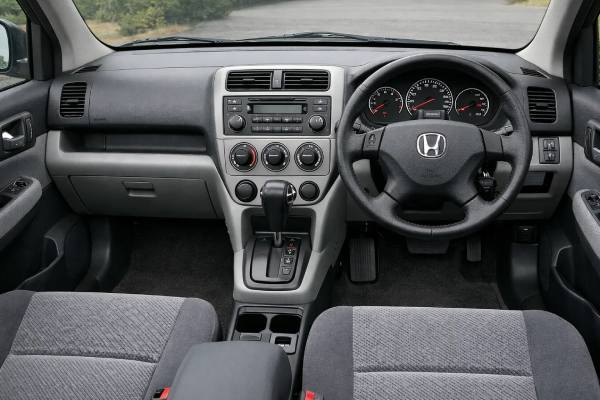
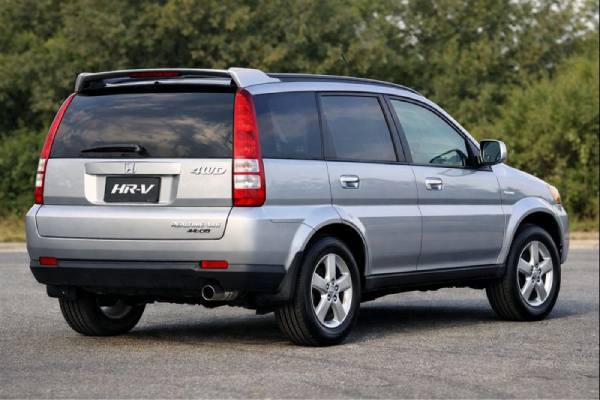
The facelift 2002–2005 Honda HR-V GH4 with Real Time 4WD and the D16W1 1.6 is a very “Honda” solution to small-SUV ownership: light, simple, and engineered around everyday usability rather than brute capability. The drivetrain is the headline—front-wheel drive most of the time, with the rear axle engaging automatically when the front tyres slip—so you get extra traction in rain, slush, and gravel without the fuel penalty of full-time AWD. The D16W1 is also a low-drama, port-injected engine that rewards basic maintenance more than expensive parts.
What makes this HR-V worth understanding today is how its strengths depend on condition: a tight suspension, fresh fluids (especially in the rear diff), and rust-free structure can make it feel surprisingly modern for commuting and winter duty. Neglect those, and small issues can stack quickly.
Owner Snapshot
- Real Time 4WD is excellent for wet roads and light snow, but it’s not a low-range off-road system.
- The D16W1 is durable with regular oil changes and a timely timing-belt service.
- Rear differential shudder on tight turns usually points to overdue Dual Pump Fluid, not a “bad AWD.”
- Plan for rust inspection yearly in winter climates, especially sills and rear arches.
- Change engine oil about every 8,000–10,000 km (or 12 months), whichever comes first.
Navigate this guide
- HR-V GH4 facelift in context
- D16W1 4WD specs and dimensions
- Equipment, trims, and safety tech
- Reliability patterns and common faults
- Maintenance plan and buying tips
- Road feel and real economy
- Rivals: what to cross-shop
HR-V GH4 facelift in context
Honda’s first-generation HR-V sits in a unique spot: smaller and lighter than most early-2000s compact SUVs, but taller and more versatile than the hatchbacks it shares DNA with. The 2002–2005 facelift models typically brought minor styling, lighting, and trim updates (market dependent), but the core engineering stayed focused on efficiency, packaging, and predictable road manners.
Real Time 4WD is the defining feature of the GH4. It’s best understood as an “on-demand” traction system. Under steady cruising, the HR-V behaves like a front-driver. When the front wheels rotate faster than the rears (slip), a dual-pump rear differential system builds hydraulic pressure and progressively engages the rear axle. The advantage is simple: fewer driveline losses in normal driving and fewer driver decisions in bad weather. The trade-off is also simple: this is not designed for sustained, heavy off-road use where you’d want a low range, a locking centre differential, or a crawl ratio.
The D16W1 engine complements that approach. It’s a naturally aspirated 1.6-liter, port-injected inline-four tuned for midrange usability. Power is modest, but the vehicle’s relatively low weight helps. What owners tend to appreciate isn’t speed; it’s the engine’s tolerance for daily use and its generally straightforward service needs compared with more complex later-era direct-injection setups.
From an ownership point of view, the HR-V GH4 is a “condition-driven” vehicle. A cared-for example can feel tight, efficient, and trustworthy. A neglected one can develop the familiar early-2000s list: worn suspension bushes, sticky brake calipers, tired engine mounts, and (most importantly) corrosion in the wrong places. The smart way to evaluate it is to treat it like a well-made tool: check structure and fluids first, then judge cosmetics.
Where it still shines today
- Secure traction for winter commuting on proper tyres
- Compact footprint with SUV seating position and practical cargo access
- Mechanical simplicity compared with many newer AWD crossovers
Where expectations should be realistic
- Modest passing power, especially fully loaded
- Highway noise and older safety design compared with modern crossovers
- Rust and age-related rubber wear matter more than the odometer alone
D16W1 4WD specs and dimensions
Specs vary slightly by market, body style, and equipment, so treat the tables below as typical for the facelift-era HR-V GH4 Real Time 4WD with the D16W1 (105 hp) rather than a promise for every VIN. When you’re buying parts or fluids, always confirm with your registration/VIN data.
Powertrain and efficiency
| Item | Typical spec (GH4 D16W1) |
|---|---|
| Engine code | D16W1 |
| Layout | Inline-4, naturally aspirated |
| Valvetrain | SOHC, 16 valves (4 valves/cyl) |
| Displacement | 1.6 L (1,590 cc) |
| Fuel system | PGM-FI (port injection) |
| Max power | 105 hp (77 kW) @ ~6,200 rpm |
| Max torque | ~135–138 Nm @ ~3,400 rpm |
| Timing drive | Belt |
| Emissions standard | Often Euro 3 (market dependent) |
| Rated economy (combined) | ~8.6 L/100 km (typical published figure) |
| Real-world highway @ 120 km/h | ~9.0–9.8 L/100 km (tyres, load, wind matter) |
Transmission and driveline
| Item | Typical spec |
|---|---|
| Transmission | 5-speed manual (common on GH4) |
| Drive type | Real Time 4WD (on-demand AWD) |
| Rear differential | Dual-pump type; uses specific Honda Dual Pump Fluid |
| Off-road hardware | No low range; no manual centre lock |
Chassis and dimensions
| Item | Typical spec (5-door GH4) |
|---|---|
| Suspension (front) | MacPherson strut |
| Suspension (rear) | Trailing arm / compact multi-link-style layout (market dependent wording) |
| Steering | Power-assisted rack-and-pinion |
| Brakes | Front discs; rear drums or discs depending on market/trim |
| Wheelbase | ~2,450 mm |
| Length | ~4,110 mm |
| Width | ~1,695 mm |
| Height | ~1,570–1,580 mm |
| Turning circle (kerb-to-kerb) | ~10.2–10.6 m (varies) |
| Kerb weight | ~1,250–1,320 kg (equipment dependent) |
| Fuel tank | ~55 L |
| Cargo volume | Often quoted ~285 L seats up (method varies) |
Performance and capability
| Metric | Typical value |
|---|---|
| 0–100 km/h (0–62 mph) | ~12–13 s |
| Top speed | ~160–165 km/h |
| Towing | Often limited; many markets rate it low or not at all—verify locally |
| Ground clearance | Usually quoted in the ~170–190 mm range depending on tyres |
Fluids and service capacities
These are the areas where people most often make expensive mistakes—especially the rear differential. If you only remember one thing, remember this: the rear diff needs the correct Dual Pump Fluid and periodic changes.
| System | Typical fluid guidance (verify by VIN) |
|---|---|
| Engine oil | Quality 5W-30 or 5W-40 (climate dependent); ~3.3–3.7 L with filter |
| Coolant | Honda-compatible long-life coolant; typically ~4–5 L total system fill |
| Manual transmission | Honda MTF or equivalent; typically ~1.6–1.9 L |
| Rear differential | Honda Dual Pump Fluid (often DPSF); typically around ~1.0–1.2 L |
| Brake fluid | DOT 3/4; flush interval matters more than brand |
Electrical
| Item | Typical spec |
|---|---|
| Charging system | Conventional alternator (output varies) |
| 12V battery | Common small JIS size; capacity and CCA vary by market |
| Spark plugs | Heat range and type vary; correct gap matters |
Key torque specs (practical “must know”)
| Fastener | Typical torque |
|---|---|
| Wheel lug nuts | ~108 Nm |
| Engine oil drain plug | Commonly ~39 Nm (verify plug type) |
Equipment, trims, and safety tech
Trim naming for the early HR-V can be confusing because markets used different grade labels and option bundles. Instead of memorizing names, it’s smarter to identify the vehicle by body style, transmission, and 4WD hardware—then confirm equipment from the VIN plate, build sticker, and what you physically see.
Trims and options that matter most
On the GH4 Real Time 4WD facelift, the biggest functional differences typically come from:
- Brake setup (rear drums vs rear discs): disc setups generally feel better under repeated use and are easier to inspect, but condition matters more than the hardware type.
- Tyre and wheel package: narrower tyres often behave better in slush and standing water; wider tyres can improve dry grip but raise road noise and can dull steering feel.
- Convenience equipment: air conditioning performance, heated mirrors, and seat heating (where fitted) matter a lot for year-round usability.
Quick identifiers you can use during a walkaround:
- “Real Time 4WD” badging (varies), rear driveshaft presence, and rear differential housing visible underneath.
- ABS warning lamp check at key-on (lamp should illuminate briefly, then go out).
- Airbag markings on steering wheel and passenger dash.
- Rear brake type visible through the wheel (disc caliper vs drum backing plate).
Safety systems: what’s typical for 2002–2005
This generation predates modern driver assistance. Expect basic passive safety and limited electronics:
- Front airbags are common (driver and passenger).
- ABS is common but not guaranteed on all markets/trims.
- Electronic Stability Control (ESC) is usually not present on this era HR-V.
- ISOFIX/LATCH availability depends on market and year; check rear seat anchor points and the owner documentation.
Because equipment is simple, safety is largely determined by:
- structure and restraint design of the era, and
- tyre quality, brake condition, and driver behavior.
Safety ratings: how to read them for this model
For the first-gen HR-V, you may not find a clean, apples-to-apples crash rating across every region. Testing protocols changed dramatically over time, and many rating systems focused on higher-volume models. When ratings do exist, read the fine print:
- Exact year and body style tested (3-door vs 5-door can differ).
- Test standard used in that period (older tests can be less representative of modern impact conditions).
- Safety equipment on the tested car, since airbags and ABS were not always standard everywhere.
A practical owner approach is to treat the HR-V GH4 like most early-2000s small SUVs: drive it as a momentum vehicle (smooth, planned inputs), keep tyres matched and fresh, and keep brakes and suspension in top shape. That combination will do more for your real-world safety than chasing a single headline rating.
Reliability patterns and common faults
A well-kept HR-V GH4 is usually dependable, but age creates predictable weak points. The most useful way to think about reliability is prevalence (how often it happens) and cost tier (how painful it is)—because some “common” issues are cheap, while some “rare” ones are wallet-heavy.
Common, low to medium cost
- Rear differential shudder in tight turns
- Symptoms: vibration or hopping when parking or making slow, tight turns.
- Likely cause: old/incorrect rear diff fluid; friction characteristics no longer match the dual-pump system.
- Remedy: drain and refill with the correct Honda Dual Pump Fluid; sometimes requires a short “figure-eight” drive to circulate; repeat if badly neglected.
- Suspension bush wear and front end knocks
- Symptoms: clunks over bumps, vague steering, uneven tyre wear.
- Likely cause: aged control-arm bushes, ball joints, anti-roll bar links.
- Remedy: inspect systematically; replace in pairs; align after major work.
- Brake drag or uneven braking
- Symptoms: car pulls, hot wheel, poor fuel economy, squeal.
- Likely cause: sticking caliper slide pins (front), worn drums/shoes (rear), old brake fluid.
- Remedy: service hardware, flush fluid, confirm parking brake adjustment.
- A/C performance drop
- Symptoms: weak cooling at idle, cycling, or musty smell.
- Likely cause: aged condenser, low refrigerant, tired compressor clutch, clogged cabin filter (if equipped).
- Remedy: leak test, correct refrigerant charge, replace worn components as needed.
Occasional, medium to high cost
- Timing belt overdue risk (engine survival item)
- Symptoms: often none until it fails; then no-start and potential internal damage (engine family dependent).
- Cause: belt age, tensioner wear, water pump bearing play.
- Remedy: replace belt kit proactively and include water pump; treat “unknown history” as overdue.
- Cooling system aging
- Symptoms: slow coolant loss, overheating in traffic, heat not consistent.
- Cause: radiator end-tank aging, hose softening, thermostat fatigue.
- Remedy: pressure test, replace weak components, refresh coolant.
- Rust and corrosion (severity varies by region)
- Symptoms: bubbling paint, crunchy sills, flaky rear substructure, suspension mounting weakness.
- Cause: road salt, trapped moisture in seams, poor prior repairs.
- Remedy: inspect underside carefully; walk away from structural rust near suspension mounts.
Rare, but worth knowing
- Fuel delivery or sensor faults (O2 sensor, crank sensor, etc.)
- Symptoms: intermittent stalling, poor idle, check-engine light.
- Remedy: diagnose with proper scan data and wiring checks; avoid guessing.
Recalls, service actions, and how to verify
For a 2002–2005 vehicle, recall status depends heavily on where it was sold and imported. Your best process is:
- Run the VIN through an official Honda recall checker for your region.
- Ask a dealer to confirm completion in their system if records exist.
- Treat airbag-related recalls as urgent, especially on older vehicles with unknown history.
Even if your region’s official database doesn’t show older campaigns (or imported vehicles fall outside the dataset), a dealer can often tell you whether a known safety campaign applies and what the remedy is.
Maintenance plan and buying tips
If you want the HR-V GH4 to stay “Honda reliable,” you’re not chasing perfection—you’re staying ahead of age. The winning strategy is fresh fluids, rubber condition, and corrosion control.
Practical maintenance schedule (distance or time)
- Engine oil and filter: every 8,000–10,000 km or 12 months. Short trips, cold weather, and city idling justify the shorter end.
- Air filter: inspect every 15,000 km; replace around 30,000 km (dusty regions sooner).
- Cabin filter (if equipped): every 15,000–30,000 km or yearly if you notice fogging/odors.
- Coolant: every 4–5 years (or per the coolant type used); always bleed air properly after service.
- Brake fluid: every 2 years regardless of mileage.
- Manual transmission fluid: every 60,000–80,000 km; sooner if shifts feel notchy or the car tows/works hard.
- Rear differential (Dual Pump) fluid: every 40,000–60,000 km, and immediately if there’s shudder on turns.
- Spark plugs: commonly every 40,000–60,000 km for standard plugs; longer if equipped with long-life plugs—confirm what’s installed.
- Valve clearance (if applicable/adjustable): check around 40,000–60,000 km or if idle quality changes.
- Timing belt and water pump: if history is unknown, do it now. Otherwise, a conservative rule is roughly every 90,000–100,000 km or 6–7 years (whichever comes first), with tensioner and water pump.
- Serpentine/aux belt: inspect yearly; replace at first signs of cracking or squeal that tensioning can’t solve.
- Tyre rotation and alignment: rotate every 10,000 km; align after suspension work or if tyre wear is uneven.
- 12V battery: test yearly after year 3; typical replacement window is 4–6 years.
Fluid specs and “don’t guess” items
- Use a Honda-compatible coolant and don’t mix unknown chemistries.
- Use the correct Honda manual transmission fluid or a proven equivalent that matches the friction requirements.
- Use the correct Honda Dual Pump Fluid in the rear differential—this one is not optional.
Pre-purchase inspection checklist (high value items)
- Rust check (priority #1): sills/rockers, rear arches, floor edges, rear subframe mounts, and the area around suspension pickup points. Surface rust is common; structural corrosion is a deal-breaker.
- AWD behavior: do slow, tight figure-eights in a parking lot. Any binding/shudder suggests rear diff fluid neglect (often fixable) but you should price it in.
- Cooling system stability: confirm stable temperature at idle with the heater on; check for crusty coolant residue and tired hoses.
- Suspension feel: listen for knocks; check tyre wear pattern; expect some wear, but avoid cars that feel loose and unaligned.
- Service history proof: timing belt documentation, fluid changes, and any recall completion paperwork.
- Electrical and interior: windows, central locking, blower fan speeds, A/C cold performance.
Durability outlook
A clean, rust-controlled GH4 with documented timing belt service and routine fluid changes can be a long-term daily driver. The cars that become money pits are usually the ones with hidden corrosion, mismatched tyres, and neglected driveline fluids. Buy the best structure you can, then “baseline” it with fluids and rubber. That’s the formula.
Road feel and real economy
The HR-V GH4 drives more like a tall hatchback than a traditional SUV. That’s a compliment if you want easy placement in traffic and predictable reactions on narrow roads. It’s also why a good example feels tighter than you might expect for its age.
Ride, handling, and NVH
- City ride: generally firm but controlled. Worn dampers or perished bushes quickly turn it into a choppy, noisy experience, so suspension condition matters a lot.
- Steering: typically light to medium effort with decent accuracy. It’s not “sports car” talkative, but a well-aligned HR-V tracks confidently.
- Highway stability: respectable for the size, but crosswinds and tyre choice can make it feel busier than larger SUVs.
- Noise levels: expect audible road and wind noise at motorway speeds. Fresh door seals, good tyres, and intact underbody liners help more than people expect.
Powertrain character (D16W1 + 5MT)
With 105 hp, the D16W1 is a momentum-friendly engine. It’s happiest when you let it rev a bit:
- Throttle response: clean and predictable, especially compared with early turbo setups.
- Midrange: usable but not punchy—plan passes early and downshift rather than flooring it in a tall gear.
- Gearbox feel: typically positive when fluid is fresh; old fluid can make cold shifts stiff.
- Loaded driving: four adults and luggage will expose the power limit. It’ll do the job, but you’ll work the shifter.
Real-world efficiency
Published combined figures around the high-8s (L/100 km) can be realistic if the car is healthy and tyres are correct. In daily use, most owners land in these bands:
- City: roughly 9.5–11.0 L/100 km depending on traffic and warm-up time.
- Highway (100–120 km/h): roughly 8.5–9.8 L/100 km depending on wind, roof racks, and tyre choice.
- Mixed: roughly 9.0–10.0 L/100 km.
Big swings usually come from:
- underinflated or mismatched tyres,
- dragging brakes,
- tired oxygen sensors or maintenance neglect,
- heavy accessories (roof boxes, big all-terrains),
- and short trips in cold weather.
Traction and control: what Real Time 4WD feels like
In normal driving you won’t “feel” the system working. When conditions get slick, you’ll notice:
- Less front-wheel scrabble when pulling away on wet inclines
- More confidence on slushy roundabouts (still tyre-limited)
- Smoother progress on gravel tracks
What it won’t do:
- Replace a true 4×4 with low range on steep, loose climbs
- Magically overcome worn tyres or mismatched tyre sizes
- Feel happy if the rear diff fluid is wrong or overdue
If your use case is commuting, ski trips on plowed roads, and occasional dirt access roads, the system is in its element. Treat it kindly and keep the rear diff fluid fresh, and it’s one of the HR-V’s best advantages.
Rivals: what to cross-shop
If you’re shopping a 2002–2005 HR-V GH4 today, you’re usually comparing it to other small SUVs and crossovers of the era. The best rival depends on what you value more: durability, rust resistance, cabin space, or off-road hardware.
Toyota RAV4 (early 2000s)
Why people pick it: strong resale, generally robust powertrains, good practicality.
Where the HR-V can win: tighter “small car” feel, often simpler mechanical layout, and an AWD system that’s very well matched to slippery road use.
Watch-outs on the Toyota: the same age-related rubber and rust issues apply; buy on condition.
Suzuki Vitara / Grand Vitara
Why people pick it: more “real 4×4” character in some versions, often better for rough tracks.
Where the HR-V can win: more refined on-road behavior, lighter feel, usually better daily efficiency.
Watch-outs on the Suzuki: rust can be significant, and ride quality can feel truckier.
Subaru Forester
Why people pick it: confident full-time AWD feel, good visibility, strong winter reputation.
Where the HR-V can win: simpler servicing in many markets, typically lower fuel use than comparable Foresters of the era.
Watch-outs on the Subaru: maintenance history is everything—cooling and gasket-related risks (engine-family dependent) can be expensive when neglected.
Nissan X-Trail (early 2000s)
Why people pick it: more interior space, more “SUV” cabin feel.
Where the HR-V can win: smaller footprint, lighter driving character, generally less bulk to maintain.
Watch-outs on the Nissan: drivetrain and suspension wear can be more expensive simply due to size/weight.
Daihatsu Terios and similar mini-SUVs
Why people pick them: simple, compact, often good visibility.
Where the HR-V can win: Honda drivetrain refinement and a more car-like ride/steering balance.
Watch-outs: parts availability can vary by region.
How to decide quickly
Choose the HR-V GH4 if you want:
- Compact size, easy parking, and predictable handling
- Winter traction for real roads (not rock crawling)
- A drivetrain that rewards fluid changes more than complex repairs
Choose a more “traditional” SUV rival if you need:
- More towing capability (where legally rated)
- More ground clearance and off-road angles
- More cabin volume for bulky cargo
In most markets, the best purchase is the cleanest, least-rust example with proof of timing belt service and correct AWD maintenance—regardless of badge.
References
- Honda Owners | Recalls and Updates | Honda UK 2025 (Recall Database)
- Safety Recall Information | Honda Australia 2025 (Recall Database)
- Check for Recalls: Vehicle, Car Seat, Tire, Equipment | NHTSA 2026 (Recall Database)
- How safe is the 2001 Honda HR-V | How Safe is Your Car? 2026 (Safety Resource)
Disclaimer
This article is for informational purposes only and is not a substitute for professional inspection, diagnosis, or repair. Specifications, torque values, service intervals, and procedures can vary by VIN, market, prior repairs, and installed equipment. Always verify details against your official owner’s literature and service documentation for your exact vehicle.
If you found this guide helpful, please consider sharing it on Facebook, X (Twitter), or your favorite forum to support our work.