

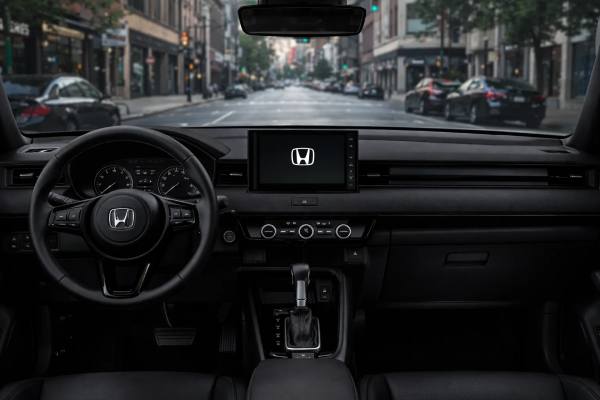

The 2022–present Honda HR-V Real Time AWD (RZ2) is a practical small SUV that leans on predictable manners rather than headline power. Its 2.0-liter K20C2 engine is naturally aspirated, which keeps heat and complexity down compared with turbo alternatives, and the CVT is tuned for smoothness and low-effort commuting. The AWD system is a key differentiator: it is not meant for rock crawling, but it adds traction on wet roads, steep driveways, and light snow—especially when paired with proper tires.
Ownership tends to be straightforward if you treat it like a modern Honda: follow the Maintenance Minder, keep fluids fresh, and don’t ignore small changes in noise or vibration. This guide focuses on the AWD-specific hardware (including the rear differential), real-world efficiency, common issues, safety results, and a buyer-oriented service plan.
Quick Specs and Notes
- Real Time AWD improves takeoff traction and stability in rain and slush, but it is still a road-focused system.
- K20C2 2.0-liter is simple by modern standards (no turbo), which often helps long-term heat management and cost predictability.
- Cabin packaging is strong for the class, with usable rear space and a large “seats down” cargo area.
- Plan on rear differential fluid service as part of AWD ownership—especially with frequent low-speed traction events.
- A sensible baseline: engine oil and filter roughly every 12 months or when the oil-life monitor approaches 15%.
Jump to sections
- RZ2 AWD HR-V in focus
- K20C2 AWD technical specs
- Equipment, safety, and Honda Sensing
- Known faults, recalls, and fixes
- Service schedule and buying tips
- Road manners and fuel use
- AWD HR-V vs competitors
RZ2 AWD HR-V in focus
Think of the RZ2 HR-V as an “all-weather commuter SUV” more than a sporty crossover. The 2.0-liter K20C2 is tuned for steady, usable response, not punch. That matters because the AWD version carries extra hardware—driveshaft, rear differential, and related controls—so the vehicle’s character stays calm and consistent rather than quick. In daily driving, that consistency is the selling point: smooth low-speed behavior, predictable braking, and a chassis that feels secure on imperfect roads.
Honda’s Real Time AWD is designed to help when front tires begin to slip. In normal cruising, it behaves like a front-driver for efficiency and simplicity. When conditions demand it—rain-soaked roundabouts, steep on-ramps in winter, muddy grass parking—it can send torque rearward to stabilize the car and reduce wheelspin. It works best when you give it the right foundation: matching tire sizes, similar tread depth across all four corners, and a quality all-season or winter tire in cold climates. AWD can’t compensate for worn or mismatched tires, and it can be confused by uneven rolling circumference.
A big ownership advantage is that this powertrain avoids turbo-specific heat and lubrication stresses. That doesn’t mean “no maintenance,” but it does mean fewer high-cost parts competing for space and cooling under the hood. The trade-off is obvious on hills and highway merges: the CVT will raise engine rpm to hold speed, and the sound can seem busier than a traditional stepped automatic. The key is to judge it on outcomes—stable speed control and smooth progression—rather than on the sensation of “shifts.”
Packaging is another strength. The HR-V’s footprint is city-friendly, yet it still offers a genuinely useful cargo bay, especially with the rear seats folded. AWD buyers should also factor in the underfloor spare and tool storage setup, because it influences how you use the cargo area on trips. Overall, the RZ2 AWD HR-V is best for drivers who value traction confidence and predictable ownership costs more than outright acceleration.
K20C2 AWD technical specs
Specifications can vary slightly by model year and trim, but the AWD mechanical layout stays consistent across the RZ2 run. The tables below focus on the core AWD powertrain, chassis numbers that affect daily use, and service capacities that matter when you plan maintenance.
Powertrain and efficiency
| Item | Specification |
|---|---|
| Engine code | K20C2 |
| Layout and valvetrain | Inline-4, DOHC, 16-valve (4 valves/cyl) |
| Bore × stroke | 86.0 × 85.9 mm (3.39 × 3.38 in) |
| Displacement | 2.0 L (1,996 cc) |
| Induction | Naturally aspirated |
| Fuel system | Multi-point fuel injection |
| Compression ratio | 10.8:1 |
| Max power | 158 hp (118 kW) @ 6,500 rpm |
| Max torque | 186 Nm (138 lb-ft) @ 4,200 rpm |
| Timing drive | Chain |
| Rated efficiency (AWD, typical EPA) | ~8.7 / 7.8 / 8.4 L/100 km (27 / 30 / 28 mpg US) city/hwy/combined |
| Real-world highway @ 120 km/h (75 mph) | ~7.8–8.6 L/100 km (27–30 mpg US), tire and wind dependent |
| Aerodynamics | Cd and frontal area not consistently published by trim |
Transmission and driveline
| Item | Specification |
|---|---|
| Transmission | CVT |
| Drive type | Real Time AWD (on-demand) |
| Differentials | Front transaxle final drive plus rear differential (open) |
Chassis and dimensions
| Item | Specification |
|---|---|
| Suspension (front/rear) | MacPherson strut / multi-link |
| Steering | Electric power steering; 12.5:1 ratio |
| Brakes (front/rear) | 12.3 in / 12.2 in discs (312 / 310 mm) |
| Wheels/tires (common) | 17–18 in wheels depending on trim |
| Ground clearance | 7.0 in (178 mm) |
| Approach / departure | 15.5° / 20.5° |
| Length / width / height | 179.8 / 72.4 / 63.4 in (4,567 / 1,839 / 1,610 mm) |
| Wheelbase | 104.5 in (2,654 mm) |
| Turning circle (curb-to-curb) | 35.1 ft (10.7 m) |
| Curb weight (AWD range) | ~3,276–3,333 lb (1,486–1,512 kg) |
| Fuel tank | 14.0 US gal (53.0 L) |
| Cargo volume | 24.4 / 55.1 ft³ (691 / 1,560 L) seats up/down |
Performance and capability (typical)
| Item | Typical value |
|---|---|
| 0–100 km/h (0–62 mph) | ~9.8–10.6 s (conditions and trim dependent) |
| Top speed | ~190 km/h (118 mph), market-limited |
| Braking 100–0 km/h | ~36–39 m (tire dependent) |
| Towing | Often not rated or limited in many markets; check your VIN placard and manual |
| Roof load | Follow roof-rail/roof-rating guidance for your specific equipment |
Fluids and service capacities (common service-fill values)
| System | Specification |
|---|---|
| Engine oil | 0W-20; 3.9 US qt (3.7 L) with filter |
| Engine coolant | Honda Long Life Antifreeze/Coolant Type 2; 5.6 US qt (5.3 L) |
| CVT fluid | Honda HCF-2; follow service method for correct fill amount |
| Rear differential fluid (AWD) | Honda DPSF-II |
| A/C refrigerant | HFO-1234yf; 400 ± 15 g (14.1 ± 0.5 oz) |
| A/C compressor oil | ND-OIL 12; 60 ± 10 mL (2.0 ± 0.3 fl oz) |
Electrical and ignition
| Item | Specification |
|---|---|
| 12V battery | 12 V, 48 Ah (20-hr) |
| Spark plugs | NGK DILZKAR7B11GS; 1.0–1.1 mm (0.039–0.043 in) gap |
Safety and driver assistance (headline)
| Item | Specification |
|---|---|
| IIHS (recent model-year testing) | Top Safety Pick + (when properly equipped) |
| Headlight rating (IIHS) | Trim-dependent; “Acceptable” commonly listed |
| ADAS | Honda Sensing suite availability varies by trim/year |
If you want a single takeaway from these tables: the AWD HR-V is defined more by traction confidence, packaging, and predictability than by raw performance numbers. That’s why the service capacities and AWD-specific fluid planning matter as much as horsepower.
Equipment, safety, and Honda Sensing
Because equipment can change by year and trim, it helps to separate what is “structural and mechanical” from what is “feature and option.” The mechanical identity of the RZ2 AWD HR-V is stable: K20C2 engine, CVT, and an on-demand AWD system. Trim differences mostly affect wheels/tires, lighting, interior features, and how much driver assistance is included.
Trims and quick identifiers
A practical way to identify what you’re looking at is to start with the wheels and lights. Base trims typically wear smaller wheels and simpler lighting signatures. Higher trims usually bring larger wheels, more aggressive tire sizing, and upgraded headlights. Inside, look for the infotainment screen size, the presence of steering-wheel driver-assist buttons, and whether the instrument display is more advanced. If you are shopping used, ask for a photo of the tire placard and the VIN label in the driver-door jamb—those details help confirm weight ratings, tire size, and build specification without guesswork.
AWD itself can be confirmed in three places:
- The vehicle’s exterior badging (when fitted).
- The center display menus or cluster indications (varies by year).
- The presence of rear driveline hardware underneath (driveshaft and rear differential).
Safety ratings and what they mean in practice
Crash-test results are only as helpful as your understanding of test scope. A high overall rating suggests strong structure, restraint performance, and good occupant protection design, but it does not eliminate the need for correct seating position, proper child-seat installation, and tire/brake maintenance. Headlight scores matter more than many owners expect: visibility and beam pattern can change night driving fatigue and reaction time, especially on unlit roads.
Driver assistance and calibration reality
Honda Sensing typically bundles several features that owners experience as one “safety package,” including automatic emergency braking, lane support, and adaptive cruise control (availability varies by trim/year). The important ownership detail is calibration. If the windshield is replaced, if the front bumper area is repaired, or if the car takes a hit that shifts sensor alignment, the driver-assistance systems may require recalibration. When done correctly, it restores intended behavior. When skipped, it can create nuisance warnings, inconsistent lane tracking, or less confident adaptive cruise behavior.
Child seats and everyday safety habits
Most HR-V configurations support modern child-seat anchoring standards, but the safest outcome still depends on technique: correct belt routing, tight anchoring, and minimizing bulky seat-protector accessories that compromise fit. For adults, the best “maintenance” for safety is simple: keep tires matched and properly inflated, don’t stretch brake fluid intervals, and fix suspension clunks early. Those items often influence stopping distance and stability more than any single electronic feature.
Known faults, recalls, and fixes
No vehicle is immune to issues, and the most useful way to think about reliability is by separating problems into “common and annoying” versus “rare but expensive.” The AWD HR-V also adds a few AWD-specific service risks that are easy to manage if you know what to watch for.
Common (usually low to medium cost)
- Brake noise or uneven pad wear (city use) → Symptom: squeal, light vibration, or a rough feel at low speeds → Likely cause: pad material behavior, light corrosion, or slide-pin lubrication issues → Remedy: clean and lubricate hardware, verify pad fitment, and avoid cheap pad compounds.
- CVT behavior that feels like “slip” → Symptom: rising rpm under load, delayed response, or a rubber-band sensation → Likely cause: normal CVT logic, fluid aging, or driving style mismatch → Remedy: verify fluid condition and correct service history; confirm there are no warning lights or stored codes before assuming failure.
- Infotainment or sensor warnings (intermittent) → Symptom: temporary messages, camera glitches, or occasional disconnects → Likely cause: software state, battery voltage dips, or connector sensitivity → Remedy: check 12V battery health first, then ensure updates and proper connector seating during service.
Occasional (cost varies)
- Wheel bearing or tire-related humming → Symptom: growing road noise that changes with speed → Likely cause: aggressive tire wear, alignment drift, or a bearing beginning to pit → Remedy: rotate tires on schedule, keep alignment within spec, and diagnose promptly so you don’t replace good parts chasing noise.
- Suspension knocks over sharp bumps → Symptom: clunk at low speed over potholes → Likely cause: end links, bushings, or a loose fastener after tire/brake work → Remedy: inspect methodically; don’t assume “that’s normal for SUVs.”
AWD-specific watch list (medium risk if ignored)
- Rear differential fluid degradation → Symptom: shudder, binding sensation in tight turns, or a faint groan during low-speed maneuvers → Likely cause: aged rear diff fluid, especially after repeated traction events or mixed tire circumferences → Remedy: service with the correct Honda fluid, confirm matching tire sizes and similar tread depth across all four wheels.
- Mismatched tires stressing the AWD system → Symptom: driveline vibration, odd handling, or premature driveline wear → Likely cause: different tread depths, different tire models, or one new tire paired with three worn tires → Remedy: keep tires matched; if you replace one, measure and decide whether two or four is the smarter move.
Recalls, TSBs, and service actions
Recalls and technical service bulletins (TSBs) are not the same thing. A recall is a safety or compliance action; a TSB is guidance for a known pattern that may or may not apply to every VIN. Your best approach is simple:
- Run a VIN-based recall check.
- Ask the seller for dealer invoices showing completion.
- If the car is in the middle of a known campaign, make completion a condition of purchase.
Even when no warning lights are present, software updates can matter—especially for ADAS behavior and infotainment stability. If a used HR-V has a history of odd warnings or sensor faults, ask a dealer to check for updates as part of a pre-purchase inspection.
Service schedule and buying tips
Honda’s Maintenance Minder system is designed to tailor service to real usage, but owners still benefit from a clear baseline schedule—especially for AWD components and fluids that some shops overlook. The outline below is a practical plan that fits most mixed driving. Always confirm with your market’s documentation and your exact VIN.
Practical maintenance schedule (distance/time)
- Engine oil and filter (0W-20): follow the oil-life monitor; many owners land around 10,000 miles (16,000 km) or 12 months in mixed use. Short trips and cold weather shorten this.
- Tire rotation and brake inspection: every 5,000–7,500 miles (8,000–12,000 km). Rotation protects AWD driveline harmony and helps catch uneven wear early.
- Cabin air filter: every 12 months or 15,000 miles (24,000 km), sooner in dusty cities.
- Engine air filter: inspect every oil service; replace around 15,000–30,000 miles (24,000–48,000 km) depending on environment.
- Brake fluid: every 3 years, regardless of mileage (moisture absorption is time-driven).
- Coolant: use the correct long-life coolant; typical first-change windows are long, but verify by year/VIN.
- CVT fluid (Honda HCF-2): a good planning range is 30,000–60,000 miles (48,000–96,000 km) depending on heat load, hills, and traffic.
- Rear differential fluid (AWD): plan around 30,000 miles (48,000 km), sooner if the car sees repeated low-speed traction events, steep grades, or frequent rain/snow starts.
- Spark plugs: commonly 100,000 miles (160,000 km), but follow the service guide for your year.
Fluids, capacities, and “don’t-get-cute” rules
- Use the correct rear differential fluid type, not a generic gear oil. AWD systems are sensitive to friction characteristics.
- Keep tires matched: same size, similar wear, and preferably the same model. This is an AWD durability habit more than a handling preference.
- If you do CVT service, keep it conservative: correct fluid, correct fill method, and no “universal” additives.
Essential torque and service decision values
Owners often want a few “anchor numbers” to keep service honest:
- Wheel nut torque: 80 lbf·ft (108 N·m).
- For other fasteners (oil drain plug, underbody braces, driveline bolts), treat online numbers as unverified unless they match your official service documentation.
Buyer’s guide: what to inspect before you pay
Bring this checklist to a pre-purchase inspection:
- Tires: confirm all four match in size and have similar tread depth. Uneven tires are an AWD red flag.
- Rear differential behavior: perform tight parking-lot turns and listen/feel for binding or shudder.
- CVT feel: smooth pull-away, no harsh engagement, no persistent shudder under light throttle.
- Brakes and alignment: no steering pull, no pedal pulsation, even pad wear.
- ADAS and cameras: confirm no warning lights and that the camera image is clear and stable.
- Service records: look for documented CVT fluid and differential fluid history if mileage is higher.
- Rust/corrosion: check underbody seams, suspension mounting points, and brake lines if the car lived in salt regions.
A well-kept AWD HR-V is usually a low-drama long-termer. The “secret” is simply respecting fluids and tires, because those two items influence both drivability and component life.
Road manners and fuel use
The AWD HR-V’s driving personality is tuned for calm control. Around town, the steering is light and quick enough to make parking easy, and the ride filters most sharp impacts without feeling floaty. The multi-link rear suspension helps the car stay composed over mid-corner bumps—one of the subtle advantages versus rivals that use simpler rear layouts on base models.
Powertrain character in the real world
The K20C2 delivers its best response when you drive it smoothly. It is willing to rev, but it does not have the effortless low-end shove of a turbo engine. The CVT’s job is to keep the engine in an efficient or effective rpm band, so under hard throttle you will hear steady rpm rather than stepped shifts. That can sound busy, but it usually translates to consistent forward progress. In traffic, the calibration prioritizes smoothness; the car generally feels easy to modulate in stop-and-go situations.
AWD adds confidence more than it adds speed. In heavy rain, the car feels more planted pulling away from a stop, and it tends to put power down with less traction-control intervention. In snow, it helps you get moving—but it does not shorten braking distances. Winter tires still make the biggest difference.
NVH (noise, vibration, harshness)
At steady highway speeds, wind and tire noise become the dominant sounds. Wheel and tire choice can change this more than many owners expect. Larger wheels often look great but can raise impact harshness over potholes and transmit more road texture into the cabin. If you want the quietest ride, prioritize quality tires and correct alignment.
Real-world efficiency expectations
Rated economy for the AWD model is typically around the high-20s mpg combined (US), but real-world results depend heavily on speed and terrain:
- City-heavy commuting: expect higher consumption if trips are short and cold.
- Steady 100–120 km/h cruising: many drivers land in the ~7.8–8.6 L/100 km band when conditions are moderate.
- Winter operation: cold air, winter fuel blends, and HVAC use can add a noticeable penalty.
If your goal is maximum efficiency, keep tire pressures correct, avoid roof racks when not needed, and drive with steady throttle. If your goal is maximum traction, accept that AWD hardware and winter tires can cost some fuel—but the stability payoff is real when conditions turn messy.
AWD HR-V vs competitors
The AWD HR-V competes in a crowded space where many vehicles look similar on paper but feel different after six months of ownership. A useful comparison is to group rivals by what they optimize.
If you want stronger acceleration
Many small SUVs now offer turbo engines or higher-output options that feel quicker in passing situations. The trade-off is usually complexity and heat management: turbos add plumbing, higher cylinder pressures, and often tighter packaging. The HR-V’s naturally aspirated approach won’t win drag races, but it tends to feel consistent across seasons and driving styles.
If you want maximum fuel economy
Hybrid competitors often beat the AWD HR-V on fuel, especially in city traffic. If your commute is stop-and-go and you keep cars for a long time, hybrid math can work. However, compare purchase price, local service expertise, and how you feel about battery-related aging. The HR-V’s advantage is simpler long-term planning—fewer high-voltage components and a straightforward service profile.
If you want a softer ride or a quieter cabin
Some rivals tune more softly and isolate more road texture at the cost of less crisp control. The HR-V strikes a middle ground: composed, stable, and generally comfortable without feeling disconnected. Tire choice can move it toward “quiet and soft” or toward “sharp and firm,” so pay attention to the wheel/tire package when shopping.
If you want more off-road credibility
Real Time AWD is an on-road traction system with light-duty capability. If you regularly travel on rutted trails or need serious ground clearance, you may be happier with a vehicle designed around off-pavement use. The HR-V’s strengths are urban maneuverability, predictable traction on slippery roads, and a chassis that feels confident in everyday conditions.
The value proposition
The HR-V AWD’s best argument is balanced ownership:
- Enough traction to reduce stress in bad weather.
- A powertrain tuned for smooth, repeatable behavior.
- Practical dimensions and a very usable cargo layout.
- Service needs that are easy to understand if you stay disciplined about fluids and tires.
If you are choosing between several compact SUVs, the simplest test is this: drive them back-to-back on the same roads. If you prefer calm responses, stable braking, and a “no surprises” feel, the AWD HR-V will likely match your priorities—especially if you commit to tire matching and AWD fluid service from day one.
References
- 2024 HR-V Features & Specs 2024
- Specifications | HR-V 2024 | Honda Owner’s Manual 2024 (Owner’s Manual)
- If a Tire Goes Flat | HR-V 2023 | Honda Owner’s Manual 2023 (Owner’s Manual)
- 2024 Honda HR-V 4-door SUV 2024 (Safety Rating)
- Recalls 2026 (Recall Database)
Disclaimer
This article is for informational purposes only and is not a substitute for professional diagnosis, inspection, or repair. Specifications, torque values, service intervals, and procedures can vary by VIN, market, model year, and equipment. Always verify details using your official Honda service and owner documentation for your exact vehicle.
If this guide helped, please consider sharing it on Facebook, X (Twitter), or your favorite forum to support our work.