

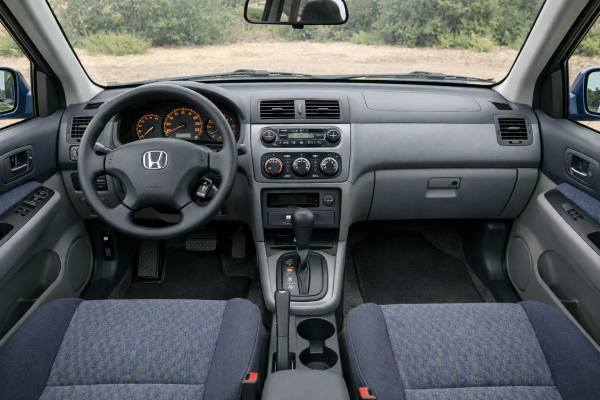
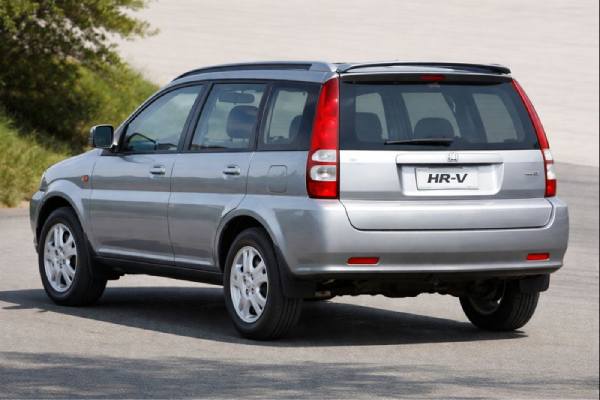
The 1999–2001 Honda HR-V FWD (GH2) sits in a sweet spot between compact hatchbacks and early crossovers: light on its feet, easy to place in traffic, and built around Honda’s durable D-series hardware. In this specific form—front-wheel drive with the 1.6-liter D16W1—the HR-V leans more toward efficient daily transport than rugged off-roading, yet it still delivers the taller seating position and practical cargo flexibility buyers wanted.
Ownership tends to be straightforward if you treat it like a late-1990s Honda: stay ahead of fluids, keep rubber components fresh, and don’t ignore corrosion. The D16W1 is not a high-output engine, but it’s well matched to the HR-V’s mission—smooth, economical, and tolerant of high mileage when serviced properly. Where these cars age is usually around wear items: suspension bushings, brakes, cooling components, and (if equipped) CVT maintenance discipline.
Owner Snapshot
- Simple, robust 1.6L drivetrain that tolerates high mileage when fluids are kept fresh.
- Compact footprint with a tall cabin makes it easy to park while staying genuinely practical.
- Predictable running costs—most repairs are wear-item based, not “mystery” electronics.
- Budget for rubber aging (bushings, mounts, hoses) and rust prevention in wet or salty climates.
- Plan engine oil and filter service about every 10,000 km (6,000 mi) or 12 months, whichever comes first, for normal use.
Navigate this guide
- HR-V GH2: what it is
- D16W1 specs and measurements
- Trims, options, and safety kit
- Reliability issues and service actions
- Maintenance plan and buyer’s checklist
- Driving feel and real efficiency
- Rivals and best alternatives
HR-V GH2: what it is
Think of the first-generation HR-V as a Civic-like platform stretched upward: a small, efficient unibody with a tall roofline, a short overhang package, and a suspension tune meant for mixed surfaces rather than serious trail work. In GH2 FWD form, the priorities are clear—reduced drivetrain complexity, lower running costs, and better fuel economy than the 4WD versions.
The engineering story is the “under-square” 1.6. The D16W1 uses a relatively long stroke for its displacement, which typically supports decent low-to-midrange pull and relaxed cruising when compared to a shorter-stroke engine of similar size. The trade-off is that it’s not a top-end “screamer.” That matches the HR-V’s role: commuting, errands, light trips, and occasional rough roads at moderate speeds.
Why owners like this configuration
- Fewer expensive driveline parts than 4WD variants (no rear diff, prop shaft, or viscous/dual-pump rear system to maintain).
- Balanced city behavior: small turning circle feel, good visibility, and a seating position that’s easier on knees and hips than low hatches.
- Good packaging: the cabin height and rear load area are useful even when the external dimensions are modest.
Where the “age” shows up
- This is a 1999–2001 design, so expect less crash structure sophistication than modern crossovers and fewer airbags in many trims.
- Rubber components and seals have simply had a long time to harden: engine mounts, suspension bushings, and coolant hoses are typical “bring it back to baseline” jobs.
- If your GH2 uses Honda’s early CVT, fluid choice and service history matter more than on a conventional automatic.
Who it fits best
If you want a compact, upright, easy-to-drive runabout with Honda parts availability and you’re comfortable keeping a 20+ year old vehicle in shape, the GH2 HR-V can be a sensible, low-drama choice. If you need modern crash performance, active safety tech, or frequent towing, it’s the wrong tool—look newer.
D16W1 specs and measurements
Below are typical specifications for the 1999–2001 HR-V FWD (GH2) with the D16W1. Exact values can vary by market, body style (3-door vs 5-door), wheel/tire package, and transmission.
Powertrain and efficiency
| Item | Specification |
|---|---|
| Engine code | D16W1 |
| Layout | Front, transverse |
| Configuration | Inline-4, SOHC |
| Valvetrain | 4 valves/cyl (16V) |
| Displacement | 1.6 L (≈ 1,590 cc) |
| Bore × stroke | 75.0 × 90.0 mm (2.95 × 3.54 in) |
| Induction | Naturally aspirated |
| Fuel system | PGM-FI multi-point injection (MPFI) |
| Compression ratio | ~9.4–9.6:1 (market dependent) |
| Max power | 105 hp (≈ 77 kW) @ ~6,200 rpm |
| Max torque | ~135–138 Nm (100–102 lb-ft) @ ~3,400–3,500 rpm |
| Timing drive | Belt |
| Rated economy (era/market dependent) | typically ~7.0–8.6 L/100 km (34–27 mpg US) |
Transmission and driveline
| Item | Specification |
|---|---|
| Drive type | FWD |
| Transmission (common) | CVT (Honda Multimatic, market dependent) |
| Transmission (possible) | 5-speed manual (market dependent) |
| Differential | Open |
Chassis, brakes, and tires
| Item | Specification |
|---|---|
| Front suspension | MacPherson strut |
| Rear suspension | Trailing arm / multi-link (market dependent) |
| Steering | Rack-and-pinion (power-assisted) |
| Front brakes | Disc |
| Rear brakes | Drum (common on many trims) |
| ABS | Optional on many early trims (verify by VIN/equipment) |
| Typical tires | 195/70 R15 or similar (varies by trim) |
Dimensions and capacities (typical range)
| Item | Metric | Imperial |
|---|---|---|
| Length | ~4,010 mm | ~157.9 in |
| Width | ~1,695 mm | ~66.7 in |
| Height | ~1,580–1,610 mm | ~62.2–63.4 in |
| Wheelbase | ~2,360 mm | ~92.9 in |
| Curb weight | ~1,150–1,250 kg | ~2,535–2,756 lb |
| Fuel tank | ~55 L | ~14.5 US gal / 12.1 UK gal |
| Cargo volume | varies widely by body/seat setup | varies |
Performance (realistic expectations)
| Metric | Typical result (depends on trans/condition) |
|---|---|
| 0–100 km/h (0–62 mph) | ~11.5–13.5 s |
| Top speed | ~160–170 km/h (99–106 mph) |
| 100–0 km/h braking | strongly tire/brake dependent; expect “older-car” distances |
Fluids, service capacities, and key torque specs (decision-useful)
| System | Spec (typical) | Capacity (approx.) |
|---|---|---|
| Engine oil | API SJ/SL-era equivalent; 5W-30 common | ~3.6 L (3.8 US qt) with filter |
| Coolant | Long-life ethylene glycol, 50/50 mix | ~4.5–5.5 L total system (varies) |
| CVT fluid (if equipped) | Honda CVT/HMMF-type fluid | ~2–3 L per drain/fill (varies) |
| Manual trans (if equipped) | Honda MTF-type fluid | ~1.5–1.8 L (varies) |
| Brake fluid | DOT 3/4 | flush volume varies |
| A/C refrigerant | R134a | ~450–550 g (varies) |
| Critical fastener | Torque (typical) |
|---|---|
| Wheel lug nuts | ~108 Nm (80 lb-ft) |
| Engine oil drain plug | ~39 Nm (29 lb-ft) |
| Spark plugs | ~18 Nm (13 lb-ft) |
If you’re building a maintenance plan, treat these as starting points and confirm for your exact VIN and transmission.
Trims, options, and safety kit
Because the 1999–2001 HR-V GH platform was sold across multiple regions with different trim naming, it’s more useful to think in terms of equipment “clusters” than a single universal trim ladder. Most cars fall into one of three buckets: base commuter spec, mid-grade convenience spec, or a better-equipped “lifestyle” spec with nicer wheels and interior upgrades.
Trims and options that matter mechanically
Transmission choice is the biggest fork.
- CVT versions prioritize smoothness and urban ease. When healthy, they keep the engine in its efficient band and make the car feel more relaxed than the power figure suggests.
- Manual versions feel more direct and often age more predictably if basic fluid changes were done, simply because there’s less hydraulic complexity.
ABS and traction behavior
- Early HR-Vs often had ABS as an option, not a given. If you care about wet-weather confidence, verify ABS by looking for the ABS warning light at key-on and checking for the ABS hydraulic unit in the engine bay.
- Some markets offered rudimentary traction control later, but on 1999–2001 FWD cars it’s commonly absent. Tires and alignment make a larger real-world difference than most owners expect.
Wheels and tire packages
- A taller sidewall tire (common on base trims) improves ride compliance and pothole tolerance.
- Wider, lower-profile packages sharpen steering response but can increase road noise and make the suspension feel busier over broken pavement.
Quick identifiers when shopping
Use these “tells” to avoid guessing:
- Transmission: CVT shifter gate and cluster indicators differ from manual. During a test drive, CVT cars should accelerate smoothly without flare or “rubber band” surging beyond what’s normal.
- ABS: confirm the ABS light functions at startup; also check whether the car actually has ABS hardware.
- Airbags: driver airbag is common; passenger and side airbags vary. Count airbag labels and verify the steering wheel and dash markings match the equipment.
Safety ratings and what to take seriously
For a 1999–2001 model, the biggest limitation is that modern-style crash ratings and advanced driver assistance systems (ADAS) were not the norm. Depending on market, there may be limited official crash-test publications for this exact early HR-V variant, and the results (if available) may not map cleanly to today’s star systems.
What you can evaluate directly:
- Structure and restraint condition: check that airbags, seatbelt pretensioners, and SRS warning light behavior are correct. A glowing SRS light is a “stop and diagnose” item, not a minor annoyance.
- Child-seat provisions: many cars of this era have fewer standardized anchor points. If you need ISOFIX/LATCH, confirm presence rather than assuming.
- Brakes and tires: upgrading to high-quality tires and restoring braking hardware (fresh pads/rotors/drums, clean fluid, correctly adjusted rear brakes where applicable) is the most effective safety improvement you can control.
Bottom line: treat the HR-V GH2 as an older vehicle that can be made safe and predictable through condition and maintenance, but it won’t match the passive and active safety of newer crossovers.
Reliability issues and service actions
A well-kept D16W1 HR-V can be long-lived, but reliability is less about the engine “blowing up” and more about age, fluids, and neglected baseline work. Below is a practical issue map using prevalence and severity/cost tier so you can triage.
Common and usually low-to-medium cost
1) Suspension bushings and ball joints (common / medium)
- Symptoms: clunks over bumps, vague steering, uneven tire wear, wandering at speed.
- Likely cause: hardened rubber bushings, worn ball joints, tired struts/shocks.
- Remedy: refresh front control arm bushings/ball joints, inspect trailing arm bushings, replace dampers in pairs, then align.
2) Cooling system aging (common / low-to-medium)
- Symptoms: slow coolant loss, crusty residue at hose joints, temperature creep in traffic.
- Likely cause: old hoses, radiator end tank aging, tired thermostat or cap.
- Remedy: pressure test, replace suspect hoses/clamps, consider radiator and thermostat as preventive items if history is unknown.
3) Oil leaks and seepage (common / low)
- Symptoms: damp oil pan area, oily timing cover edges, drips after parking.
- Likely cause: valve cover gasket, cam seal, crank seal, oil pan seep.
- Remedy: reseal as needed—best done alongside timing belt service if seals are involved.
Occasional but can be higher impact
4) CVT behavior and fluid sensitivity (occasional / high if ignored)
- Symptoms: shudder on takeoff, flare-like rev changes, delayed engagement, burnt-smelling fluid.
- Likely cause: wrong fluid, overdue changes, internal belt/pulley wear, control issues.
- Remedy: verify correct CVT fluid type, perform multiple drain/fills if fluid is dirty (not a power flush), and diagnose early. If it still shudders, budget for deeper repair.
5) Idle control and intake deposits (occasional / low-to-medium)
- Symptoms: hunting idle, stalling when coming to a stop, inconsistent cold starts.
- Likely cause: dirty throttle body, aging IACV (idle air control valve), vacuum leaks.
- Remedy: clean throttle body, check vacuum lines, diagnose IACV and PCV.
Rare, but don’t ignore
6) Timing belt neglect (rare if maintained / high if skipped)
- Symptoms: belt noise, unknown history, old cracked belt on inspection.
- Likely cause: missed interval.
- Remedy: replace timing belt, tensioner, and typically the water pump together. This is “baseline insurance” on belt-driven Hondas.
Recalls, service actions, and how to verify completion
Two practical points for HR-V owners:
- Some official campaigns were broad and affected multiple Honda models of the era, including HR-V chassis codes.
- Not every campaign applies to every body style. For example, a repair involving rear doors will not apply to 3-door configurations.
How to verify: use an official recall lookup by chassis/VIN where available, and confirm with dealer history or documented repair receipts. If you’re buying, ask for written proof—completed recall work often has a sticker or a dealer record entry.
Maintenance plan and buyer’s checklist
The fastest way to make a 1999–2001 HR-V GH2 feel “right” is to stop thinking in terms of single repairs and instead do baseline maintenance in a logical order: fluids first, then ignition and cooling, then suspension and brakes.
Practical maintenance schedule (typical intervals)
Use distance and time—short trips and cold starts age fluids faster than mileage suggests.
| Item | Interval (distance) | Interval (time) | Notes |
|---|---|---|---|
| Engine oil and filter | 8,000–10,000 km (5,000–6,000 mi) | 12 months | Use the correct viscosity for climate; shorten for heavy city use |
| Engine air filter | 15,000–30,000 km | 12–24 months | Dusty conditions = shorter |
| Cabin filter (if equipped) | 15,000–30,000 km | 12–24 months | Not fitted on all early trims |
| Coolant | — | 2–3 years | Replace sooner if unknown type/history |
| Brake fluid | — | 2 years | Moisture absorption is time-driven |
| Spark plugs | 40,000–100,000 km | 3–6 years | Depends on plug type; confirm what’s installed |
| Valve clearance (if applicable) | 40,000–50,000 km | — | Adjust if noisy or rough idle; confirm spec for your engine |
| Timing belt + tensioner | 90,000–105,000 km | 6–7 years | Replace water pump at the same time as best practice |
| CVT fluid (if CVT) | 30,000–40,000 km | 2–3 years | Drain/fill, correct fluid only |
| Manual trans fluid (if manual) | 60,000–80,000 km | 4–5 years | Earlier if shifting feels notchy |
| Brake pads/shoes inspection | 10,000–15,000 km | 12 months | Rear drums may need periodic adjustment |
| Tire rotation and inspection | 10,000 km | 12 months | Include alignment check if wear is uneven |
| 12 V battery test | — | yearly after year 3 | Replace proactively around 4–6 years in harsh climates |
Buyer’s guide: what to inspect first
Body and rust
- Check rear wheel arches, sills/rockers, floor edges, suspension mounting points, and underbody seams.
- Look for fresh undercoating that hides problems; a clean, honest underside is better than a freshly painted mystery.
Engine bay
- Cold start: listen for belt noise, idle hunting, or misfire.
- Inspect coolant condition and level stability; look for oil contamination and hose swelling.
- Confirm maintenance evidence for the timing belt if mileage/age suggests it’s due.
Transmission
- CVT: smooth takeoff matters. Any persistent shudder, delayed engagement, or burning smell is a negotiating point at minimum.
- Manual: check for synchro wear (2nd gear), clutch take-up, and any driveline clunks.
Suspension and steering
- Test for straight-line stability at highway speed and over rough patches.
- Uneven tire wear often signals worn bushings or an alignment problem that hasn’t been solved, only “lived with.”
Brakes
- Confirm consistent pedal feel and that the car tracks straight under moderate braking.
- If ABS is equipped, confirm the warning light behavior and that ABS activates on a safe low-grip surface without faults.
Long-term durability outlook
If you keep corrosion controlled and follow a disciplined fluid schedule—especially for CVT cars—this HR-V configuration can be a steady long-term companion. The best examples are not the lowest-mileage ones; they’re the ones with documented belt service, clean coolant practices, and fresh suspension work.
Driving feel and real efficiency
A healthy HR-V GH2 drives like a compact car that happens to be taller. That’s a compliment: it generally feels lighter and more predictable than heavier, taller SUVs from the same era.
Ride, handling, and NVH (noise, vibration, harshness)
Ride: The suspension is usually compliant at city speeds, especially on taller sidewall tires. The downside is that worn dampers and bushings quickly turn “compliant” into “floaty.” If the car bounces after bumps or feels loose in crosswinds, assume it needs suspension attention.
Handling: The higher center of gravity is noticeable compared to a Civic, but the short length and honest steering make it easy to place. Good tires transform the car more than most mods—many “handling complaints” are really cheap tires and tired alignment.
NVH: Expect more road and wind noise than modern crossovers. Door seals, aging engine mounts, and worn tires amplify the effect. A quiet example usually means someone already invested in the basics.
Powertrain character (D16W1)
With 105 hp, speed comes from maintaining momentum, not brute force. The engine’s long-stroke feel supports usable midrange, so it doesn’t demand constant high rpm to get moving—though full-throttle merging will still be “plan ahead.”
CVT behavior: In good condition, it keeps the engine at a steady rpm under load. Some drivers dislike the constant-rpm sensation, but it can make the car feel smoother than expected. If the CVT is worn or has the wrong fluid, you’ll notice shudder or inconsistent response—don’t ignore that.
Manual behavior: The manual tends to make the car feel more engaged, with better “directness” under throttle. For some owners, the manual is also the simpler long-term bet.
Real-world fuel use
Real-world consumption is mostly dictated by speed, terrain, and tire choice:
- City: roughly 8.0–10.0 L/100 km (29–24 mpg US) if used for short trips.
- Highway (100–120 km/h / 60–75 mph): roughly 7.0–8.5 L/100 km (34–28 mpg US).
- Mixed: roughly 7.5–9.0 L/100 km (31–26 mpg US).
Cold weather can raise consumption noticeably due to enrichment during warm-up and higher rolling resistance.
Practical performance metrics that matter
For daily use, two numbers matter more than top speed:
- Passing and hill response: the HR-V rewards downshifts (manual) or decisive throttle (CVT) early, before you run out of gap.
- Turning and parking confidence: the compact footprint is a real advantage over bulkier rivals—especially in older city centers and tight lots.
If your driving is mostly urban and suburban, this HR-V’s “easy-to-live-with” nature is often the best part of the ownership experience.
Rivals and best alternatives
The HR-V GH2 FWD competes best with other late-1990s and early-2000s compact crossovers that prioritize practicality and light-duty capability. The right comparison depends on what you value: reliability simplicity, cabin space, winter traction, or highway comfort.
If you want similar size and simplicity
Suzuki Vitara / Grand Vitara (era equivalent)
- Pros: often offers real 4WD hardware, good off-pavement ability.
- Cons: can be noisier and thirstier; rust and aging driveline parts can be an issue.
- Verdict: better if you truly need rough-road hardware; less “car-like” daily.
Toyota RAV4 (first gen / early second gen)
- Pros: strong durability reputation, good parts support, solid resale.
- Cons: often costs more used; some versions feel heavier and less nimble in town.
- Verdict: a dependable alternative if you prioritize Toyota’s ecosystem and don’t mind paying extra.
If you want the most “Honda-like” alternative
Honda CR-V (first gen)
- Pros: more space, more relaxed highway character, strong community and parts availability.
- Cons: larger footprint; usually higher fuel use; AWD systems add complexity.
- Verdict: choose the CR-V if you want more room and highway calm; choose the HR-V if you want compact agility and lower running complexity.
If you mainly want a practical small car
Honda Civic hatch / other compact hatches
- Pros: often better fuel economy, simpler aerodynamics, sometimes cheaper tires and brakes.
- Cons: lower seating position, less “crossover” cargo usability.
- Verdict: if you don’t need the upright packaging, a hatch can be the smarter, more efficient choice.
What makes the HR-V GH2 stand out today
For the right owner, the GH2 HR-V has a clear niche:
- Smaller and easier to live with than many SUV-shaped rivals.
- Mechanically straightforward compared with modern crossovers full of sensors and calibration dependencies.
- A “good enough” utility vehicle that behaves like a compact car.
The deciding factor is condition. A sorted HR-V with rust controlled, suspension refreshed, and (if CVT) documented fluid care will often feel better than a “newer but neglected” rival.
References
- クルマ | 取扱説明書ダウンロード | Honda 日本製品情報サイト 2026 (Owner’s Manual Portal)
- アクティ、ライフ、ストリームなど 19車種のリコール | Honda 2001 (Recall Notice)
- HR-Vのリコール | Honda 2005 (Recall Notice)
- リコール情報検索 2026 (Recall Lookup)
- Information of Japan New Car Assessment Program|National agency for Automotive Safety & Victims’ Aid 2026 (Safety Rating Program)
Disclaimer
This article is for informational purposes only and is not a substitute for professional inspection, diagnosis, or repair. Specifications, torque values, service intervals, and procedures can vary by VIN, market, production date, and equipment, so always verify details using official service documentation for your exact vehicle.
If you found this guide useful, please consider sharing it on Facebook, X (Twitter), or your favorite forum to help others keep these older Hondas on the road.