
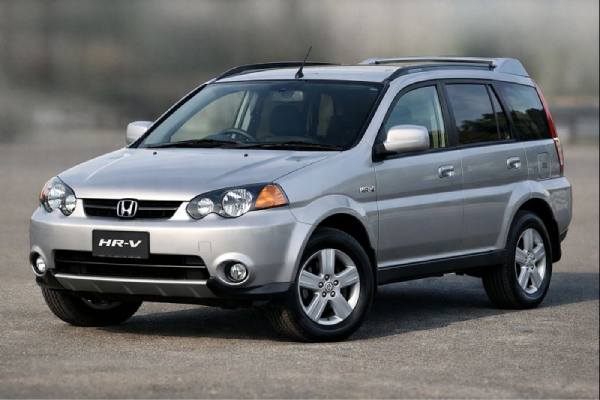
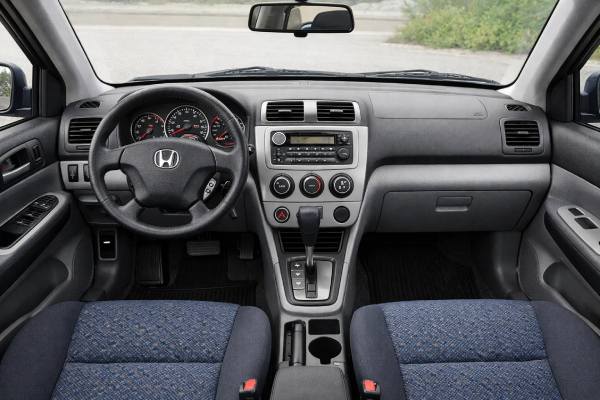
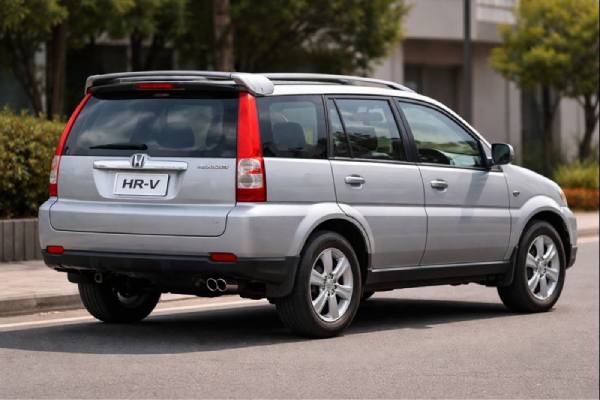
The facelift-era Honda HR-V with the D16W1 1.6 is a practical, light-duty crossover that sits closer to a tall hatchback than a modern SUV. In front-wheel-drive form, its biggest engineering strength is simplicity: a naturally aspirated, port-injected four-cylinder, conventional cooling and fueling, and a chassis that’s easy to service without special tools. The upside is predictable running costs and strong parts availability in many markets.
Where owners usually feel the difference versus heavier rivals is in day-to-day drivability. The HR-V’s low mass helps the modest 105 hp feel adequate around town, and the upright packaging gives good sightlines and flexible cargo use. The trade-off is that age matters more than mileage: rubber bushings, cooling components, and electrical grounds become the deciding factors on a 20+ year-old car.
Owner Snapshot
- Easy ownership when service history is consistent, especially with regular fluid changes.
- Light weight and compact footprint make it city-friendly and simple to park.
- Good parts interchange in the Honda ecosystem helps keep repairs affordable.
- Expect age-related wear in suspension bushings, cooling hoses, and door seals.
- Plan engine oil and filter service every 10,000 km (6,200 mi) or 12 months (short trips: sooner).
Guide contents
- Facelift GH4 FWD in context
- D16W1 spec tables
- Trims, options, and safety kit
- Reliability pain points and fixes
- Service schedule and buying tips
- On-road performance and economy
- Against CR-V and rivals
Facelift GH4 FWD in context
The 2002–2005 facelift HR-V is best understood as Honda’s “light crossover” concept before the segment became bigger and more complex. The body sits tall for visibility and entry/exit comfort, but the mechanical layout stays close to Honda compact-car norms: transverse engine, front-drive packaging, and a focus on low operating costs rather than off-road hardware.
In FWD form, this HR-V tends to be the more economical and lower-maintenance choice compared with 4WD variants because it removes rear driveline components and (in many markets) the rear differential service requirements. That simplification matters on older vehicles: fewer joints, seals, bearings, and fluids to age out. It also helps reduce rotating mass, which can slightly improve response and fuel use in stop-start driving.
The D16W1 1.6-liter engine is a conventional naturally aspirated unit with port fuel injection. On paper, 105 hp doesn’t sound like much, but the HR-V’s relatively low curb weight and short gearing make it workable in urban and suburban use. Where you notice the limits is sustained highway speed with a full load, long grades, or strong headwinds—situations where a small-displacement engine simply has less reserve.
From an ownership perspective, this generation has two big advantages:
- Straightforward serviceability. Many jobs—filters, plugs, accessory belt, brakes, suspension links—are approachable for a competent independent shop.
- Predictable “old car” failure patterns. Most problems follow age and maintenance history, not mysterious electronics.
The key is buying the right example. A clean HR-V with documented cooling system upkeep, regular oil changes, and rust control can be a very durable daily driver. A neglected one can quickly turn into a sequence of “small” repairs—bushings, sensors, hoses, grounds—that add up in time and inconvenience.
D16W1 spec tables
The tables below focus on the facelift HR-V with the D16W1 1.6 (105 hp). Because equipment and gearing varied by country and transmission choice, treat the numbers as typical for this powertrain and confirm against the VIN plate, service book, and local handbook.
Powertrain and efficiency (typical)
| Item | Specification |
|---|---|
| Engine code | D16W1 |
| Layout | Inline-4, transverse |
| Valvetrain | SOHC, 16 valves (4 valves/cyl) |
| Displacement | 1.6 L (1,590 cc) |
| Induction | Naturally aspirated |
| Fuel system | PFI/MPFI (port injection) |
| Max power | 105 hp (77 kW) @ ~6,200 rpm (market-dependent) |
| Max torque | ~140 Nm (103 lb-ft) @ ~4,800 rpm (market-dependent) |
| Timing drive | Belt |
| Rated economy (combined) | ~7.5–8.5 L/100 km (31–28 mpg US / 38–33 mpg UK) depending on transmission |
| Real-world highway @ 120 km/h (75 mph) | Often ~8.0–9.0 L/100 km if lightly loaded; more with roof racks or larger tyres |
| Aerodynamics | Cd typically in the mid-0.3 range (varies by body and mirrors) |
Transmission and driveline (common configurations)
| Item | Specification |
|---|---|
| Drive type | FWD |
| Manual option | 5-speed manual (market-dependent) |
| Automatic option | CVT in some markets/years (verify by VIN and shifter pattern) |
| Differential | Open (front) |
Chassis and dimensions (typical)
| Item | Specification |
|---|---|
| Front suspension | MacPherson strut |
| Rear suspension | Trailing arm / torsion-type layout (market-dependent) |
| Steering | Hydraulic power steering on most trims |
| Brakes | Front discs, rear drums or discs (trim/market-dependent) |
| Wheels/tyres | Commonly 15-inch wheels; tyre sizes vary by trim |
| Ground clearance | ~180–200 mm (7.1–7.9 in) depending on tyres |
| Length | ~4,110 mm (161.8 in) |
| Width | ~1,695 mm (66.7 in) |
| Height | ~1,580 mm (62.2 in) |
| Wheelbase | ~2,460 mm (96.9 in) |
| Turning circle | ~10.0–10.6 m (32.8–34.8 ft) depending on tyres |
| Curb weight | ~1,150–1,250 kg (2,535–2,756 lb) depending on equipment |
Cargo and utility (typical)
| Item | Specification |
|---|---|
| Fuel tank | ~55 L (14.5 US gal / 12.1 UK gal) |
| Cargo volume | Varies widely by measurement method; expect “compact crossover” practicality rather than van-like space |
| Roof load | Check local handbook; many markets specify ~50–75 kg including rack weight |
Performance (realistic expectations)
| Item | Typical result |
|---|---|
| 0–100 km/h (0–62 mph) | ~12.5–14.0 s depending on transmission and tyres |
| Top speed | ~165–175 km/h (103–109 mph) |
| Braking feel | Stable for its era with good tyres; longer stops than modern SUVs with larger brakes |
| Towing | Often not rated high; confirm local rating and hitch rules |
Fluids and service capacities (common estimates)
| Fluid | Specification (typical) |
|---|---|
| Engine oil | 5W-30 or 10W-30 depending on climate; API grade per handbook |
| Oil capacity | ~3.3–3.7 L (3.5–3.9 US qt) with filter |
| Coolant | Honda-type long-life coolant; 50/50 mix unless specified otherwise |
| Coolant capacity | Often ~4–5 L total (varies by radiator and market) |
| Manual trans fluid | Honda MTF (or equivalent spec) |
| Brake fluid | DOT 3 or DOT 4 (confirm cap/handbook) |
| Power steering | Honda PSF (avoid generic ATF unless handbook allows) |
| A/C refrigerant | R134a on most markets/years (verify under-hood label) |
Electrical (typical)
| Item | Specification |
|---|---|
| 12 V battery | Commonly 45–60 Ah range depending on climate package |
| Alternator | Output varies; confirm by part number |
| Spark plugs | NGK/Denso equivalents; gap per under-hood label/handbook |
Safety and driver assistance (era-appropriate)
| Item | Notes |
|---|---|
| Airbags | Usually dual front; side airbags depend on trim/market |
| ABS | Often standard or widely available; confirm by dash light and VIN data |
| Stability control | Typically not present on early-2000s HR-V; verify by equipment list |
| ADAS | Not expected on this generation |
Trims, options, and safety kit
Facelift-era HR-V trim names vary by country, but the hardware differences are usually more important than the badge. When you’re shopping or confirming equipment, focus on transmission type, brake setup, wheel package, and safety features rather than cosmetic add-ons.
Trims and options: what changes in real life
Common option “breakpoints” you’ll see across markets include:
- Transmission choice: 5-speed manual versus CVT/automatic. Manuals are simpler and often cheaper to keep long-term; automatics can be perfectly fine but demand clean fluid and correct service intervals.
- Brakes: Some trims use rear drums, others rear discs. Rear drums can last a long time and are inexpensive, but discs are easier to inspect and can offer more consistent feel.
- Wheel and tyre package: 15-inch wheels are common. Heavier wheels and wide tyres improve grip but can dull acceleration and increase fuel use.
- Interior durability package: Seat fabric, door cards, and cargo plastics differ by grade. If the car is used for pets or outdoor gear, interior condition is a real “ownership cost.”
- Climate equipment: A/C type and condenser condition matter; a weak A/C system can turn into a chain repair (condenser leaks → low charge → compressor wear).
Quick identifiers that help you decode what you’re looking at:
- ABS presence: Look for the ABS warning lamp at key-on and the ABS hydraulic unit in the engine bay.
- Transmission type: The shift gate (manual H-pattern versus PRND) is obvious, but also check the tachometer behavior on test drive—CVTs hold rpm differently.
- Rear brake type: A quick glance behind the wheel often shows drum versus disc.
- Airbag count: “SRS” labels on seats or pillars can hint at side airbags, but confirm via VIN data or the original equipment list.
Safety ratings: what you can (and can’t) conclude
For this generation, official crash-test data is often limited or based on early production years rather than the facelift specifically. Also, test protocols evolved substantially in the 2000s, so a star rating from one program/year does not map cleanly onto later standards.
A practical way to interpret safety for a 2002–2005 HR-V is:
- Assume basic passive safety for the era: a stiff safety cell, seatbelts with pretensioners, and dual front airbags on many trims.
- Treat ABS as a major real-world safety feature if you drive in wet/cold climates.
- Don’t expect modern crash-avoidance tech—tyres, brakes, and suspension condition do a lot of the safety work.
Safety systems and service implications
Even without modern driver assistance, older safety systems still need care:
- Airbag/SRS: The SRS light must illuminate at key-on and then go out. A constant or flashing light means you should diagnose before purchase.
- ABS sensors and tone rings: Rust, damaged wiring, or neglected wheel bearings can cause intermittent faults.
- Child-seat anchoring: Many markets used ISOFIX/LATCH, but not always. If this matters, verify the rear seat anchor points physically.
If the car has been in a front-end repair, pay attention to sensor mounting, grounding, and harness routing. On older Hondas, poor grounds and pinched wiring can imitate “module failures” that are actually simple electrical issues.
Reliability pain points and fixes
A well-kept D16W1 HR-V can be dependable, but most examples now fail by age-related wear rather than “design flaws.” Use the guide below to separate common nuisances from high-cost problems.
Common, low-to-medium cost issues
- Cooling system aging (common, medium severity if ignored):
- Symptoms: temperature creeping in traffic, coolant smell, low expansion tank level, wet radiator end tanks.
- Likely causes: radiator plastic end tanks aging, soft hoses, tired thermostat, weak radiator cap.
- Remedy: refresh the system as a set—hoses, thermostat, cap, and coolant; replace radiator if any seepage is present.
- Suspension bushings and links (common, low-to-medium):
- Symptoms: clunks over bumps, vague steering, uneven tyre wear.
- Likely causes: anti-roll bar links, control arm bushings, trailing arm bushings.
- Remedy: replace worn components and align afterward; tyres often transform the car more than owners expect.
- Ignition wear and misfires (common, low-to-medium):
- Symptoms: rough idle, hesitation under load, occasional check-engine light.
- Likely causes: old spark plugs, tired leads/coils (depending on ignition setup), dirty throttle body, vacuum leaks.
- Remedy: restore baseline tune—plugs, filters, PCV valve, and intake leak check.
- Electrical grounds and charging quirks (occasional, low):
- Symptoms: dim lights at idle, random sensor codes, slow cranking.
- Likely causes: corroded grounds, weak battery, alternator wear.
- Remedy: clean grounds, load-test battery, verify alternator output under load.
Occasional but higher-cost risks
- Timing belt overdue (occasional, high severity if it fails):
- Symptoms: often none until failure; sometimes belt noise or oil contamination.
- Likely causes: neglected interval, oil leaks from cam/crank seals.
- Remedy: replace belt, tensioner, and usually water pump together; fix any oil leaks that could contaminate the new belt.
- Automatic/CVT neglect (market-dependent, medium-to-high):
- Symptoms: shudder on takeoff, flare, delayed engagement, whining.
- Likely causes: wrong fluid, extended intervals, overheating, worn internal components.
- Remedy: correct fluid service with the right specification; if symptoms persist, budget for specialist diagnosis.
- Rust in structural areas (market-dependent, high):
- Symptoms: bubbling paint at arches, crunchy pinch welds, rust around rear suspension mounts.
- Likely causes: winter salt, blocked drains, poor past repairs.
- Remedy: avoid severe structural rust—this is where an inexpensive car becomes expensive.
Recalls, TSBs, and service actions
Availability and content vary by country and VIN range. Your best path is to:
- Run an official recall/field action check for your region.
- Ask the seller for dealer invoices showing completion.
- Inspect for evidence of correct repairs (labels, updated parts, documentation).
Even if a recall was completed years ago, confirm workmanship. On older cars, the risk is not just the recall itself, but poor follow-up repairs that create electrical or fitment issues.
Pre-purchase checks worth requesting
- Proof of timing belt replacement (invoice with mileage/date).
- Evidence of coolant refresh and radiator replacement if the car is in a hot climate.
- Suspension work history (bushings/links/struts).
- Transmission fluid service records with the correct fluid name.
- Rust inspection photos on a lift, especially around rear suspension mounts and sills.
Service schedule and buying tips
A good maintenance plan for the facelift HR-V is less about “factory minimums” and more about keeping fluids and rubber parts fresh. The schedule below is practical for a 20+ year-old daily driver.
Core maintenance schedule (use distance or time, whichever comes first)
- Engine oil and filter: every 10,000 km (6,200 mi) or 12 months.
- Short trips, cold climates, or heavy city use: consider 7,500 km (4,700 mi) intervals.
- Engine air filter: inspect every 10,000 km; replace every 20,000–30,000 km depending on dust.
- Cabin filter (if fitted): every 15,000–20,000 km or annually for allergy control.
- Coolant: every 3–5 years depending on coolant type and climate; never mix unknown coolants.
- Brake fluid: every 2 years (moisture absorption is the enemy).
- Spark plugs: typically 80,000–100,000 km for long-life plugs, earlier if misfires or unknown history.
- Timing belt kit: follow the official interval for your market; if unknown, treat as due and replace promptly.
- Accessory belt and hoses: inspect at every oil service; replace if cracking, glazing, or squealing persists after tension adjustment.
- Manual transmission fluid: every 60,000–80,000 km; sooner if shifting feels notchy.
- Automatic/CVT fluid: conservative approach is every 40,000–60,000 km with the correct spec fluid.
- Tyre rotation and alignment: rotate every 10,000 km; align annually or after suspension work.
Practical fluid choices and “don’ts”
- Use the correct Honda-spec fluids where required (especially for transmissions and power steering). A “universal” fluid can create drivability issues that look like mechanical failure.
- Avoid “stop leak” products in cooling systems. They can clog heater cores and create bigger costs later.
- If oil consumption appears, diagnose properly (PCV, leaks, compression) instead of jumping to thicker oil as the only fix.
Essential torque values (decision-making level)
Exact torque values vary by fastener and model year, so verify in the correct service documentation. As a rule:
- Wheel lug nuts on Hondas of this era commonly sit around 100–120 Nm (74–89 lb-ft).
- Brake caliper bracket bolts are typically much higher torque than slider pins.
- Suspension fasteners often require tightening at normal ride height to avoid bushing preload.
Treat any “unknown torque” job as a reason to look up the official spec rather than guessing—especially on brakes and suspension.
Buyer’s guide: what to inspect in 30 minutes
- Cold start: listen for belt chirps, tapping, or unstable idle.
- Cooling system: check coolant level and condition; inspect radiator seams and hoses for crusting.
- Transmission behavior: smooth engagement, no flare, no shudder on gentle takeoff.
- Brakes: straight stops, no pulsation, firm pedal.
- Steering and suspension: no clunks on small bumps; steering should self-center naturally.
- Rust: inspect sills, rear arches, floor pan edges, and rear suspension mounting areas.
- Electrical: confirm all windows, locks, and lighting; intermittent faults often trace back to grounds or water ingress.
Long-term durability outlook is good if you buy on condition, not mileage. The HR-V rewards owners who “reset the baseline” early—fluids, belt status, cooling health, tyres—and then keep it simple.
On-road performance and economy
Driven back-to-back with modern small SUVs, the facelift HR-V feels light and honest. It doesn’t have the isolation or torque of newer turbo engines, but it responds predictably and can be enjoyable at sane speeds.
Ride, handling, and NVH
- Ride quality: usually firm but not harsh when the suspension is healthy. Worn struts and tired bushings make it feel busy and noisy over sharp edges.
- Handling balance: front-drive safe and neutral. With decent tyres, it turns in neatly, but it won’t hide worn alignment or cheap tyres.
- Steering feel: hydraulic assist gives more natural weight than many modern electric systems, but it should not be heavy or jerky. If it is, suspect low fluid, wrong fluid, or a tired pump.
- Cabin noise: expect noticeable road noise at highway speeds, especially on coarse asphalt. Door seals and tyre choice make a bigger difference than owners expect.
Powertrain character (D16W1, 105 hp)
The D16W1 is happiest when you use revs. Around town, it pulls cleanly and feels responsive with light throttle. For merging or hills, you’ll often downshift (manual) or hear the engine hold rpm (automatic/CVT). That’s normal—this engine makes its power higher in the range.
If the car feels unusually sluggish, look for:
- Restricted intake (dirty filter), weak ignition components, or a dragging brake caliper.
- Incorrect transmission fluid or overdue service on automatic/CVT models.
- Oversized tyres/wheels that add rotating mass.
Real-world fuel use
Actual consumption depends heavily on speed and load. Typical owner ranges you might see:
- City: ~8.5–10.5 L/100 km (28–22 mpg US / 33–27 mpg UK)
- Highway (100–120 km/h): ~7.0–9.0 L/100 km (34–26 mpg US / 40–31 mpg UK)
- Mixed: ~7.5–9.5 L/100 km (31–25 mpg US / 38–30 mpg UK)
Cold weather and short trips can add a noticeable penalty, mainly because the engine spends more time warming up and running richer.
Key metrics that matter in practice
- 0–100 km/h: the headline number is less important than mid-range response. Expect calm, not quick.
- Braking confidence: fresh tyres, good pads, and clean brake fluid often change the car more than any “performance” mod.
- Turning circle: the HR-V’s compact footprint is a real advantage in tight streets and parking structures.
The best-driving HR-Vs are the ones that feel “tight”: no suspension clunks, stable braking, smooth throttle response, and correct tyre pressures. This platform makes condition obvious—good or bad.
Against CR-V and rivals
Shopping a 2002–2005 HR-V today usually means cross-shopping used compact crossovers and small wagons from the same era. The right comparison depends on what you value: simplicity, space, comfort, or winter capability.
Versus Honda CR-V (same era)
- Space and comfort: the CR-V typically wins for rear-seat comfort, cargo height, and highway composure.
- Running costs: HR-V often wins on tyres, brakes, and fuel use—especially in FWD form.
- Performance: CR-V’s larger engines feel less strained on the highway and with passengers.
- Complexity: HR-V is generally the simpler car to maintain, particularly when you avoid neglected automatics.
Choose the HR-V if you prioritize compact size, easier parking, and lower everyday costs. Choose the CR-V if you do frequent long trips, carry people in the back often, or want a more relaxed engine.
Versus Toyota RAV4 (early-2000s)
- RAV4 rivals the HR-V in reliability reputation but often commands higher used prices.
- Parts cost and availability vary by region; in some markets Toyota wins, in others Honda does.
- The decision often comes down to condition and rust—buy the cleanest example with the best history.
Versus small wagons and hatchbacks
A well-kept wagon (Civic wagon equivalents, Corolla wagon equivalents, etc.) can match the HR-V’s practicality with better fuel economy and lower ride height. But the HR-V offers:
- Easier entry/exit,
- Better visibility,
- More “rough road” tolerance with its ride height.
A realistic verdict
The facelift HR-V FWD is not a “cheap SUV.” It’s a durable, compact utility car with SUV-like ergonomics. If you buy one with solid maintenance history and address the known age points early (belt status, cooling system health, suspension wear, rust prevention), it can still be a dependable daily driver with a refreshingly simple ownership experience.
References
- Honda|ACCESS|カーラインアップ|終了モデル|HR−V 2026 (Parts and equipment reference)
- HR-Vアクセサリーカタログ05.05 2005 (Accessories catalog)
- リコール等情報 2026 (Recall lookup)
- Used Car Safety Ratings brochure 2023 (Safety rating methodology)
Disclaimer
This article is for informational purposes only and is not a substitute for professional inspection, diagnosis, or repair. Specifications, torque values, service intervals, and procedures vary by VIN, market, and equipment; always verify details using the correct official service documentation for your vehicle.
If this guide helped, please consider sharing it on Facebook, X (Twitter), or your favorite forum to support our work.