

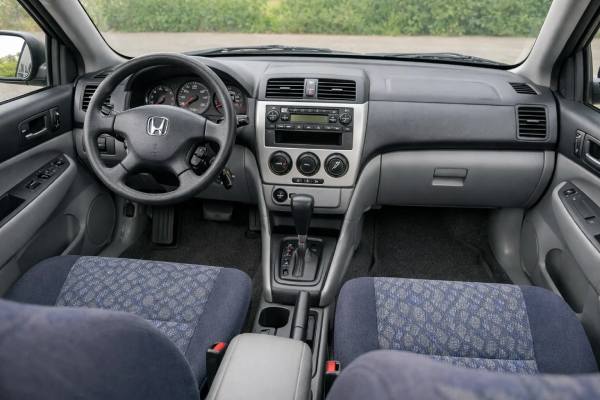
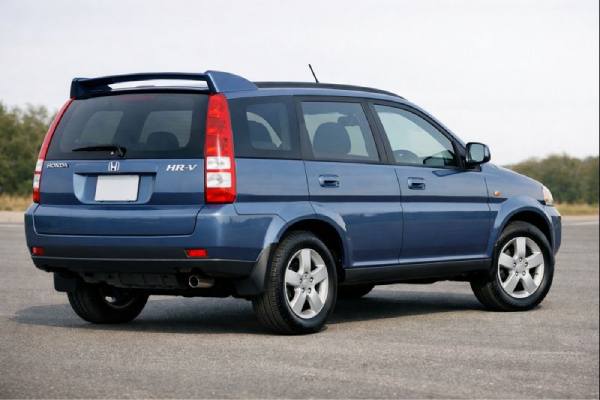
The 2000–2001 Honda HR-V GH4 in front-wheel drive with the D16W1 1.6-liter engine is the simplest, lightest way into first-generation HR-V ownership. You get the same compact footprint and tall seating position as the 4WD versions, but with fewer driveline parts to service and fewer age-related surprises underneath. The trade is traction: this HR-V relies on tires, weight balance, and careful throttle control rather than a rear-drive assist. With 105 hp, it’s also more about smooth momentum than quick acceleration—but the engine is straightforward, parts are widely known, and the chassis is pleasant at realistic speeds. The best examples feel tight and efficient; the worst feel tired because rubber, fluids, and cooling systems were ignored. If you start with a clean body and a documented timing-belt history, the GH4 FWD can still be a practical, low-stress small SUV for daily use.
Quick Specs and Notes
- FWD layout keeps servicing simpler than Real Time 4WD models and usually improves fuel economy slightly.
- Compact size with a tall cabin makes it easy to park while still carrying everyday gear.
- D16W1 is a proven, naturally aspirated Honda four-cylinder that tolerates regular use when cooling and oil service are consistent.
- Most “unreliability” today comes from age: coolant leaks, vacuum hoses, and worn suspension bushings—not the core engine design.
- Replace timing belt and water pump every 100,000 km (62,000 mi) or 7 years if records are missing.
Navigate this guide
- Why the GH4 FWD makes sense
- GH4 FWD key engineering numbers
- Badges, options, and safety basics
- Age-related faults and service actions
- Maintenance routine and buyer checklist
- Driving character and real efficiency
- Today’s best rivals and alternatives
Why the GH4 FWD makes sense
In the first-generation HR-V lineup, the FWD GH4 occupies a sweet spot for buyers who like the HR-V idea—upright seating, a useful hatch, and compact dimensions—but don’t need extra traction hardware. That matters in 2026 because age has shifted the ownership equation. The more complex the driveline, the more places there are for neglected fluids, mismatched tires, and worn mounts to create noise or vibration. In FWD form, the HR-V keeps the same basic chassis concept while removing the rear differential coupling, prop shaft, and related service points.
The GH4 body is also part of the appeal. Compared with the early 3-door, the 5-door layout is more practical for daily life: easier rear-seat access, simpler child-seat loading, and a cargo area that suits groceries, strollers, or weekend bags without “seat gymnastics.” Even if you rarely carry rear passengers, the convenience shows up in small moments—parking, loading, and cleaning.
From a handling standpoint, FWD fits the HR-V’s mission. The chassis is tuned for predictable grip rather than aggressive cornering. On good tires, it feels stable and easy to place, and it’s less sensitive to rear-end drivetrain behavior than on-demand AWD systems can be. In wet weather, the HR-V’s higher ride height and tall tires encourage a calm driving style: smooth inputs, gentle throttle, and earlier braking. If you drive it that way, it feels secure and consistent.
Where the FWD GH4 falls short is the same place every FWD small SUV falls short: low-grip starts and steep, slippery climbs. You can compensate more than people expect with proper tires (especially modern all-weather or winter tires) and by keeping the front suspension and alignment in good shape. But if you live in an area with frequent deep snow, muddy access roads, or steep icy driveways, the AWD HR-V’s extra traction is a real advantage.
A final reason this model makes sense is cost discipline. A clean FWD HR-V often lets you spend your budget where it matters—rust prevention, timing belt documentation, and a baseline fluid service—rather than chasing rare AWD-specific parts. In the long run, that can be the difference between a charming daily and a “project that never ends.”
GH4 FWD key engineering numbers
This section focuses on the specs you actually use: the engine and driveline basics, the chassis layout, key dimensions, and service-relevant capacities. Because first-generation HR-V details vary by market (and sometimes by build month), treat the numbers as a practical guide and confirm the final details by VIN, under-hood labels, or the correct service manual for your region.
Powertrain and efficiency
| Item | Specification |
|---|---|
| Engine code | D16W1 |
| Engine layout and cylinders | Inline-4, transverse |
| Valvetrain | SOHC |
| Valves per cylinder | 4 (typical for this family; verify by market) |
| Bore × stroke | 75.0 × 90.0 mm (2.95 × 3.54 in) |
| Displacement | 1.6 L (1,590 cc) |
| Induction | Naturally aspirated |
| Fuel system | PGM-FI multi-point injection |
| Compression ratio | ~9.4:1 (market-dependent) |
| Max power | 105 hp (78 kW) @ ~6,200 rpm |
| Max torque | ~135 Nm (100 lb-ft) @ ~3,400–3,500 rpm |
| Timing drive | Belt |
| Rated efficiency (typical combined) | ~8.0–8.8 L/100 km (29–27 mpg US / 35–32 mpg UK) |
| Real-world highway @ 120 km/h | ~8.5–9.5 L/100 km (28–25 mpg US), condition-dependent |
Transmission and driveline
| Item | Specification |
|---|---|
| Transmission | 5-speed manual (common) or CVT (market-dependent) |
| Drive type | FWD |
| Differential | Open |
Chassis, brakes, and tires
| Item | Specification |
|---|---|
| Suspension (front) | MacPherson strut (typical) |
| Suspension (rear) | Multi-link / De Dion-style arrangement (market literature varies) |
| Steering | Rack-and-pinion, hydraulic assist (common) |
| Brakes (front/rear) | Ventilated disc / drum (common) |
| Common tire size | 195/70 R15 (varies by trim) |
Dimensions and weights
Because “GH4” commonly refers to the 5-door body, the figures below align with the longer wheelbase format. Confirm exact numbers for your market and bumper style.
| Item | Typical figure |
|---|---|
| Length | ~4,110 mm (161.8 in) |
| Width | ~1,695–1,700 mm (66.7–66.9 in) |
| Height | ~1,575–1,675 mm (62.0–65.9 in), roof and trim dependent |
| Wheelbase | ~2,450–2,460 mm (96.5–96.9 in) |
| Ground clearance | ~170–175 mm (6.7–6.9 in) |
| Turning circle (kerb-to-kerb) | ~10.6–11.0 m (34.8–36.1 ft) |
| Kerb (curb) weight | ~1,150–1,240 kg (2,535–2,734 lb) |
| Fuel tank | 55 L (14.5 US gal / 12.1 UK gal) |
| Cargo volume | ~285 L (10.1 ft³) seats up (method varies) |
Performance benchmarks
| Metric | Typical figure (1.6 105 hp FWD) |
|---|---|
| 0–100 km/h (0–62 mph) | ~12.0–13.5 s (transmission and condition dependent) |
| Top speed | ~160–165 km/h (99–103 mph) |
| Braking distance | Highly tire-dependent; focus on brake condition and tire quality |
Fluids, capacities, and “decision-grade” torques
These values help you plan parts and budgets, but always verify before tightening critical fasteners.
| Item | Typical spec |
|---|---|
| Engine oil | 5W-30 or 10W-40 depending on climate and handbook |
| Engine oil capacity | ~3.3–3.6 L (3.5–3.8 US qt) with filter |
| Coolant | Honda-type long-life coolant, 50/50 mix |
| Manual gearbox oil | Honda MTF or equivalent spec per handbook |
| CVT fluid (if equipped) | Honda CVT fluid specified for the unit (do not substitute ATF) |
| A/C refrigerant | R-134a (check under-hood label) |
Common Honda torque anchors:
- Wheel nuts: ~108 Nm (80 lb-ft)
- Spark plugs: ~18 Nm (13 lb-ft)
- Oil drain plug: ~39 Nm (29 lb-ft)
Badges, options, and safety basics
On first-generation HR-Vs, trim names can be less informative than the actual equipment fitted. For buyers, the goal is to identify what affects safety, comfort, and long-term upkeep—then confirm it matches the paperwork and the car in front of you.
What trims usually change
Transmission choice is the biggest divider. A manual GH4 often feels more direct and tends to be more forgiving if the previous owner wasn’t perfect about fluid changes. A CVT car can be smooth and convenient, but it demands correct fluid and careful diagnosis when symptoms appear. If you want the lowest-risk ownership path, the manual is usually the safer bet.
Wheels, tires, and suspension condition matter more than trim labels. Many cars left the factory on 15-inch wheels with tall-profile tires. That tire shape supports ride comfort and rough-road tolerance, but it can feel vague if the tires are old or the alignment is off. If you test-drive two HR-Vs and one feels “tight” while the other feels “floaty,” the difference is often tires and bushings, not the model year.
Comfort equipment typically includes power windows, power mirrors, air conditioning, and sometimes heated mirrors, fog lights, and roof rails. For older cars, confirm these items function because repairs can be time-consuming even when parts are cheap.
Quick identifiers before you buy
- 5-door GH4 body: rear doors and longer wheelbase stance are the easy tells.
- FWD confirmation: no rear differential and no prop shaft underneath.
- ABS check: ABS warning light should illuminate at key-on and then go out.
- Airbag/SRS check: SRS light should also illuminate at key-on and then go out.
Safety ratings: what’s realistic for this model
Buyers often want Euro NCAP star ratings or IIHS grades, but many late-1990s vehicles were never tested under the modern programs people recognize today—or were tested under earlier protocols that don’t compare cleanly with current results. For the GH4 FWD, focus on what you can verify:
- Passive safety hardware: front airbags are common; confirm the SRS system is fault-free.
- Seatbelts: check retraction strength, latch function, and signs of crash-related replacements.
- Brakes and tires: stopping performance depends heavily on these; a well-maintained brake system with quality tires is a bigger real-world safety upgrade than any brochure claim.
Driver assistance (ADAS) expectations
There is no modern ADAS suite here—no automatic emergency braking, no adaptive cruise, no lane centering. That changes how you should think about “safe driving” in this car. The best safety improvements you can make are practical:
- Use modern tires appropriate for your climate (all-weather or winter tires if needed).
- Keep brake fluid fresh and calipers sliding freely.
- Restore lighting and aim headlights correctly for night driving.
- Keep suspension bushings and alignment within spec so the car responds predictably in emergency maneuvers.
If you approach the GH4 as an honest, older vehicle that needs honest upkeep, it can still be a safe, confidence-inspiring daily within its era’s limits.
Age-related faults and service actions
The D16W1 HR-V has a reputation for toughness, but by now the typical problems are less about engine internals and more about aging systems. Below is a practical map by prevalence and cost tier, with symptoms and fixes you can act on.
Common issues (usually low to medium cost)
- Oil leaks and seepage (common, low/medium):
Symptoms: oil smell, wet valve cover edge, minor drips after parking.
Likely causes: valve cover gasket, cam seals, aging PCV hoses, loose clamps.
Remedy: reseal with quality gaskets, replace brittle hoses, confirm PCV valve function, and clean the area so you can verify the result. - Idle surge or stalling (common, low/medium):
Symptoms: unstable idle, stalling when stopping, rough cold idle.
Likely causes: dirty throttle body, idle air control valve contamination, vacuum leaks.
Remedy: clean throttle body and idle passages, replace cracked vacuum hoses, then confirm base idle per correct procedure. - Ignition wear (common, medium):
Symptoms: misfire under load, hesitation in damp weather, weak acceleration.
Likely causes: worn distributor components (where fitted), old plug leads, tired coil/igniter (market-dependent).
Remedy: refresh ignition with reputable parts; cheap ignition parts often create repeat failures.
Occasional issues (can become expensive if ignored)
- Cooling system failures (occasional, medium/high):
Symptoms: temperature creep in traffic, coolant loss, heater changes, sweet smell.
Likely causes: radiator end-tank aging, thermostat issues, old hoses, neglected coolant.
Remedy: pressure test the system, replace weak components proactively, and bleed correctly to avoid air pockets. - CVT judder or flare (occasional, medium/high, CVT cars only):
Symptoms: shudder on take-off, RPM rises without matching speed, inconsistent engagement.
Likely causes: incorrect or old fluid, wear in start clutch components (unit dependent), adaptation issues.
Remedy: confirm correct Honda CVT fluid, service at conservative intervals, and diagnose early—waiting usually raises the cost.
Chassis and body age problems (often the true deal-breakers)
- Suspension bushing wear (common, medium):
Symptoms: clunks over bumps, vague steering, uneven tire wear.
Likely causes: front compliance bushings, ball joints, tired dampers.
Remedy: inspect systematically, align after repairs, and don’t “chase alignment” before fixing worn parts. - Corrosion hotspots (common by climate, high if advanced):
Symptoms: bubbling paint at arches, flaky seams, brake/fuel line corrosion.
Likely causes: winter salt, trapped dirt in seams, poor past repairs.
Remedy: prioritize underside inspection before purchase; severe rust can exceed the car’s value quickly.
Recalls and service actions
Recalls vary by market and registration history. The practical workflow is:
- Use official Honda recall search tools available for your region or Japan import history.
- Ask for paperwork or dealer confirmation of completion.
- Treat missing recall documentation as a negotiation point and a task to complete after purchase.
Even when a recall sounds minor, it can affect safety systems, door hardware, or airbag-related coverage—areas where you want certainty, not guesses.
Maintenance routine and buyer checklist
A good GH4 FWD maintenance plan is about reducing risk. You’re not trying to make the HR-V “new”; you’re trying to make it predictable. The easiest way is to establish a baseline the first month you own it, then follow conservative intervals.
Baseline service after purchase (first 30 days)
If records are incomplete, assume you need to reset the clock:
- Engine oil and filter (and verify oil level stays stable over the next 1,000 km).
- Coolant inspection: pressure test, check radiator and hoses, and replace the thermostat if you see temperature instability.
- Brake fluid (if older than two years).
- Transmission service:
- Manual: refresh MTF and inspect for leaks.
- CVT: use the correct Honda CVT fluid and consider a staged drain-and-fill approach if the fluid is very dark.
- Air filter and cabin filter (if equipped).
- Alignment check after verifying suspension components are healthy.
Practical maintenance schedule (distance or time)
- Engine oil and filter: every 7,500–10,000 km (4,700–6,200 mi) or 12 months.
- Engine air filter: inspect every 15,000 km (9,300 mi), replace ~30,000 km (18,600 mi).
- Cabin filter: every 15,000–30,000 km (9,300–18,600 mi) if equipped.
- Coolant: every 3–5 years (or per handbook for your coolant type).
- Brake fluid: every 2 years.
- Spark plugs: every 60,000–100,000 km (37,000–62,000 mi) depending on plug type.
- Timing belt and water pump: every 100,000 km (62,000 mi) or 7 years if unknown; include tensioner and inspect seals while open.
- Valve clearance (if adjustable): inspect around 80,000–120,000 km (50,000–75,000 mi) or if cold-start ticking appears.
- Accessory belt and coolant hoses: inspect yearly; replace at first signs of cracking or swelling.
- Tire rotation: every 10,000 km (6,200 mi) and align if wear is uneven.
- 12 V battery test: annually; replacement often every 4–6 years.
Buyer’s checklist that prevents expensive surprises
- Cold start behavior: no persistent belt squeal, no warning lights that stay on.
- Temperature control: stable gauge after a 20-minute drive with a traffic segment.
- Transmission feel:
- Manual: no grinding into gears, clutch engages smoothly.
- CVT: no shudder on take-off, no delayed engagement.
- Underside condition: look for rust on structural seams, brake lines, and mounting points.
- Tire wear pattern: uneven wear suggests alignment or bushing issues.
- Timing belt proof: receipts matter more than seller confidence.
Long-term durability outlook
A well-kept GH4 FWD can be a long-running daily because the fundamentals are simple. The cars that become money pits are typically the ones with rust, unknown timing belt history, or a neglected cooling system. Buy the cleanest structure you can, then maintain it like a machine—not a miracle.
Driving character and real efficiency
The 105 hp HR-V is not about speed; it’s about usable, predictable performance. When the car is healthy, it feels light on its feet for a small SUV, and it rewards smooth driving more than aggressive inputs.
Ride, handling, and steering
The HR-V’s taller stance doesn’t mean sloppy dynamics—at sensible speeds it feels composed. The suspension is tuned to absorb rough edges, especially on the common 15-inch, higher-profile tire setup. Steering is typically light with decent accuracy, and the car’s compact width makes it easy to thread through city streets. If the car feels nervous or wanders at motorway speed, suspect alignment, tired dampers, or cheap tires before blaming the design.
Braking feel is usually progressive, but consistency depends on maintenance. Old brake fluid, sticky caliper sliders, or rear drum adjustment issues can make braking feel uneven. A brake refresh often transforms the way these cars feel.
Engine and transmission behavior
The D16W1 makes its power higher in the rev range than many modern engines, so the car feels best when you keep it in the right gear and let it breathe. In a manual, that means downshifting earlier on hills and merging with intent. In a CVT, acceleration can feel smooth but “elastic,” with the engine holding revs while road speed catches up. That’s normal behavior to a point; shudder or delayed engagement is not.
Because this is FWD, traction is primarily a front-tire story. Worn front tires or weak dampers can cause wheelspin in rain, and poor alignment can make the car feel less stable than it should.
Real-world fuel economy
For a small, tall vehicle of this era, fuel use is reasonable but sensitive to speed and tire choice:
- City-heavy driving: ~9.0–10.5 L/100 km (26–22 mpg US)
- Highway 100–120 km/h: ~8.5–9.5 L/100 km (28–25 mpg US)
- Mixed use: ~8.6–9.8 L/100 km (27–24 mpg US)
Cold weather typically adds consumption through longer warm-up periods, denser air, and winter tires. Short trips are especially hard on economy and on the engine’s long-term health, so shorten oil-change intervals if your use is mostly under 10 km at a time.
What actually improves the driving experience
If you want this HR-V to feel “better than its age,” prioritize these in order:
- High-quality tires suited to your climate.
- Suspension bushings, ball joints, and alignment.
- Brake fluid refresh and hardware service.
- Engine mounts if vibration is excessive.
- Cooling system confidence (because overheating ruins everything).
Done in that order, the GH4 FWD becomes a calm, pleasant daily that feels cohesive rather than worn out.
Today’s best rivals and alternatives
If you’re shopping a 2000–2001 HR-V FWD today, you’re usually balancing three things: compact size, reliability, and the ability to handle real-world roads without stress. Here are the alternatives that most often make sense, plus the trade-offs that matter in the used market.
Toyota RAV4 (first generation)
The first-gen RAV4 is the closest “same idea” competitor: compact, car-like, and practical. Many buyers like its straightforward feel and broad parts support. The risk profile is similar to the HR-V now—rust and neglected maintenance are the main threats. If you want a slightly more substantial feel at speed, the RAV4 can be appealing. If you prefer Honda ergonomics and a lighter, simpler FWD package, the HR-V still holds its own.
Honda CR-V (first generation)
A CR-V is bigger and often easier to live with for families, with more cargo space and a more relaxed highway personality. The downside is size and sometimes higher running costs (tires, brakes, and fuel). If you regularly do motorway trips and want more cabin comfort, an older CR-V can be the more satisfying daily. If you value easy parking and low bulk, the HR-V remains the better city fit.
Daihatsu Terios (first generation)
Terios is small and useful, often with a simple, durable vibe. The interior and highway refinement typically trail the Honda, but some owners like its honest utility. Choose it if you prioritize compact toughness over comfort. Choose the HR-V if you want a more car-like feel and a cabin that’s generally nicer to spend time in.
Suzuki Vitara (late 1990s to early 2000s)
Vitara options can lean more “traditional SUV,” sometimes with more off-road credibility. The trade is refinement: they may feel noisier, less composed on broken pavement, and sometimes thirstier. If you truly need rough-road tolerance, Vitara can be a better tool. If your reality is mostly city plus occasional poor roads, the HR-V is often the more pleasant companion.
How to decide quickly
- Choose HR-V GH4 FWD if you want compact size, simple upkeep, and a light, predictable drive.
- Choose RAV4 if you want a similar concept with Toyota flavor and strong parts support.
- Choose CR-V if you want more space and a calmer motorway personality.
- Choose Vitara/Terios if your use includes rougher roads and you accept comfort compromises.
In the end, condition beats model choice. A rust-free HR-V with records will almost always be the smartest buy compared with a “better” rival that needs structural repair and deferred maintenance.
References
- HR-V 99 1999 (Press Release)
- Geneva Motorshow 2000 2000 (Press Release)
- クルマ | 取扱説明書ダウンロード | Honda 日本製品情報サイト 2026 (Owner’s Manual)
- HR-Vのリコール | Honda 2005 (Recall Database)
- Takata Airbag Recall – Searching for Vehicles Subject to the Recall 2026 (Recall Database)
Disclaimer
This article is for informational purposes only and is not a substitute for professional inspection, diagnosis, or repair. Specifications, torque values, service intervals, and procedures can vary by VIN, market, production date, and equipment. Always verify details against your vehicle’s official Honda service documentation, labels, and recall records before ordering parts or performing work.
If you found this guide useful, please consider sharing it on Facebook, X (Twitter), or your preferred community to support our work.