


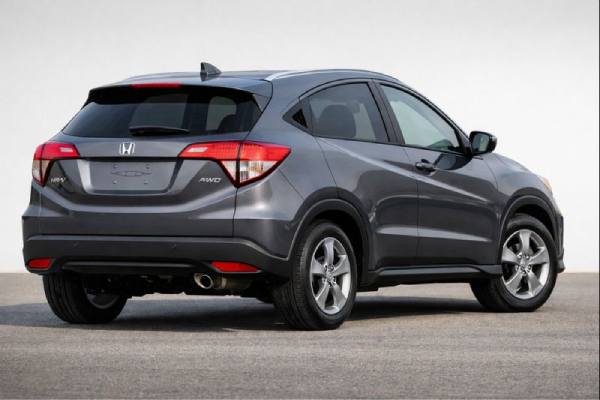
The 2015–2018 Honda HR-V FWD (RU1) pairs a simple front-wheel-drive layout with unusually smart packaging, which is why it still appeals as a practical used crossover. Its 1.5-litre i-VTEC petrol (L15Z family) is tuned for smooth, high-rev power rather than punchy low-end torque, and it’s offered with either a 6-speed manual or a CVT calibrated to feel more “geared” than older Honda units. Underneath, the HR-V uses MacPherson struts up front and a torsion-beam rear axle—straightforward hardware that tends to age well if bushings and alignment are kept in check.
For owners, the big story is usability: a wide boot opening, versatile rear seating, and low running costs when basic fluids are serviced on time. Buy well, maintain it sensibly, and it’s one of the more stress-free small crossovers of its era.
Essential Insights
- Efficient and easy to live with, especially on 16-inch wheels and conservative tyre pressures.
- Practical cabin and luggage layout makes it feel “bigger than it is” for daily family use.
- Strong safety equipment for the class, including low-speed autonomous braking on European cars.
- CVT cars reward strict fluid care; budget for more frequent CVT fluid changes than “lifetime” advice.
- Plan oil and filter service about every 10,000–15,000 km (6,000–9,000 mi) or 12 months, depending on driving style.
What’s inside
- Honda HR-V RU1 ownership brief
- RU1 L15Z specs and dimensions
- RU1 trims, options, and safety
- Reliability trends and known fixes
- Maintenance schedule and buyer checks
- Driving feel and real mpg
- RU1 HR-V versus key rivals
Honda HR-V RU1 ownership brief
The RU1 HR-V (front-wheel drive) sits in a sweet spot between supermini-based crossovers and larger compact SUVs. It’s tall enough to be easy to get in and out of, but small enough to park without drama. Honda’s engineering choices are deliberately conservative: unit-body construction, a simple rear torsion beam, and drivetrains that prioritize low operating costs over headline performance. That recipe matters in the real world because it reduces the number of high-cost “surprises” you tend to see on more complex AWD systems or multi-link rear suspensions.
With the 1.5 i-VTEC petrol, expect a refined, willing engine that likes revs. The payoff is smoothness and decent economy; the trade-off is that it won’t feel “turbo quick” around town. If your driving is mostly urban with short trips, the manual often feels more responsive at low speed. If you spend more time in traffic or want a calmer commute, the CVT can be the better match—as long as it has a clean service history and gets fresh fluid at sensible intervals.
Ownership practicality is a genuine advantage here. The boot is large for the class, and the cabin is designed around flexible daily use rather than flashy styling. A key reason is the fuel tank layout and rear seat design, which allow a flatter, more usable load space when the rear seats are folded. For buyers who carry sports gear, prams, or bulky shopping, the HR-V’s shape and opening are worth more than a few extra horsepower.
Where the RU1 needs respect is basics: tyres, alignment, and fluid service. A set of mismatched tyres or ignored suspension wear will make it feel nervous and noisy. And like many modern petrol engines, it’s happiest when oil quality is kept high and the cooling system is not neglected. Treat it like a long-term appliance rather than a disposable runabout, and it tends to reward you.
RU1 L15Z specs and dimensions
Below are key specifications for the 2015–2018 HR-V RU1 FWD with the 1.5 i-VTEC petrol and manual or CVT, using commonly published European/UK technical data for this generation. Values can vary slightly by market, wheel size, and trim.
Powertrain and efficiency
| Item | Specification |
|---|---|
| Code | L15Z family (1.5 i-VTEC petrol) |
| Engine layout and cylinders | Inline-4; 4 valves/cylinder; i-VTEC (variable valve timing and lift) |
| Bore × stroke | 73.0 × 89.5 mm |
| Displacement | 1.5 L (1,498 cc) |
| Induction | Naturally aspirated |
| Fuel system | Direct injection (market dependent) |
| Compression ratio | 11.5:1 |
| Max power | 130 hp (96 kW) @ 6,600 rpm |
| Max torque | 155 Nm (114 lb-ft) @ 4,600 rpm |
| Timing drive | Chain (inspect for noise and correlation faults; no routine interval) |
| Rated efficiency (combined) | ~5.2–5.6 L/100 km (54.3–50.4 mpg UK) depending on transmission and wheels |
| Real-world highway @ 120 km/h | Typically ~6.5–7.2 L/100 km (36–33 mpg US / 43–39 mpg UK), weather and tyres matter |
Transmission and driveline
| Item | Specification |
|---|---|
| Transmission | 6-speed manual or CVT with 7 simulated steps |
| Drive type | FWD |
| Differential | Open |
Chassis and dimensions
| Item | Specification |
|---|---|
| Suspension (front/rear) | MacPherson strut / H-type torsion beam |
| Steering | Rack and pinion; electric assist; ~2.79 turns lock-to-lock |
| Brakes | 293 mm ventilated front discs / 282 mm rear discs |
| Wheels and tyres | 215/60 R16 or 215/55 R17 (typical European fitment) |
| Length | 4,294 mm (169.1 in) |
| Width | 2,019 mm (79.5 in) including mirrors |
| Height | 1,605 mm (63.2 in) including antenna |
| Wheelbase | 2,610 mm (102.8 in) |
| Turning circle | 10.6 m at wheels / 11.4 m at body |
| Kerb weight | Typically ~1,241–1,322 kg (2,736–2,915 lb), varies by trim and gearbox |
| Fuel tank | 50 L (13.2 US gal / 11.0 UK gal) |
| Cargo volume | 470 L seats up / 1,533 L seats folded (method varies by market) |
Performance and capability
| Item | Typical figure |
|---|---|
| 0–100 km/h (0–62 mph) | ~10.7 s (6MT) / ~11.2 s (CVT) |
| Top speed | ~192 km/h (119 mph) 6MT / ~187 km/h (116 mph) CVT |
| Towing capacity | Often up to ~1,000 kg braked for petrol versions (market dependent) |
| Roof load | Commonly 75 kg with approved roof bars (check your roof rail setup) |
Fluids and service capacities (practical owner guidance)
Because capacities and specifications can differ by VIN and market, use these as decision-making ranges and verify on your official documentation:
| Item | Typical specification |
|---|---|
| Engine oil | 0W-20 preferred; some markets allow 5W-30; capacity often ~3.5–3.8 L with filter |
| Coolant | Honda Type 2/long-life premix; system capacity often ~4–5 L |
| CVT fluid | Honda CVT fluid (market-specific spec such as HCF-2); drain-and-fill commonly ~3–4 L |
| Manual gearbox oil | Honda MTF; typically ~1.5–2.0 L |
| Brake fluid | DOT 4 (most EU markets) |
| A/C refrigerant | Varies by year and market (R134a or R1234yf); verify under-bonnet label |
Electrical
| Item | Typical specification |
|---|---|
| 12V battery | Size and CCA vary; test condition rather than age alone |
| Spark plugs | Long-life iridium (gap and part number vary by engine spec) |
Safety and driver assistance (high-level)
| Item | Typical RU1 equipment notes |
|---|---|
| Airbags | Often 8 airbags on European cars (front, side, curtains, and other coverage depending on market) |
| Stability and braking aids | ABS, EBD, Brake Assist, stability control, hill start assist (varies by market) |
| Low-speed AEB | City-Brake Active System on European HR-V models (market and grade dependent) |
RU1 trims, options, and safety
Trim naming depends heavily on country, but most European/UK RU1 HR-V petrol lineups were structured as entry, mid, and upper grades, with equipment climbing quickly in comfort and safety. If you’re shopping used, your goal is not “the highest trim,” but the trim that matches your priorities—especially transmission type, wheel size, and the safety pack fitted.
Trims and options that change the experience
Common patterns you’ll see:
- Entry grades usually bring the essentials: manual air conditioning, basic infotainment, and smaller wheels (often 16-inch). These can ride more quietly and more comfortably because the tyre sidewall is taller.
- Mid grades are the sweet spot for many buyers. They often add parking sensors or a reversing camera, better infotainment, and upgraded interior touches without forcing the largest wheels.
- Upper grades tend to add premium cabin features (keyless entry, upgraded lighting, leather or part-leather, and sometimes panoramic roof options in certain markets). They may also bundle more driver-assistance features.
Wheel choice is not just cosmetic. 16-inch wheels often deliver better ride compliance and slightly better real-world economy; 17-inch wheels can sharpen steering response but may increase tyre cost and road noise.
For identification, use more than badges. Check:
- Wheel size and tyre spec (often the quickest clue).
- Infotainment unit and camera presence (screen size and button layout).
- Steering wheel controls (cruise/limiter layouts can differ with safety packs).
- VIN build data and original sales invoice if available.
Safety ratings and what they mean
In Europe, the HR-V achieved a five-star Euro NCAP rating in the era’s test regime. That’s a strong baseline, but remember: a star rating reflects a specific test protocol and standard equipment at the time. When comparing cars across different years, focus on what is physically fitted to the vehicle you’re buying: the number and type of airbags, stability control, and whether autonomous braking features are present.
In the United States, the HR-V was also tested by IIHS. Results show solid structure in several crash tests, but equipment-related categories—especially headlights—can be weak depending on configuration. This matters because “safe car” is not only about crash structure; it’s also about seeing hazards early at night and having predictable braking and tyre performance in bad weather.
Safety systems and driver assistance on RU1
European HR-V models were notable for offering low-speed autonomous braking on many versions. On some grades, additional driver aids were packaged together, commonly including:
- Forward Collision Warning
- Lane Departure Warning
- Traffic Sign Recognition
- Intelligent Speed Limiter
- High-beam support
Also look for practical family safety features:
- ISOFIX/LATCH points (confirm the number of tether points and accessibility)
- Rear door child locks
- Tyre pressure monitoring approach (system type varies by market)
After any collision repair or windscreen replacement, verify calibration requirements for camera-based systems. Even when features are simple, poor alignment or incorrect camera mounting can cause nuisance warnings or reduced effectiveness.
Reliability trends and known fixes
Overall, the RU1 HR-V is a “good fundamentals” vehicle: simple suspension layout, proven Honda electrical architecture, and an engine that typically ages well when serviced correctly. Most problems are not catastrophic; they’re usually wear-related, maintenance-related, or the result of ignored symptoms. The best approach is to sort issues by how often they happen and how expensive they become if neglected.
Common (plan for it)
- CVT fluid deterioration and drivability changes (CVT cars)
- Symptoms: judder on pull-away, flare-like rev behavior, sluggish response, or a “rubber band” feel that worsens over time.
- Likely cause: aged fluid, incorrect fluid type, or missed service intervals.
- Remedy: drain-and-fill with the correct Honda CVT fluid on a strict schedule; avoid “universal” fluids.
- Suspension consumables (bushings, drop links, alignment drift)
- Symptoms: clunks over bumps, vague steering on center, uneven tyre wear.
- Likely cause: normal wear amplified by potholes, heavy loads, or incorrect tyre pressures.
- Remedy: replace worn links/bushings, then do a quality alignment with correct load and tyre pressures.
- Brake maintenance issues (slider pins, pad wear patterns)
- Symptoms: uneven pad wear, squeal, slight pull under braking, hot wheel smell after a drive.
- Likely cause: sticky caliper slides, infrequent cleaning, low-quality pads.
- Remedy: service sliders and hardware; use decent pads and flush brake fluid on schedule.
Occasional (watch for it)
- Direct-injection intake deposits (driving-style dependent)
- Symptoms: rough cold idle, hesitant response, occasional misfire codes.
- Likely cause: deposit buildup on intake valves on DI engines, especially with short trips.
- Remedy: drive it hot occasionally, keep oil changes consistent, and consider professional intake cleaning if symptoms appear.
- A/C performance decline
- Symptoms: weak cooling, intermittent performance in heat.
- Likely cause: small leaks, condenser damage, or age-related component wear.
- Remedy: leak test, repair properly, and recharge to the exact label specification.
- Battery and charging complaints
- Symptoms: slow cranking, warning lights after sitting, start-stop (if fitted) behaving oddly.
- Likely cause: ageing 12V battery, short-trip use, poor terminal connections.
- Remedy: battery test with measured CCA and charging voltage; clean connections.
Rare (but expensive if ignored)
- Timing-related noise or correlation faults
- Symptoms: persistent rattle on startup, cam/crank correlation codes, rough running.
- Likely cause: tensioner wear, chain stretch (rare), or oil neglect.
- Remedy: diagnose early; correct oil grade and interval reduces risk.
Recalls, TSBs, and service actions
Recall patterns vary by market and VIN range. The practical rule is simple: run the VIN through official recall databases and insist on written proof of completion. If the seller can’t show recall status, treat it as a negotiation item and plan a dealer check. For buyer confidence, prioritize cars with full dealer history or well-documented specialist servicing, especially on CVT models where correct fluid matters.
Maintenance schedule and buyer checks
A well-maintained HR-V RU1 is usually inexpensive to own, but the cost curve changes quickly if you buy a neglected example. Use a schedule that reflects how people actually drive small crossovers—short trips, city use, and occasional motorway runs—and you’ll avoid most of the common ownership headaches.
Practical maintenance schedule (distance or time, whichever comes first)
- Engine oil and filter: every 10,000–15,000 km (6,000–9,000 mi) or 12 months. Short trips and cold weather push you to the shorter end.
- Engine air filter: inspect every 15,000–20,000 km; replace about every 30,000–40,000 km (dusty areas sooner).
- Cabin filter: every 15,000–30,000 km or annually if allergies/dust are an issue.
- Spark plugs (iridium): commonly 90,000–120,000 km (55,000–75,000 mi); replace sooner if misfires or poor cold running appear.
- Coolant: typically long-life; often around 5–10 years depending on the coolant spec used in your market.
- Brake fluid: every 2 years (humidity and ABS components benefit from fresh fluid).
- Brake inspection: at every service; clean and lubricate slider pins as needed.
- Manual gearbox oil: consider replacing around 80,000–120,000 km, especially if shifts feel notchy in cold weather.
- CVT fluid: conservative owners often do a drain-and-fill around 40,000–60,000 km (or earlier if mostly city driving).
- Tyre rotation and alignment: rotate about every 10,000–12,000 km; align whenever tyres show uneven wear or after suspension work.
- Serpentine belt and hoses: inspect every service after 60,000 km; replace at signs of cracking or noise.
- 12V battery test: yearly after year 4; many batteries last 4–6 years depending on usage.
Fluid specs, capacities, and “owner-grade” torque references
For decision-making, these guidelines help you discuss service intelligently:
- Oil: 0W-20 is commonly specified; confirm your market.
- CVT: use only the correct Honda-spec CVT fluid.
- Brake fluid: DOT 4 is common in many EU markets.
- Typical torque references to confirm: wheel nuts often around 108 Nm (80 lb-ft); sump drain bolts often around 30–40 Nm (22–30 lb-ft) depending on design.
Treat those torque figures as prompts, not gospel—verify for your VIN.
Buyer’s guide: what to inspect before purchase
1) Drivetrain and transmission
- CVT: smooth pull-away, no judder, no delayed engagement, and a documented CVT fluid history.
- Manual: clutch bite point and slip test in a high gear at low rpm; listen for bearing noise.
2) Suspension and tyres
- Look for uneven tyre wear (inner shoulders are a common clue of alignment drift).
- Check for clunks over speed bumps and rough surfaces.
3) Brakes
- Check pad thickness and rotor condition; feel for vibration under moderate braking.
- Inspect for seized sliders if one wheel is noticeably dirtier or hotter.
4) Body and corrosion hotspots
- Inspect underbody edges, subframe areas, and rear wheel arches depending on climate.
- Check tailgate shut lines and water ingress signs in the boot.
5) Electronics
- Verify all driver-assistance warnings clear properly after startup.
- Confirm camera and parking sensors work consistently.
Long-term outlook: if you choose a clean-history car and maintain the CVT (or clutch) properly, the RU1 HR-V generally delivers a long service life with manageable wear-item costs.
Driving feel and real mpg
On the road, the RU1 HR-V feels engineered for calm predictability rather than excitement. The seating position is upright with good visibility, and the chassis is stable at motorway speeds. The trade-off is that the torsion-beam rear suspension can feel a bit busy over sharp broken surfaces compared to some multi-link rivals, especially on larger wheels with lower-profile tyres.
Ride, handling, and NVH
- Ride: 16-inch wheels generally ride more softly and quietly. With 17s, the car can feel firmer on potholes and expansion joints.
- Handling: safe, mild understeer when pushed, with a steady rear end. It’s confidence-inspiring rather than playful.
- Steering: light-to-medium weight with a consistent response. It’s not a feedback-rich setup, but it’s accurate enough for daily driving.
- Braking feel: strong and stable with good pedal consistency when the system is maintained; neglected caliper hardware can cause uneven feel.
Cabin noise is usually dominated by tyres and road surface. If an HR-V feels unusually loud, suspect cheap tyres, uneven wear, or alignment issues before blaming the car.
Powertrain character: manual vs CVT
The 1.5 i-VTEC petrol makes its best work higher in the rev range, so you’ll use more throttle than you might in a small turbo SUV. The 6-speed manual suits drivers who like controlling the engine, especially for hilly routes or quick merges. The CVT is tuned to feel less “elastic” than older CVTs, and it can simulate stepped ratios under load. When healthy, it’s smooth and efficient. When neglected, it’s the costliest part of ownership.
Real-world efficiency
Official test numbers can look excellent, but your real-world result depends on speed, tyres, temperature, and trip length:
- City: typically 6.8–8.0 L/100 km (35–29 mpg US / 42–35 mpg UK), higher in winter or short trips.
- Highway (100–120 km/h): often 6.5–7.2 L/100 km (36–33 mpg US / 43–39 mpg UK).
- Mixed driving: many owners land around 6.2–7.0 L/100 km (38–34 mpg US / 46–40 mpg UK) with sensible tyres and smooth driving.
Cold weather has a noticeable effect: longer warm-up times, winter tyres, and dense air can add roughly 0.5–1.0 L/100 km depending on conditions.
Traction and control (FWD reality)
As a FWD crossover, traction is mostly tyre-dependent. With quality all-season or winter tyres, it’s competent on wet roads and light snow. Stability control tuning is conservative and generally unobtrusive. If you live in a steep, snowy area, tyre choice and ground clearance will matter more than the badge on the tailgate.
RU1 HR-V versus key rivals
The RU1 HR-V competed in one of the busiest segments of the decade, and it still cross-shops well today. The best comparison comes down to what you value most: cabin versatility, driving feel, safety equipment, or repair costs.
Versus Nissan Juke and early Qashqai variants
- HR-V advantage: more usable rear seat and boot, more “grown-up” driving position, and a calmer ride.
- Nissan advantage: some turbo engines feel quicker at low rpm.
- Decision tip: if you want practicality first, HR-V wins; if you want punchy city acceleration, a small turbo can feel livelier.
Versus Renault Captur and Peugeot 2008 (early generations)
- HR-V advantage: strong packaging, generally durable mechanical layout, and a dependable feel over years of use.
- French rivals advantage: often more modern infotainment features for the money and lighter steering in town.
- Decision tip: pick HR-V for long-term “set and forget” ownership; pick the others if you prioritize cabin tech and don’t mind being more selective about service history.
Versus Mazda CX-3
- HR-V advantage: cabin and boot versatility; it’s simply more practical.
- CX-3 advantage: sharper handling and a more engaging driving feel.
- Decision tip: if you drive solo and value steering feel, CX-3 is appealing; if you carry people and gear, HR-V is the easier daily tool.
Versus Hyundai Kona (early) and Kia Stonic
- HR-V advantage: proven packaging and mature ride.
- Korean rivals advantage: often newer driver-assistance suites depending on year and trim, sometimes longer warranty coverage (region dependent).
- Decision tip: compare equipment lists carefully; the HR-V’s value often comes from condition and history, not just features.
Bottom line
Choose the RU1 HR-V if you want a compact crossover that behaves like a dependable household appliance: practical, efficient, and easy to live with. In this segment, it’s rarely the fastest or flashiest, but it’s often the one that still feels tight and sensible when the odometer climbs—provided you respect tyres, alignment, and transmission fluid service.
References
- Honda HR-V UK Press Kit 2015 (Press Kit)
- Honda HR-V – Euro NCAP Results 2015 2015 (Safety Rating)
- 2016 Honda HR-V 2016 (Safety Rating)
- Vehicle Detail Search – 2016 HONDA HR-V SUV FWD#recalls | NHTSA 2016 (Recall Database)
- Honda Owners Manuals | Honda HR-V | Owners | Honda UK 2026 (Owner’s Manual Portal)
Disclaimer
This article is for informational purposes only and is not a substitute for professional inspection, diagnosis, or repair. Specifications, torque values, service intervals, and procedures can vary by VIN, market, model year, and equipment. Always verify details using your official Honda service information and owner’s documentation for your exact vehicle.
If you found this guide useful, please consider sharing it on Facebook, X (Twitter), or your favorite forum to support our work.