
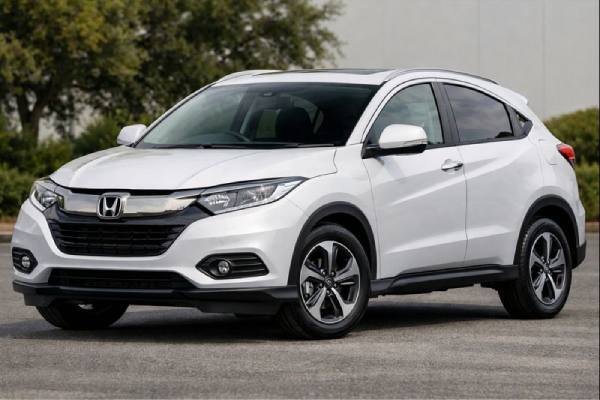
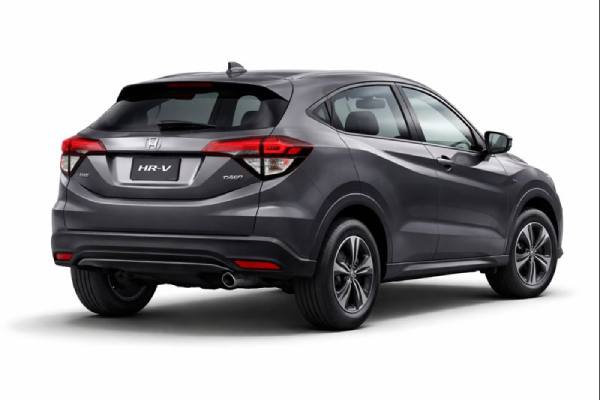
If you’re shopping for a facelifted Honda HR-V with the 1.8-liter engine, the FWD RU5 configuration is usually the “simple and sensible” pick: naturally aspirated power, fewer AWD-related parts to maintain, and a chassis that’s tuned more for daily comfort than sporty flash. The R18Z9 1.8 i-VTEC is not a torque monster, but it’s predictable and easy to live with, and the CVT (when treated correctly) matches the car’s relaxed mission well.
Where ownership gets interesting is the balance this HR-V strikes: compact exterior dimensions, a surprisingly flexible interior packaging approach, and strong safety tech availability—paired with the usual small-SUV compromises (road noise, limited passing punch, and a few age-and-mileage wear points). This guide focuses on what matters most: the hard specs, common issues, and how to keep one reliable long-term.
Essential Insights
- Strong everyday usability: compact footprint with a genuinely flexible cabin and cargo layout.
- Straightforward drivetrain: 1.8 NA engine avoids turbo complexity and heat management concerns.
- FWD keeps running costs lower than AWD in many markets (fewer fluids and driveline parts).
- CVT longevity depends on fluid discipline and driving style; neglect is expensive.
- Plan engine-oil service around 12 months / 10,000–12,000 km (or sooner in short-trip use).
Jump to sections
- RU5 1.8 facelift identity
- R18Z9 specs and capacities
- Trim equipment and safety tech
- Known problems and campaigns
- Service schedule and buyer checks
- Driving feel and fuel economy
- Competitors and best alternatives
RU5 1.8 facelift identity
The 2019–2022 facelift HR-V sits in a sweet spot for buyers who want a compact crossover that behaves more like a durable hatchback than a “mini SUV.” In many regions, the RU5 label is tied to the front-wheel-drive version with the 1.8-liter i-VTEC engine. The key takeaway is that this configuration prioritizes low complexity: a naturally aspirated engine, a single driven axle, and a chassis that’s built to absorb poor roads without feeling fragile.
What changed with the facelift matters to owners. First, structural and crash-performance updates arrived around the 2019 model year in several markets, and safety testing notes often describe reinforcements to the front structure and pillars for improved small-overlap and frontal protection. In real life, that can translate to a more confidence-inspiring body shell and better crash-test applicability across 2019–2022 builds. Second, infotainment, lighting, and driver-assistance availability evolved by trim and year. That means two “same-year” cars can feel very different depending on whether they have the full safety suite or the base setup.
From an engineering perspective, the HR-V’s practical appeal is packaging. The cabin layout typically provides a high seating point without the bulky feel of larger crossovers, and the rear area is designed to switch roles quickly: commuter during the week, cargo hauler on weekends. This is also where the FWD model makes sense—without AWD hardware, you often gain a bit of weight advantage, fewer driveline wear parts, and slightly simpler underbody service access.
Ownership priorities should match the car’s personality. This is not a fast or sporty compact SUV. It’s a steady, efficient daily driver that rewards routine maintenance and sensible tire choices. Buy it for durability, space efficiency, and predictable running costs—and you’ll likely be happy. Buy it expecting strong passing power or premium quietness, and you’ll spend a lot of time wishing it were something else.
R18Z9 specs and capacities
Below are the most relevant technical details for the facelift HR-V FWD with the 1.8-liter engine. Some values vary by market, trim, and tire package; where factory-public values aren’t consistently published, ranges are provided and you should confirm against VIN-specific documentation.
Powertrain and efficiency
| Item | Specification |
|---|---|
| Code | R18Z9 |
| Layout | Inline-4 (I-4), i-VTEC |
| Displacement | 1.8 L (1799 cc) |
| Induction | Naturally aspirated |
| Fuel system | Port fuel injection (typical for this engine family) |
| Max power | 141 hp (105 kW) (market dependent) |
| Max torque | ~172 Nm (~127 lb-ft) (typical for 1.8 HR-V applications) |
| Timing drive | Chain (typical for R-series) |
| Rated efficiency | Example (Canada, CVT FWD): 8.4 / 7.0 / 7.8 L/100 km city/hwy/combined |
| Real-world highway @ 120 km/h | Expect ~7.5–8.5 L/100 km (varies by wind, tires, load) |
| Aerodynamics | Cd and frontal area not consistently published; typical small-SUV Cd is ~0.33–0.36 |
Transmission and driveline
| Item | Specification |
|---|---|
| Transmission | CVT |
| Drive type | FWD |
| Differential | Open |
Chassis and dimensions (example: 2022 spec sheet values)
| Item | Specification |
|---|---|
| Suspension (front/rear) | MacPherson strut / torsion beam |
| Steering | Electric power-assisted rack-and-pinion; 2.71 turns lock-to-lock |
| Wheels/tires | 215/55 R17 (common) |
| Ground clearance | 185 mm (7.3 in) no-load (FWD example) |
| Length / Width / Height | 4348 mm / 1772 mm / 1605 mm (171.2 in / 69.8 in / 63.2 in) |
| Wheelbase | 2610 mm (102.8 in) |
| Turning circle (kerb-to-kerb) | 5.7 m (18.7 ft) |
| Curb weight | ~1320 kg (2910 lb) (FWD example) |
| GVWR | ~1815 kg (4000 lb) (FWD example) |
| Fuel tank | 50 L (13.2 US gal / 11.0 UK gal) |
| Cargo volume | 688 / 1665 L seats up/down (24.3 / 58.8 ft³), method varies by market |
Performance and capability (typical real-world)
| Item | Typical result |
|---|---|
| 0–100 km/h (0–62 mph) | ~10.5–11.5 s (CVT, depending on tires and conditions) |
| Top speed | ~180–190 km/h (112–118 mph) |
| Braking 100–0 km/h | ~39–42 m (128–138 ft) |
| Towing capacity | Often not rated or very limited; treat as “light-duty only” unless your manual states otherwise |
| Roof load | Commonly 50–75 kg (110–165 lb) depending on roof system |
Fluids and service capacities (typical guidance—verify by VIN)
| Fluid | Specification | Typical capacity |
|---|---|---|
| Engine oil | 0W-20 (Honda spec for many 2019–2022 NA engines) | ~3.5–3.7 L (3.7–3.9 US qt) with filter |
| Coolant | Honda long-life coolant; 50/50 mix | ~4–5 L (varies by system) |
| CVT fluid | Honda-spec CVT fluid (often HCF-2 in many markets) | drain/fill often ~3–4 L; total varies |
| Brake fluid | DOT 3 / Honda equivalent | flush, not “capacity” based |
| A/C refrigerant | Market dependent | confirm under-hood label |
Safety and driver assistance (high-level)
| Item | Notes |
|---|---|
| IIHS crashworthiness | Applies to 2019–2022 models on several tests; headlights and crash-prevention ratings vary by trim/option |
| ADAS | AEB/FCW, LKAS/LKA, ACC and related features may be standard or optional depending on market and year |
Trim equipment and safety tech
Trim naming varies by country, but most facelift 2019–2022 HR-V lineups follow a predictable ladder: a base trim aimed at value, mid-trims that add comfort and connectivity, and a top trim that bundles lighting upgrades, driver assistance, and interior finish improvements. For buyers, the “best” trim usually isn’t the top one—it’s the one that combines the safety suite you want with the wheels, tires, and interior materials you’re willing to maintain.
Quick identifiers that help in the real world
- Wheels and lighting: Many higher trims move to alloy wheels and upgraded headlights. In safety testing, headlight ratings can vary sharply by trim, so “same car” isn’t always “same night visibility.”
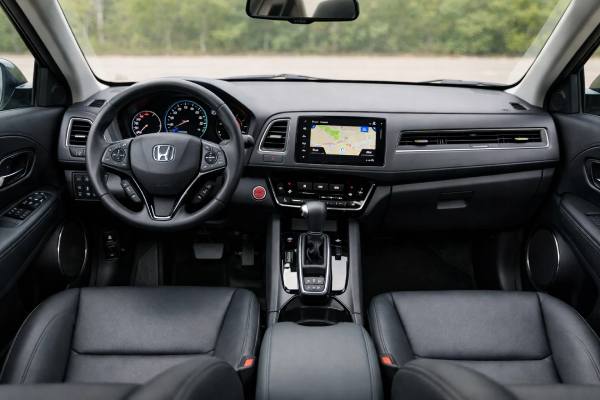
- Steering-wheel controls and instrument cluster: Adaptive cruise and lane support usually bring extra steering-wheel buttons and specific cluster icons.
- Rear camera and infotainment: Most facelift cars have a rear camera, but screen size, smartphone integration, and audio output differ.
Safety ratings and what they mean
Safety results can be confusing because testing bodies update protocols. For the 2019–2022 HR-V generation, IIHS notes that ratings apply to these model years for key crash tests, and also calls out that headlights vary by trim/option and that front crash prevention may be optional depending on configuration. That’s a practical reminder: if safety is a priority, you should shop the equipment list—not just the badge.
ADAS (driver assistance) in ownership terms
Driver assistance systems are not “set and forget.” On the HR-V, camera- and radar-based features (like lane support, road-departure mitigation, adaptive cruise, and automatic emergency braking) depend on:
- Clean sensors and correct alignment: Windshield replacement, front-end repairs, and even ride-height changes can require calibration.
- Tire match and alignment: Uneven tire diameters and poor alignment can produce steering pull that confuses lane-keeping behavior.
- Software version: Some drivability quirks and false warnings are fixed by updates; a dealer scan can confirm.
Child-seat practicality
Most builds provide ISOFIX/LATCH anchors and a rear bench that’s easier to use than many small crossovers because the roofline isn’t excessively sloped. The trade-off is rear legroom: it’s usable, but tall front occupants can steal space quickly. If you regularly carry rear-facing child seats, test-fit with the driver’s seat set to your normal position.
Known problems and campaigns
No used car is “problem free,” but the facelift HR-V FWD with the 1.8 is generally better when you treat it like a system: engine, transmission, brakes, suspension, and electronics all respond to routine care. Below is a practical map of issues by prevalence and cost tier, using owner-visible symptoms and repair logic rather than internet panic.
Common (low to medium cost if caught early)
CVT judder, flare, or hesitation (medium cost if ignored)
- Symptoms: shudder on light throttle, “rubber band” flare, delayed engagement from a stop, or a droning change in sound.
- Likely cause: aged CVT fluid, overheated fluid from repeated hard launches, or adaptation values that no longer match hardware.
- Remedy: correct fluid service with the proper spec; follow with a relearn procedure if recommended. If it’s already slipping or noisy, the cost escalates quickly.
Front suspension wear (low to medium cost)
- Symptoms: clunks over sharp bumps, vague steering on center, uneven tire wear.
- Likely cause: worn stabilizer links, bushings, or ball joints depending on road conditions.
- Remedy: inspect systematically during a wheel alignment; replace worn components before you ruin tires.
Brake maintenance drag and corrosion (low to medium cost)
- Symptoms: pulsing under braking, squeal, or a “gritty” feel after winter.
- Likely cause: pad material glazing, rotor rust buildup, or caliper slide pin stiffness.
- Remedy: clean and lubricate slide hardware during pad service; do not wait until the caliper binds.
Occasional (medium cost)
A/C performance drop
- Symptoms: weak cooling, intermittent operation, or unusual compressor cycling.
- Likely cause: refrigerant loss, condenser damage, or pressure sensor faults.
- Remedy: leak test first; avoid “top-up only” approaches that hide problems.
Direct-injection carbon build-up
Not a primary concern here because the 1.8 in many applications uses port injection rather than direct injection. That’s one reason the long-term maintenance profile can be calmer than some turbo DI rivals.
Rare (high cost)
Internal engine issues
Rare when oil service is consistent and the cooling system is healthy. The bigger risk is neglect: long oil intervals in short-trip use, low oil level, or overheating events.
Recalls, TSBs, and service actions: how to verify
Rather than memorizing lists, use a repeatable process:
- Run a VIN check using an official recall database for your market.
- Ask for dealer service history showing completion dates.
- Confirm software updates (infotainment and ADAS modules) during a pre-purchase inspection scan.
If you’re buying used, treat “no records” as a cost, not a neutral fact. Budget for baseline fluids and filters immediately, and the HR-V’s reliability story improves dramatically.
Service schedule and buyer checks
This HR-V responds best to a “simple schedule done consistently.” Many owners rely on the factory Maintenance Minder system, which adjusts service prompts based on operating conditions. That’s useful, but you still need a baseline plan—especially for used ownership where the previous driver’s habits are unknown.
Practical maintenance schedule (distance/time)
Engine oil and filter:
- Normal use: every 10,000–12,000 km / 12 months
- Short trips, cold climate, heavy city use: every 7,000–8,000 km / 6–9 months
CVT fluid:
- A smart long-term interval is 40,000–60,000 km depending on heat load and driving style. If the car sees lots of stop-and-go, hills, or aggressive launches, choose the shorter end.
Brake fluid:
- Replace every 3 years, even if mileage is low. (This is a common rule in Honda maintenance guidance and aligns with moisture absorption reality.)
Engine air filter:
- Inspect every oil service; replace roughly 20,000–30,000 km depending on dust.
Cabin air filter:
- Replace about 12 months / 15,000–20,000 km (more often in dusty cities).
Spark plugs:
- Typically long-life plugs; plan inspection/replace around 160,000 km unless your manual specifies otherwise.
Coolant:
- Long-life coolant can go a long time, but once the car is out of “first fill” territory, many owners choose 5 years / 100,000 km as a conservative reset—then follow the factory interval.
Tires and alignment:
- Rotate every 8,000–10,000 km; align when replacing tires or when wear patterns start.
Fluid specs and “decision torque” values (owner-level)
- Use the exact CVT fluid spec stated for your VIN; CVTs are picky.
- Use a quality 0W-20 oil meeting Honda’s requirements (confirm for your region).
- Treat torque values as service-manual items; owner-level decision-making should focus on correct parts and correct procedures, not guesswork.
Buyer’s guide: inspection checklist
- Cold start: listen for abnormal rattles, rough idle, or belt noise.
- CVT behavior: smooth engagement, no judder on light throttle, and no “surging” feel at steady speeds.
- Brakes: consistent pedal feel, no pulling, no heavy vibration.
- Tires: match brand/model across an axle; uneven wear suggests suspension or alignment issues.
- Electronics: confirm camera operation, Bluetooth stability, and ADAS warnings (if equipped).
- Underbody: check for corrosion at seams and suspension mounting points if the car lived in salted winters.
Long-term outlook is best when you buy a car with records, reset the fluid baseline, and keep the CVT on a strict fluid routine.
Driving feel and fuel economy
On the road, the facelift HR-V FWD feels more “upright hatchback” than “truck.” The steering is light and predictable, the suspension is tuned for comfort over broken pavement, and the car generally behaves calmly at urban speeds. The trade-off is feedback: you get stability and ease, but not much road texture through the wheel, and the cabin can let in more tire and wind noise than you’d expect from a premium-leaning competitor.
Powertrain character (R18 + CVT)
The 1.8-liter naturally aspirated engine delivers its best behavior when you drive it smoothly. Throttle response is clean, but low-rpm torque is modest, so the CVT often raises engine speed under load to keep acceleration steady. That’s normal; it’s how the car makes the most of limited torque. If you want the drivetrain to feel better:
- Use moderate throttle early rather than stabbing late (it reduces the “rev flare” sensation).
- Avoid repeated full-throttle launches; they create heat that’s hard on CVT fluid.
- Keep tires properly inflated; low pressure makes the car feel slower and noisier.
Ride, handling, and braking
- Ride: compliant over potholes; sharper impacts can still thump through due to the shorter wheelbase.
- Handling: safe and mildly understeery, with stability systems tuned for reassurance rather than playful rotation.
- Braking: typically easy to modulate; if you feel pulsing, suspect rotor condition or caliper hardware rather than “bad ABS.”
Real-world efficiency (what owners actually see)
Government ratings vary by market and test cycle, but as a reference point, one 2022 spec sheet example lists 8.4 / 7.0 / 7.8 L/100 km city/highway/combined for CVT FWD. In real driving:
- City-heavy: ~8.5–10.0 L/100 km (winter can push higher)
- Highway 100–120 km/h: ~7.5–8.5 L/100 km
- Mixed: ~8.0–9.0 L/100 km
Cold weather matters because the engine runs richer until warm, and short trips can keep it in that inefficient zone. If your usage is mostly short urban hops, use shorter oil intervals and don’t judge fuel economy by summer expectations.
Competitors and best alternatives
The HR-V FWD 1.8 facelift competes best when you treat it as a durable, practical tool. Rivals often win on power or cabin quietness, but the HR-V’s blend of packaging, everyday ease, and long-run simplicity is still compelling—especially in used markets where repair history matters as much as features.
If you want more power
Mazda CX-3 / CX-30 (depending on market): Typically stronger passing performance and a more “driver-focused” feel. You may trade away some interior flexibility and pay more for certain parts.
Hyundai Kona (non-turbo vs turbo): Turbo variants feel quicker, but turbo complexity and heat management raise the stakes for maintenance discipline.
If you prioritize comfort and quiet
Toyota C-HR (where available): Often feels solid and composed, but practicality can suffer (rear visibility and cargo shape).
Nissan Kicks: Efficient and easy around town, though not a strong pick if you drive fast highways often.
If you want the lowest long-term stress
The HR-V’s strongest argument is that it avoids “high-feature risk.” A naturally aspirated engine and a straightforward chassis can be easier to keep healthy at 10+ years. The caveat is the CVT: it is not fragile by default, but it is unforgiving of neglect. In many cases, a well-maintained HR-V will outlast a more powerful competitor simply because it asks less of its drivetrain every day.
Practical recommendation by buyer type
- Commuter and city driver: HR-V FWD makes sense—buy the best safety equipment you can.
- Snow-belt driver: If you don’t need AWD, spend the savings on premium winter tires; they matter more than many people think.
- Family buyer: prioritize the trim with the safety suite and verify correct sensor calibration after windshield or bumper repairs.
- Long-distance driver: consider whether you’d prefer a quieter rival; if you choose HR-V, budget for tire selection that reduces road noise and keep alignments tight.
If you buy on condition (records + inspection) rather than on year alone, the facelift HR-V FWD is one of the safer used bets in the segment.
References
- 027650_09_22MY_HRV_HeaderSpecs_EN.indd 2022 (Specifications)
- Fuel Economy of 2022 Honda HR-V 2022 (Fuel Economy Rating)
- 2022 Honda HR-V 2022 (Safety Rating)
- Maintenance MinderTM 2021 (Owner’s Manual)
Disclaimer
This article is for informational purposes only and is not a substitute for professional diagnosis, inspection, or repair. Specifications, torque values, service intervals, and procedures can vary by VIN, market, and equipment, so always verify details using official owner and service documentation for your exact vehicle.
If this guide helped, please consider sharing it on Facebook, X/Twitter, or your favorite forum to support our work.