

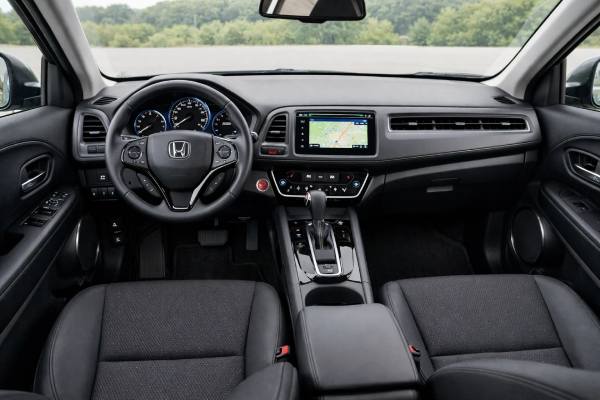

The 2015–2018 Honda HR-V RU5 in FWD form with the R18Z9 1.8-liter engine is the “simple Honda” take on the small crossover: a naturally aspirated, chain-driven i-VTEC four-cylinder, a light footprint, and a cabin that’s designed around everyday flexibility. With 141 hp, it’s not a fast SUV, but it is an easy one to live with—especially if you value predictable throttle response, low running costs, and a chassis that stays tidy on rough city roads.
Where ownership gets interesting is in the details: which transmission your market received (CVT or manual in some regions), how well the previous owner stayed on top of fluids, and whether common age-related rubber and suspension wear has been addressed. Buy a good one and keep it maintained, and the RU5 HR-V can be a durable, low-drama compact family car.
Owner Snapshot
- Smooth, linear 1.8-liter power delivery that suits commuting and light highway use.
- Practical packaging with a tall cabin and flexible rear cargo arrangement for a small footprint.
- Best when maintained on schedule; neglected CVT fluid service can shorten transmission life.
- Plan on engine oil and filter every 8,000–10,000 km (5,000–6,000 mi) or 12 months, depending on use.
Jump to sections
- RU5 1.8 FWD ownership profile
- RU5 specs, tables, and capacities
- Trims, safety, and equipment map
- Reliability patterns and known faults
- Maintenance plan and smart buying
- Real-world driving and economy
- RU5 HR-V versus closest rivals
RU5 1.8 FWD ownership profile
Think of the RU5 HR-V as a practical hatchback on taller suspension, not a mini off-roader. The 1.8-liter R18Z9 engine is a long-running Honda design philosophy: prioritize reliability, everyday torque, and low ownership friction over headline power. In traffic, it feels calm and predictable. The throttle mapping is usually gentle, and the engine’s best work happens in the mid-range where it doesn’t need to rev hard to keep pace with normal driving.
FWD is also part of the appeal. It reduces driveline complexity and cuts some service costs compared with AWD systems. On good all-season tires, it handles rain and mild winter conditions well. In heavy snow or steep unplowed driveways, traction becomes more about tire choice and driver technique than horsepower. If your use includes frequent snow, budget for proper winter tires and pay attention to alignment and front suspension condition—front-end geometry makes a big difference to stability and tire wear on these compact crossovers.
The RU5 cabin and cargo layout are the other “engineering win.” The HR-V’s tall roofline and upright seating create usable space for adults without needing a large vehicle footprint. The rear seating and cargo floor arrangement is designed for real objects—strollers, flat-pack furniture, and bulky sports gear—not just grocery bags. Owners often keep these vehicles longer than expected because they’re easy to park, easy to see out of, and versatile when life changes.
The ownership trade-off is that age and maintenance history matter more than mileage alone. A higher-mile but well-serviced HR-V—especially one with documented fluid services—often beats a low-mile example that sat or was run on long oil intervals. The RU5 platform is generally forgiving, but neglected fluids, worn engine mounts, and tired suspension bushings can make it feel older than it is.
RU5 specs, tables, and capacities
Below are typical specifications for the 2015–2018 HR-V RU5 FWD with the 1.8-liter R18Z9. Exact figures can vary by market, trim, wheel size, and transmission, so treat these as the right “shape” of the vehicle and verify details by VIN when ordering parts.
Powertrain and efficiency
| Item | Specification |
|---|---|
| Engine code | R18Z9 |
| Layout | Transverse front |
| Cylinders and valvetrain | Inline-4, SOHC i-VTEC, 4 valves/cyl |
| Displacement | 1.8 L (1,799 cc) |
| Bore × stroke | 81.0 × 87.3 mm (3.19 × 3.44 in) |
| Induction | Naturally aspirated |
| Fuel system | PFI / Honda PGM-FI |
| Compression ratio | ~10.6:1 (market dependent) |
| Max power | 141 hp (105 kW) @ ~6,500 rpm |
| Max torque | ~172 Nm (127 lb-ft) @ ~4,300 rpm |
| Timing drive | Chain |
| Rated efficiency | Typically ~7.0–8.5 L/100 km (28–34 mpg US / 33–40 mpg UK), depending on transmission and wheels |
| Real-world highway @ 120 km/h (75 mph) | Often ~7.5–9.0 L/100 km (26–31 mpg US / 31–38 mpg UK), wind and terrain dependent |
| Aerodynamics | Cd not consistently published; focus on tires and speed for economy gains |
Transmission and driveline
| Item | Specification |
|---|---|
| Transmission | CVT (most markets) or 6MT (select trims/regions) |
| Drive type | FWD |
| Differential | Open |
Chassis and dimensions
| Item | Specification |
|---|---|
| Suspension (front/rear) | MacPherson strut / torsion beam (typical FWD layout) |
| Steering | Electric power steering (EPS) |
| Brakes | 4-wheel discs on many trims; rear disc vs drum varies by market |
| Wheels/tyres | Common: 215/55 R17 or 205/60 R16 (trim dependent) |
| Ground clearance | ~170 mm (6.7 in), trim dependent |
| Length / width / height | ~4,295 / 1,772 / 1,605 mm (169.1 / 69.8 / 63.2 in) |
| Wheelbase | ~2,610 mm (102.8 in) |
| Turning circle | ~11.0 m (36.1 ft), depending on wheels/tires |
| Kerb weight | ~1,270–1,380 kg (2,800–3,040 lb), equipment dependent |
| Fuel tank | ~50 L (13.2 US gal / 11.0 UK gal) |
| Cargo volume | Market-dependent measurement methods; typically strong “seats down” practicality for the size |
Performance and capability (typical)
| Item | Typical value |
|---|---|
| 0–100 km/h (0–62 mph) | ~10.5–12.0 s (CVT vs manual varies) |
| Top speed | ~185–195 km/h (115–121 mph) |
| Braking 100–0 km/h | Depends heavily on tires; plan maintenance around brake feel and consistency |
| Towing capacity | Often limited or not rated in many markets; verify official rating if towing matters |
| Roof load | Commonly ~50–75 kg (110–165 lb), verify by market |
Fluids, service capacities, and key torque specs
| Item | Specification (typical) |
|---|---|
| Engine oil | 0W-20 (spec varies by market); ~3.7 L (3.9 US qt) with filter |
| Coolant | Honda Type 2 / long-life coolant; capacity varies by radiator and climate pack |
| CVT fluid | Honda CVT fluid (market spec); service by severe-use schedule if mostly city driving |
| Manual trans fluid | MTF (Honda spec), capacity varies by gearbox |
| A/C refrigerant | R-134a in many markets (verify label); charge varies by system |
| Key torque specs | Wheel nuts commonly ~108 Nm (80 lb-ft) on many Hondas (verify by wheel type and market) |
Electrical and ignition
| Item | Specification |
|---|---|
| 12V battery | Commonly 45–60 Ah range (size varies by market) |
| Spark plugs | Iridium type on many trims; gap and part number vary by market |
| Alternator | Output varies by equipment load |
Safety and driver assistance
| Item | Notes |
|---|---|
| Crash ratings | Vary by region and test body; IIHS and Euro NCAP results exist for this generation |
| Airbags | Typically front, side, and curtain airbags; confirm count by trim/market |
| ADAS suite | Many 2015–2018 vehicles rely on stability control and airbags; advanced AEB/ACC depends heavily on market and year |
If you’re building a maintenance plan, focus on what changes ownership outcomes: oil quality, transmission fluid condition, coolant health, brake fluid age, and suspension wear.
Trims, safety, and equipment map
HR-V trims vary widely by region, so the smart approach is to identify the car by its functional equipment, not the badge on the tailgate. For the RU5 1.8 FWD, the biggest “ownership difference makers” usually come down to transmission choice, wheel size, lighting performance, and whether the car includes additional safety tech packages.
Trims and options: what actually changes
Common trim patterns include an entry model with smaller wheels and simpler infotainment, mid trims with larger screens and more comfort features, and a higher trim with alloy wheels, upgraded lighting, and more driver aids. When comparing two cars, prioritize these items:
- Transmission type: CVT vs manual changes the driving feel and service needs. A well-kept CVT is fine, but it is less tolerant of neglect than a manual gearbox.
- Wheel and tire package: Larger wheels can sharpen steering response but often worsen ride over broken pavement and can increase tire replacement cost.
- Lighting: Headlight performance is a safety and comfort feature, not just cosmetic. Many HR-Vs of this era use halogen reflectors; aim for the best factory setup available in your market.
- Brake hardware: Rear disc vs rear drum setups differ by market and trim. Discs can simplify certain service work and improve consistent feel, but the real-world difference depends on pads, tires, and maintenance.
Quick identifiers you can use on a walkaround
- Wheels and brakes: Peek through the rear wheel—rear discs are easy to spot if fitted.
- Steering wheel buttons and camera pods: These can hint at driver-aid or infotainment level.
- Cluster and infotainment unit: Base units tend to be smaller and simpler; higher trims often integrate more phone connectivity features.
Safety ratings and what they mean in practice
Safety results depend on the test body, the year of the protocol, and whether optional safety packs were included. This generation of HR-V earned strong recognition in Europe and is rated by IIHS in the U.S. context. A key takeaway from IIHS-style testing is that a vehicle can score well for crash structure yet still disappoint in headlight performance—which matters because avoiding a crash is often more about what you can see than what happens after impact.
Safety systems and service implications
Even without modern radar-based driver assistance, the HR-V typically includes:
- ABS and stability control (ESC/VSA): Essential for maintaining control in emergency maneuvers.
- Airbags: Confirm that the airbag warning light proves out at startup and goes off normally.
- ISOFIX/LATCH anchors: Check that the anchors are accessible and not damaged—especially if the car has carried child seats.
After any collision repair, insist on a proper alignment, steering angle sensor calibration if required, and verification that warning lights remain off. Small crossovers can drive “fine” with hidden alignment errors that quietly destroy tires.
Reliability patterns and known faults
The RU5 HR-V’s reliability story is usually better than average for the class, but it isn’t immune to predictable wear points. A good way to think about it is “mostly durable mechanicals, with a few systems that punish neglect.”
Common issues (more frequent)
- CVT fluid degradation and drivability complaints (medium cost):
Symptoms: Shudder on takeoff, flare or rubber-band feel, hesitation, or a change in engine speed behavior.
Likely causes: Old CVT fluid, incorrect fluid type, or a transmission learning adaptation that’s out of range after maintenance.
Remedy: Proper CVT fluid service using the correct spec, and a relearn procedure when applicable. If buying used, prioritize service records over promises. - Front suspension wear (low to medium cost):
Symptoms: Clunks over bumps, steering vibration, uneven tire wear.
Likely causes: Stabilizer links, control arm bushings, ball joints, and strut mounts aging—especially in pothole-heavy cities.
Remedy: Replace worn components in pairs where appropriate and perform a quality alignment. This restores “new car” feel more than most owners expect. - Engine mounts and NVH creep (low to medium cost):
Symptoms: Vibration at idle in gear (CVT), thump during shifts or on throttle lift.
Likely causes: Rubber mount settling and cracking with age and heat cycles.
Remedy: Replace the worst mount first, then reassess. Mounts often look “fine” but lose stiffness.
Occasional issues (situational)
- A/C performance drop (medium cost):
Symptoms: Weak cooling, cycling behavior, odor.
Likely causes: Refrigerant leaks, condenser damage from road debris, or compressor wear.
Remedy: Leak test and recharge to the exact spec—overcharge can be as harmful as undercharge. - Brake feel variation (low cost):
Symptoms: Soft pedal, inconsistent bite, vibration.
Likely causes: Old brake fluid, uneven pad deposits, or budget tires masking grip.
Remedy: Brake fluid replacement on time, quality pads/rotors, and tire upgrades if needed.
Rare but expensive checks
- Overheat events and cooling-system neglect (high cost):
Any history of overheating deserves extra caution: pressure test the system, verify fan operation, and inspect coolant condition. A reliable engine can become an unreliable one after a single severe overheat.
Recalls, TSBs, and how to verify completion
Use the official VIN lookup tools and request dealer service history where possible. Recalls and service campaigns are often handled quietly, and the “fixed” status matters more than the headline. When you inspect a car, check for warning lights, confirm all keys work, and scan for stored codes if you can—many problems start as intermittent faults before they become obvious symptoms.
Maintenance plan and smart buying
A strong maintenance routine for the RU5 HR-V is less about over-servicing and more about consistency. The platform responds well to fresh fluids, correct parts, and inspections that catch wear early.
Practical maintenance schedule (distance or time)
- Engine oil and filter: Every 8,000–10,000 km (5,000–6,000 mi) or 12 months. Short-trip driving, hot climates, or heavy traffic justify the shorter interval.
- Engine air filter: Inspect every 15,000 km (9,000 mi); replace around 30,000 km (18,000 mi) or sooner in dusty areas.
- Cabin air filter: Every 15,000–25,000 km (9,000–15,000 mi) or annually if allergies matter.
- Coolant: Replace by the official interval for your market coolant type; many long-life coolants are 5 years / 100,000 km+ initially, then shorter thereafter.
- Spark plugs: Often 160,000 km (100,000 mi) for iridium plugs, but verify exact spec.
- CVT fluid (if equipped): A sensible owner interval is often 40,000–60,000 km (25,000–37,000 mi), especially for mostly city driving.
- Manual trans fluid (if equipped): Often 60,000–100,000 km (37,000–62,000 mi) depending on use.
- Brake fluid: Every 2–3 years regardless of mileage.
- Brake pads/rotors: Inspect at every tire rotation; replace based on thickness and feel, not a fixed mileage.
- Tire rotation and alignment: Rotate every 8,000–10,000 km (5,000–6,000 mi); check alignment annually or after major pothole impacts.
- 12V battery: Test annually after year 3; many last 4–6 years depending on climate and short-trip use.
- Belts and hoses: Inspect yearly; replace when cracking, glazing, or seepage appears.
Fluids and “do not guess” notes
- Use the exact Honda-recommended CVT fluid spec for your market. “Close enough” fluids can change shift behavior and long-term wear.
- If you don’t know what’s in the cooling system, don’t mix types. Drain and refill correctly instead of topping off with a random coolant.
Buyer’s checklist: the fast, high-value inspection
- Cold start and idle: Listen for abnormal rattles, check for smooth idle, and confirm warning lights go out normally.
- Transmission behavior: CVT should pull smoothly without shudder; manual should engage cleanly without clutch slip.
- Steering and suspension: On a rough road, listen for clunks; on a smooth road, note vibration or pull.
- Brakes: Confirm consistent bite and no steering-wheel shake under moderate braking.
- Leaks and corrosion: Check around the oil pan area, coolant hoses, and underbody seams.
- Tires: Uneven wear can reveal alignment or bushing problems better than any sales pitch.
A well-chosen HR-V often needs only baseline catch-up work—fluids, filters, and tires—to become a dependable long-term daily driver.
Real-world driving and economy
The RU5 HR-V is at its best when driven like a light crossover, not a performance vehicle. The 1.8 i-VTEC engine feels smooth and willing, but it makes its power higher in the rev range than turbocharged rivals. That means full-throttle acceleration is more “steady build” than “punch,” especially with a CVT that prioritizes keeping the engine in its efficient band.
Ride, handling, and NVH
Ride quality is generally comfortable for the segment, with a slightly firm edge on larger wheels. On broken pavement, the suspension does a good job controlling body motion without feeling floaty. The steering is light and easy in parking lots, and straight-line tracking is typically stable—assuming the alignment is correct and the tires are decent.
Cabin noise is acceptable rather than hushed. Around town, wind and tire noise stay in the background. At highway speeds, the biggest NVH factor is often tire choice and road surface. Owners who switch from budget tires to a quality touring tire frequently report a noticeable improvement in noise and ride.
Powertrain character and transmission behavior
- CVT: Smooth and efficient when healthy, but it can feel “busy” under hard acceleration because engine rpm may rise and hold while road speed catches up. In daily driving, it’s usually unobtrusive.
- Manual (where offered): More direct feel and often a more engaging match for the 1.8L engine. Clutch condition matters; a high bite point can mean future work.
Real-world efficiency
Expect economy to be highly sensitive to speed and tire pressure. As a rough guide:
- City: ~8.0–10.0 L/100 km (24–29 mpg US / 28–35 mpg UK) depending on traffic and warm-up time.
- Highway (100–120 km/h / 60–75 mph): ~7.5–9.0 L/100 km (26–31 mpg US / 31–38 mpg UK).
- Mixed driving: ~7.5–9.5 L/100 km (25–31 mpg US / 30–38 mpg UK).
Cold weather can raise consumption meaningfully because short trips keep the engine out of its most efficient operating temperature range. If your commute is under 10 minutes, shorten oil intervals and keep an eye on battery health.
Traction and control
With FWD, traction is tire-limited. The stability control calibration is usually conservative and helpful, particularly on wet roads. If you regularly drive in snow, winter tires deliver far more real-world confidence than chasing drivetrain changes.
RU5 HR-V versus closest rivals
In the 2015–2018 compact crossover space, the RU5 HR-V competes less on power and more on packaging, predictable ownership, and “small car ease.” If you’re comparing options, match the rival to your actual priorities.
Versus Mazda CX-3
The CX-3 often feels sportier: sharper steering, firmer body control, and a more eager personality. The trade-off is space. The HR-V typically wins for rear-seat comfort and cargo flexibility, especially if you regularly carry tall items or need a more accommodating rear cabin. If your driving enjoyment matters most and you rarely use the back seat, the CX-3 can be a better fit; if practicality matters daily, the HR-V usually scores higher.
Versus Nissan Juke (and similar “style-first” crossovers)
Style-forward rivals can be fun, but they often compromise visibility, rear space, or cargo usability. The HR-V is the opposite: easy sightlines, easy controls, and less drama. Long-term ownership tends to favor the HR-V if you want a vehicle that quietly does its job without becoming a project.
Versus Toyota C-HR (where applicable)
The C-HR typically offers strong safety engineering and a distinctive interior, but some markets pair it with powertrains that can feel less flexible under load. The HR-V’s naturally aspirated 1.8L isn’t quick, yet it’s straightforward and easy to service. If you value a simple mechanical layout and flexible cargo solutions, the HR-V remains a strong pick.
Versus small turbo crossovers (various brands)
Turbo rivals often feel faster at low rpm and can be more satisfying for highway merging. The HR-V counters with fewer heat-related stresses, simpler intake plumbing, and generally predictable long-term behavior if serviced correctly. If you keep vehicles past 150,000 km (93,000 mi), simplicity can matter as much as features.
The practical verdict
Choose the RU5 HR-V if you want:
- A compact footprint with genuinely usable interior space
- Predictable, naturally aspirated driving behavior
- A platform that rewards routine maintenance and good tires
Look elsewhere if you need strong passing power at highway speeds, frequent towing, or the quietest cabin in the segment. The HR-V’s strengths are real, but they’re also specific—and that’s what makes it a smart buy for the right owner.
References
- Honda Owners Manuals | Honda HR-V | Owners | Honda UK 2026 (Owner’s Manual)
- 2016 Honda HR-V 2026 (Safety Rating)
- Vehicle Detail Search – 2016 HONDA HR-V SUV FWD#recalls | NHTSA 2026 (Recall Database)
- Gas Mileage of 2016 Honda HR-V 2026 (Official Fuel Economy)
- Euro NCAP | Press Release Nov. 2015 – Top Marks for Audi and Honda 2015 (Safety Rating)
Disclaimer
This article is for informational purposes only and is not a substitute for professional diagnosis, inspection, or repair. Specifications, torque values, service intervals, and procedures vary by VIN, market, and equipment; always verify details using official Honda service documentation for your exact vehicle.
If this guide helped you, consider sharing it on Facebook or X to support our work.