

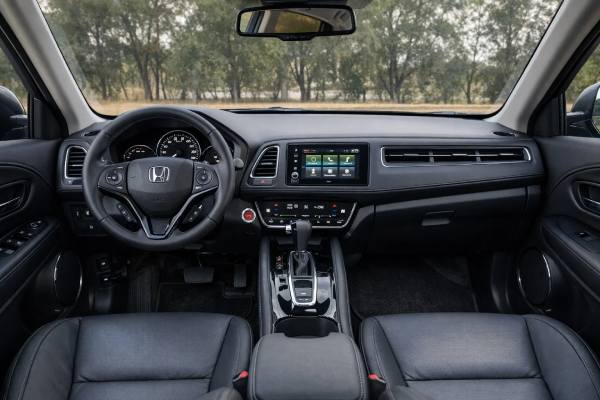
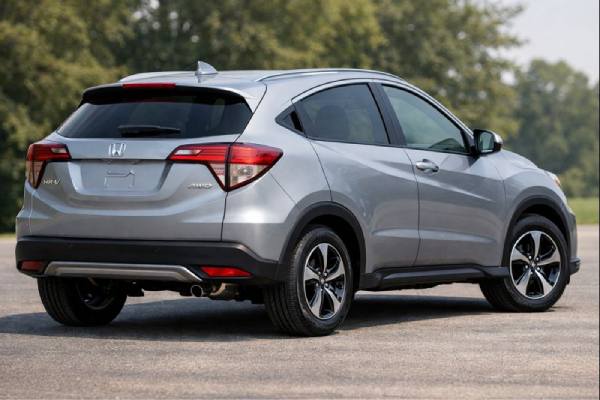
The facelifted 2019–2020 Honda HR-V RU8 with the 1.6 i-DTEC diesel is a practical, torque-rich take on Honda’s compact crossover recipe. This version matters because it pairs a relatively light body with a strong mid-range diesel (300 Nm), a 6-speed manual, and Honda’s clever packaging—especially the central fuel tank and “Magic Seat” rear layout that frees up real cargo flexibility. In daily use, the diesel HR-V’s biggest strengths are relaxed highway cruising and low fuel use when you drive long enough for the emissions system to stay clean.
Ownership is mostly straightforward, but it rewards the right usage pattern: repeated short trips can stress the diesel aftertreatment (DPF and EGR), and neglected fluid services can turn small issues into expensive ones. Treat it as a long-distance-capable small SUV, keep maintenance consistent, and it can be a durable, economical companion.
Quick Specs and Notes
- Strong mid-range pull (300 Nm) makes the HR-V feel more effortless than the power figure suggests.
- Excellent cabin versatility thanks to the center fuel tank and multi-mode rear seats.
- Efficient on steady trips; WLTP combined is about 5.0–5.2 L/100 km depending on spec.
- Short-trip use can trigger DPF/EGR soot issues—plan regular longer drives.
- Plan engine oil service every 12 months or 15,000 km (whichever comes first), and shorten the interval in heavy city use.
What’s inside
- RU8 diesel facelift focus
- N16A diesel specifications tables
- FWD trims and ADAS availability
- Diesel issues, recalls, and fixes
- Service schedule and buying checklist
- Real-world drive and fuel use
- Rivals and ownership value
RU8 diesel facelift focus
This 2019–2020 facelift HR-V in RU8 diesel form is best understood as a “high-torque commuter” built around smart packaging rather than outright speed. The N16A 1.6 i-DTEC is rated at 120 PS (88 kW) and 300 Nm, and Honda pairs it with a 6-speed manual driving the front wheels. On paper, it’s not a hot model—but in practice, the torque peak arrives early (around 2,000 rpm), so it feels calm and capable in real traffic, especially when merging, climbing, or carrying passengers.
The facelift did more than tidy the styling. It also refined everyday touchpoints: improved lighting availability, comfort tweaks, and a clearer trim walk that made safety tech easier to find depending on market. Underneath, the fundamentals stayed consistent: MacPherson struts up front, a torsion-beam rear, and a body tuned for predictable responses rather than sharp cornering. That matters for diesel buyers because a stable chassis and good straight-line composure complement the engine’s relaxed nature at motorway speeds.
Where this HR-V continues to stand out is interior usability. The central fuel tank placement (under the front seats) is not a gimmick—it’s the reason the rear seat base can fold and flip in ways many rivals simply can’t match. If you carry bikes, tall boxes, or awkward items, the HR-V’s seat modes can save you from stepping up to a larger vehicle. It also helps the car feel “bigger inside” than the exterior footprint suggests.
As an ownership proposition, the diesel RU8 makes the most sense for drivers who regularly do longer runs: commuting that includes warm-up time, frequent highway driving, or mixed rural routes. That pattern keeps the diesel emissions system healthier and usually delivers the best fuel numbers. If your use is mostly cold starts and short city hops, the same emissions hardware that makes it clean can become the ownership pain point. So the best way to judge this model is simple: it’s a compact SUV that pays you back when you drive it like a diesel—steady, warmed up, and used for real distances.
N16A diesel specifications tables
Below are the core technical specifications for the 2019–2020 facelift HR-V with the 1.6 i-DTEC (N16A) diesel and 6-speed manual FWD. Exact values can vary slightly by market, wheel size, and equipment weight, so treat ranges as normal for this generation.
Powertrain and efficiency
| Item | Specification |
|---|---|
| Engine code | N16A |
| Layout | Inline-4 turbo-diesel |
| Displacement | 1.6 L (1,597 cc) |
| Induction | Turbocharged |
| Max power | 120 PS (88 kW) @ 4,000 rpm |
| Max torque | 300 Nm @ 2,000 rpm |
| Fuel economy (WLTP combined) | 5.0–5.2 L/100 km |
| CO₂ (WLTP combined) | 132–136 g/km |
Transmission and driveline
| Item | Specification |
|---|---|
| Transmission | 6-speed manual |
| Drive type | FWD |
| Turning circle (kerb-to-kerb) | 11.4 m |
Chassis, brakes, and wheels
| Item | Specification |
|---|---|
| Suspension (front) | MacPherson strut |
| Suspension (rear) | H-type torsion beam |
| Brakes (front) | 293 mm ventilated discs |
| Brakes (rear) | 282 mm discs |
| Common tyre sizes | 215/60 R16 or 215/55 R17 (market/trim dependent) |
Dimensions, weights, and cargo
| Item | Specification |
|---|---|
| Length | 4,335 mm (170.7 in) |
| Width | 2,019 mm (79.5 in) including mirrors |
| Height | 1,605 mm (63.2 in) including antenna |
| Wheelbase | 2,610 mm (102.8 in) |
| Curb weight (range) | 1,343–1,417 kg (2,962–3,124 lb) |
| Fuel tank | 50 L (13.2 US gal / 11.0 UK gal) |
| Cargo volume | 470 L seats up / 1,103 L seats folded (VDA-style figure commonly used in EU materials) |
Performance
| Item | Specification |
|---|---|
| 0–100 km/h (0–62 mph) | 10.5 s |
| Top speed | 188 km/h (117 mph) |
Fluids and service capacities (practical owner view)
Because fluid capacities and specifications can differ by VIN and market, use these as decision-level guidance and confirm on the under-hood labels or official service documentation:
| System | What to use (typical) | Notes |
|---|---|---|
| Engine oil | Low-ash diesel oil (commonly ACEA C2) | Choose viscosity per climate; confirm spec for your market. |
| Coolant | Long-life OEM-type premix | Confirm exact coolant type before topping up. |
| Manual gearbox | OEM manual transmission fluid | If shifting feels notchy when cold, fresh fluid can help. |
| A/C refrigerant | Often R1234yf on later EU vehicles | Always confirm by under-hood label before any service. |
Safety and driver assistance (baseline structure)
| Item | Typical availability on this generation |
|---|---|
| Airbags | Multi-airbag layout; count varies by market |
| ESC/ABS/EBD | Standard |
| AEB (forward collision mitigation) | Often trim/package dependent; more common on later builds |
| Lane support | Typically trim/package dependent |
| Parking sensors/camera | Common on mid/high trims; depends on market |
If you want one takeaway from the tables: this diesel HR-V isn’t about peak output. It’s about usable torque, sensible gearing, efficient cruising, and a body package that makes the interior work harder than most rivals.
FWD trims and ADAS availability
Trim naming on the HR-V varies by country, but the facelift-era lineup usually follows a familiar ladder: a well-equipped base grade, one or two mid grades with comfort and infotainment upgrades, and a top grade that concentrates active safety tech and exterior lighting improvements. The diesel (in markets where it remained available) typically sits in the middle of the range because it costs more to build and certify than the base petrol.
Quick trim identifiers (useful when viewing used cars)
- Wheel size as a clue: 16-inch wheels tend to signal lower grades; 17-inch often indicates mid or higher trims.
- Lighting: full-LED headlamps and darker rear lamp treatment often track higher grades in this facelift period.
- Cabin details: upgraded seat fabrics, contrast stitching, and touchscreen/infotainment features usually scale with trim.
- Parking aids: rear camera is common; front sensors and auto-parking style features are more trim dependent.
Options that change daily ownership
For this diesel HR-V, the most important “options” are functional rather than cosmetic:
- Active safety suite (AEB, lane support, sign recognition): These systems can materially reduce crash risk and fatigue on long trips. If the car has them, budget for proper calibration when windshield or radar-related components are replaced.
- Headlights: Better headlights are not just a luxury—on winter commutes and rural roads they reduce strain and improve reaction time.
- Infotainment and camera quality: A good reversing camera and sensors matter because the HR-V’s rear visibility can feel “high tailgate” typical of small SUVs.
Safety ratings: how to interpret them correctly
Two points help you read safety ratings without confusion:
- The generation matters more than the badge year. A 2019–2020 facelift can share core structure with earlier cars, even if equipment improves later. Ratings often reflect the underlying generation and the test protocol used at the time.
- Trim can shift results in the real world. Ratings are one thing; whether your exact car has AEB, lane support, and good headlights is another. In practice, a higher-trim car with strong active safety can be meaningfully safer in everyday driving than a lower-trim variant of the same model.
ADAS and service implications (often overlooked)
If your HR-V has camera- or radar-based systems, treat windscreen replacement, front-end repairs, wheel alignment, and suspension work as “calibration events.” Even when the car drives straight, misalignment can cause false warnings, poor lane tracking, or degraded AEB behavior. When shopping used, ask for documentation that any crash repairs included calibration—not just parts replacement.
The best buying approach is simple: prioritize the safety and lighting package you want first, then evaluate the diesel’s condition and service history. A well-optioned, well-maintained diesel HR-V is an excellent long-trip tool. A poorly maintained one with missing safety features is not as compelling as the badge suggests.
Diesel issues, recalls, and fixes
The N16A diesel HR-V is not a fragile vehicle, but diesel ownership has “system-level” risks that petrol buyers may never face. The good news is that most problems show warning signs early—if you know what to look for.
Common (most likely) issues
- DPF soot loading and forced regenerations (medium cost if ignored):
- Symptoms: rising idle speed, frequent fan operation after shutdown, warning lights, reduced power.
- Root cause: repeated short trips, interrupted regens, poor-quality oil, or blocked pressure sensors.
- Remedy: change driving pattern (regular sustained runs), scan for soot load, check sensors and exhaust leaks, and avoid non-approved oil.
- EGR valve/cooler fouling (medium cost):
- Symptoms: hesitation, poor throttle response, rough idle, black smoke under load, engine light.
- Root cause: soot accumulation, especially with low-load driving.
- Remedy: cleaning or replacement depending on severity; confirm updated software is applied where available.
- Boost leaks (low to medium cost):
- Symptoms: whooshing noise, underboost codes, sluggish acceleration, oily residue on hoses.
- Root cause: split intercooler hoses or clamps loosening with age/heat cycles.
- Remedy: pressure test intake tract; replace worn hoses/clamps.
Occasional issues
- Clutch and dual-mass flywheel wear (higher cost):
- Symptoms: vibration at idle, rattling on shutdown, slipping under load, harsh engagement.
- Root cause: city driving, towing, aggressive starts, or high-mileage wear.
- Remedy: clutch kit and DMF replacement when symptoms progress; check for oil leaks that contaminate the clutch.
- Injector sealing and combustion “chuff” (medium cost):
- Symptoms: ticking noise, diesel smell, black residue near injectors.
- Root cause: sealing washer leakage.
- Remedy: reseal early before carbon buildup makes removal difficult.
Rare but worth scanning for
- Turbo actuator or vane control faults (higher cost):
- Symptoms: limp mode, inconsistent boost, recurring under/overboost codes.
- Root cause: sticking mechanism or control issues.
- Remedy: diagnosis first—many “turbo failures” are actually control or leak problems.
Recalls, service campaigns, and how to verify
On a used diesel HR-V, you should assume at least one campaign may have applied over its life (for example, airbag-related campaigns were common across the industry in this era). The right approach is not guessing the list—it’s verifying the specific VIN. Use official recall tools and insist on paperwork showing completion.
When viewing a car, ask for:
- A printout or screenshot showing recall status by VIN.
- Service records confirming oil type and intervals (diesels are sensitive to the wrong oil spec).
- Evidence of any emissions-related work (sensor replacement, software updates, DPF cleaning) if mileage is high.
A well-maintained diesel HR-V usually feels tight, smooth, and consistent. If the car feels hesitant, “breathless,” or warning-prone, treat it as a sign the emissions system has been living a hard life.
Service schedule and buying checklist
A practical maintenance plan for the RU8 diesel has two goals: protect the engine and turbo, and keep the emissions system healthy. The schedule below is a sensible baseline for real ownership; always align final intervals with the official service schedule for your VIN and market.
Core maintenance schedule (distance or time, whichever comes first)
- Engine oil and filter: every 15,000 km (9,000 mi) or 12 months.
- If you do frequent short trips, consider 10,000–12,000 km intervals. Diesel aftertreatment and turbo longevity depend heavily on clean oil of the correct low-ash specification.
- Air filter: inspect every service; replace around 30,000 km (18,000 mi) sooner in dusty areas.
- Cabin filter: 20,000–30,000 km or annually if you have allergies and urban pollution exposure.
- Fuel filter (diesel): commonly 60,000–90,000 km depending on market schedule and fuel quality. If starting becomes slow or the engine feels starved under load, don’t delay.
- Brake fluid: every 3 years (time matters more than mileage).
- Coolant: often long-life coolant with a longer first interval; after that, plan a 3–5 year rhythm depending on the coolant type used.
- Manual transmission fluid: consider refresh around 100,000–120,000 km if you want long-term shift quality.
- Tyre rotation and alignment: rotate every 10,000–12,000 km; check alignment annually or after pothole strikes.
Diesel-specific habits that prevent expensive repairs
- Give it long runs: aim for a sustained drive (for example 20–30 minutes at steady speed) regularly so the DPF can complete regeneration cycles.
- Don’t shut down mid-regeneration: if the fan is running and idle seems elevated after a drive, let it finish if practical.
- Use the right oil: low-ash oil helps protect the DPF. “Good oil” is not enough; the specification matters.
- Scan before you buy: a basic scan tool that reads soot load and stored codes can reveal a lot about how the car was used.
Pre-purchase checklist (what to inspect)
- Service history quality: look for consistent intervals, correct oil specification, and evidence of filter changes (including fuel filter).
- Cold start behavior: the engine should start cleanly without excessive cranking or smoke.
- Driveability under load: test a long uphill pull in a higher gear. Any repeated limp mode, surging, or warning lights is a red flag.
- Boost system: inspect hoses for oil mist and splits; listen for whooshing under acceleration.
- Clutch and flywheel: feel for vibration at idle and during take-off; listen for rattles when shutting down.
- Rust and underbody: check subframe edges, brake lines, and suspension mounting points, especially in salted-winter regions.
- Electrical and ADAS: if equipped, confirm camera/radar functions behave normally and no warning lights appear.
Long-term durability outlook: if your use pattern fits a diesel and you keep oil quality high, the HR-V diesel can age well. If your driving is mostly short trips, a petrol or hybrid alternative is usually a better ownership match.
Real-world drive and fuel use
The RU8 diesel HR-V is defined by how it delivers its performance, not by headline acceleration. With 300 Nm arriving low in the rev range, it steps away from lights with less effort than many small petrol SUVs, and it holds speed on inclines without constant downshifts. That makes it feel “grown up” on highways and when fully loaded. The 6-speed manual typically suits the engine well: you can short-shift and ride the torque, or keep it in the mid-range when you need quick passing response.
Ride, handling, and NVH
- Ride: the HR-V’s suspension is tuned for stability rather than softness. On good roads it feels planted; on sharp edges you may notice the torsion-beam rear transmitting some impacts into the cabin. Tyre choice and wheel size make a real difference—larger wheels usually look better but can add harshness.
- Handling: it’s predictable and confidence-inspiring rather than playful. The steering is light and consistent, and the chassis feels composed in quick lane changes—useful for motorway driving.
- Noise: diesels bring more low-frequency engine note, especially under load or when cold. Once warmed up at cruising speed, it typically settles into a steady, unobtrusive rhythm.
Powertrain character in daily driving
- Best zone: the car feels strongest in the mid-range where torque is abundant.
- Low-speed smoothness: in stop-start traffic, diesels can feel slightly more “mechanical” than petrols; smooth clutch work matters.
- Highway behavior: this is where the diesel earns its keep. It usually feels relaxed at European motorway speeds and can return strong fuel economy if you keep speeds steady.
Real-world efficiency expectations
WLTP combined figures for this engine are around 5.0–5.2 L/100 km, but real consumption depends on temperature, speed, and trip length.
A realistic owner pattern often looks like this:
- Highway at ~120 km/h: roughly 5.2–5.8 L/100 km if conditions are mild and the car is healthy.
- Mixed driving: about 5.5–6.3 L/100 km depending on traffic and terrain.
- Short-trip city use: often 6.5–7.5 L/100 km and the DPF is more likely to complain.
In cold weather, expect higher fuel use and more frequent regeneration behavior—both normal for modern diesels. The key is consistency: if your commute is long enough to warm the car fully, the diesel HR-V becomes a quietly efficient tool. If it’s not, you’ll spend more time managing diesel-specific quirks than enjoying the fuel savings.
Rivals and ownership value
In 2019–2020, the small SUV field was crowded, and diesel choices were beginning to shrink as the market pivoted toward petrol, mild-hybrid, and full-hybrid options. That context is important: the RU8 diesel HR-V can be excellent value specifically because it suits a niche that many newer cars no longer target as directly.
Where the diesel HR-V wins
- Cabin versatility: the HR-V’s seat and cargo flexibility remains a genuine advantage. Many rivals match its cargo volume on paper, but fewer match the “odd-object” usability that comes from the Magic Seat layout.
- Torque and long-trip efficiency: compared with small turbo petrol rivals of the era, the diesel feels less strained at speed and can use less fuel on steady routes.
- Honda driving polish: the car’s stability and controls (pedals, shifter, steering consistency) often feel well-integrated, which matters on long commutes.
Where rivals can beat it
- Urban friendliness: if your life is mostly short trips, many petrol alternatives (and especially newer hybrids) are easier to live with and less sensitive to driving pattern.
- Infotainment and driver assistance breadth: some competitors offered broader ADAS availability or more modern infotainment interfaces depending on trim and year.
- Rear suspension sophistication: a few rivals in the class used more complex rear suspensions on certain trims, which can improve ride comfort on broken pavement.
Practical rival set (what to cross-shop)
- Nissan Qashqai diesel-era models: often offer more rear-seat space, but may not match the HR-V’s interior flexibility.
- Peugeot 2008 / Citroën C3 Aircross diesels: can be efficient and stylish, but long-term ownership depends heavily on maintenance quality and specific powertrain.
- Renault Captur diesel-era models: good urban packaging; diesel ownership demands the same “right usage” pattern as the Honda.
- Hyundai Kona diesel-era models (market dependent): often strong equipment for the money; ride can be firmer depending on wheels.
Value verdict for buyers today
If your driving pattern matches a diesel and you find a well-maintained example with clean history, the HR-V RU8 1.6 i-DTEC can be a smart, underappreciated purchase. The best cars are those with:
- clear evidence of correct oil and filter servicing,
- regular longer-distance use,
- no history of recurring emissions warnings, and
- the safety and lighting equipment you actually want.
If you’re mainly a city driver, you can still own one—but the economics and hassle factor often favor a petrol or hybrid alternative. In other words: the diesel HR-V is a great tool when used correctly, and a frustrating one when it isn’t.
References
- 2019 Honda HR-V 2019 (Press Release)
- Honda reveals most sophisticated HR-V ever with refreshed styling and advanced technologies 2018 (Press Release)
- New HR-V and Jazz latest Honda models to receive 5-star Euro NCAP Overall Safety Rating 2015 (Safety Rating)
- Honda HR-V | Safety Rating & Report | ANCAP 2015 (Safety Rating)
- Honda Owners | Recalls and Updates | Honda UK 2026 (Recall Database)
Disclaimer
This article is for informational purposes only and is not a substitute for professional diagnosis, inspection, or repair. Specifications, torque values, service intervals, and procedures can vary by VIN, market, and equipment level—always verify details using official Honda documentation for your exact vehicle and consult a qualified technician when needed.
If this guide helped, please consider sharing it on Facebook, X (Twitter), or your favorite forum—your support helps us keep publishing detailed, practical owner resources.