
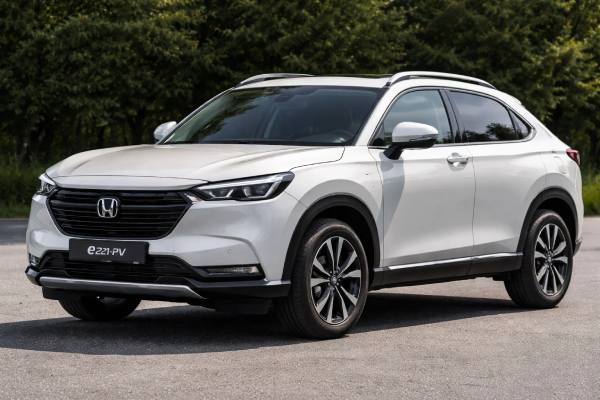
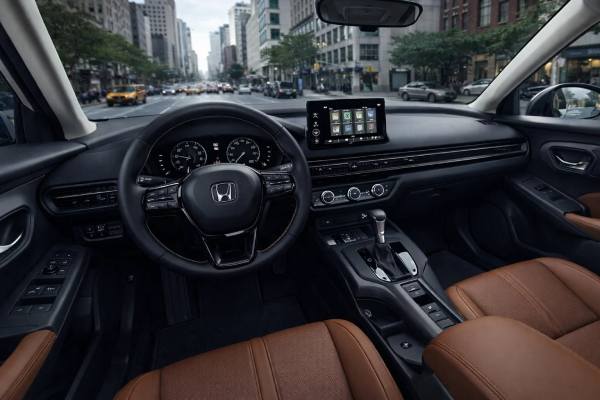
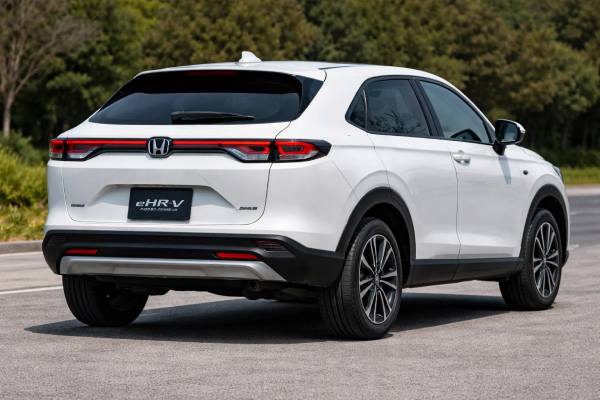
Honda’s third-generation HR-V for Europe went “hybrid-first” in a very Honda way: it uses the i-MMD e:HEV system, where an electric motor does most of the driving and the petrol engine often acts as a generator. For owners, that changes what matters. Smoothness and low-speed response feel closer to an EV than a conventional mild hybrid, while fuel use stays consistent in mixed driving without needing to plug in.
In RV5 form (2021–2023), you get a compact SUV footprint with a low floor, smart packaging, and a restrained, durable interior. The trade-offs are also predictable: it is not quick by modern turbo standards, highway economy depends heavily on speed, and the hybrid system rewards drivers who maintain tyres, brakes, and cooling systems properly. This guide focuses on the numbers, the common ownership questions, and the service habits that keep the HR-V e:HEV dependable long-term.
At a Glance
- Smooth, EV-like pull in town thanks to the traction motor doing most of the work.
- Strong everyday efficiency for a petrol SUV when driven at mixed speeds (WLTP combined around 5.4 L/100 km).
- Practical cabin packaging and usable cargo space for the class, with a compact exterior footprint.
- Hybrid complexity means you should keep software updates and cooling system health on your radar.
- Plan on engine oil and filter every 12 months or 15,000 km (whichever comes first) in typical European service schedules.
Navigate this guide
- RV5 hybrid ownership profile
- i-MMD e:HEV specs tables
- Grades, options, and driver assistance
- Reliability patterns and service actions
- Maintenance schedule and buyer advice
- Driving feel, efficiency, and range
- Hybrid rivals and best picks
RV5 hybrid ownership profile
The HR-V e:HEV (RV5) sits in the small SUV class, but it drives with a different “logic” than most rivals. Honda’s i-MMD (Intelligent Multi-Mode Drive) hybrid typically uses three operating states:
- EV Drive: the traction motor propels the car using battery energy.
- Hybrid Drive: the petrol engine runs a generator; the traction motor still drives the wheels.
- Engine Drive: a clutch connects the engine to the wheels at steadier speeds when it is efficient to do so.
For the driver, this means two things. First, initial acceleration and low-speed cruising feel unusually smooth and immediate, because the traction motor does the heavy lifting. Second, engine sound does not always match road speed in the way a conventional automatic does. Some owners call this “CVT feel,” even though the eCVT here is a control strategy and fixed gearing rather than a belt-and-pulley CVT. Understanding that characteristic helps you judge the car fairly on a test drive.
Packaging is another HR-V strength. The upright seating position, wide-opening doors, and a square cargo area make it easy to live with. Honda also kept the exterior tidy: it is easy to place in traffic and parking, and visibility is generally strong for an SUV, especially over the bonnet.
Where the HR-V e:HEV asks for realism is performance and high-speed economy. On paper, 0–100 km/h is about 10.6–10.8 seconds, which is fine for normal use but not “hot” by today’s standards. On the motorway, fuel use rises quickly above 120 km/h because aerodynamic drag dominates. The hybrid system can still be efficient, but it cannot defeat physics.
Ownership priorities for this model are therefore straightforward:
- Keep rolling resistance low: correct tyre pressures and good alignment matter more than you might expect.
- Protect cooling and electronics: hybrids rely on stable temperatures for long life.
- Stay current on calibrations: small software updates can meaningfully improve drivability or warning-light behavior.
- Do not neglect the 12 V battery: it is the gatekeeper that wakes up the hybrid system.
Get those right, and the HR-V e:HEV tends to deliver exactly what it promises: calm daily driving, good real-world economy in mixed use, and a mature, durable feel.
i-MMD e:HEV specs tables
Below are the core specifications for the Honda HR-V e:HEV (RV5), 2021–2023, focusing on the European-market hybrid-only configuration. Numbers can vary slightly by market, wheel size, and trim (especially weights and cargo figures).
Powertrain and efficiency
| Item | Specification |
|---|---|
| Powertrain code / system | i-MMD e:HEV (Intelligent Multi-Mode Drive) |
| Engine layout | Inline-4, DOHC i-VTEC, 4 valves/cyl, chain-driven |
| Displacement | 1.5 L (1498 cc) |
| Bore × stroke | 73.0 × 89.5 mm (2.87 × 3.52 in) |
| Induction | Naturally aspirated |
| Compression ratio | 13.5:1 |
| Fuel requirement | Unleaded 95 RON |
| Max engine power | 79 kW @ 6000–6400 rpm |
| Max engine torque | 131 Nm @ 4500–5000 rpm |
| Traction motor max power | 96 kW (131 PS) |
| Traction motor max torque | 253 Nm |
| Timing drive | Chain |
| Rated efficiency (WLTP combined) | 5.4 L/100 km (about 52.3 mpg UK) |
| Real-world highway @ 120 km/h | Typically 6.0–6.8 L/100 km depending on temperature, tyres, and load |
| Aerodynamics | Cd and frontal area are not consistently published in public EU spec sheets |
Transmission and driveline
| Item | Specification |
|---|---|
| Transmission | eCVT (hybrid control system with fixed gearing and clutch) |
| Drive type | FWD (2WD) |
| Differential | Open (traction managed by brake-based stability/traction control) |
Chassis, dimensions, and capacities
| Item | Specification |
|---|---|
| Suspension (front/rear) | MacPherson strut / torsion beam (market-dependent tuning) |
| Steering | Electric power steering |
| Length / width / height | 4340–4355 / 1790 / 1582 mm (varies by measurement standard) |
| Wheelbase | 2610 mm (102.8 in) |
| Turning circle (kerb-to-kerb) | 11.3 m (37.1 ft) |
| Ground clearance | 188 mm (with driver); about 150 mm fully loaded |
| Fuel tank | 40 L (10.6 US gal / 8.8 UK gal) |
| Cargo volume (VDA) | 319 L seats up, 1289 L seats down to roof (trim-dependent) |
| Kerb (curb) weight | 1380–1401 kg (3042–3089 lb) |
| GVWR / max permissible weight | 1870 kg (4123 lb) |
| Payload | 469–490 kg (1034–1080 lb) |
| Roof load | 45–50 kg (99–110 lb) |
Performance and capability
| Item | Specification |
|---|---|
| 0–100 km/h (0–62 mph) | 10.6–10.8 s |
| Top speed | 170 km/h (106 mph) |
| Towing capacity | Not a strong suit for this model; check market rating by VIN and trim |
| Braking distance | Not consistently published in official spec sheets; tyre choice has a large effect |
Fluids and service capacities (practical guidance)
Official published service capacities can be market- and VIN-specific. The figures below reflect common service practice for Honda 1.5 i-MMD systems, but you should verify them against your official service documentation before ordering fluids.
| Fluid / item | Typical specification | Typical capacity |
|---|---|---|
| Engine oil | 0W-20 meeting the required Honda/ACEA standard | ~3.4–3.7 L with filter |
| Engine coolant | Long-life OAT coolant (Honda type) | commonly ~5–6 L total system |
| eCVT / hybrid transmission fluid | Honda-spec hybrid trans fluid | often ~2–4 L (service-fill varies) |
| Brake fluid | DOT 4 | flush quantity varies; plan 1 L for a complete exchange |
| A/C refrigerant | R-1234yf (common for this generation) | charge varies by equipment |
Key torque specs (common workshop values to verify):
| Fastener | Typical torque |
|---|---|
| Wheel nuts | ~108 Nm (80 lb-ft) |
| Engine oil drain plug | commonly 35–40 Nm (26–30 lb-ft) |
| Front caliper carrier bolts | often 100–120 Nm range (varies by caliper) |
Electrical
| Item | Specification |
|---|---|
| 12 V battery | Conventional 12 V battery (capacity varies by market) |
| High-voltage system | Hybrid traction battery and inverter (exact voltage/chemistry not always published in consumer spec sheets) |
Safety and driver assistance (headline)
| Item | Specification |
|---|---|
| Euro NCAP (2022 protocol) | Adult 82% / Child 75% / VRU 73% / Safety Assist 78% |
| Overall Euro NCAP stars | 4 stars |
| ADAS suite | Honda Sensing: AEB, ACC, lane support, traffic sign recognition and more (availability varies by trim/market) |
Grades, options, and driver assistance
Most European markets offered the HR-V e:HEV in a small set of clear grades (names vary by country), typically along the lines of Elegance, Advance, and Advance Style. The good news is that Honda kept the powertrain consistent: you are usually choosing equipment, wheels, and comfort features rather than different engines.
Trims and how to identify them quickly
- Base / Elegance-style trims: usually smaller wheels, simpler upholstery, and fewer exterior styling cues. You still get the same hybrid output and the same everyday drivability.
- Mid / Advance: often adds convenience items (keyless entry, upgraded infotainment, parking sensors/camera upgrades) and may introduce more driver assistance features as standard depending on market.
- Top / Advance Style: typically brings larger wheels, styling packages (contrast roof or unique bumpers/trim), and the fullest tech set, including enhanced lighting or premium interior details.
Quick “tell” items you can use when shopping:
- Wheel size and tyre profile often correlate strongly with trim.
- Interior dash trim, seat material, and the presence of heated seats/steering wheel (market-specific) are reliable indicators.
- Parking sensors front and rear, and a higher-grade rear camera, often show up on mid and top trims.
Options that change ownership more than you expect
- Wheel and tyre packages
Larger wheels can sharpen steering response, but they usually cost you ride comfort and a small slice of efficiency. They also increase the risk of sidewall damage on poor roads. If your priority is refinement and economy, the smaller wheel option is often the sweet spot. - Parking and visibility aids
A rear camera is extremely useful on this model because the coupe-like roofline narrows the rear view compared with older HR-V generations. Front parking sensors also reduce bumper scuffs, especially with tight urban parking. - Lighting
Headlight performance matters for safety and fatigue. If your market offered upgraded headlights or adaptive lighting, it can be worth prioritizing for frequent night driving.
Safety ratings and what they mean in practice
For this generation, Euro NCAP testing under the 2022-era protocols yielded a 4-star overall rating, with category scores strong in adult protection and safety assist, and comparatively weaker in child occupant performance. The takeaway is not that the HR-V is unsafe—rather, it performs well overall but does not reach the highest band in every sub-test.
When comparing used cars, remember that safety ratings can also reflect standard equipment. A car with more complete driver assistance (or radar hardware where applicable) can score better than the same model in a lower equipment level.
Honda Sensing and ADAS: what to look for
Common Honda Sensing features on HR-V e:HEV include:
- Collision Mitigation Braking System (AEB): can detect vehicles and, in many markets, pedestrians and cyclists.
- Adaptive Cruise Control (ACC): useful for commuting; check for smooth operation and correct following distance behavior.
- Lane keeping and road departure mitigation: lane centering and corrective steering assistance depend on clean camera view and correct wheel alignment.
- Traffic sign recognition and intelligent speed limiter: helpful, but it needs a clean windscreen camera area.
Service note: after windscreen replacement, alignment work, or front-end repairs, ADAS calibration may be required. If the seller cannot document calibration, budget for a diagnostic scan and calibration check.
Reliability patterns and service actions
The HR-V e:HEV’s reputation rests on a strong Honda pattern: conservative hardware, careful thermal management, and hybrid control logic refined over many years. Most problems owners experience are not “catastrophic hybrid failures,” but smaller issues that create warnings, drivability annoyance, or premature wear if ignored.
Below is a practical map of prevalence and cost tier, plus what to watch for by mileage and usage.
Common (low to medium cost)
- 12 V battery weakness (common / low–medium cost)
Symptoms: intermittent warning messages, failure to “ready,” odd infotainment resets, or stop-start/hybrid transitions feeling inconsistent.
Likely cause: a tired 12 V battery or frequent short trips that never fully recharge it.
Remedy: test battery under load, check charging behavior, replace with the correct spec battery when it fails tests. On hybrids, a marginal 12 V battery causes outsized drama. - Brake rust and uneven pad wear (common / low–medium cost)
Symptoms: grinding after rain, pulsing, or rear brakes doing little work on inspection.
Cause: regenerative braking reduces friction brake use, so corrosion builds faster—especially on the rear.
Remedy: periodic “brake cleaning” service, occasional firm stops to exercise friction brakes, and earlier pad/disc servicing in wet climates. - Tyre wear from alignment drift (common / low cost)
Symptoms: inner-edge wear, steering off-centre, higher road noise.
Cause: potholes and kerb impacts can knock toe out; EV-like torque makes poor alignment show up quickly.
Remedy: alignment check at least annually or after a hard hit, and rotate tyres on schedule.
Occasional (medium cost)
- EGR and intake deposits (occasional / medium cost)
Symptoms: rough cold starts, reduced efficiency, occasional fault codes.
Cause: short trips and frequent engine on/off cycles can encourage deposits.
Remedy: inspection and cleaning as needed; using quality fuel and ensuring the engine reaches full temperature regularly helps. - Cooling system issues (occasional / medium cost)
Symptoms: rising temperatures, warning lights, reduced power, or frequent fan operation.
Cause: coolant age, air trapped after service, or radiator/condenser blockage.
Remedy: correct coolant type, proper bleeding procedure, and keeping the front heat exchangers clean. - Infotainment glitches (occasional / low–medium cost)
Symptoms: Bluetooth dropouts, slow boot, camera lag.
Cause: software bugs, phone compatibility, or weak 12 V power supply.
Remedy: update software, confirm stable 12 V voltage, and reset/re-pair devices.
Rare (higher cost, but uncommon)
- High-voltage component faults (rare / high cost)
Symptoms: “hybrid system” warnings, refusal to go READY, limp mode.
Cause: inverter, DC-DC converter, wiring connectors, or sensor faults.
Remedy: dealer-level diagnostics. These cases are uncommon, but they are the reason you should not ignore warning lights.
Recalls, TSBs, and how to verify
Because recall and service-campaign coverage varies by market, the best habit is procedural:
- Run an official VIN recall check for your country.
- Ask the seller for dealer service history or digital service records.
- Confirm whether any software updates were applied (engine ECU, hybrid control, ADAS camera/radar modules where fitted).
Pre-purchase checks that matter most on the e:HEV
- Diagnostic scan for stored hybrid, ABS, and ADAS codes (even if the dash is clear).
- Confirm smooth transitions: creeping, stop-start, and gentle acceleration should feel consistent.
- Inspect brakes for corrosion and measure disc thickness if possible.
- Check tyre brand matching and wear patterns—mismatched tyres can upset stability systems and economy.
- Verify the 12 V battery test result (not just “it starts”).
If the car passes those checks, the HR-V e:HEV is typically a low-drama long-term vehicle.
Maintenance schedule and buyer advice
The HR-V e:HEV is not difficult to maintain, but it rewards a “hybrid-aware” approach: keep fluids fresh, keep the cooling system healthy, and do not treat brakes as a once-every-five-years item.
Practical maintenance schedule (distance/time)
Use this as a planning guide and then confirm the exact intervals for your VIN and market.
Every 12 months or 15,000 km (typical):
- Engine oil and filter (use the correct 0W-20 spec required for your market).
- Inspect brakes (pads, discs, sliders) and clean/grease as needed.
- Inspect tyres and rotate if wear pattern suggests it (many owners rotate every 10,000–12,000 km).
- Cabin air filter inspection; replace if dusty or if HVAC airflow drops.
- Check 12 V battery health (voltage, load test) and charging behavior.
Every 30,000 km or 2 years:
- Engine air filter replacement (more often in dusty areas).
- Brake fluid inspection; replace if moisture is high or per schedule.
- Alignment check (sooner if you hit potholes regularly).
Every 60,000–90,000 km (or as condition requires):
- Thorough brake service; consider proactive rear brake attention in wet climates.
- Inspect cooling system hoses and clamps, and clean the radiator/condenser stack.
Every 5 years (common long-life coolant guideline):
- Coolant replacement (correct type, correct bleeding procedure).
Spark plugs:
- Often 100,000 km+ on modern Honda petrol engines, but verify your service book.
Hybrid system checks:
- Periodic diagnostic scan for battery and inverter temps, stored codes, and software updates—especially if you keep the car beyond warranty.
Fluids, parts, and what to buy confidently
Even when you verify capacities by VIN, your purchase decision can be informed by the “shape” of what the car needs:
- Engine oil: a high-quality 0W-20 from a reputable supplier is not optional; it supports efficiency and cold-start protection.
- Coolant: do not mix generic coolants. Hybrids rely on stable heat control, and the wrong coolant chemistry can shorten component life.
- Brake fluid: DOT 4 is common, but the timing matters more than the brand. Moisture is the enemy.
Essential torque values (decision-making quick list)
Treat these as “workshop typical” until you confirm them for your exact model:
- Wheel nuts: ~108 Nm
- Oil drain plug: ~35–40 Nm
- Undertray fasteners and small bolts: do not overtighten—stripped threads cause recurring rattles and water ingress
Buyer’s guide: what to seek, what to avoid
Good choices to seek
- A car with documented annual servicing and at least one brake service showing caliper cleaning.
- A matched set of quality tyres (same brand/model across an axle, ideally all four).
- Evidence of software updates or at least regular dealer servicing, which usually includes them.
Caution flags
- Persistent warning lights, even if “it drives fine.”
- Mismatched tyres, heavy inner-edge wear, or steering off-centre.
- Overdue brake fluid and visibly corroded discs—especially in a car that “only did short trips.”
Long-term durability outlook
For most owners, the HR-V e:HEV’s long-term durability hinges on avoiding two traps: ignoring the 12 V battery until it becomes a nuisance, and neglecting brakes because regen “hides” friction-brake wear. If you stay ahead of those, the hybrid system is generally a set-and-forget experience.
Driving feel, efficiency, and range
The HR-V e:HEV’s driving character is best described as calm and electrically biased. In city driving it often feels closer to an EV than a conventional hybrid because the traction motor does the work and the engine appears and disappears in the background.
Ride, handling, and NVH
- Ride: tuned for comfort first. It absorbs broken city pavement well, though larger wheels can make sharp edges more noticeable.
- Handling: predictable and stable rather than playful. The centre of gravity is not low, but body control is good for the class.
- Steering: light at parking speeds and firmer on the move. Feedback is modest, but accuracy is good, which matters more day-to-day.
- Cabin noise: at urban speeds it is quiet; at motorway speeds tyre choice and road surface dominate. The engine note can rise under heavy load even if road speed changes slowly—normal for this powertrain strategy.
Powertrain feel: what to expect
- Throttle response: immediate in the first few metres because the motor supplies torque quickly.
- Mid-range: fine for merging, but not punchy. Passing at 80–120 km/h is competent, not fast.
- Engine behavior: the engine may run at a steady high rpm under sustained acceleration, then drop away. This is not a fault; it is the system holding the engine at an efficient operating point while the motor drives the wheels.
- Drive modes: most markets offer Normal/Econ/Sport. Sport typically holds higher system response and makes engine involvement more obvious; Econ is best for smooth commuting.
Real-world efficiency: what owners usually see
A useful way to think about this hybrid is “excellent when speed varies, average when speed is fixed and high.”
Typical observed results (driver and conditions dependent):
- City / suburban: 4.5–5.5 L/100 km is realistic with gentle inputs and warm temperatures.
- Mixed commuting: around 5.0–6.0 L/100 km.
- Motorway 110–120 km/h: often 6.0–6.8 L/100 km.
- Cold weather penalty: short trips in winter can add 0.5–1.5 L/100 km, mostly due to cabin heat demand and the engine running more often.
Two practical tips to keep consumption low:
- Avoid abrupt speed changes that trigger heavy engine involvement. Smooth acceleration lets the system stay in its sweet spot.
- Keep tyres correctly inflated and choose low-rolling-resistance tyres when replacements are due.
Braking feel and regen behavior
Regen is generally well blended, but the pedal can feel slightly different from a conventional car:
- Initial pedal travel may command regen first.
- Harder braking brings in friction brakes more decisively.
Because regen reduces friction-brake use, schedule occasional firm stops (when safe) to keep discs clean, especially after rain.
Load carrying and towing realism
The HR-V is a practical daily carrier, but it is not designed to be a tow workhorse. If towing matters, check:
- Your exact VIN’s rated towing limit (braked/unbraked).
- Cooling system condition and tyre load ratings.
- Whether your market requires specific towing wiring modules compatible with the vehicle’s electronics.
For most owners, the HR-V e:HEV is best used as a high-efficiency commuter and family runabout, not as a heavy-load tool.
Hybrid rivals and best picks
The HR-V e:HEV competes in a crowded segment where the “best” choice depends on what you value: fuel economy, space, performance, or driver assistance sophistication. Here is how the Honda’s character compares to common rivals.
Versus Toyota C-HR Hybrid
Why you might pick the Toyota
- Often stronger headline fuel economy and a deeply proven hybrid ecosystem.
- Strong resale in many European markets.
Why you might pick the Honda
- More “EV-like” low-speed feel in many situations, with a calmer cabin experience.
- More straightforward cabin packaging and a practical cargo shape.
Decision tip: If you prioritise maximum efficiency and resale, Toyota is hard to beat. If you prioritise smoothness and usability, the Honda’s approach is compelling.
Versus Renault Captur E-Tech (hybrid)
Why you might pick the Renault
- Different powertrain flavor, often punchy around town.
- Attractive pricing and trim variety in many countries.
Why you might pick the Honda
- More consistent, refined hybrid calibration and a more conservative long-term engineering approach.
- Typically strong build feel.
Decision tip: If you keep cars a long time and want fewer powertrain surprises, the Honda tends to appeal. If you want features per euro and like trim flexibility, Renault can win.
Versus Ford Puma (mild hybrid)
Why you might pick the Ford
- Sharper handling and a more enthusiastic driving feel.
- Often stronger turbocharged mid-range.
Why you might pick the Honda
- Better stop-start smoothness and real hybrid behavior in traffic.
- Often lower fuel use in true urban driving compared with mild hybrids.
Decision tip: Choose Ford for fun and turbo torque; choose Honda for calm and efficiency in mixed and urban conditions.
Versus VW T-Cross / T-Roc (petrol)
Why you might pick VW
- Familiar turbo-petrol feel and often strong highway performance for engine size.
- Wide dealer network and many drivetrain variations.
Why you might pick the Honda
- Lower fuel use in variable-speed driving and a smoother city experience.
- Hybrid system that feels more “engineered” than simply “downsized.”
Decision tip: If most of your miles are motorway and you want strong passing power, a turbo-petrol rival can make sense. If you do mixed driving, the HR-V e:HEV’s efficiency advantage usually shows up.
Best HR-V e:HEV configuration for most buyers
If you are choosing within the HR-V range itself:
- Prioritise the trim that gives you the safety and comfort items you will use daily (parking sensors/camera upgrades, better headlights, heated features if offered).
- Do not assume the biggest wheels are “best.” For many owners, the mid wheel size offers the best blend of ride, noise, and tyre cost.
The HR-V e:HEV’s competitive edge is not outright speed or maximum cargo volume. It is the combination of refined hybrid behavior, usable packaging, and low-stress ownership when maintained with hybrid-aware habits.
References
- 2021 Honda HR-V e:HEV 2021 (Technical Specifications)
- Honda HR-V Specs, Dimensions & Interior | Honda UK 2025 (Specifications)
- Official Honda HR-V 2022 safety rating 2022 (Safety Rating)
- Euro NCAP | Next to Best: Honda HR-V and DS 4 go for four, while Dacia struggles again 2022 (Press Release)
- ALL-NEW HR-V: EFFICIENT AND RESPONSIVE HYBRID PERFORMANCE AND A CLASS-LEADING CABIN EXPERIENCE AND TECHNOLOGY 2021 (Press Release)
Disclaimer
This article is for informational purposes only and is not a substitute for professional diagnosis, inspection, or repair. Specifications, torque values, fluid capacities, service intervals, and procedures can vary by VIN, market, model year, and equipment. Always verify details using your official owner’s manual, service documentation, and dealer information for your exact vehicle.
If you found this guide useful, consider sharing it on Facebook, X (Twitter), or your favorite forum to help others find reliable ownership information.