
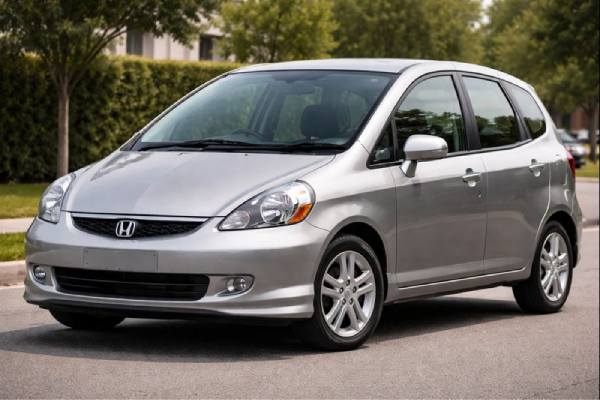

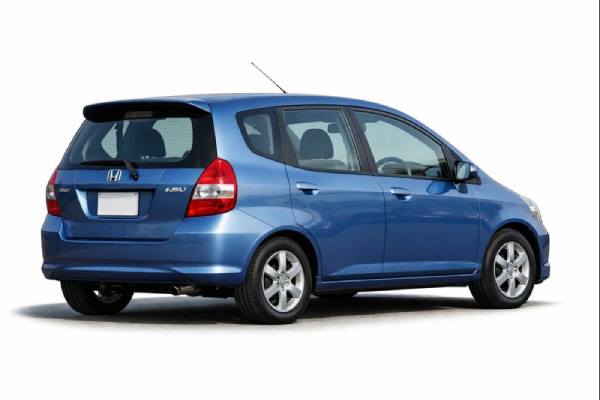
The facelift-era Honda Jazz (GD) with the 1.2 i-DSI L12A1 is a study in smart engineering: modest power, exceptional packaging, and a drivetrain designed to be easy to live with. The i-DSI concept (two spark plugs per cylinder) prioritizes clean, efficient combustion at everyday speeds, which suits the Jazz’s role as an urban and commuter car. More importantly, the “tall small” body delivers real family usability—upright seating, excellent visibility, and a cabin that can swallow bulky loads thanks to Honda’s clever rear-seat design.
For 2004–2008 facelift cars, you’re typically choosing this version for low running costs, simple mechanicals, and a reputation for durability when maintenance is kept consistent. It is not a fast car, but it is often a satisfying one: light controls, predictable handling, and a layout that makes daily ownership feel easier than the numbers suggest.
Top Highlights
- Big-car cabin flexibility in a small footprint, with genuinely useful rear-seat and cargo configurations
- Efficient, low-stress 1.2 i-DSI character that suits city use and steady commuting
- Usually strong mechanical longevity when serviced on time, especially with clean oil and correct spark plugs
- Watch for age-related corrosion and suspension wear; neglected examples can feel tired quickly
- Plan on engine oil and filter every 10,000–12,000 km (6,000–7,500 mi) or 12 months
What’s inside
- Facelift Jazz GD 1.2 explained
- Specs for 2004–2008 L12A1
- Equipment, trims, and safety
- Problems, recalls, and fixes
- Service schedule and buying advice
- On-road performance and economy
- Rivals and used-market verdict
Facelift Jazz GD 1.2 explained
In facelift form (2004–2008), the GD Jazz kept the same core strengths—space efficiency and mechanical simplicity—while gaining updates that made it feel more mature as a daily car. The key idea is packaging: the fuel tank sits centrally under the front seats, freeing the rear floor and allowing the rear seat base to fold in creative ways. In practice, that means you can carry tall items behind the front seats, or turn the cabin into a flat load area without wrestling with complicated latches. For owners, it is one of the rare small cars that can replace a larger hatch for many real tasks.
The L12A1 1.2 i-DSI matches that concept. It is tuned for usable torque at low to mid rpm rather than headline power. The i-DSI system uses two spark plugs per cylinder to create a faster, more complete burn under light loads. You feel that as smooth, tidy response when pulling away, and consistent fuel use in stop-start driving. It also tends to be forgiving: it does not demand high revs to move the car, and it does not run hot or stressed when used normally.
Facelift-era changes depended on market and trim, but commonly included revised exterior details, refreshed instruments and interior materials, and (on some higher trims and engine combinations) the option of stability control. For the 1.2 specifically, the ownership appeal usually comes from the basics: a manual gearbox, straightforward suspension, and a cabin that wears well if it has been cared for.
The Jazz is also easy to place on the road. The driving position is upright, the glass area is generous, and the bonnet line is short. Those traits reduce everyday fatigue—parking, tight streets, and roundabouts feel simpler. The trade-off is that the body is tall for its footprint, so crosswinds and high-speed lane changes can feel more “supermini” than “compact hatch.” Good tyres and healthy dampers matter more than on lower, heavier rivals.
If you want the most satisfying version of the 1.2, prioritize condition over mileage. A well-serviced, rust-controlled Jazz with tight suspension bushings will feel crisp and modern in a way a neglected one will not—regardless of how few kilometres are on the odometer.
Specs for 2004–2008 L12A1
Below are the most useful specifications for the facelift Honda Jazz (GD) 1.2 i-DSI with engine code L12A1. Some figures vary by market, tyre size, and equipment, so treat these as typical ranges for decision-making rather than VIN-perfect data.
Powertrain and efficiency
| Item | Specification |
|---|---|
| Code | L12A1 |
| Engine layout and cylinders | Inline-4, transverse; SOHC; 2 valves/cyl; i-DSI with 2 spark plugs/cyl |
| Displacement | 1.2 L (1,246 cc) |
| Bore × stroke | 73.0 × 74.4 mm (2.87 × 2.93 in) |
| Induction | Naturally aspirated |
| Fuel system | PGM-FI port fuel injection |
| Compression ratio | 10.8:1 |
| Max power | 78 hp (57 kW) @ 5,700 rpm |
| Max torque | 110 Nm (81 lb-ft) @ 2,800 rpm |
| Timing drive | Chain |
| Rated efficiency (typical) | 5.1–5.6 L/100 km (42–46 mpg US / 50–55 mpg UK) |
| Real-world highway @ 120 km/h (typical) | 6.3–7.2 L/100 km (33–37 mpg US / 39–45 mpg UK) |
| Aerodynamics | Cd and frontal area: market-dependent (rarely published for this variant) |
Transmission and driveline
| Item | Specification |
|---|---|
| Transmission | 5-speed manual (most common for L12A1) |
| Drive type | FWD |
| Differential | Open |
Chassis and dimensions
| Item | Specification |
|---|---|
| Suspension (front/rear) | MacPherson strut / torsion beam |
| Steering | Electric power steering (EPS) |
| Brakes (typical) | Front discs / rear drums (rear discs on some higher trims/markets) |
| Wheels and tyres (common) | 175/65 R14 (varies by trim) |
| Ground clearance | Typically 140–155 mm (5.5–6.1 in) depending on tyres |
| Length / width / height (typical) | 3,830 × 1,675 × 1,525 mm (150.8 × 65.9 × 60.0 in) |
| Wheelbase | 2,450 mm (96.5 in) |
| Turning circle (kerb-to-kerb) | Typically 9.8–10.4 m (32–34 ft) |
| Kerb weight | Typically 980–1,080 kg (2,160–2,380 lb) |
| Fuel tank | Typically 42 L (11.1 US gal / 9.2 UK gal) |
| Cargo volume | Typically ~380 L seats up / ~1,320 L seats down (method varies by market) |
Performance and capability
| Item | Typical figure |
|---|---|
| Acceleration 0–100 km/h (0–62 mph) | ~12.5–13.5 s |
| Top speed | ~165–175 km/h (103–109 mph) |
| Braking distance 100–0 km/h | Strongly tyre-dependent; not consistently published for this variant |
| Towing capacity | Often not rated or very low in many markets; check local handbook |
| Roof load | Commonly ~50 kg (110 lb) where specified |
Fluids and service capacities (typical)
| Item | Specification (typical) |
|---|---|
| Engine oil | Honda-spec oil; commonly 5W-30; capacity typically ~3.4–3.7 L (3.6–3.9 US qt) with filter |
| Coolant | Honda Type 2 or equivalent long-life; mix ratio per label; capacity varies by radiator/heater layout |
| Manual transmission fluid | Honda MTF (or equivalent); capacity typically ~1.4–1.6 L (1.5–1.7 US qt) |
| A/C refrigerant | R134a (charge varies by system) |
Electrical
| Item | Specification (typical) |
|---|---|
| 12V battery | Commonly 35–45 Ah class (size varies by market) |
| Spark plugs | 8 plugs total; correct heat range and type are important; gap per plug spec |
Safety and driver assistance (typical for era)
| Item | Notes |
|---|---|
| Crash ratings | Euro NCAP rating exists for early GD Jazz; protocol differs from modern percentage system |
| Airbags | Typically front airbags; side airbags often trim/market-dependent |
| ABS | Common, but not universal in every base trim/market |
| ADAS | Not expected on this generation (no AEB/ACC/LKA in period-correct trims) |
Equipment, trims, and safety
Trim structure for the facelift Jazz varies more than many people expect because Honda adjusted names and standard equipment by region (and sometimes even by steering position). Still, the 1.2 i-DSI usually sits at the value end of the range: simple, light, and focused on low ownership costs. In many markets you will see trim names that imply a step-up ladder—base or “S” style trims, then mid-level comfort trims, and then sportier or luxury-focused variants that are typically paired with larger engines.
Trims and options that matter on the 1.2
For used buyers, the important differences are functional, not cosmetic:
- Safety equipment: side airbags may be present on better-equipped cars. If this is a priority, verify by looking for “SRS” labels on the outer seatbacks and checking the airbag count in the instrument cluster self-test (or the equipment list by VIN).
- Brakes: many 1.2 cars run rear drums; some higher trims/markets moved to rear discs. Drums are not automatically “bad,” but neglected drums can hide seized adjusters and uneven braking.
- Climate and comfort: manual A/C vs automatic climate control (where offered), heated mirrors, and electric mirror folding can make daily life easier—especially on older cars where cabin demist performance matters.
- Wheel and tyre package: 14-inch wheels typically ride better and cost less to replace tyres for. Larger wheels can sharpen steering response but may increase noise and reduce ride compliance on rough roads.
- Audio and controls: facelift cars commonly improved instrumentation and switchgear feel. If you do lots of night driving, check that the dash illumination is even and that the HVAC controls still move smoothly.
Quick identifiers
- Facelift exterior cues can include bumper and grille changes and detail updates to lights and trim. Because the Jazz has been frequently repaired and resprayed over the years, don’t use bumpers alone as proof—check build plate data and service history.
- Interior “tells”: revised cluster graphics and updated trim textures are common in facelift cars. Worn seat bolsters, a shiny steering wheel, and sticky switches usually indicate heavy city use rather than “bad design.”
Safety ratings and what they mean here
The Jazz’s safety story is best understood in context: it performed well for its time, but the benchmark has moved dramatically since the early 2000s. Early Euro NCAP results for the GD Jazz include a four-star occupant protection rating under the older system, plus separate child and pedestrian ratings. Those tests do not map cleanly to modern percentage-based scoring, so avoid direct comparisons with newer superminis.
Safety systems and driver assistance
Expect classic, mechanical-era safety rather than modern assistance:
- Passive safety: front airbags are common; side airbags depend on trim and market. ISOFIX child-seat anchor points are typically provided on outer rear seats.
- Braking and stability: ABS is common in many trims; stability control (where offered) tends to appear on specific higher trims and engine/gearbox combinations rather than the base 1.2.
- Service implications: any airbag light or ABS fault needs proper diagnosis before purchase. Many faults are simple (wheel speed sensor wiring, low battery voltage), but you should treat warning lights as a negotiation point, not a “minor quirk.”
Problems, recalls, and fixes
The facelift GD Jazz is generally robust, but age and usage pattern matter more now than original design margins. The best way to think about common issues is to separate “wear and tear” from “real faults,” then judge severity by how expensive the fix is relative to the car’s value.
Common (low to medium cost)
- Suspension knocks and looseness (common):
Symptoms: clunks over bumps, vague steering, uneven tyre wear.
Likely causes: drop links, front lower arm bushes, strut top mounts, rear beam bushes.
Remedy: replace worn joints and bushes, then do a proper alignment. A tight Jazz feels dramatically better. - Brake binding or uneven braking (common):
Symptoms: pulling under braking, hot wheel, poor fuel economy.
Likely causes: sticking front caliper slides; rear drum hardware corrosion; old brake fluid.
Remedy: service calipers, clean and lubricate slides, refresh drum hardware where needed, and change brake fluid. - EPS (electric power steering) quirks (occasional):
Symptoms: heavy steering intermittently or EPS warning light.
Likely causes: low battery voltage, poor grounds, or EPS sensor/column wear on high-mileage cars.
Remedy: start with battery/charging tests and wiring checks before condemning parts.
Occasional (medium cost or time-consuming)
- Ignition and misfire behaviour (occasional):
Symptoms: rough idle, hesitation, poor economy.
Likely causes: incorrect spark plugs (very common on i-DSI engines), worn plugs, coil issues, or vacuum leaks.
Remedy: verify the correct plug type and replace all plugs on schedule. The i-DSI’s “eight plugs” design rewards doing the job properly. - Oil seepage (occasional):
Symptoms: light oil wetness around the engine or gearbox area.
Likely causes: rocker cover gasket, chain cover seepage, or crank seal sweating with age.
Remedy: fix leaks that reach belts, mounts, or the clutch area; minor sweating can be monitored. - HVAC and cabin electrics (occasional):
Symptoms: blower speeds not working properly, intermittent window switches, weak A/C.
Likely causes: blower resistor, worn switch contacts, or A/C system age (seals, condenser).
Remedy: diagnose methodically; avoid “parts cannon” repairs.
Rare (higher cost)
- Timing chain-related noise (rare on maintained cars):
Symptoms: persistent rattling on cold start, cam/crank correlation faults.
Likely causes: neglected oil changes, chain tensioner wear, guide wear.
Remedy: address early—oil quality and correct viscosity are your first defence; mechanical repair is possible but not a casual job.
Recalls and service actions
Because these cars span an era with multiple industry-wide recall campaigns, do not rely on memory or “I think it was done.” Verify by VIN. Safety-related recalls can include items like airbag inflators and other component campaigns depending on market and build date. The practical rule is simple:
- Run an official recall check using the car’s VIN (and keep a screenshot or printout).
- Ask for evidence of completion from dealer history or invoices.
- Treat missing recall confirmation as a reason to delay purchase until verified.
A well-bought Jazz is one that has had these administrative issues handled, not one where you inherit uncertainty.
Service schedule and buying advice
If you maintain the L12A1 Jazz like a precision tool rather than “just a cheap runabout,” it usually pays you back with stability and low drama. The engine is not fragile, but it responds strongly to clean oil, correct ignition parts, and cooling-system health.
Practical maintenance schedule (typical)
Every 10,000–12,000 km (6,000–7,500 mi) or 12 months
- Engine oil and filter (commonly 5W-30 meeting the correct spec for your market)
- Basic inspection: leaks, coolant level, belts/hoses condition, tyre wear and pressures
- Brake inspection (pad thickness, disc condition; for drums, check adjustment and hardware condition)
Every 20,000–30,000 km (12,000–18,000 mi)
- Engine air filter (sooner in dusty conditions)
- Cabin/pollen filter (if fitted; sooner for city driving)
- Rotate tyres and check alignment (especially if steering feels off-centre)
Every 40,000–50,000 km (25,000–31,000 mi)
- Valve clearance inspection (if noise increases or idle quality changes, do it earlier)
- Manual gearbox fluid check; consider replacement if shifts feel notchy
Every 2 years
- Brake fluid change (important for pedal feel and corrosion control in ABS components)
- Battery test and charging-system check (EPS and ABS dislike low voltage)
Every 80,000–100,000 km (50,000–62,000 mi) or time-based as specified
- Spark plugs: replace all 8 with the correct type and heat range for i-DSI
- Coolant: follow the correct long-life interval for your coolant type (often 5 years initially, then shorter)
Timing chain
- No routine replacement interval like a belt, but inspect for noise and oil neglect signs. If you hear repeated cold-start rattle that does not fade quickly, investigate before it becomes expensive.
Fluids, specs, and a few “decision torque” numbers
- Oil capacity and plug types vary by exact engine and sump configuration; treat any purchase where the owner “isn’t sure what oil is in it” as higher risk.
- Typical wheel nut torque on Hondas is often around ~108 Nm (80 lb-ft), but verify for your wheels and studs.
- If a seller cannot show receipts for plugs, oil, and brake fluid, assume you will be doing a baseline service immediately.
Buyer’s guide: what to inspect first
- Corrosion hotspots: rear arches, sills, rear beam mounts, subframe areas, tailgate edges, and underseal condition. Rust is the one thing that can make a cheap Jazz uneconomical.
- Suspension tightness: drive over rough roads at low speed with windows down; listen for knocks. A worn Jazz can feel “loose,” but the fix is usually parts and labour rather than a fundamental flaw.
- Clutch and gearbox: check for clutch slip in higher gears and ensure the shifter feels positive. Grinding or crunching suggests either clutch drag or synchro wear.
- Cooling system health: stable temperature, clean coolant, and no sweet smell in the cabin.
- Electrical sanity: confirm all windows, locks, wipers, and blower speeds work. Small electrical faults add up.
Long-term outlook
A facelift 1.2 Jazz in honest condition is still a sensible used buy: simple, efficient, and practical. The cars that disappoint tend to be the ones that were treated as disposable. Pay for condition, and you usually get the Jazz experience people talk about.
On-road performance and economy
The 78 hp L12A1 Jazz is best understood as “easy performance,” not “quick performance.” In normal driving it feels responsive because it is light, the gearing is usually sensible, and the engine makes its torque where you actually use it—low and mid rpm. That makes city driving calmer than the numbers suggest: you do not need to rev it hard to keep pace, and the throttle response tends to be smooth rather than jumpy.
Ride, handling, and NVH
- Ride: The Jazz rides with a slightly busy supermini edge over sharp bumps, but good dampers and correct tyre pressures keep it controlled. If the rear feels skittish, suspect tyres and rear beam bushes before blaming the design.
- Handling: Neutral and predictable. The tall body means you feel some lean, but grip is usually safe and progressive. It is not a hot hatch, yet it is confidence-inspiring on tight roads.
- Steering: Light at parking speeds thanks to EPS, with enough accuracy for town work. The “feel” is modest, but the placement is excellent.
- Brakes: When maintained, they are consistent. A soft pedal usually points to old brake fluid, seized slides, or rear adjustment issues.
Powertrain character and gearbox behaviour
The i-DSI’s personality suits steady driving. It is happiest between roughly 2,000 and 4,500 rpm, where it pulls cleanly and sips fuel. Above that, it will rev, but acceleration gains taper—so short-shifting often feels better than chasing the redline. The 5-speed manual is typically light and easy, and it rewards smooth inputs more than aggressive shifting.
Real-world efficiency
Owners typically see strong results when the car is healthy and driven in a relaxed style:
- City: often 6.0–7.2 L/100 km (33–39 mpg US / 39–47 mpg UK) depending on traffic, warm-up time, and tyre choice
- Highway (100–120 km/h): often 6.3–7.2 L/100 km (33–37 mpg US / 39–45 mpg UK), with higher figures in winter or heavy crosswinds
- Mixed driving: often 5.6–6.5 L/100 km (36–42 mpg US / 43–50 mpg UK)
If fuel economy is poor, look for the usual culprits: underinflated tyres, dragging brakes, old plugs (or wrong plugs), tired oxygen sensors, or short-trip usage where the engine never fully warms.
A few performance metrics that matter
- 0–100 km/h: typically around 13 seconds (varies with load, tyres, and conditions)
- Passing performance: adequate for secondary roads if you plan your gaps and use the gearbox
- Turning circle: one of the Jazz’s quiet strengths for daily use—easy U-turns and parking
The bottom line is that the 1.2 Jazz feels cooperative. It encourages smooth driving, and it makes everyday trips feel low-effort, which is a form of performance many owners value more than speed.
Rivals and used-market verdict
In the used supermini class, the facelift GD Jazz sits in a specific niche: it often looks modest on paper, but it wins on usability and long-term ownership logic. If you compare it to rivals from the same era, the Jazz’s strongest advantage is that it behaves like a small MPV in a hatchback body—without the weight, complexity, or running costs of a true people carrier.
How it stacks up against key rivals
- Toyota Yaris (XP10/XP90 era): Often matches the Jazz for reliability reputation and urban friendliness. The Jazz usually wins on interior flexibility and rear-seat practicality, while the Yaris can feel slightly more refined in noise and ride depending on trim.
- Ford Fiesta (early-to-mid 2000s): Typically sharper steering feel and a more “fun” chassis balance. The Jazz answers with better packaging, easier visibility, and often simpler long-term ownership. If you love driving feel, Fiesta; if you want the clever cabin, Jazz.
- Volkswagen Polo (9N era): Can feel more solid at speed and more premium in materials. The trade-off is commonly higher parts and labour costs. The Jazz is usually cheaper to keep honest over time, especially if you do preventative maintenance.
- Renault Clio (II/III overlap): Often comfortable and widely available. Age-related electrical quirks can be more common in some examples, while the Jazz tends to reward basic mechanical care.
- Suzuki Swift (mid-2000s): Light, nimble, and often fun. The Jazz usually offers more interior space and a more “grown-up” cargo solution.
Who should buy the L12A1 facelift Jazz?
This is a smart choice if you want:
- A small car that can handle big-life tasks (shopping, strollers, flat-pack items)
- Predictable running costs and straightforward mechanicals
- A car that is easy to park and easy to see out of
It is a weaker fit if you want:
- Modern crash-avoidance features (this era predates the ADAS wave)
- Quiet, high-speed refinement like newer superminis
- Strong acceleration with a full load and air conditioning running
Used-market verdict
A good facelift 1.2 Jazz is rarely exciting in the way enthusiasts mean, but it is often satisfying in the way owners mean: it starts, it works, it carries more than it should, and it does not demand constant attention. The trick is buying the right one. Rust control, correct servicing (especially plugs and oil), and a tight suspension are what separate a “cheap old hatch” from a Jazz that still feels genuinely capable.
If you find a clean, well-documented example, it remains one of the most rational small-car purchases of its generation.
References
- Jazz 05 2004 (Manufacturer Press Release)
- Honda Jazz Achieves Highest Overall Rating in EuroNCAP Supermini Crash Tests | Honda Global Corporate Website 2004 (News Release)
- Honda Owners | Recalls and Updates | Honda UK 2026 (Recall Check)
- Check if a vehicle, part or accessory has been recalled – GOV.UK 2026 (Recall Guidance)
Disclaimer
This article is for informational purposes only and is not a substitute for professional inspection, diagnosis, or repair. Specifications, torque values, service intervals, and procedures can vary by VIN, market, model year, and equipment. Always verify details using the official owner’s manual and service documentation for your exact vehicle and consult a qualified technician when needed.
If this guide helped you, please consider sharing it on Facebook, X (Twitter), or your preferred platform—your support helps us keep producing practical owner resources.