
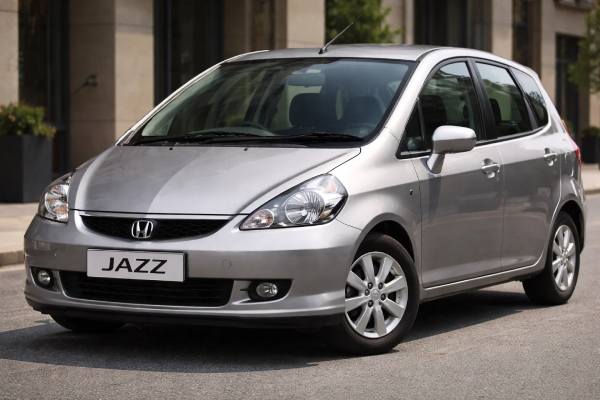
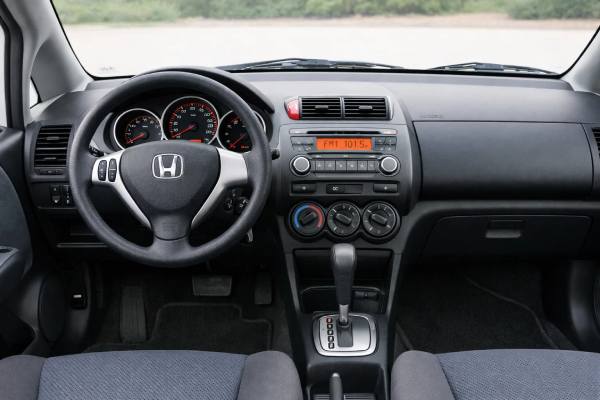
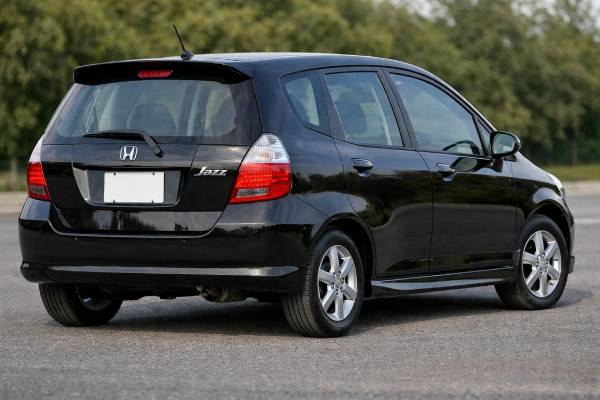
The facelifted Honda Jazz (GD) with the L13A1 is the version many owners recommend when you want the original “Magic Seat” packaging, low running costs, and a drivetrain that tolerates city use. This engine is often marketed as 1.4 i-DSI in Europe even though displacement is 1,339 cc (1.3 L), and the i-DSI concept (two spark plugs per cylinder) prioritizes clean, efficient combustion at everyday rpm rather than high-rev power. In facelift form (roughly 2004–2008), Honda also refined cabin materials, improved minor noise details, and widened availability of stability control in some markets.
Buyers today are usually balancing two things: (1) the Jazz’s outstanding space efficiency and visibility, and (2) age-related wear items—suspension rubbers, brakes, and transmission fluid condition—rather than fundamental engine weakness.
Owner Snapshot
- Choose this L13A1 if you want low-rpm drivability and simple, non-turbo reliability over quick acceleration.
- The “Magic Seat” layout and tall roof make it one of the most practical small hatchbacks for bulky loads.
- CVT versions can be smooth, but they are far more sensitive to correct fluid and service history than the manual.
- Budget for rubber-and-bushing refreshes on a 15–20-year-old car, even if mileage is low.
- Typical engine oil interval: 12 months or 10,000–12,000 km (6,000–7,500 miles), whichever comes first.
Quick navigation
- What the facelift L13A1 Jazz is like
- L13A1 specs and key numbers
- Trims, safety, and equipment notes
- Reliability issues ranked by impact
- Maintenance plan and smart buying checks
- Driving feel and real-world economy
- How it stacks up against rivals
What the facelift L13A1 Jazz is like
The 2004–2008 facelift GD Jazz keeps the same core idea that made the early Jazz/fit famous: a tall “monoform” body with a fuel tank tucked centrally, allowing the rear seat base to fold in clever ways. In daily ownership terms, that packaging matters as much as the engine choice. You can run errands, carry a bicycle with the front wheel off, or load tall boxes without needing a larger car. Visibility is a strong point too—thin pillars for the era, a high seating position, and a short bonnet that makes parking easy.
The L13A1 i-DSI is tuned for efficiency and calm response. It does not feel “peaky.” Instead, it pulls cleanly from low rpm and encourages short-shifting. If your driving is mostly urban, this is exactly the kind of engine that feels cooperative: smooth idle, predictable throttle, and good economy when you stay in the mid-range. Owners who come from larger engines sometimes call it slow; owners who value low costs call it “right-sized.”
Facelift updates vary by market, but they often include revised bumpers and lamps, small interior trim changes, and—importantly—broader availability of stability control (commonly Honda’s VSA) and other safety equipment on higher grades. That means two identical-looking cars can differ a lot in equipment, so it’s worth decoding the trim properly before you buy.
As a used car in 2026, the Jazz’s biggest “engineering trait” is that it’s now an aging platform: reliability depends less on the base design and more on whether a previous owner kept up with fluids, brakes, and suspension wear. A well-kept Jazz can feel tight and honest; a neglected one can feel loose and noisy even if the engine still runs fine. The good news is that most fixes are straightforward and parts availability is usually strong.
L13A1 specs and key numbers
Below are practical, owner-relevant specifications for the facelift GD Jazz with the L13A1 (often sold as 1.4 i-DSI in Europe). Some items vary slightly by trim, wheel size, and local homologation, so treat figures as typical ranges unless your VIN-specific documentation states otherwise.
Powertrain and efficiency (L13A1)
| Item | Specification |
|---|---|
| Code | L13A1 |
| Engine layout and cylinders | Front transverse I-4, SOHC, 2 valves/cyl (8 valves total), i-DSI (dual spark per cylinder) |
| Bore × stroke | 73.0 × 80.0 mm (2.87 × 3.15 in) |
| Displacement | 1.3 L (1,339 cc) |
| Induction | Naturally aspirated |
| Fuel system | Multi-point injection (PGM-FI / MPFI) |
| Compression ratio | 10.8:1 |
| Max power | 83 hp (61 kW) @ 5,700 rpm |
| Max torque | 119 Nm (88 lb-ft) @ 2,800 rpm |
| Timing drive | Chain |
| Rated efficiency (typical) | ~5.8–5.9 L/100 km (mpg US / mpg UK varies by market test) |
| Real-world highway @ 120 km/h | Expect ~6.2–7.0 L/100 km depending on tyres, wind, load, and A/C use |
Transmission and driveline
| Item | Specification |
|---|---|
| Transmission (common) | 5-speed manual |
| Automatic option (common) | CVT (often with stepped/manual mode in some markets) |
| Drive type | FWD |
| Differential | Open |
Chassis, dimensions, and capacities
| Item | Specification |
|---|---|
| Suspension (front/rear) | MacPherson strut / torsion beam (trailing arm) |
| Steering | Electric power-assisted rack-and-pinion |
| Brakes | Front ventilated discs / rear drums (trim-dependent) |
| Wheels and tyres (typical) | 14″ or 15″ packages (e.g., 175/65 R14 or 185/55 R15) |
| Ground clearance | Typically ~125–150 mm (5.0–5.9 in) (market/tyre dependent) |
| Length / width / height | ~3,830–3,845 / 1,675 / 1,525 mm (150.8–151.4 / 65.9 / 60.0 in) |
| Wheelbase | 2,450 mm (96.5 in) |
| Turning circle (kerb-to-kerb) | Typically ~9.4–9.8 m (30.8–32.2 ft) (wheel/tyre dependent) |
| Kerb weight | Commonly ~1,040–1,090 kg (2,293–2,403 lb) depending on trim and CVT |
| Fuel tank | 42 L (11.1 US gal / 9.2 UK gal) |
| Cargo volume (important note) | Commonly quoted as ~380 L seats up / 1,323 L seats down (to roof); some brochures use VDA “to window” figures that are lower |
Performance and capability (typical)
| Item | Specification |
|---|---|
| 0–100 km/h (0–62 mph) | About 13–15 s (manual usually quicker than CVT) |
| Top speed | Around 160–170 km/h (99–106 mph) depending on transmission and trim |
| Towing (where rated) | Often listed around 1,000 kg braked / ~450 kg unbraked (market-specific) |
| Roof load (where stated) | Often around ~35–40 kg (verify for your market) |
Fluids and service capacities (verify by VIN/market)
| Item | Typical guidance |
|---|---|
| Engine oil | Use the viscosity and spec listed for your market; capacity is typically ~3.6–3.9 L with filter (verify) |
| Coolant | Honda long-life coolant type varies by region; capacity varies by radiator/heater spec (verify) |
| Manual trans fluid | Honda MTF-type fluid; service-fill quantity varies (verify) |
| CVT fluid | Honda CVT fluid only; drain/fill quantity varies (verify) |
Safety and driver assistance (era-appropriate)
| Item | Notes |
|---|---|
| Crash ratings (commonly cited) | Euro NCAP (2004-era test): 4-star adult, 3-star child, 3-star pedestrian |
| Core safety systems | Dual front airbags; ABS/EBD common; side airbags and stability control may be trim/market dependent |
| ADAS | No modern ADAS (no AEB/ACC/LKA in this generation) |
Trims, safety, and equipment notes
Facelift GD Jazz trims vary widely across Europe, the UK, Australia/NZ, and other right-hand-drive markets, even when the drivetrain is the same. The best approach is to identify the car by transmission, wheel size, and safety equipment first—then treat comfort features as a bonus.
Trims and options: what changes in real life
Most L13A1 cars share the same base engine and suspension layout, so the meaningful differences are usually:
- Transmission choice: 5-speed manual versus CVT. The CVT can be excellent when healthy, but service history matters much more than on the manual.
- Wheel/tyre package: 14″ setups often ride slightly softer and can deliver marginally better economy; 15″ setups look better, can sharpen steering response, and sometimes increase turning circle slightly.
- Interior utility features: Some trims add steering wheel audio controls, better audio units, extra storage solutions, or upgraded seat fabrics. These do not change reliability, but they change how “modern” the car feels.
- Cold-climate and convenience items: Heated mirrors, A/C type, or minor lighting upgrades can be market-dependent.
Quick identifiers that help during inspections:
- VSA/ESP button or indicator: If equipped, it’s usually obvious in the instrument cluster or near the dash switches.
- Side-airbag tags: Often stitched into seat side bolsters or shown on labels.
- ISOFIX/LATCH markers: Look for small icons or plastic guides at the outer rear seats.
Safety ratings and what they mean today
The Jazz scored well for its class in early-2000s crash testing, commonly referenced as 4 stars for adult occupant protection and strong pedestrian results for a supermini of that era. Still, it’s crucial to interpret that correctly: the test standards were different from today’s, and the Jazz does not have modern crash-avoidance systems. You’re buying a car that can protect well in a crash for its time, but it will not help you avoid the crash the way newer cars can.
Safety systems and service implications
Expect the following layout on most facelift cars:
- Airbags: Dual front airbags are common; side airbags may be optional. If the car has side airbags, confirm that seats match the original type and no warning lights remain after a seat swap.
- Braking and stability: ABS is common; stability control (VSA) appears on some higher trims/markets. If VSA is fitted, wheel-speed sensors and steering-angle calibration matter after alignment or suspension work.
- Child seats: ISOFIX is commonly present on the outer rear seats. Check for broken plastic guides and confirm the rear seat locks positively after “Magic Seat” transformations.
If safety equipment is a priority, your best used-buy strategy is simple: prioritize the best-equipped car you can verify, even if it has slightly higher mileage. Condition and correct equipment usually beat a “low-mileage mystery car.”
Reliability issues ranked by impact
The L13A1 Jazz has a strong reputation because its failures are usually predictable, gradual, and affordable—but age can stack small issues until the car feels tired. Here’s a practical way to think about problems by prevalence and cost.
Common, low-to-medium cost (most owners see some of these)
- Ignition wear and misfires (i-DSI specifics): This engine uses two spark plugs per cylinder, so neglected plugs or coils can show up as rough idle, hesitation, or a flashing MIL under load. Remedy is typically plugs and, if needed, coils—done correctly, it restores smoothness immediately.
- Engine mounts and exhaust flex wear: Vibration at idle, clunks when engaging first gear, or exhaust “buzz” over bumps often traces to tired mounts or hangers rather than internal engine trouble.
- Suspension consumables: Front drop links, lower arm bushes, and rear beam bushes can wear with age. Symptoms are knocking over small bumps, vague steering on centre, or tyre wear that returns quickly after alignment.
- Brake maintenance drift: Rear drums can go out of adjustment; front discs can develop lip and vibration. A thorough brake service (including cleaning and adjustment) often transforms pedal feel.
Occasional, medium cost (watch for these during inspection)
- CVT judder or ratio flare (if equipped): Hesitation from a stop, shuddering, or inconsistent rpm behaviour can indicate old fluid, wrong fluid, or internal wear. A proper fluid service can help, but persistent symptoms deserve a specialist diagnosis before you buy.
- Air conditioning performance: Weak cooling can be as simple as low refrigerant, but age-related condenser corrosion and small leaks are common on older small cars.
- Cooling system aging: Radiator end tanks, thermostat behaviour, or slow leaks can appear with age. Overheating is the real enemy—walk away from any Jazz with temperature spikes or unexplained coolant loss.
Rare, high cost (uncommon, but important)
- Severe oil neglect: The L13A1 can run a long time, but extended oil intervals and low oil level can accelerate timing chain and top-end wear. Listen for persistent chain noise on cold start and check for sludge signs under the oil cap.
- Accident or flood history issues: Electrical gremlins, persistent airbag lights, or corrosion in odd places can signal a past event that’s hard to fix economically.
Recalls and service actions: how to handle this properly
Because recalls are market-specific, the correct approach is not guessing—it’s verification:
- Run an official VIN check for your region.
- Confirm completion records (dealer printout or service history).
- If the car has an airbag warning light or missing SRS labels, treat it as a stop-sign until proven correctly repaired.
For a Jazz of this age, reliability is less about “Will the engine fail?” and more about “Did someone keep it maintained the Honda way?” If you buy the best-kept example and then baseline the fluids and ignition parts, you can usually get a very dependable small car.
Maintenance plan and smart buying checks
A facelift GD Jazz rewards simple, consistent servicing. The goal is to prevent small age-related issues (fluids, ignition, rubber parts) from turning into drivability complaints that make the car feel older than it is.
Practical maintenance schedule (distance/time)
Use this as an ownership baseline, then adjust to your official documentation:
- Engine oil and filter: Every 10,000–12,000 km or 12 months. If the car does short trips or cold starts daily, move closer to 8,000–10,000 km.
- Engine air filter: Inspect every oil service; replace about 20,000–30,000 km depending on dust.
- Cabin air filter (if fitted): Every 15,000–30,000 km or annually if you value HVAC airflow.
- Spark plugs (8 total): Inspect condition and replace on a sensible interval. Many owners treat 60,000–100,000 km as a realistic window depending on plug type and driving style. Misfires are often the first sign you waited too long.
- Valve clearance (if adjustable in your market spec): Check at ~40,000–60,000 km intervals or if you notice ticking, rough idle, or loss of smoothness.
- Coolant: Replace by time as much as distance. Many Honda long-life coolants are 5 years initially; older cars benefit from a conservative refresh if history is unknown.
- Brake fluid: Every 2 years, regardless of mileage.
- Manual gearbox oil: Consider ~60,000–100,000 km intervals for smoother shifting, especially if the car has seen city use.
- CVT fluid (if equipped): Treat as critical—often ~40,000–60,000 km service intervals are a safe ownership practice unless documentation states otherwise. Use the correct Honda CVT fluid only.
- Tyre rotation and alignment: Rotate every 10,000 km; align when tyres show uneven wear or after suspension work.
- 12 V battery: Test annually once it’s past 4–5 years. Small cars dislike weak batteries in winter.
Fluids, specs, and decision-making
Because VIN/market variations exist, the smart move is to keep your strategy “spec-led”:
- Use the exact oil viscosity and standard listed for your car.
- Avoid universal CVT fluids.
- If you cannot confirm capacities, fill by procedure (level check) rather than by volume alone.
Buyer’s guide: inspection checklist
Bring this mindset to any viewing:
- Cold start: Should be clean, steady idle, no persistent chain rattle, no heavy tappet noise.
- Dashboard lights: ABS and SRS must self-test and go out normally.
- CVT behaviour (if relevant): No shudder taking off, no slipping sensation, consistent response.
- Suspension: Listen for knocks over small bumps; check for uneven tyre wear.
- Brakes: Firm pedal, no pulling, no grinding from rear drums.
- Water ingress: Check spare-wheel well and rear floor for dampness or rust staining.
- Service history: Look specifically for oil discipline, brake fluid changes, and transmission fluid records.
Long-term durability outlook: buy on condition and maintenance proof, then baseline fluids and ignition items. Do that, and the Jazz typically delivers low-cost ownership for years.
Driving feel and real-world economy
The facelift GD Jazz is not a “hot hatch,” but it is one of the most confidence-inspiring small cars to place on the road—especially in cities. You sit high, you can see the corners, and the steering is light without feeling vague when the front end is in good condition. The ride quality is honest: it can feel firm over sharp edges on 15″ tyres, but it stays composed and rarely feels fragile.
Ride, handling, and NVH
- City ride: Short bumps can be noticeable, especially if suspension bushes are tired or tyres are overinflated. A refreshed front end (links, bushes) often restores the “tight Honda” feel.
- Cornering balance: Neutral and predictable. You can place it accurately, and it doesn’t surprise you mid-corner.
- Braking feel: With drums in the rear, pedal feel depends heavily on maintenance. A properly serviced system feels consistent; a neglected one can feel long or grabby.
- Noise levels: Expect some road noise at motorway speeds—this is an early-2000s supermini. Good tyres and intact door seals make a bigger difference than many people expect.
Powertrain character (what 83 hp feels like)
The L13A1’s strength is low-rpm response and smoothness, not acceleration. Around town it feels eager enough because the torque peak arrives early. On faster roads, you plan overtakes and accept that hills and full loads will need downshifts. The manual gearbox is typically the driver’s choice if you enjoy control and want the simplest long-term service story.
Real-world efficiency
Real-world fuel use depends more on speed and traffic than on “sporty driving” because the engine is small and aerodynamic drag rises quickly:
- City: Often lands around 6.5–8.0 L/100 km depending on congestion and warm-up time.
- Highway (100–120 km/h): Often ~6.2–7.0 L/100 km depending on wind, tyres, and load.
- Mixed driving: Many owners see ~5.8–7.0 L/100 km in normal use.
Cold-weather note: short trips in winter can push consumption up noticeably because the engine spends more time warming up, and the cabin heater demand is high relative to engine size.
Key metrics that matter
For most buyers, the single most “performance” spec that matters is turning circle and visibility—and the Jazz is excellent here. It feels smaller than its interior suggests, which is exactly what you want in dense urban driving.
How it stacks up against rivals
When you shop the facelift GD Jazz L13A1, you’re usually cross-shopping other early-to-mid-2000s superminis. The Jazz often wins on practicality and ownership simplicity, but it’s not the best choice for every driver.
Against Toyota Yaris (XP10 era)
- Jazz advantages: More versatile cargo/seat packaging and a “bigger-car” seating position. The cabin often feels more spacious for passengers and tall items.
- Yaris advantages: Some trims feel lighter and a bit more responsive; parts and reliability are also strong.
- Decision tip: If you carry bulky loads or value seat flexibility, Jazz wins. If you want the simplest, lightest commuter feel, Yaris is a strong alternative.
Against Ford Fiesta (Mk6 era) and VW Polo (9N era)
- Jazz advantages: Interior packaging, visibility, and the sense that it was engineered around everyday usability.
- Fiesta advantages: More engaging steering and chassis feel.
- Polo advantages: More “solid” feel in some trims and often better motorway refinement, though costs can be higher depending on condition.
- Decision tip: If you care about driving enjoyment first, Fiesta often wins. If you care about carrying things, living with the car, and low drama, Jazz is hard to beat.
Against Renault Clio (II/III overlap) and Opel/Vauxhall Corsa (C era)
- Jazz advantages: Typically stronger long-term ownership story with fewer electrical surprises when maintained.
- Rivals’ advantages: Some offer more powerful engines or more modern-feeling interiors depending on year and trim.
- Decision tip: Buy the best-kept example regardless of badge—condition matters more than brochure specs at this age.
The Jazz “best use case”
This L13A1 facelift Jazz makes the most sense if you:
- Drive mostly in town or mixed commuting.
- Want maximum cargo flexibility from a small footprint.
- Prefer a simple, naturally aspirated engine and can maintain it consistently.
If you regularly do high-speed motorway runs with full loads, consider a higher-output engine variant (or a larger class of car) for a calmer experience.
References
- Jazz 05 2005
- euroncap_honda_jazz_2004_4stars.pdf 2004 (Safety Rating)
- Honda Owners | Recalls and Updates | Honda UK 2026 (Recall Database)
- Check if a vehicle, part or accessory has been recalled – GOV.UK 2026 (Recall Database)
Disclaimer
This article is for informational purposes only and is not a substitute for professional diagnosis, inspection, or repair. Specifications, torque values, service intervals, and procedures can vary by VIN, market, model year, and installed equipment, so always verify details using official Honda service documentation for your exact vehicle.
If you found this guide useful, please consider sharing it on Facebook, X (Twitter), or your favorite forum—it helps support the work.