
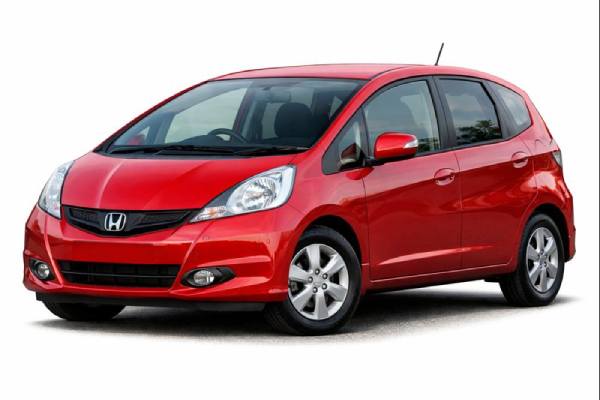
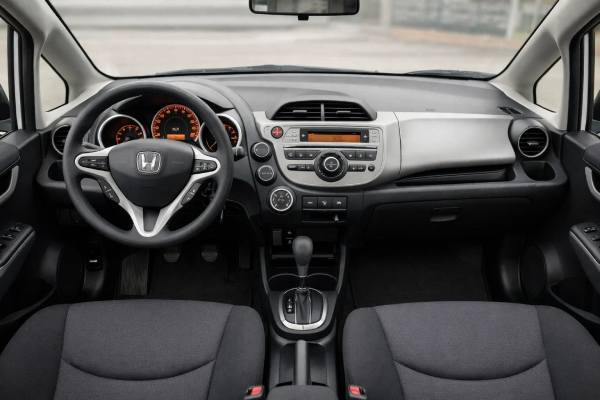
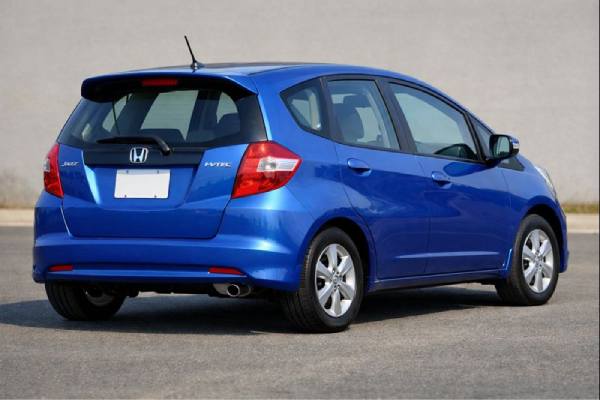
The 2008–2011 Honda Jazz (GE) with the L13Z1 is one of those small cars that feels “engineered bigger” than its footprint suggests. The packaging is the headline: a short nose, tall roofline, and Honda’s clever fuel-tank placement create a cabin that carries people and awkward cargo better than many larger hatchbacks. Under the hood, the 1.3-litre (marketed as 1.3 or 1.4 depending on country) i-VTEC four-cylinder prioritizes low friction, predictable response, and longevity over outright speed.
For owners, the appeal is simple: strong visibility, an easy driving position, a tight turning circle, and running costs that stay reasonable when maintenance is done on time. This guide focuses on the L13Z1-powered GE Jazz—what it is, how it drives, what commonly wears out, and how to keep it reliable well past 200,000 km.
Owner Snapshot
- Practical interior and “Magic Seats” versatility make it unusually useful for its size.
- L13Z1 i-VTEC is typically durable with low oil consumption when serviced on schedule.
- Best as a city and light-commute car; motorway overtakes need planning when loaded.
- Avoid neglected automatics: CVT fluid and calibration history matter.
- Plan engine oil and filter every 10,000–12,500 miles (16,000–20,000 km) or 12 months.
Guide contents
- Honda Jazz GE in detail
- L13Z1 specs and capacities
- Trims, equipment, and safety tech
- Known faults and reliability trends
- Maintenance plan and buying tips
- On-road performance and economy
- Rivals and best alternatives
Honda Jazz GE in detail
The GE-generation Jazz was designed around a simple idea: maximize usable space without making the car feel tall, wobbly, or “cheap.” Honda moved the fuel tank forward and low (under the front seats), which freed up the rear floor area. That single layout decision explains the Jazz’s signature trick: rear seats that fold flat, flip up, and generally adapt to real life better than the usual small-hatch compromises.
The L13Z1 engine sits in the sweet spot for this chassis. It’s not the fastest option in every market, but it’s often the one that feels most “right” for long-term ownership: low stress, naturally aspirated, timing chain, and relatively simple emissions hardware compared with later downsized turbos. Honda’s i-VTEC here is aimed more at efficiency and clean combustion than dramatic high-rpm power. In normal driving, it gives a smooth, linear build rather than a punchy surge.
A quick note on naming: many countries sold this engine as a “1.4 i-VTEC” even though displacement is about 1.34 L. Your VIN and engine code matter more than the badge on the tailgate. If you see L13Z1, you’re in the correct family for this guide.
From an engineering and ownership perspective, the Jazz GE’s strengths tend to cluster around three areas:
- Packaging and ergonomics: upright seating, wide-opening doors, and a cabin that feels airy.
- Predictability: benign handling, easy low-speed control, and stable braking behavior.
- Low drama running: straightforward servicing, few “must-fix-now” design flaws, and good parts availability in many regions.
Where it can disappoint is expectations. This is an efficiency-first drivetrain in a practical body. If your daily route is heavy motorway with steep grades or frequent full-load acceleration, you’ll notice the modest torque and the way gearing and automatic logic (where fitted) prioritize economy.
L13Z1 specs and capacities
Below are model-typical specifications for the Honda Jazz (GE) with the L13Z1. Exact numbers can vary by market, trim, tyre size, and transmission, so use these as a decision-ready baseline and verify against your VIN-specific documentation.
Powertrain and efficiency (L13Z1 / i-VTEC)
| Item | Specification |
|---|---|
| Code | L13Z1 |
| Engine layout and cylinders | Inline-4, SOHC i-VTEC, 4 valves/cyl |
| Bore × stroke | 73.0 × 80.0 mm (2.87 × 3.15 in) |
| Displacement | 1.34 L (1339 cc) |
| Induction | Naturally aspirated |
| Fuel system | PGM-FI (multi-point injection) |
| Compression ratio | ~10.4:1 (market dependent) |
| Max power | 100 hp (73 kW) @ ~6,000 rpm |
| Max torque | ~127 Nm (94 lb-ft) @ ~4,800 rpm |
| Timing drive | Chain |
| Rated efficiency (typical EU) | ~5.3–5.8 L/100 km (41–44 mpg US / 49–53 mpg UK) |
| Real-world highway @ 120 km/h (75 mph) | ~6.2–7.0 L/100 km (34–38 mpg US / 40–46 mpg UK) |
| Aerodynamics | Cd commonly reported around ~0.32; frontal area varies by trim/tyres |
Transmission and driveline
| Item | Specification |
|---|---|
| Drive type | FWD |
| Manual (common) | 5-speed manual (market code varies) |
| Automated/manual or CVT (market dependent) | i-SHIFT (early markets) or CVT (later/facelift markets) |
| Differential | Open |
Chassis and dimensions
| Item | Specification |
|---|---|
| Suspension (front/rear) | MacPherson strut / torsion beam |
| Steering | Electric power steering, rack-and-pinion |
| Brakes (typical) | Front ventilated discs ~262 mm (10.3 in); rear drums ~203 mm (8.0 in) or rear discs on some trims |
| Wheels/tyres (typical) | 175/65 R15 or 185/55 R16 (trim dependent) |
| Ground clearance | ~150 mm (5.9 in) |
| Length / width / height | ~3,900 / 1,695 / 1,525 mm (153.5 / 66.7 / 60.0 in) |
| Wheelbase | ~2,495 mm (98.2 in) |
| Turning circle (kerb-to-kerb) | ~9.8 m (32.2 ft) |
| Kerb (curb) weight | ~1,050–1,120 kg (2,315–2,469 lb) |
| Fuel tank | ~42 L (11.1 US gal / 9.2 UK gal) |
| Cargo volume | commonly quoted ~379 L seats up / ~883 L seats down (method varies) |
Performance and capability (typical for L13Z1)
| Item | Specification |
|---|---|
| 0–100 km/h (0–62 mph) | ~11.9–12.6 s (transmission and tyres matter) |
| Top speed | ~175–182 km/h (109–113 mph) |
| Braking distance (100–0 km/h) | typically high-30s to low-40s m (tyres and pads dominate) |
| Towing capacity | often up to ~1,000 kg braked / ~400–500 kg unbraked (verify by market) |
| Roof load | commonly ~50–60 kg (verify by market) |
Fluids and key service capacities (decision-ready)
| Item | Specification |
|---|---|
| Engine oil | 0W-20 or 5W-30 (market climate dependent); capacity ~3.6 L (3.8 US qt) with filter |
| Coolant | Honda Type 2 / long-life; typically 50:50 mix; capacity varies by radiator spec |
| Manual transmission | Honda MTF (spec varies); drain/fill quantity roughly ~1.5–1.7 L |
| CVT (if fitted) | Honda CVT fluid only (spec varies by year); drain/fill commonly ~3 L range |
| Brake fluid | DOT 4 |
| A/C refrigerant | R134a (charge varies by system spec) |
Electrical (typical)
| Item | Specification |
|---|---|
| Alternator output | often ~80–90 A (market dependent) |
| 12 V battery | typically ~35–45 Ah class (CCA varies) |
| Spark plug | long-life iridium type; gap and part number vary by VIN |
Trims, equipment, and safety tech
Trim naming varies widely, so think of Jazz GE trims as equipment ladders rather than completely different cars. The drivetrain fundamentals stay the same: FWD, torsion-beam rear, and the L13 engine family. What changes is comfort, wheel size, braking hardware on some versions, and the availability of certain transmissions.
Trims and options: what typically changes
Most markets offered some version of the following pattern:
- Entry trim (often “S” or similar): steel wheels or smaller alloys, simpler audio, manual A/C, rear drums more common.
- Mid trims (“SE/ES” style): improved upholstery, better audio with steering controls, alloy wheels, more convenience features.
- Top trims (“EX” style): climate control in some markets, larger alloys (often 16-inch), panoramic glass roof on certain versions, fog lights, and upgraded interior finishes.
Transmission availability is the most important functional differentiator:
- 5-speed manual is the safest bet for low running risk if service history is thin.
- i-SHIFT (automated manual) can be fine when calibrated and maintained, but it is more sensitive to clutch wear and actuator setup.
- CVT (where offered) is smooth and suits city driving, but it raises the importance of correct fluid, correct service intervals, and a clean test drive with no judder.
Quick identifiers that help when buying:
- Wheel size and tyre spec on the door jamb often reveal trim tier.
- Steering-wheel audio controls and climate panel design often separate mid and high trims.
- Panoramic roof models are easy to spot and can influence wind noise and cabin heat management.
Safety ratings: what the numbers mean
In Euro NCAP’s 2009 scheme, the Jazz achieved a 5-star overall rating with these category percentages:
- Adult occupant: 78%
- Child occupant: 79%
- Pedestrian: 60%
- Safety assist: 71%
A key nuance for this generation is that stability control availability evolved during the run. Some early cars had ESC/VSA as optional or market-dependent equipment, with broader standardization later. When shopping, confirm whether the car has stability control (and that there are no warning lights), because it meaningfully changes emergency behavior on wet or broken surfaces.
Safety systems and driver assistance (ADAS)
This era predates modern camera-and-radar ADAS in most trims. Expect “traditional” safety tech:
- Multiple airbags (front, side torso, and curtain in many versions)
- Seatbelt pretensioners and load limiters
- ISOFIX/LATCH provisions on rear outboard seats
- ABS with EBD (electronic brake-force distribution)
- Stability control (VSA/ESC) depending on year and market
Ownership note: after suspension or steering work, alignment matters more than many owners expect because the Jazz’s light steering and short wheelbase can amplify tyre wear and straight-line “nervousness” if toe is off.
Known faults and reliability trends
The L13Z1 Jazz is generally a low-drama long-term car, but age, use pattern, and maintenance quality will surface predictable weaknesses. The best way to think about reliability is to separate wear items (expected) from pattern faults (repeat across owners) and then judge severity.
Common (low to medium cost): age-and-mileage wear
- Front suspension drop links and bushings
- Symptoms: clunks over small bumps, vague turn-in
- Likely cause: worn anti-roll bar links or control arm rear bush
- Remedy: replace links/bushings; align after major work
- Rear brake drag (especially drums)
- Symptoms: hot rear wheels, poor economy, handbrake feel changes
- Likely cause: seized adjusters, sticky wheel cylinders, corrosion from infrequent use
- Remedy: clean/renew hardware; flush brake fluid; use quality shoes/hardware
- A/C performance fade
- Symptoms: weak cooling, intermittent cold air
- Likely cause: condenser corrosion, slow leak, clutch/control issues (market dependent)
- Remedy: proper leak test, repair, correct recharge by weight
- 12 V battery sensitivity
- Symptoms: slow crank, intermittent warnings, central locking oddities
- Likely cause: small battery capacity plus short-trip use
- Remedy: test battery and charging; replace preventively every ~4–6 years in harsh use
Occasional (medium cost): drivability and transmission-dependent issues
- Valve clearance drift (SOHC engines)
- Symptoms: ticking when cold, rough idle, slight power drop
- Cause: clearances tighten/loosen over time, especially with high-heat city use
- Remedy: measure and adjust to spec at interval or when noisy
- Ignition coils and plugs (age-related)
- Symptoms: misfire under load, flashing MIL, poor fuel economy
- Cause: coil degradation or overdue plugs
- Remedy: replace plugs with correct heat range; coils as needed
- CVT judder or flare (if equipped)
- Symptoms: shudder on pull-away, revs rise without matching speed
- Cause: old fluid, wrong fluid, or wear; sometimes requires adaptation/calibration
- Remedy: correct Honda CVT fluid service; verify no slip codes; road test thoroughly
- i-SHIFT clutch/actuator behavior (if equipped)
- Symptoms: slow or jerky shifts, “gearbox” warnings, clutch smell
- Cause: clutch wear plus actuator learning/calibration issues
- Remedy: clutch service, actuator calibration, and system health check
Rare (higher cost): investigate before purchase
- Cooling system neglect leading to overheating
- Symptoms: temperature instability, coolant loss, heater performance changes
- Cause: old coolant, leaking radiator, stuck thermostat
- Remedy: pressure test, renew weak components; avoid cars with repeated overheating history
- Corrosion in localized areas (market/climate dependent)
- Symptoms: bubbling at seams, underbody scaling, brake line corrosion
- Cause: road salt exposure and age
- Remedy: inspection, targeted rust repair, and corrosion protection
Recalls, TSBs, and service actions (how to approach them)
On cars of this age, recall completion matters as much as the recall itself. The practical approach:
- Run an official VIN check through your regional Honda site.
- Ask for dealer printouts or service records showing completed campaigns.
- Prioritize safety campaigns first—particularly airbag inflator work—before cosmetic or minor updates.
If a seller can’t show proof, price the car as if recall work is outstanding and build in the time and hassle of booking it.
Maintenance plan and buying tips
A well-kept Jazz GE tends to stay dependable, but it rewards routine servicing more than “fix it when it breaks” ownership. Use the schedule below as a practical baseline; if your market uses a maintenance minder or different intervals, follow the stricter requirement.
Practical maintenance schedule (distance/time)
| Item | Interval (whichever comes first) | Notes |
|---|---|---|
| Engine oil and filter | 16,000–20,000 km / 12 months | Short trips: consider 10,000–12,000 km |
| Air filter (engine) | Inspect every service; replace ~30,000–40,000 km | Dusty climates: sooner |
| Cabin filter | ~20,000–30,000 km / 12 months | Helps HVAC and defogging |
| Spark plugs | ~90,000–120,000 km | Iridium types last longer; confirm spec |
| Valve clearance | Inspect ~100,000 km (or if noisy) | Adjust if out of spec |
| Coolant | Often long-life: first change can be very long, then periodic | Verify your coolant type and history |
| Brake fluid | Every 2 years | Moisture control and pedal feel |
| Manual gearbox oil | ~80,000–120,000 km | Earlier if shifting feels notchy |
| CVT fluid (if equipped) | ~40,000–60,000 km | Use correct Honda fluid only |
| Brake pads/rotors | Inspect every service | Rear drums can hide problems—inspect properly |
| Tyre rotation and alignment | Rotate ~10,000–12,000 km; align as needed | Uneven wear often points to toe settings |
| Auxiliary belt and hoses | Inspect annually; replace by condition | Age cracks matter as much as mileage |
| 12 V battery test | At every service after year 3 | Replace proactively if weak |
Fluids and specs: what to insist on
- Engine oil: correct viscosity for climate (many cars tolerate 0W-20 or 5W-30 well), changed on time.
- CVT/i-SHIFT: correct fluid and documented service; “universal ATF” is a red flag.
- Brake fluid: a dated receipt every two years is a good sign the owner cared.
Essential torque values (common decision points)
These are typical values used across many Honda small cars, but verify for your exact model:
- Wheel nuts: ~108 Nm (80 lb-ft)
- Engine oil drain plug: ~30–40 Nm (22–30 lb-ft) depending on plug design
- Spark plugs (aluminum head): typically in the ~18 Nm (13 lb-ft) range when specified by plug maker
Buyer’s guide: what to check before money changes hands
Use this checklist on a cold start and a warm test drive:
- Cold start: listen for excessive valvetrain ticking that doesn’t settle; verify idle stability.
- Transmission behavior: no judder on pull-away (CVT), no delayed engagement, no warning lights.
- Brakes: straight stops with no pulsing; ensure rear brakes don’t drag after a drive.
- Cooling system: stable temperature, clean coolant, no sweet smell in the cabin.
- Underside: look for corrosion on brake lines, subframe edges, and rear suspension mounts.
- Water ingress: check spare wheel well and footwells for dampness.
- Service history quality: fewer “big gaps” matters more than stamped books.
Long-term durability outlook: if you buy on condition and service history—especially transmission fluid correctness—the Jazz GE is usually the kind of car that ages slowly. The most expensive surprises typically come from neglected automatics, chronic overheating history, or rust in harsh climates.
On-road performance and economy
In daily driving, the L13Z1 Jazz feels light on its feet and easy to place. The steering is quick and city-friendly, and visibility is a genuine advantage—thin pillars for the era and a high seating position reduce stress in traffic and parking. The suspension leans toward comfort, but the tall body can feel a bit busy over sharp bumps on larger wheels. If you can choose, the mid-size wheel and tyre setup often delivers the best ride-to-grip balance.
Powertrain character
The 1.3 i-VTEC is smooth and predictable rather than punchy. It responds cleanly to throttle, but it doesn’t produce much low-rpm torque, so it rewards a driver who is comfortable using revs when merging or overtaking. With a manual gearbox, the car feels more lively because you can keep it in the power band. With CVT, the same output can feel quieter and steadier, but also more “elastic” under hard acceleration.
Practical note: if you often carry four adults and luggage, the Jazz will do it, but you’ll plan overtakes and accept that hills require downshifts (manual) or higher sustained rpm (CVT).
Ride, handling, and NVH
- City: supple, easy, and confidence-inspiring; small bumps are handled well.
- Motorway: stable for a supermini, but wind noise and tyre roar depend heavily on tyres and door seals.
- Corners: safe understeer, with a light rear end that stays predictable unless tyres are worn or pressures are off.
- Braking feel: generally consistent; cheaper pads can make the pedal feel grabby.
Real-world efficiency
Official figures vary by market and gearbox, but owner-observed patterns are consistent:
- Mixed driving: roughly mid-5s L/100 km is achievable with steady driving.
- Highway (100–120 km/h): consumption rises into the 6–7 L/100 km zone depending on load, tyres, and wind.
- Cold weather and short trips: expect a noticeable penalty; warm-up losses are proportionally larger on small engines.
The biggest “free” efficiency gains are basic: correct tyre pressures, clean air filter, fresh spark plugs at the right time, and brakes that don’t drag.
Key performance metrics that shape expectations
A 0–100 km/h time around the low-12-second range tells you what you need to know: it’s adequate, not sporty. The upside is that the engine is rarely working at stressful boost pressures or extreme temperatures, which supports longevity.
Rivals and best alternatives
The Jazz GE’s main rivals were other B-segment hatchbacks that chased a similar mix of practicality and low running costs—but few matched Honda’s cabin flexibility. When comparing, it helps to decide whether you care more about space and ease or sharp driving feel.
If you want the most similar “do-it-all” small car
- Toyota Yaris (similar years): typically strong reliability reputation and easy ownership. Often feels more conventional inside; rear-seat/cargo flexibility usually doesn’t match the Jazz’s “Magic Seats” usefulness.
- Hyundai i20 / Kia Rio (era dependent): often good value and simple to service. Check rust protection history and trim-level differences carefully.
If you care more about driving feel
- Ford Fiesta: usually the handling benchmark in this class. The trade-off is less interior versatility and, depending on engine choice, potentially more complex powertrains than the Jazz’s simple NA setup.
- Mazda2: light, responsive, and engaging. Cabin space and storage solutions tend to be less “van-like” than the Jazz.
If you want a more “solid” motorway demeanor
- Volkswagen Polo: often feels more planted and refined at speed, with a more substantial cabin impression. Depending on engine and transmission, maintenance complexity and costs can be higher than the Jazz.
The Jazz GE value proposition in one paragraph
If your priority is a small footprint with a surprisingly large and adaptable interior, the Jazz remains a class standout. It’s not the fastest option, and it won’t feel premium in every detail, but it’s engineered to be easy to live with. Choose based on service history and transmission type, budget for rubber-and-brakes aging items, and it can be a long-term keeper that quietly outperforms expectations.
References
- Honda Jazz Press Kit 2011 (Press Kit)
- Honda Jazz Achieves Top Euro NCAP Overall Safety Rating 2009 (Press Release)
- Honda Jazz 2009 (Safety Rating)
- Airbag inflator recall 2025 (Recall Information)
- Product recalls and updates 2025 (VIN Check Tool)
Disclaimer
This article is for informational purposes only and is not a substitute for professional diagnosis, inspection, or repair. Specifications, torque values, service intervals, and procedures can vary by VIN, market, model year, and installed equipment. Always confirm details using your official owner’s manual, workshop documentation, and/or a qualified technician.
If this guide helped, please consider sharing it on Facebook, X (Twitter), or your favorite forum to support our work.