
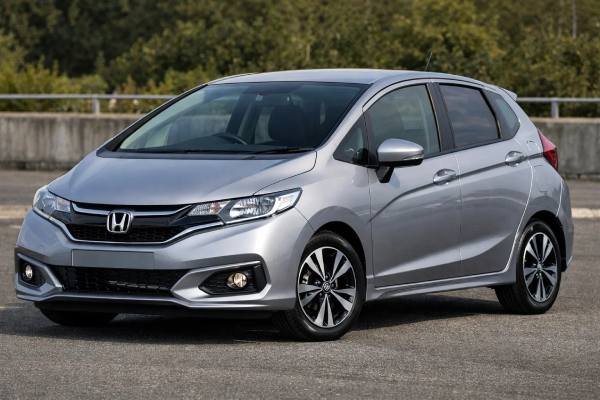
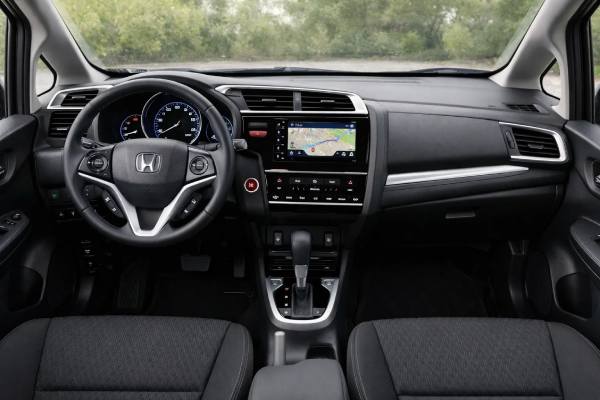
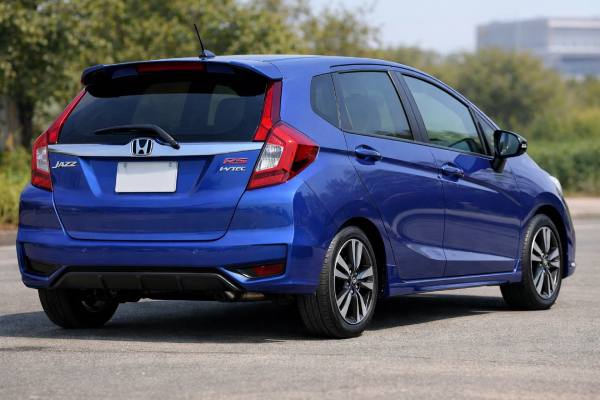
The facelifted Honda Jazz (GK) with the L13B2 1.3-litre engine is a practical car engineered around efficient packaging rather than headline power. With the fuel tank moved under the front seats, the Jazz frees up a low, flat load floor and enables Honda’s “Magic Seats,” which fold and flip in ways most superminis still can’t match. The L13B2 itself is a high-compression, naturally aspirated four-cylinder designed for smoothness, low running costs, and consistent real-world economy—especially when paired with the CVT and driven at moderate speeds.
For owners, the appeal is simple: excellent visibility, an easy urban footprint, and a cabin that feels one size up. The facelift years also brought meaningful equipment upgrades in many markets, including broader availability of active safety tech, making late GK cars particularly strong used buys when serviced correctly.
Owner Snapshot
- Big-cabin practicality in a supermini footprint, with flexible Magic Seat cargo modes.
- Efficient 1.3 i-VTEC drivetrain that rewards steady driving and short-trip friendliness.
- Late-facelift cars often add stronger active-safety and infotainment features versus early GK.
- CVT versions need correct fluid and service history; neglected units can develop shudder.
- Plan engine oil and filter service about every 10,000–15,000 km (6,000–9,000 mi) or 12 months (whichever comes first).
Section overview
- Facelift GK Jazz explained
- L13B2 specs and dimensions
- Trims, options, and safety tech
- Common issues and service actions
- Maintenance and buyer’s checklist
- Real-world driving and economy
- Jazz GK vs key rivals
Facelift GK Jazz explained
The facelifted GK Jazz is best understood as Honda refining an already clever platform. The body is still compact on the outside, but the interior packaging stays the star: a tall roofline, upright seating, and thin pillars deliver visibility that’s rare in modern superminis. You sit slightly higher than you expect, which helps new drivers and anyone who spends time in traffic. The steering, pedals, and shifter placement are also typically Honda—light, predictable, and easy to drive smoothly.
What changes with the facelift depends on market, but the general themes are consistent:
- Exterior and aero tweaks: a refreshed front bumper and grille, revised lighting details, and small underbody improvements aimed at noise and efficiency rather than performance.
- Cabin updates: trim materials and infotainment features often improve, and later cars tend to feel less “economy-car” in touch points.
- Safety tech expansion: many late GK cars add wider availability of camera-based and radar-assisted features. The important ownership detail is that these systems may require calibration after windscreen replacement or front-end repairs.
The L13B2 1.3 i-VTEC suits the Jazz’s mission. It’s not fast, but it is responsive enough around town and tolerates short trips better than many small turbo engines (less heat stress, fewer turbo-related failure modes). On the open road, it rewards maintaining momentum rather than frequent kickdowns. If you drive it like a bigger engine—hard accelerations, high speeds, constant passing—you can make it feel strained. Driven as intended, it’s quiet, economical, and durable.
A practical note for the “2017–2020” label: in some regions the facelift arrived as a late-2017 or 2018 model-year update, while other markets continued selling the GK alongside newer generations for a period. When shopping, prioritize the actual build date, equipment list, and service history over the registration year on the logbook.
L13B2 specs and dimensions
Below are key technical figures commonly associated with the facelift-era GK Jazz fitted with the L13B2 1.3 i-VTEC (often quoted as 102 hp / 75 kW in many markets). Exact values can vary slightly by region, emissions certification, wheel size, and gearbox.
Powertrain and efficiency (L13B2 1.3 i-VTEC)
| Item | Spec |
|---|---|
| Code | L13B2 |
| Layout | Inline-4, DOHC, 4 valves/cyl |
| Displacement | 1.3 L (1318 cc) |
| Bore × stroke | 73.0 × 78.7 mm (2.87 × 3.10 in) |
| Induction | Naturally aspirated |
| Fuel system | PGM-FI (port injection) |
| Compression ratio | 13.5:1 |
| Max power | 102 hp (75 kW) @ 6,000 rpm (market-dependent rating) |
| Max torque | 123 Nm (91 lb-ft) @ 5,000 rpm |
| Timing drive | Chain |
| Rated efficiency (example) | ~4.7 L/100 km combined (varies by transmission/tyres) |
| Real-world highway @ 120 km/h (75 mph) | Typically ~5.5–6.3 L/100 km (driver and conditions dependent) |
Transmission and driveline
| Item | Spec |
|---|---|
| Drive type | FWD |
| Manual | 6-speed manual (common pairing) |
| Automatic | CVT (with stepped “virtual” ratios in many markets) |
| Differential | Open |
Chassis, brakes, and wheels
| Item | Spec |
|---|---|
| Suspension (front / rear) | MacPherson strut / torsion beam |
| Steering | Electric power steering |
| Brakes (front / rear) | Ventilated disc / solid disc |
| Brake diameters | 262 mm (10.3 in) front / 239 mm (9.4 in) rear |
| Typical tyres | 185/60 R15 or 185/55 R16 (varies by trim) |
Dimensions, weights, and capacity
| Item | Spec |
|---|---|
| Length / width / height | 3,995 / 1,694 / 1,550 mm (157.3 / 66.7 / 61.0 in) |
| Wheelbase | 2,530 mm (99.6 in) |
| Turning circle (kerb-to-kerb) | ~11.1 m (36.4 ft) |
| Kerb weight (approx.) | ~1,066–1,092 kg (2,350–2,408 lb), transmission-dependent |
| Fuel tank | 40 L (10.6 US gal / 8.8 UK gal) |
| Cargo volume | 354 L (12.5 ft³) seats up / 1,314 L (46.4 ft³) seats down (method varies by standard) |
Performance (typical, not a guarantee)
| Metric | Typical result |
|---|---|
| 0–100 km/h (0–62 mph) | ~11–13 s (gearbox and test conditions matter) |
| Top speed | ~170–190 km/h (105–118 mph), gearbox-dependent |
Fluids and service capacities (verify by VIN/service literature)
Because Honda publishes different capacity figures across manuals and markets, use these as decision-making ranges rather than exact fill targets:
| Item | Typical spec guidance |
|---|---|
| Engine oil | 0W-20 preferred in many markets; some allow 5W-30. Capacity often ~3.3–3.7 L (3.5–3.9 US qt) with filter. |
| Coolant | Honda Type 2 / long-life coolant is common; system capacity often ~4–6 L total depending on spec. |
| CVT fluid | Honda HCF-2 (common spec); service fill varies—use the correct procedure and temperature checks. |
| Manual gearbox oil | MTF (Honda spec); fill typically ~1.5–2.0 L range. |
| A/C refrigerant | Often R-134a on many GK markets; charge amount varies by system—check under-hood label. |
Electrical
| Item | Typical spec guidance |
|---|---|
| 12V battery | Commonly 45–60 Ah class depending on trim and climate equipment |
| Spark plugs | Long-life iridium type is common; replacement interval often around 100,000 km (60,000+ mi) depending on market schedule |
Trims, options, and safety tech
Facelift GK Jazz trims vary by region, but the buying logic is similar everywhere: match equipment to your needs, then verify the car has the hardware (and software) you think it has. Late cars can look almost identical to early facelift examples in photos, so use practical identifiers.
Trims and option patterns that matter
Common trim themes include a value-focused base grade, one or two mid grades, and a high grade with upgraded wheels, lighting, and infotainment. In many markets:
- The 1.3 L is the volume engine and is widely available.
- A sport-styled grade may exist, but it can be engine-limited in some regions (so confirm the engine code and registration data).
- Wheel size is not cosmetic only: larger wheels can add road noise and slightly worsen ride comfort and real-world economy.
Quick identifiers when viewing a car:
- Windscreen camera housing (behind the rear-view mirror) often signals lane and traffic-sign features.
- Radar panel in the grille (or a radar unit behind a badge) can indicate AEB/ACC capability on some versions.
- Button layout on the steering wheel can hint at cruise type and lane-support functions.
- Infotainment version is easiest to verify by pairing a phone and checking menu structure rather than relying on seller claims.
Safety ratings and what they mean for facelift cars
The GK Jazz generation earned strong crash-test results when new. The key nuance is that official star ratings can “expire” over time as protocols change, even if the structure stays the same. For practical ownership, focus on the equipment level (airbags, stability control, AEB availability) rather than the star sticker alone.
Core safety hardware
Most facelift GK Jazz cars include:
- Front, side, and curtain airbags (often 6 total; confirm for your market).
- ABS and stability control as standard in most regions.
- ISOFIX/LATCH mounting points, typically on the outer rear seats.
ADAS (driver assistance) on late GK cars
Depending on market and trim, you may see:
- AEB/City-Brake (low-speed collision mitigation)
- Forward Collision Warning
- Lane Departure Warning and sometimes lane support
- Traffic Sign Recognition
- Auto high-beam
- Adaptive Cruise Control (less common on early trims; verify carefully)
Ownership tip: if the car has camera-based lane or braking support, budget for correct calibration after windscreen replacement, front-end work, or suspension geometry changes. A car can drive “fine” while the system is quietly degraded or throwing intermittent faults.
Common issues and service actions
The facelift GK Jazz is generally a low-drama ownership proposition, but reliability is never just “good or bad.” It’s a mix of patterns, maintenance behavior, and how the car was used. Below are the issues that most often affect late GK ownership, grouped by prevalence and cost.
Common (seen regularly)
- CVT shudder or flare (medium cost if ignored):
Symptoms: judder on light throttle, “rubber band” surging, delayed engagement.
Likely cause: aged or incorrect CVT fluid, sometimes worsened by stop-start city use.
Remedy: correct Honda-spec CVT fluid service (and correct procedure). If symptoms persist, diagnostic work is needed before assuming a mechanical failure. - Rear brake corrosion and uneven wear (low–medium cost):
Symptoms: scraping after rain, vibration, poor handbrake holding, uneven pad wear.
Likely cause: light rear axle loading and frequent short trips that don’t dry the brakes.
Remedy: routine cleaning, correct pad hardware, and timely replacement. Avoid letting pads run to backing plates. - 12V battery sensitivity (low cost):
Symptoms: slow cranking, infotainment resets, start-stop malfunctions (if fitted).
Likely cause: many short trips and accessory use.
Remedy: test battery health before winter; replace proactively if it fails load testing.
Occasional (depends on climate and mileage)
- Suspension links and bushes (medium cost):
Symptoms: front-end knocks over sharp bumps, vague steering feel.
Likely cause: wear in drop links or control arm bushes.
Remedy: replace worn components and follow with alignment; worn tyres can mask the real issue. - A/C performance drop (low–medium cost):
Symptoms: weak cooling at idle, noisy compressor cycling.
Likely cause: gradual refrigerant loss or condenser damage from road debris.
Remedy: leak-check before re-gassing; repeated top-ups without leak diagnosis waste money.
Rare (but worth screening)
- Timing chain concerns (usually low risk):
The L13B2 uses a chain, and outright chain failures are uncommon when oil is changed on time.
Watch for: persistent rattle on cold start, timing correlation faults, or chronic oil neglect history.
Remedy: diagnose properly—do not replace parts on guesswork.
Recalls, TSBs, and service actions
Because recall campaigns vary by country and build date, treat recall checking as a required step, not optional. Some vehicles also receive “product updates” that aren’t branded as recalls but still matter for reliability or safety.
How to verify completion:
- Run the official VIN recall check for your market.
- Ask the seller for dealer invoices showing campaign completion (the best proof).
- If the car has ADAS, confirm no unresolved camera/radar faults are stored.
A final note on software: infotainment and safety systems can receive updates that fix bugs or improve sensor behavior. If a car has intermittent warnings with no clear mechanical cause, a dealer-level scan and update check is often cheaper than guessing parts.
Maintenance and buyer’s checklist
A facelift GK Jazz can be extremely inexpensive to run—but only if you anchor ownership around a few critical services. The goal is simple: keep fluids fresh, prevent brake and suspension wear from snowballing, and document everything.
Practical maintenance schedule (typical guidance)
Use this as a conservative plan; always confirm the exact schedule for your VIN and market.
| Item | Interval (distance/time) | Notes |
|---|---|---|
| Engine oil and filter | 10,000–15,000 km (6,000–9,000 mi) or 12 months | Short trips and cold climates: shorten interval. |
| Engine air filter | 30,000 km (18,000 mi) or 2 years | Dusty areas: inspect more often. |
| Cabin filter | 15,000–30,000 km (9,000–18,000 mi) or yearly | Helps HVAC performance and demist speed. |
| Spark plugs | ~100,000 km (60,000+ mi) | Use correct plug type and gap spec. |
| Brake fluid | Every 2 years | Moisture absorption is the enemy. |
| Coolant | Long-life; often 5 years then periodic | Verify type and interval for your market. |
| CVT fluid (if fitted) | 40,000–60,000 km (25,000–37,000 mi) as a protective habit | Especially important for city-driven cars. |
| Manual gearbox oil | 80,000–120,000 km (50,000–75,000 mi) | Often neglected; improves shift feel. |
| Tyre rotation and inspection | 10,000–12,000 km (6,000–7,500 mi) | Prevents cupping and road-noise growth. |
| Alignment check | Yearly or after tyre/suspension work | Saves tyres and stabilizes braking. |
| 12V battery test | Annually after year 4 | Replace when it fails load testing. |
Fluids, specs, and “do not improvise” items
- Use the correct CVT fluid if you have a CVT. Generic ATF can create shudder and long-term wear.
- Use the correct coolant type (long-life Honda-spec) and avoid mixing unknown fluids.
- If the car has ADAS, insist on proper calibration after windscreen replacement or front-end repairs.
Buyer’s guide: what to check on a used facelift GK
Bring a small checklist and stick to it:
- Service history: oil services are non-negotiable; CVT fluid history is a major value divider.
- Cold start behavior: listen for abnormal rattles, check for warning lights, and ensure idle is stable.
- CVT test drive (if applicable): gentle rolling acceleration from 20–60 km/h should be smooth—no judder.
- Brakes: check for pulsing, grinding, and uneven pad wear; inspect rear discs closely.
- Suspension: drive over broken pavement at low speed and listen for repeated knocks.
- Water leaks: lift boot floor, feel carpets, check door seals; city cars can suffer blocked drains.
- Electronics: verify all windows, locks, camera sensors, and infotainment pairing.
- Rust hotspots: look at rear subframe areas, brake lines (where visible), and wheel-arch lips in salted-road regions.
Best long-term outlook usually comes from: late-facelift cars with full history, modest wheel size, and documented CVT servicing (if equipped).
Real-world driving and economy
The facelift GK Jazz is not a “hot hatch,” but it is one of the easiest cars in its class to drive well every day. The visibility, compact nose, and predictable controls make tight streets and parking less stressful than many newer, heavier superminis.
Ride, handling, and NVH
- Ride quality: on 15-inch tyres the Jazz typically rides with a gentle, controlled softness. On larger wheels it can become sharper over broken pavement, with more tyre thump.
- Handling balance: safe and neutral. It prefers clean lines and smooth inputs rather than aggressive corner entry. The torsion-beam rear keeps it stable, but it won’t rotate like a Fiesta.
- Highway stability: good for the class, helped by the upright seating and clear sight lines. Crosswinds can be felt due to the tall profile, but it tracks predictably.
- Noise: wind and tyre noise dominate at motorway speeds. Late cars can feel slightly more refined, but wheel/tyre choice still matters most.
Powertrain character: L13B2 1.3 i-VTEC
This engine is happiest when you use it intelligently:
- Low-speed response: adequate and smooth, especially for city traffic.
- Mid-range: you’ll often need a downshift (manual) or extra throttle (CVT) for quick overtakes.
- Top-end: it will rev cleanly, but it’s not rewarding in the way a performance engine is.
Manual vs CVT feel:
- 6MT: more direct and often more satisfying if you drive in hilly areas or like control.
- CVT: smooth in traffic and can be very efficient, but it feels best when driven with steady throttle rather than constant surges.
Real-world economy (what owners tend to experience)
Actual results depend heavily on speed and trip length. As a realistic expectation:
- City: ~6.0–7.5 L/100 km (31–39 mpg US / 38–47 mpg UK), short trips at the higher end.
- Highway (100–120 km/h): ~5.2–6.3 L/100 km (37–45 mpg US / 45–54 mpg UK).
- Mixed driving: ~5.5–6.8 L/100 km (35–43 mpg US / 41–51 mpg UK).
Cold weather can add a noticeable penalty because the cabin heater relies on engine heat and the engine spends more time warming up. Tyre pressure and wheel size also show up more clearly on a small, light car than they do on larger vehicles.
If your driving is mainly urban, a well-maintained CVT Jazz can feel like a “set-and-forget” commuter. If you do frequent fast motorway runs, the car remains capable, but you’ll feel the limits of power and sound insulation sooner than in larger hatchbacks.
Jazz GK vs key rivals
The facelift GK Jazz wins its category in a specific way: it offers the most usable interior and daily convenience for the footprint, even if some rivals feel sharper or faster.
Against Toyota Yaris (similar years)
- Jazz advantages: cabin space, rear-seat flexibility, visibility, and cargo practicality.
- Yaris advantages: often feels tighter in town and can have a simpler, more “appliance” ownership vibe.
- Who should pick Jazz: anyone prioritizing space and seat versatility over style or sporty feel.
Against Mazda2
- Jazz advantages: rear space, boot usability, and the sense of airy headroom.
- Mazda2 advantages: more engaging steering/handling feel and often nicer interior touch points.
- Decision point: if you enjoy driving and rarely use the rear seats, the Mazda2 can feel special; the Jazz is the smarter tool.
Against Ford Fiesta
- Jazz advantages: packaging, ease of access, and typically calmer long-term ownership when maintained.
- Fiesta advantages: handling, steering feel, and often stronger engine options.
- Decision point: Fiesta for drivers, Jazz for do-everything practicality.
Against VW Polo and Hyundai i20
- Jazz advantages: interior cleverness and upright, easy ergonomics.
- Polo/i20 advantages: a more “solid” motorway feel in some trims and often more modern infotainment depending on year.
- Decision point: if your use is mostly high-speed commuting, a Polo-type approach may suit; if you carry people and stuff in a city-sized car, Jazz is hard to beat.
The bottom line
If you want the most driver engagement, the Jazz won’t be the class leader. But if you want a compact car that behaves like a small MPV on the inside—without the bulk and fuel costs of a larger vehicle—the facelift GK Jazz is one of the best answers, especially with clean service history and the right trim.
References
- Honda reveals fresh look and new engine option for Jazz supermini 2017 (Press Release)
- 2018 Honda Jazz 1.5 i-VTEC Press Kit 2018 (Press Kit)
- Honda Owners Manuals | Honda Jazz| Owners | Honda UK 2026 (Owner’s Manual)
- Honda Owners | Recalls and Updates | Honda UK 2026 (Recall Database)
- Euro NCAP | Press Release Nov. 2015 – Top Marks for Audi and Honda 2015 (Safety Rating)
Disclaimer
This article is for informational purposes only and is not a substitute for professional diagnosis, inspection, or repair. Specifications, torque values, fluid capacities, service intervals, and procedures can vary by VIN, market, model year, and equipment, so always verify details using official owner and service documentation for your specific vehicle.
If you found this guide useful, please consider sharing it on Facebook, X/Twitter, or your favorite forum to help others find reliable ownership information.