
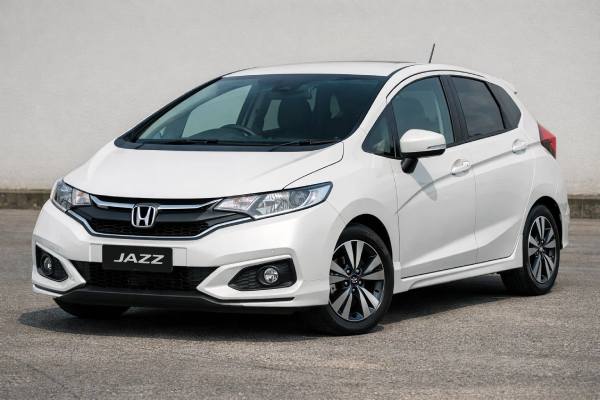
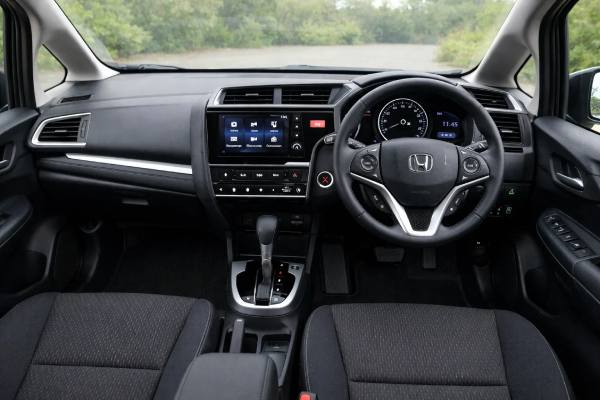
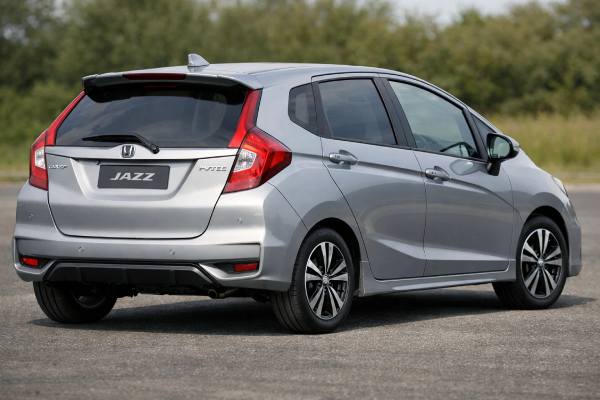
The facelift Honda Jazz (GK) with the L15B1 1.5 i-VTEC is the “sweet spot” for drivers who want a small hatchback that feels lively without losing the Jazz’s core strengths: packaging, visibility, and everyday durability. With 130 hp and a naturally aspirated powerband, it rewards smooth revs rather than turbo-style low-end punch—yet it still feels quick in real traffic thanks to low mass and sensible gearing. The facelift years also brought a more modern look and, in many markets, a stronger focus on active safety tech while keeping the same clever center fuel-tank layout that enables the Magic Seats system.
This guide focuses on the European-market style Jazz GK facelift (2018–2020) with the 1.5-liter L15B1. Specs can vary by country, transmission, and trim, so use this as a practical baseline—and confirm details by VIN when buying or servicing.
Top Highlights
- Strong real-world pace for a small NA hatch, especially with the 6-speed manual.
- Cabin packaging is class-leading: tall load space and Magic Seats versatility.
- Generally low running costs if fluids are kept fresh (especially CVT fluid, if equipped).
- Watch for neglected brake servicing and rear-caliper slide pin corrosion in wet/salty climates.
- Typical engine oil service interval: every 10,000–15,000 km (6,000–9,000 mi) or 12 months (whichever comes first).
Jump to sections
- Why this facelift Jazz
- L15B1 specs and measurements
- Trims options and safety tech
- Reliability patterns and known fixes
- Service plan and used buying
- How it drives and fuel use
- Rivals to cross shop
Why this facelift Jazz
The 2018–2020 Jazz GK facelift keeps the same fundamental engineering that made the third-generation Jazz a favorite among practical owners: a compact footprint, a tall cabin, and Honda’s “center tank” packaging that frees up rear-floor space. That single design choice is why the Jazz can feel like a small MPV inside while still parking like a supermini. In daily use, it matters more than most headline features—because it changes how easily you can load bulky items, carry tall passengers, or reconfigure the cabin quickly.
What the L15B1 1.5 i-VTEC adds is confidence. The 1.3 is efficient, but the 1.5 gives you stronger overtakes, easier merging, and less need to “plan” your speed on hills. Importantly, it does this without the complexity of a turbocharger. Naturally aspirated (NA) engines tend to be predictable: throttle response is linear, heat loads are lower than many turbo setups, and there is usually less hardware around the intake and exhaust to age badly.
The facelift itself is not just a cosmetic tweak. Depending on market and trim, it commonly brought:
- A more aggressive front bumper/grille design and small aero refinements.
- Expanded availability of driver-assistance functions (often packaged differently by country).
- A clearer trim walk: comfort-focused grades versus sport-themed versions, especially paired with the 1.5.
From an ownership angle, the Jazz GK’s “big wins” are easy to summarize:
- Visibility and ergonomics: upright seating, large glass area, simple controls.
- Low stress servicing: accessible layout, common tire sizes, and typically modest parts pricing.
- Longevity when maintained: the engine and chassis generally tolerate high mileage well if fluids and brakes are kept on schedule.
Where owners get surprised is usually not the engine—it’s the neglected basics: old brake fluid, sticking caliper slides, cheap tires that undo the chassis balance, or skipped transmission servicing (especially on CVT cars). Treat it like a small car that deserves full-size maintenance discipline, and the 1.5 Jazz tends to pay you back with years of straightforward use.
L15B1 specs and measurements
Below are baseline specs for the facelift Jazz (GK) with the 1.5 i-VTEC (L15B1, 130 hp). Market variations exist (notably wheel sizes, equipment weight, and transmission availability), so use ranges where appropriate.
Powertrain and efficiency (L15B1 1.5 i-VTEC)
| Item | Specification |
|---|---|
| Code | L15B1 |
| Layout | I-4, DOHC, 4 valves/cyl |
| Displacement | 1.5 L (1,498 cc) |
| Bore × stroke | 73.0 × 89.5 mm (2.87 × 3.52 in) |
| Induction | NA (naturally aspirated) |
| Compression ratio | 11.5:1 |
| Max power | 130 hp (96 kW) @ 6,600 rpm |
| Max torque | 155 Nm (114 lb-ft) @ 4,600 rpm |
| Timing drive | Chain (inspection-based; replace on condition) |
| Rated efficiency (typical) | Often ~5.0–6.0 L/100 km combined-equivalent depending on test cycle/trim |
| Real-world highway @ 120 km/h (75 mph) | Commonly ~5.8–6.8 L/100 km (41–35 mpg US / 49–42 mpg UK) in mild weather |
Transmission and driveline
| Item | Specification |
|---|---|
| Drive type | FWD |
| Manual | 6-speed manual (common pairing for 1.5) |
| Automatic | CVT (availability varies by market/trim) |
| Differential | Open (traction control manages wheelspin) |
Chassis, brakes, and tires
| Item | Specification |
|---|---|
| Suspension (front/rear) | MacPherson strut / torsion beam (H-type) |
| Steering | Electric rack-and-pinion |
| Steering turns lock-to-lock | Typically ~2.52 (varies by wheel size) |
| Brakes (front/rear) | Ventilated disc / disc |
| Wheel and tire examples | 185/60 R15 or 185/55 R16 (trim dependent) |
Dimensions, weights, and capacity
| Item | Specification |
|---|---|
| Length | 3,995 mm (157.3 in) |
| Width | 1,694 mm (66.7 in) (often listed incl. mirrors in some sources; confirm local spec sheet) |
| Height | 1,550 mm (61.0 in) (unladen) |
| Wheelbase | 2,530 mm (99.6 in) |
| Turning circle | Often quoted ~11.1 m (36.4 ft) (body) |
| Kerb (curb) weight | Typically ~1,104–1,136 kg (2,435–2,505 lb) depending on trim/transmission |
| Fuel tank | 40 L (10.6 US gal / 8.8 UK gal) |
| Cargo volume | 354 L (12.5 ft³) seats up / 897 L (31.7 ft³) seats folded (method can vary; treat as benchmark) |
Performance (typical published figures)
| Metric | 1.5 i-VTEC manual | 1.5 i-VTEC CVT |
|---|---|---|
| 0–100 km/h (0–62 mph) | ~8.7 s | ~10.0 s |
| Top speed | Often ~190 km/h (118 mph) | Often ~190 km/h (118 mph) |
Fluids, service capacities, and key torque specs (decision-use)
Because official capacities can vary by VIN/market, treat these as “planning numbers” and confirm with your service documentation:
- Engine oil: typically 0W-20 or 5W-30 (market/climate dependent), ~3.5–3.8 L (3.7–4.0 US qt) with filter
- Coolant: Honda long-life coolant, commonly ~4–5 L total system fill (varies)
- Manual gearbox fluid: usually MTF class fluid; capacity varies by unit and drain method
- CVT fluid: Honda CVT fluid; capacity depends heavily on drain/fill versus overhaul
- Brake fluid: DOT 4 class commonly specified in many EU markets
- Key torque (common Honda practice): wheel nuts often around 108 Nm (80 lb-ft) (verify for your wheels/hub spec)
Electrical
| Item | Specification |
|---|---|
| 12V battery | Size and CCA vary by market; test yearly after ~4 years |
| Spark plugs | Iridium-type common; replacement interval varies by schedule |
Safety and driver assistance (headline)
| Item | Specification |
|---|---|
| Euro NCAP | Jazz achieved 5 stars under the 2015 regime (facelift typically inherits platform performance) |
| Airbags | Commonly 6 airbags (front, side, curtain) depending on market |
| ADAS availability | AEB/City-Brake type systems, lane support, sign recognition and others vary by year/trim/market |
Trims options and safety tech
Trim naming on the Jazz GK facelift can be confusing because it shifts by country (and sometimes by model year), but the underlying pattern is consistent: comfort-led grades focus on convenience features, while sport-themed grades pair the 1.5 with firmer styling, larger wheels, and sometimes a different equipment mix. When you shop used, your goal is to identify the equipment you care about (and the wheels/tires you’ll live with), not just the badge on the tailgate.
Common trim structure (how to decode quickly)
Look for these “tells” when you inspect a car:
- Wheel size: 15-inch setups usually ride softer and cost less in tires; 16-inch often looks sharper but can add road noise and harsher impacts.
- Front bumper and grille design: facelift cars typically have a more pronounced, sportier front end; sport grades add more aggressive trim.
- Cabin tech level: higher grades often have a larger central touchscreen with smartphone integration, while lower trims may use simpler audio systems.
- Climate controls: automatic climate control tends to cluster with higher trims, though exceptions exist.
Options and functional differences that matter
- Transmission choice: Some markets offered both 6MT and CVT with the 1.5; others pushed the manual on sport trims. If you want the most connected feel, the 6MT is the pick; if you commute in heavy traffic, the CVT can be the calmer partner—provided it’s been serviced correctly.
- Lighting: LED headlamps and improved beam performance may be tied to upper trims. This can be a genuine safety upgrade on dark rural roads.
- Driver assistance bundles: Many Jazz GK cars offer an AEB/City-Brake style system that’s most helpful in low-speed urban crashes, plus lane and sign features depending on the package.
Safety ratings (how to interpret them on a facelift car)
For the Jazz GK generation, the key point is that the underlying body structure and restraint strategy are shared across the run, so a facelift doesn’t automatically mean a new crash structure. Safety can still improve through:
- Better standard-fit active safety (AEB becoming more common).
- Improved headlight performance on higher trims.
- More consistent availability of stability/traction control and tire-pressure monitoring across markets.
If you’re comparing two used examples, the “safer” purchase is often the one with:
- Working AEB and lane camera/radar hardware (no warning lights),
- Better lights, and
- Newer, higher-quality tires with even wear.
ADAS service implication (often overlooked)
Any car with camera-based lane or braking assistance needs proper calibration if:
- The windscreen is replaced,
- The front end is repaired after impact,
- Alignment is significantly changed.
A used Jazz with ADAS warning lights or a poorly repaired front bumper can become an expensive headache—not because parts are exotic, but because diagnostics and calibration labor add up. When in doubt, scan for stored fault codes and confirm that the warning lights illuminate briefly at start-up and then clear normally.
Reliability patterns and known fixes
The Jazz GK facelift with the L15B1 has a strong reliability baseline, but “reliability” in practice is about patterns: what fails often, what fails rarely but expensively, and what failures are actually maintenance problems in disguise.
Common and low-cost issues (frequent, usually manageable)
- Brake slide pin and caliper sticking (common in wet/salty climates):
Symptoms: one wheel runs hotter, uneven pad wear, pulsing or dragging feel.
Root cause: corrosion on slider pins or pad hardware, old brake fluid, infrequent cleaning.
Remedy: clean and lubricate slides with correct high-temp grease, replace boots/pins if torn, refresh brake fluid on schedule. - 12V battery sensitivity (especially short-trip use):
Symptoms: slow cranking, stop-start oddities (if equipped), infotainment resets.
Root cause: short journeys, aging battery, or a battery not matched to the car’s spec.
Remedy: battery test, check charging health, replace proactively around the 4–6 year mark depending on climate.
Occasional issues (watch list)
- CVT drivability or shudder (on CVT-equipped cars):
Symptoms: judder at low speeds, delayed response, or “rubber band” feel worsening over time.
Root cause: aged CVT fluid, incorrect fluid, or overdue service; sometimes software calibration updates.
Remedy: correct Honda-spec CVT fluid service at sensible intervals; confirm any software updates have been applied; avoid “universal” fluids. - Suspension wear items:
Symptoms: front-end knocks over sharp bumps, vague steering, uneven tire wear.
Root cause: worn drop links, top mounts, or bushings—normal wear accelerated by poor roads and large wheels.
Remedy: replace worn links/bushings, then align; choose tires that suit the chassis.
Rare but higher-cost risks (usually avoidable with checks)
- Accident-repair and ADAS faults:
Symptoms: persistent camera/radar warnings, AEB/lane functions disabled.
Root cause: misalignment, damaged sensor mounts, or missing calibration after repair.
Remedy: proper calibration and verification; avoid cars with “mystery” front-end repairs. - Timing chain concerns (generally uncommon when oil is maintained):
Symptoms: cold-start rattle, correlation faults, rough running.
Root cause: extended oil intervals, low oil level, or poor-quality oil.
Remedy: return to correct oil spec and interval; investigate quickly if noise/faults appear.
Recalls, TSBs, and service actions (what to do as an owner)
Across the industry, airbags and fuel system campaigns have affected many brands and years. The correct approach is procedural:
- Run a VIN check using an official Honda recall/update portal (country-specific).
- Ask for dealer history or proof of completion for recall work.
- Check for warning lights and scan for stored codes—even if the dash looks clean.
Pre-purchase reliability checks (high value, quick)
- Cold start: listen for unusual rattles; confirm idle settles smoothly.
- Brake test: gentle stop hands-off; feel for pulling or vibration.
- CVT check (if equipped): smooth pull-away, no shudder, no flare.
- Underside inspection: look for brake line corrosion, damaged undertrays, and leaking dampers.
- Service records: prioritize evidence of regular oil changes and brake fluid servicing, plus transmission fluid history where relevant.
Service plan and used buying
A Jazz will tolerate a lot, but it rewards owners who treat maintenance as risk control rather than a box-tick. The goal is to keep fluids fresh, protect the brake system from corrosion, and prevent small drivability issues from turning into expensive diagnostic sessions.
Practical maintenance schedule (distance/time)
Use this as a conservative, owner-friendly plan—especially if the car does short trips, city driving, or harsh winters.
Every 10,000–15,000 km (6,000–9,000 mi) or 12 months
- Engine oil and filter (use the correct viscosity for your market/climate).
- Inspect air filter and cabin filter; replace if dirty (many owners do these yearly).
- Inspect brakes (pad thickness, slider movement, rotor condition).
- Tire rotation (where directional/asymmetric patterns allow) and pressure check.
Every 30,000–40,000 km (19,000–25,000 mi) or 2 years
- Brake fluid replacement (helps prevent internal corrosion and sticky calipers).
- Cabin air filter replacement if not done earlier.
- Alignment check (especially if you see uneven tire wear).
Every 40,000–60,000 km (25,000–37,000 mi)
- CVT fluid service (if CVT): many long-life claims assume ideal conditions; real longevity improves with periodic fluid changes.
- Manual gearbox fluid refresh (optional but beneficial if shifting feels notchy).
Every 5 years (time-based)
- Coolant service per official schedule (time matters as much as mileage).
- Inspect accessory belt and coolant hoses; replace on condition.
Spark plugs
- Follow the official interval for your specific engine and plug type; many iridium sets last a long time, but aging plugs can quietly worsen fuel economy and cold-start behavior.
12V battery
- Start testing annually after year 4; replace before it strands you if cranking speed drops in winter.
Fluids and parts choices (what matters most)
- Use the correct Honda-spec CVT fluid if applicable—this is not an area for experimentation.
- Avoid bargain brake pads that dust heavily or overheat; consistent braking feel matters more than saving a small amount.
- Tires shape the Jazz’s ride and stability dramatically; a good tire can make the car feel “one class up.”
Buyer’s guide: what to seek (and what to avoid)
Seek
- Full service history with consistent oil intervals.
- Evidence of brake fluid changes and clean brake hardware.
- A car on 15-inch wheels if comfort and low running costs are priorities.
- Working ADAS with no warning lights and no “recent windscreen replacement” mystery.
Approach carefully
- CVT cars with no recorded CVT fluid servicing.
- Cars with mismatched tires, uneven wear, or steering pull (often signals alignment or suspension wear).
- Poor accident repairs: uneven panel gaps, overspray, missing clips/undertrays.
Avoid
- Persistent ADAS warnings or sellers who dismiss warning lights as “just a sensor.”
- Evidence of overheating, coolant contamination, or repeated low coolant—rare, but not worth the gamble.
Long-term durability outlook
If you keep oil changes consistent, protect the brakes from corrosion, and service the transmission correctly, the 1.5 Jazz is well-suited to long ownership. Most “big bills” come from neglected maintenance or accident-repair complications—not from inherent engine weakness.
How it drives and fuel use
The L15B1 Jazz facelift is at its best when you drive it like Honda intended: keep it smooth, let the engine spin, and use the chassis balance rather than brute torque. It feels light on its feet, predictable at the limit for a front-wheel-drive hatch, and genuinely easy to place on narrow roads thanks to strong visibility.
Ride, handling, and NVH (noise and refinement)
- Ride: On 15-inch wheels, the Jazz tends to round off broken city surfaces better and feels less “busy.” On 16-inch wheels, sharp edges come through more clearly, and winter potholes can feel harsher.
- Handling: The steering is quick enough for the class, with a stable front end and safe understeer. Good tires make a bigger difference than most owners expect.
- Braking feel: Typically firm and confidence-inspiring when the brake hardware is clean and the fluid is fresh. If the pedal feels inconsistent, suspect old brake fluid or sticky slides first.
- Cabin noise: At highway speed, tire choice dominates. Touring-focused tires often reduce drone more than any “sound-deadening hack.”
Powertrain character: 6MT vs CVT
- 6-speed manual: The best match for drivers who enjoy the engine. The car feels alert, and the 1.5’s extra power makes overtakes easy without constant downshifts.
- CVT: Smooth and efficient when healthy, but it can feel less direct. In “step” modes it mimics gears, which some drivers prefer for predictability on hills.
Real-world efficiency (what owners typically see)
Actual consumption depends on speed, temperature, and wheel/tire setup, but these are reasonable planning ranges for a well-maintained car:
- City: ~6.2–7.5 L/100 km (38–31 mpg US / 46–38 mpg UK)
- Highway (100–120 km/h / 60–75 mph): ~5.8–6.8 L/100 km (41–35 mpg US / 49–42 mpg UK)
- Mixed: ~5.8–7.0 L/100 km (41–34 mpg US / 49–40 mpg UK)
Cold weather can add a noticeable penalty, especially on short trips where the engine never reaches full temperature. If your consumption is far worse than expected, the usual culprits are: under-inflated tires, dragging brakes, old spark plugs, or a transmission fluid that’s past its best.
Performance metrics that change the verdict
- 0–100 km/h: the manual’s ~8–9 second capability is genuinely brisk for the segment, and it shows in safer overtakes.
- Passing feel: the engine likes revs; if you short-shift below the torque peak, it can feel slower than it is.
- Turning circle: small-car maneuverability remains a core Jazz advantage in daily life.
Load carrying
The Jazz is not a tow car in most markets, but it is a load-friendly hatch. The Magic Seats enable tall items behind the front seats, and the flat load floor with seats folded makes it practical for DIY and small-business tasks. When fully loaded, expect longer braking distances and a modest consumption increase—good tires and correct pressures matter even more.
Rivals to cross shop
The Jazz GK facelift 1.5 sits in a competitive space: it’s priced and sized like a supermini, but it often behaves like a mini-MPV in daily usability. When you compare rivals, separate the decision into two categories: driving character and ownership practicality.
If you want the closest “do-it-all” alternative
- Toyota Yaris (similar years): often strong on reliability reputation and city efficiency, but typically less cargo-flexible than the Jazz. Rear space can feel tighter, and the seating position is usually lower.
- Hyundai i20 / Kia Rio: can offer good value and modern infotainment, but the Jazz still tends to win on interior packaging and visibility. Pay attention to trim differences and tire sizes, as these cars can vary widely.
If you care most about highway comfort and refinement
- Volkswagen Polo / SEAT Ibiza / Škoda Fabia: these often feel more “grown up” at speed, with a heavier, calmer highway character. The trade-off is usually less cabin versatility for bulky loads, and maintenance costs can be higher depending on engine and transmission choice.
If you want the most fun per kilometer
- Ford Fiesta (non-ST): frequently sharper steering feel and playful balance. The Jazz counters with better visibility, easier loading, and (often) lower stress long-term ownership when maintenance history is equal.
- Mazda 2: light and responsive with a high-quality feel, but typically not as spacious or flexible as the Jazz.
Where the Jazz 1.5 wins most often
- Practicality per meter of car length: the cabin and cargo solutions are hard to beat.
- Simple, linear performance: naturally aspirated power is predictable, with fewer heat-driven complications than many turbo rivals.
- Urban usability: sightlines, turning ease, and the sense that you can “do more with less car.”
Where a rival may be the smarter pick
- You want the quietest highway ride and a more premium cabin feel (Polo-class cars often lead).
- You strongly prefer turbo low-end torque for effortless part-throttle acceleration.
- You want a particular ADAS feature that was standardized earlier on another model in your market.
If you find a Jazz 1.5 with clean history, correct tires, and evidence of brake and transmission care, it’s one of the best “keep it for years” choices in this size class—especially for owners who value space and simplicity over fashion.
References
- 2018 Honda Jazz 1.5 i-VTEC 2018 (Press Kit)
- Honda Owners Manuals | Honda Jazz| Owners | Honda UK 2025 (Owner’s Manual)
- Honda Owners | Recalls and Updates | Honda UK 2025 (Recall Database)
- Honda Jazz – Euro NCAP Results 2015 2015 (Safety Rating)
- Check if a vehicle, part or accessory has been recalled – GOV.UK 2025 (Recall Database)
Disclaimer
This article is for informational purposes only and is not a substitute for professional diagnosis, inspection, or repair. Specifications, torque values, fluid capacities, service intervals, and procedures can vary by VIN, market, model year, and equipment. Always verify details using official Honda service documentation for your exact vehicle and follow local safety regulations.
If this guide helped, consider sharing it on Facebook or X (Twitter) to support our work.