
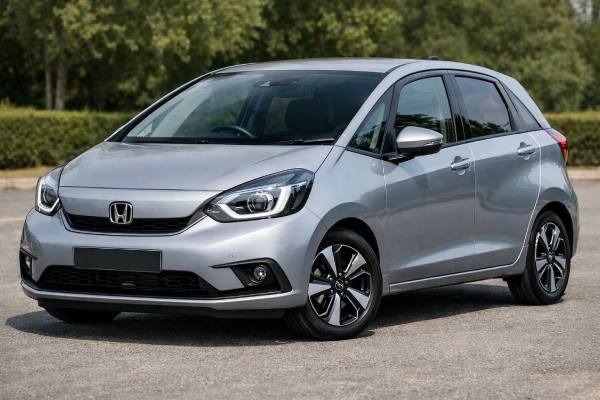
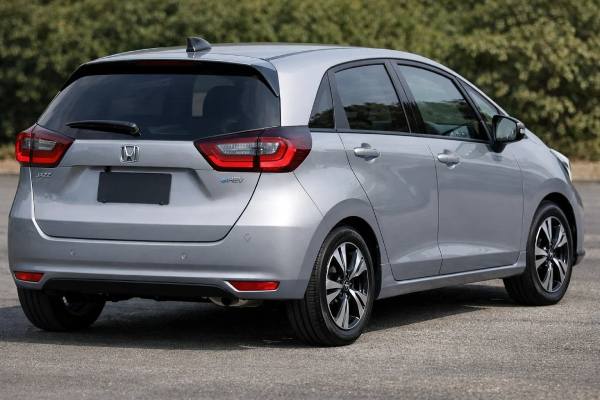
Honda’s fourth-generation Jazz (GR) with the 1.5-litre e:HEV hybrid system is built around a simple promise: real-world efficiency without the “rubber-band” feel many drivers associate with small hybrids. Instead of relying on a conventional CVT and a high-revving engine, the Jazz often drives like an EV at urban speeds, using its electric motor for most propulsion and bringing the petrol engine in mainly as a generator. A direct-drive clutch can connect the engine to the wheels at steadier speeds, which is why motorway cruising tends to feel calmer than you might expect in this class.
Beyond the powertrain, the GR Jazz keeps the model’s traditional strengths—excellent visibility, “Magic Seat” cabin flexibility, and easy parking manners—while adding stronger safety tech and a more mature ride. For owners, the appeal is low daily effort: predictable running costs, light maintenance needs, and a platform that suits city life but does not punish longer trips.
What to Know
- Best for mixed city and suburban driving where the hybrid can run EV-like for long stretches.
- Smart packaging and tall roofline make it feel roomier than most supermini rivals.
- Most cars include strong active-safety tech, but sensor calibration matters after windscreen or bumper repairs.
- Expect the hybrid to reward smooth inputs; aggressive acceleration drains the small battery quickly.
- Plan engine oil service about every 10,000–15,000 km (6,000–9,000 mi) or 12 months, depending on duty cycle and the car’s maintenance minder.
Navigate this guide
- GR Jazz hybrid in depth
- LEB8 specs and dimensions
- Trims, options, and safety tech
- Reliability, issues, and service actions
- Maintenance plan and buying advice
- Real-world driving and economy
- Rivals: Yaris and other hybrids
GR Jazz hybrid in depth
The 2020–2023 Honda Jazz (GR) e:HEV is a “series-parallel” hybrid that behaves differently from many small-car hybrids. In everyday driving it often runs as a series hybrid: the petrol engine spins a generator, and the traction motor does the work of moving the car. That layout is why it can feel smooth and responsive at low speeds—there are no traditional gear changes, and the motor delivers instant torque for the first car-length or two.
At higher, steadier speeds the system can switch to engine drive using a clutch that links the petrol engine to the wheels. This direct-drive mode is the key to why the Jazz can settle down on faster roads instead of sounding busy. The transition is usually subtle, but you will notice it more on rolling hills or when the battery state-of-charge is low.
In ownership terms, the Jazz’s hybrid advantage is consistency. You do not need to “hyper-mile” to see good results—light traffic, stop-start commuting, and short trips are exactly where it shines. The trade-off is that the battery is relatively small, so repeated full-throttle launches or long, steep climbs quickly use the available electric buffer. When that happens, the engine may run harder to keep the system charged, which can make the car feel less relaxed until conditions ease.
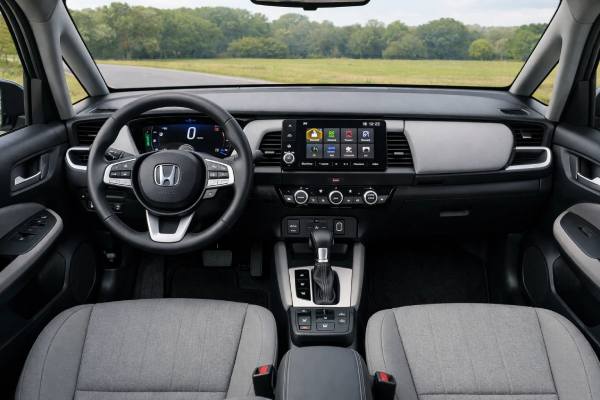
The GR platform supports the Jazz’s practical mission. The driving position is upright with excellent glass area, the nose is short for tight parking, and the cabin is designed around storage and flexibility rather than sporty drama. The “Magic Seat” rear arrangement (market-dependent naming) remains a defining feature: it lets you fold the seat base up to carry tall items, or drop the seatbacks to create a surprisingly long load floor for a compact hatch.
For buyers, the sweet spot is a Jazz that matches your usage. If you mostly do city miles, the hybrid system’s strengths are amplified. If your life is almost all motorway at 120–130 km/h (75–80 mph), you will still benefit, but the gap to an efficient petrol supermini narrows—and tyre choice and winter temperatures start to matter more than the badge on the tailgate.
LEB8 specs and dimensions
Specifications vary by market and trim, but the tables below reflect the common 2020–2023 GR Jazz e:HEV layout with the LEB8 1.5-litre hybrid system and front-wheel drive. Treat them as a solid planning baseline, then confirm against the VIN-specific spec sheet for your region.
Powertrain and efficiency
| Item | Specification |
|---|---|
| Code | LEB8 |
| Engine layout and cylinders | Inline-4, DOHC, 4 valves/cyl (16V) |
| Displacement | 1.5 L (1,498 cc) |
| Induction | Naturally aspirated |
| Fuel system | Direct injection (DI) |
| Max system power | 109 hp (80 kW) |
| Max system torque | ~253 Nm (~187 lb-ft) (motor) |
| Timing drive | Chain |
| Rated efficiency (WLTP typical) | ~4.5–5.0 L/100 km (52–47 mpg US / 63–56 mpg UK) |
| Real-world highway @ 120 km/h (75 mph) | ~5.3–6.2 L/100 km (44–38 mpg US / 53–46 mpg UK) |
| Aerodynamics | Cd not consistently published; small-hatch class typical ~0.30–0.33 |
Transmission and driveline
| Item | Specification |
|---|---|
| Transmission | e-CVT (single-speed hybrid drive with clutch-assisted direct drive) |
| Drive type | FWD |
| Differential | Open |
Chassis and dimensions
| Item | Specification |
|---|---|
| Suspension (front/rear) | MacPherson strut / torsion beam |
| Steering | Electric power steering |
| Brakes | Disc front / drum or disc rear (by market and trim) |
| Wheels and tyres | Common: 185/60 R15 or 185/55 R16 |
| Ground clearance | ~135–150 mm (~5.3–5.9 in), market-dependent |
| Length / width / height | ~4,044 mm (159.2 in) / 1,694 mm (66.7 in) / ~1,526 mm (60.1 in) |
| Wheelbase | ~2,530 mm (99.6 in) |
| Turning circle (kerb-to-kerb) | ~10.1–10.6 m (33.1–34.8 ft) |
| Kerb weight | ~1,240–1,330 kg (2,734–2,932 lb) |
| Fuel tank | ~40 L (10.6 US gal / 8.8 UK gal) |
| Cargo volume | Typically ~304 L (10.7 ft³) seats up; up to ~1,200+ L (42+ ft³) seats down (method varies) |
Performance and capability
| Item | Specification |
|---|---|
| 0–100 km/h (0–62 mph) | ~9.4 s |
| Top speed | ~175 km/h (109 mph) |
| Braking distance 100–0 km/h | Depends heavily on tyres; typically ~36–41 m |
| Towing capacity | Often not rated or low; verify local homologation |
| Roof load | Commonly ~50–60 kg (110–132 lb), verify market spec |
Fluids and service capacities (typical planning values)
| Item | Specification |
|---|---|
| Engine oil | 0W-20 (API/ILSAC spec per market); ~3.0–3.7 L (3.2–3.9 US qt) with filter |
| Coolant | Honda Type 2 or equivalent long-life; capacity varies (engine loop and power electronics may be separate) |
| Transmission or drive fluid | Honda-specific e-CVT or reduction-gear fluid (varies by market); capacity varies |
| A/C refrigerant | R-1234yf (many markets) or R-134a (some markets); charge varies |
| Key torque specs | Wheel nuts often ~108 Nm (80 lb-ft); oil drain plug often ~35–40 Nm (26–30 lb-ft) — verify for your VIN |
Electrical and ignition
| Item | Specification |
|---|---|
| 12 V battery | Small AGM or EFB style; capacity and form factor vary |
| Spark plugs | Iridium long-life type; gap and part number per VIN |
| Hybrid battery | High-voltage lithium-ion (most markets); exact voltage and capacity vary |
Safety and driver assistance (common equipment)
| Item | Specification |
|---|---|
| Crash ratings | Euro NCAP (2020 Jazz): 5-star overall; published category percentages vary by test protocol |
| ADAS suite | AEB, ACC, lane support, traffic sign recognition and speed assist (availability varies by grade and year) |
Trims, options, and safety tech
Trim naming differs by country, but the GR Jazz e:HEV lineup usually follows a clear pattern: a well-equipped base hybrid grade, a mid-level comfort and tech trim, and a top grade with larger wheels, upgraded lighting, and more convenience features. In some markets, “Crosstar” sits alongside the standard Jazz with a more rugged look, roof rails, and slightly different tyre and suspension tuning. This article focuses on the regular Jazz hybrid, but many cabin and safety features overlap.
Quick ways to identify what you are looking at
- Wheel size is a fast clue: many entry and mid trims use 15-inch wheels for efficiency; higher trims use 16-inch wheels that look sharper but can cost a little comfort and fuel economy.
- Headlights: LED headlights (and sometimes LED indicators) often signal a higher grade.
- Cabin tech: a larger central touchscreen and more steering wheel controls typically indicate the better infotainment tier.
- VIN and build plate: for any hybrid, the VIN lookup at a dealer is the cleanest way to confirm battery type, ADAS hardware, and campaign eligibility.
Options that change day-to-day ownership
- Tyre and wheel package: 16-inch wheels usually improve turn-in and stance, but the Jazz rides best on 15s, especially on broken city roads.
- Infotainment and camera: a factory rear camera and parking sensors are worth prioritizing because retrofits are rarely as clean.
- Heated seats and climate features: in cold climates, comfort options matter more than performance options because cabin heating can push the hybrid system to keep the engine running.
Safety ratings and what they really mean
The GR Jazz scored strongly in modern European crash testing, helped by a solid structure, good restraint design, and effective active safety features. When comparing ratings, note the test year and protocol: a 2020 score is not directly comparable to a 2015 score because requirements and test scenarios evolve. Also, some results are published “with standard equipment” versus “with safety pack,” so confirm which configuration matches your market trim.
ADAS equipment and calibration notes
Many Jazz e:HEV cars include forward camera and radar-based systems such as autonomous emergency braking (AEB), adaptive cruise control (ACC), and lane support. These systems are valuable, but they add two ownership realities:
- Windscreen replacement may require camera recalibration.
- Bumper repairs can affect radar alignment, even after minor impacts.
If you are buying used, ask for documentation after any front-end repair. A car can drive normally while its driver assistance systems are quietly compromised. A proper scan for fault codes plus a calibration check is inexpensive insurance, especially on a car where safety tech is part of the value proposition.
Reliability, issues, and service actions
The GR Jazz e:HEV has a good reliability baseline because the hybrid system avoids some wear items that punish conventional small cars in city traffic. There is no starter motor doing constant stop-start work, brake wear is often reduced by regeneration, and the drivetrain has fewer traditional shifting parts. Still, any modern hybrid has a few predictable patterns worth knowing.
Common (low to medium cost)
- 12 V battery weakness (common)
Symptoms: slow wake-up, warning messages, infotainment glitches, intermittent no-start (ready mode not achieved).
Likely cause: small 12 V battery capacity plus short trips and lots of accessory load.
Remedy: test battery health, check charging behavior, replace with correct AGM/EFB spec, and keep terminals clean. - Brake noise and light corrosion (common)
Symptoms: squeal, rough feel after rain, light surface rust on discs.
Likely cause: regeneration reduces friction brake use, so the discs do less “self-cleaning.”
Remedy: periodic firm stops from safe speeds, regular brake inspections, and correct pad material. - Infotainment and phone pairing issues (occasional)
Symptoms: Bluetooth drops, slow boot, camera lag.
Likely cause: software bugs, older phone compatibility.
Remedy: update head unit software where available; confirm stable operation before purchase.
Occasional (medium cost)
- Air conditioning performance decline
Symptoms: weak cooling, compressor cycling, odour.
Likely cause: refrigerant loss, condenser damage from road debris, or cabin filter neglect.
Remedy: leak test and proper recharge; replace cabin filter on schedule. - Suspension knocks over sharp bumps
Symptoms: front-end clunks, vague steering over potholes.
Likely cause: drop links or top mounts wearing early on rough roads.
Remedy: inspect links, mounts, and bushings; align after parts replacement.
Rare (higher cost but uncommon)
- Hybrid system warning lights
Symptoms: reduced power, “check hybrid system,” persistent faults.
Likely cause: sensor faults, wiring issues, or cooling system problems.
Remedy: diagnostic scan with hybrid-capable tools; do not guess and replace parts blindly.
Recalls, campaigns, and how to check them
Rather than relying on rumours, use official recall tools and ask a dealer to confirm completion based on the VIN. Campaigns can cover items as small as software updates or as significant as component replacement. For a used-car purchase, a simple process works best:
- Run the VIN through an official recall checker for your market.
- Ask the seller for paperwork showing recall completion.
- If unsure, call a dealer service desk and request a campaign status printout.
Pre-purchase checks to request
- Full service history and evidence of correct oil spec usage.
- A scan for stored fault codes (especially for ADAS and hybrid modules).
- Smooth transitions between EV-like driving and engine operation during a test drive.
- Evidence that windscreen and bumper repairs (if any) included sensor calibration.
Maintenance plan and buying advice
Honda’s hybrid system keeps routine servicing fairly simple, but “simple” is not the same as “ignore it.” The best Jazz e:HEV ownership outcomes come from consistent fluid changes, careful brake care, and staying ahead of small electrical issues.
Practical maintenance schedule (typical)
Use the car’s maintenance minder if fitted, then anchor it with time and distance limits.
- Engine oil and filter: every 10,000–15,000 km (6,000–9,000 mi) or 12 months. Short trips and cold climates push you toward the shorter end.
- Engine air filter: inspect every 15,000–30,000 km (9,000–18,000 mi); replace when dirty.
- Cabin air filter: every 15,000 km (9,000 mi) or 12 months for best HVAC performance.
- Brake fluid: every 2 years, regardless of mileage.
- Coolant (engine and power electronics if separate): commonly 5 years, then every 3–5 years (verify for your market).
- Spark plugs: often 90,000–120,000 km (55,000–75,000 mi), depending on service schedule.
- e-CVT or drive fluid: many owners plan a drain and refill around 60,000–100,000 km (37,000–62,000 mi) for long-term smoothness; confirm the official interval locally.
- Brakes: inspect pads, discs, and slider pins at every service; hybrids benefit from more frequent cleaning and lubrication in wet climates.
- Tyre rotation and alignment: rotate every 10,000–12,000 km (6,000–7,500 mi); align annually if roads are rough.
- 12 V battery test: annually after year 3; replacement often makes sense around 4–6 years, depending on climate and usage.
Fluids and parts that matter
- Oil spec discipline matters more than brand: use the correct low-viscosity oil (often 0W-20) to protect timing chain components and optimize cold-start efficiency.
- Correct coolant is important in hybrids because cooling often supports both engine and power electronics.
- Brake service quality matters: a cheap pad choice can increase noise, and dry slider pins can mimic “warped disc” complaints.
Buyer’s guide: what to look for
Checklist in 10 minutes:
- Uneven tyre wear (suggests alignment issues or worn suspension parts).
- Smooth brake feel at low speed (no grabbing, no strong pulsing).
- No warning lights after a cold start and a short drive.
- Stable infotainment operation and a clear reversing camera image.
- Evidence of ADAS functioning (lane support icon behaviour, ACC availability).
Recommended picks:
- A mid trim with the features you actually use (camera, sensors, heated seats if needed) on 15-inch wheels is often the best “ownership value” configuration.
Avoid if:
- The car has repeated unexplained warning lights, a mismatched windscreen with no calibration proof, or a neglected service history. Hybrid cars tolerate abuse less gracefully when electronics are involved.
Long-term durability outlook is strong when the car is serviced on time and kept on quality tyres. Most “big” problems in this model class come from deferred maintenance or poor repair work, not from the core hybrid design.
Real-world driving and economy
The Jazz e:HEV feels different from a conventional supermini the moment you pull away. In town, it often glides on electric drive with a quiet, torque-rich step-off. Throttle response is easy to modulate, and the car rewards smooth pedal work. If you drive it like a small EV—gentle acceleration, looking ahead, and avoiding late braking—you will notice the hybrid system stays calmer and the engine runs less often.
Ride, handling, and NVH
Ride quality is a highlight on sensible wheel sizes. The Jazz is not sporty in the traditional sense, but it is tidy: it changes direction predictably and stays composed over uneven surfaces. Steering is light, which suits parking and city work, and the car feels stable for its height. At motorway speeds the cabin remains reasonably quiet for the class, though you will still hear tyre noise on coarse surfaces—often more than wind noise.
Braking feel can be the one learning curve. Hybrids blend regenerative braking (motor slowing the car) with friction braking (pads and discs). The Jazz generally does this well, but the pedal can feel slightly different compared with a purely hydraulic system, especially in the last few metres of a stop.
Powertrain character
Under moderate load the system is smooth and unbothered. Under heavy acceleration the engine may flare to supply electrical power and maintain battery charge. This is normal for the design, but it can surprise drivers coming from turbo petrol cars where sound and speed rise together. The best way to judge the Jazz is by results: it gathers speed briskly enough for daily traffic, and its real strength is how little fuel it uses while doing so.
Real-world efficiency
Typical patterns owners report:
- City and short commutes: often excellent, with the hybrid operating in its comfort zone.
- Steady 100–120 km/h (60–75 mph): good but less dramatic; the gap to efficient petrol rivals narrows.
- Winter driving: expect higher consumption because the engine must produce cabin heat and warm up to maintain emissions control. Short winter trips can be the worst case.
Useful performance metrics
- 0–100 km/h (0–62 mph) around the mid-9-second range is enough for merges and overtakes when driven with intent.
- Passing response is best when the battery has charge; a tired battery can make the car feel more “engine-led” until it recovers.
In short, the Jazz e:HEV is a tool for low-effort efficiency. Drive smoothly and it feels surprisingly premium for a small hatch. Drive it hard and it remains competent, but you will not see the same fuel advantage—and you may hear more engine activity than you expect.
Rivals: Yaris and other hybrids
The GR Jazz e:HEV competes in a crowded space where “hybrid” can mean very different engineering. Your best rival depends on what you value: efficiency, driving feel, cabin space, or long-term simplicity.
Toyota Yaris Hybrid
The Yaris Hybrid is often the benchmark for city fuel economy and has a strong reliability record. It tends to feel smaller and more “hatchback-like” to drive, with a lower seating position and a tighter footprint. Where the Jazz fights back is packaging: it usually feels roomier, is easier to load with tall items, and offers a more airy cabin with better outward visibility. If you mostly drive alone in dense city streets, the Yaris is hard to beat. If you carry passengers, a child seat, or bulky cargo, the Jazz’s space advantage becomes obvious.
Renault Clio E-Tech Hybrid
Clio’s hybrid system can feel more “geared” because it uses a multi-mode transmission strategy, which some drivers prefer. It can be efficient, but ownership experience often depends on local service quality and software maturity. The Jazz generally wins for straightforward predictability, interior flexibility, and calm low-speed behaviour.
Hyundai i20 (non-hybrid or mild-hybrid)
In many markets, the i20 offers strong value and good tech. Mild-hybrid versions help a bit in town, but they do not deliver the same EV-like glide or stop-start smoothness as a full hybrid. If you do mostly longer trips and want a conventional feel, an efficient petrol i20 can make sense. If your driving is stop-start heavy, the Jazz’s full hybrid system is a more meaningful advantage.
Honda Jazz versus small crossovers
Some buyers cross-shop small SUVs for seating height and practicality. The Jazz often matches them for usable cabin space while being lighter, easier to park, and usually more efficient. Unless you need extra ground clearance or a specific styling preference, the Jazz is often the “quietly smarter” choice.
The practical verdict
Choose the Jazz e:HEV if you want:
- a flexible interior that behaves like a bigger car,
- hybrid efficiency that feels natural in traffic, and
- a strong safety tech story for the class.
Choose a rival if you want:
- the smallest footprint possible (Yaris),
- a more traditional “geared” sensation (some E-Tech hybrids), or
- the lowest purchase price with acceptable economy (non-hybrid petrol options).
In the 2020–2023 window, the GR Jazz e:HEV’s unique strength is balance: it is not the sportiest or the cheapest, but it is one of the easiest small cars to live with day after day.
References
- 2020 Honda Jazz & Jazz Crosstar 2020
- Official Honda Jazz 2020 safety rating 2020 (Safety Rating)
- Check vehicle recalls 2026 (Recall Database)
- Honda Recall Check 2026 (Recall Database)
- 21YM All-New Jazz Price List 2021
Disclaimer
This article is for informational purposes only and is not a substitute for professional diagnosis, inspection, or repair. Specifications, torque values, service intervals, fluids, and procedures can vary by VIN, market, and equipment. Always verify details using your vehicle’s official owner documentation and service information, and consult a qualified technician when needed.
If this guide helped you, please consider sharing it on Facebook or X to support our work.