
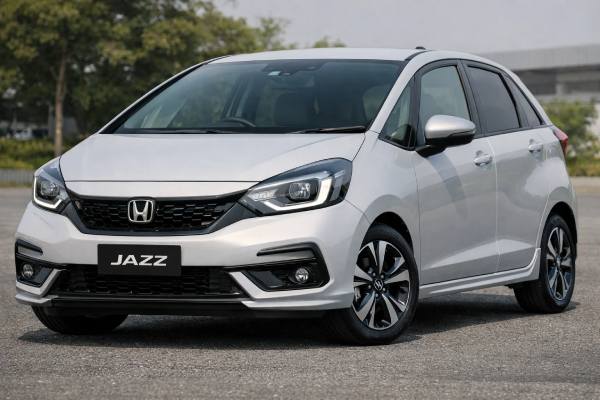
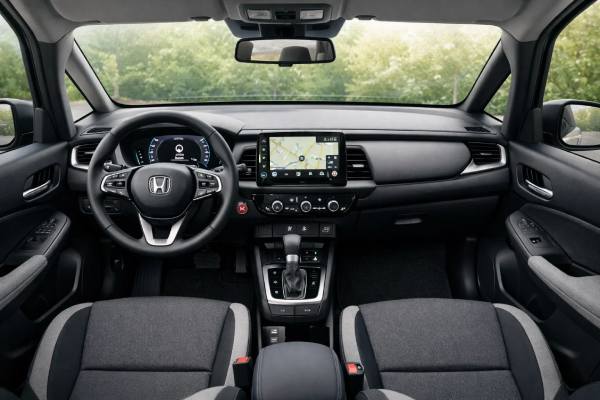
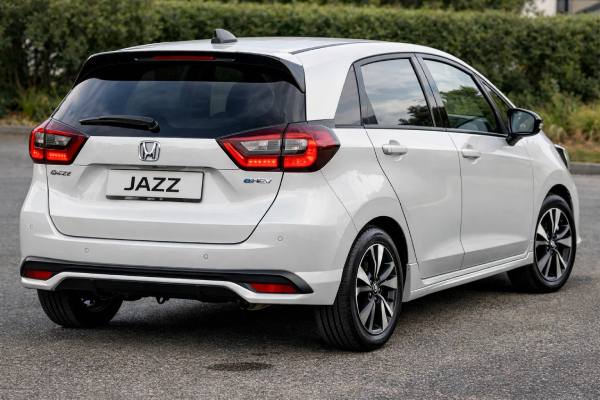
The facelift Honda Jazz (GR) Hybrid (often branded e:HEV) is a practical small car built around one clear idea: keep daily driving easy, efficient, and low-stress—without asking you to plug in. Its hybrid system is tuned for electric-first response in town, then switches seamlessly between series-hybrid and direct drive at higher speeds. The update from 2023 brought a sharper equipment walk, small usability tweaks, and—most importantly for buyers—a stronger combined output that makes motorway merging and hilly routes feel less strained.
If you want a compact car that majors on visibility, cabin flexibility, and predictable running costs, this Jazz is one of the most ownership-friendly options in its class. The trade-off is that it prioritizes smoothness and economy over sporty feedback, so it rewards calm, consistent driving more than aggressive inputs.
Essential Insights
- Strong real-world fuel economy in mixed driving, especially in stop-start city use.
- Practical cabin packaging with a tall driving position and flexible rear-seat folding.
- Very complete active-safety suite on most trims compared with typical superminis.
- Expect higher tyre costs on larger wheel options, and keep an eye on rear brake corrosion if the car does short trips.
- Plan engine oil and filter service every 12 months or 10,000–12,000 miles (16,000–19,000 km), depending on your market schedule.
Contents and shortcuts
- 2023 Jazz hybrid refresh
- Tech specs and capacities
- Grades, equipment and ADAS
- Known faults and recalls
- Service schedule and used tips
- How it drives day to day
- Against Yaris and Clio
2023 Jazz hybrid refresh
The 2023-on facelift Jazz Hybrid keeps the same core strengths that made the GR Jazz popular—easy access, excellent outward visibility, and a cabin that feels “one size bigger” than its footprint—while polishing the ownership experience. It remains a five-door supermini with a tall roofline and short bonnet, designed for city manoeuvres, tight parking bays, and comfortable entry/exit. The steering and suspension tuning is aimed at stability and calmness rather than hot-hatch responses, which suits the Jazz’s main audience: commuters, families, and drivers who value predictability.
The headline mechanical change is the stronger hybrid system output (commonly quoted as 122 hp / 90 kW). The way it delivers that performance matters more than the number. In most urban driving, the Jazz behaves like an EV: the traction motor does the main work, giving immediate step-off response. The petrol engine often runs as a generator (series-hybrid mode), supplying electricity rather than driving the wheels directly. At steady higher speeds, the system can engage a clutch for direct drive, reducing energy conversion losses and helping fuel economy on faster roads. This three-mode approach is why the Jazz feels especially efficient in stop-start traffic without the complexity of plugging in.
Facelift cars also tend to be easier to “spec right.” Honda’s trim strategy is usually to bundle high-value features—heated seats, better lighting, upgraded infotainment, and more driver-assistance tech—into clearly separated grades rather than a long options list. For buyers, that means less guesswork: pick the grade that matches your comfort and safety priorities, then focus on condition and service history. Practicality remains a core advantage. The rear seating and load area are designed for real life: shopping trips, child seats, and occasional bulky loads. If you regularly carry tall items, the Jazz’s upright opening and cabin height are still standout traits in this class.
The overall ownership proposition is simple: you are paying for engineering that reduces day-to-day friction. Smooth hybrid behaviour, low fuel use, low-stress controls, and strong safety equipment add up to a car that is rarely the fastest or flashiest choice, but often the easiest to live with over five to ten years.
Tech specs and capacities
Below are the core specifications for the facelift Honda Jazz (GR) Hybrid / e:HEV as commonly delivered in European markets. Exact numbers can vary by grade, wheel size, and homologation version, so treat “ranges” as normal.
Powertrain and efficiency
| Item | Spec |
|---|---|
| Powertrain code | LEB8 (1.5 i-MMD / e:HEV family) |
| Engine layout and cylinders | I-4, DOHC, 16-valve (4 valves/cyl) |
| Displacement | 1.5 L (1,498 cc) |
| Induction | Naturally aspirated |
| Fuel system | Port injection (PFI) in most markets |
| Compression ratio | High (Atkinson-cycle tuned) (verify by VIN/market) |
| System max power | 122 hp (90 kW) |
| System max torque | Motor-led delivery (commonly ~250 Nm / ~184 lb-ft class) |
| Timing drive | Chain (typical for this engine family) |
| Rated efficiency | Typically ~4.5–5.0 L/100 km (≈ 63–56 mpg UK / 52–47 mpg US) depending on trim |
| Real-world highway @ 120 km/h | Often ~5.5–6.2 L/100 km (≈ 51–46 mpg UK / 43–38 mpg US) |
| Aerodynamics | Cd not consistently published by market; treat as trim-dependent |
Transmission and driveline
| Item | Spec |
|---|---|
| Transmission | e-CVT / e:HEV single-speed with clutch/direct-drive operation |
| Drive type | FWD |
| Differential | Open |
Chassis and dimensions
| Item | Spec |
|---|---|
| Suspension (front / rear) | MacPherson strut / torsion beam (typical GR Jazz layout) |
| Steering | Electric power steering (ratio varies by homologation) |
| Wheels and tyres | Commonly 15–16 in wheels depending on grade |
| Length / width / height | Around 4,090 mm (161.0 in) / 1,695 mm (66.7 in) / 1,525 mm (60.0 in) (grade-dependent) |
| Wheelbase | Around 2,530 mm (99.6 in) |
| Turning circle (kerb-to-kerb) | About 10.1 m (33.1 ft) |
| Kerb (curb) weight | Often ~1,250–1,350 kg (2,756–2,976 lb) depending on grade |
| Fuel tank | 40 L (10.6 US gal / 8.8 UK gal) |
| Cargo volume | Typically ~300 L (≈10.6 ft³) seats up; ~1,200 L (≈42.4 ft³) seats down (method varies) |
Performance and capability
| Item | Spec |
|---|---|
| 0–100 km/h (0–62 mph) | Typically ~9–10 s depending on grade/conditions |
| Top speed | Typically ~170–175 km/h (106–109 mph) |
| Towing capacity | Often limited; check market approval (some list up to ~500 kg braked) |
| Roof load | Commonly ~50–75 kg depending on rails/roof type |
Fluids and service capacities (typical decision-use values)
| Item | Spec |
|---|---|
| Engine oil | Usually 0W-20, API/ACEA per market; capacity commonly ~3.5–3.8 L (3.7–4.0 US qt) with filter |
| Coolant | Honda Type-2 class premix (market equivalent); capacity varies (verify by VIN) |
| Transmission fluid | Honda genuine fluid as specified for e:HEV unit (verify by VIN/market) |
| A/C refrigerant | Commonly R-1234yf; charge varies by equipment |
| Key torque specs | Wheel nuts often ~108 Nm (80 lb-ft); drain plugs vary (verify by VIN) |
Electrical (12 V and ignition)
| Item | Spec |
|---|---|
| 12 V battery | Small capacity (hybrid-typical); test annually after year 4 |
| Spark plugs | Long-life type (often ~160,000 km / 100,000 mi class interval) |
Safety and driver assistance (headline)
| Item | Spec |
|---|---|
| Crash ratings | Euro NCAP: 5-star for the GR Jazz generation under 2020-era testing; confirm any facelift re-assessments by year |
| ADAS suite | AEB, ACC, lane support, traffic sign recognition, speed assistance (standard/optional depends on grade and market) |
Grades, equipment and ADAS
Honda’s Jazz range strategy is usually “fewer trims, fewer surprises.” For the facelift period, most markets cluster around mid and high grades plus a lifestyle-flavoured variant (often called Crosstar in many European countries) and sometimes a sport-themed appearance grade (for example, “Advance Sport” naming appears in some markets). The mechanical core—hybrid system, FWD layout, and primary chassis hardware—does not normally change dramatically between grades, so your decision is mostly about comfort, lighting, infotainment, and driver assistance.
How to identify trims quickly (practical cues):
- Wheels: base/mid grades often run simpler 15-inch designs; higher grades tend to have more detailed 16-inch wheels.
- Exterior cladding and ride stance: Crosstar-style versions usually add darker cladding, roof rails, and a slightly different look that’s easy to spot from a distance.
- Cabin cues: higher grades often add heated seats, upgraded steering wheel finish, better screen/audio, and extra USB points.
Infotainment and convenience differences to watch:
- Screen size and smartphone mirroring can vary by year and grade. If you rely on navigation, calls, or streaming, test it during a cold start and after a short drive—some issues only show once the system warms up.
- Keyless entry, parking sensors, and camera quality also vary. For city use, rear sensors plus a clear camera matter more than a bigger wheel package.
Safety systems and ADAS (what matters most):
Most facelift Jazz Hybrids are strong on active safety for the class. The key is to confirm what is standard vs optional in your market and whether a previous owner has disabled features due to annoyance.
Commonly available features include:
- AEB (Autonomous Emergency Braking): looks for vehicles and, in many systems, pedestrians and cyclists.
- ACC (Adaptive Cruise Control): valuable on ring roads and motorways; test smoothness in traffic.
- Lane keeping / lane centring support: good systems reduce fatigue, but require proper camera calibration after windscreen replacement.
- Traffic sign recognition and speed assistance: helpful, but can be over-eager—learn how to manage alerts.
- Blind-spot monitoring and cross-traffic alert: sometimes reserved for higher grades or option packs.
Airbags and child-seat provisions:
Expect full modern coverage (front, side, and curtain airbags) and ISOFIX anchor points for child seats. Always check the rear seat area for evidence of hard child-seat installation (twisted belts, damaged plastics) and confirm the airbag warning light illuminates at start-up then goes out—any deviation needs diagnosis.
If you are shopping used, pick the trim for your lifestyle first (lighting, parking aids, heated seats), then choose the best-maintained example. A clean service record and careful ownership will matter more than one trim step on paper.
Known faults and recalls
The facelift Jazz Hybrid is generally a durable design, but hybrids add extra systems—high-voltage components, power electronics, sensors, and cooling loops—that can trigger warning lights if something is marginal. The best approach is to think in terms of prevalence and cost tier, then shop accordingly.
Common (usually low–medium cost)
- 12 V battery weakness (common, low–medium):
Symptoms: slow cranking behaviour (where applicable), multiple warning messages, infotainment resets, random sensor alerts after sitting.
Likely cause: small 12 V battery capacity and short-trip usage.
Remedy: battery test with proper load tester; replace with correct spec; check parasitic draw if it recurs. - Rear brake corrosion on short-trip cars (common, low–medium):
Symptoms: scraping noise, reduced smoothness, uneven braking after rain or inactivity.
Cause: hybrids use regenerative braking, so friction brakes may work less in gentle driving.
Remedy: periodic firm braking to clean surfaces; inspect discs/drums and parking brake operation; service as needed. - Infotainment glitches (common, low):
Symptoms: slow boot, intermittent Bluetooth, camera lag.
Cause: software quirks or low 12 V voltage.
Remedy: software updates where available; address 12 V health first.
Occasional (medium cost)
- Hybrid system warnings from sensors or cooling issues (occasional, medium):
Symptoms: “check system” messages, reduced power, fan noise.
Cause: sensor faults, cooling performance issues, or connector problems.
Remedy: proper diagnostic scan; inspect cooling paths and electrical connections; update calibrations if specified. - Suspension knocks over sharp edges (occasional, medium):
Symptoms: clunks at low speed, vague rear feel.
Cause: wear in drop links, bushes, or top mounts depending on mileage and roads.
Remedy: targeted replacement; avoid cheap components—noise often returns.
Rare (higher cost potential)
- Power electronics or HV component faults (rare, high):
Symptoms: persistent hybrid error lights, limp mode, no-ready condition.
Cause: inverter/DC-DC issues, HV wiring or control module faults (rare).
Remedy: dealer-level diagnostics; confirm warranty coverage where applicable.
Recalls, software actions, and how to verify
Because recalls can be market-specific and change over time, treat verification as part of your buying checklist—not an afterthought. Use an official recall database and ask the seller for paperwork showing completion. If the car has had a windscreen replacement, ensure any camera-based ADAS was recalibrated; this is not a “nice to have,” it directly affects AEB and lane support performance.
Pre-purchase checks to request (high value):
- Full service history with hybrid system checks noted.
- Proof of recall completion (printout or dealer invoice).
- 12 V battery test result (or budget for replacement).
- Brake inspection report if the car does mostly city miles.
- Scan for stored diagnostic codes—especially intermittent ones.
A Jazz with clean records and no warning-light history is typically a low-drama ownership proposition. A neglected one can still be fixed, but hybrid fault-chasing is where labour costs rise quickly.
Service schedule and used tips
A practical maintenance plan for the facelift Jazz Hybrid is about consistency. The hybrid system itself is usually robust when fluids, filters, and inspections are kept on time—and when the car isn’t left for long periods on a weak 12 V battery.
Maintenance schedule (typical, market-dependent)
Use this as a decision guide, then confirm the official schedule for your VIN:
- Engine oil and filter: every 12 months or 10,000–12,000 miles (16,000–19,000 km).
Why it matters: hybrids still run the engine under load and can do many cold starts in winter. Fresh oil protects timing components and reduces deposits. - Cabin air filter: 12–24 months (earlier if urban/pollen-heavy).
- Engine air filter: typically every 30,000–40,000 miles (48,000–64,000 km) or 3–4 years; inspect annually.
- Brake fluid: commonly every 3 years, regardless of mileage.
- Coolant: often 5 years initial, then every 3–4 years (verify by VIN/market).
- Spark plugs: commonly ~100,000 miles (160,000 km) class interval.
- e:HEV transmission / drive unit fluid (if specified): follow the service manual; for heavy city use, many owners prefer preventative changes rather than lifetime claims.
- Tyre rotation and alignment: rotate every 6,000–8,000 miles (10,000–13,000 km); align if you see uneven wear.
- 12 V battery testing: annually after year 4; replace proactively if test results are marginal.
Fluids and specs (decision-use guidance)
- Engine oil: commonly 0W-20 (verify the exact standard for your market).
- Coolant: Honda-approved premix equivalent (do not mix unknown chemistries).
- A/C service: use the correct refrigerant type for your car; hybrids still depend on reliable cabin comfort for efficiency in winter and summer.
Buyer’s guide: what to inspect
- Hybrid behaviour: it should start, drive, and transition smoothly with no persistent warnings.
- Brakes and tyres: check for lipping, corrosion, and uneven wear—especially on cars used for short commutes.
- Infotainment and cameras: test everything during a cold start; low voltage can mask deeper issues.
- Suspension noise: drive over sharp edges at low speed with the radio off.
- Service evidence: look for yearly stamps/invoices, not just low mileage.
Long-term durability outlook
With routine servicing and a healthy 12 V battery, the facelift Jazz Hybrid typically ages well. The most common “ownership pain” items are not major mechanical failures—they are small-electrical issues, neglected brakes, and wear items. Buy the cleanest, best-documented car you can, and the Jazz generally pays you back with predictable running costs.
How it drives day to day
The Jazz Hybrid’s driving character is shaped by its electric-first hybrid logic. In town, it often moves off and cruises on the traction motor, so it feels smooth and responsive at low speed. Throttle response is immediate, which makes gaps in traffic easier to judge than in many small petrol cars. When the engine runs, it may do so at a steady rpm to generate electricity; that can sound unusual if you are new to hybrid behaviour, but it is normal for this system.
Ride, handling, and NVH (noise, vibration, harshness):
- Ride quality: tuned for comfort over broken city surfaces, with a stable, calm feel at typical urban speeds.
- Cornering balance: safe and predictable rather than playful; it resists drama and prioritizes grip and stability.
- Steering: light at parking speeds, steady on faster roads, but not designed for “sports” feedback.
- Cabin noise: generally quiet in city driving; at motorway speeds, tyre noise becomes the main contributor, especially on larger wheels.
Powertrain character and transmission feel:
Unlike a conventional CVT that constantly varies ratios, the Jazz’s e:HEV behaviour is more about mode switching. You may notice:
- A smooth EV-like surge at low speed.
- The engine starting to supply power as a generator under higher load.
- A more direct, settled feel at steady higher speeds when direct drive engages.
Once you understand that the engine speed may not always mirror road speed, the system makes sense. It is optimized for efficiency and smoothness, not for a traditional “rev-and-shift” experience.
Real-world efficiency:
- City: often excellent because regeneration and EV-mode operation suit stop-start routes.
- Motorway: still efficient for the class, but the advantage narrows at 120 km/h because aero drag dominates.
- Cold weather: expect consumption to rise; short winter trips are the hardest case because the engine runs for heat and warm-up.
Braking feel:
Hybrids blend regenerative braking (motor generating electricity) with friction brakes. The Jazz is usually well-calibrated, but if you feel grabby or inconsistent response, test another example—calibration, tyre condition, and brake maintenance can change the feel.
In daily use, the Jazz Hybrid’s biggest performance advantage is not acceleration figures; it is the way it makes routine driving smoother, calmer, and more efficient with minimal driver effort.
Against Yaris and Clio
The facelift Jazz Hybrid competes in a crowded supermini field, but its strengths are specific: packaging, visibility, and an electric-first hybrid feel. Here’s how it typically stacks up against key rivals.
Toyota Yaris Hybrid
- Where the Yaris often wins: tighter, sportier feel; very strong urban efficiency; broad market support.
- Where the Jazz often wins: interior space and upright practicality; seat versatility; easier entry/exit and visibility.
- Decision tip: choose Yaris if you value compact “hotter hatch” vibes; choose Jazz if you want small-car size with big-car usability.
Renault Clio E-Tech Hybrid
- Where the Clio often wins: cabin style, infotainment presentation (trim-dependent), and a more “European hatchback” feel.
- Where the Jazz often wins: simpler ownership experience, calmer controls, and typically more intuitive practicality.
- Decision tip: the Clio can feel more premium inside; the Jazz can feel more purposeful and efficient in traffic.
Mazda2 Hybrid and other badge variants
- Where they win: often strong efficiency and familiar Toyota-based hybrid behaviour (on some versions).
- Where the Jazz wins: Honda’s packaging approach and driving position; more “mini-MPV” usefulness in a supermini footprint.
Mild-hybrid petrol alternatives (i20, Swift, Polo-class petrols)
- Where mild hybrids win: lower purchase prices in some markets; simpler systems; sometimes better motorway refinement depending on model.
- Where the Jazz wins: stronger stop-start economy, smoother low-speed drive, and less dependence on driver technique to return good numbers.
The Jazz verdict in this set
If your driving includes lots of short trips, traffic, school runs, and urban routes, the Jazz’s hybrid system and cabin practicality can make it feel like the “smartest tool” rather than just another small hatch. If you want steering feel, sporty body control, or the lowest possible purchase price, some rivals will suit you better. The Jazz is the quiet expert choice: not flashy, but extremely effective when judged by day-to-day ownership.
References
- JAZZ e:HEV – Press Information 2023 (Press Kit)
- Honda Jazz Hybrid Specifications 2026 (Specifications)
- Check if a vehicle, part or accessory has been recalled 2025 (Recall Database)
Disclaimer
This article is for informational purposes only and is not a substitute for professional diagnosis, inspection, or repair. Specifications, torque values, service intervals, and procedures can vary by VIN, market, and equipment. Always verify details using official owner’s literature and service documentation for your exact vehicle, and consult a qualified technician for safety-critical work.
If you found this guide useful, please consider sharing it on Facebook, X (Twitter), or your favourite forum to help others support our work.