
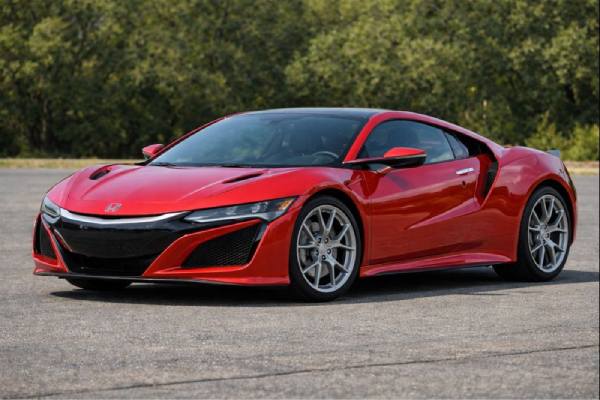

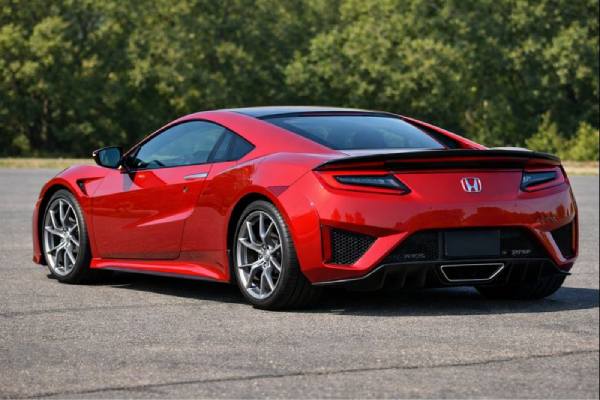
The 2016–2018 NSX (NC1) is a modern supercar built around an unusual idea: use hybrid hardware not for economy-first driving, but to sharpen response, traction, and corner-exit speed. Its twin-turbo 3.5-liter V6 sits mid-mounted, while three electric motors—one at the rear and two at the front—fill torque gaps and add torque vectoring. The result is a car that can feel “pulled” into a corner on throttle, with instant front-axle corrections that are difficult to replicate with mechanical differentials alone.
For owners, the NC1 combines exotic materials and a complex powertrain with Honda-like service logic: clear fluid specs, predictable wear items, and robust thermal management—if you keep up with maintenance. The big trade-off is that this is not a simple supercar to neglect; age, low annual mileage, and heat cycles matter as much as odometer readings.
Owner Snapshot
- Fast real-world pace from torque vectoring and electric “fill,” not just peak horsepower.
- Everyday usability is high for a mid-engine car: visibility, dual-clutch manners, and refinement are strong.
- Braking and thermal management are track-capable, but consumables can be expensive and setup-sensitive.
- Prioritize coolant condition and leak checks at every service; the car has multiple cooling loops.
- Plan engine oil service at least every 12 months (even with low mileage), or sooner with hard use.
Navigate this guide
- NC1 hybrid overview
- Specs, dimensions, and performance
- Trims, options, and safety tech
- Reliability, issues, and recalls
- Maintenance plan and buying tips
- Driving impressions and efficiency
- How the NC1 NSX stacks up
NC1 hybrid overview
The NC1 NSX is best understood as a torque-management car. Its headline number—573 hp—matters, but the signature trait is how the hybrid system shapes when and where torque arrives. The powertrain uses a twin-turbocharged 3.5-liter V6 (engine code JNC1) paired with a 9-speed dual-clutch transmission (DCT). Behind the engine sits a rear motor-generator that can add torque instantly and smooth torque delivery during gear changes. Up front, a “twin motor unit” places one electric motor at each front wheel, allowing true left/right torque vectoring rather than brake-based imitation.
That front axle changes the ownership and driving story. In a conventional mid-engine AWD system, the front wheels usually receive torque through a mechanical transfer mechanism and differential. In the NSX, the front is electrically driven. That means the car can add front-axle pull even if the engine is between boost thresholds, and it can trim yaw (rotation) by pushing one front wheel harder than the other. You feel this as an ability to apply throttle earlier in a corner and still have the car tuck in rather than push wide.
The chassis supports that approach. It’s aluminum-intensive with carefully chosen high-strength steel in key crash structures, aiming for rigidity without a heavy steel shell. The NC1 is also a cooling-system car. Between the turbocharged engine, charge-air cooling, hybrid power electronics, and battery thermal needs, it runs multiple coolant circuits. That’s good news for track sessions and hot climates—if the system stays healthy. It’s also why fluid condition and leak checks are not “optional extra diligence” on this model; they’re foundational.
For buyers, the NC1 fits two profiles well: drivers who want supercar pace with daily drivability, and owners who appreciate technology that improves repeatable performance. It’s less ideal if you want a simple, lightly stressed engine with minimal complexity, or if you plan to store the car for long periods without consistent maintenance and battery care.
Specs, dimensions, and performance
Below is a consolidated spec set for the 2016–2018 NSX (NC1) in its early production form, focusing on the hybrid 3.5 twin-turbo setup and its key service data. Some items vary by market and tire fitment, but the core architecture is consistent.
Powertrain and efficiency
| Item | Specification |
|---|---|
| Code | JNC1 |
| Engine layout and cylinders | Mid-mounted V6, DOHC, 4 valves/cyl (24-valve) |
| Displacement | 3.5 L (3493 cc) |
| Induction | Twin turbo |
| Fuel system | Direct injection (market documentation may describe multi-point support functions; verify by VIN) |
| Max power | 573 hp (427 kW) system output |
| Max torque | 645 Nm (476 lb-ft) system torque |
| Motor type and count | 3 electric motors (rear motor-generator + 2 front motors) |
| Motor axle layout | Tri-motor: rear + front-left/front-right |
| System voltage | High-voltage hybrid system (exact nominal voltage varies by subsystem; not consistently published in owner-facing docs) |
| Battery chemistry | Lithium-ion |
| Rated efficiency | ~11.2 L/100 km (21 mpg US combined; 22 mpg US highway / 21 mpg US city) |
| Real-world highway @ 120 km/h (75 mph) | Typically ~10.5–12.5 L/100 km (19–22 mpg US), depending on tires, temperature, and traffic |
| Aerodynamics | Cd commonly reported around low-0.3 range; exact Cd/frontal area varies with aero parts and is not always specified in owner literature |
Transmission and driveline
| Item | Specification |
|---|---|
| Transmission | 9-speed dual-clutch automatic (DCT) |
| Drive type | AWD (Sport Hybrid SH-AWD concept: electric front axle + rear drive through DCT) |
| Differential | Rear electronic control with limited-slip behavior; front torque vectoring via twin motors |
Chassis and dimensions
| Item | Specification |
|---|---|
| Suspension (front/rear) | Double wishbone / multi-link (market descriptions vary; geometry is performance-focused) |
| Steering | Electric power steering (EPS) |
| Brakes | 4-wheel ventilated discs (sizes vary by year/market; inspect rotors for spec) |
| Wheels/tyres (common factory fitment) | Front 245/35 ZR19; Rear 305/30 ZR20 |
| Length / Width / Height | 4472 mm / 1939 mm / 1215 mm |
| Wheelbase | 2630 mm |
| Kerb (curb) weight | Typically ~1725–1799 kg depending on market equipment |
| Fuel tank | 52 L (13.7 US gal / 11.4 UK gal) |
| Cargo volume | Limited (mid-engine packaging); verify by market method |
Performance and capability (notable measured and commonly cited figures)
| Metric | Typical value for NC1 2016–2018 |
|---|---|
| 0–60 mph (0–97 km/h) | ~2.9–3.1 s (conditions-dependent; often quoted as ~2.9 s) |
| 0–100 km/h (0–62 mph) | ~3.0–3.2 s |
| 0–200 km/h (0–124 mph) | ~10–12 s (varies with surface and rollout conventions) |
| 1/4 mile | ~11.1–11.5 s @ ~195–202 km/h (121–126 mph) |
| Top speed | ~307 km/h (191 mph) |
| Braking distance (100–0 km/h) | Often ~33–36 m on performance tires |
| Braking distance (60–0 mph) | Often ~31–34 m (100–112 ft) |
| Skidpad (lateral grip) | ~0.98–1.03 g depending on tires and surface |
Fluids and service capacities (owner-facing specifications)
| Item | Specification and capacity |
|---|---|
| Engine oil | SAE 0W-40 (Type 3.0); 7.3 L (7.7 US qt) with filter |
| Engine coolant | Honda Long Life Antifreeze/Coolant Type 2; 15.5 L (4.1 US gal) |
| Transmission fluid | ATF DW-1 (DCT); 2.4 L (2.56 US qt) |
| A/C refrigerant | HFC-134a; 450 g (15.9 oz) |
| A/C compressor oil | ND-OIL 11; 80 mL (2.7 oz) |
Electrical
| Item | Specification |
|---|---|
| 12V battery | Conventional 12V battery under the front hood (exact Ah/CCA varies by supplier/market) |
| High-voltage A/C compressor | Electrically driven compressor (hybrid-safe service procedures required) |
Safety and driver assistance
| Item | Notes |
|---|---|
| Crash ratings | Low-volume sports cars are not always fully rated by all agencies; check your market’s official database by VIN/year |
| Airbags | Front, side, side-curtain, and driver knee airbag (market-dependent count; verify by build spec) |
| ADAS suite | Many early NC1 cars emphasize performance hardware over a full “Honda Sensing”-style suite; verify camera/radar functions by year/market |
Trims, options, and safety tech
Most markets keep the NC1 NSX lineup relatively simple compared to high-volume models. Instead of many trims, the car is typically defined by: (1) base specification, (2) wheel/brake/tire packages, (3) interior trim themes, (4) carbon-fiber and aero add-ons, and (5) infotainment and audio configuration. That simplicity helps used buyers—if you know what you’re looking at.
Trims and options (what actually changes)
Common equipment differences tend to cluster around these areas:
- Brakes and wheels: Some cars are fitted with carbon-ceramic brakes (where offered) and different wheel finishes or designs. Ceramics reduce fade and unsprung mass, but rotor replacement costs can be substantial. For a road-driven car, steel brakes can be the more rational choice.
- Exterior carbon/aero: Carbon rear spoilers, diffusers, and trim pieces can add downforce or stability at speed, but the biggest ownership effect is cost and vulnerability. Scrapes and cracks are expensive, and fit/finish should be inspected closely.
- Interior seating and trim: Alcantara, semi-aniline leather, and color themes vary. Seats can differ in bolstering and comfort; check your own driving posture because the NSX’s cabin is tight by design.
- Audio and infotainment: Look for upgraded audio packages if long trips matter. Confirm all speakers, microphones, Bluetooth, and the reverse camera function correctly—repairs can be more involved than on mainstream Hondas.
Quick identifiers (useful at viewing):
- Wheel size stagger (often 19″ front / 20″ rear) and tire widths can hint at performance focus.
- Carbon add-ons should have consistent weave, clean edges, and proper mounting—aftermarket carbon can look good but may fit poorly.
- Check for factory labels and documentation for brake type and wheel/tire sizes to avoid “mixed setup” issues.
Safety ratings (how to handle the gaps)
For low-production supercars, don’t assume you’ll find a neat Euro NCAP or IIHS star summary. The practical approach is:
- Check the official safety-rating database for your market by model year and VIN where possible.
- Treat “not rated” as “unknown,” not “unsafe.” It often reflects test prioritization, not design weakness.
- Lean on structure and restraint details. The NSX uses a multi-material structure with high-strength steel in key areas and a full airbag set in most markets.
Safety systems and driver assistance
Even when the NC1 doesn’t offer the latest ADAS features of newer cars, it typically includes strong fundamentals:
- SRS airbags with seatbelt pretensioners.
- ABS and stability control, tuned for performance tires and high grip.
- Traction logic integrated with the hybrid system. This matters because torque can be routed and shaped rapidly; stability control works with motor torque management rather than only cutting engine power.
- Rear camera and parking aids in many markets, though sensor availability varies.
One ownership note: hybrid safety systems change how collision and service procedures work. The vehicle is designed to shut down high-voltage contactors in major impacts, but responders and technicians still treat the orange-cable system as energized until correct shutdown steps are followed. If your car has had accident repairs, confirm that HV components, cable routing, and protective covers match factory design.
Reliability, issues, and recalls
The NC1 NSX’s reputation is generally strong for a complex hybrid supercar, but reliability depends heavily on usage patterns and maintenance quality. The common trap is low mileage with long intervals: fluids age, seals dry, batteries sit, and a car that’s “barely driven” can still be overdue.
Below is a practical issue map by prevalence and typical cost tier. Consider age (years), heat cycles, and storage conditions as seriously as mileage.
Common (more likely as cars age)
- Tire aging and flat-spotting (low/medium cost):
Symptoms: vibration that improves as tires warm; tramlining.
Cause: performance-compound tires harden with age; long storage creates flat spots.
Remedy: check date codes; budget for fresh tires even with good tread. - Battery and 12V system sensitivity (low/medium cost):
Symptoms: warning lights, slow start logic, odd infotainment behavior after storage.
Cause: weak 12V battery can confuse modules on modern hybrids.
Remedy: load-test 12V battery; replace proactively if old; use correct charging practices. - Coolant condition and small seepage (medium cost if ignored):
Symptoms: sweet smell, low reservoir level, intermittent temperature rise.
Cause: multiple coolant circuits increase hose/joint count; age and heat cycles matter.
Remedy: pressure test; fix early; use correct coolant type to protect aluminum and seals.
Occasional (depends on use and service history)
- DCT shift behavior and fluid condition (medium cost):
Symptoms: harsh engagement when cold, delayed response, shudder during low-speed creep.
Cause: fluid degradation, adaptation needs, or clutch wear patterns.
Remedy: follow correct DCT fluid spec and change intervals; ensure adaptation/calibration steps are completed by a knowledgeable shop. - Brake noise and rotor wear patterns (low/medium cost):
Symptoms: squeal, judder, uneven pad deposits.
Cause: high-performance pads, light braking habits, storage corrosion.
Remedy: bedding procedure, rotor inspection, fluid flush schedule; avoid long storage with wet rotors. - Turbo heat-management side effects (medium):
Symptoms: heat-soak performance drop, underhood odor, brittle plastics.
Cause: repeated hot shutdowns and track use accelerate heat aging.
Remedy: cooldown practice after hard driving; inspect heat shielding and nearby wiring.
Rare (high cost when it happens)
- Hybrid power electronics or motor faults (high):
Symptoms: hybrid warnings, reduced power, unusual driveline behavior.
Cause: component failure is uncommon but expensive; sometimes linked to cooling or electrical issues.
Remedy: proper diagnostic equipment and factory procedures; avoid “parts darts.” - Accident repair HV integrity (high):
Symptoms: recurring HV warnings post-repair, charging/drive readiness issues.
Cause: improper HV cable routing, damaged connectors, incorrect grounding/shielding.
Remedy: insist on qualified repair facility and documentation.
Recalls, TSBs, and service actions
Because recall scope varies by market and production batch, treat this as a process rather than a list:
- Run the car’s VIN through the official recall database for your country.
- Ask for dealer printouts showing completion dates.
- Confirm any software updates were applied, especially those affecting drivability, hybrid coordination, or warning logic.
For pre-purchase, request:
- Full service history with dates (not just mileage).
- Evidence of correct fluid types (engine oil, DCT, coolant).
- Documentation of any hybrid-system work and who performed it.
- A scan for stored codes (including history codes), not just “no lights on.”
Maintenance plan and buying tips
A strong NC1 ownership experience comes from treating it like a high-performance hybrid: time-based maintenance matters, and inspections should focus on cooling, fluids, and tire/brake condition. Below is a practical schedule that fits most owners; adjust for climate and track use.
Practical maintenance schedule (distance/time)
Every 8,000–12,000 km (5,000–7,500 mi) or 12 months
- Engine oil and filter (use the specified 0W-40 and correct fill quantity)
- Full underbody inspection: coolant seepage, torn boots, loose panels
- Tire pressure check and tread/age check (date codes matter)
- Brake inspection: pad thickness, rotor condition, fluid leaks
Every 16,000–24,000 km (10,000–15,000 mi) or 12–24 months
- Cabin air filter (where fitted)
- Alignment check (especially if tire wear is uneven or after pothole impact)
- Brake fluid flush if the car sees humidity, mountain driving, or track use (many owners do this every 2 years, sooner for track)
Every 40,000–60,000 km (25,000–37,000 mi) or 3–4 years
- DCT fluid service (use the correct DW-1 spec; ensure proper procedure and temperature checks)
- Cooling system inspection: hoses, clamps, and reservoir behavior
- A/C system performance check (hybrid-safe procedures only)
Every 5 years (time-based priority)
- Engine coolant service (use the specified long-life coolant type and bleed procedures)
- Deep inspection of rubber components near heat sources (turbo plumbing, coolant hoses)
As-needed / condition-based
- Spark plugs: follow official guidance; turbo engines can be sensitive to plug condition under load
- Brake pads/rotors: driven heavily by use; track use can shorten life dramatically
- 12V battery: test annually; replace proactively if weak to avoid nuisance faults
Fluid specs and key decision values (owner-facing highlights)
- Engine oil: SAE 0W-40 (Type 3.0); 7.3 L (7.7 US qt) with filter
- Engine coolant: Honda Type 2; 15.5 L (4.1 US gal) total system fill
- DCT fluid: ATF DW-1; 2.4 L (2.56 US qt) for service fill
- A/C refrigerant: HFC-134a; 450 g (15.9 oz)
- A/C compressor oil: ND-OIL 11; 80 mL (2.7 oz)
Torque specs can vary by market and revision, and many fasteners on the NSX are safety-critical or material-specific (aluminum structures, suspension). For purchase decisions, focus on whether a shop can follow factory procedures—not whether they can “tighten it by feel.”
Buyer’s guide: what to inspect and what to ask
Walk-around and body
- Panel alignment and paint depth consistency (accident history)
- Carbon parts for cracks and poor fit
- Undertray condition: missing fasteners can indicate rushed work
Mechanical and hybrid
- Cold-start behavior: smooth idle, no extended rattles
- Test drive: low-speed DCT smoothness, no harsh clunks, no warning lights
- Cooling: fans cycling correctly; no coolant odor after driving
- Check for updated tires matched as a set (mismatched tire models can upset torque-vectoring feel)
Paperwork
- Dates matter more than miles: oil, coolant, and DCT services should be time-appropriate
- Confirm recall completion by VIN in the official database
- Prefer cars with consistent use over “stored for years” examples unless storage was professionally managed
Long-term durability outlook is good when the car is exercised regularly, serviced on time, and kept on correct tires. The NC1 tolerates enthusiastic driving better than neglect.
Driving impressions and efficiency
The NC1’s driving character is defined by response. In normal cruising it can feel calmer than its performance suggests—quiet, stable, and surprisingly easy to place on the road. But when you ask for acceleration, it reacts in layers: electric torque arrives instantly, the twin-turbo V6 builds boost, and the DCT keeps the engine in the sweet spot without the elastic feel of a CVT-style hybrid.
Ride, handling, and NVH
Straight-line stability is excellent at speed, helped by a low center of gravity and aero that feels planted rather than nervous. Steering is quick and precise, with more accuracy than “classic hydraulic feel,” but better consistency across surfaces. The hybrid front axle creates a distinctive cornering sensation: instead of waiting for the rear to rotate, you can feel the car guided by small front-axle torque adjustments as you add throttle.
Braking feel tends to be strong and confidence-inspiring. The hybrid system supports energy recovery, but the calibration is designed to keep pedal feel linear—important for track use and for drivers transitioning from non-hybrid sports cars. Consumables (pads/tires) remain the limiting factor, not braking power.
Cabin noise at highway speed is usually reasonable for a supercar. Tire choice changes this dramatically; aggressive replacements can add roar and tramlining that owners sometimes mistake for suspension wear.
Powertrain character and real-world pace
- Throttle response: immediate; electric motors fill the first instant where a turbo engine would normally hesitate.
- Low-rpm torque: strong for the class; it feels more like a larger-displacement engine than a “peaky” turbo V6.
- Transmission behavior: quick, performance-biased shifts under load; in traffic it can be smooth, but cold behavior depends on fluid condition and adaptation.
- Drive modes: typically alter suspension, steering weight, and hybrid aggressiveness. The best ownership tip is to test all modes on a drive and confirm there are no unexpected jolts, warnings, or inconsistent engagement.
Efficiency (what owners actually see)
For a 573 hp AWD hybrid, fuel economy is respectable but not “cheap to run.” Expect:
- City: often ~11–13+ L/100 km (18–21 mpg US), depending on traffic and temperature
- Highway (100–120 km/h): often ~10.5–12.5 L/100 km (19–22 mpg US)
- Mixed: commonly lands near the rated combined figure if driven calmly, but climbs quickly with boost-heavy driving
Cold weather typically hurts efficiency more than in a naturally aspirated sports car because warm-up and battery temperature management add overhead. On the other hand, steady-speed touring can look surprisingly reasonable for the performance level.
Key performance metrics that change the verdict
The NC1 is not just quick in a straight line. Its advantage is repeatability: stable braking, consistent thermal control, and traction out of corners that makes real roads and imperfect surfaces feel easier. That trait often matters more than whether a rival is a tenth quicker to 60 mph under ideal conditions.
How the NC1 NSX stacks up
The NC1 occupies a niche between “analog supercar” and “high-tech performance car.” Comparing it well means matching priorities: traction and consistency versus drama and simplicity.
Versus mid-engine supercars (McLaren, Ferrari, Lamborghini equivalents)
- Strengths:
- Exceptional corner-exit traction and confidence, especially on imperfect roads
- Very approachable limits; you can use more of the car more often
- Daily drivability tends to be better than many peers
- Trade-offs:
- Less theatrical sound and “event feel” than some V8/V10 competitors
- Complexity is higher; DIY-friendly ownership is limited
- Some rivals deliver a more vivid steering/feedback personality, depending on model
If your use includes real roads, variable weather, and frequent driving, the NSX’s “usable speed” is a real advantage.
Versus AWD performance coupes (GT-R, 911 Turbo-type alternatives)
- Strengths:
- Mid-engine balance and lower polar moment: it changes direction differently
- Hybrid torque vectoring can feel more advanced than mechanical AWD strategies
- Cabin ergonomics and visibility can surprise people used to older supercars
- Trade-offs:
- Less practicality (seating, cargo) than front-engine or rear-engine coupes
- Fewer tuning and aftermarket pathways compared with some platforms
- Service access can be more specialized
In simple terms: a high-end AWD coupe can be the smarter “only car,” while the NSX is a more exotic-feeling solution without being fragile—if maintained properly.
Versus newer hybrid/EV performance options
Modern EVs can match or beat straight-line numbers, but they often don’t replicate the NC1’s steering and corner-exit nuance. The NSX also avoids range planning and charging constraints. If you value long-distance, high-speed touring plus track-capable dynamics without charging logistics, the NC1 remains distinctive.
The bottom line
Choose the NC1 if you want supercar speed that’s accessible, repeatable, and engineered around traction and response. Choose a simpler rival if you want fewer systems, more mechanical purity, and a car you can “set and forget.” The NSX rewards owners who respect its complexity with a rare combination of technology and durability.
References
- 2017 Acura NSX Owner’s Guide 2017 (Owner’s Guide)
- 2017–21 Acura NSX Emergency Response Guide 2021 (Emergency Response Guide) ([acura.ca][1])
- Vehicle Detail Search – 2018 ACURA NSX 2 DR AWD | NHTSA 2018 (Recall Database) ([NHTSA][2])
- Fuel Economy of the 2022 Acura NSX Hybrid 2022 (Official Fuel Economy Data) ([fueleconomy.gov][3])
- 2021 Acura NSX Specifications 2021 (Manufacturer Specifications) ([hondanews.com][4])
Disclaimer
This article is for informational purposes only and is not a substitute for professional inspection, diagnosis, or repair. Specifications, torque values, service intervals, and procedures can vary by VIN, market, and equipment; always verify details using the official service documentation for your exact vehicle and consult qualified technicians for high-voltage hybrid systems.
If you found this guide helpful, please consider sharing it on Facebook, X (Twitter), or your preferred forum or group to support our work.