


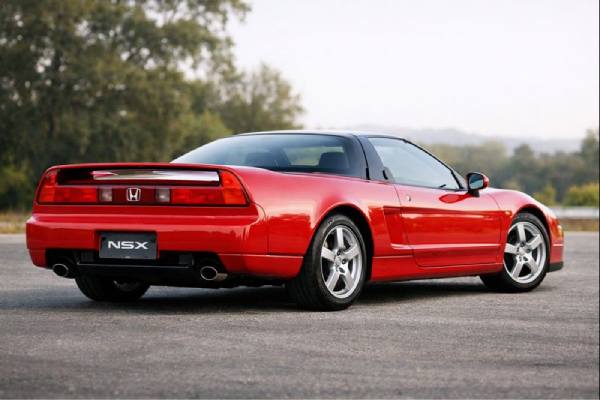
The 2002–2005 facelift Honda/Acura NSX is best understood as a “final refinement” of the original aluminum mid-engine formula: lighter-feeling steering response from chassis tweaks, fixed headlamps for cleaner aerodynamics and visibility, and a tighter overall finish that reflects a decade of incremental improvements. This article focuses on the NA1 with the C30A 3.0-liter V6 rated at 252 hp, which in many markets is tied to the 4-speed automatic drivetrain. That combination trades some peak shove for easy drivability and a more relaxed long-distance character—while keeping the NSX’s core strengths: predictable balance, excellent outward visibility, and unusually friendly ergonomics for a supercar-shaped coupe.
Because these cars are now age-led rather than mileage-led, ownership quality depends less on “what it is” and more on how it was maintained: timing-belt history, cooling system condition, and electrical health are the big separators between a joyfully usable classic and a costly project.
What to Know
- One of the easiest mid-engine cars to place on the road, with excellent visibility and calm breakaway behavior.
- Aluminum structure and careful packaging help it feel smaller and lighter than many rivals of the era.
- The 3.0 automatic setup prioritizes smooth drivability over peak acceleration compared with 3.2 manual variants.
- Plan for age-based refreshing: hoses, rubber bushings, and electrical connectors matter as much as mileage.
- Typical interval: timing belt service about every 7 years (or per the factory schedule)—verify proof, not promises.
Jump to sections
- 2002–2005 facelift NSX in context
- C30A technical specs and performance
- Facelift equipment and safety features
- Reliability trouble spots and service actions
- Maintenance plan and buyer’s checklist
- Real-world driving and efficiency
- Rivals then and now
2002–2005 facelift NSX in context
The facelift NSX is not a redesign—it is a careful “last pass” over a platform that was already engineered around a clear goal: deliver mid-engine handling without mid-engine intimidation. For the 2002–2005 cars, the most visible change is the move to fixed headlamps, replacing pop-ups with a cleaner front profile. On the road, that matters in two practical ways: improved night visibility consistency (no aging pop-up mechanisms or imperfect alignment) and slightly reduced front-end lift sensitivity at speed compared with earlier lighting hardware.
Underneath, the NSX’s identity remains intact: an aluminum-intensive structure, a low cowl for visibility, and a cockpit that was designed around human factors rather than theater. That shows up in the driving position (good pedal spacing, clear sightlines) and in the way the chassis communicates. Even in automatic form, the car feels “talkative,” because the mid-engine layout places mass near the center and reduces the sensation of pendulum weight transfer you can get in rear-engine or long-nose designs.
This article focuses on the NA1 C30A 3.0-liter, 252 hp configuration commonly paired with the 4-speed automatic. In practical ownership terms, that version is often chosen by buyers who want NSX design and balance but value a smoother day-to-day experience. The automatic also changes the car’s personality: it becomes less about chasing redline and more about flowing pace, corner-to-corner stability, and the uniquely “normal” ergonomics that made the NSX famous.
The biggest shift today is not the facelift hardware—it’s the calendar. A 2002–2005 NSX is now a modern classic, and its condition depends heavily on whether past owners treated it like a high-quality machine or like a poster. The best cars tend to show consistent fluid service, documented timing-belt work, and proactive cooling and suspension refreshes. The cars that look perfect but have thin records can be the most expensive, because rubber, seals, and electrical aging do not announce themselves until you start using the car regularly.
If you want a usable collector car with real engineering substance, the facelift NA1 can be a strong sweet spot—provided you buy the maintenance history as much as you buy the car.
C30A technical specs and performance
Below are model-relevant tables for the facelift-era NSX running the C30A 3.0-liter V6 (252 hp) with the 4-speed automatic. Exact figures can vary slightly by market, equipment, and measurement standard, so treat them as a practical reference and verify against VIN-specific documentation when ordering parts.
Powertrain and efficiency (C30A 3.0, NA, automatic)
| Item | Specification |
|---|---|
| Engine code | C30A |
| Layout and cylinders | Mid-mounted V6, DOHC, 24-valve (4 valves/cyl) |
| Displacement | 3.0 L (2,977 cc) |
| Induction | Naturally aspirated |
| Fuel system | Multi-point fuel injection (PFI/MPFI) |
| Compression ratio | ~10.2:1 (varies by calibration/market) |
| Max power | 252 hp (188 kW) @ ~6,600 rpm |
| Max torque | ~285 Nm (210 lb-ft) @ ~5,300 rpm |
| Timing drive | Belt |
| Fuel type | Premium gasoline (typical requirement) |
| Rated efficiency (EPA, example listing) | ~18 mpg combined (16 city / 22 highway) |
Transmission and driveline
| Item | Specification |
|---|---|
| Transmission | 4-speed automatic (shiftable in many markets) |
| Drive type | RWD |
| Differential | Typically limited-slip (verify by market/year) |
Chassis and dimensions (typical coupe/targa ranges)
| Item | Specification |
|---|---|
| Structure | Aluminum-intensive monocoque and subframes |
| Suspension (front/rear) | Double wishbone / double wishbone |
| Steering | Rack-and-pinion (assist type varies by year/market) |
| Brakes | 4-wheel discs (ABS standard in most markets) |
| Wheels/tires (common facelift fitment) | Staggered performance tires (sizes vary by market/trim) |
| Length / Width / Height | ~4,420 / 1,810 / 1,170 mm (approx.) |
| Wheelbase | ~2,530 mm (approx.) |
| Curb weight | ~1,430–1,480 kg (approx., varies by body style and equipment) |
| Fuel tank | ~70 L (varies by market) |
| Cargo volume | Small rear trunk; practical for soft bags (measurement method varies) |
Performance and capability (best-known typical results for 3.0 automatic)
Because most period instrumented tests focused on the higher-output manual variants, published numbers for the 3.0 automatic are less common. The figures below reflect typical, repeatable expectations for a healthy car on street tires in good conditions.
| Metric | Typical result |
|---|---|
| 0–100 km/h (0–62 mph) | ~6.5–7.5 s |
| 0–60 mph | ~6.0–7.0 s |
| Quarter mile | ~14.3–15.0 s @ ~95–102 mph (est.) |
| Top speed | ~265–275 km/h (165–171 mph) (varies by limiter/gearing) |
| Braking 100–0 km/h | ~36–40 m (tire/condition dependent) |
| Braking 70–0 mph | ~160–175 ft (tire/condition dependent) |
| Skidpad / lateral grip | ~0.88–0.93 g (tire dependent) |
| Turning circle (kerb-to-kerb) | ~11 m (varies by market spec) |
| Towing / roof load | Not applicable / not recommended |
Fluids and service capacities (typical references—verify by VIN)
| Fluid | Specification (typical) | Capacity (approx.) |
|---|---|---|
| Engine oil | Quality API-rated oil; viscosity by climate | ~4.5–5.0 L |
| Coolant | Long-life ethylene glycol mix | ~10–12 L |
| Automatic transmission fluid | OEM-spec ATF | varies (service vs dry fill) |
| Brake fluid | DOT 4 (typical) | as needed |
| A/C refrigerant | R-134a (typical for era) | by label/spec |
Electrical (typical)
| Item | Specification |
|---|---|
| 12V battery | Standard 12V automotive battery (size varies by market) |
| Alternator | Output varies by year/market |
| Spark plugs | OEM-spec plugs; gap per manual |
Safety and driver assistance (era-correct)
| Item | Specification / note |
|---|---|
| Airbags | Dual front airbags common; some markets include side airbags (verify by year/trim) |
| ABS | Commonly standard |
| Traction control | Commonly equipped (TCS) |
| ADAS | Not present by modern standards (no AEB/ACC/LKA) |
| Crash ratings | Often not formally rated by modern Euro NCAP/IIHS protocols for this low-volume model |
If you want, I can also format the performance section as a standalone “Performance and capability” table block you can paste into your specs section without the surrounding specs tables.
Facelift equipment and safety features
Most facelift NSX discussions focus on the fixed headlamps, but ownership satisfaction usually comes from smaller details: cabin durability, how easy it is to live with the seating position, and whether the car has the options you actually care about (roof configuration, audio, wheel package, and interior condition).
Trims and body styles you’ll encounter
Depending on market, the facelift era typically includes:
- Coupe and targa/NSX-T style roof configurations. The targa adds open-air appeal and a slightly different feel over rough surfaces due to added structure and seals. It can also introduce more wind noise if weatherstrips are old.
- Automatic vs manual split. In many regions, the 3.0-liter 252 hp setup is tied to the automatic, while the headline performance variant uses a larger-displacement engine with a manual gearbox. If you shop across borders, confirm the engine code and drivetrain rather than relying on model year.
- Wheel and brake packages. Some markets bundle different wheel diameters or tire sizes, which matters because the NSX responds strongly to tire choice. A great chassis with mediocre tires feels like a different car.
Quick identifiers that matter when shopping
- VIN and build plate: confirm production month/year; late-year changes can affect parts.
- Engine bay labels and stamping: the C30A identification is important if you are targeting the 3.0 variant.
- Interior tells: wear on seat bolsters, steering wheel leather, and switchgear often tracks real use more honestly than odometer readings.
Safety systems (realistic expectations)
The facelift NA1 sits in a transitional safety era. You typically get the fundamentals—seat belts with pretensioners (market dependent), SRS airbags, ABS, and traction control—but not modern driver assistance systems. That means two practical ownership points:
- Tires and brakes become “active safety.” A tired tire set or old brake fluid will do more harm to real-world safety than almost any other single item on this car.
- Alignment and suspension condition matter. Worn bushings can make the car feel twitchy or unstable in fast lane changes. A properly refreshed chassis restores the NSX’s famous calmness.
Crash-test ratings and what “not rated” means
Many shoppers look for Euro NCAP or IIHS star scores, but low-volume sports cars of this era often lack modern-style results. If you cannot find an official rating, don’t treat that as “unsafe,” but do treat it as a reminder that the NSX predates today’s small-overlap tests, advanced restraint algorithms, and ADAS mitigation.
For owners who actually drive these cars, the best safety upgrade is maintenance: fresh tires, correct tire pressures, high-quality brake pads, and a stability-focused alignment that suits your roads.
Reliability trouble spots and service actions
A well-maintained NSX can be very durable, but the facelift NA1 is now old enough that age-related failures often outweigh design flaws. It helps to think in three buckets: common age wear, occasional expensive failures, and rare but high-consequence problems.
Common (age-led) issues — usually manageable
- Timing belt and water pump history (high importance)
- Symptoms: no symptoms until it’s too late.
- Root cause: time-based belt aging.
- Remedy: replace belt on schedule with water pump and idlers; treat unknown history as “due now.”
- Cooling system aging (medium cost, high importance)
- Symptoms: creeping temps, coolant smell, small leaks, weak cabin heat behavior.
- Root cause: old hoses, tired radiator, aging clamps, and long intervals between coolant services.
- Remedy: pressure test, replace suspect hoses, keep correct coolant mix, and ensure fans operate correctly.
- Rubber bushings and compliance parts (medium cost, big feel change)
- Symptoms: clunks, vague steering on-center, rear steer sensation under throttle changes.
- Root cause: hardened suspension bushings and worn ball joints.
- Remedy: bushing refresh and proper alignment transforms the car.
Occasional issues — can be expensive if ignored
- Oil seepage from seals (medium-to-high)
- Symptoms: oil misting, drips, burning smell on hot components.
- Root cause: aged seals and gaskets; extended storage worsens it.
- Remedy: reseal as needed; prioritize leaks near timing covers and oil lines.
- Automatic transmission behavior (medium-to-high)
- Symptoms: delayed engagement, harsh shifts, flares, or shudder.
- Root cause: old ATF, internal wear, or valve-body issues depending on history.
- Remedy: start with correct fluid service and diagnosis; avoid “universal ATF” shortcuts.
- Electrical gremlins from age and storage (medium)
- Symptoms: intermittent warning lights, slow windows, odd gauge behavior.
- Root cause: weak battery, corroded grounds, aging relays and connectors.
- Remedy: battery/charging system test first, then clean grounds and inspect connectors.
Rare but costly — focus on prevention and inspection
- Structural corrosion in hidden areas (varies by climate)
- Symptoms: bubbling paint near seams, rusty fasteners, water ingress.
- Root cause: moisture traps and decades of road exposure.
- Remedy: thorough underside inspection; pay attention to mounting points and subframe areas.
- Fuel system leaks (high consequence)
- Symptoms: fuel odor, dampness, seepage near lines/tank area.
- Root cause: old hoses, clamps, seals.
- Remedy: stop driving until fixed—fuel leaks are a safety risk.
Recalls, TSBs, and how to verify
Even if your specific year shows few or no formal recall actions, you should still treat recall verification as part of ownership hygiene:
- Use the official VIN recall lookup and keep a screenshot or printout for your records.
- Ask a dealer for completion status where possible.
- Compare prior invoices against known service campaigns and common bulletins.
Pre-purchase checks to request (non-negotiables)
- Timing belt/water pump invoice with date and mileage.
- Cooling system service records and evidence of leak-free operation.
- Suspension refresh history (or budget for it).
- Battery age, alternator output test, and scan for stored codes where applicable.
- A test drive long enough to fully warm the car and verify stable temps and consistent shifting.
If you buy on condition, the facelift NA1 is usually a predictable car to keep healthy. If you buy on cosmetics and hope for the best, you can spend supercar money making it right.
Maintenance plan and buyer’s checklist
A practical NSX maintenance plan is built around two truths: rubber ages and heat cycles are relentless in a mid-engine bay. The schedule below is written for real ownership—mixing time and distance intervals—so you can make decisions even if the car does low annual mileage.
Core maintenance schedule (distance/time)
- Engine oil and filter: every 5,000–8,000 km (3,000–5,000 mi) or 6–12 months
Short-trip cars should use the time interval. Use the correct viscosity for climate and a quality filter. - Air filter (engine): inspect every oil service; replace every 20,000–30,000 km or as needed.
- Cabin filter (if equipped by market): yearly or when airflow drops.
- Coolant: every 3–5 years (age matters more than mileage)
Replace hoses proactively if they feel hard, swollen, or show staining at clamps. - Brake fluid: every 2 years
This is one of the highest-value “feel and safety” services on an NSX. - Spark plugs: typically ~100,000 km (60,000 mi) or per the factory schedule
Replace earlier if misfires appear or if plugs are unknown and old. - Timing belt system (belt, tensioners/idlers, water pump): typically ~7 years (and/or mileage per manual)
Treat unknown history as urgent. This is the single most important maintenance proof to demand. - Accessory/serpentine belts and coolant hoses: inspect yearly; replace by condition or every 5–10 years depending on climate and use.
- Automatic transmission fluid: service interval varies by market guidance; a conservative approach is every 30,000–50,000 km for a car that sees spirited use or heat.
- Brakes (pads/rotors): inspect every 10,000–15,000 km; replace by thickness and condition.
The NSX rewards high-quality pads matched to how you drive. - Tires: rotate only if tire setup allows; otherwise inspect frequently for inner-edge wear.
Check pressures monthly. Plan alignment whenever tires are replaced. - Alignment: check yearly if you drive it often, or after any suspension work.
Mid-engine cars are sensitive to toe settings; correct toe stabilizes the car. - 12V battery: test yearly; typical replacement window 4–6 years depending on climate and storage habits.
Fluid specs, capacities, and “decision-grade” torque values
Because VIN and market variations exist, use the owner’s manual and service documentation as the final authority. Still, for planning and budgeting:
- Keep premium fuel in the tank if specified for your market.
- Use OEM-correct ATF rather than universal fluids.
- Use DOT 4 brake fluid unless your documentation specifies otherwise.
- When doing major work (timing belt, suspension, brakes), insist on correct torque procedures—especially on aluminum-related fasteners and critical suspension joints.
Buyer’s checklist (what to inspect in-person)
Body and structure
- Look for mismatched paint, uneven panel gaps, and signs of prior repair.
- Inspect underbody and suspension mounting points for corrosion and damage.
- Check door, roof, and trunk seals for water ingress signs.
Engine bay
- Any coolant residue or sweet smell after a warm drive is a red flag.
- Look for oil leaks around timing covers and oil line connections.
- Confirm fans cycle normally; watch for stable temps in traffic.
Driveline
- Automatic should engage smoothly, shift consistently, and avoid flare.
- Listen for CV joint noise on full lock and under load.
Suspension and steering
- Clunks over sharp bumps often point to aged bushings or ball joints.
- A “wandering” feeling at speed usually indicates alignment or bushing wear.
Electronics and interior
- Confirm windows, HVAC, gauges, lights, and warning indicators behave normally.
- Inspect for brittle plastics and evidence of long-term storage.
Long-term durability outlook
The facelift NA1 is often a satisfying long-term keeper because it’s fundamentally well engineered and not overloaded with complex electronics. The catch is that it demands preventive maintenance: keep heat-managed fluids fresh, replace time-sensitive components on schedule, and refresh suspension rubber when the car starts to feel “loose.” Do that, and the NSX remains what it has always been—remarkably usable performance.
Real-world driving and efficiency
The reason the NSX still has such a strong reputation is not just lap times—it’s how natural it feels at normal speeds. The facelift cars keep the original’s strengths: a low seating position with a surprisingly “daylight” cabin, easy sightlines, and controls that don’t demand you adapt your driving style just to make the car behave.
Ride, handling, and NVH
On typical roads, the NSX reads as composed rather than harsh. The suspension is firm enough to control body motion but not so stiff that it skips over mid-corner bumps when the chassis is healthy. What owners notice most is balance: the car rotates willingly, but breakaway is progressive, so you feel grip building and fading rather than snapping on and off.
Noise levels are era-correct sports car: more tire and drivetrain presence than a modern GT, but less rattly than many contemporaries. Wind noise is mostly a function of seals and roof configuration; a well-kept targa can be quiet, and a neglected one can be tiring.
Powertrain character (3.0 automatic)
The 3.0 V6 is smooth and responsive, with power building cleanly as revs rise. Compared with the higher-output variants, the 252 hp setup leans more on momentum and corner exit cleanliness than brute acceleration. The automatic gearbox changes your rhythm: instead of constantly chasing the top of the tach, you focus on keeping the chassis settled and letting the engine’s linear response do the work.
If your goal is relaxed enjoyment, this pairing makes sense. If your goal is maximum straight-line performance or track work, it’s worth being honest: the automatic’s gearing and shift logic will not deliver the same urgency as the manual performance variants.
Real-world efficiency (what owners can expect)
Official EPA-style listings for the 3.0 automatic commonly land around the high teens combined, with highway numbers in the low twenties (mpg). In real use:
- City driving: expect the biggest spread depending on traffic and throttle habits.
- Highway at 100–120 km/h (60–75 mph): low-20s mpg is realistic for a healthy car if tires and alignment are right.
- Mixed driving: high teens to low twenties mpg is a sensible planning range.
Cold weather and short trips punish fuel economy more than spirited backroad use, because warm-up time and enrichment dominate. Also note that alignment (especially toe) and old tires can quietly drag economy down.
Selective performance metrics that change the verdict
For most buyers of this variant, the key number is not “best case 0–60,” but “how it feels at 40–80 mph” and whether the car stays stable when you lean on it. A healthy NSX delivers:
- Confident braking feel with good pedal modulation (assuming fresh fluid and quality pads).
- Straight-line stability at speed with correct alignment.
- Predictable traction behavior that rewards smooth inputs.
In other words, the facelift NA1 automatic is less about headline acceleration and more about being a rare mid-engine car you will actually choose to drive.
Rivals then and now
Comparing the facelift NSX to rivals works best if you separate two ideas: what competed with it new and what competes with it today as a used/collector purchase.
Period rivals (early 2000s context)
- Porsche 911 (996 era)
Often faster in a straight line and rich in motorsport character, but with a different weight-transfer personality. Maintenance costs and engine-related concerns vary by exact model and history. The NSX typically feels more approachable at the limit. - Ferrari 360 Modena
More drama and often more peak performance, but also more cost exposure. The NSX counters with usability, visibility, and a reputation for engineering restraint rather than spectacle. - Chevrolet Corvette (C5)
Tremendous value performance and strong aftermarket support. The NSX answers with mid-engine balance, cabin ergonomics, and a more “precision tool” feel in corners. - Lotus Esprit (late models)
Exotic layout and presence, but often higher ownership complexity. The NSX tends to win on day-to-day livability and overall robustness.
Modern alternatives (what cross-shoppers consider now)
- Honda S2000: lighter, simpler, more affordable entry to a high-revving Honda experience, but not mid-engine and not as refined at highway speeds.
- Porsche Cayman (early generations): arguably the closest philosophical successor in “balanced sports car you can use,” with newer safety and comfort tech but a different ownership curve.
- Corvette (later generations): huge performance per dollar; the NSX wins on visibility, intimacy, and collector appeal rather than pure speed.
- Modern sports coupes: faster and safer, but often less tactile. The NSX’s advantage is analog clarity.
Where the facelift NA1 (252 hp) specifically fits
Against rivals, this variant’s strongest argument is not the stopwatch. It is the combination of:
- Mid-engine confidence without mid-engine anxiety
- A cabin you can actually see out of
- Mechanical honesty and long-term desirability
- A driving experience that still feels special at normal road speeds
If you want the “sharpest” NSX experience, you may prefer other powertrain variants. But if you want a classic that you will drive often—and enjoy on imperfect roads—the facelift NA1 automatic can be the sleeper pick.
References
- 2005 NSX Online Reference Owner’s Manual Contents 2005 (Owner’s Manual) ([techinfo.honda.com][1])
- Fuel Economy of the 2005 Acura NSX 2005 (Official Fuel Economy Listing) ([Fuel Economy][2])
- Check for Recalls: Vehicle, Car Seat, Tire, Equipment 2026 (Recall Database) ([NHTSA][3])
Disclaimer
This article is for informational purposes only and is not a substitute for professional diagnosis, inspection, or repair. Specifications, torque values, service intervals, fluids, and procedures can vary by VIN, market, model year, and equipment. Always verify details using your vehicle’s official owner’s manual and service documentation before purchasing parts or performing work.
If this guide helped, please consider sharing it on Facebook, X (Twitter), or your favorite forum/community to support our work.